Tools & materials you'll need
Affiliate linksAs an Amazon Associate FixlyGuide earns from qualifying purchases — at no extra cost to you. Prices and availability are accurate as of publication and subject to change.
Quick Answer
Flickering lights in one room usually indicate a specific issue within that room's electrical circuit, often a loose bulb, an arc fault, or a faulty switch or outlet. Unlike whole-house flickering, which suggests a utility or main panel problem, isolated flickering is typically a simpler fix, requiring basic diagnostic steps to pinpoint the exact culprit and restore steady illumination.
The Problem
Imagine settling down for the evening, only to have the lights in your living room erratically dim and brighten, creating an unsettling strobe effect. Or perhaps the overhead light in your bedroom has started to flicker intermittently, a minor annoyance that can quickly become a major headache. When this phenomenon is confined to a single room, it’s a strong signal that the problem isn't with your main electrical service or the utility grid. Instead, the issue lies somewhere specific within that room's electrical setup – it could be as simple as a loose light bulb or as complex as a dying fixture or a wiring fault. Ignoring these localized flickers isn't just an inconvenience; it can indicate underlying electrical stress, potential fire hazards, or increased energy consumption due to inefficient connections. Understanding the 'why' behind this specific flickering allows you to approach the 'how to fix' with confidence and safety.
How It Works
Your home's electrical system operates by delivering a consistent flow of alternating current (AC) to all your fixtures and appliances. Electricity enters your home from the utility grid, passes through your main service panel (where it’s divided into circuits), and then travels through wires to individual outlets, switches, and light fixtures. Each light fixture requires a continuous, stable connection: a hot wire bringing power in, a neutral wire taking it out, and often a ground wire for safety. When any part of this pathway becomes compromised – a loose wire, a faulty component, or an overloaded connection – the flow of electricity can become intermittent or fluctuate, leading to the visible flickering. Think of it like a garden hose with a kink: the water flow isn't completely stopped, but it's inconsistent. In an electrical circuit, even a momentary break in continuity, or a drop in voltage, can cause your lights to flicker. Arc faults, for instance, are tiny, uncontrolled electrical discharges that generate heat and interrupt current flow, often due to damaged or aged wiring. Understanding this basic flow helps you trace the problem from the light source backward through the circuit.
Step-by-Step Fix
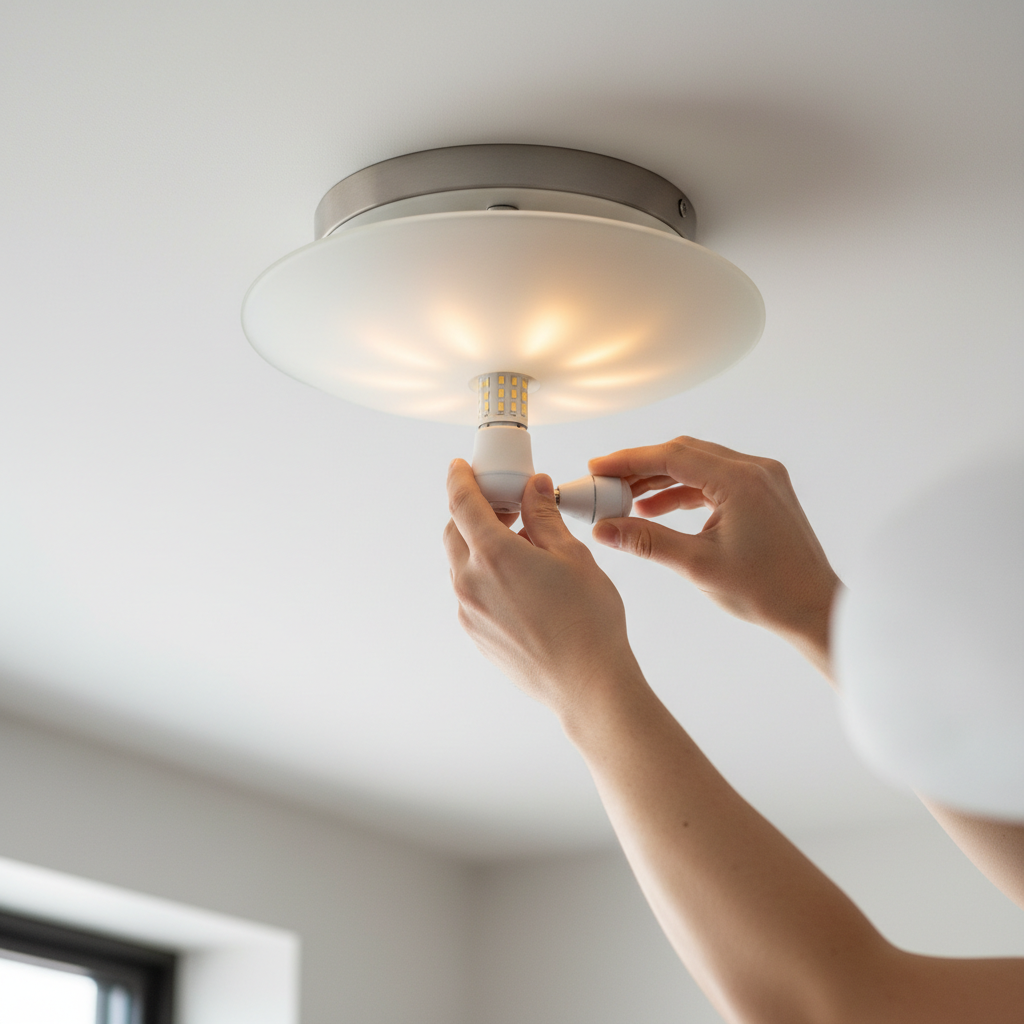
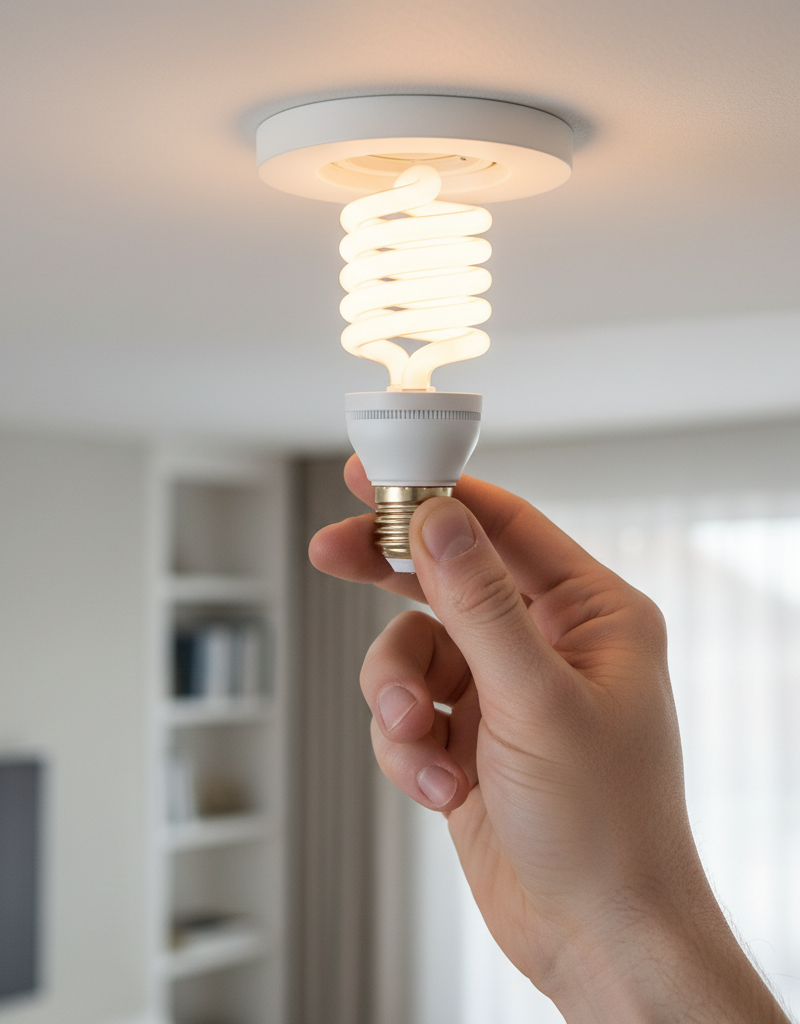
1. Check the Obvious — The Light Bulb Itself – Start with the simplest solution. A loose or failing bulb is the most common cause of flickering in a single fixture.
- Action: Turn off the light at the switch. Gently twist the bulb clockwise to ensure it's securely seated in the socket. If it's a newer LED bulb, try replacing it with a known good incandescent bulb (if you have one) to rule out compatibility issues or an early LED failure. Sometimes, a cheap LED bulb can flicker even when new. If the bulb works elsewhere, try a different bulb in the flickering fixture.
- Safety: Always turn off the power at the switch or, better yet, at the breaker before manipulating electrical components.
2. Don't Forget the Switch — The Wall Switch – The switch is a mechanical device that can wear out or develop loose connections over time, especially if it's heavily used.
- Action: With the power off at the breaker, carefully remove the wall plate and gently wiggle the switch. Are any wires visibly loose or discolored? Use a screwdriver to gently tighten the terminal screws holding the wires. Don't overtighten. Look for burn marks on the wires or switch body. If you see any, the switch is likely faulty and needs replacement.
- If this doesn't work: Consider that the switch itself might be faulty internally. Replacing a basic light switch is a relatively simple DIY task if you're comfortable with basic electrical work.
3. Inspect the Outlet (If Applicable) — Loose Outlet Connections – If the flickering light is plugged into an outlet, the outlet itself or its wiring could be the cause.
- Action: Unplug the lamp or fixture. With the power off at the breaker, remove the outlet cover plate. Carefully pull the outlet slightly out of the wall box. Look for loose wires at the terminal screws or push-in connections. Tighten any loose screws. If using push-in terminals, gently pull on each wire to ensure it's secure. Replace the outlet if it appears damaged or burnt.
- Safety: Never touch the exposed wires while the breaker is on. Test the outlet with a voltage tester before touching anything.
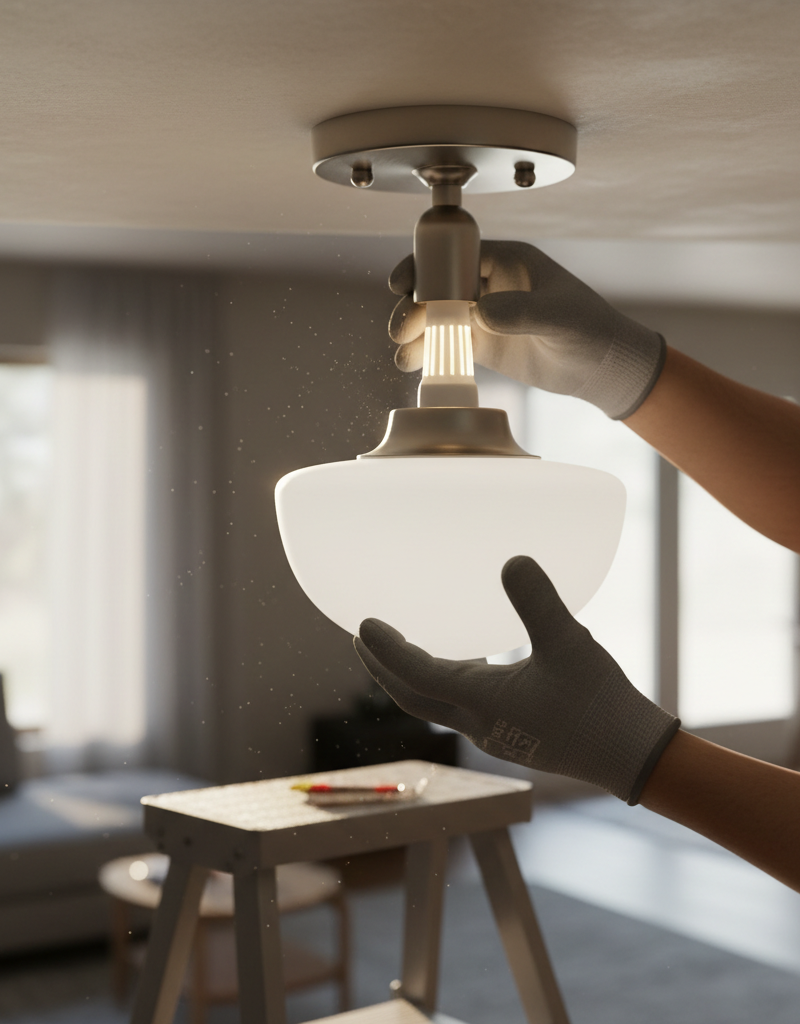
4. Look Inside the Fixture — Loose Wires in the Light Fixture – The junction box inside the fixture canopy can experience loose wire nuts or connections due to vibration, heat cycling, or poor initial installation.
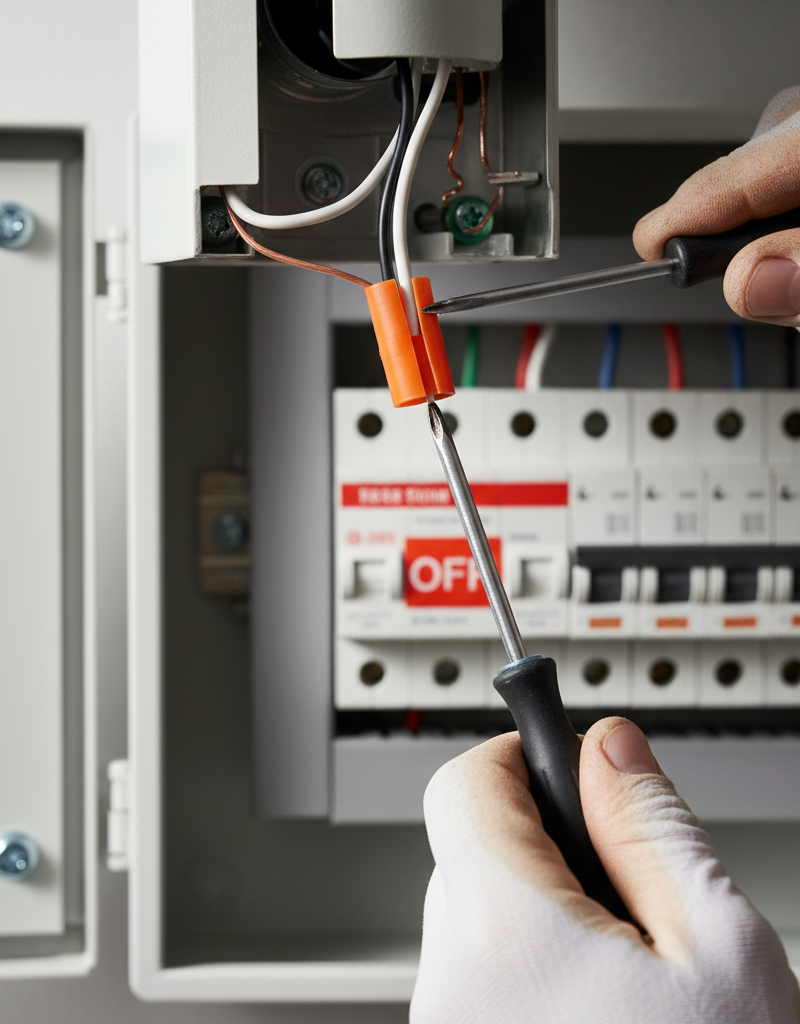
- Action: Turn off the power at the breaker. Carefully lower the light fixture. Inside the canopy (the part that sits flush against the ceiling), you'll find wire nuts connecting the house wiring to the fixture wiring. Gently twist each wire nut clockwise to ensure it's tight. Check for any exposed copper wire beyond the wire nut, which indicates a poor connection. If you see any, remove the wire nut, strip a fresh section of wire (about 1/2 inch), twist the two wires together clockwise, and reapply the wire nut securely.
- Tools: Small flathead screwdriver, wire strippers.
5. Consider the Circuit Load — Overloaded Circuit – While less common for a single light, if the flickering started after adding new appliances, the circuit might be drawing too much power.
- Action: Unplug all other devices on that circuit (lamps, chargers, entertainment systems) from outlets in the flickering room and any adjacent rooms that share the same circuit. Turn the light back on. If the flickering stops, you've identified an overload. Redistribute some of the devices to different circuits.
- How to find other devices on the circuit: Turn off the breaker for the flickering room and walk through your house, noting which outlets and lights no longer work. Those are on the same circuit.
6. The Mysterious Arc Fault — Arc Fault Circuit Interrupter (AFCI) Breaker Tripping – If your home has modern AFCI breakers, flickering could be a sign an arc fault is being detected by the breaker itself. An AFCI breaker protects against electrical fires caused by arc faults.
- Action: Go to your electrical panel. If the breaker for the flickering room trips repeatedly (or rests in a mid-position), it's doing its job. Reset it. If it trips again, it’s signaling a persistent arc fault. You need to identify the cause of the arc fault (often damaged wiring, a loose connection, or a faulty appliance). If you can't find it, call a professional.
- Safety: Do not bypass an AFCI breaker. It's a critical safety device.
7. The Last Resort — Fixture Failure – Sometimes the problem isn't the wiring but the fixture itself.
- Action: If you've tried all other steps and the flickering persists, and you're confident the circuit isn't overloaded and wiring is sound, the fixture itself might be failing. This is more common with older fixtures or those with integrated drivers (for LEDs). You might need to replace the entire light fixture.
- Consider: If the fixture is dimmable, ensure the bulb is compatible with the dimmer switch, and that the dimmer itself isn't faulty or old.
Common Causes
- Loose Light Bulbs: The simplest and most frequent cause. The metal contact in the socket isn't making consistent contact with the bulb's base.
- Failing Light Bulb: Especially common with older incandescent bulbs reaching the end of their life, or poorly manufactured LED bulbs.
- Loose Wire Connections: Within the fixture, at the wall switch, or inside an outlet. These connections can loosen over time due to thermal expansion and contraction, vibration, or poor initial installation.
- Faulty Light Switch or Outlet: Electrical contacts within the device can degrade or become corroded, leading to intermittent power delivery.
- Arc Faults: Small, unintended electrical discharges across a gap in the wiring, often caused by damaged insulation, pinched wires, or loose connections. Modern homes have AFCI breakers to detect and prevent these.
- Incompatible or Faulty Dimmer Switch: Not all LED bulbs are compatible with all dimmer switches, and an old or low-quality dimmer can cause flickering.
- Overloaded Circuit (less common for single light): While typically affecting multiple lights or the whole house, a heavily loaded circuit could cause voltage drops leading to flickering, especially if other high-draw appliances turn on and off.
Common Mistakes
- Ignoring the Obvious: Many homeowners immediately assume a complex wiring issue without first checking if the bulb is simply loose or faulty. Start simple!
- Working with Live Power: Attempting to tighten wires or replace components without turning off the corresponding circuit breaker. This is extremely dangerous and can lead to electric shock or fire.
- Overtightening Screws: When tightening terminal screws on switches or outlets, overtightening can strip the screw head, damage the wire, or crack the device, creating a worse connection or a safety hazard.
- Using Incorrect Wire Connectors: Using electrical tape instead of appropriate wire nuts (or vice versa), using wire nuts that are too small or too large for the wire gauge, or not twisting wires together properly before applying a wire nut.
- Guessing on Circuit Loads: Continually tripping breakers or experiencing flickering without understanding what's drawing power on a specific circuit. It's important to map your circuits.
- Assuming All LEDs are Equal: Buying cheap, generic LED bulbs can often lead to compatibility problems with dimmers or premature flickering and failure, unlike higher-quality, brand-name alternatives.
Cost & Time Breakdown
| Task | DIY Cost | Pro Cost | Time |
|---|---|---|---|
| Check/Replace Bulb | $5–$20 | $0 (DIY only) | 5 minutes |
| Tighten Switch/Outlet Wires | $0 (tools only) | $100–$250 | 15–30 minutes |
| Replace Wall Switch/Outlet | $10–$30 | $150–$300 | 30–60 minutes |
| Tighten Fixture Wires | $0 (tools only) | $150–$350 | 30–60 minutes |
| Replace Light Fixture | $30–$200+ | $150–$400 | 1–2 hours |
Tips & Prevention
- Regular Bulb Checks: Periodically check that all your bulbs are screwed in snugly, especially in high-vibration areas like near doors or ceiling fans.
- Use Quality Components: Invest in good quality light bulbs (especially LEDs from reputable brands) and electrical devices like switches and outlets. Cheap components are often more prone to failure.
- Avoid Overloading: Be mindful of how many high-wattage appliances are plugged into outlets on a single circuit. Distribute your power needs across different circuits.
- Proper Wire Connections: When installing new fixtures or devices, always ensure wires are stripped to the correct length and secured firmly with correct-sized wire nuts or terminal screws. No frayed strands should be visible.
- Circuit Mapping: Take the time to map out your home's electrical circuits. Label your breaker panel clearly so you know exactly which breaker controls which rooms and outlets. This makes troubleshooting much faster and safer.
- Watch for Warning Signs: Don't ignore intermittent flickering. It's often an early warning sign of a problem that could worsen, potentially leading to a complete circuit failure or a fire hazard.
When to Call a Professional
While many single-room flickering issues are manageable for DIYers, there are clear indicators when it's time to call a licensed electrician. If, after checking bulbs, switches, and fixtures, the flickering persists, or if you observe any signs of electrical damage such as burning smells, discoloration around outlets or switches, buzzing sounds from the wall, or repeated tripping of an AFCI breaker, stop immediately. These symptoms suggest a deeper, potentially dangerous wiring issue that requires professional diagnostic equipment and expertise. Additionally, if the flickering is accompanied by significant dimming or brightening of other lights in the house, or if it occurs in conjunction with the use of major appliances, there might be a larger service or panel issue. An electrician can safely diagnose complex wiring problems, replace faulty components within your walls, or assess your home's overall electrical load to prevent future issues. Never attempt to address issues beyond your comfort or skill level, especially when dealing with live electrical circuits.
Frequently asked questions
Why do my lights flicker only in one room?+
Flickering lights confined to a single room typically indicate a localized issue such as a loose light bulb, a faulty wall switch or outlet, or loose wiring within the light fixture itself. It's less likely to be a whole-house electrical problem.
Is flickering lights in one room dangerous?+
While often a minor annoyance, continuous flickering can occasionally signal a loose or arcing connection, which generates heat and poses a potential fire hazard. Always investigate flickering promptly and call a professional if you suspect a serious electrical issue like burning smells or repeated breaker trips.
Can a bad light bulb cause flickering?+
Yes, a loose or failing light bulb is one of the most common reasons for flickering. Try tightening the bulb in its socket or replacing it with a new one to see if the problem resolves.
How do I check for loose wiring in a light fixture?+
To check for loose wiring in a light fixture, first turn off the power at the circuit breaker. Then, carefully lower the fixture's canopy and ensure all wire nuts are secure and no bare wires are exposed. Gently twist wire nuts clockwise to tighten them if needed.
When should I call an electrician for flickering lights?+
You should call an electrician if, after checking bulbs, switches, and fixtures, the flickering persists. Also call a professional if you notice burning smells, discolored outlets, buzzing sounds from walls, or frequent tripping of circuit breakers, as these can indicate serious underlying electrical problems.
Discussion
Loading comments…