Tools & materials you'll need
Affiliate linksAs an Amazon Associate FixlyGuide earns from qualifying purchases — at no extra cost to you. Prices and availability are accurate as of publication and subject to change.
Quick Answer
A GFCI outlet that consistently trips is signaling a critical safety issue, most often a ground fault where electricity is escaping the intended circuit. This could be due to moisture getting into an outlet or appliance, a damaged electrical cord or internal fault within a connected device, or problems with the wiring itself, such as a loose connection or nicked insulation that allows current to leak to ground. Systematically isolating components and inspecting for environmental factors is key to diagnosing and safely resolving the problem.
The Problem
You're trying to use a hairdryer, power a string of outdoor lights, or even just plug in a lamp, and click—the GFCI outlet trips, cutting off power. Sometimes it resets, only to trip again seconds or minutes later. This isn't just an annoyance; it's a safety device doing its job. A GFCI is designed to protect you from electrocution by detecting even tiny imbalances in the electrical current. When it trips, it means current is flowing where it shouldn't—to ground—and this could be through a person. Ignoring a tripping GFCI or repeatedly resetting it without investigating the cause is extremely dangerous and defeats the purpose of the safety device.
How It Works
To understand why a GFCI trips, it helps to know how it operates. A standard electrical circuit has two main current-carrying wires: a 'hot' wire (typically black or red) that carries power from the breaker panel, and a 'neutral' wire (typically white) that carries the power back to the panel, completing the circuit. A GFCI outlet has a sophisticated internal sensor, essentially a small transformer, that constantly monitors the current flowing out on the hot wire and the current flowing back on the neutral wire. In a healthy circuit, these currents should be precisely equal.
What happens if there's an imbalance? Let's say a tiny amount of current (as little as 4–6 milliamperes) escapes the circuit—perhaps through a damaged appliance cord touching a metal sink, through water that's seeped into an outdoor outlet, or even through someone inadvertently touching a faulty appliance. This 'leaking' current finds an unintended path to ground. The GFCI detects this discrepancy: the current going out on the hot wire no longer perfectly matches the current returning on the neutral wire. When this imbalance occurs, usually within 1/40th of a second, the GFCI rapidly opens an internal switch, interrupting power to prevent a potentially fatal electrical shock. This quick response is why GFCIs are mandatory in wet or damp locations like bathrooms, kitchens, garages, basements, and outdoors.
It's important to differentiate a GFCI trip from a standard circuit breaker trip. A circuit breaker trips due to an overload (too many appliances drawing too much current) or a short circuit (a sudden, high-current path between hot and neutral wires). A GFCI, however, is specifically sensitive to ground faults, which are often much smaller current deviations and wouldn't necessarily trip a regular breaker. This makes them a vital layer of protection against electrocution.
Step-by-Step Fix
Safety First — Always prioritize your safety.
- Turn off power at the breaker: Before physically inspecting or touching any part of the electrical system, always go to your main electrical panel and turn off the circuit breaker that controls the GFCI outlet. Use a voltage tester to confirm the power is off at the outlet before proceeding.
- Never work in wet conditions: Ensure your hands and feet are dry. Wear rubber-soled shoes for added insulation.
Unplug Everything — Isolate the source of the problem.
- Go to the problematic GFCI outlet and unplug every single appliance or device connected to it, including anything plugged into other standard outlets on the same circuit downstream from the GFCI. Remember, a single GFCI often protects multiple standard outlets, especially in bathrooms or kitchens.
- Test the GFCI: Once everything is unplugged, try resetting the GFCI. If it holds, the problem is likely with one of the appliances or devices you just unplugged. If it still trips, the issue is internal to the GFCI outlet itself or the wiring leading to it.
Test Connected Appliances — Pinpoint the faulty device.
- If the GFCI held after unplugging everything, plug devices back in one at a time. After plugging each device in, wait a few minutes and see if the GFCI trips.
- Isolate the culprit: When the GFCI trips again, you've found the faulty appliance. Discard or repair that appliance. If it's an older appliance with a frayed cord, replace the cord if possible, or replace the entire appliance.
- If no appliance trips it: It's possible the fault is intermittent, or an appliance only trips it under certain conditions (e.g., when a motor kicks on). Continue monitoring.
Inspect for Moisture Intrusion — A common and often overlooked cause.
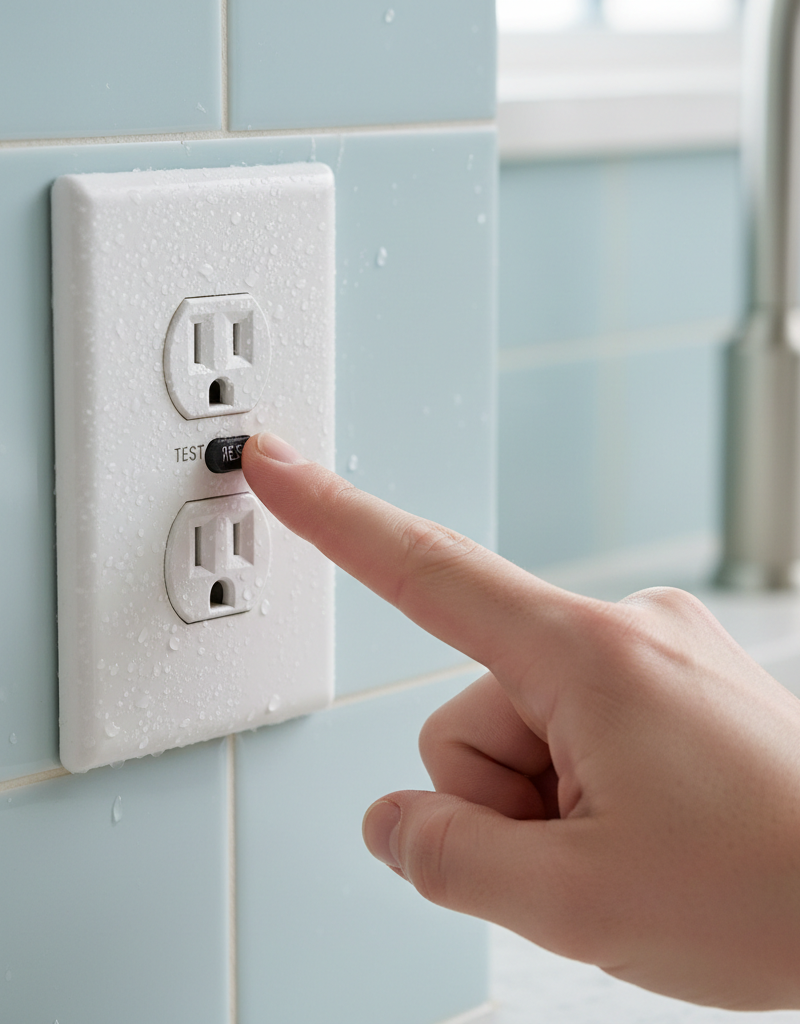
- Examine outlets: Carefully inspect the GFCI outlet itself, and any downstream outlets it protects, for signs of moisture. Look for condensation, water droplets, or even rust or corrosion, especially in outdoor or bathroom locations.
- Check seals and covers: For outdoor GFCIs, ensure the weatherproof cover is fully intact and sealing properly. Rain, sprinklers, or even high humidity can cause a trip.
- Dry out: If moisture is present, you'll need to turn off the power at the breaker and allow the area to thoroughly dry out. This might take several hours or even a day. You can use a fan to aid in drying. Do NOT re-energize until completely dry.
Check for External Wiring Damage — Visible signs of trouble.
- With the power still off at the breaker, visually inspect any visible wiring that leads to the GFCI or other outlets on the circuit. Look for frayed cords, wires pinched by furniture, or outdoor wires that have been damaged by lawnmowers or pets.
- Check for staples or nails: If you recently hung a picture or did any minor renovation, a nail or screw might have inadvertently pierced a wire, creating a hidden ground fault. This is notoriously difficult to find without professional equipment.
Examine the GFCI Outlet Itself — Internal component failure.
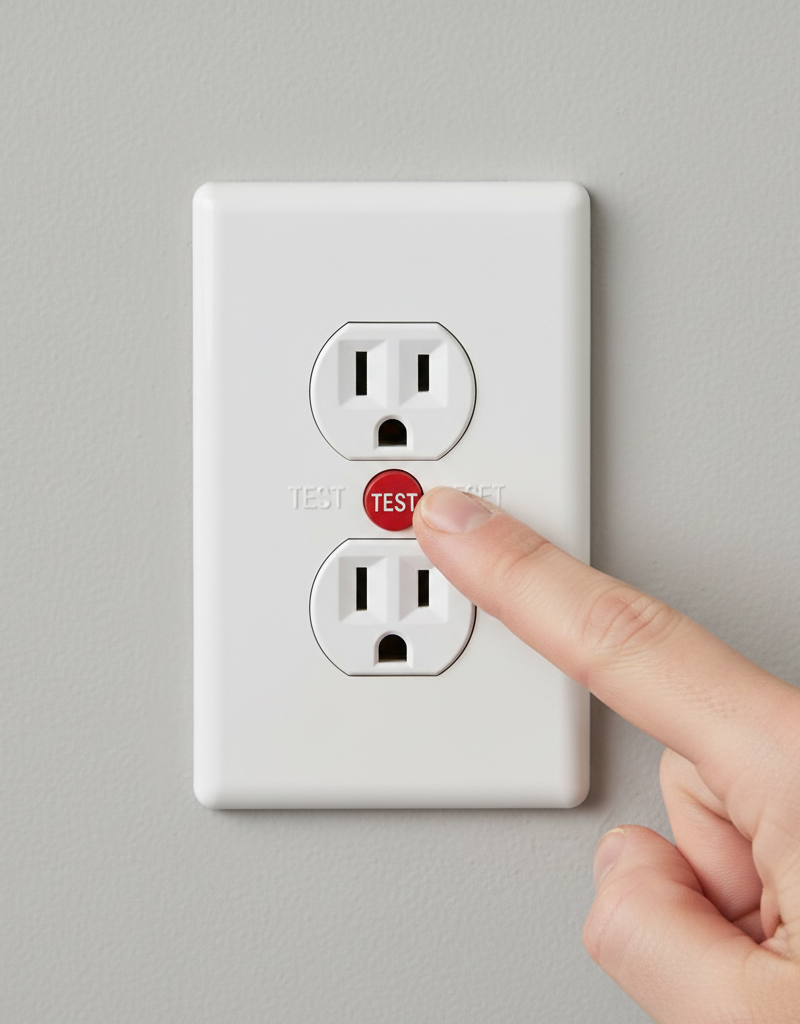
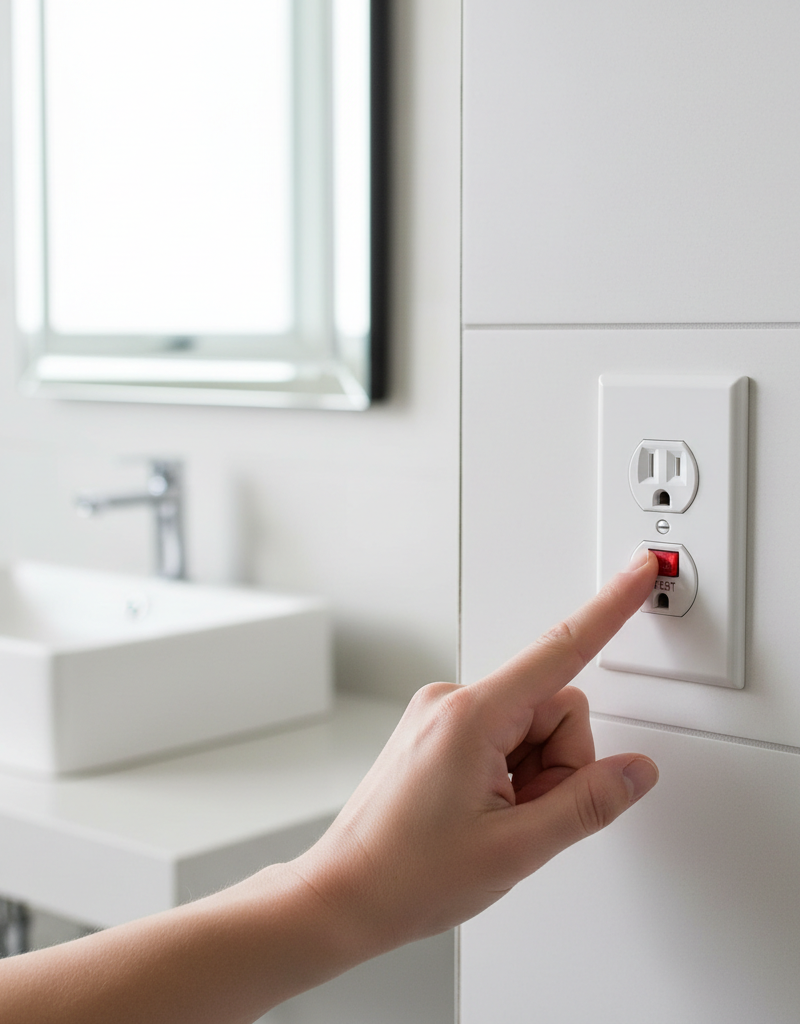
- Test button: Press the
Related Articles
Keep troubleshooting with these hand-picked guides from FixlyGuide:
- The Hidden Reason Your GFCI Trips (It's Not Always a Faulty Outlet) — A continuously tripping GFCI outlet is a critical safety warning, often indicating moisture, a faulty appliance, or a wiring problem that r…
- The Hidden Reason Your GFCI Trips (It’s Not Always a Bad Outlet) — A tripping GFCI outlet is a safety mechanism doing its job, often indicating a problem like moisture, a faulty appliance, or a wiring issue…
- The Hidden Reason Your GFCI Trips (and Why Most Homeowners Miss It) — A continuously tripping GFCI outlet is a safety warning, often signaling common but overlooked issues like moisture intrusion, appliance fa…
- The 6-Minute Secret to a Sparkling Bathroom (It’s Not What You Think) — Unleash the hidden power of your cordless drill to tackle stubborn household grime, from tile grout to dryer vents, with specialized attach…
- The 5 Essential Tools Every New Gardener Needs (And 3 You Can Skip) — Starting a garden doesn't require a huge investment in tools; savvy new gardeners can thrive with just a few key items and save money by kn…
- The 7 Head-Scratching Reasons Your Outlet Died (Even With The Breaker On) — Discover the surprising reasons why an electrical outlet might stop working even when its circuit breaker is fully engaged, and how to safe…
This article was independently written by FixlyGuide based on the source topic.
Frequently asked questions
How do I know if the GFCI outlet itself is bad?+
After unplugging all devices, if the GFCI still trips immediately upon reset, or if it doesn't trip when you press its 'Test' button, the GFCI unit itself is likely faulty and needs replacement.
Can a faulty appliance cause a GFCI to trip intermittently?+
Yes, absolutely. Some appliances, especially those with motors or heating elements, might only develop a ground fault when they are heating up, vibrating, or under load, leading to intermittent GFCI trips.
Is it safe to just use a regular outlet if my GFCI keeps tripping?+
No, it is extremely unsafe and against electrical code to bypass a tripping GFCI with a regular outlet, especially in areas where GFCIs are required. The GFCI is tripping to protect you from a serious electrical hazard, and removing it puts you at severe risk of electrocution.
What's the difference between a GFCI and an AFCI?+
A GFCI (Ground Fault Circuit Interrupter) protects against ground faults, which can lead to electrocution. An AFCI (Arc Fault Circuit Interrupter) protects against arc faults (electrical arcing), which can cause electrical fires. They serve different, but equally critical, safety functions.
Discussion
Loading comments…