Tools & materials you'll need
Affiliate linksAs an Amazon Associate FixlyGuide earns from qualifying purchases — at no extra cost to you. Prices and availability are accurate as of publication and subject to change.
Quick Answer
AWhen your GFCI outlet refuses to reset, it's signaling a potential safety hazard, most commonly a ground fault, an overloaded circuit, or even internal damage to the GFCI unit itself. The fastest way to start diagnosing the problem is to unplug everything connected to that GFCI outlet and any other outlets downstream from it. Then, press the 'RESET' button firmly. If it clicks and stays in, systematically plug appliances back in one by one to identify the culprit. If it still won't reset, you may have a faulty GFCI or a deeper wiring issue that requires further investigation.
The Problem
There's nothing quite as frustrating or concerning as a GFCI (Ground Fault Circuit Interrupter) outlet that steadfastly refuses to reset. You press the button, perhaps multiple times, hoping for that reassuring click, but it remains stubbornly popped out or simply unresponsive. This issue isn't just an inconvenience; it's a clear indication that a safety mechanism designed to protect you from electrical shock is engaged, or perhaps, faulty itself. GFCI outlets are mandated in areas of your home where water and electricity could potentially mix, such as bathrooms, kitchens, laundries, garages, and outdoors. Their primary role is to detect even a minute difference in current flowing into and out of a circuit. If this difference—as small as 5 milliamps—is detected, it means current is escaping the circuit, likely through a person's body or a ground path, and the GFCI trips, cutting power almost instantaneously. When it won't reset, it's either continually sensing a fault, unable to hold a charge due to internal damage, or the circuit it protects is overwhelmed. Ignoring a non-resetting GFCI is not an option, as it compromises the safety intended for that location.
How It Works
A GFCI outlet is a sophisticated safety device, far more advanced than a standard circuit breaker in its ability to detect dangerous ground faults. It continuously monitors the current flowing through its hot and neutral conductors. Under normal operating conditions, the amount of current flowing out on the 'hot' wire should exactly equal the amount of current returning on the 'neutral' wire. The GFCI contains a sensitive toroid current transformer which surrounds both the hot and neutral wires. This transformer detects any imbalance in current. If, for example, a faulty appliance or a person comes into contact with the hot wire and provides an alternative path to ground, even a tiny amount of current (typically 4-6 milliamps) will bypass the neutral wire and flow directly to ground. This creates an imbalance—more current going out on the hot than returning on the neutral. The toroid transformer detects this discrepancy, and almost instantaneously (within milliseconds), an internal electromagnet triggers a tripping mechanism, opening the electrical contacts and cutting off power to the outlet and any downstream receptacles. This rapid response is crucial for preventing severe electrical shock. The 'TEST' button on the GFCI creates a simulated ground fault, ensuring the mechanism is working correctly, while the 'RESET' button re-engages the contacts and restores power after a fault has been cleared. When a GFCI won't reset, it means this internal mechanism is either continually detecting a fault, has failed internally, or is being overloaded by the demands of the circuit it protects. Understanding this detection principle is key to diagnosing why it might not be resetting, as you're essentially looking for the cause of that persistent current imbalance.
Step-by-Step Fix
1. Check for a Ground Fault — Unplug everything and try to reset.
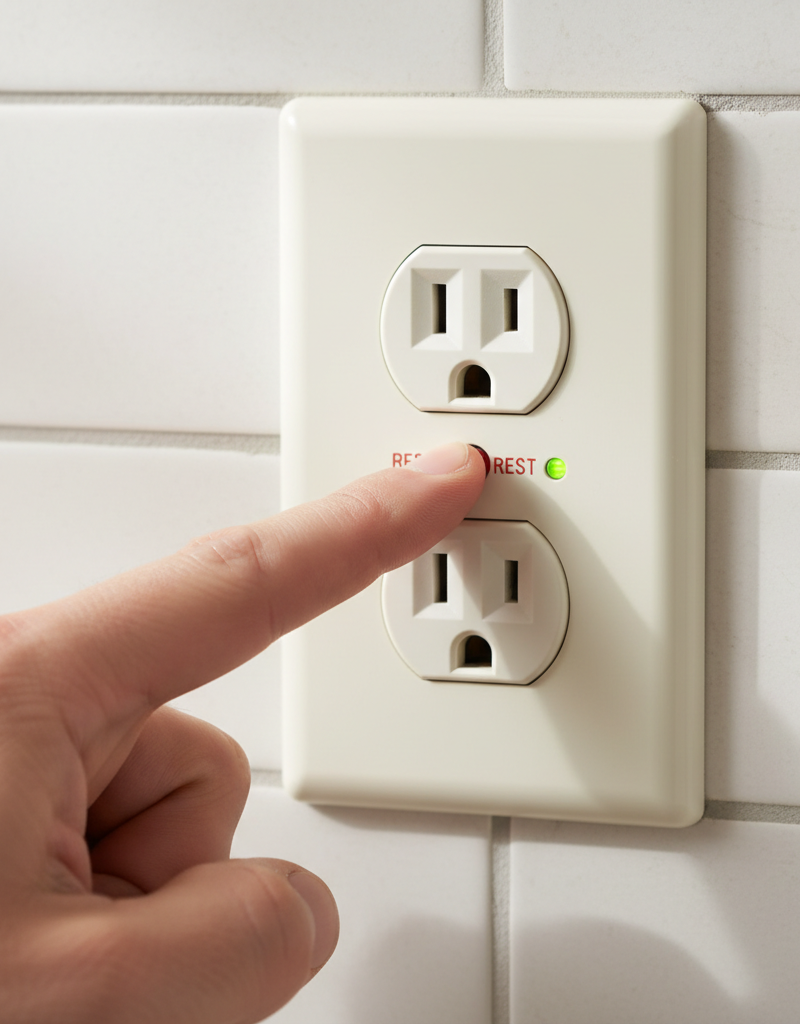
*   **Action:** Disconnect all appliances, lamps, and chargers from the non-resetting GFCI outlet and any other outlets connected to it (often called 'downstream' outlets). Look closely for any visible signs of damage to appliance cords or plugs. Even a small nick can cause a ground fault. Once everything is unplugged, firmly press the 'RESET' button on the GFCI. Listen for a click and check if it stays in.
*   **If it resets:** This indicates one of your unplugged devices was causing a ground fault. Systematically plug appliances back in, one at a time, resetting the GFCI after each one, until you find the culprit. Discard or repair the faulty appliance.
*   **If it doesn't reset:** Proceed to the next step, as the issue is likely not with a connected appliance itself, but with the wiring or the GFCI unit.
2. Locate the Breaker — Ensure the circuit breaker isn't tripped.
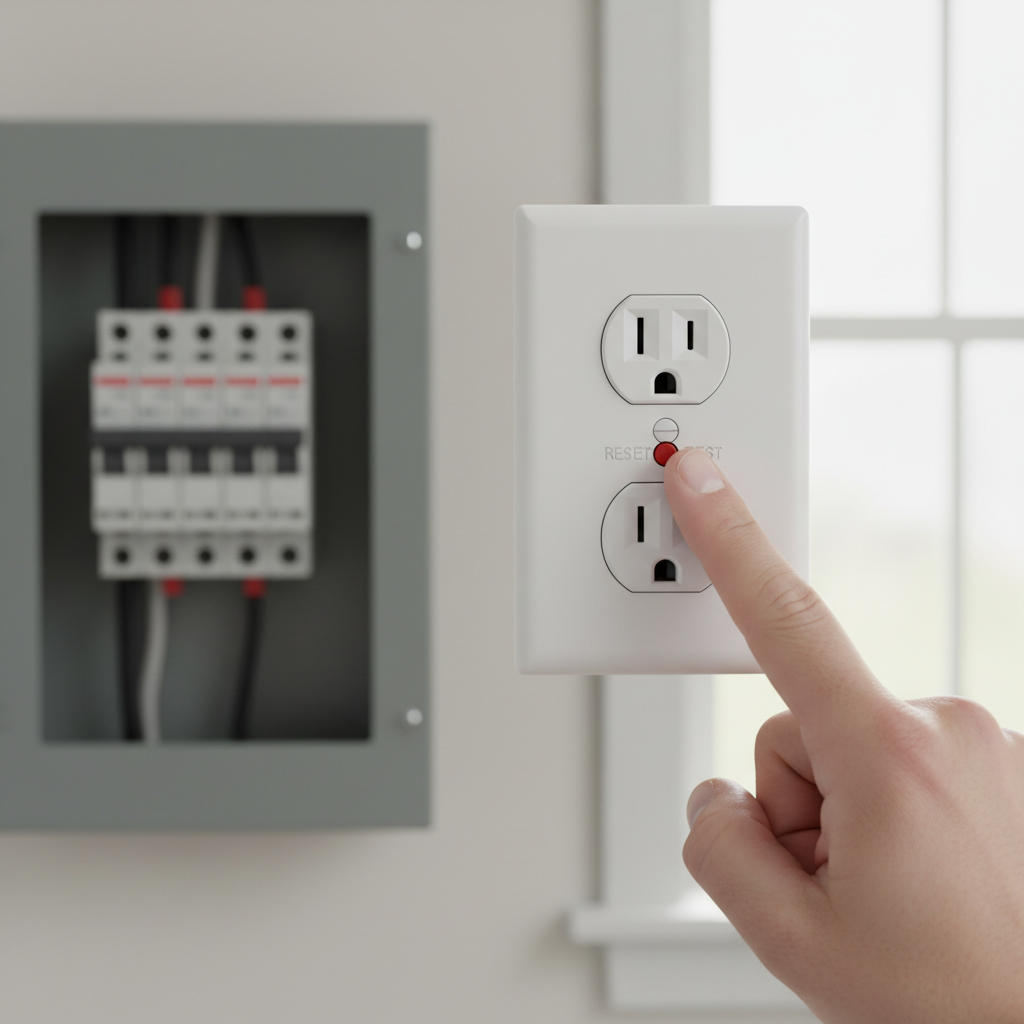
*   **Action:** Head to your electrical panel. Locate the circuit breaker corresponding to the non-resetting GFCI circuit. Sometimes, a breaker can trip without looking fully off. Firmly push the breaker all the way to the 'OFF' position, then firmly back to the 'ON' position. This ensures a full reset of the breaker. Even if the GFCI's primary job is ground fault protection, it also relies on proper circuit power.
*   **Safety Note:** Always be careful around your electrical panel. If you are unsure which breaker it is, turn off the main breaker to the entire house before working on the GFCI outlet itself, or call an electrician.
3. Test the GFCI Itself — Determine if the GFCI is faulty.
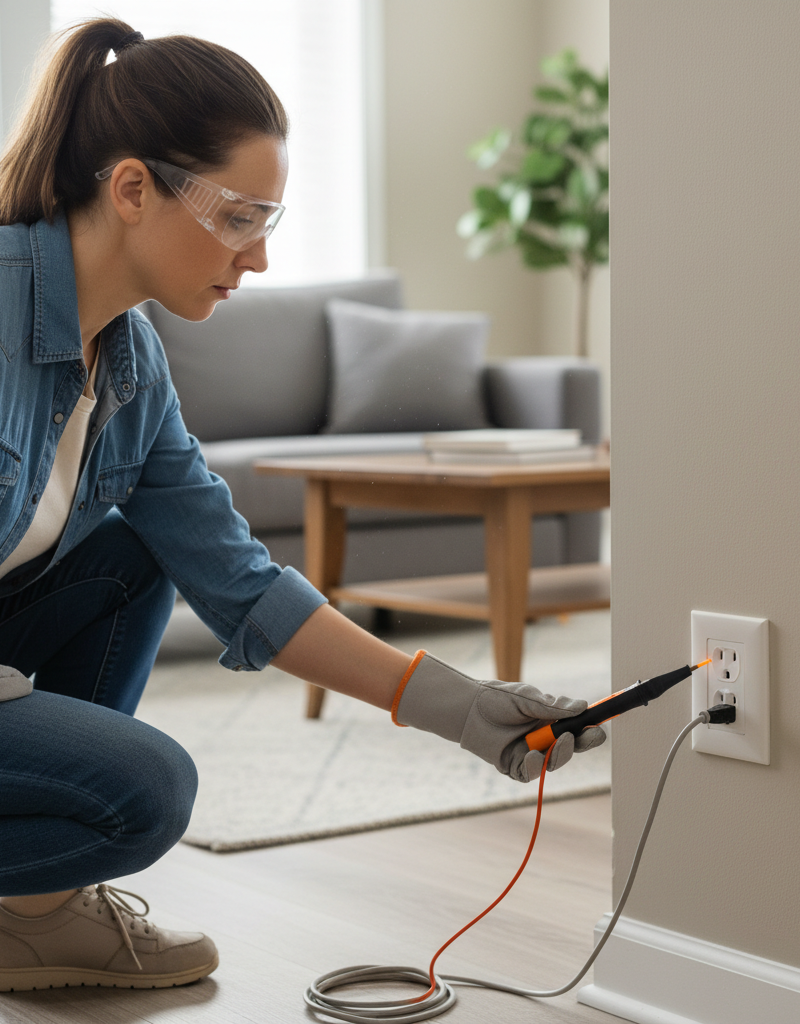
*   **Action:** If the GFCI still won't reset after checking for ground faults and the circuit breaker, it's time to test the outlet itself. With the breaker for the circuit *OFF*, carefully use a Phillips screwdriver to loosen the screw holding the GFCI's faceplate and remove the faceplate. Then, unscrew the two screws holding the outlet to the electrical box. Gently pull the GFCI out of the box, being careful not to touch any exposed wires. With a non-contact voltage tester, confirm there's no power to any of the wires. Look for any burn marks, loose connections, or damage to the GFCI unit itself. If it appears visibly damaged, it's likely the problem.
*   **Tools:** Phillips screwdriver, non-contact voltage tester.
*   **If you see damage:** The GFCI is likely faulty and needs replacement. See Step 5.
*   **If no visible damage:** Proceed, but keep GFCI replacement in mind.
4. Examine Wiring Connections — Check for loose or corroded wires.
*   **Action:** With the power still *OFF* at the breaker and the GFCI pulled out of the electrical box (as in Step 3), carefully inspect all wire connections to the GFCI. Look for loose wires, frayed insulation, or signs of corrosion on the terminals. Ensure the 'LINE' wires (incoming power from the panel) are connected to the 'LINE' terminals and the 'LOAD' wires (outgoing power to other outlets or devices) are connected to the 'LOAD' terminals. Incorrect wiring, especially swapping 'LINE' and 'LOAD', will prevent a GFCI from resetting. Gently pull on each wire connected to the terminals to ensure it's securely fastened.
*   **Safety Note:** Never work on live electrical circuits. Always confirm the power is off with a voltage tester before touching any wires.
*   **If wires are loose/corroded:** Carefully tighten any loose screw terminals or clean off corrosion with fine-grit sandpaper. Re-strip damaged wire ends if necessary and ensure they are fully inserted into the terminals and securely tightened. Make sure no bare copper is exposed beyond the terminal screw head.
5. Replace a Faulty GFCI — Install a new GFCI if it's the culprit.
*   **Action:** If you've exhausted all other options and the GFCI still won't reset, it's highly probable the unit itself is faulty. With the circuit breaker *OFF*, disconnect all wires from the old GFCI, carefully noting which wires were connected to 'LINE' and 'LOAD' terminals. It's often helpful to take a photo before disconnecting. Connect the corresponding wires to the new GFCI outlet, ensuring the 'LINE' wires go to the 'LINE' terminals (usually on the bottom, often covered by a yellow sticker that needs to be removed) and 'LOAD' wires go to the 'LOAD' terminals (usually on the top). Use a wire stripper to ensure about 3/4 inch of insulation is removed for a secure connection under the screw terminals. Once wired, gently push the new GFCI back into the electrical box, secure it with screws, and replace the faceplate. Turn the breaker back on and test the new GFCI.
*   **Tools:** Phillips screwdriver, wire strippers, new GFCI outlet.
*   **Safety Note:** Double-check all connections. Loose connections are a leading cause of electrical problems and safety hazards. Make sure to buy a GFCI with the correct amperage rating (e.g., 15A or 20A) to match your circuit.
6. Address an Overloaded Circuit — Calculated reduction of electrical load.
*   **Action:** Sometimes, a GFCI won't reset because the circuit it protects is temporarily or persistently overloaded. While a standard breaker typically handles overloads, GFCIs can sometimes be sensitive to high inrush currents or cumulative loads. If your GFCI trips immediately after resetting (or won't reset at all) when specific high-power appliances are connected, you might have an overload. Calculate the total wattage of all devices connected to that circuit. For a 15-amp circuit, the safe continuous load is typically around 1440 watts (15 amps * 120 volts * 0.8), and for a 20-amp circuit, it's about 1920 watts (20 amps * 120 volts * 0.8). If your total exceeds this, redistribute appliances to other circuits or use fewer high-demand items simultaneously.
*   **If it's an overload:** Permanently move some appliances to a different circuit or avoid using them simultaneously. Installing additional dedicated circuits for high-draw appliances might be necessary, which is a job for a licensed electrician.
Common Causes
- Ground Fault: This is the most common reason a GFCI trips and won't reset. It means electricity is finding an unintended path to the ground, possibly through water, a damaged appliance, or faulty wiring. Even a minor leak in an appliance can cause this.
- Faulty Appliance: An appliance with internal wiring damage or a heating element starting to fail can create small ground faults, causing the GFCI to trip. Often, these are intermittent at first but become more persistent.
- Overloaded Circuit: While GFCIs primarily protect against ground faults, an excessively overloaded circuit, especially with devices that have a high initial power draw (like certain motors or heaters), can sometimes prevent a GFCI from resetting or cause it to immediately trip again. This isn't its primary function, but it can be a symptom.
- Loose or Incorrect Wiring: Loose connections behind the GFCI or at other outlets on the same circuit can create intermittent faults or resistance, causing the GFCI to malfunction or trip. Incorrectly wired LINE and LOAD terminals are also a frequent culprit, preventing proper operation from the start.
- Internal GFCI Failure: Like any electrical component, a GFCI outlet has a lifespan (typically 10-15 years). Over time, constant tripping, power surges, or general wear and tear can damage its internal sensing and tripping mechanisms, causing it to fail and be unable to reset.
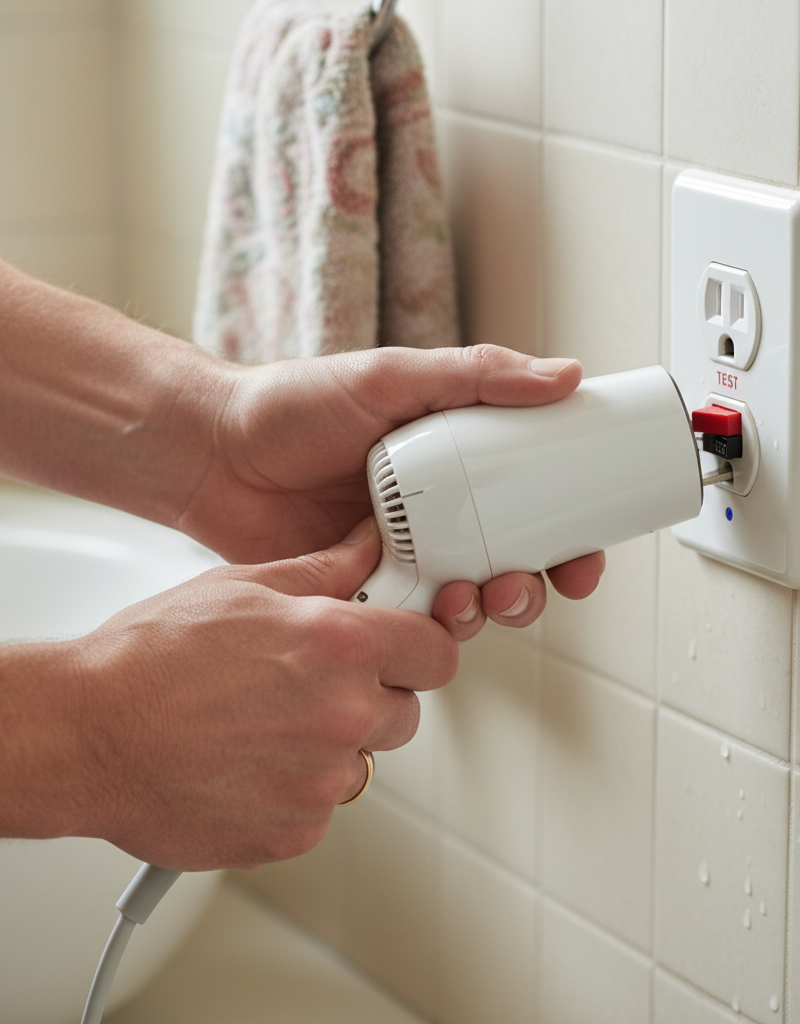
- Moisture Intrusion: In outdoor or bathroom locations, moisture can get into the electrical box or the GFCI mechanism itself, creating a direct path to ground and preventing the GFCI from resetting until it dries out or the moisture source is sealed.
Common Mistakes
- Ignoring Downstream Outlets: Many DIYers focus only on the non-resetting GFCI itself, forgetting that a fault can occur at any regular outlet connected downstream (protected) by that GFCI. Always unplug everything from all outlets connected to the problem GFCI before trying to reset.
- Not Checking the Breaker: Assuming the GFCI is the sole issue, homeowners sometimes forget to check the circuit breaker for that circuit. A tripped breaker, even if it looks only slightly off, must be fully reset before the GFCI can function.
- Swapping LINE and LOAD Wires: This is a very common wiring mistake. The 'LINE' terminals are for incoming power from the electrical panel, and 'LOAD' terminals send power to other outlets on the same circuit. Reversing these will prevent the GFCI from operating correctly, if at all, and it will often refuse to reset. Always refer to the instructions and label the wires if unsure.
- Not Confirming Power is OFF: Working on electrical outlets without verifying the power is off at the breaker with a non-contact voltage tester is a serious safety hazard. Always test, even if you're sure you flipped the right breaker.
- Over-Tightening or Under-Tightening Screws: Terminal screws need to be snug – tight enough for a secure connection (usually 12-14 inch-pounds of torque) but not so tight that they strip the screw or cut the wire. Loose connections can lead to arcing and overheating, while over-tightening can damage the wire.
- Replacing with the Wrong Amperage: GFCIs come in different amperages (e.g., 15A or 20A). Replacing a 20A GFCI with a 15A unit on a 20A circuit can lead to nuisance tripping and is not up to code. Always match the amperage of the existing GFCI and the circuit breaker.
Cost & Time Breakdown
| Task | DIY Cost | Pro Cost | Time |
|---|---|---|---|
| Diagnose Faulty Appliance | $0 | $50–$100 | 5–15 min |
| Reset Breaker / Unplug Items | $0 | $0 | 2–5 min |
| Replace Faulty GFCI Outlet | $15–$30 | $150–$250 | 20–45 min |
| Diagnose Loose Wiring | $0 | $100–$200 | 15–30 min |
| Wiring Correction / Tightening | $0 | $100–$200 | 15–45 min |
| Circuit Load Balancing | $0 | $100–$150 | 10–20 min |
Tips & Prevention
- Monthly GFCI Testing: Press the 'TEST' button on all your GFCI outlets once a month. The GFCI should trip, cutting power. Then, press 'RESET' to restore power. If it doesn't trip or reset, replace it immediately. This simple test confirms the internal mechanism is working.
- Inspect Appliances Regularly: Periodically check appliance cords and plugs for fraying, cracks, or damage, especially anything used near water. Promptly repair or replace damaged appliances.
- Keep Outlets Dry: Ensure GFCI outlets in wet areas (bathrooms, kitchens, outdoors) are protected from moisture. For outdoor outlets, use 'weather-resistant' or 'weather-proof while in use' covers.
- Avoid Overloading Circuits: Be mindful of how many high-wattage appliances are plugged into a single circuit, even if it's GFCI protected. Overloading can lead to nuisance tripping and potentially damage the GFCI or other circuit components.
- Proper Installation: If you're installing a new GFCI, always follow manufacturer instructions carefully, especially concerning LINE and LOAD wiring. If in doubt, have a qualified electrician perform the installation.
- Consider AFCI/GFCI Combinations: In some areas, newer code requires Arc Fault Circuit Interrupters (AFCIs) in addition to GFCIs, or combination AFCI/GFCI breakers/outlets. These offer enhanced protection against different types of electrical faults.
When to Call a Professional
While many GFCI issues are resolvable with DIY steps, there are clear indicators when it's time to call a licensed electrician. If your GFCI won't reset and you detect burning smells, see smoke, or notice scorch marks around the outlet or electrical panel, immediately turn off the main breaker and call an electrician. These are signs of a serious electrical fault or fire hazard. You should also call a pro if, after following all troubleshooting steps, the GFCI still won't reset, as this points to a deeper wiring problem within the walls or at the electrical panel that could be dangerous to diagnose yourself. If you've replaced the GFCI but the new one also refuses to reset, or if the issue is intermittent and you can't identify a consistent cause, an electrician has specialized tools to trace faults and ensure your system is safe and compliant with electrical codes. Any concerns about incorrect wiring, especially if you're uncertain about which wires are LINE and LOAD, also warrant professional help to prevent damage or injury. Do not attempt to rewire your electrical panel or trace faults through walls without proper training and equipment.
Related Articles
Keep troubleshooting with these hand-picked guides from FixlyGuide:
- The Hidden Reason Your GFCI Won't Reset (And It's Not Always a Short) — Uncover the mysterious reasons your GFCI outlet refuses to reset and learn the exact steps to diagnose and fix the problem safely, preventi…
- The Hidden Reason Your Circuit Breaker Keeps Tripping (It's Not Always an Overload) — Discover the often-overlooked causes behind a frequently tripping circuit breaker and learn how to diagnose and fix them safely.
- The 7 Head-Scratching Reasons Your Outlet Died (Even With The Breaker On) — Discover the surprising reasons why an electrical outlet might stop working even when its circuit breaker is fully engaged, and how to safe…
- Why is Your Light Switch Hot? (The Hidden Danger Most Homeowners Miss) — A hot light switch isn't just uncomfortable; it's a critical warning sign of electrical issues that should never be ignored due to fire ris…
- The Hidden Reason Your Extension Cord Keeps Tripping the Breaker (and What to Do) — Discover why your extension cord might be tripping a circuit breaker and learn how to diagnose and fix common electrical issues safely.
- The Hidden Reason Your GFCI Trips (It's Not Always a Faulty Outlet) — A continuously tripping GFCI outlet is a critical safety warning, often indicating moisture, a faulty appliance, or a wiring problem that r…
Frequently asked questions
How do you troubleshoot a GFCI that won't reset?+
Start by unplugging all appliances from the GFCI and any downstream outlets. Then, try to reset the GFCI. If it resets, plug items back in one by one to find the faulty appliance. If it doesn't reset, check your electrical panel for a tripped circuit breaker. If the GFCI still won't reset, the unit itself may be faulty, or there's a wiring issue that might require professional help.
Can a bad appliance cause a GFCI not to reset?+
Yes, absolutely. A faulty appliance is one of the most common reasons a GFCI will trip and refuse to reset. If an appliance has internal damage, frayed cords, or a heating element starting to fail, it can create a 'ground fault' condition, causing the GFCI to engage its safety mechanism. Unplugging all appliances is the first troubleshooting step to rule this out.
How do you know if a GFCI is bad?+
You can suspect a GFCI is bad if it consistently refuses to reset even after you've unplugged all connected devices and verified the circuit breaker isn't tripped. Another sign is if it fails the monthly 'TEST' button function—if you press 'TEST' and it doesn't trip, or if it trips but then won't reset, it's likely gone bad and needs replacement. Visible damage or burn marks also indicate a faulty unit.
Discussion
Loading comments…