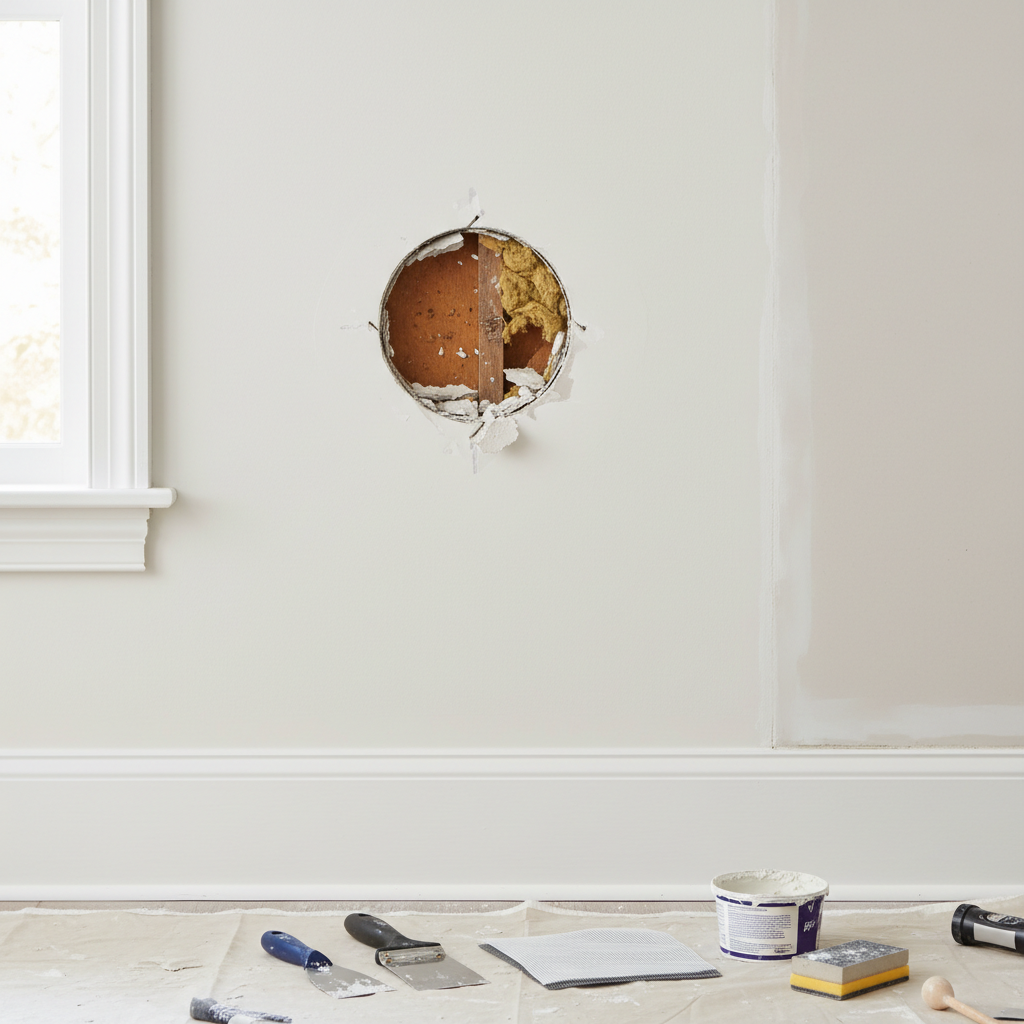
Tools & materials you'll need
Affiliate links- AmazonUtility Knife1 · With a fresh, sharp blade.
- AmazonCarpenter's Square or Ruler1 · For making straight, square cuts.
- AmazonPutty/Taping Knives1 set · A 6-inch knife for setting, and 10-inch and 12-inch knives for feathering.
- AmazonSanding Sponges2 · Medium and fine-grit.
- AmazonSafety Glasses1 · Crucial for eye protection.
- AmazonDrywall Sheet (2x2 ft)1 · Must be the same thickness as your existing wall (usually 1/2-inch).
- AmazonAll-Purpose Joint Compound1 small tub · For setting the patch and the first coat.
- AmazonTopping Joint Compound1 small tub · Optional but recommended for the smoothest finish coats.
- AmazonPVA Drywall Primer1 quart · Essential for sealing the patch before painting.
- AmazonPaint1 quart · Matched to your existing wall color.
As an Amazon Associate FixlyGuide earns from qualifying purchases — at no extra cost to you. Prices and availability are accurate as of publication and subject to change.
Quick Answer
To patch a softball-sized hole in drywall, you’ll use a "California patch," a self-supporting piece of new drywall. Cut a square of new drywall larger than the hole, then trim the front paper and gypsum but leave the back paper intact to act as a flange. Apply joint compound to the back of the paper flange, press it into the hole, and smooth it out. Finish with two or three more coats of compound, sanding between each, to create a perfectly seamless, invisible repair ready for primer andpaint.
The Problem
A softball-sized hole in your drywall is more than a minor imperfection. It’s a gaping issue that draws the eye, disrupts the smooth plane of your wall, and can even compromise your home's insulation and soundproofing. This isn't a simple nail hole you can spackle over. The damage goes through the entire thickness of the drywall, leaving nothing behind for a simple filler to bond to. These larger holes can happen from anything: a doorknob thrown open with too much force, roughhousing that gets out of hand, or an accident while moving furniture. The result is a crater in your wall that can look intimidating to fix. A standard adhesive mesh patch often results in a noticeable hump on the wall, and simply trying to fill a hole this big with joint compound is a recipe for disaster; the compound will shrink, crack, and likely fall right out. You need a structural solution, a way to bridge the gap with a solid backing that integrates perfectly with the existing wall surface. A poorly executed patch is almost as bad as the hole itself, creating a visible bulge or a seam that cracks over time, telegraphing the repair through your final coat of paint.
How It Works
The secret to an invisible repair for a softball-sized hole is the "California patch," also known as a "butterfly patch." This professional technique creates a self-supporting patch from a piece of new drywall, eliminating the need for adding wood backing strips inside the wall. The magic lies in how you prepare the patch. You start with a square of drywall larger than the hole. You then score the back of this new piece, about two inches from the edge on all four sides, and snap off the gypsum, but—and this is the key—you leave the front face paper intact. This creates a flange of paper around the central, solid gypsum core of your patch. The gypsum core is cut to fit snugly inside the hole, while the paper flange overlaps onto the surrounding wall surface. You apply joint compound to the back of this paper flange and press the patch into place. The compound acts as an adhesive, "gluing" the paper flange to the existing wall. This method provides immense strength and tapered edges, making it far superior to a simple mesh patch. The paper flange, embedded in mud, creates a natural feathering effect, allowing you to blend the repair seamlessly into the wall with subsequent coats of compound. Because the patch is made of the same material as the wall, it expands and contracts at the same rate, drastically reducing the chances of cracks appearing later.
Step-by-Step Fix
-
Prepare the Hole: Use a utility knife to clean up the edges of the hole, removing any loose paper or crumbling gypsum. Then, use a carpenter's square or a ruler to draw a square around the hole that is slightly larger than the widest part of the damage. Score these lines with your utility knife and carefully cut out the square section of damaged drywall. This gives you a clean, symmetrical opening to work with.
-
Cut the Patch: Cut a new piece of drywall that is about 4 inches wider and 4 inches taller than the square hole you just made. For instance, if you cut a 6x6-inch hole, your new piece should be 10x10 inches.
-
Create the "California Patch": On the back (gray paper side) of your new drywall piece, use your ruler and a pencil to measure and mark a line 2 inches in from all four edges. This should create a central square that is the exact size of the hole you cut in the wall (e.g., a 6x6-inch square in the center of your 10x10-inch patch).
-
Score and Snap: Using your utility knife, score along the pencil lines you just drew on the back of the patch. Apply firm pressure to cut through the back paper and into the gypsum core. Carefully snap the drywall along the score lines, breaking the gypsum away from the front paper. Peel the broken gypsum pieces off, leaving a 2-inch paper flange around the central gypsum square. Be very careful not to tear this front paper.
-
Test Fit: Check that your patch fits correctly. The central gypsum square should fit snugly into the hole in the wall, and the paper flanges should lie flat against the surrounding wall surface. Trim the gypsum core slightly if the fit is too tight.
-
Apply First Coat of Compound: Using a 6-inch putty knife, apply a thin, even layer of all-purpose joint compound around the perimeter of the hole on the wall, covering an area slightly larger than the paper flange. Then, apply a generous amount of compound to the back side of the paper flanges on your patch.
-
Set the Patch: Gently press the patch into the hole. The gypsum core goes into the hole, and the mudded paper flanges adhere to the wall. Using your 6-inch knife, and starting from the center of the patch, press down firmly and wipe away the excess compound that squeezes out. Work from the center outwards in all four directions. The goal is to embed the paper tape fully and remove all air bubbles. The paper flange should be flat against the wall.
-
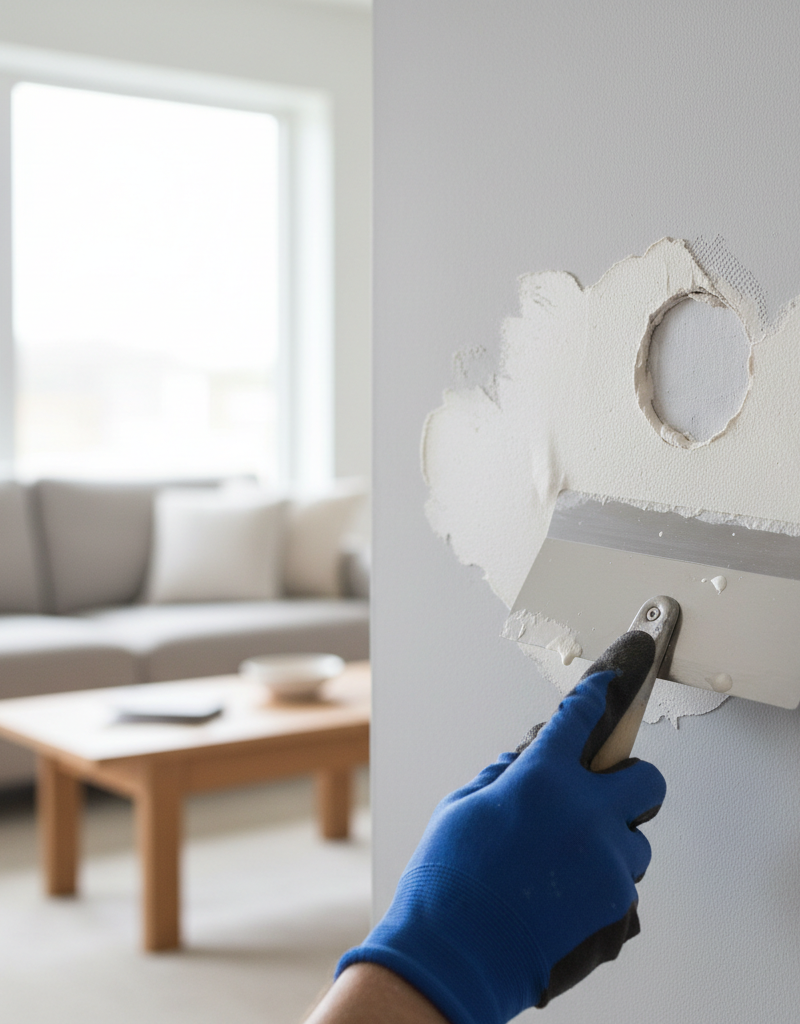
First Skim Coat: Immediately after setting the patch, apply a thin skim coat of joint compound over the entire patch and the paper flanges, extending about 2 inches beyond the edge of the paper. Use your 10-inch taping knife for a wider, smoother application. The goal is to just cover the paper. Don't try to build it up too much on this first coat.
-
Feather the Edges: Let the first coat dry completely (typically 12-24 hours). Once dry, lightly sand the surface with a medium-grit sanding sponge to knock down any high spots or ridges. Now, apply a second, wider coat of topping compound using your 12-inch taping knife. This coat should extend another 3-4 inches beyond the edges of the first coat. Use long, smooth strokes to feather the edges into the wall surface. The center of your patch will have the most mud, tapering to nothing at the edges.
-
Final Coat and Sanding: Let the second coat dry completely. Inspect the patch. If you still see any seams or imperfections, apply a very thin final skim coat, feathering it even wider than the previous coat. Let it dry completely. Now, using a fine-grit sanding sponge or 220-grit sandpaper, lightly sand the entire repair. Use a light touch and sand in a circular motion to blend everything perfectly. When you run your hand over the patch, you should not be able to feel where the patch ends and the wall begins.
-
Prime and Paint: Wipe away all sanding dust with a damp cloth and let it dry. Apply a coat of drywall primer (like PVA primer) over the entire patched area. This seals the porous joint compound and ensures the final paint sheen will be uniform. Once the primer is dry, you can paint the wall. You will likely need two coats of paint to match the surrounding area.
Common Causes
- Doorknob Impact: The most frequent cause. A door without a stopper is swung open with force, and the doorknob punches a perfect, often softball-sized, hole in the wall.
- Furniture Accidents: Bumping a sharp corner of a desk, chair, or bed frame into the wall during moving or rearranging can easily cause significant damage.
- Roughhousing: Accidental falls, thrown toys, or general horseplay are common culprits, especially in homes with children.
- Failed Wall Anchors: Attempting to hang a heavy object with an inadequate wall anchor can lead to the anchor pulling out a large chunk of drywall.
Common Mistakes
- Using a Mesh Patch: For a hole this large, a self-adhesive mesh patch will almost always leave a visible hump after it's mudded over. It lacks the rigidity for a truly flat repair.
- Not Squaring the Hole: Trying to patch an irregular, jagged hole makes it much harder to create a clean, strong repair. Taking the time to cut a neat square is crucial.
- Making the Patch Too Small: The paper flanges are essential for strength and blending. If they are too narrow, the patch is more likely to crack at the seams.
- Over-Sanding: Aggressive sanding, especially with a power sander, can chew through the joint compound and scuff the paper face of the drywall, creating a fuzzy texture that shows through paint.
- Skipping Primer: Painting directly over joint compound will result in "flashing," where the patched area has a different sheen or texture than the rest of the wall because the porous compound absorbs paint differently.
- Applying Coats Too Thickly: Piling on thick layers of joint compound will lead to excessive shrinkage, cracking, and a much longer drying time. Thin, multiple coats are the key to a professional finish.
Cost & Time Breakdown
| Item | Cost (DIY) | Time |
|---|---|---|
| Small Drywall Sheet | $10 - $15 | 10 mins |
| Joint Compound (All-Purpose & Topping) | $15 - $25 | 10 mins |
| Taping Knives (6", 10", 12") | $20 - $35 | - |
| Sanding Sponges | $5 - $10 | 30-45 mins |
| Utility Knife & Square | $15 - $25 | 5 mins |
| Primer & Paint | $20 - $40 | 2-3 hours |
| Total | $85 - $150 | 3-4 hours (plus drying time) |
Note: Total time does not include the 24-48 hours of drying time required between coats of compound and before painting.
Tips & Prevention
- Install Door Stops: The best prevention for doorknob holes is a $3 door stop. Install them on every door. Hinge-pin stops, baseboard stops, and wall-mounted bumpers are all effective.
- Use Corner Guards: In high-traffic areas or on outside corners, clear plastic corner guards can protect drywall from bumps and scrapes.
- Invest in Good Taping Knives: Flexible, high-quality blue steel or stainless steel knives make a huge difference in your ability to feather edges smoothly.
- Use Topping Compound for Final Coats: While all-purpose compound can be used for all steps, topping compound is lighter, smoother, and easier to sand, making it ideal for the final one or two coats for the smoothest possible finish.
- Use a Bright Light: When sanding, hold a bright work light at a low angle to the wall. This will cast shadows across any tiny ridges or imperfections, showing you where you need to sand more.
- Clean Your Tools: Scrape your taping knives clean immediately after use. Dried bits of old mud on your knife will create streaks and gouges in your fresh coat.
When to Call a Professional
While patching a softball-sized hole is a very achievable DIY project, there are situations where calling a professional drywall contractor is the better choice. If the hole is part of a larger area of damage, such as from water intrusion, a professional should assess the extent of the problem first. Water damage often requires replacing a much larger section of drywall and insulation to prevent mold growth. If the hole is in a ceiling, the repair is physically more difficult and messy. If your home has plaster walls instead of drywall, the repair process is entirely different and requires specialized skills. Furthermore, if you are simply not comfortable with the multi-step process of taping and mudding, or if you need a perfect, guaranteed finish for a highly visible area, a pro can get the job done faster and with flawless results. A professional will typically charge between $150 and $350 to patch a hole of this size, which includes all materials and paint matching. If the damage involves plumbing or electrical wiring within the wall, you MUST call a licensed plumber or electrician before any drywall repair begins.
Safety First
Always wear safety glasses to protect your eyes from debris and dust, especially during demolition and sanding. A dust mask (N95 recommended) is crucial when cutting drywall and sanding joint compound, as the dust can be harmful to your lungs. Use a sharp blade in your utility knife and always cut away from your body. If the damaged area is near an electrical outlet or switch, turn off the power to that circuit at your breaker panel before you begin cutting into the wall.
Related Articles
Keep troubleshooting with these hand-picked guides from FixlyGuide:
- That Drywall Hole Isn't Just Ugly, It's a Bat Signal — Learn the pro-approved method for patching drywall holes of any size. We cover the surprising science behind a lasting repair and common mi…
- How to Replace a Deadbolt Lock: A DIY Guide — Learn how to replace a deadbolt lock yourself with this easy-to-follow guide, improving your home security in under an hour.
- Why Your Hardwood Floors Have Gaps in Winter (And When to Worry) — Seeing gaps in your hardwood floors this winter? It's likely caused by low indoor humidity making the wood shrink. Learn what's normal, how…
- That Crooked Crown Molding? Your Ceiling Is Lying — Discover the surprising reason your perfectly level crown molding still looks crooked. It's not your installation—it's an optical illusion…
- Why Your Baseboard is Gapping (and How to Fix It for Good) — Seeing a gap between your baseboard and wall? Learn why this happens, from seasonal wood movement to installation errors, and get the lasti…
- The 4-Inch Drywall Hole Fix: Why Spackle Alone Always Fails — Learn the right way to patch a small drywall hole (up to 4 inches) to ensure a strong, invisible repair that spackle alone can't achieve.
Get the print-ready PDF of this guide
A clean, ad-free, printable version you can keep on your phone or pin to the workshop wall. We'll also send occasional weekly tips matched to your home situation.
- Print-optimized layout
- Tools, materials & every step included
- Unsubscribe anytime
Frequently asked questions
Can I use a mesh patch for a softball-sized hole?+
It's not recommended. For a hole this large, a mesh patch tends to create a noticeable hump on the wall because it lacks the rigidity of a drywall patch. A California patch provides a much flatter, stronger, and more seamless repair.
How long does it take for the joint compound to dry?+
Drying time depends on the thickness of the application, humidity, and temperature. Typically, each coat of joint compound will need 12 to 24 hours to dry completely before you can sand or apply another coat.
What's the difference between all-purpose and topping joint compound?+
All-purpose compound is a good all-around choice for taping and filling. Topping compound is a lighter-weight mud that is easier to sand and provides a smoother finish, making it ideal for the final one or two coats of your patch.
Why did my drywall patch crack?+
Cracking is usually caused by applying the joint compound too thickly, which causes it to shrink as it dries. It can also happen if you don't use enough compound to properly embed the paper tape flange, leading to a weak joint. Always apply multiple thin coats for the best results.
Do I really need to prime the patch before painting?+
Yes, absolutely. Joint compound is very porous and absorbs paint differently than the surrounding wall. If you don't prime first, the patched area will look dull or have a different texture, a problem known as 'flashing.' A PVA drywall primer is inexpensive and ensures a uniform paint finish.
Discussion
Loading comments…