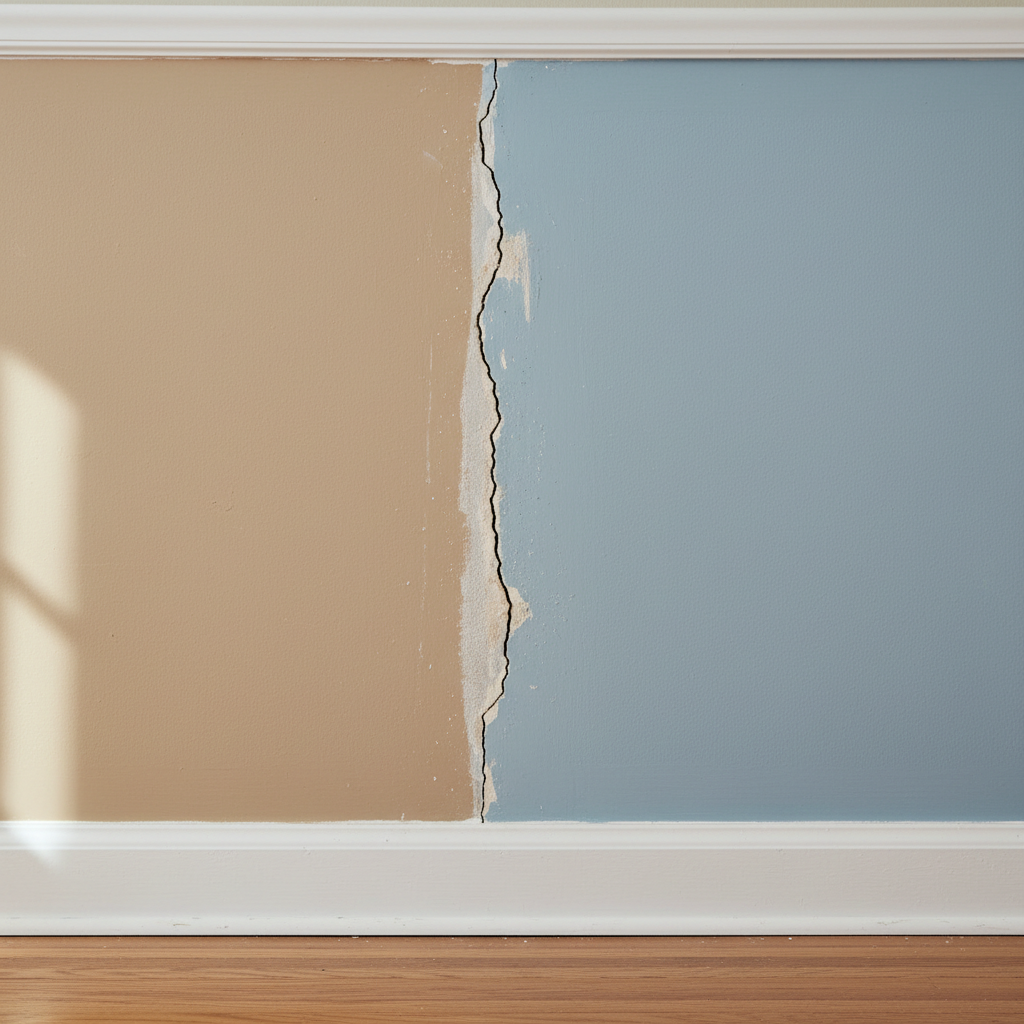
Tools & materials you'll need
Affiliate linksAs an Amazon Associate FixlyGuide earns from qualifying purchases — at no extra cost to you. Prices and availability are accurate as of publication and subject to change.
Quick Answer
That recurring drywall crack in the corner isn't a drywall failure; it's a symptom of structural movement. The wood framing of your house is subtly shifting due to changes in temperature, humidity, or settling, and the rigid drywall corner can't absorb the stress. The crack will keep returning until the underlying movement is accounted for with a more flexible repair.
The Problem
You’ve patched it once, maybe three times. Each time, you follow the steps: you apply joint compound, sand it smooth, prime, and paint. For a few weeks, or maybe even a few months, it looks perfect. Then, slowly, a hairline fracture appears, a ghost of the problem you thought you’d solved. Soon enough, the crack is back in its full glory, mocking your hard work. This repeating drywall crack, almost always on an inside corner where a wall meets a ceiling or another wall, is one of the most frustrating and misunderstood home repairs. You’re not doing it wrong; you’re just fixing the symptom, not the cause. The drywall itself is rarely the problem. The real issue is that your house is alive—it moves.
How It Works
Your home's skeleton is a frame, typically made of wood studs and joists. This wood is hygroscopic, meaning it absorbs and releases moisture from the air. When the air is humid, a wood stud can expand by as much as 1/4 inch across its width. When the air is dry, it shrinks. Now, multiply that small movement across dozens of studs and joists. This is why you hear your house creaking and groaning at night. Seasonal changes are the biggest culprit. In winter, heating systems dry out the air, causing the framing to shrink. In summer, humidity makes it swell. This is especially pronounced in the attic, where temperature and humidity swings are extreme. The bottom chord of your roof trusses can move up and down seasonally ("truss uplift"), pulling the ceiling drywall away from the wall drywall and creating that classic corner crack. Your home’s foundation also settles over time, causing subtle shifts throughout the entire structure. The rigid, unforgiving nature of a standard drywall corner, which is just paper tape embedded in hardening mud, simply cannot handle this perpetual push and pull. It’s like trying to glue two moving objects together with a brittle adhesive. Eventually, the weakest point—the taped seam—gives way, and the crack reappears.
Step-by-Step Fix
To fix a recurring corner crack, you need a solution that can accommodate movement. This 10-step process uses a more flexible, modern repair system.
-
Safety First: Put on your safety glasses and dust mask. Drywall dust is a serious irritant. Lay down drop cloths to protect your floors and furniture.
-
Remove the Old Tape: Using a utility knife, score along both edges of the old drywall tape. Carefully peel and scrape all of it out of the corner. This is the most crucial step. You need to get back to the bare drywall. A 5-in-1 tool can be very helpful here for scraping.
-
Widen the Gap (Slightly): Use the point of your utility knife to gently "V-groove" the corner joint. You want to open up a small channel, about 1/8 inch wide, where the two sheets of drywall meet. This removes any loose, crumbly gypsum and gives the new compound a better grip.
-
Vacuum and Clean: Thoroughly vacuum the corner and surrounding area to remove all dust and debris. Wipe it down with a damp cloth and let it dry completely. A clean surface is non-negotiable for good adhesion.
-
Apply a Bead of Flexible Caulk: This is the secret step most DIY-ers miss. Apply a very thin, continuous bead of paintable, flexible caulking (like a siliconized acrylic latex) directly into the corner V-groove you just cleaned. Tool it with your finger to press it into the joint. This acts as a microscopic expansion joint, a first line of defense against movement.
-
First Coat of Mud: Apply a thin layer of setting-type joint compound (hot mud) to both sides of the corner, feathering it out about 2 inches from the center. Hot mud is stronger and shrinks less than pre-mixed compound.
-
Embed a Flexible Tape: Instead of standard paper tape, use a modern composite or paper-faced flexible corner bead. These products have a plastic or metal core that is more forgiving of movement. Cut the tape to length, fold it along its centerline, and press it firmly into the wet compound with a corner tool or putty knife. Ensure there are no air bubbles trapped underneath.
-
Wipe Down Excess: Immediately apply a tight skim coat of compound over the tape to fully embed it. Use a flexible corner tool to wipe down the excess, leaving a clean, sharp corner. The goal is to fill the void, not build up a thick layer.
-
Apply Finish Coats: After the hot mud has fully set (usually 90 minutes, check the bag), you can switch to all-purpose joint compound. Apply two more thin coats, each one wider than the last, feathering the edges out to 8-10 inches. This wide feathering will make the repair invisible. Allow each coat to dry completely before applying the next.
-
Sand, Prime, and Paint: Once the final coat is dry, lightly sand the entire area with fine-grit sandpaper (220-grit) on a sanding sponge. The goal is a glassy-smooth surface that blends perfectly with the existing wall. Wipe away all dust, apply a coat of high-quality PVA drywall primer, and then paint to match your wall color.
Common Causes
- Truss Uplift: The most common cause of ceiling/wall corner cracks. The bottom chords of your roof trusses bow upwards in winter due to temperature and moisture differences between your attic and living space, pulling the ceiling away from the walls.
- New Construction Settling: A new home can take 2-5 years to fully settle into its foundation. As it does, the framing shifts, and drywall cracks are a common, almost unavoidable, side effect.
- Moisture and Humidity Swings: Wood framing expands in the humid summer and contracts in the dry winter. This constant back-and-forth movement puts immense stress on rigid drywall joints.
- Inadequate Framing Support: If a wall is built on a subfloor that has too much flex or "bounce," the constant movement will eventually crack the corners. This could be due to joists that are undersized or spaced too far apart.
- Improper Initial Taping: If the original drywall finishers didn't use enough compound, didn't embed the tape properly, or used the wrong type of tape, the joint will be weak and prone to failure from the start.
- Nearby Structural Stress: A settling pier, a failing header over a door, or even repeated slamming of a nearby door can transfer vibrations and stress to the framing, which will manifest as a crack in the nearest corner.
Common Mistakes
- Just Spackling Over It: Applying lightweight spackle is a temporary cosmetic fix. It has no structural strength and will crack as soon as the wall moves.
- Not Removing the Old Tape: Simply mudding over the failed tape is like putting a band-aid on a splinter. You haven’t addressed the underlying failure, and the crack will telegraph through the new mud.
- Using Mesh Tape in a Corner: Fiberglass mesh tape is great for flat seams but is not designed for the stress of an inside corner. It does not fold well and lacks the tensile strength of paper or composite tape.
- Applying Compound Too Thickly: Thick layers of joint compound are more likely to shrink, crack, and create a visible hump on the wall. Several thin, feathered coats are always better.
- Skipping Primer: Painting directly over fresh joint compound will result in a dull, lifeless spot on your wall, a phenomenon called "flashing." The porous compound sucks the sheen out of the paint. Primer seals the surface for an even finish.
Cost & Time Breakdown
This breakdown assumes you are repairing a single 8-foot corner crack.
| Item | DIY Cost | Professional Cost | DIY Time | Pro Time |
|---|---|---|---|---|
| Materials (Tape, Mud, Caulk) | $30 - $50 | $50 - $75 | 1 hour | N/A |
| Tools (if not owned) | $40 - $75 | Included | N/A | N/A |
| Labor & Multiple Visits | Free (your time) | $250 - $500 | 4-6 hours | 2-3 hours |
| Total | $70 - $125 | $300 - $575 | 5-7 hours | 2-3 hours |
Note: Time is spread across 2-3 days to allow for drying time between coats.
Tips & Prevention
- Control Indoor Humidity: Run a humidifier in the winter and a dehumidifier in the summer to minimize the expansion and contraction of your home's wood frame. Aim for a stable 30-50% humidity level year-round.
- Use High-Quality Materials: When repairing, don't skimp. Setting-type compound for the base coat and a flexible composite tape will provide a much more durable repair than standard materials.
- Check Your Gutters: Ensure your gutters and downspouts are clear and directing water far away from your foundation. Saturated soil can lead to foundation movement and settling, which causes cracks throughout the house.
- Install Crown Molding: For persistent ceiling-to-wall cracks caused by truss uplift, installing crown molding can be an elegant solution. Fasten the molding to the ceiling only, allowing it to float over the wall. This hides the crack and allows the ceiling to move independently.
When to Call a Professional
While a single, recurring hairline crack in a corner is usually cosmetic, there are times when you should absolutely call a professional. If the crack is wider than 1/4 inch, if one side of the crack is displaced or out of plane with the other, or if it runs diagonally from the corner of a door or window, it could signal a more serious structural issue. Look for other warning signs: doors and windows that suddenly stick or won't close, bouncy floors, or visible cracks in your foundation. If you see any of these, call a licensed general contractor or even a structural engineer for an evaluation. The cost of an inspection is minimal compared to the potential cost of ignoring a significant foundation or framing problem. For complex issues like truss uplift, a professional drywall contractor will have the experience to implement the right floating corner systems or other advanced repair techniques that are beyond the scope of a typical DIY project. SAFETY NOTE: Any work involving structural framing or foundation repair is not a DIY job and requires a qualified professional.
Related Articles
Keep troubleshooting with these hand-picked guides from FixlyGuide:
- The 5-Minute Trick to Fix a Window That Won't Stay Open (No Tools Needed!) — Discover the surprisingly simple reasons why your window keeps sliding shut and how to fix it in minutes, often without any tools.
- The Hidden Cause of Squeaky Hardwood Floors & The Real Fix — That persistent squeak from your hardwood floors isn't just an annoyance; it's a sign of movement. We'll uncover the hidden causes, from hu…
- That ONE Reason Your Closet Door Keeps Derailing — Stop just putting your sliding closet door back on the track. We reveal the hidden—and surprisingly simple—hardware issue that causes 90% o…
- The 4 Hidden Reasons Your Doorbell Dies (And the 20-Minute Fix) — A non-working doorbell is often caused by simple, hidden issues like a tripped transformer or a corroded button, which homeowners can fix i…
- That Ceiling Stain Isn't a Leak: 5 Hidden Causes — A mysterious ceiling stain can be alarming, especially when there's no active leak. The real culprits are often hidden issues like attic co…
- The 3 Hidden Reasons Your LED Bulbs Die Early (And the Simple Fixes) — LED bulbs promise long life, but often fail prematurely due to hidden electrical issues or incompatible fixtures. Learn the real culprits.
Get the print-ready PDF of this guide
A clean, ad-free, printable version you can keep on your phone or pin to the workshop wall. We'll also send occasional weekly tips matched to your home situation.
- Print-optimized layout
- Tools, materials & every step included
- Unsubscribe anytime
Frequently asked questions
Can I just use flexible caulk to fill the crack and paint over it?+
While it seems like a simple solution, just caulking and painting will leave you with a visible, rubbery line on your wall. It won't look like a proper, seamless corner. Caulk should be used as one component of the repair, inside the joint, not as the final surface.
Is a recurring corner crack dangerous?+
In most cases, a hairline crack that reappears season after season is not structurally dangerous. It's usually a cosmetic issue caused by normal house movement. However, if the crack is wide (more than 1/4 inch) or accompanied by other signs like sticking doors or foundation cracks, it could indicate a more serious problem that warrants a professional inspection.
What is "truss uplift"?+
Truss uplift is a common phenomenon where the bottom chord of roof trusses bows upward during cold weather. The attic space is cold and dry, shrinking the top parts of the truss, while the bottom part is warmer and more humid from the living space below. This differential causes the center of the ceiling to lift slightly, pulling it away from the interior walls and creating cracks at the corners.
How long does a drywall repair take to dry?+
Drying time depends entirely on the type of compound, the thickness of the application, and the humidity in your home. Setting-type compounds (hot mud) harden chemically in 20-250 minutes, depending on the type. All-purpose pre-mixed compound, however, dries through evaporation and can take up to 24 hours for a thin coat to fully dry. Always wait until a coat is completely dry and white before sanding or applying another coat.
Discussion
Loading comments…