Tools & materials you'll need
Affiliate linksAs an Amazon Associate FixlyGuide earns from qualifying purchases — at no extra cost to you. Prices and availability are accurate as of publication and subject to change.
'''
Quick Answer
To spot hail damage, you need to look for more than just obvious holes or leaks. The most common evidence on asphalt shingles are "bruises"—small, often circular, black spots where the protective granules have been knocked off, exposing the dark asphalt beneath. These spots may feel soft or spongy to the touch. You should also inspect soft metal components on your roof system like gutters, downspouts, and turbine vents for dents and dings. Collateral damage to siding, window screens, or your air conditioning unit's fins are also strong indicators that your roof likely sustained damage, even if it isn't immediately visible from the ground.
The Problem
A major hailstorm just rolled through your neighborhood. The cars on the street have a few dings, and your flowerbeds are shredded, but your house seems fine. From the ground, the roof looks intact. The problem is that hail damage is deceptive; it rarely causes an immediate, catastrophic leak. Instead, it acts as a silent timer, starting a countdown to premature roof failure.
Most homeowner insurance policies have a strict time limit for filing a claim after a "loss event," often just six to twelve months. If you don't spot the damage within this window, you forfeit your right to a claim, and the full cost of a premature roof replacement—potentially $10,000 to $25,000 or more—falls squarely on your shoulders. The damage happens in an instant, but the consequences unfold over months or years. Hail strikes knock off the protective ceramic granules from your shingles, exposing the underlying asphalt mat to the sun's harsh UV rays. This UV exposure accelerates the aging of the shingle, causing it to become brittle, crack, and eventually fail, letting water in. By the time you see a water spot on your ceiling, the secondary damage (mold, rotted decking, ruined insulation) has already begun, and your claim window is likely long closed.
How It Works
Understanding how a shingle is constructed is key to understanding how hail damages it. An asphalt shingle isn't just a simple piece of tar paper. It's a sophisticated, multi-layer composite designed to protect your home for decades.
- Fiberglass Mat: The core of a modern shingle is a woven fiberglass mat. This provides the structural integrity, tensile strength, and fire resistance.
- Weathering Asphalt: This fiberglass mat is coated on both sides with a layer of specially formulated, waterproof asphalt. This is the primary barrier that keeps water out of your home.
- Ceramic Granules: The top surface of the shingle is embedded with a dense layer of ceramic-coated mineral granules. These colorful granules are not just for aesthetics. They are the shingle's primary shield against solar radiation. They block UV rays that would otherwise break down the asphalt, causing it to dry out, shrink, and crack. They also add weight, help with fire resistance, and provide a durable surface to walk on.
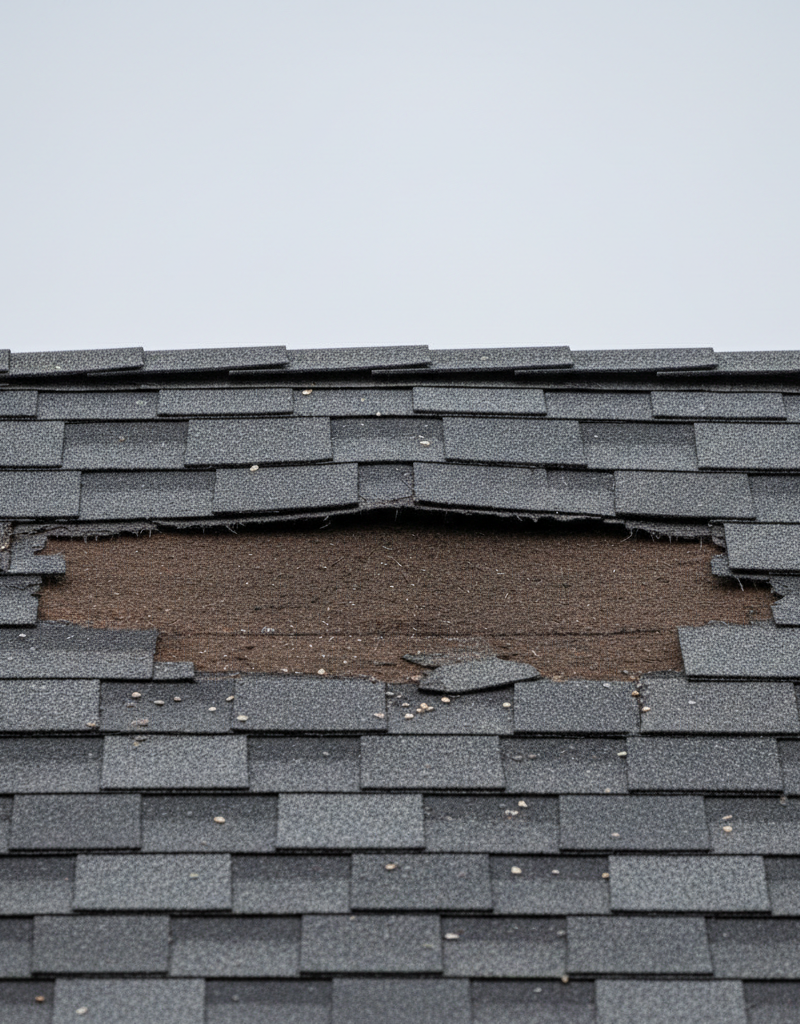
Hail's destructive force is a kinetic impact. When a hailstone strikes the shingle, it acts like a hammer blow. The force of the impact dislodges the protective granules at the point of contact, creating a "bruise." This action doesn't just scrape the granules off; it physically forces them into the asphalt layer, weakening the bond and creating a soft spot. With the granules gone, the black asphalt is directly exposed to the sun. UV radiation begins to degrade this spot immediately, making it brittle. Over a few seasons of heat and cold, this small, bruised spot will expand and contract, eventually forming a crack, then a hole, allowing water to penetrate the shingle and reach your roof deck.
Step-by-Step Inspection
Follow these steps to safely and thoroughly assess your roof for hail damage. Your goal is to gather evidence for a potential insurance claim.
1. Safety First: The Ground Assessment — Before even thinking about a ladder, walk the perimeter of your property. Bring a smartphone or camera. * Look for dents on your car's hood and roof. * Check your air conditioner's metal fins for pockmarks. * Inspect siding (especially aluminum) and window trim for dings. * Examine your mailbox, shed roof, and any other structures. If you find widespread, small impacts, your roof almost certainly has them too. Photograph everything.
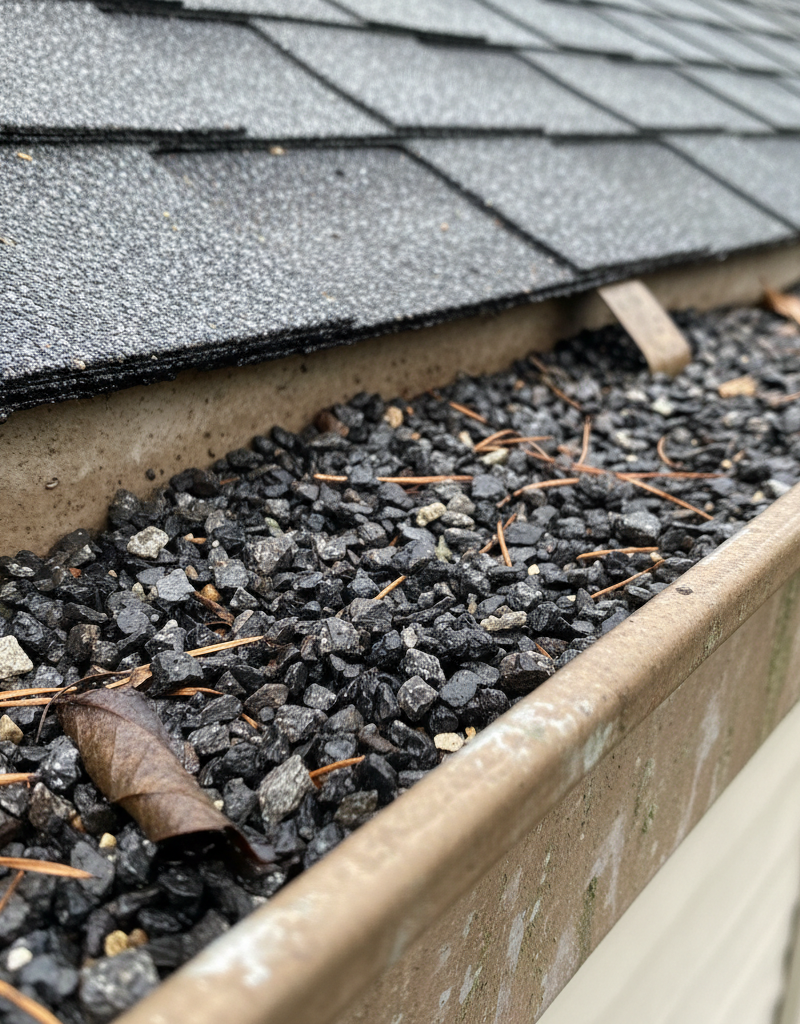
2. Check Gutters and Downspouts — Your gutter system is a fantastic clue. Look for small, distinct dents on the horizontal runs of the gutters and on the softer aluminum of the downspouts. Then, check at the base of your downspouts. A significant accumulation of black mineral granules that looks like coarse sand is a red flag that they've been recently knocked off your shingles.
3. Inspect Vents and Flashing from the Ground — Use a pair of binoculars to get a closer look at your roof from the ground. Scan metal roof vents (turbine, box, or plumbing vents) and the flashing around your chimney. These soft metal components are easily dented by hail as small as a quarter. If you see dents here, it’s a strong sign of hail impact across the entire roof slope.
4. Ladder Setup and Safety Check — If the ground-level evidence is compelling, a roof-level inspection is the next step. Safety is not optional. * CRITICAL SAFETY NOTE: Do not attempt to get on your roof if it is wet, windy, has a steep pitch (anything over a 6:12 slope), or is two or more stories high. In these cases, call a professional roofer for an inspection immediately. * Use a sturdy extension ladder placed on firm, level ground. Follow the 4-to-1 rule: for every four feet of height to the edge of the roof, the base of the ladder should be one foot out. * The ladder must extend at least three feet above the roof eave. Wear clean, soft-soled shoes with good grip. Inform someone you are going on the roof.
5. Mark Your Test Squares — Once safely on the roof, pick a slope that faced the storm. Using sidewalk chalk, mark out a 10-foot by 10-foot square. Insurance adjusters use this standard size to determine the extent of the damage. You should plan to check a square on the front, back, and each side of the roof if possible, as hail can be directional.
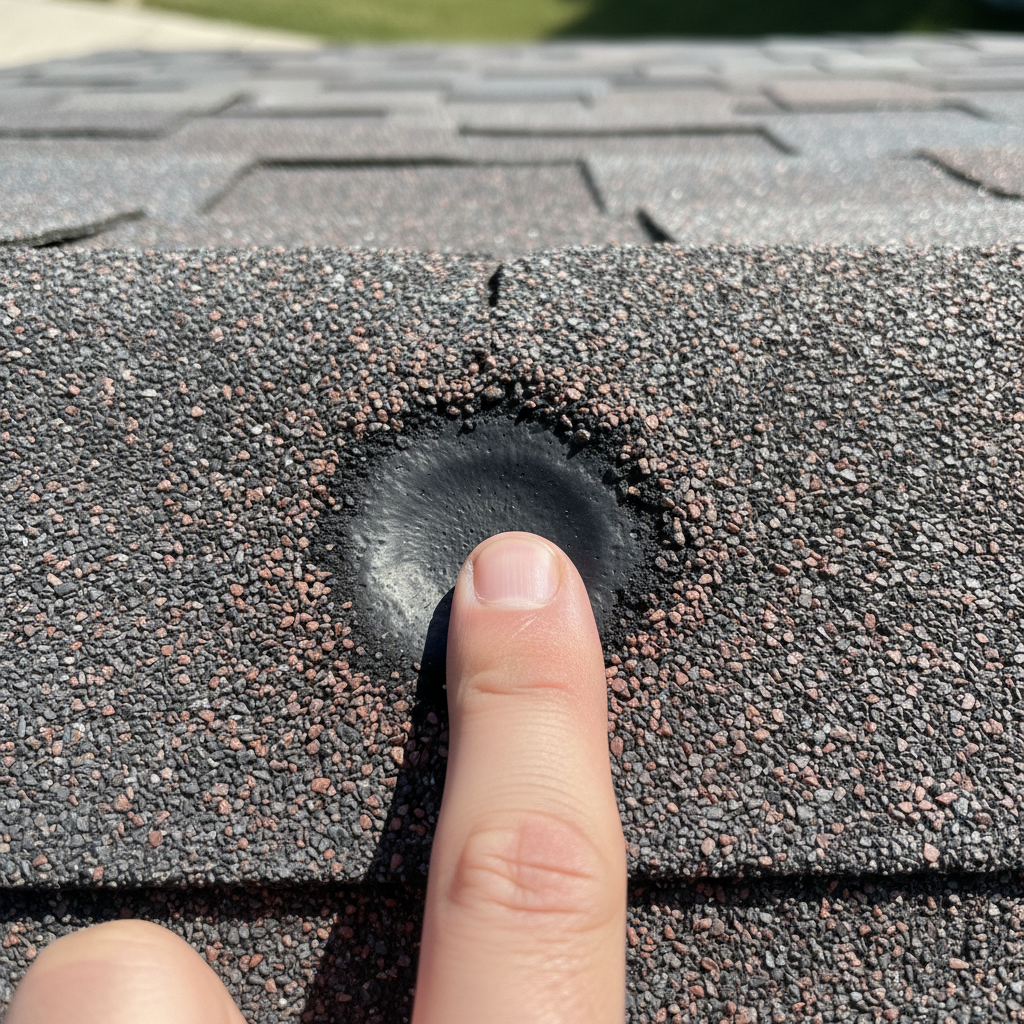
6. Identify Hail "Bruises" on Shingles — Within your test square, look for the tell-tale signs. Hail impacts are characterized by: * Random Pattern: Unlike manufacturing defects, hail hits are randomly scattered. * Circular Shape: They are often round or oval. * Visible Granule Loss: You will see the black asphalt substrate showing through. It looks like a dark polka dot on the shingle. * Soft to the Touch: Gently press on one of the marks. It will often feel soft and spongy, like a bruise on an apple. This is the key differentiator from a simple blister, which is usually hard.
7. Feel for Texture Difference — Gently run your gloved hand across a suspect area versus an area that appears undamaged. The hail-hit sections may feel rougher and you might dislodge loose granules, further indicating a recent impact.
8. Check Ridges and Hips — The ridge cap shingles at the peak of your roof (and the "hips," which are diagnosed ridges) take a more direct, forceful impact from hail. They are often more severely damaged than the field shingles. Inspect them closely for cracks and significant bruising.
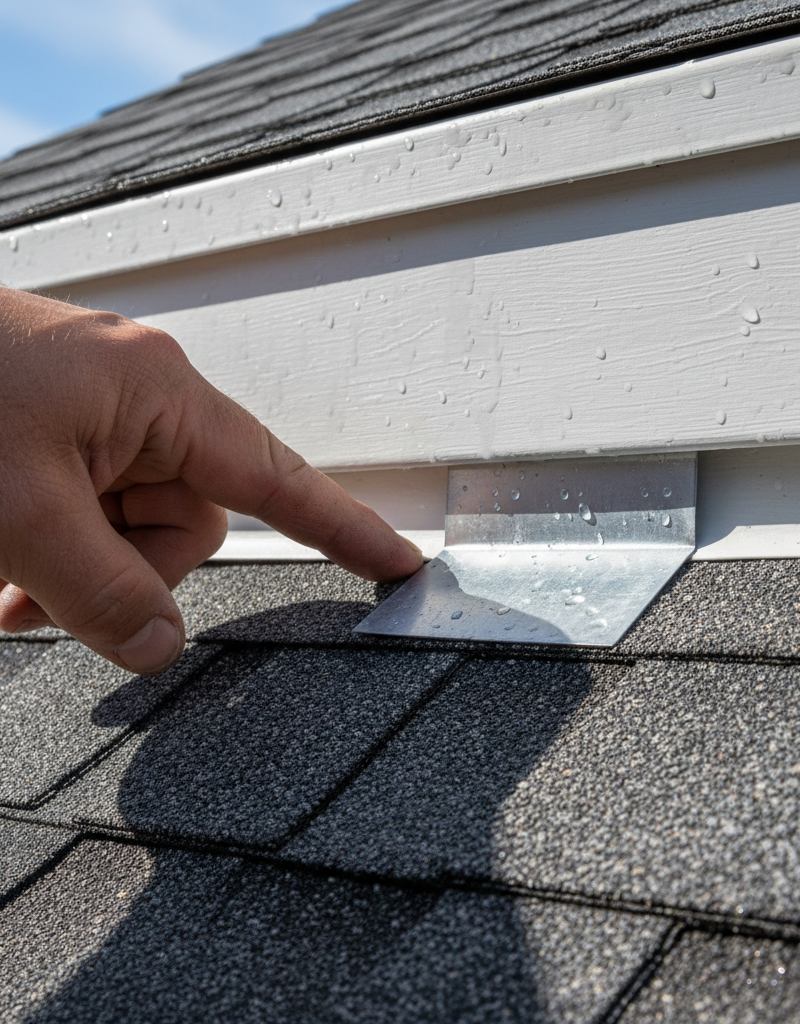
9. Examine Roof Penetrations — Closely inspect everything that sticks through the roof: plumbing vent boots, skylights, and chimney flashing. Look for cracked plastic on vents or skylight frames, and dents or tears in the soft metal "boots" at the base of pipes.
10. Document Everything Meticulously — This is the most important step for your insurance claim. Take dozens of clear photos. * Place a coin or ruler next to individual hail hits to provide a sense of scale. * Take close-up shots of bruises, dented vents, and granule-filled gutters. * Take wider shots of your chalked-off test squares to show the density and pattern of the hits. * Photograph every side of the roof.
11. Make the Call — With your documentation in hand, contact your insurance company to initiate a claim. Let them know the date of the storm and that you have photo evidence of the damage.
Common Causes
The primary cause is obviously hail, but the severity of the damage is influenced by several factors:
- Hail Size & Density: Most insurance companies consider hail of 1-inch diameter or larger to be damaging. However, smaller hail can still cause harm.
- Wind Speed: Wind-driven hail is far more destructive. The horizontal velocity adds significant force to the impact, causing it to strike the shingle at an angle and scour granules off.
- Shingle Age & Type: Older shingles are more brittle and susceptible to damage. Basic 3-tab shingles are more easily damaged than heavier, thicker architectural or dimensional shingles.
- Roof Slope: A lower-sloped roof receives more direct, perpendicular impacts than a steeply pitched roof, where hailstones may deliver a more glancing blow.
Common Mistakes
- Thinking "No Leaks = No Damage": This is the biggest mistake. Hail damage is about the premature aging and shortened lifespan of your roof, not immediate leaks.
- Waiting Too Long: Many homeowners don't think to check their roof until months after a storm. By then, the claim window may be closing, and it can be harder to tie the damage to a specific storm date.
- Ignoring "Small" Hail: Pea-sized hail might seem harmless, but when driven by 50 mph winds, it acts like a sandblaster, stripping away years of your roof's life.
- Hiring a "Storm Chaser": Be wary of out-of-town contractors who appear immediately after a storm. Stick with local, reputable roofers with a proven track record in your community.
- Accepting the First Assessment: If your insurance adjuster denies the claim but a reputable roofer insists there is damage, you have the right to a second opinion or to hire a public adjuster.
- Inadequate Documentation: Your photos are your power. Cell phone pictures from the ground are not enough. You need clear, close-up, well-lit evidence of the specific damage points.
Cost & Time Breakdown
This breakdown covers the inspection and claim process, not the roof replacement itself, which is what insurance is for.
| Task | DIY Cost | Pro Cost | Time |
|---|---|---|---|
| Ground-Level Inspection | $0 | $0 | 30 minutes |
| DIY On-Roof Inspection | $0 | N/A | 1-2 hours |
| Professional Roofing Inspection & Report | N/A | $0 - $500 | 1 hour |
| Emergency Tarping (if severe) | $50 - $150 | $300 - $700 | 1-3 hours |
| Filing Insurance Claim | $0 | $0 | 30 minutes |
| Meeting with Insurance Adjuster | $0 | $0 | 1-2 hours |
Note: Most reputable roofing contractors will perform a hail inspection for free, hoping to win the replacement job if the claim is approved.
Tips & Prevention
- Consider Impact-Resistant Shingles: When it’s time to replace your roof, ask about Class 4 Impact-Resistant (IR) shingles. They cost more upfront but are engineered to withstand hail and can earn you a significant discount on your homeowner's insurance premium.
- Take "Before" Photos: After you install a new roof, take detailed pictures of it. This gives you a baseline to compare against after a future storm.
- Know Your Policy: Read your homeowner's insurance policy before a storm hits. Understand your deductible and whether your policy covers Replacement Cost Value (RCV) or Actual Cash Value (ACV).
- Vet Your Contractor: Never sign a contract with a roofer who makes you feel pressured. Check for local licenses, proof of insurance (liability and worker's comp), and ask for references from recent jobs in your area.
- Get It In Writing: Your roofer should be willing to meet with the insurance adjuster at your property to point out the damage they found.
When to Call a Professional
Your safety is paramount. You should immediately call a professional roofing contractor for an inspection and avoid getting on the roof yourself if any of the following are true:
- Your roof has a steep pitch (generally anything steeper than a 6:12 pitch, meaning the roof rises 6 inches for every 12 inches of horizontal run).
- The roof is two or more stories high.
- The roof is currently wet, icy, or covered in debris.
- You are not completely comfortable and experienced with ladder safety and working at heights.
Beyond safety, a professional roofer inspects roofs every day. They can quickly and accurately distinguish between true hail damage, manufacturing defects, heat blisters, or normal wear and tear. Their trained eye is a valuable asset. Many will perform an inspection for free. Having a trusted contractor present when the insurance adjuster visits can be incredibly helpful, ensuring that all damage is properly identified and assessed, maximizing the potential for your claim to be approved. '''
Related Articles
Keep troubleshooting with these hand-picked guides from FixlyGuide:
- Missing Roof Shingles After a Storm? Here's What to Do — Discover how to safely assess and address missing roof shingles after a storm, including temporary fixes and when to call a professional.
- Why Your Roof Only Leaks in Sideways Rain (It's Not the Shingles) — That maddening leak that only appears during severe, wind-driven rain isn't your shingles—it's a sign that water is being forced sideways b…
- Gutters Full of Shingle Grit? Here's What It Really Means — Finding shingle granules in your gutters can be alarming, signaling everything from normal new-roof shedding to critical roof damage that r…
- Hail Damaged Siding: A Homeowner's DIY Repair Guide — Address hail-damaged siding promptly to prevent further issues like water intrusion and reduced curb appeal with this DIY repair guide.
- The Urgent Truth About Missing Roof Shingles (And Your 3-Step Fix) — High winds can rip shingles off your roof, exposing your home to immediate water damage – here’s how to assess, temporary patch, and plan p…
- The Tiny Stain That Betrays a $10,000 Roof Leak (And 5 Ways to Find It) — Discover how to identify subtle signs of a roof leak early, saving your home from extensive and costly water damage before it escalates.
Frequently asked questions
How long do I have to file a hail damage claim?+
This varies by policy and state, but a typical window is 6 to 12 months from the date of the storm. It's critical to check your specific policy and act quickly, as waiting too long can result in a denied claim.
What does hail damage look like on a roof?+
On asphalt shingles, hail damage looks like small, dark, circular 'bruises' where the protective granules have been knocked off. The area may feel soft to the touch. On metal components like gutters and vents, it appears as small, distinct dents.
Will my insurance rates go up if I file a hail claim?+
Generally, insurance companies cannot raise your individual rates for filing a claim for an 'Act of God' like a hailstorm. However, if an entire region is hit by a major storm, the company may raise rates for everyone in that area to cover the widespread losses.
What's the difference between ACV and RCV on my insurance policy?+
ACV (Actual Cash Value) pays for the depreciated value of your old roof. RCV (Replacement Cost Value) pays for a full brand-new roof. RCV coverage is more expensive but provides far better protection, and it's what most homeowners should have for their roof.
Discussion
Loading comments…