Tools & materials you'll need
Affiliate links- AmazonSturdy Extension LadderEnsure it is rated for your weight and extends at least 3 feet above the roofline.
- AmazonWork Gloves
- AmazonBucketFor collecting gutter debris.
- AmazonGutter Scoop or Trowel
- AmazonBinocularsEssential for safe inspection from the ground.
- AmazonSafety Harness with Rope and AnchorNon-negotiable for working on steep-slope roofs. Most homeowners should leave this to the pros.
No materials required.
As an Amazon Associate FixlyGuide earns from qualifying purchases — at no extra cost to you. Prices and availability are accurate as of publication and subject to change.
'''
Quick Answer
A small amount of shingle granule loss is normal, especially for a new roof, as excess granules are shed. However, large or sudden accumulations of these ceramic-coated asphalt particles in your gutters often indicate that your shingles are aging, failing, or have been damaged by hail or blistering, compromising your roof's ability to protect your home from UV rays and water damage. If your roof is over 15 years old or you're finding handfuls of granules, it's a critical sign to inspect for underlying issues before a leak appears.
The Problem
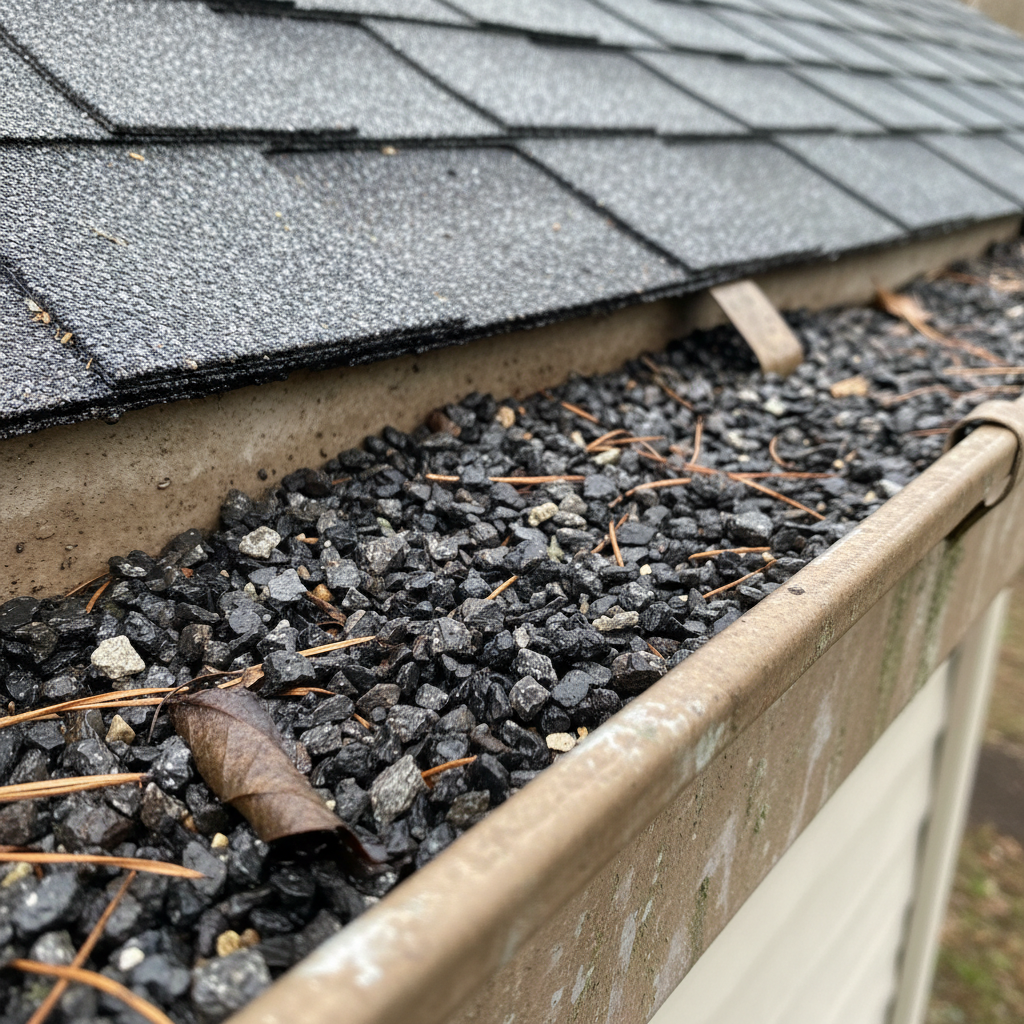
You’re up on a ladder for your semi-annual gutter cleaning. As you scoop out the damp leaves and debris, you notice something else: a thick, heavy layer of what looks like coarse black sand or tiny gravel collecting at the bottom of the trough and especially near the downspout openings. This material is made of shingle granules, and their presence is a direct message from your roof.
These granules aren't just decorative; they are a critical component of your home's primary defense against the elements. Their job is to protect the underlying asphalt layer of the shingle from the sun's damaging ultraviolet (UV) radiation. Without this granular shield, the asphalt becomes brittle, cracks, and ultimately fails, allowing water to penetrate your roof deck. Seeing them in your gutters means a portion of your roof’s "sunscreen" has washed away. The core question for any homeowner is whether this is a normal part of the roof's life cycle or a five-alarm fire signaling imminent failure.
How It Works
An asphalt shingle is a multi-layered product engineered for durability. The base is a fiberglass mat, which provides structural integrity. This mat is saturated and coated with asphalt, which is the primary waterproofing agent. The top surface of the shingle is then embedded with a dense layer of mineral granules. These granules perform several vital functions:
- UV Protection: This is their most important job. The sun’s UV rays are incredibly destructive to asphalt, causing it to lose its flexibility and volatile oils. The granules physically block the UV radiation, preserving the asphalt underneath. A shingle without granules is an asphalt mat that will quickly cook, curl, and crack under the sun.
- Fire Resistance: The mineral granules are a key reason most modern shingles carry a "Class A" fire rating, the highest level of resistance to external fire sources.
- Color and Aesthetics: Granules are coated with ceramic pigments to give shingles their color, from common grays and browns to greens and reds. Manufacturers can create blended patterns that add dimension and curb appeal.
- Algae Resistance (in some shingles): Many modern shingles include copper-infused granules (like those in GAF's "StainGuard" or Owens Corning's "StreakGuard" lines). The copper ions slowly wash down the roof, inhibiting the growth of the blue-green algae that cause unsightly black streaks.
The process of granule loss is intrinsically tied to the roof's age and the environment. Over a 20- to 30-year lifespan, the asphalt binder holding the granules gradually hardens and shrinks due to constant thermal cycles (hot days, cool nights). This slow degradation weakens its grip on the granules, allowing them to be washed away by rain. This is normal aging. However, other factors like manufacturing defects, storm damage, or mechanical impact can accelerate this process dramatically, turning a slow decline into a rapid failure.
Step-by-Step Fix: How to Diagnose Granule Loss
The "fix" for granule loss isn't about putting the granules back on; it's about diagnosing the cause and severity to determine the correct action—from monitoring to a full replacement.
1. Quantify the Loss & Note Your Roof’s Age — Before you even get on a ladder, look at the ground where your downspouts discharge. Are there fan-shaped deltas of granules on your driveway or in your garden beds? When you clean the gutters, is it a light dusting or are you scooping up handfuls or even shovelfuls? A brand-new roof (less than a year old) will shed a noticeable amount of excess granules from the manufacturing process; this is normal. A 15-year-old roof shedding piles of granules is a serious warning sign.
2. Perform a Safe Ground Inspection — Using a pair of binoculars, scan the entire surface of your roof from the ground. Look for "bald" spots where the granules are missing and the black asphalt substrate is visible. Pay close attention to the areas directly above where you found the granule piles in the gutters. Look for variations in color or texture across the roof plane.
3. Conduct a Close-Up Ladder Inspection (With Extreme Caution) — If you can do so safely, a closer look is necessary. SAFETY FIRST: Use a sturdy, properly-angled extension ladder. Maintain three points of contact at all times. Do not work on a wet, windy, or excessively hot day. If your roof has a steep pitch (greater than 6:12), is two stories or higher, or if you are not 100% comfortable with heights, stop here and call a professional roofer. This is non-negotiable.
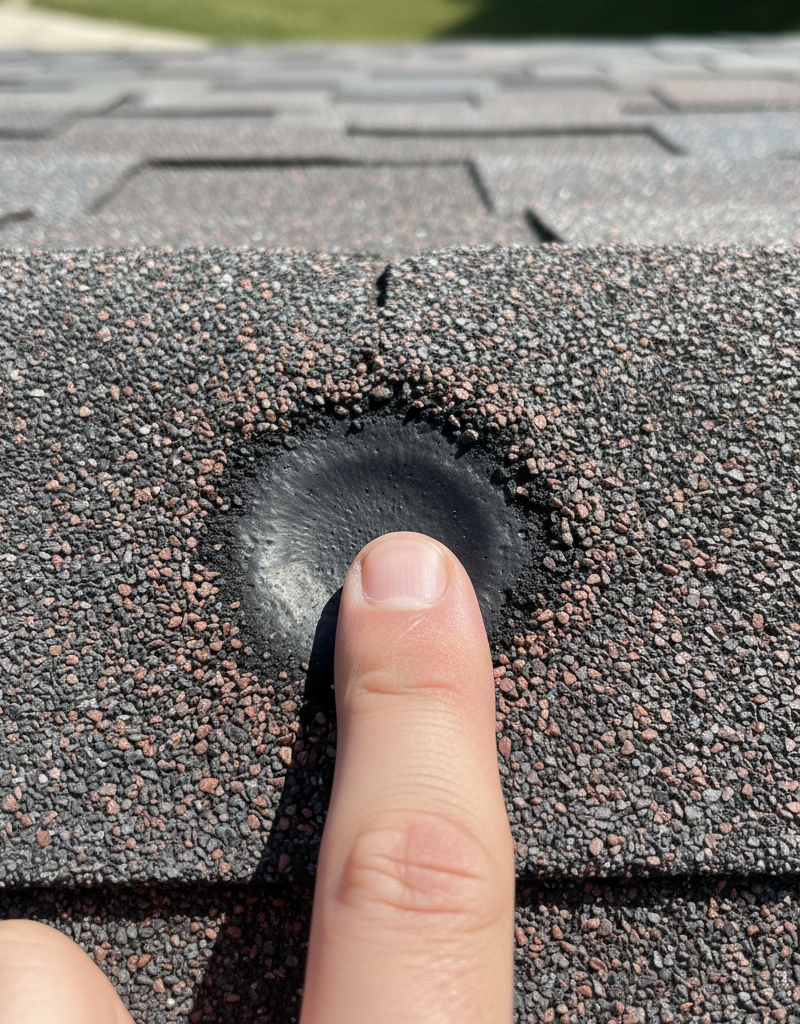
4. Identify Hail Damage — If the granules are gone in small, pockmarked spots, you may be looking at hail damage. Hail strikes knock the granules off at the point of impact, leaving a "bruise" on the shingle that exposes the asphalt. It often feels soft or spongy to the touch. This kind of damage is random and is a common reason for an insurance claim.
5. Look for Blistering or Cracking — Scan individual shingles for signs of failure. Blisters are small bubbles that look like pimples on the shingle's surface. They form from trapped moisture during manufacturing and eventually "pop," releasing their granules. Widespread cracking, curling, or clawing (where the corners of the shingle tabs lift up) are all signs the shingle has reached the end of its life.
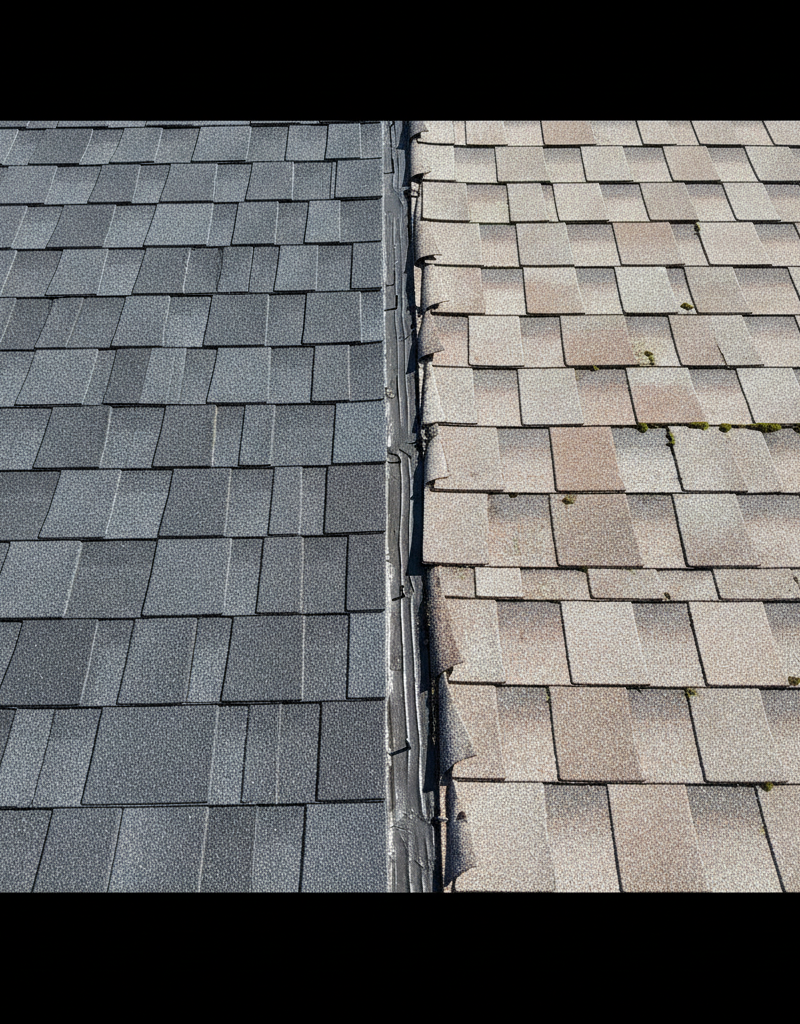
6. Inspect Roof Valleys — Valleys are the V-shaped channels where two roof planes meet. They handle a tremendous volume of water. This concentrated flow acts like a river, eroding granules faster than on the main roof planes. Significant granule loss in valleys is common but also dangerous, as a valley leak can cause substantial water damage.
7. Check for Mechanical Damage — Look for scuff marks or straight lines of granule loss. This is often caused by foot traffic (e.g., from a cable installer or chimney sweep), a ladder being dragged across the roof, or low-hanging tree limbs scraping the surface during windy conditions.
8. Document Everything — Take clear photos of the granules in the gutters, the piles at the downspouts, and any visible bald spots, cracks, or hail bruises on the roof. This documentation is invaluable whether you're monitoring the roof yourself, filing an insurance claim, or getting quotes from contractors.
Common Causes
- New Roof Shedding: Normal and expected. A new roof will shed its excess manufacturing granules for 6-12 months. This looks like a lot but typically stops after the first year.
- Advanced Age: The most common cause. As a roof ages (15+ years), the asphalt hardens and can no longer hold the granules effectively. This loss is usually slow and uniform across the roof.
- Hail Impact: Hailstones act like tiny hammers, blasting granules off the shingles at the point of impact. This type of damage voids the manufacturer's warranty but is typically covered by homeowner's insurance.
- Shingle Blistering: A manufacturing defect where trapped moisture expands in the heat, creating bubbles that pop and leave a small pockmark without granules.
- Mechanical Damage & Foot Traffic: Walking on shingles, especially on a hot day when the asphalt is soft, can easily scuff granules off. Tree limbs rubbing on the roof are another major culprit.
- Aggressive Cleaning: Never, ever pressure wash an asphalt shingle roof. It will strip off granules and can void your warranty, effectively removing years from the roof's life.
- Poor Attic Ventilation: An attic that is too hot can bake the shingles from underneath, accelerating the aging process of the asphalt and causing it to release its granules prematurely.
Common Mistakes
- Ignoring the Problem: The single biggest mistake is seeing granule buildup and dismissing it as "dirt." It’s a critical diagnostic signal from your roof; ignoring it can lead to preventable leaks.
- Pressure Washing the Roof: Homeowners trying to remove algae stains often turn to a pressure washer. This is catastrophic for shingles and is the equivalent of sandblasting years of life off your roof.
- Applying a "Sealant": Attempting to fix bald spots by smearing roofing cement or a liquid sealant over them is an ineffective, temporary, and unsightly patch. It often fails quickly and can trap water, making the problem worse.
- Walking on the Roof Unnecessarily: Limit foot traffic on your roof. Every step, especially on a hot day, grinds granules off the shingles.
- Not Differentiating Age from Damage: Assuming granule loss on a 7-year-old roof is "normal aging" is a mistake. It’s more likely a sign of a defect, storm damage, or poor ventilation that needs to be addressed.
- Hiring the Wrong "Pro": Be wary of any "roofer" who suggests pressure washing or "rejuvenating" your shingles with an oily sealant. Always use a licensed and insured contractor who can properly diagnose the root cause.
Cost & Time Breakdown
The cost associated with shingle granules is not in fixing the granules themselves, but in addressing the underlying cause. This table outlines the costs for diagnosis and potential remedies.
| Task | DIY Cost | Pro Cost | Time |
|---|---|---|---|
| Gutter Cleaning & Granule Inspection | $20 (bucket, gloves, scoop) | $150 - $350 | 2-4 hours |
| Professional Roof Inspection & Report | N/A | $250 - $600 | 1-2 hours |
| Minor Shingle Repair (replace a few shingles) | $50 - $100 | $250 - $500 | 1-3 hours |
| Section Replacement (10x10 ft area) | $200 - $400 | $600 - $1,500 | 4-8 hours |
| Full Roof Replacement (Asphalt, ~2000 sq ft) | $9,000 - $20,000+ | $9,000 - $20,000+ | 2-5 days |
Tips & Prevention
- Clean Gutters Religiously: Clean your gutters every spring and fall. This not only prevents water damage from overflows but also makes it your primary method for monitoring granule loss over time.
- Trim Overhanging Trees: Keep tree limbs at least 10 feet away from your roof surface to prevent them from scraping and scuffing the shingles in the wind.
- Ensure Proper Attic Ventilation: A well-ventilated attic is crucial for a long roof life. The standard rule is 1 square foot of net free vent area for every 300 square feet of attic floor space, balanced between intake (soffit) and exhaust (ridge/gable) vents. This prevents heat buildup that cooks shingles.
- Stay Off the Roof: Minimize foot traffic. If you must go on the roof, do it on a cool day and wear soft-soled shoes.
- Get Post-Storm Inspections: After a major hailstorm or severe wind event, have your roof inspected by a qualified professional. They can spot damage that’s invisible from the ground.
When to Call a Professional
While a DIY inspection can give you a good idea of the situation, a professional roofer is essential in many cases. Call a professional if:
- You see large, visible "bald" patches on your roof where the black asphalt is exposed.
- The granule loss is sudden and heavy, and your roof is not new.
- Your roof is more than 15-20 years old and showing uniform, widespread granule loss. This is the primary indicator that it's nearing the end of its intended service life.
- You discover any corresponding signs of a leak, like water stains on your ceilings or in your attic.
- Your roof is steep (a 6:12 pitch or greater), your house is two or more stories tall, or you are not completely comfortable working on a ladder. A professional has the training and safety equipment (like fall-arrest systems) to work on roofs that are unsafe for a homeowner.
- You suspect hail damage. A qualified roofer can properly document the damage and provide a report to help you navigate the insurance claims process.
A professional can give you a definitive diagnosis, separating normal end-of-life wear from acute damage, and provide an honest assessment of your roof's remaining lifespan. '''
Related Articles
Keep troubleshooting with these hand-picked guides from FixlyGuide:
- 5 Signs Hail Secretly Damaged Your Roof (And How to Act Fast) — Learn to identify the subtle signs of hail impact on asphalt shingles, gutters, and flashing, so you can file an insurance claim before the…
- The Urgent Truth About Missing Roof Shingles (And Your 3-Step Fix) — High winds can rip shingles off your roof, exposing your home to immediate water damage – here’s how to assess, temporary patch, and plan p…
- Why Your '30-Year' Shingles Won't Last 30 Years — Most '30-year' asphalt shingles don't last 30 years; understand the real-world factors like climate, installation, and ventilation that det…
- The #1 Deck Sealing Mistake Most Homeowners Make (And How to Fix It) — Many homeowners make a critical error when sealing their decks, leading to premature wear and damage. Learn how to properly reseal your woo…
- Your Insulation Isn't the Problem: Why Your Attic Still Bakes — Even with thick insulation, a hot attic signals a critical ventilation failure that could be silently damaging your roof and driving up you…
- Prevent Roof Damage: Gutter Cleaning & Maintenance for Homeowners — Clogged and neglected gutters can lead to significant roof damage, but regular cleaning and maintenance can prevent costly repairs and prot…
Frequently asked questions
Is it normal to see granules from a brand new roof?+
Yes, absolutely. Manufacturers apply a slight excess of granules during production. It is completely normal for a new roof to shed these loose granules for the first 6 to 12 months, especially after the first few rainstorms. This initial shedding should taper off significantly after a year.
Can I just paint or seal the bald spots on my shingles?+
This is strongly discouraged. Applying a roof sealant or coating to bald spots is a very temporary fix that often fails within a year. Worse, these coatings can trap moisture against the shingle, potentially accelerating deterioration and causing more complex problems. It does not restore the UV protection and is not a substitute for replacing a failed shingle.
How long does a roof last after it starts losing granules?+
It entirely depends on the rate and reason for the loss. A slow, steady loss of granules is part of the natural aging process over 20-30 years. However, if you are suddenly seeing significant, widespread granule loss, it means the roof is actively failing and may only have 1-3 years of functional life left, if that. Rapid loss requires immediate professional assessment.
Will insurance cover a roof that's failing from granule loss?+
It depends on the cause. If the granule loss is from normal aging or a manufacturing defect outside its warranty period, it is considered maintenance and is not covered. However, if the granule loss is the direct result of a specific event like a hailstorm or a tree falling on the roof, it is typically covered under most homeowner's insurance policies.
Discussion
Loading comments…