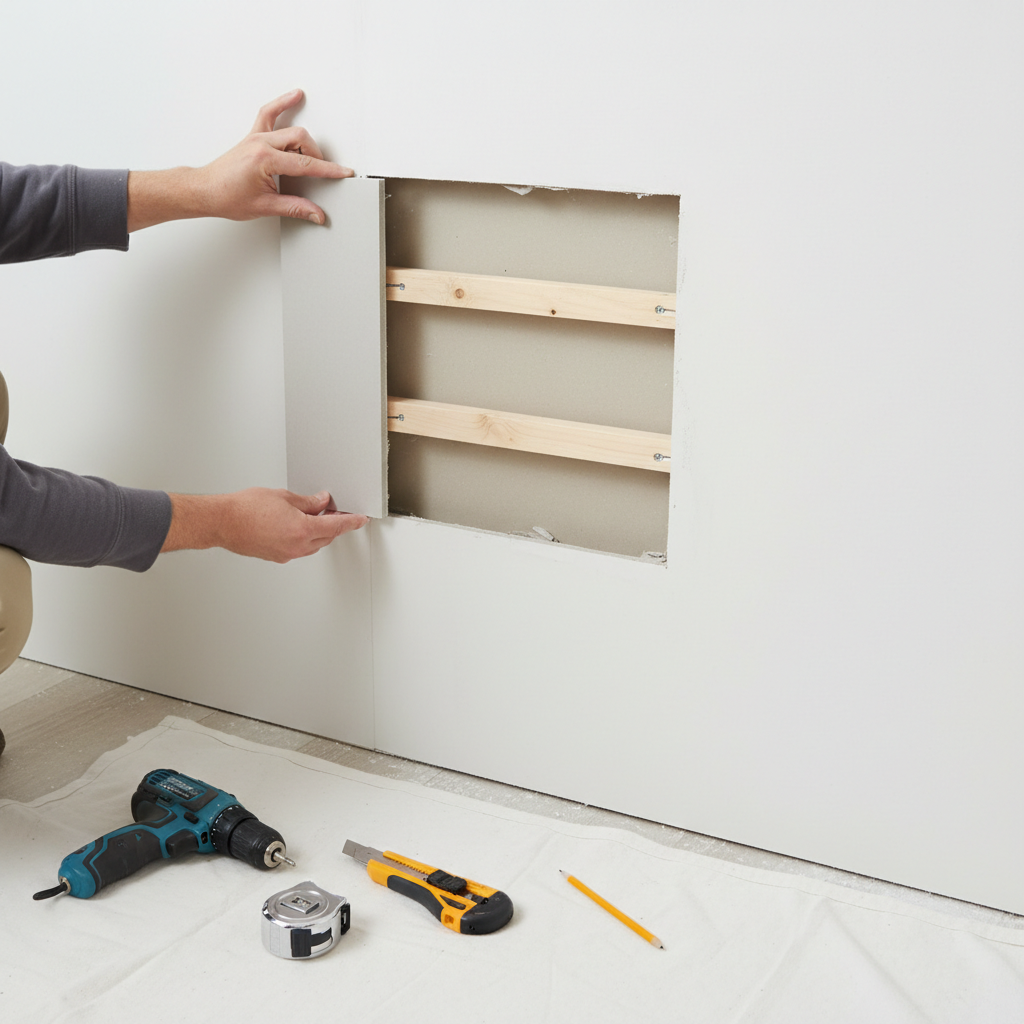
Tools & materials you'll need
Affiliate linksAs an Amazon Associate FixlyGuide earns from qualifying purchases — at no extra cost to you. Prices and availability are accurate as of publication and subject to change.
Quick Answer
Repairing a large drywall hole (over 6 inches) effectively requires cutting the damaged area into a neat square, installing wood backing supports, securing a new piece of drywall, and then meticulously finishing the seams with joint compound and tape. This method ensures a strong, invisible patch that lasts.
The Problem
You've got a large, unsightly hole in your drywall—maybe from an errant doorknob, a misplaced foot during attic exploration, or a previous DIY mishap. These aren't small nail pops or stress cracks; we're talking about holes that are often six inches or more in diameter, too big for simple spackling or small patch kits. A large hole compromises the structural integrity of your wall, allows sound to travel more freely, and is a significant eyesore, diminishing the aesthetic appeal and potentially the value of your home. Left unaddressed, it can also become a haven for pests or a pathway for drafts, impacting energy efficiency. While daunting, patching a large drywall hole is a very achievable DIY project with a methodical approach.
How It Works
Unlike small holes that can be filled directly with spackle or mesh patches, large drywall holes require a more robust solution. The core principle is to replace the damaged section with a new, equally sized piece of drywall and integrate it seamlessly into the existing wall. This isn't just about filling a gap; it's about rebuilding a section of the wall. The process begins with creating a clean, uniform opening. This allows for precise measurement and cutting of the replacement piece.
Crucially, the new drywall piece needs something to attach to. Since the original studs likely won't align perfectly with your patch, you'll install backing supports—usually strips of wood (furring strips or small pieces of 1x2 lumber)—behind the existing drywall. These supports span across the opening, creating a sturdy frame to screw your new drywall patch into. Once the new drywall is screwed in place, it creates a flush surface with the surrounding wall.
The final, and often most challenging, stage is concealing the seams. This involves applying layers of joint compound (often called 'mud') over the gaps and embedding fiberglass mesh tape or paper tape into the first layer of mud. The tape reinforces the seam and prevents future cracking. Multiple thin coats of compound are applied, feathered out over a wider area with each subsequent coat. This feathering effect gradually tapers the patch into the existing wall, making the transition invisible. Each coat must dry thoroughly and be sanded smooth before the next application. This systematic approach ensures a durable repair that, when painted, becomes indistinguishable from the original wall.
Step-by-Step Fix
Safety First! Always wear a dust mask and safety glasses when cutting and sanding drywall. Drywall dust is fine and can irritate your respiratory system and eyes. Be mindful of electrical wires or plumbing pipes that might be behind the wall. Use a stud finder or carefully probe before cutting.
-
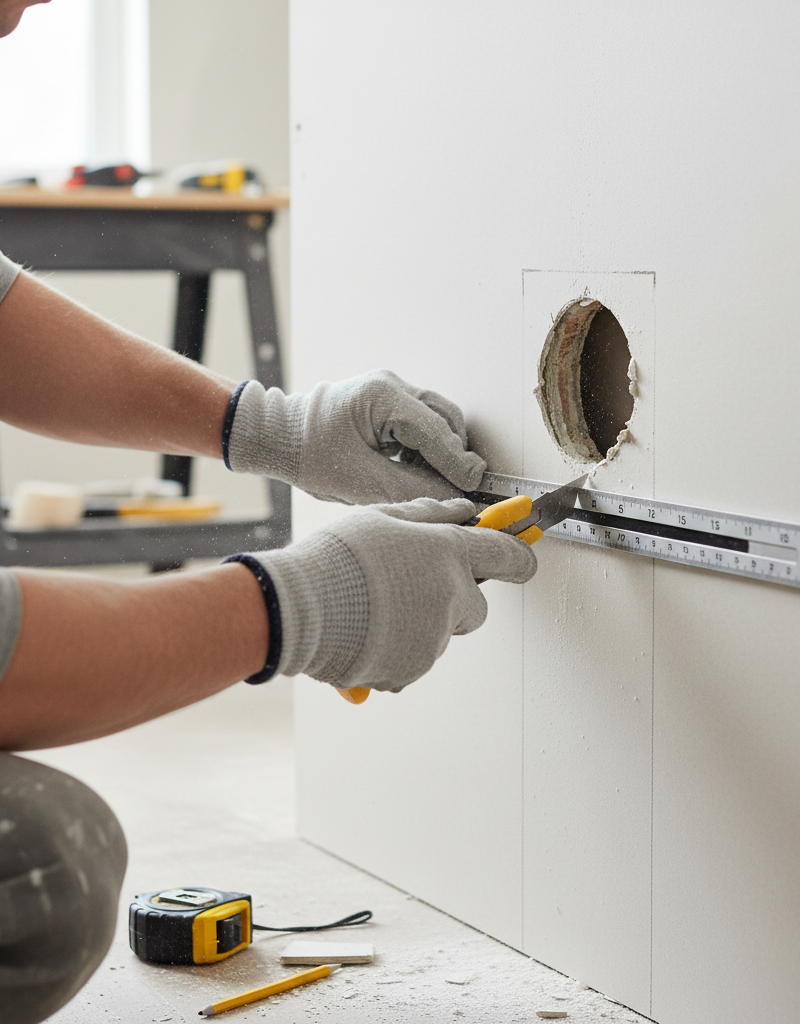
Prepare the Area and Square Off the Hole – Create a clean working space and define your patch. Clear any furniture or obstacles from around the damaged wall section. Lay down a drop cloth to catch dust and debris. Using a straightedge (like a utility knife guide or a level) and a pencil, draw a square or rectangular outline around the damaged area. Make sure your lines extend into solid, undamaged drywall. Aim for the smallest possible patch that completely removes all the damage. For very large holes, try to align your cut lines with existing studs if possible to minimize the need for extra backing.
-
Cut Out the Damaged Section – Precisely remove the compromise. Carefully score along your pencil lines with a utility knife several times until you cut through the drywall. For thicker drywall (5/8-inch), you might need to use a drywall saw or an oscillating multi-tool for faster, cleaner cuts. Go slowly to avoid over-cutting. Once cut, gently remove the damaged piece. If the hole is very large, you may consider a plaster saw for efficiency. Always double-check behind the wall for wires or pipes before making deep cuts.
- Tool Tip: A drywall jab saw is excellent for this task, allowing for plunge cuts directly into the board.
- Pro Tip: If you hit an unexpected wire or pipe, stop immediately. Do not proceed; consult a licensed electrician or plumber.
-
Install Wood Backing Supports – Provide a sturdy frame for your new patch. Cut two pieces of 1x2 lumber or furring strips approximately 6-8 inches longer than the height of your hole. Hold one piece of wood behind the existing drywall at the top of the opening, centered, so about 3-4 inches extends beyond the cut edge on both sides. Drive two drywall screws through the existing drywall and into each end of the backing piece, securing it firmly. Repeat this process for the bottom of the opening. These pieces will serve as anchor points for your new drywall patch. Ensure the screws are countersunk slightly below the surface of the existing drywall.
- Alternative: Plywood strips can also be used, ensuring they are thick enough (at least 1/2 inch) to provide good screw purchase.
-
Cut and Install the New Drywall Patch – Precisely fit your replacement piece. Measure the exact dimensions of the opening you created. Cut a new piece of drywall to these exact measurements. Test fit the patch in the opening; it should fit snugly but not be forced. If it's too tight, slightly trim the edges with a utility knife until it fits perfectly flush with the surrounding wall. Once satisfied, position the new patch in the opening and screw it into the top and bottom wood backing supports. Place screws every 6-8 inches along the top and bottom edges, ensuring they are slightly countersunk.
-
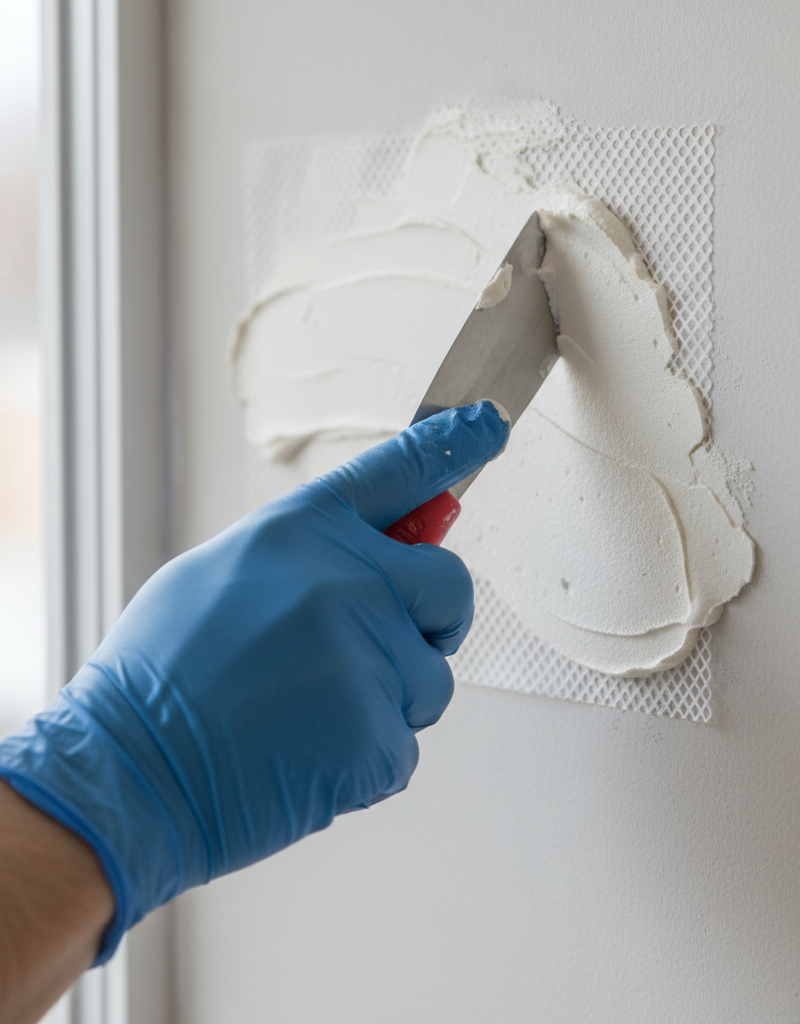
Apply Joint Compound and Tape (First Coat) – Seal the seams and begin the smoothing process. Using a 6-inch drywall knife, apply a thin, even layer of all-purpose joint compound over all the seams where the new patch meets the existing drywall. Immediately embed fiberglass mesh tape or paper tape directly into the wet compound, centering it over each seam. Press the tape firmly into the mud, ensuring there are no bubbles or wrinkles. Once the tape is in place, apply another thin layer of joint compound over the tape, feathering the edges out about 2-3 inches onto the existing drywall. Let this coat dry completely (typically 4-6 hours or overnight).
- Material Note: Fiberglass mesh tape is self-adhesive and generally easier for beginners. Paper tape requires a bit more skill to embed smoothly but offers excellent strength.
-
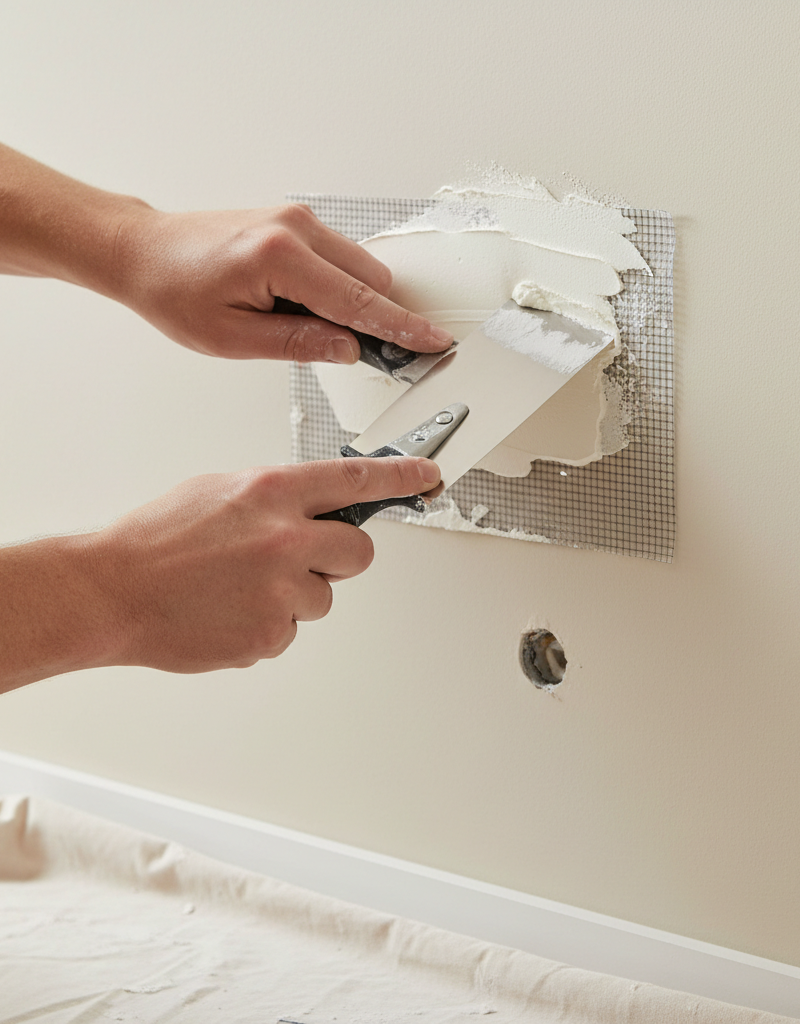
Apply Second Coat of Joint Compound – Build up the surface and start blending. Once the first coat is completely dry, lightly sand any high spots or ridges with 150-grit sandpaper or a sanding sponge. Wipe away dust with a damp cloth. Using an 8-10 inch drywall knife, apply a second, slightly thicker layer of joint compound over the first coat and tape. Extend this coat roughly 2-3 inches wider than the first coat, feathering the edges even further onto the existing wall to create a smooth transition. Ensure there are no visible ridges. Let this coat dry completely (another 4-6 hours or overnight).
-
Apply Third (Finishing) Coat of Joint Compound – Achieve an invisible finish. After the second coat is dry, lightly sand it smooth as before, removing any imperfections. Wipe away dust. For the final coat, switch to a 10-12 inch drywall knife. Apply a very thin, wide layer of lightweight, all-purpose, or topping compound. This coat should be feathered out even wider—another 3-4 inches beyond the previous coat—to create the most gradual, imperceptible blend with the surrounding wall. The goal is to make the patch area completely level and smooth. Let this final coat dry thoroughly.
- Patience is Key: Rushing the drying process or applying coats that are too thick will lead to cracking and an inferior finish.
-
Final Sanding and Priming – Prepare for paint. Once the final coat is completely dry, use a fine-grit (180-220) sanding sponge or sandpaper to carefully sand the entire patched area until it is perfectly smooth and flush with the surrounding wall. Use a pole sander for larger areas to ensure flatness. Run your hand over the surface to check for any bumps or depressions. Clean off all dust with a damp cloth. Apply a high-quality PVA (polyvinyl acetate) drywall primer to the entire patched area. This seals the new mud and ensures a uniform finish when you paint. Let the primer dry according to manufacturer instructions before painting.
Common Causes
- Impact Damage: The most frequent culprit. This includes doorknobs slamming against walls without a doorstop, furniture being moved carelessly, or objects being dropped or thrown.
- Roughhousing or Play: Children playing indoors can often lead to accidental holes from toys, balls, or even just running into a wall.
- Plumbing or Electrical Access: Sometimes, plumbers or electricians need to cut into a wall for repairs or installations, leaving a larger opening than anticipated once their work is done.
- Mounting Mishaps: Attempting to mount heavy items (like TVs or shelves) without proper anchors or into hollow wall sections can cause the drywall to tear out.
- Falls or Accidents: A misstep in an attic or crawl space, or falling against a wall during an accident, can create significant damage.
- Water Damage (Indirect): While water doesn't directly cause holes, prolonged exposure can weaken drywall to the point where it easily breaks or crumbles, making it susceptible to holes from minor impacts.
Common Mistakes
- Applying Too Much Joint Compound at Once: This is the most common mistake. Thick layers of mud take forever to dry, are prone to cracking, and are incredibly difficult to sand smooth. Instead, apply multiple thin coats, allowing each to dry completely.
- Not Feathering the Edges: Failing to extend each subsequent joint compound coat wider than the last results in a visible hump or ridge around the patch. Instead, gradually feather out each coat by several inches on all sides.
- Inadequate Backing: Simply trying to spackle over a large hole or using flimsy backing material will result in a weak patch that cracks or fails. Instead, always use sturdy wood backing securely screwed into the existing drywall.
- Skipping the Primer: Drywall mud has a different porosity than drywall paper. Painting directly over unprimed mud will result in flashing (dull spots) and an uneven paint finish. Instead, always prime the patched area with a quality drywall primer before painting.
- Insufficient Drying Time: Rushing to apply the next coat of mud or paint before the previous layer is completely dry will lead to cracking, bubbling, and a poor finish. Instead, be patient and allow adequate drying time, even using a fan if necessary to aid circulation.
- Poor Sanding Technique: Uneven or rushed sanding leaves visible ridges, depressions, or scratch marks that show through paint. Instead, use a sanding sponge or pole sander for controlled, even sanding, and run your hand over the surface to detect imperfections.
Cost & Time Breakdown
| Task | DIY cost | Pro cost | Time |
|---|---|---|---|
| Materials (drywall, compound, tape, screws) | $20–$50 | Included in labor | — |
| Cutting & installing backing | $0 | Included in labor | 30–60 minutes |
| Drywall Patch Install | $0 | Included in labor | 30–60 minutes |
| Joint Compound Application (3 coats) | $0 | Included in labor | 3–6 hours (active) + 24-48 hours (drying) |
| Sanding & Priming | $0 | Included in labor | 1–2 hours |
| Total | $20–$50 | $150–$350+ | 6–12 hours active + 2-3 days passive |
Tips & Prevention
- Install Door Stops: The simplest way to prevent doorknob holes is to install wall-mounted or baseboard-mounted door stops behind every door.
- Use Stud Finders: When hanging anything heavy, always use a stud finder to locate wall studs and anchor into them. For lighter items in hollow walls, use appropriate drywall anchors.
- Be Mindful When Moving Furniture: Have a helper, lift instead of drag, and use furniture sliders to prevent accidental wall bumps.
- Regular Inspections: Periodically check high-traffic areas or areas behind doors for signs of minor damage before they escalate into larger holes.
- Keep Spare Drywall: If you have leftover drywall from a previous project, save a small piece. It will be perfectly color-matched in terms of paper tone for patching, making the prime and paint stage easier.
When to Call a Professional
While patching a large drywall hole is a manageable DIY project, there are specific scenarios where calling a professional is the smarter choice. If the hole is extensive, spanning multiple wall studs, or involves a corner, it's best to consult a drywall contractor. Similarly, if the damage is accompanied by signs of active water leakage, potential mold growth, or structural concerns, you need to call a plumber or a general contractor first to address the underlying issue before any cosmetic repairs begin. If the hole exposes electrical wiring or plumbing lines that appear damaged or are difficult to work around safely, immediately stop and contact a licensed electrician or plumber. Professionals have the tools and expertise to handle complex repairs efficiently, ensure a flawless finish, and address any hidden issues that might compromise a DIY fix, ultimately saving you time and preventing further damage or safety risks.
Frequently asked questions
How big of a hole in drywall can I patch myself?+
You can typically patch most holes up to about 12-14 inches in diameter yourself using this method. For holes larger than that, or those spanning multiple studs, a professional might achieve a better, faster result.
What kind of joint compound should I use?+
For beginners, an all-purpose joint compound is versatile for all coats. For the final coat, a lightweight 'topping' compound is easier to sand to a smooth finish. Avoid 'setting-type' compounds (hot mud) unless you're experienced, as they dry very quickly.
Do I need to use mesh tape or paper tape?+
Fiberglass mesh tape is self-adhesive and generally easier for DIYers as it doesn't bubble. Paper tape is stronger when embedded correctly but requires a bit more practice to apply without wrinkles or bubbles. Both work effectively for large patches.
Why is my drywall patch cracking after painting?+
Cracking often occurs if the joint compound was applied too thickly, not allowed to dry completely between coats, or if the backing support was insufficient. Temperature fluctuations during drying can also contribute. Ensure thin coats, full drying time, and secure backing.
Discussion
Loading comments…