Tools & materials you'll need
Affiliate linksAs an Amazon Associate FixlyGuide earns from qualifying purchases — at no extra cost to you. Prices and availability are accurate as of publication and subject to change.
'''
Quick Answer
Icicles form on your gutters because heat escaping from your attic melts snow on the roof. This water runs down and refreezes at the cold eaves, creating a blockage called an "ice dam." This is dangerous because the dam traps a pool of water that can back up under your shingles, causing leaks, rot, and serious structural damage. While small, wispy icicles can be harmless, a thick curtain of them is a clear sign of an inefficient and potentially unhealthy roof system.
The Problem
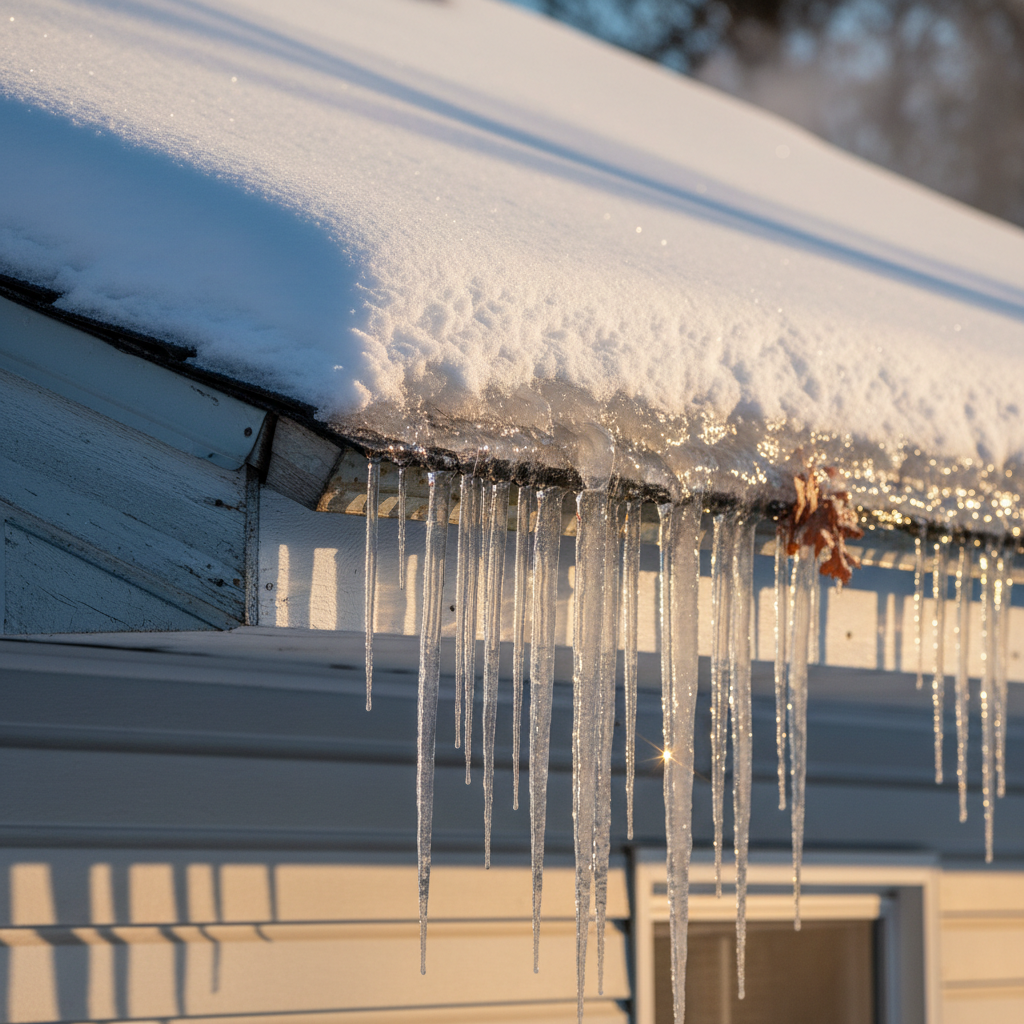
At first glance, icicles hanging from the eaves can look like a charming feature of a winter landscape. But to a roofer or a knowledgeable homeowner, a dense colony of icicles is a major red flag. They are the visible symptom of a much larger, insidious problem lurking above: an ice dam.
The immediate danger is obvious. Large icicles can break free, posing a serious risk to anyone below and potentially tearing off the gutters themselves under their immense weight. A single cubic foot of ice weighs about 57 pounds; a long, thick ice dam can easily weigh hundreds or even thousands of pounds, putting enormous stress on your entire eave assembly.
But the hidden danger is far more destructive. The "dam" of ice at the edge of your roof prevents melting snow from draining properly. This creates a reservoir of standing water on your roof. Shingles are designed to shed water, not to be submerged in it. This ponding water will work its way uphill, defying gravity, through capillary action under your shingles and past your underlayment. Once it finds a nail penetration, it will drip into your attic, onto your insulation, and eventually into your exterior wall cavities and ceilings. This can lead to rotted roof decking, saturated and ineffective insulation, peeling paint, and rampant mold growth within your walls—damage that can cost thousands of dollars to remediate.
How It Works
The formation of an ice dam is a perfect, and perfectly destructive, storm of thermodynamics. It's not just about snow and cold weather; it's about a temperature imbalance between the peak of your roof and the edge.
- Heat Loss: It all starts inside your house. Heat from your living space naturally rises. If the "ceiling" of your top floor—which is the "floor" of your attic—is not properly air-sealed and insulated, that expensive warm air escapes into the attic.
- A Warm Attic: This heat gets trapped in the attic, warming the underside of your roof deck. Common culprits for this heat transfer include unsealed attic hatches, gaps around plumbing vents or electrical wires, and, most significantly, recessed can lights that aren’t rated for contact with insulation (non-IC rated).
- Snow Melts from the Bottom: While the outside air temperature might be 25°F, the surface of your roof deck can warm up to above 32°F due to the heat loss from the attic. This melts the blanket of snow on your roof from the bottom up.
- Water Runs to a Cold Edge: This meltwater flows down the slope of the roof underneath the snowpack. However, the very edge of your roof—the overhang, or eave—is not heated by the attic below. It remains at the ambient outdoor temperature.
- The "Dam" Forms: As soon as the meltwater hits this freezing-cold roof edge and the even colder aluminum gutter, it refreezes. This process repeats, building up a solid ridge of ice—the ice dam.
- Water Backs Up: The dam now blocks the drainage path for any subsequent meltwater. A pool forms behind it, submerging the lower courses of your shingles. This trapped water, sometimes several inches deep, pushes its way under shingle tabs and through nail holes, directly into your home's structure.
Proper attic ventilation is supposed to prevent this. A balanced system of soffit vents (intake, at the eaves) and a ridge vent (exhaust, at the peak) keeps the attic air temperature close to the outside temperature. This keeps the entire roof deck cold, preventing the snow from melting in the first place. The ideal is a ratio of 1 square foot of net free vent area for every 300 square feet of attic floor space (the 1:300 rule), balanced 50/50 between intake and exhaust. If air sealing is poor, this ratio is increased to 1:150.
Step-by-Step Fix
Addressing ice dams is a two-part process: the short-term emergency fix to stop the immediate damage, and the long-term permanent solution to prevent it from ever happening again.
Short-Term: Emergency Mitigation
SAFETY FIRST: This work is dangerous. Never go on a snowy or icy roof. If your roof is high, has a steep pitch (greater than 6:12), or you are not comfortable on a ladder, call a professional. Always have a spotter when using a ladder.
-
Rake The Snow — Using a long-handled, wheeled roof rake from the safety of the ground, gently pull the snow off the lower 4 to 6 feet of your roof. This removes the "fuel" for the ice dam. Without a snow blanket to melt, the dam can't grow larger. Do not use a metal garden rake, as this will destroy your shingles.
-
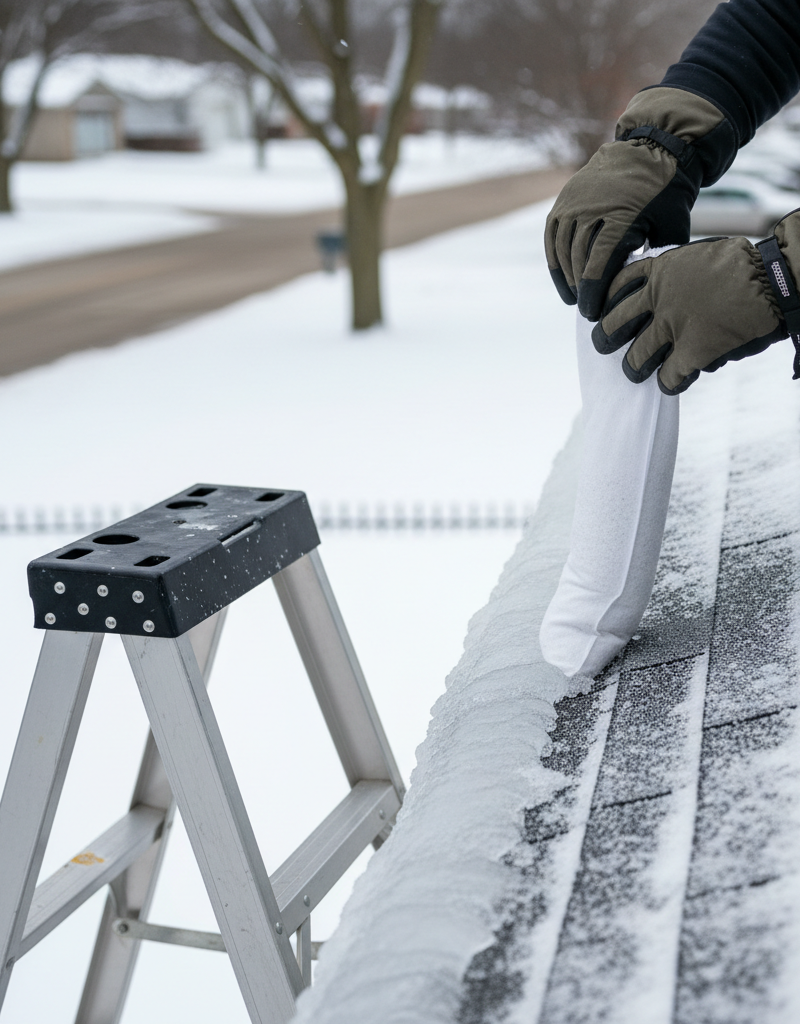
Create Melt Channels — This step is not about destroying the ice dam with force. Fill a pair of old pantyhose or a fabric tube with a calcium chloride ice melt product. Lay these tubes vertically across the ice dam every few feet. The calcium chloride will slowly melt through the dam, creating channels for the trapped water to drain away. Crucially, never use rock salt (sodium chloride), as it is highly corrosive and will damage your shingles, flashing, and gutters, and kill your landscaping.
-
Aggressively Chip Ice (Not Recommended) — While it may be tempting, attacking an ice dam with a hammer, axe, or shovel is a recipe for disaster. You are almost certain to damage your shingles, leading to leaks long after the ice is gone. This should be avoided at all costs.
-
Call for Steam — The safest and most effective way to have a severe ice dam removed is to hire a professional who uses a low-pressure, high-temperature steam machine. This melts the ice quickly and completely without any impact or chemical damage to your roofing materials.
Long-Term: The Permanent Solution
-
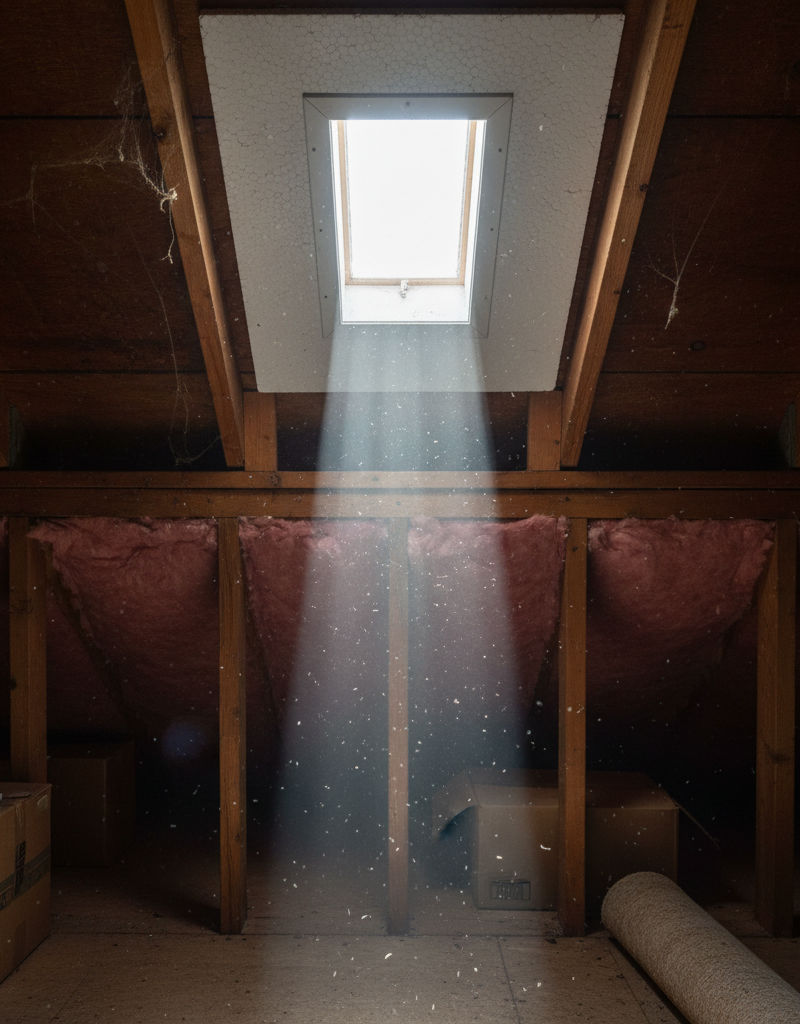
Conduct an Attic Audit — The real fix is inside your attic. On a cold winter day, carefully go into your attic. Is it noticeably warmer than the outside air? Look for signs of moisture like frost on the underside of the roof sheathing or damp, compacted insulation. Check to see if insulation is blocking your soffit vents at the eaves.
-
Air Seal the Attic Floor — This is the single most important step. You must stop the warm air from your living space from getting into the attic in the first place. Purchase several cans of fire-rated spray foam and acoustic caulk. Meticulously seal every penetration in your attic floor. Pay close attention to:
- Gaps around plumbing stacks and electrical wires.
- The tops of interior walls (top plates).
- Holes drilled for recessed lighting (if not IC-rated, they need to be boxed and sealed).
- The frame of the attic access hatch itself (add weatherstripping).
-
Boost Your Insulation — Once air leaks are sealed, assess your insulation levels. Many older homes are severely under-insulated. In colder climates, you should have a deep, fluffy blanket of insulation totaling R-49 to R-60 (roughly 16-20 inches deep). If your insulation is compressed, wet, or you can see the tops of your ceiling joists, you need to add more. Blown-in fiberglass or cellulose is an excellent choice for topping up existing insulation.
-
Verify Attic Ventilation — A cold attic requires good airflow. Ensure your soffit vents are clear and not blocked by insulation or paint. Installing plastic baffles can create a clear channel for air to flow from the soffit up the roof deck. Verify you have a continuous ridge vent at the peak of your roof for exhaust. If your ventilation is inadequate (e.g., only a few gable vents), consult a roofer about upgrading to a modern soffit-and-ridge system.
Common Causes
- Inadequate Attic Insulation: Not enough insulation allows furnace heat to escape and warm the roof deck.
- Poor Air Sealing: Gaps in the attic floor are a primary highway for heat loss, often a bigger culprit than insulation alone.
- Blocked or Missing Ventilation: Soffit vents blocked by insulation or a lack of ridge vents means warm, moist air gets trapped in the attic.
- Recessed Lighting: Older, non-IC-rated can lights generate tremendous heat and are a major source of attic warming.
- Bathroom/Kitchen Vents: Exhaust fans vented directly into the attic (instead of outside) pump warm, moist air right where you don’t want it.
- Complex Rooflines: Valleys and dormers can collect deeper snow, creating localized hot spots for melting.
Common Mistakes
- Attacking Ice with Tools: Using hammers, axes, or shovels to break ice will severely damage and shorten the life of your asphalt shingles.
- Using Rock Salt: Sodium chloride (rock salt) will corrode your metal flashing, gutters, and roofing nails, and is toxic to plants.
- Ignoring the Problem: Thinking icicles are normal allows hidden water damage to occur year after year, leading to major structural rot and mold.
- Relying on Heat Cables: Installing zigzag heating cables is an expensive band-aid. It treats the symptom (ice) with costly electricity, but doesn't fix the root cause (heat loss).
- Blocking Soffit Vents: When adding insulation, carelessly blowing it over the soffit vents at the eaves cuts off critical cool air intake for your attic.
- Improper Installation of Ice & Water Shield: This self-adhering membrane is required at the eaves in cold climates. Code often requires 3 feet of protection, but 6 feet is far superior for homes prone to ice dams.
Cost & Time Breakdown
| Task | DIY Cost | Pro Cost | Time Estimate |
|---|---|---|---|
| Roof Raking (per event) | $50-$100 (for rake) | $250 - $500 | 1-2 Hours |
| Emergency Ice Dam Removal | $20 (for CaCl2) | $500 - $2,000+ (Steam) | 2-5 Hours |
| Full Attic Air Sealing | $100 - $300 | $800 - $2,000 | 1-2 Days |
| Add Blown-In Insulation | $600 - $1,500 | $2,000 - $4,500 | 1 Day |
| Install Ventilation Baffles | $50 - $200 | $500 - $1,000 | 4-8 Hours |
| Upgrade Roof Vents | N/A | $750 - $2,500 | 1 Day |
Tips & Prevention
- Clean Your Gutters: Every autumn, ensure your gutters and downspouts are completely clear. Clogged gutters give ice dams a perfect foundation to build upon.
- Use a Roof Rake: A long-handled roof rake is a homeowner's best friend in snow country. After any snowfall over 6 inches, clear the first 4-6 feet of snow from your eaves.
- Get a Home Energy Audit: Many utility companies offer professional energy audits (sometimes subsidized) that use infrared cameras to pinpoint exactly where you are losing heat.
- Plan Your Next Roofing Project: When it's time for a new roof, insist that your contractor installs a high-quality ice and water shield membrane. In areas with ice dam history, demand coverage extending at least 24 inches inside the plane of the exterior wall, which often means installing a 6-foot wide membrane.
- Box Out Heat Sources: Before re-insulating, build sealed drywall boxes around any non-IC-rated recessed lights to isolate them from the new insulation.
When to Call a Professional
While some preventative measures are DIY-friendly, several situations absolutely require a professional with the right safety gear and expertise.
Call a pro immediately if you see water actively leaking into your home. A professional roofer can take emergency steps to stop the immediate damage.
For ice removal, if you have a steep roof (a pitch of 6:12 or greater), a multi-story home, or are uncomfortable on a ladder, do not attempt it. The only truly safe method for removing a large, established ice dam without damaging the roof is with professional-grade steam equipment.
For the long-term fixes, while air sealing and adding insulation can be a DIY job for a dedicated homeowner, it's often messy and time-consuming. Correcting significant attic ventilation problems—such as installing a new ridge vent or cutting in new soffit vents—is a job for an experienced roofing or ventilation contractor. They have the tools and knowledge to do the job right without compromising your roof's integrity. '''
Related Articles
Keep troubleshooting with these hand-picked guides from FixlyGuide:
- Your Insulation Isn't the Problem: Why Your Attic Still Bakes — Even with thick insulation, a hot attic signals a critical ventilation failure that could be silently damaging your roof and driving up you…
- Hail-Damaged Siding: A Homeowner's Guide to Inspection & Repair — Discover how to assess and repair hail damage on your home's siding, ensuring your home remains protected and looks its best.
- The Urgent Truth About Missing Roof Shingles (And Your 3-Step Fix) — High winds can rip shingles off your roof, exposing your home to immediate water damage – here’s how to assess, temporary patch, and plan p…
- Why Your Roof Only Leaks in Sideways Rain (It's Not the Shingles) — That maddening leak that only appears during severe, wind-driven rain isn't your shingles—it's a sign that water is being forced sideways b…
- Why Your '30-Year' Shingles Won't Last 30 Years — Most '30-year' asphalt shingles don't last 30 years; understand the real-world factors like climate, installation, and ventilation that det…
- Prevent Roof Damage: Gutter Cleaning & Maintenance for Homeowners — Clogged and neglected gutters can lead to significant roof damage, but regular cleaning and maintenance can prevent costly repairs and prot…
Frequently asked questions
Are icicles on gutters always a bad sign?+
Not always. Small, wispy icicles that form during a sunny day and disappear quickly can be normal. However, large, thick columns of icicles, especially those present for days on a snow-covered roof, are a strong indicator of significant heat loss from the attic, which is the primary cause of destructive ice dams.
Can I just use salt to melt the ice on my roof?+
No. You should never use rock salt (sodium chloride) on your roof. It is highly corrosive and will damage metal flashing, gutters, and roofing nails. It can also discolor your shingles and kill vegetation on the ground below. If you must use a chemical, calcium chloride is a much safer, though still temporary, option.
Do electric heat cables prevent ice dams?+
Heat cables or heat tape can prevent ice from forming on the specific areas where they are installed, but they are not a true fix. They are an expensive-to-operate 'band-aid' that treats the symptom (ice) without addressing the underlying problem of heat loss from your attic. Correcting your insulation and ventilation is the only permanent solution.
How much snow do I need to clear off my roof edge?+
Using a proper roof rake from the ground, you should aim to clear the snow from the first 4 to 6 feet of your roof edge. This removes the snow that would otherwise melt and feed the ice dam. Doing this after every heavy snowfall is one of the most effective preventative measures you can take.
Discussion
Loading comments…