Tools & materials you'll need
Affiliate linksNo materials required.
As an Amazon Associate FixlyGuide earns from qualifying purchases — at no extra cost to you. Prices and availability are accurate as of publication and subject to change.
Quick Answer
After a major windstorm, inspect your roof from the ground with binoculars. Look for missing, creased, or lifted shingles, especially on the edges and peaks. Also, check your gutters and downspouts for a large amount of asphalt granules, which look like black sand. Document any findings with photos and call a professional roofer for a full inspection, as most insurance policies have a 6-12 month time limit for filing a claim.
The Problem
The wind has stopped howling and the storm has passed, but the threat to your home might just be beginning. Wind damage on your roof is a subtle and insidious problem. Unlike a fallen tree, it doesn’t always announce its presence with a loud crash. Instead, it can leave behind a trail of seemingly minor issues that can escalate into catastrophic failures over time. A single shingle lifted by a 60-mph gust may not seem like a big deal, but it’s a breach in your home’s primary defense against the elements.
The most pressing issue is the insurance clock. Most homeowners' insurance policies have a "statute of limitations" for filing a claim, typically ranging from 180 days to one year from the date of the storm. If you don't spot the damage within this window, you forfeit your right to a claim, and the full cost of repairs—or a full roof replacement—falls squarely on your shoulders. The consequences of undiscovered wind damage are severe: slow, persistent leaks that saturate insulation, rot the underlying roof decking, and promote dangerous mold growth within your attic and walls. By the time you notice a water stain on your ceiling, the damage is already extensive and far more expensive to fix.
How It Works
Understanding how wind damages a roof reveals why it’s often hard to see. It’s not just a matter of brute force tearing things apart. The primary culprit is wind uplift pressure. As wind flows over your roof, the principles of aerodynamics create a low-pressure zone above the roof surface, similar to how an airplane wing generates lift. This negative pressure pulls upwards on the shingles. Simultaneously, wind can be forced into any small cracks or openings on the surface, creating positive pressure from underneath. This combination of push and pull is a powerful force.
Asphalt shingles are most vulnerable. They are affixed to the roof deck with nails and sealed to the course below them with a thin strip of asphalt sealant. Strong winds can break this sealant bond. The wind then gets a better grip on the shingle, bending it upward. The shingle might flap in the wind, fatiguing the material until it creases or tears. If it only lifts and then settles back down, the seal is now broken, leaving a pathway for wind-driven rain. A single broken seal on a key shingle can cause a chain reaction, allowing water to get underneath and compromise the surrounding shingles. This is why a single "lifted" or "creased" shingle, while appearing minor, is a significant indicator of wind damage on your roof and a critical sign that the roof's water-shedding capability has been compromised.
Step-by-Step Fix: The Homeowner Inspection Process
This guide outlines a safe, ground-based inspection to identify potential wind damage. The "fix" at this stage is to find and document the problem so you can engage a professional and your insurance company effectively.
SAFETY NOTE: This entire inspection must be performed from the ground or a secure second-story window. Do not, under any circumstances, get on your roof. A fall can result in serious injury or death. Leave ladders and rooftop work to licensed and insured professionals.
1. Review Your Records & Know the Storm Date Before you even look outside, gather your facts. Find the paperwork for your roof: how old is it? What material is it made of? Note the exact date of the windstorm. Your insurance company will require this specific date of loss.
2. Conduct a Perimeter Walk Start with a slow, deliberate walk around your entire house. Scan your lawn, landscaping beds, and driveway. Look for "shingle orphans"—entire shingles or significant pieces of shingle material that were blown off. Finding even one is a clear sign of damage that warrants a professional call.
3. Grab Your Binoculars A good pair of binoculars is your most important tool for a ground-level roof inspection. It allows you to get a close-up view without taking a single step up a ladder. Find a stable spot to stand, far enough back to see a large section of the roof plane at once.
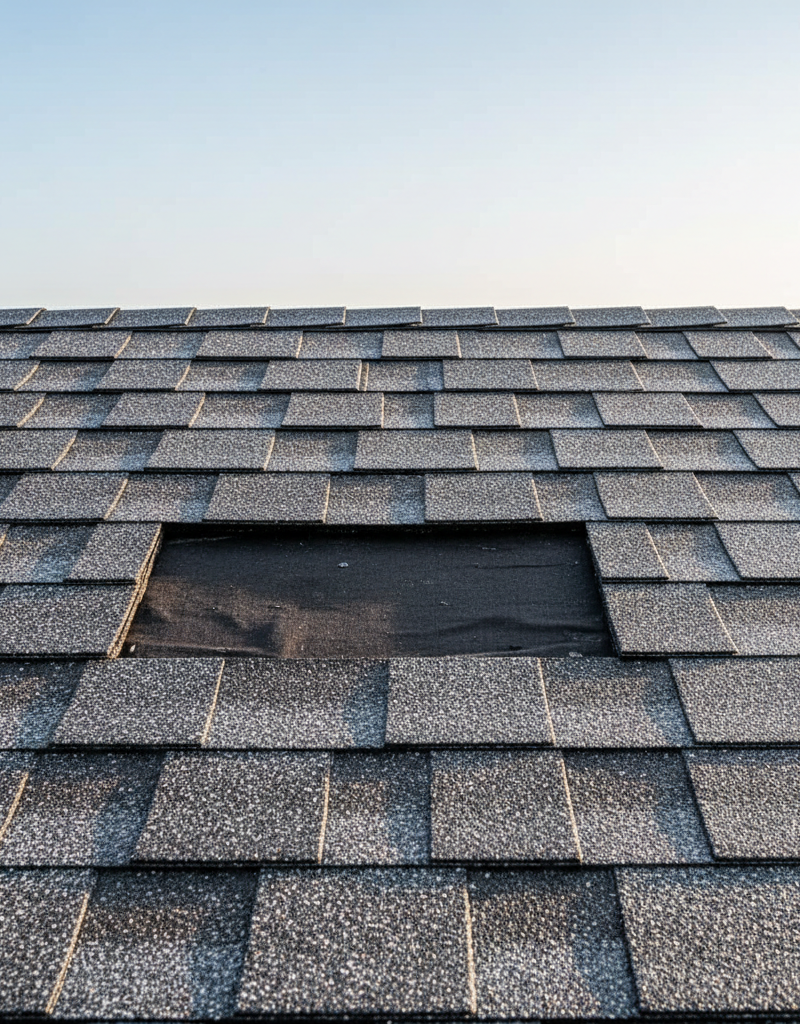
4. Systematically Scan the Roof Field Don’t just glance around. Scan the roof methodically, like reading a book. Move your view back and forth across the main "field" of shingles. Look for any shingles that are missing entirely, creating a gap in the pattern. Pay close attention to color and texture variations.
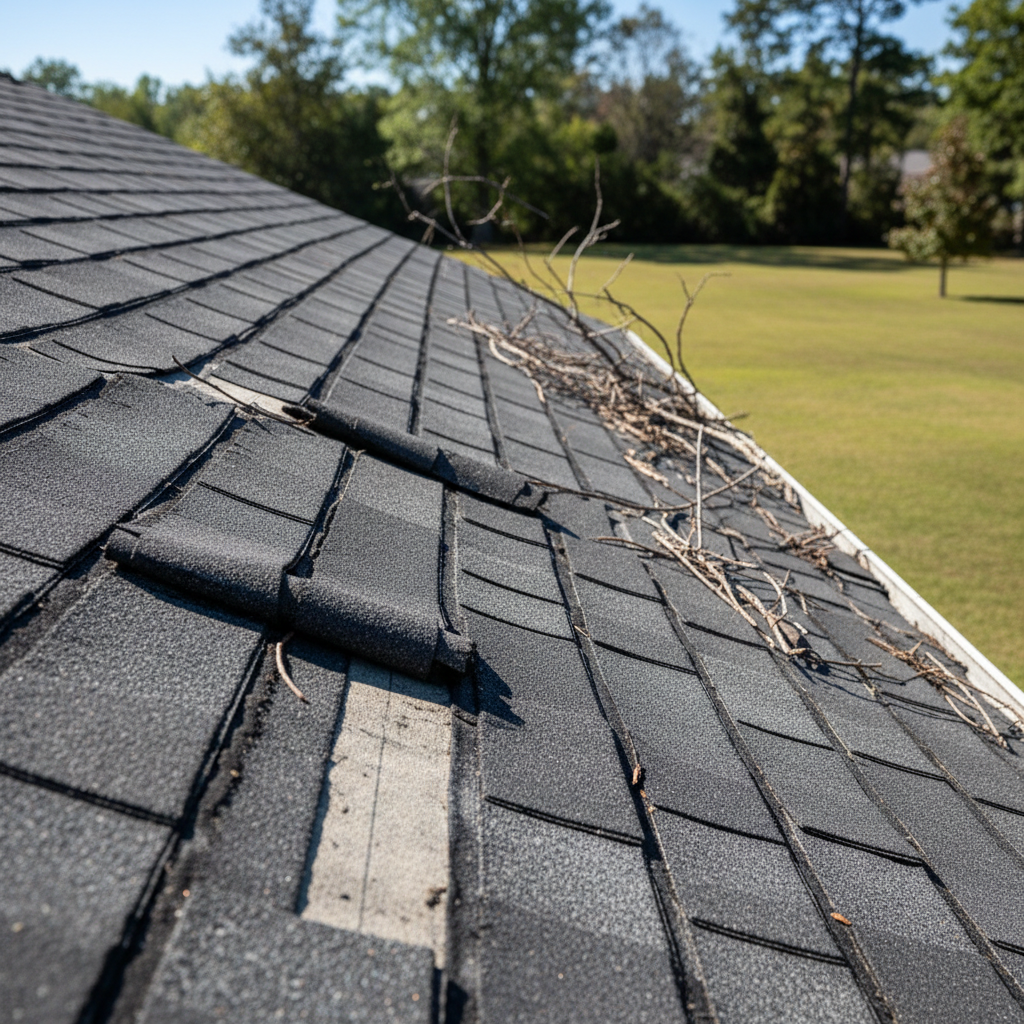
5. Spot Lifted or "Flipper" Shingles This is a critical, and often missed, sign of wind damage. Look for shingles where the bottom edge is slightly raised, casting a shadow line that looks out of place. The sealant strip has been broken by the wind. These shingles may appear to lie flat on calm days but will easily lift in future storms, funneling water directly onto the underlayment.
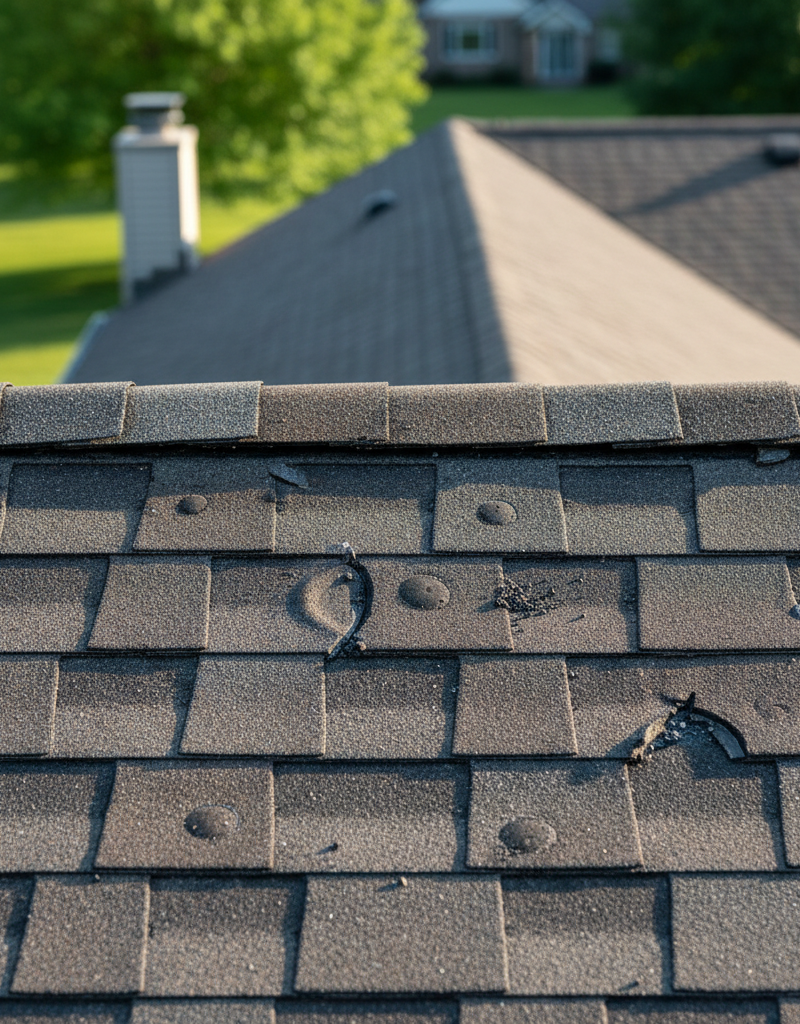
6. Identify Creased Shingles Look for a horizontal line or crease running across the upper portion of a shingle. This happens when the wind violently flaps the shingle back and forth but doesn’t tear it off completely. This crease represents a structural failure of the shingle itself; it is now weakened and will likely crack and fail completely over time.
7. Check for Heavy Granule Loss Use your binoculars to look at the roof surface for "bald" spots on the shingles where the protective granules have been scrubbed off. More importantly, check the openings of your downspouts and inside your gutters. A large accumulation of these black, sand-like asphalt granules is a sign of advanced age and/or significant storm trauma.
8. Inspect Ridges and Hips The "ridge cap" shingles along the peaks (ridges) and angled corners (hips) of your roof take a beating from the wind. They are more exposed and have more surface area for the wind to grab. Look carefully for any shingles that are cracked, missing, or lifted along these critical lines.
9. Examine Roof Penetrations Anything that sticks out of your roof—vents, plumbing stacks, chimneys, skylights—is a potential weak point. Wind can damage the metal flashing that seals these joints. Look for any flashing that appears bent, lifted, or out of place. This is a common entry point for water.
10. Do an Attic Check If it’s safe to do so, go into your attic with a powerful flashlight during the day. Turn off the lights. Look up at the underside of the roof deck. Do you see any pinpricks of daylight? This indicates a nail has popped or a shingle is missing. Scan the wood and insulation for any dark water stains, damp spots, or signs of active dripping.
11. Document Everything Meticulously Using your smartphone, take clear, well-lit pictures and videos of everything you find. For roof shots, zoom in to capture the creased or lifted shingle. Take wider shots to show its location on the roof. Photograph the granules in the gutters and any shingles you found on the ground. This documentation is non-negotiable proof for your insurance claim.
12. Call a Reputable Local Roofer Once your ground inspection is complete, your next step is to call a licensed, insured, and reputable local roofing contractor for a professional assessment. They can safely confirm your findings and identify damage you may have missed.
Common Causes
While high-speed wind is the obvious cause, the specific failures that lead to wind damage on your roof are more nuanced.
- Wind Uplift: As explained above, this aerodynamic force is the primary mechanism, pulling shingles up from the roof deck.
- Improper Installation: This is a huge factor. "High nailing," where nails are placed too high on the shingle, misses the common bond and provides very little holding power. An insufficient number of nails per shingle (most codes require 4-6) also creates a weak point.
- Failed Sealant Strip: The asphalt sealant can fail due to age, cold weather installation (which prevents a proper thermal seal), or manufacturing defects. Once the seal is compromised, shingles are highly vulnerable.
- Age and Material Degradation: As a roof ages, the asphalt shingles become brittle and the sealant loses its adhesive quality. An older roof can be damaged by wind speeds that a new roof would easily withstand.
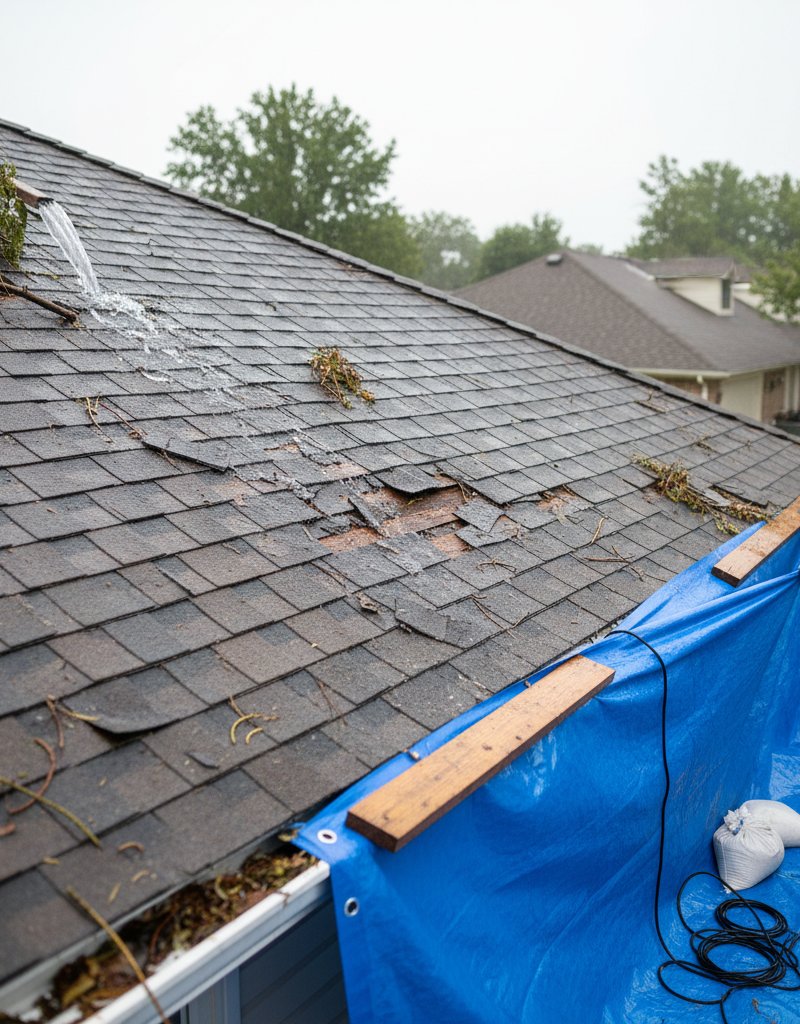
- Debris Impact: During a storm, wind doesn’t act alone. It carries tree limbs, branches, and other debris that can strike the roof, puncturing shingles and creating immediate leak points.
- Roof Pitch and Shape: Very low-slope or very high-pitch roofs can be more susceptible to specific wind forces. Complex roof geometries with many hips and valleys create more seams and edges for the wind to attack.
Common Mistakes to Avoid
Navigating a potential roof damage claim can be tricky. Avoid these common pitfalls:
- Waiting to Act: The biggest mistake is assuming that "no visible leak" means "no damage." You must proactively look for damage after a storm to avoid missing your insurance claim window.
- Getting on the Roof Yourself: This is a life-threatening risk. It can also cause further damage to the roof and potentially void a warranty or complicate an insurance claim.
- Hiring a "Storm Chaser": Be wary of out-of-town contractors who flock to areas after a storm. Stick with local, established companies with a long-standing reputation in your community.
- Signing a Contingency Agreement Immediately: Never sign a contract that locks you into using a specific roofer before your insurance company has even assessed the damage and approved the claim. This can strip you of your options.
- Dismissing "Minor" Damage: Do not ignore a few missing tabs or a single creased shingle. These are legitimate signs of damage that compromise the entire roofing system and should be part of a claim.
- Lack of Personal Documentation: Relying solely on your contractor's photos is a mistake. Always take your own timestamped photos and videos before any work is done. This is your personal proof.
Cost & Time Breakdown
This table outlines the typical costs and time involved in the inspection and repair process after discovering wind damage. Costs are estimates and can vary significantly based on your location, roof type, and the extent of the damage.
| Service / Item | Estimated Cost (USD) | Estimated Time |
|---|---|---|
| Professional Roof Inspection | $100 - $400 (often offered free by roofers hoping to get the repair job) | 1-2 hours |
| Minor Shingle Repair (a few shingles) | $150 - $400 | 1-2 hours |
| Section Replacement (10x10 ft "square") | $350 - $800 | 2-4 hours |
| Flashing Repair/Resealing (around chimney/vents) | $250 - $600 | 2-3 hours |
| Full Roof Replacement (Asphalt, per sq. ft.) | $4.75 - $9.50 | 2-5 days |
| Meeting with Insurance Adjuster | Your time | 1-2 hours on-site |
Tips & Prevention
While you can't stop the wind, you can take steps to mitigate potential damage and be prepared.
- Perform Biannual Inspections: Conduct the safe, ground-level inspection described above every spring and fall, and always after a major storm.
- Hire for Professional Check-ups: Every two to three years, have a professional roofer conduct a "roof tune-up" to seal any exposed nail heads and address minor issues before they become major problems.
- Invest in High-Wind Shingles: When it’s time to replace your roof, ask your contractor about impact-resistant or high-wind rated architectural shingles (e.g., Class F or Class H). The marginal extra cost is well worth the peace of mind.
- Keep Your Gutters Clean: Clogged gutters cause water to back up under the edges of your roof, which can worsen leaks caused by wind-driven rain getting under lifted shingles.
- Trim Overhanging Trees: Keep tree limbs trimmed well away from your roofline. This reduces the risk of scuffing damage from swaying branches and catastrophic impact from a falling limb during a storm.
- Know Your Insurance Policy: Read your homeowner's insurance policy before a storm hits. Understand your deductible, the specifics of your roof coverage (ACV vs. Replacement cost), and the exact procedure for filing a claim.
When to Call a Professional
Your ground-level inspection is a preliminary diagnostic tool, not a final verdict. You should always call a licensed, professional roofing contractor for a comprehensive inspection after any significant wind event. A trained professional has the safety equipment and expertise to get on the roof and identify subtle forms of damage that are invisible from the ground. They can physically lift shingles to check for broken seals, identify hairline cracks in flashing, and assess the integrity of the entire roofing system. Their detailed report is a crucial piece of evidence for your insurance claim. Furthermore, a reputable roofer can meet with your insurance adjuster on-site, pointing out the damage and ensuring that its full scope is understood and properly valued. This professional advocacy can be the difference between a denied claim and a fully funded roof repair or replacement.
SAFETY WARNING: Any work on a roof, electrical panel, or involving gas lines is not a DIY job. For your safety and the integrity of your home, always hire a licensed and insured professional for these tasks.
Related Articles
Keep troubleshooting with these hand-picked guides from FixlyGuide:
- Is Your Roof Hiding Hail Damage From You? — Hail damage to asphalt shingles is often invisible from the ground. Learn to identify the subtle signs of bruising, granule loss, and fract…
- 5 Signs Hail Secretly Damaged Your Roof (And How to Act Fast) — Learn to identify the subtle signs of hail impact on asphalt shingles, gutters, and flashing, so you can file an insurance claim before the…
- Wind Tore Off Your Shingles? The 7 Critical Steps Most Homeowners Miss — Discover the essential steps to take when roof shingles go missing after a storm, from immediate safety checks to temporary repairs and ins…
- The One Shingle Mistake That Creates Roof Leaks (And How to Fix It Fast) — Missing roof shingles after a storm can quickly lead to extensive water damage if not addressed correctly. Learn how to safely inspect and…
- Your Roof is Leaking. Now What? — A leaking roof after a storm is a homeowner's nightmare. Learn how to safely install a temporary roof tarp to prevent further water damage…
- The Silent Destroyer: 7 Hidden Signs Your Roof Has a Leak (Before You Need a New Ceiling) — Catching roof leaks early can save your home from extensive damage and costly repairs. Learn the subtle indicators that reveal hidden water…
Frequently asked questions
How long do I have to file a roof wind damage claim?+
This varies by insurance policy and state law, but a typical timeframe is between 180 days and one year from the date of the storm. Check your specific policy documents or call your agent to be certain. The clock starts ticking on the day of the storm, so it's crucial to act quickly.
Will my insurance rates go up if I file a claim for wind damage?+
Generally, claims resulting from natural disasters or "Acts of God" like a windstorm do not cause your individual premium to increase. However, if an entire region is hit by a severe storm, the insurance company may raise rates for everyone in that area to cover the widespread losses.
What if the only damage is a few missing or creased shingles? Is it worth a claim?+
Yes. Even a few damaged shingles mean the integrity of your entire roofing system is compromised. It's an active leak point for wind-driven rain. This type of damage is often enough to warrant an insurance claim, and ignoring it will lead to more extensive and expensive repairs down the road.
What is the difference between ACV and Replacement Cost coverage for a roof?+
Actual Cash Value (ACV) pays for the replacement cost of your roof minus depreciation. This means an older roof will get a much smaller payout. Replacement Cost Value (RCV) pays the full cost to replace the roof with similar quality materials, without deducting for depreciation. RCV coverage is far better for homeowners.
Discussion
Loading comments…