Tools & materials you'll need
Affiliate links- AmazonExtension Ladder1 · Must be tall enough to extend 3 ft past the roof edge.
- AmazonHeavy-Duty Work Gloves1 pair · To protect hands on the ladder and roof.
- AmazonSmartphone or Digital Camera1 · For documenting all evidence of damage.
- AmazonBinoculars1 · Useful for a preliminary inspection from the ground.
- AmazonSidewalk Chalk1 piece · A light color (white or yellow) works best to mark dark shingles.
As an Amazon Associate FixlyGuide earns from qualifying purchases — at no extra cost to you. Prices and availability are accurate as of publication and subject to change.
Quick Answer
From the ground, your roof might look perfectly fine after a hailstorm. However, from a ladder, you can spot the real damage: subtle circular bruises, patches of missing protective granules, and underlying fractures in the shingle's matting. The easiest initial signs are often dents in soft metal roof vents and a surprising accumulation of black granules in your gutters. This hidden damage compromises the shingle, shortening your roof's lifespan and inevitably leading to leaks, sometimes years after the storm.
The Problem
A significant hailstorm just rolled through your neighborhood. You look outside, and while your car might have a few dings, a glance up at your roof reveals... nothing. The shingles look flat, there are no obvious holes, and everything seems intact. This is the deceptive nature of hail damage on an asphalt shingle roof. It rarely creates the gaping holes you might expect. Instead, it inflicts subtle, insidious wounds that are almost entirely invisible from 40 feet below.
The danger lies in this hidden damage. Each hailstone acts like a hammer blow, crushing the shingle's structure. It dislodges the protective ceramic granules, exposing the underlying asphalt to UV radiation, which rapidly degrades it. It can also create tiny, spiderweb-like fractures in the fiberglass mat that serves as the shingle's backbone. For months or even a year or two, nothing may seem wrong. Then, small, persistent leaks begin to appear in your attic or on your ceilings. By the time you notice the water spots, the underlayment and decking may already be saturated, leading to wood rot, mold growth, and a far more expensive repair. Ignoring the potential for unseen hail damage is a gamble against your home's most critical line of defense.
How It Works
To understand why hail damage is so hard to spot, you need to know how an asphalt shingle is constructed. It isn't just a simple sheet of tar. A modern architectural shingle has several layers:
- Fiberglass Mat: This is the skeleton of the shingle, providing strength and tear resistance.
- Asphalt: A layer of specially formulated waterproof asphalt is applied to the top and bottom of the mat.
- Granules: Tiny ceramic-coated mineral granules are embedded into the top layer of hot asphalt. These granules are the shingle's armor. They protect the asphalt from the sun's damaging UV rays, provide fire resistance, and give the shingle its color.
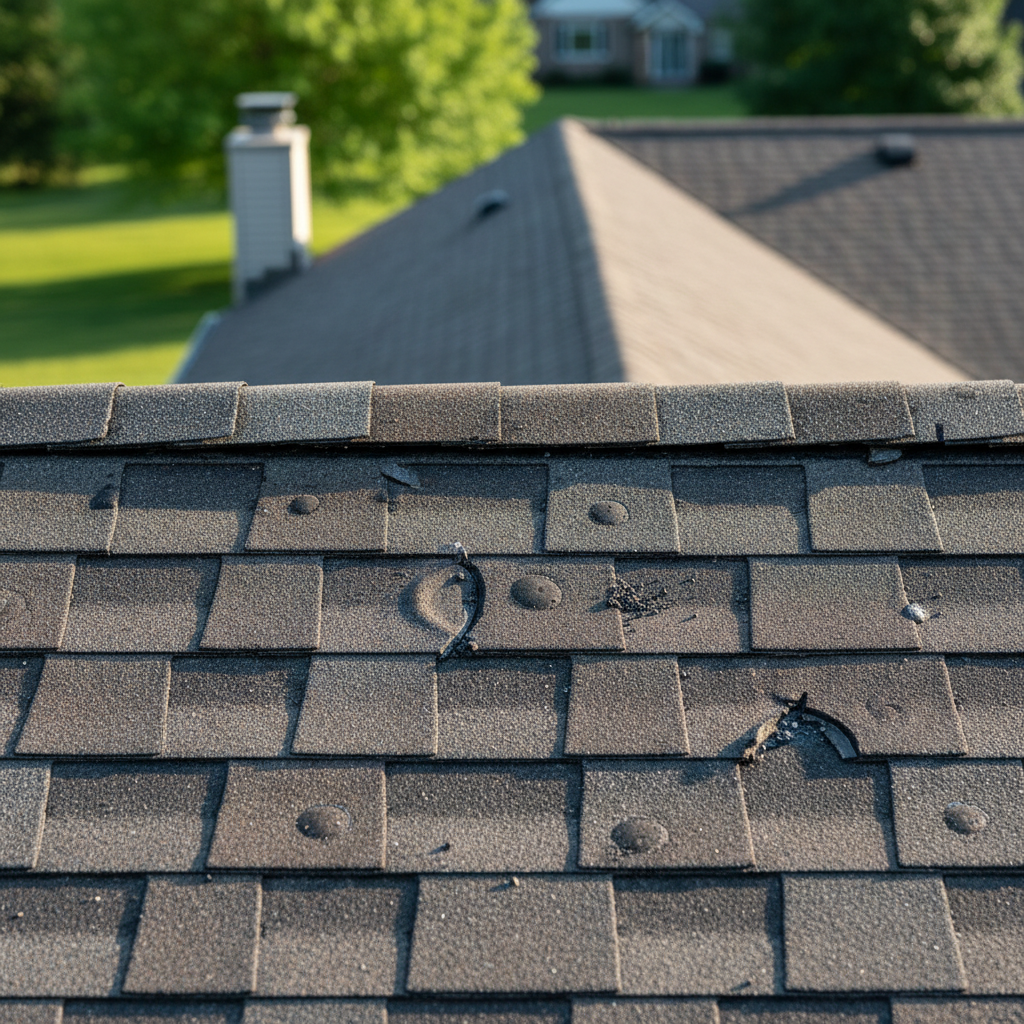
When a hailstone strikes the roof, it doesn't just bounce off. The force of the impact does two things. First, it knocks a cluster of those protective granules loose, exposing the raw asphalt beneath. Second, and more importantly, it compresses and potentially fractures the fiberglass mat underneath. This impact creates what roofers call a "bruise." The spot may not be soft to the touch immediately but has lost its structural integrity. From the ground, you can't see the missing granules or the bruise. The overall pattern of the roof looks unchanged. But from a ladder, these impact points look like dark, dull spots or subtle divots on the shingle's surface. Over time, as the exposed asphalt breaks down and the fractured mat expands and contracts, a crack forms and water finds its way in.
Step-by-Step Inspection
This guide focuses on inspecting your roof safely from a ladder, not by walking on it. Walking on a hail-damaged roof can be dangerous and can cause further damage.
SAFETY NOTE: Always prioritize safety. Inspect your ladder for good condition before use. Set it on firm, level ground. Use the 4-to-1 rule: for every four feet of height, the base should be one foot from the wall. Ensure the ladder extends at least 3 feet above the roof edge. Avoid power lines and work on a calm, dry day.
-
Safety & Tool Prep: Put on your work gloves. Grab your sidewalk chalk and smartphone. Ensure your extension ladder is in good working order and that you know how to operate it safely.
-
Ground-Level Clues: Before even getting on the ladder, walk the perimeter of your house. Look for dents on air conditioner fins, window screens, siding, and especially downspouts. These are tell-tale signs the hail was large and hard enough to damage the shingles.
-
Optimal Lighting: The best time to inspect is on an overcast day or during the early morning or late afternoon when the sun is at a low angle. Direct, overhead sunlight can wash out the subtle depressions and shadows that indicate hail hits.
-
Ladder Placement: Position your ladder to inspect one of the roof slopes that faced the direction of the storm. Secure the base and ensure the extension locks are engaged before you climb.
-
Check the Gutters First: This is a critical first step from the ladder. Look inside the gutters. Do you see an unusual accumulation of black, sand-like granules? A massive loss of granules is the #1 sign of widespread hail impact and a shortened roof lifespan.
-
Inspect Metal Vents & Flashing: Once at the top of the ladder, look at any soft metal components on the roof plane. This includes turbine vents, box vents, and furnace caps. These components are your "canary in the coal mine." They dent easily. If you see multiple dings on your metal vents, you almost certainly have hail damage on the shingles.
-
Choose a Test Square: From your ladder vantage point, visually mark out a 10-foot by 10-foot section of the roof. Don't just glance over it; scan it methodically, shingle by shingle.
-
Identify Bruising & Granule Loss: Look for circular spots where the granules are missing and the underlying black asphalt is exposed. These may be the size of a dime, quarter, or even a half-dollar. On a sunny day, these spots may have a "shiny" appearance because the exposed asphalt is reflecting light differently than the granule-covered surface. These are hail hits.
-
The "Bruise" Test (By Sight): A true hail bruise is more than just cosmetic granule loss. It's a spot where the shingle itself has been crushed. Look for a subtle indentation or a circular pattern where the shingle texture is disturbed. It may look slightly flattened or pushed in compared to the surrounding area.
-
Use Chalk to Reveal Fractures: Take a piece of sidewalk chalk and lightly run the side of it over a suspected impact area. The chalk will catch on the edges of any micro-fractures in the shingle that are invisible to the naked eye, highlighting them like a spiderweb.
-
Document Everything: Use your smartphone to take pictures of everything you find. First, take a wider shot of the 10x10 test square to establish the density of the hits (e.g., "12 hits in this square"). Then, take close-up photos of individual hits, dents on vents, and granules in the gutter. For scale, place a coin next to a hail mark. Use your chalk to circle the damage before taking the photo to make it obvious. This documentation is crucial for insurance claims.
-
Repeat on Other Slopes: If it's safe to do so, move the ladder to inspect all other roof slopes. The severity of damage can vary dramatically from one side of the house to another, depending on the storm's direction.
Common Factors in Hail Damage
The severity of hail damage isn't just about the size of the hailstones. Several factors determine the outcome:
- Roof Age: Older shingles are more brittle and have already lost some granules, making them far more susceptible to damage.
- Shingle Type: Basic 3-tab shingles are thinner and less durable than heavier architectural or laminated shingles. Class 4 Impact-Resistant shingles offer the best protection.
- Roof Slope: A lower-pitched roof presents a more direct target for falling hail and will sustain more damage than a steep-sloped roof where hailstones strike a more glancing blow.
- Hail Characteristics: The size, density (some hail is slushy, some is solid ice), and shape of the hailstones matter. Wind-driven hail is also far more destructive.
- Underlying Decking: If the roof decking underneath is not solid (e.g., spaced planking on an old house), the shingles have less support and can be punctured more easily.
Common Mistakes to Avoid
- The Ground-Level Glance: The single biggest mistake is looking up, seeing nothing, and assuming you're fine. You must perform a close-up inspection.
- Walking on the Roof: Never walk on a wet or potentially compromised roof. You can dislodge more granules, grind them into other shingles, and risk a serious fall.
- Ignoring Metal Dents: Believing that dents on vents are just "cosmetic." They are your proof that the hail was strong enough to damage the entire roof system.
- Delaying Inspection: Your insurance policy has a time limit for filing claims (often 1-2 years). The longer you wait, the harder it is to prove the damage came from a specific storm, and the more time you give leaks to develop.
- Not Checking Gutters: Failing to look for granule loss in the gutters is missing the most obvious piece of evidence.
- Hiring a "Storm Chaser": Be wary of unsolicited contractors who knock on your door right after a storm. Stick with local, reputable, and certified roofing companies.
Cost & Time Breakdown
This project is about inspection, not repair. The goal is to assess whether you need to file an insurance claim and call a professional.
| Item | Cost (DIY) | Cost (Professional) | Notes |
|---|---|---|---|
| Initial Inspection | $0 | $200 - $500 | Professional inspectors provide a detailed report and may use drone footage. Cost may be waived if they get the repair job. |
| Ladder Usage | $0 (if owned) | N/A | Renting an extension ladder can cost $50-$80 per day. |
| Tools (Chalk, Gloves) | ~$15 | Included | Minor cost for basic materials. |
| Time | 1-3 hours | 1-2 hours | Depends on the size and complexity of your roof. |
| Total | ~$15 | $200 - $500 | A small price for peace of mind or for thousands of dollars in justified insurance claims. |
Tips & Prevention
- Pre-Storm Photos: Take pictures of your roof every year or two on a clear day. This "before" gallery is invaluable for proving "after" damage to an insurance adjuster.
- Know Your Policy: Read your homeowner's insurance policy today. Understand your deductible for wind/hail, any cosmetic exclusions, and the timeframe you have for filing a claim.
- Clean Gutters Regularly: Clean gutters are a great diagnostic tool. If you clean them in the spring and find them full of granules after a summer hailstorm, you have clear evidence of damage.
- Choose Impact-Resistant Shingles: If you live in a hail-prone region ("Hail Alley" in the Midwest, for example), specify Class 4 Impact-Resistant (IR) shingles when it's time to replace your roof. They cost more upfront but can save you from future claims and may earn you a discount on your insurance premium.
- Find a Pro Before You Need One: Research the top 3-5 certified local roofers in your area now. Put their numbers in your phone. If a storm hits, you won't have to scramble or fall prey to a storm chaser.
When to Call a Professional
Let's be clear: getting on a ladder to look at your roof is inherently risky. If you are not 100% stable on a ladder, are afraid of heights, or have a particularly steep or high roof, do not attempt this inspection. A professional roofer is trained and insured to work at height safely. A fee of a few hundred dollars for an inspection is a tiny price to pay to avoid a life-altering fall.
Furthermore, a certified roofing inspector knows exactly what to look for. They can distinguish between normal wear and tear and legitimate hail damage—something an insurance adjuster may try to dispute. They have seen thousands of roofs and can spot subtle patterns of damage you might miss. Finally, if damage is found, their detailed report, expert opinion, and professional estimate are the most powerful tools you can have when initiating an insurance claim. If you have even the slightest doubt about your findings or your safety, make the call. It's the safest and most effective way to protect your home. A professional can also help you navigate the complexities of the insurance claim process, ensuring you get the fair settlement you're entitled to.
Related Articles
Keep troubleshooting with these hand-picked guides from FixlyGuide:
- Did Wind Damage Your Roof? Find Out Before It's Too Late — High winds can inflict serious, yet subtle, damage to your roof. Learn to spot the hidden signs of wind damage from the safety of the groun…
- 5 Signs Hail Secretly Damaged Your Roof (And How to Act Fast) — Learn to identify the subtle signs of hail impact on asphalt shingles, gutters, and flashing, so you can file an insurance claim before the…
- Your Roof is Leaking. Now What? — A leaking roof after a storm is a homeowner's nightmare. Learn how to safely install a temporary roof tarp to prevent further water damage…
- Why Your Roof Only Leaks in Sideways Rain (It's Not the Shingles) — That maddening leak that only appears during severe, wind-driven rain isn't your shingles—it's a sign that water is being forced sideways b…
- The One Shingle Mistake That Creates Roof Leaks (And How to Fix It Fast) — Missing roof shingles after a storm can quickly lead to extensive water damage if not addressed correctly. Learn how to safely inspect and…
- The Silent Destroyer: 7 Hidden Signs Your Roof Has a Leak (Before You Need a New Ceiling) — Catching roof leaks early can save your home from extensive damage and costly repairs. Learn the subtle indicators that reveal hidden water…
Get the print-ready PDF of this guide
A clean, ad-free, printable version you can keep on your phone or pin to the workshop wall. We'll also send occasional weekly tips matched to your home situation.
- Print-optimized layout
- Tools, materials & every step included
- Unsubscribe anytime
Frequently asked questions
How long do I have to file an insurance claim for hail damage?+
This varies significantly by policy and state, but it's typically between six months and two years from the date of the storm. It's critical to read your policy or call your agent immediately after an inspection reveals damage to understand your specific deadline.
Will a few hail hits void my roof warranty?+
Yes, it can. Most shingle manufacturer warranties cover defects in the product itself, not damage from 'acts of God' like hailstorms. The damage from hail is typically covered by your homeowner's insurance policy, not the shingle warranty.
Can I just repair the shingles that have hail damage?+
For very minor, isolated damage, patching may be an option. However, hail affects the entire roof slope. If you have more than 8-10 hits in a 10x10 foot square, most insurance companies will declare it a total loss and pay for a full replacement, as patching that many spots is impractical and provides a less reliable repair.
What is a Class 4 shingle?+
A Class 4 shingle is an impact-resistant shingle that has passed the UL 2218 test, which involves dropping a 2-inch steel ball from 20 feet without the shingle fracturing. They offer the highest level of hail protection for residential roofs.
Discussion
Loading comments…