
Tools & materials you'll need
Affiliate links- AmazonMultimeter1 · For testing electrical components.
- Amazon5-Gallon Bucket1 · For testing flow rate and draining.
- AmazonPhillips & Flathead Screwdrivers1 set · For removing access panels.
- AmazonChannel-lock Pliers1 · For general plumbing connections.
- AmazonWater Heater Element Wrench1 · A special socket for removing heating elements.
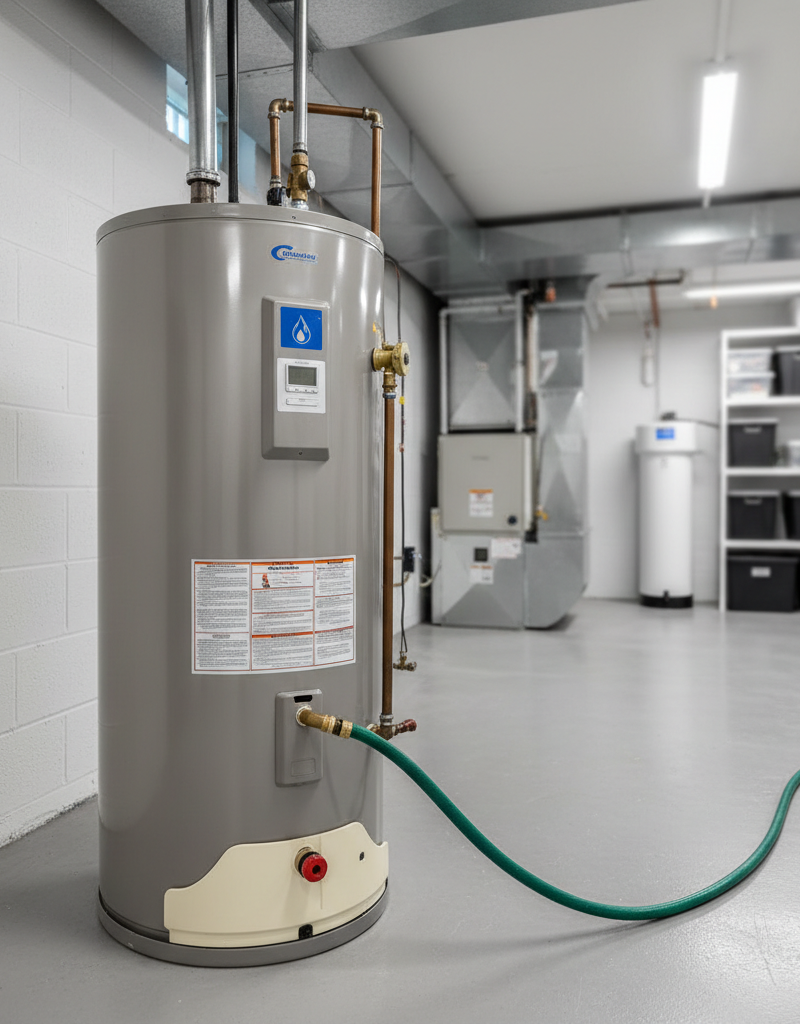
- AmazonGarden Hose1 · For flushing the tank.
As an Amazon Associate FixlyGuide earns from qualifying purchases — at no extra cost to you. Prices and availability are accurate as of publication and subject to change.
Quick Answer
If your hot water runs out quickly, it's likely due to one of three issues: sediment buildup in your water heater tank reducing its effective capacity, a broken dip tube feeding cold water directly to the top of the tank, or a malfunctioning heating element (in an electric heater) that can't keep up with demand. Start by checking your shower head's flow rate and then investigate your water heater's components.
The Problem
It’s a frustratingly common scenario. You step into the shower, expecting a long, relaxing stream of hot water. The first five minutes are perfect, but then, far sooner than you expect, the water begins its inevitable slide toward lukewarm, then outright cold. You find yourself rushing to rinse the shampoo from your hair as the comfort of the hot spray is replaced by a chilly disappointment. This isn’t just an inconvenience; it’s a baffling problem that disrupts your daily routine. You know you have a large water heater tank, so why does it feel like you’re living with a tiny, inadequate unit? The issue might not be the size of your heater, but the unseen problems developing within it or even at the point of use.
How It Works
To understand why your hot water is disappearing, you first need to understand how your water heater functions. Most homes use a conventional storage-tank water heater.
Conventional Tank-Style Heaters (Electric): A standard 40- or 50-gallon electric water heater is a simple, effective machine. It’s an insulated steel tank with two primary components: two heating elements and two thermostats. Cold water enters the tank near the bottom via a long plastic dip tube. Because heat rises, the hottest water naturally gathers at the top of the tank, where the hot water outlet pipe draws it to supply your faucets and shower. The two heating elements are responsible for heating the water. The top element is the primary one; it heats the top third of the tank and passes control to the lower element. The lower element then heats the bottom two-thirds of the tank. The two thermostats, one for each element, act as temperature-sensing switches. When the water around a thermostat drops below its set point (usually 120-125°F), it sends power to its corresponding heating element, which glows red-hot to transfer heat to the water. The top element gets priority, ensuring a small amount of hot water is always ready. Once the top is hot, the lower element takes over to heat the rest. If either of these components fails, your hot water supply can be drastically cut.
Conventional Tank-Style Heaters (Gas): A gas heater works on the same principle of stratification (hot water on top, cold on the bottom) and also uses a dip tube. However, instead of electrical elements, it uses a gas burner at the bottom of the tank, controlled by a gas valve and a thermostat. When the thermostat senses the water temperature has dropped, it opens the gas valve, a pilot light ignites the main burner, and the flame heats the water from below through the base of the tank. Exhaust gases travel up a central flue and out of your home. A problem here usually relates to the burner assembly or the thermostat, and due to the risks of carbon monoxide, these are best left to professionals.
Step-by-Step Fix
This guide focuses on diagnosing and fixing issues with an electric water heater, which is the most common type and offers more opportunities for safe DIY intervention.
🛑 SAFETY NOTE: Always turn off the power to your water heater at the circuit breaker before opening any access panels or touching any electrical components. Use a voltage tester to confirm the power is off.
-
Test Your Shower Head's Flow Rate — Before you touch the water heater, check if the problem is the shower itself. Place a 5-gallon bucket under the shower head and turn the shower on to full hot. Time how long it takes to fill the bucket. If it fills in less than 2 minutes, you have a high-flow shower head (over 2.5 gallons per minute) that is simply demanding more hot water than your tank can provide in a sustained way. Replacing it with a low-flow model (1.8 to 2.5 GPM) can instantly solve your problem.
-
Check the Thermostat Temperature Settings — Remove the small upper and lower access panels on the side of your water heater. You'll see a plastic cover over the thermostat. Carefully lift the insulation. Most thermostats have a small dial or screw that indicates the temperature. Both the upper and lower thermostats should be set to the same temperature, typically 120°F. If one is set significantly lower, it can cause a shortage of hot water.
-
Test the Upper Heating Element Thermostat — With the power off, disconnect the two wires from the upper thermostat terminals. Set your multimeter to measure resistance (Ω). Touch one probe to the leftmost screw terminal and the other to the screw terminal directly below it. A reading of infinity (or "O.L.") means the thermostat is working correctly (it's an open switch). Then, press the red reset button on the thermostat and test again. It should still read infinity. If you get a continuity reading at any point, the thermostat has failed and needs replacement.
-
Test the Lower Heating Element — It’s more common for the lower element to fail. With the power off, find the lower access panel. Disconnect the two wires attached to the screws on the element itself. Set your multimeter to read resistance (Ω) on the lowest setting (e.g., Rx1K). Touch the probes to the two screw terminals on the element. A good element will show a reading between 10 and 30 ohms. If you get a reading of infinity ("O.L."), the element has burned out and has no continuity. If you get a reading of zero, it has shorted. In either case, it needs to be replaced.
-
Look for Signs of a Broken Dip Tube — A broken dip tube is a classic cause of suddenly short showers. It stops directing incoming cold water to the bottom of the tank. Instead, it dumps cold water in at the top, where it immediately mixes with the hottest water, tricking you into thinking the tank is empty. To check this, briefly turn on a hot water tap at a sink close to the heater. If the water is briefly hot and then quickly turns lukewarm, a broken dip tube is a strong possibility. You might also find small pieces of white plastic clogging your faucet aerators, which is a tell-tale sign of a disintegrating dip tube.
-
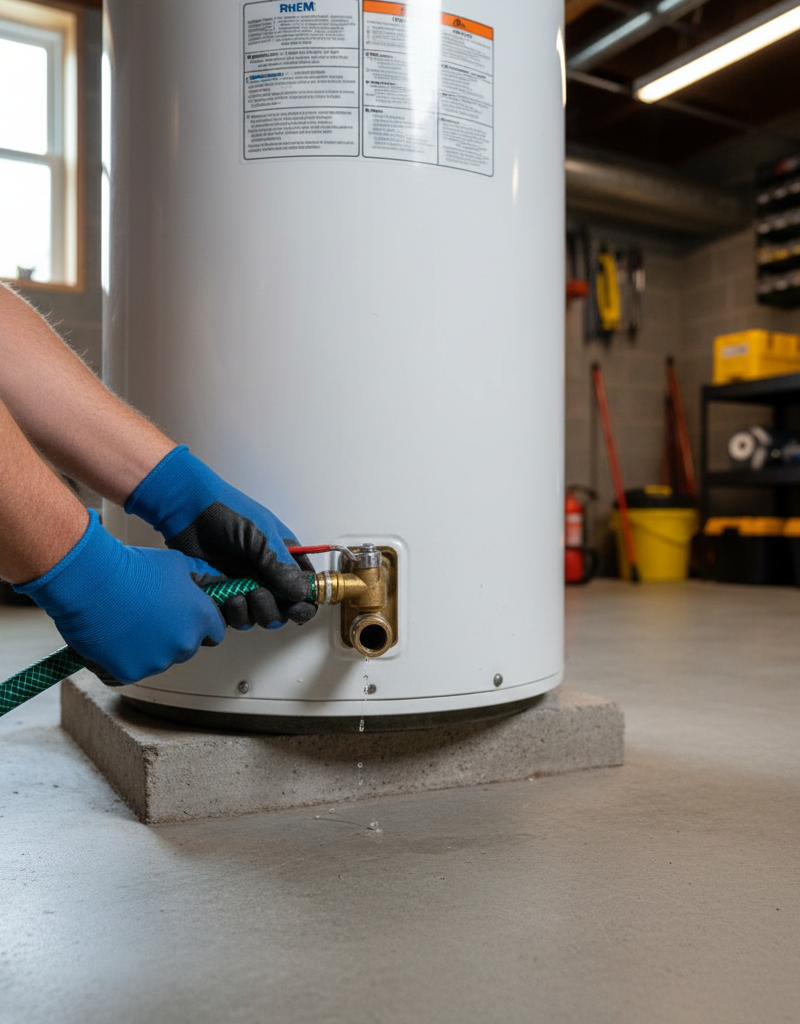
Perform a Mini-Flush for Sediment — Sediment is the enemy of your water heater. Place a bucket under the drain valve at the bottom of the tank. With the power still off, slightly open the drain valve for 15-20 seconds. If the water that comes out is milky, rusty, or full of sandy particles, you have a significant sediment problem. This layer of mineral buildup at the bottom of the tank insulates the lower heating element from the water, preventing it from heating effectively and reducing the tank's usable capacity.
-
Isolate the Heater and Check for Leaks — Turn off the cold water supply valve to the water heater. Ensure no one uses any hot water in the house for at least an hour. Check the water meter. If the meter’s dial is still moving, even slightly, you have a leak in a hot water pipe somewhere in your home. This constant drain will deplete your hot water supply without you ever seeing the leak.
-
Replace the Faulty Component — Based on your diagnosis, the fix could be replacing a heating element, a thermostat, or the dip tube. Replacing an element involves draining the tank, using a special element wrench to unscrew the old one, and installing the new one. Replacing a dip tube involves disconnecting the cold water inlet pipe and simply pulling the old tube out and inserting a new one. Both are manageable DIY tasks for a handy homeowner.
Common Causes
- Sediment Buildup: This is the #1 cause. Minerals like calcium and magnesium precipitate out of heated water and form a thick, sludgy layer at the bottom of the tank. This layer can displace gallons of water, reducing a 50-gallon tank to a 30-gallon effective capacity. It also forms a barrier that forces the lower heating element to work much harder, often causing it to fail prematurely.
- Broken or Short Dip Tube: These plastic tubes are submerged in hot water for years and can become brittle, cracking or breaking off. A tube that should be 40 inches long might break off to be only 10 inches long. When this happens, incoming cold water mixes directly with the outgoing hot water at the top of the tank, causing a rapid temperature drop.
- Failed Lower Heating Element: In an electric heater, the lower element does the bulk of the work. When it fails, only the small upper element is left to heat the top portion of the tank. This gives you a very small amount of hot water that runs out extremely fast, as there is no heating happening in the bottom 70% of the tank.
- Malfunctioning Thermostat: If the lower thermostat fails, it will never signal the lower element to turn on. The symptoms are identical to a failed lower element. Less commonly, a thermostat can be miscalibrated, shutting off the element before the water is fully heated.
- Undersized Water Heater: Your household may simply be using more hot water than your heater was designed for. A 40-gallon tank might be fine for two people, but if you have a family of four and run the dishwasher and laundry frequently, it might be too small to keep up with demand.
- High-Flow Fixtures: That wonderful rain-style shower head might feel great, but if it has a flow rate of 3.5 gallons per minute (GPM), it will drain a 40-gallon heater in just over 10 minutes. Modern codes mandate fixtures of 2.5 GPM or less for this very reason.
Common Mistakes
- Never Flushing the Tank: Most homeowners are unaware that water heaters require an annual flush to remove sediment. Ignoring this maintenance is the single biggest contributor to poor performance and premature failure.
- Setting the Temperature Too High: Thinking that a hotter setting will produce more hot water is a mistake. It actually accelerates mineral buildup and creates a severe scalding risk. The energy cost also rises significantly for every 10 degrees you increase the temperature.
- Replacing the Wrong Part: Homeowners often assume the problem is the water heater itself and replace it, only to find the issue was a $15 dip tube or a $20 shower head.
- Ignoring a Leaking T&P Valve: The Temperature and Pressure Relief valve is a critical safety device. If it's weeping or dripping, it may indicate excessive pressure or temperature in the tank. Simply capping it is incredibly dangerous and can lead to an explosion.
- DIY Gas Heater Repair: Attempting to service the gas valve, thermocouple, or burner assembly on a gas water heater is extremely dangerous for a non-professional. A mistake can lead to a gas leak or carbon monoxide poisoning.
Cost & Time Breakdown
| Task | DIY Cost | Pro Cost | Time |
|---|---|---|---|
| Professional Diagnosis | N/A | $100 - $200 | 1 hour |
| Replace Shower Head | $20 - $70 | $120 - $250 | 15 minutes |
| Full Tank Flush | $5 (hose) | $150 - $300 | 1-2 hours |
| Replace Heating Element | $15 - $30 | $200 - $400 | 2-3 hours |
| Replace Dip Tube | $10 - $20 | $180 - $350 | 1-2 hours |
| Replace Water Heater | $500 - $1,200 | $1,200 - $2,500+ | 4-6 hours |
Tips & Prevention
- Flush Annually: At least once a year, connect a hose to the drain valve and flush your tank until the water runs clear. This is the best thing you can do for its health and your hot water supply.
- Install Low-Flow Fixtures: Swap out old shower heads and faucet aerators for modern, efficient models. You likely won't notice the difference in pressure but you will absolutely notice the longer-lasting hot water.
- Insulate Your Pipes: Wrap the first 6-10 feet of the hot and cold water pipes connected to your heater with foam pipe insulation. This reduces "standby heat loss" and can make your water hotter upon delivery.
- Check Your Dip Tube: If your heater is over 8 years old, consider proactively replacing the dip tube. It's an inexpensive part that prevents a common and frustrating failure mode.
- Test Your T&P Valve: Once a year, place a bucket under the discharge pipe and briefly lift the lever on your T&P valve. A short burst of water should come out. This ensures the valve isn't seized.
When to Call a Professional
While diagnosing issues and replacing components on an electric water heater is within reach for many DIYers, certain situations absolutely require a licensed plumber.
Do not attempt to service a gas water heater yourself. The risks of improper installation—including gas leaks, fire, explosion, and carbon monoxide poisoning—are severe. Anything related to the gas supply line, burner assembly, thermocouple, or venting system is a job for a pro.
Additionally, if you see any signs of the tank itself leaking (puddles or steady drips from the bottom of the steel tank jacket), it cannot be repaired. The entire unit must be replaced, a job that often involves soldering pipes and ensuring compliance with local plumbing and electrical codes. If you are not 100% confident in shutting off power, testing circuits with a multimeter, and safely draining a 400-pound tank full of water, calling a professional is the wisest and safest choice. Their diagnostic fee can save you hours of frustration and prevent a simple repair from turning into a major flood.
Frequently asked questions
How long should a hot shower last with a 40-gallon heater?+
With a standard 2.5 GPM shower head and a 40-gallon tank, you can expect about 15-20 minutes of continuous hot water before it starts to cool down. If you're getting 10 minutes or less, you likely have a problem like sediment buildup or a failed component.
Can a bad thermostat cause my hot water to run out fast?+
Yes. In an electric heater, there are two thermostats. If the lower thermostat fails, it won't signal the lower heating element to turn on. This means only the top 1/3 of the tank gets heated, giving you a very small amount of hot water that runs out in minutes.
Will replacing my water heater guarantee longer showers?+
Not necessarily. If your problem is a high-flow shower head or an unknown leak in your hot water pipes, a new heater won't solve the issue. It's crucial to diagnose the root cause first before investing in a full replacement.
Is it normal to see white plastic bits in my faucet aerator?+
No, this is a classic sign of a disintegrating dip tube in your water heater. The dip tube is made of plastic and can become brittle over time, breaking apart. Those small white particles travel through your pipes and get caught in aerators and shower heads, indicating the tube needs to be replaced.
Discussion
Loading comments…