Tools & materials you'll need
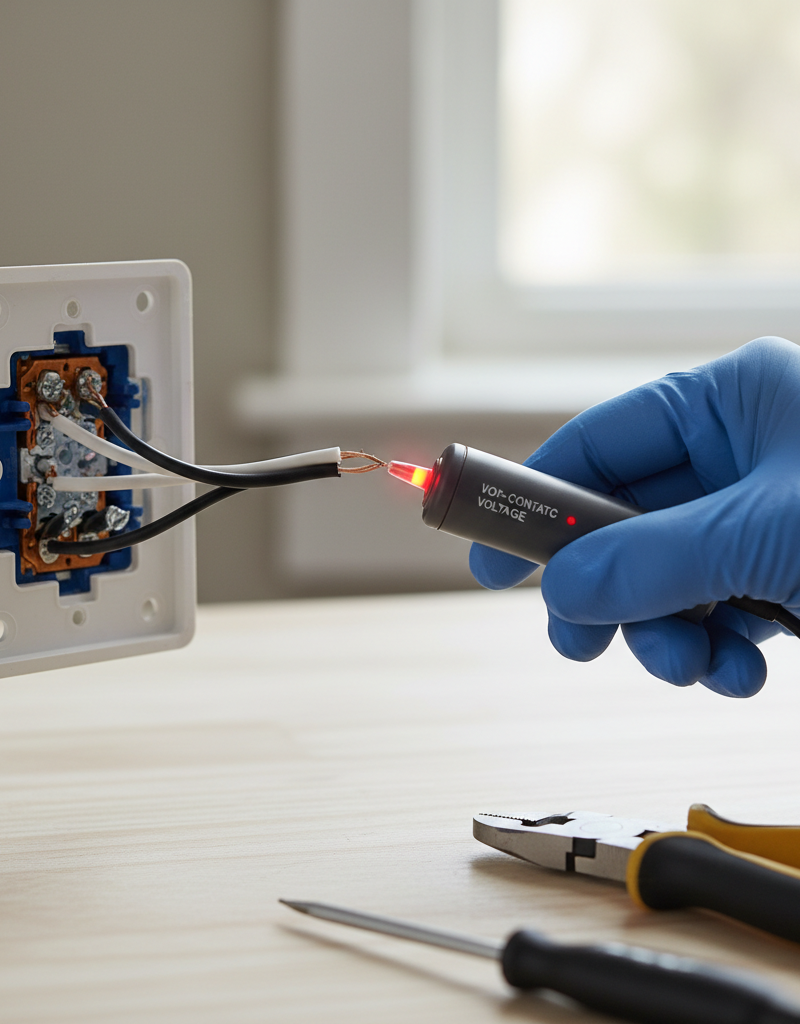
Affiliate links- AmazonNon-Contact Voltage Tester1 · CRITICAL for verifying power is off before touching any wires.
- AmazonTorque Screwdriver1 · Highly recommended for tightening connectors to the correct specification.
- AmazonWire Strippers1 · For removing insulation from wires.
- AmazonScrewdrivers (Flathead & Phillips)1 set · For removing and installing devices.
- AmazonOutlet Tester1 · For verifying correct wiring after installation.
- AmazonCO/ALR-Rated Outlets and SwitchesAs needed · Specifically designed for direct connection to aluminum wire.
- AmazonAlumiConn ConnectorsAs needed · The CPSC-recommended lug connector for pigtailing.
- AmazonSolid Copper Wire (THHN)1 roll · For making pigtails. #14 AWG for 15A circuits, #12 AWG for 20A circuits.
- AmazonStandard Outlets/SwitchesAs needed · For use with copper pigtails only.
As an Amazon Associate FixlyGuide earns from qualifying purchases — at no extra cost to you. Prices and availability are accurate as of publication and subject to change.
Quick Answer
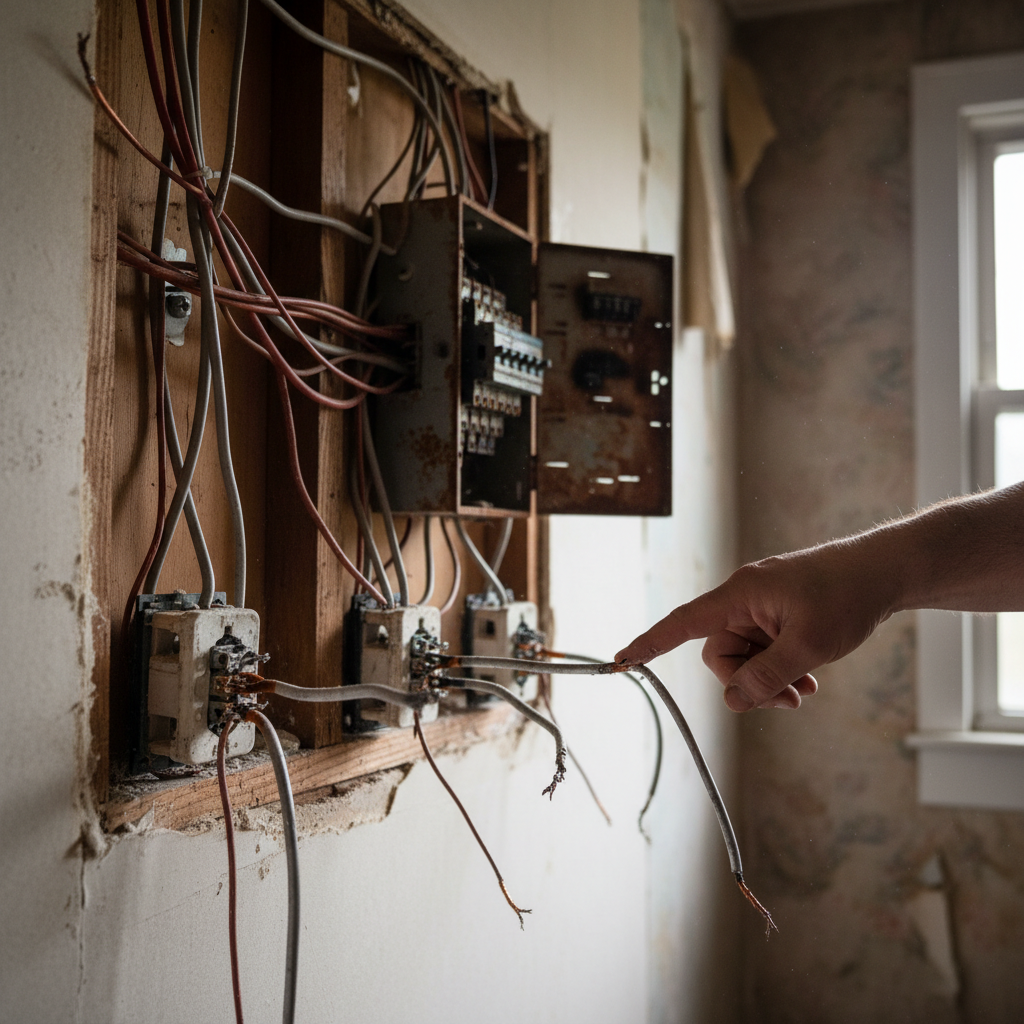
If your home was built or renovated between 1965 and 1973, your outlets might have solid-conductor aluminum wiring instead of copper. This wiring is a serious fire hazard because aluminum expands, contracts, and oxidizes differently than copper, causing connections at outlets, switches, and fixtures to become loose and overheat. Homeowners must have an electrician inspect it and either replace the wiring entirely or, more affordably, install special "CO/ALR" rated devices or crimp-on copper pigtails with UL-listed connectors to make the connections safe.
The Problem
The primary danger of solid aluminum wiring isn't the wire itself, but the connections. You plug in a vacuum cleaner, the circuit draws a heavy electrical load, and the aluminum wire heats up and expands. When you turn it off, the wire cools and shrinks. This cycle, repeated over thousands of times, is where the trouble begins. Aluminum expands and contracts at a much higher rate than the copper or brass terminals of a standard outlet, switch, or light fixture. This microscopic "thermal creep" causes the screw-terminal connections to loosen over time.
A loose connection is an electrical fire waiting to happen. Electricity struggles to jump the tiny gap that forms, creating high resistance. This resistance generates intense heat—a phenomenon known as arc-faulting. The heat can be hot enough to melt the plastic housing of an outlet or switch and ignite nearby flammable materials like insulation, wallpaper, or wood framing. The US Consumer Product Safety Commission (CPSC) reports that homes with aluminum wiring are 55 times more likely to have "one or more connections reach 'Fire Hazard Conditions'" than homes wired with copper.
Another critical issue is oxidation. When aluminum is exposed to air, it instantly forms a layer of aluminum oxide. Unlike copper oxide, which is conductive, aluminum oxide is a very poor electrical conductor. This oxide layer increases resistance at the connection point, adding yet another layer of risk and heat generation. Standard outlets and switches were not designed to deal with these unique properties of aluminum, making most original installations from the era inherently unsafe by modern standards.
How It Works
An electrical circuit is a continuous loop. Power flows from the main service panel, through a circuit breaker, along a "hot" wire (usually black), through a device (like an outlet), and back to the panel along a "neutral" wire (usually white). A safety ground wire (bare copper or green) is also present to protect against shocks.
For this system to work safely, every connection must be tight and have low resistance. Wires are connected to outlets and switches using either screw terminals on the side or "backstab" push-in connectors on the rear. The problem is that these connection points were engineered for copper, the standard for residential wiring for over a century.
In the mid-1960s, a spike in copper prices led to the introduction of solid-conductor aluminum wiring as a cheaper alternative for branch circuits (the 15- and 20-amp circuits that power lights and outlets). This wasn't the multi-stranded aluminum wire you see today for heavy-duty service entrance cables, but solid, single-strand aluminum wire (typically #12 or #10 AWG). Builders embraced it to control costs.
The fatal flaw was connecting this new aluminum wire to devices designed for copper. Besides the thermal expansion and oxidation issues, another subtle but dangerous reaction called galvanic corrosion can occur. When two different metals (like aluminum wire and a brass terminal screw) are in contact in the presence of moisture (humidity in the air), a tiny electrical current can flow between them, corroding the aluminum and further degrading the connection. Over years, this combination of mechanical loosening, insulating oxidation, and galvanic corrosion creates progressively more resistance, and therefore, more heat. It's a slow-burning fuse, where a once-safe connection silently degrades until it fails, often catastrophically.
Step-by-Step Fix
This guide covers identifying aluminum wiring and the two CPSC-approved permanent repair methods: using CO/ALR devices and the AlumiConn connector. A full home rewire is the ultimate solution but is vastly more expensive and invasive.
SAFETY FIRST: Working with aluminum wiring is more dangerous than copper. If you are not 100% confident, stop and call a licensed electrician. This is not a beginner project. Before starting, turn off the correct circuit breaker at your main electrical panel. Use a voltage tester to confirm the power is OFF at the outlet you are examining.
1. Initial Inspection
- Tools: Flathead screwdriver, Phillips head screwdriver, non-contact voltage tester.
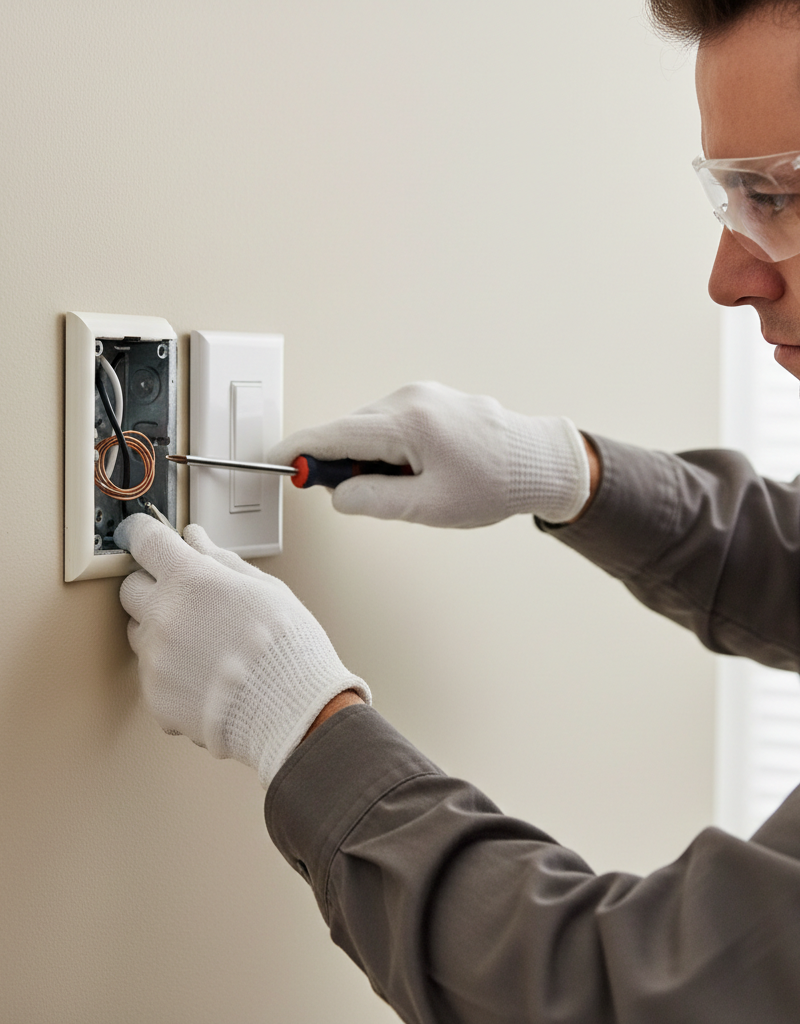
- Action: Turn off the breaker. Unscrew and gently pull an outlet or switch out from its box. Look at the exposed wiring connected to the device. Copper wire is copper-colored. Aluminum wire is a distinct silver or grey color. Check the outer sheathing of the cable; it might be marked with "AL" or "ALUMINUM."
2. Identify the Wiring Type
- Action: Confirm you have solid, single-strand aluminum. If the wire is multi-stranded, it's likely a different type of wiring (like tin-coated copper or modern stranded aluminum for large appliances) that may not pose the same risk. This guide specifically addresses solid-conductor aluminum used for 15A and 20A branch circuits.
METHOD 1: Installing CO/ALR Devices
This is the simpler of the two primary fixes.
3. Purchase CO/ALR Devices
- Materials: CO/ALR-rated outlets and switches.
- Note: These devices are specifically designed to be used with aluminum wire. They have screw terminals made of a special tin-plated metal that is more compatible with aluminum and designed to mitigate the risks of expansion and oxidation. They are clearly marked "CO/ALR" on the mounting strap. They cost significantly more than standard devices.
4. Remove the Old Device
- Tools: Screwdrivers, wire strippers.
- Action: With the power confirmed off, unscrew the terminals and detach the old outlet or switch. Carefully inspect the ends of the aluminum wires. If they are nicked, brittle, or heavily oxidized, you may need to trim them back and strip a fresh 1/2-inch of insulation. Be extremely gentle; old aluminum wire can be brittle and break easily.
5. Connect the New CO/ALR Device
- Action: Following the device instructions, loop the aluminum wire clockwise around the screw terminals. This ensures the wire is pulled tighter as you tighten the screw. Tighten the screws to the manufacturer's specified torque (usually found on the packaging, around 12-14 inch-pounds). Do NOT use the backstab push-in connectors, even if the device has them.
6. Reinstall and Test
- Action: Gently fold the wires back into the box, screw the new device in place, and install the faceplate. Turn the breaker back on and use an outlet tester to ensure it is wired correctly and receiving power.
METHOD 2: Pigtailing with AlumiConn Connectors
This is considered the most robust and permanent repair short of a full rewire. It involves attaching a short piece of copper wire (a "pigtail") to the aluminum wire and connecting the copper pigtail to the outlet or switch. This means all your devices will connect to standard, safe copper.
7. Purchase Connectors and Wire
- Materials: AlumiConn 3-port connectors (#95104, #95124, etc.), a short length of #12 or #14 AWG solid copper wire (THHN), standard high-quality outlets/switches.
- Note: The AlumiConn is a UL-listed aluminum-to-copper lug connector. It is a small rectangular block with ports for the wires. Inside, the wires are kept separate and a special anti-oxidant grease prevents corrosion. DO NOT use standard wire nuts, even the purple ones marketed for this purpose, as they are not considered a permanent, safe solution by the CPSC.
8. Prepare the Pigtails
- Tools: Wire strippers, wire cutters.
- Action: For each connection (hot, neutral, ground), cut a 6-inch piece of copper wire. Strip 1/2-inch of insulation from each end.
9. Install the AlumiConn Connector
- Action: Turn the breaker off and verify. Trim the old aluminum wire to get a fresh end. Insert the aluminum wire into one port of the AlumiConn, and the new copper pigtail into another port. The third port can be used if another wire needs to be connected (a "pass-through" circuit). Use a small torque screwdriver or nut driver to tighten the screw for each port to the specified torque (10-15 inch-pounds). You will be able to see the wires are secure through the clear case. The connector comes pre-filled with the necessary anti-oxidant compound.
10. Connect the Pigtail to a New Device
- Action: With the pigtailing complete, you now have a standard copper wire to work with. Connect the copper pigtail to a brand new, standard (and much cheaper) outlet or switch using its screw terminals. Loop the wire clockwise and tighten securely.
11. Fit Everything Back in the Box
- Challenge: The AlumiConn connectors and extra wire take up space. You need to carefully fold the wires into the electrical box. If the box is too small to accommodate the connectors (a common problem in older homes), you may need to replace the existing box with a deeper "old work" electrical box.
12. Final Test
- Action: Secure the device and faceplate. Turn the breaker on and use an outlet tester to verify your work is correct. This pigtailing method is the gold standard for mitigation and allows you to use any standard modern device safely.
Common Causes
- Copper Prices: The primary driver for the use of solid aluminum branch circuit wiring was a dramatic spike in the price of copper in the mid-1960s, making aluminum a tempting, cost-effective alternative for builders during a housing boom.
- Ignorance of Long-Term Risks: At the time, the full extent of the long-term dangers was not well understood. The industry believed that aluminum, a good conductor of electricity, could be a straightforward substitute for copper.
- Improper Installation: Even by the standards of the day, installers often used the wrong devices (non-CO/ALR) or used poor workmanship, such as nicking the wire or failing to torque scews correctly, which exacerbated the inherent problems.
- Era of Construction: The vast majority of homes with this issue were built or had major renovations between approximately 1965 and 1973. After this period, the dangers became more widely known, and the industry switched back to copper for branch circuits.
Common Mistakes
- Using Standard Outlets: Never connect aluminum wire directly to a standard outlet or switch only rated for copper ("CU"). This is the original, unsafe installation that causes fires.
- Using Standard Wire Nuts: Do not use regular wire nuts to connect aluminum to copper. The metals will react, and the connection will fail. Even the purple-colored "Al/Cu" wire nuts are considered a temporary or inadequate fix by the CPSC and many electricians.
- Re-using Old Devices: Never reinstall an old outlet or switch, even if it is CO/ALR rated. The internal springs and connection surfaces are worn and may not provide a secure connection.
- Over-torquing or Under-torquing: Tightening terminal screws too much can damage the soft aluminum wire, while not tightening them enough creates a loose connection from the start. A torque screwdriver is recommended for the AlumiConn or CO/ALR methods.
- Nicking the Wire: Aluminum wire is softer and more brittle than copper. Nicking or scraping the wire while stripping the insulation creates a weak point that can easily break off or create a hot spot.
- Ignoring the Problem: The most common mistake is seeing the silver-colored wire and doing nothing about it. The problem is progressive and will not fix itself. Evidence of trouble includes flickering lights, warm switch or outlet plates, or a smell of burning plastic.
Cost & Time Breakdown
| Task | DIY Cost | Pro Cost | Time |
|---|---|---|---|
| Inspect a Single Outlet | $0 | $100 - $150 (trip charge) | 15 minutes |
| Replace One Outlet with CO/ALR | $4 - $8 per device | $25 - $50 per device | 15-20 minutes |
| Pigtail One Outlet with AlumiConn | $3 - $5 per connector + wire | $30 - $60 per device | 20-30 minutes |
| Full Home Mitigation (1500 sq ft) | $300 - $600 (materials only) | $2,000 - $4,000 | 2-4 days |
| Full Home Rewire (1500 sq ft) | N/A (pro only) | $10,000 - $20,000+ | 1-2 weeks |
Tips & Prevention
- Prioritize High-Load Circuits: If you can't afford a whole-home fix at once, prioritize circuits that power appliances with motors or heating elements, like kitchens, laundry rooms, and bathrooms, as these generate the most heat cycling.
- Use a Torque Screwdriver: For the AlumiConn and CO/ALR methods, using a torque screwdriver is the only way to guarantee you are meeting the manufacturer's specification for a safe, lasting connection.
- Check for Warmth: Routinely (once a month) feel the faceplates of your most-used outlets and switches. If they feel warm to the touch, it's a major warning sign. Unplug everything from that outlet and call an electrician immediately.
- Install AFCI Breakers: Arc-Fault Circuit Interrupters (AFCIs) are modern breakers designed to detect the unique electrical signature of a dangerous arc (like the kind caused by a loose connection) and shut the circuit down. Installing these can add a significant layer of safety to a home with aluminum wiring.
- Don't Overload Circuits: Avoid plugging multiple high-draw appliances into a single circuit. This is good advice for any home but is especially critical for aging aluminum-wired systems.
- Inform Your Insurer: Check with your homeowner's insurance company. Some may require proof of mitigation (like a certificate from an electrician) to provide or continue coverage for a home with aluminum wiring.
When to Call a Professional
While identifying aluminum wiring is a straightforward DIY task, the remediation is complex and carries significant risk. You should call a licensed electrician if you encounter any of the following:
- You are not 100% confident in your ability to perform the work safely.
- You open an outlet box and find brittle, cracked, or extensively damaged insulation.
- The electrical boxes are too crowded to safely fit new connectors, requiring box replacement.
- You discover signs of previous overheating, such as melted plastic, scorch marks, or a strong smell of burning.
- You have a "multi-wire branch circuit" (MWBC), where two hot wires share a neutral, which can complicate the pigtailing process.
- You need a formal inspection or certification for insurance purposes or when selling the home.
- You decide that a partial or full home rewire is the best long-term solution.
A professional electrician has the experience to quickly and safely assess the entire system, recommend the best mitigation strategy for your budget, and guarantee the work complies with all local electrical codes. For a known fire hazard like aluminum wiring, professional intervention is always the wisest choice.
Related Articles
Keep troubleshooting with these hand-picked guides from FixlyGuide:
- Is Your Light Switch a Fire Hazard? The Scary Truth About Warm Switches — A warm light switch could signal anything from minor electrical quirks to a serious fire risk in your home. Learn how to diagnose the probl…
- The 5 Silent Signals Your Light Switch Is a Fire Risk — A hot light switch can indicate a common electrical issue, but it needs prompt attention to prevent potential hazards. This guide explains…
- Why Your Wall Switch Feels Hot: The Hidden Danger Most Homeowners Miss — A hot light switch isn't just uncomfortable; it's a critical warning sign of potential electrical hazards that demand immediate attention.
- 1 warm breaker = fire risk. Here's why. — A single warm circuit breaker in your electrical panel is a red flag for a dangerous condition like an overload, loose wire, or failing com…
- Amps vs. Gauge: The Overheating Secret Hiding in Your Walls — Your breaker's amp rating is only half the story; the hidden danger of electrical fires often lies in a mismatched wire gauge, a critical d…
- The Dryer Vent Fire Trap: 3 Hidden Signs Your Home Is at Risk — Learn the critical signs your dryer vent is clogged and how to safely clean it to prevent a dangerous house fire.
Frequently asked questions
Is all aluminum wiring bad?+
No. Modern multi-stranded aluminum alloy wiring is safe and commonly used for heavy-duty applications like the main service entrance cable to your home or for large appliance circuits (like your stove or AC unit). The primary concern is single-strand solid aluminum wiring used for general-purpose 15 and 20-amp branch circuits from the 1960s and 70s.
Can I just use the purple wire nuts I see at the hardware store?+
While certain purple-colored wire nuts (like the Ideal 65 Twister Al/Cu) are UL-listed for aluminum-to-copper connections, the US Consumer Product Safety Commission (CPSC) does not consider them a permanent, reliable fix. Field studies have shown they can still fail. The CPSC officially recommends only two methods for a permanent repair short of a full rewire: CO/ALR devices or crimp/lug connectors like the AlumiConn.
How can I tell if I have aluminum wiring without opening an outlet?+
The most definitive way is to inspect the wiring. However, the year your home was built is a huge clue; if it was constructed or significantly remodeled between 1965 and 1973, there's a high probability. You can also look at the sheathing on any visible electrical cables in your attic or basement. The plastic jacket may be stamped with 'AL' or 'ALUMINUM'.
My home inspector said the aluminum wiring was fine. Should I still be concerned?+
Yes. A home inspector's primary job is to report on the visible, functional state of the house *at the time of inspection*. They may not be licensed electricians and typically do not perform the kind of invasive inspection needed to certify wiring safety. If an inspector notes the presence of aluminum wiring, you should always follow up with a licensed electrician who specializes in older homes for a thorough evaluation and remediation plan.
Discussion
Loading comments…