Tools & materials you'll need
Affiliate links- AmazonNew air filter (correct size)1
As an Amazon Associate FixlyGuide earns from qualifying purchases — at no extra cost to you. Prices and availability are accurate as of publication and subject to change.
Quick Answer
When your central AC unit is running but failing to cool your home, the issue often boils down to a fundamental problem with airflow. While refrigerant levels are a common concern, a dirty air filter, blocked return or supply vents, or a frozen evaporator coil are frequently the real culprits, preventing the system from circulating cooled air effectively. Addressing these airflow obstructions can often restore your AC's cooling power without needing a professional.
The Problem
You walk into your home on a scorching summer day, expecting a refreshing blast of cool air, but instead, you're met with stale, tepid air despite your central AC unit working overtime. The outdoor unit might be humming, the indoor fan running, but the thermostat just keeps climbing. This frustrating scenario leaves many homeowners scratching their heads, often assuming the worst: an expensive refrigerant leak or a condemned compressor. However, the problem of an AC not cooling is remarkably often simpler and less costly than anticipated, frequently stemming from overlooked issues related to how air moves through your system. Before jumping to dire conclusions, understanding the role of airflow in your AC's operation can empower you to diagnose and often resolve the problem yourself.
How It Works
Your central air conditioning system operates on a fundamental principle of heat transfer, moving heat from inside your home to the outside, rather than 'creating' cold air. It achieves this through a continuous cycle involving refrigerant, which changes state between liquid and gas to absorb and release heat.
The journey begins in your indoor unit, typically located in a basement, attic, or utility closet, where the furnace fan (blower) pulls warm air from your home through return air ducts. This air first passes through an air filter, which traps dust and debris. Clean air then flows over the evaporator coil, a component filled with cool, low-pressure liquid refrigerant. As warm indoor air passes over this coil, the refrigerant absorbs the heat, causing it to evaporate and turn into a low-pressure gas. This is where the magic of cooling happens – the air loses its heat to the refrigerant, becoming cooler and dehumidified.
The now-cooled air is then pushed by the blower fan through your supply ducts and out into your living spaces via registers. Meanwhile, the heat-laden, gaseous refrigerant travels outdoors to the condenser unit. Here, a compressor increases the pressure and temperature of the refrigerant gas. This hot, high-pressure gas then flows through the condenser coil, which is surrounded by cooler outdoor air drawn in by the condenser fan. As the outdoor air passes over the coil, the refrigerant releases its absorbed heat to the outside environment, condenses back into a high-pressure liquid, and the cycle repeats.
Crucially, for this entire system to work efficiently, unimpeded airflow is paramount. Any blockage or restriction, whether at the filter, vents, or even on the coils, can disrupt this delicate balance, preventing proper heat exchange and resulting in your AC running but not cooling effectively.
Step-by-Step Fix
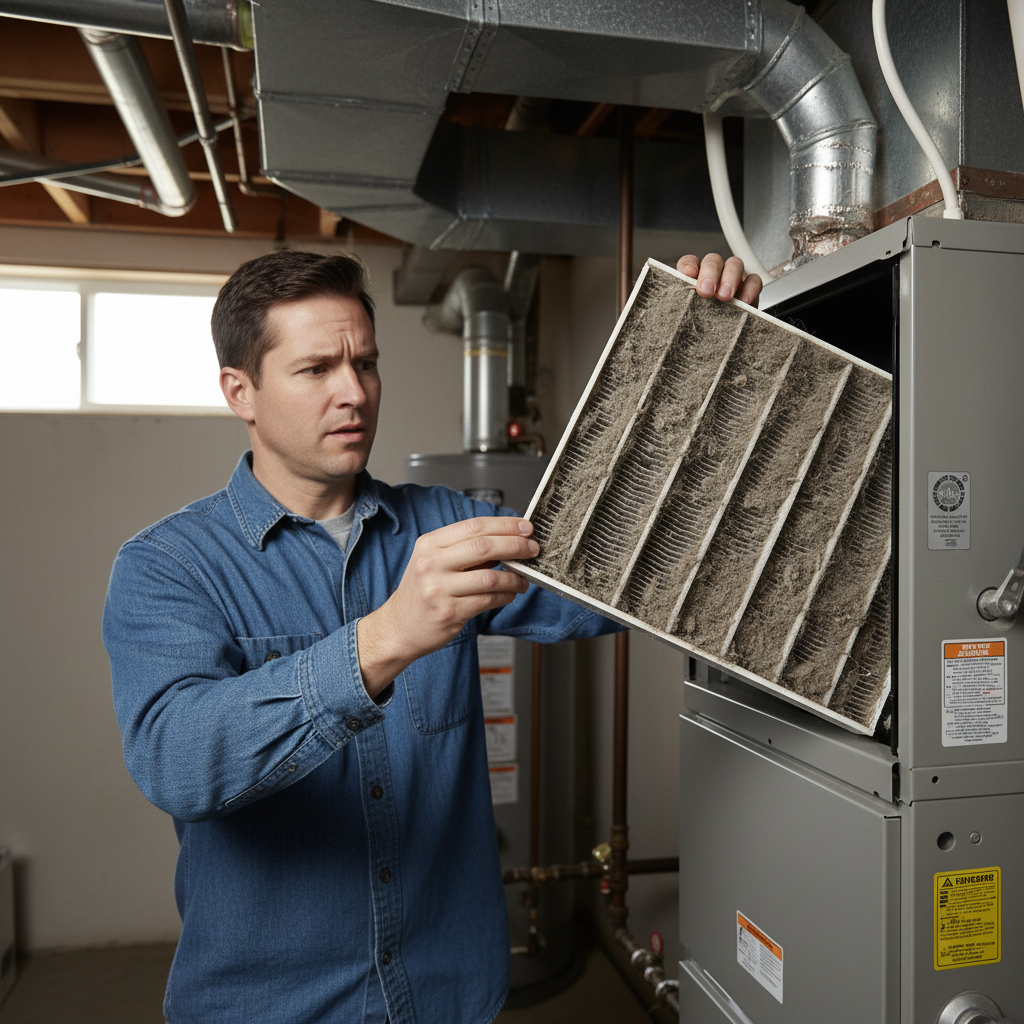
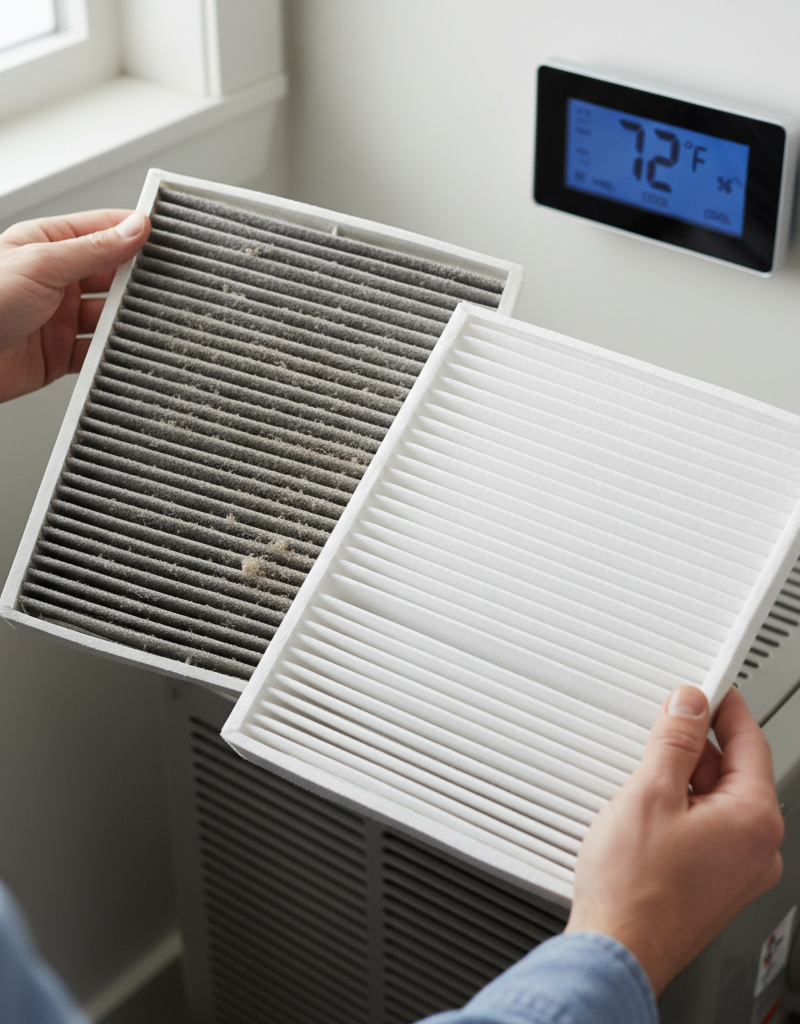
1. Check and Replace Air Filter — A clogged air filter is the most common culprit for poor AC performance. A dirty filter restricts airflow to the evaporator coil, causing the coil to get too cold and potentially freeze.
*   **How:** Locate your air filter, usually in the return air duct or within the indoor air handler/furnace. Note the arrow indicating airflow direction. Slide out the old filter.
    *   **Safety:** Turn off your thermostat and the breaker to the indoor unit before handling the filter.
    *   **If this doesn't work:** Even with a clean filter, check for other airflow obstructions like blocked vents.
*   **Cost:** $10–$30 (for a new filter)
*   **Time:** 5 minutes
2. Inspect and Clear Vents and Returns — Blocked supply registers or return air grilles can starve your system of air, similar to a dirty filter. Furniture, rugs, or even dust buildup can restrict crucial airflow.
*   **How:** Walk through your home. Ensure all supply registers (where cold air comes out) are open and unobstructed by furniture, curtains, or decor. Check return air grilles (where warm air gets sucked in) for blockages or heavy dust accumulation. Vacuum away any dust from grilles.
    *   **Tip:** If you have adjustable registers, ensure they are fully open.
    *   **If this doesn't work:** Consider that ductwork might be leaking air into unconditioned spaces, reducing flow to living areas.
*   **Cost:** $0
*   **Time:** 10–15 minutes
3. Examine the Outdoor Condenser Unit — The outdoor unit needs clear space to dissipate heat. Blockages can make it work harder and less effectively.
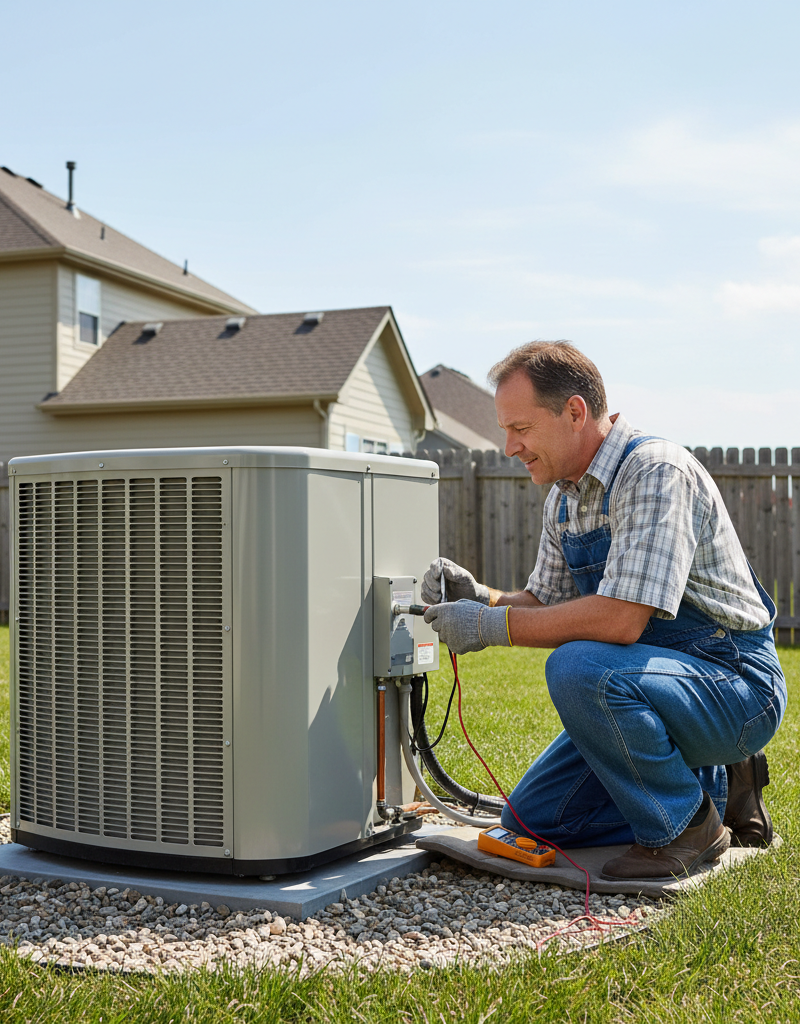
*   **How:** Turn off the power to the outdoor unit at your electrical panel. Visually inspect the condenser unit. Clear away any leaves, dirt, grass clippings, or debris from around the unit. Ensure there's at least 2 feet of clear space around all sides. If the fins are visibly dirty, carefully brush them clean or use a gentle spray from a garden hose (avoiding direct electrical components).
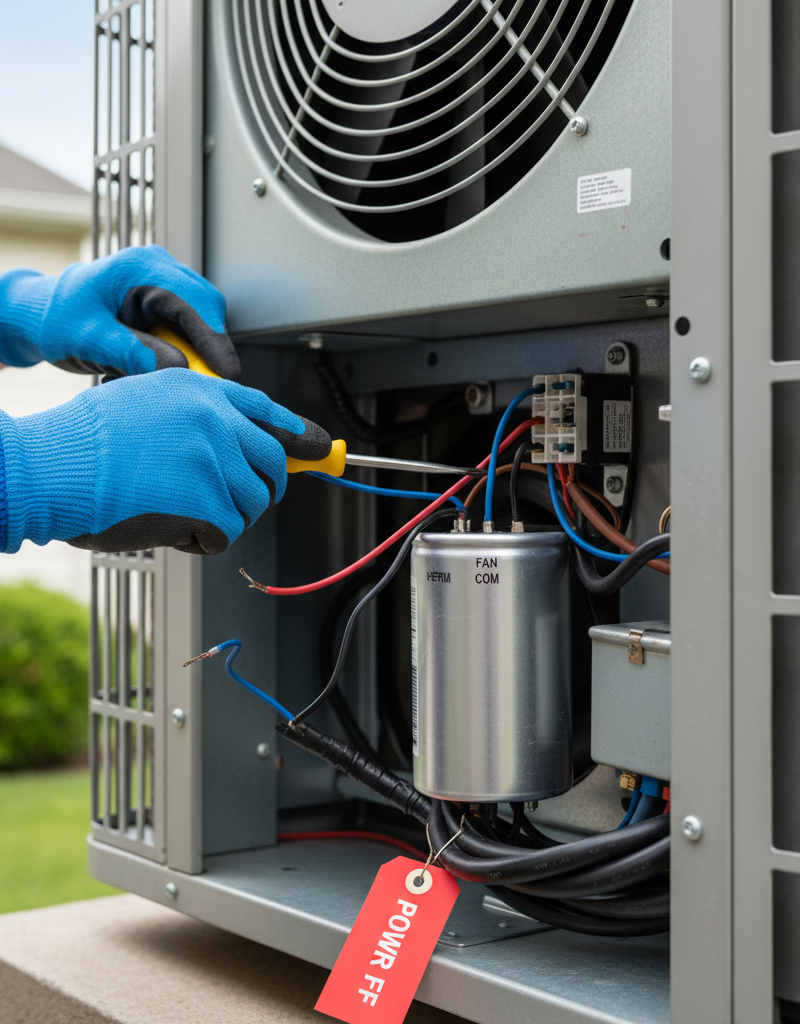
    *   **Safety:** Always turn off power before touching the outdoor unit. Be careful not to bend the delicate fins.
    *   **If this doesn't work:** The condenser fan motor might be faulty, or the coil could be severely clogged internally, requiring professional cleaning.
*   **Cost:** $0
*   **Time:** 15–20 minutes
4. Check for a Frozen Evaporator Coil — A frozen indoor coil is a common symptom of severe airflow restriction or low refrigerant, but it prevents heat absorption.
*   **How:** With the AC unit off, open the access panel to your indoor unit (furnace/air handler). Look for ice buildup on the evaporator coil. If you see ice, turn off the AC (but keep the fan running) for several hours to allow it to thaw completely. While thawing, replace your air filter and check all vents for obstructions.
    *   **Safety:** Wear gloves when handling dusty components. Do not attempt to chip ice off the coil, as you could damage it.
    *   **If this doesn't work:** If the coil refreezes quickly after cleaning the filter and ensuring airflow, it likely indicates a refrigerant issue and warrants a professional call.
*   **Cost:** $0
*   **Time:** 2–4 hours (thaw time)
5. Verify Thermostat Settings and Batteries — A simple but often overlooked issue is an incorrect thermostat setting or dead batteries, leading to the AC not engaging properly.
* **How:** Ensure your thermostat is set to
Related Articles
Keep troubleshooting with these hand-picked guides from FixlyGuide:
- The Hidden Reason Your GFCI Trips (It's Not Always a Faulty Outlet) — A continuously tripping GFCI outlet is a critical safety warning, often indicating moisture, a faulty appliance, or a wiring problem that r…
- The Secret to Lush Raised Beds? It's Not Just About How You Water — Smart irrigation for raised garden beds isn't just about automation; it's about delivering the right amount of water precisely when your pl…
- The Hidden Reason Your GFCI Trips (It’s Not Always a Short Circuit) — A persistently tripping GFCI outlet is often a sign of a hidden electrical issue, frequently caused by moisture, a faulty appliance, or sub…
- The Hidden Reason Your GFCI Trips (It’s Not Always a Bad Outlet) — A tripping GFCI outlet is a safety mechanism doing its job, often indicating a problem like moisture, a faulty appliance, or a wiring issue…
- The Hidden Reason Your AC Isn't Cooling (And 7 Fixes Homeowners Miss) — If your central AC isn't cooling your home, the culprit often lies in an overlooked issue that's simple to fix, preventing costly professio…
- The Hidden Reason Your AC Freezes — And Why Most Homeowners Get It Wrong — Discover the surprising truth behind why your outdoor AC unit is freezing up and the common mistake homeowners make when trying to fix it.
This article was independently written by FixlyGuide based on the source topic.
Frequently asked questions
How do I know if my AC is low on refrigerant?+
Common signs of low refrigerant include a hissing or bubbling sound from the refrigeration lines, ice buildup on the evaporator coil (even with good airflow), and the AC running constantly without adequately cooling the home. These often point to a leak, which requires a professional to diagnose and repair.
Can a dirty outdoor unit affect cooling?+
Yes, absolutely. A dirty outdoor condenser coil or unit blocked by debris prevents the system from efficiently releasing heat to the outside. This makes the AC work harder, raising energy bills and reducing cooling capacity. Regularly clearing debris and gently cleaning the coil is essential.
Why would my AC freeze up if the filter is clean?+
If your AC coil freezes even with a clean filter, other airflow obstructions might be present (e.g., closed vents, blocked return ducts) or, more likely, you could be experiencing low refrigerant levels. Low refrigerant causes the evaporator coil to get excessively cold, leading to ice formation.
How often should I change my AC air filter?+
Most manufacturers recommend changing standard pleated air filters every 1 to 3 months, especially if you have pets, allergies, or live in a dusty environment. During peak cooling seasons, more frequent checks are advisable.
Discussion
Loading comments…