Tools & materials you'll need
Affiliate linksNo materials required.
As an Amazon Associate FixlyGuide earns from qualifying purchases — at no extra cost to you. Prices and availability are accurate as of publication and subject to change.
Quick Answer
Adjusting a sprinkler's spray pattern is a common and easy DIY task that can save significant water and improve lawn health. For most pop-up spray heads and rotor heads, adjustments involve identifying specific rings, screws, or collars on the head, often requiring only a flat-head screwdriver or even just your hands. The process typically takes just a few minutes per head once you understand the mechanics, allowing you to fine-tune the arc, distance, and direction of the water to perfectly cover your landscape without waste.
The Problem
An incorrectly adjusted sprinkler head isn't just an annoyance; it's a silent drain on your wallet and a threat to your lawn's health. You might notice dry patches despite regular watering, water pooling on sidewalks, or even water spraying directly onto your house or car. This misdirected water is inefficient, leading to higher water bills, potential damage to structures, and an unevenly watered, stressed lawn. The problem often stems from bumps, debris, or normal wear and tear that shift the internal mechanisms of the sprinkler head, causing it to spray too far, too short, or in the wrong direction entirely. Ignoring these misalignments can lead to fungal growth in overwatered areas, drought stress in underwatered zones, and ultimately, the need for more costly landscape repairs.
How It Works
Understanding how different sprinkler heads work is crucial for effective adjustment. There are primarily two types homeowners encounter: fixed spray heads and rotor heads.
Fixed Spray Heads: These are the simplest, typically used for smaller, more intricate areas. They emit a constant, fan-shaped spray pattern (e.g., quarter-circle, half-circle, full-circle). While the 'spray pattern' itself is fixed by the nozzle 'type', their direction and distance can often be fine-tuned. Many modern fixed spray heads have a small adjustment screw on top. Turning this screw clockwise drives a small pin into the water stream, breaking it up and reducing the spray distance. Counter-clockwise increases the distance. The overall direction and arc are usually determined by how the nozzle is threaded onto the riser and can often be rotated manually after loosening a collar if present. Some advanced models might have small tabs to adjust the arc slightly, but their primary function is consistent coverage in a set area.
Rotor Heads: These are designed for larger areas and operate by rotating a single stream of water back and forth, or in a full circle. They are more complex and offer greater adjustability. Internally, a small turbine is spun by water pressure, which in turn drives a gear train that rotates the nozzle. Most rotor heads have two main adjustment points: the arc (the sweep of the spray from its start to end point) and the distance. The arc is typically set using a specific key or a flat-head screwdriver to turn an adjustment screw or ring on the top of the head. This mechanism limits the left and right rotation points. Distance is often controlled by a radius reduction screw (similar to the fixed spray head's distance screw) that protrudes into the water stream, or by swapping out different nozzles internally, which alter the flow rate and trajectory. Understanding the interaction between water pressure, nozzle size, arc setting, and radius reduction is key to optimizing rotor head performance for even coverage.
Step-by-Step Fix
Here’s how to diagnose and adjust your sprinkler heads for optimal performance and water efficiency.
-
Identify Your Sprinkler Head Type — Before you touch anything, know what you're working with.
- Action: Observe your sprinklers in action. Do they spray a continuous fan of water (spray head) or a single stream that rotates (rotor head)? Note any brand names or model numbers if visible.
- Why it matters: Adjustment methods vary significantly between types.
-
Inspect for Obstructions and Damage — A clear path is essential for proper function.
- Action: Turn on the zone. Look for grass, dirt, or debris blocking the nozzle. Check for cracks in the head or riser.
- If this doesn't work: Gently clear any blockages. For damaged heads, replacement is usually the best option (see pro callout).
-
Adjust Fixed Spray Head Distance — Reduce overspray on nearby surfaces.
- Tools: Flat-head screwdriver.
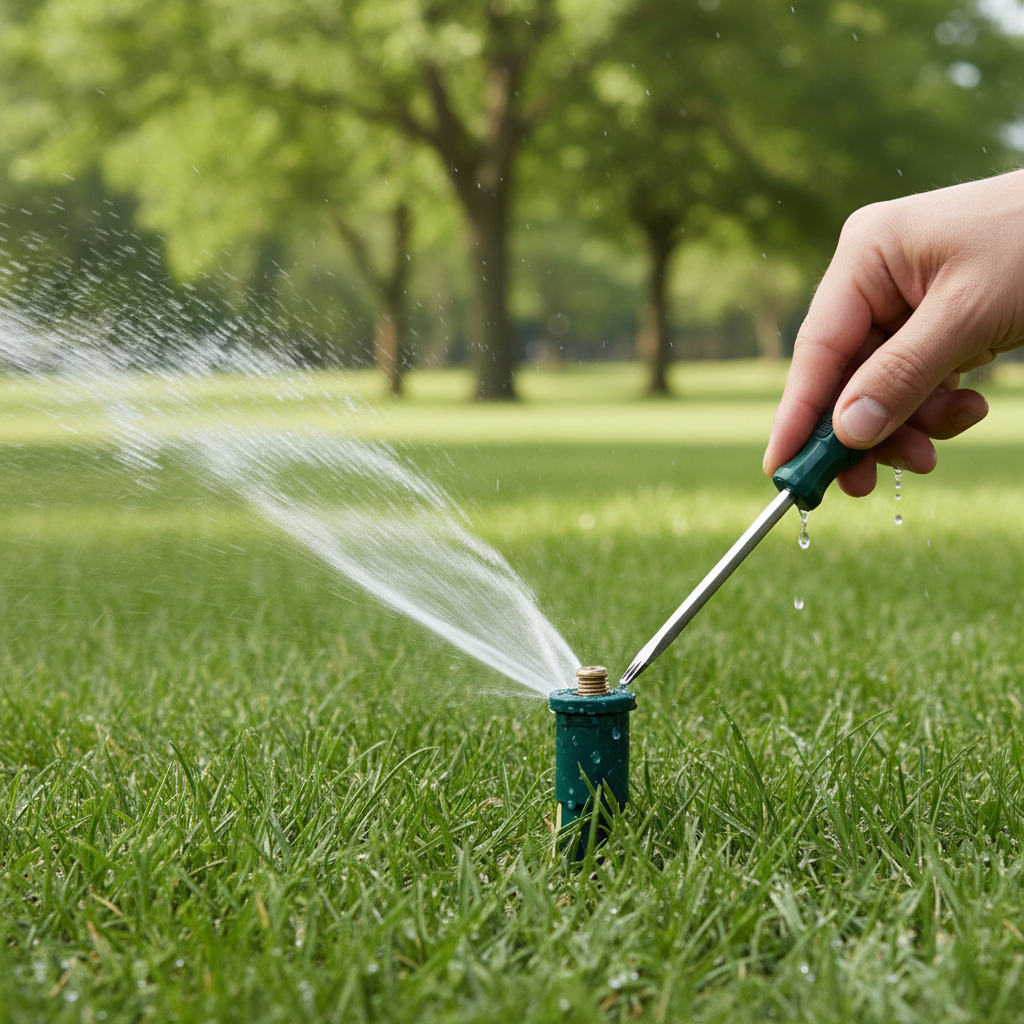
- Action: Locate the small screw on the top center of the nozzle. While the water is running (to clearly see the effect), turn the screw clockwise to decrease the spray distance, breaking up the stream. Turn counter-clockwise to increase it. Aim for water to land just before the next head or property line.
- Safety: Do not overtighten; you could damage the nozzle.
-
Adjust Fixed Spray Head Direction — Point the water exactly where it needs to go.
- Action: Grip the body of the nozzle (not the riser) firmly and twist it in the desired direction. Some older models might require pulling up the riser to engage a ratcheting mechanism. For some, you might need to unscrew the entire nozzle slightly to re-thread it correctly.
- Note: If the entire riser assembly turns, the connection at the bottom might be loose or broken, requiring professional attention.
-
Set Rotor Head's Fixed Side (Right Stop) — Establish the permanent boundary of the spray.
- Tools: Sprinkler adjustment key (often supplied with new heads) or small flat-head screwdriver.
- Action: Most rotor heads have a fixed right stop (or left stop, depending on manufacturer). With the water running, rotate the turret (the top part that sprays water) manually by hand or with the key until it aligns with the edge of the area you want to water. This sets the fixed boundary. Then, find the arc adjustment slot – consult your specific model's manual if unsure. Rotate the turret counter-clockwise to the right-most point of its rotation. If it doesn't align with your desired boundary, you may need to unscrew the entire rotor head a quarter to half turn, pull up the riser, and turn the base of the rotor assembly until the fixed side is correctly oriented, then screw it back down.
- Tip: Always set the fixed side first, then adjust the arc from there.
-
Adjust Rotor Head's Arc (Sweep) — Control the range of motion.
- Tools: Sprinkler adjustment key or flat-head screwdriver.
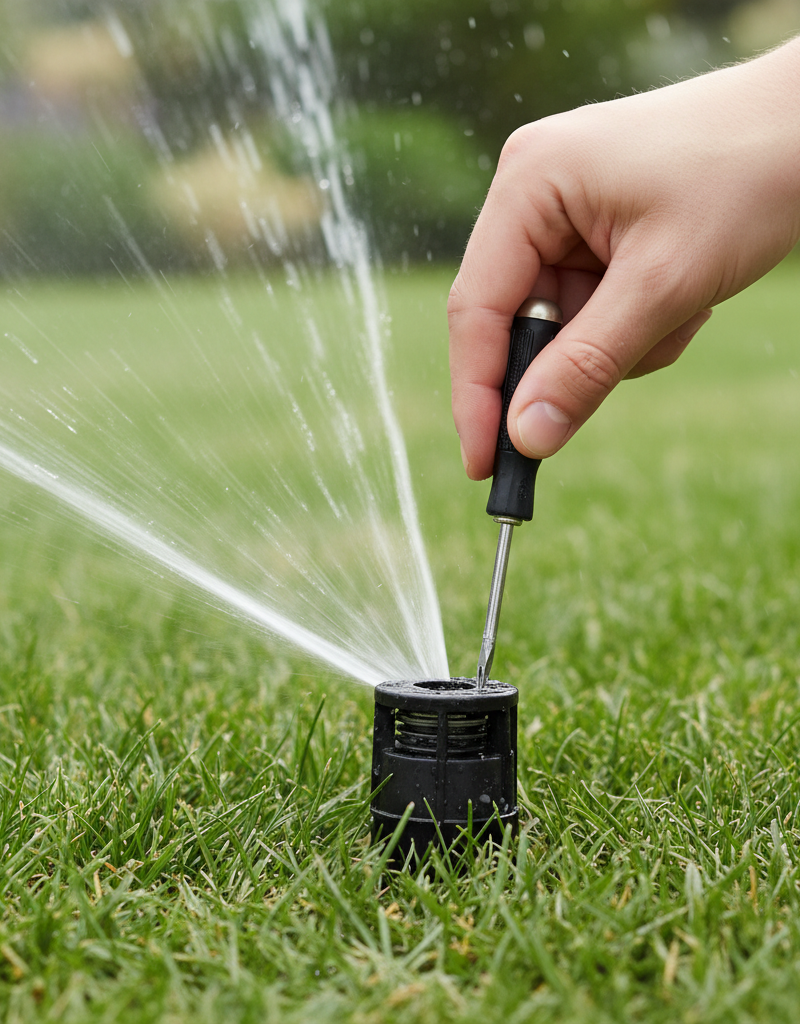
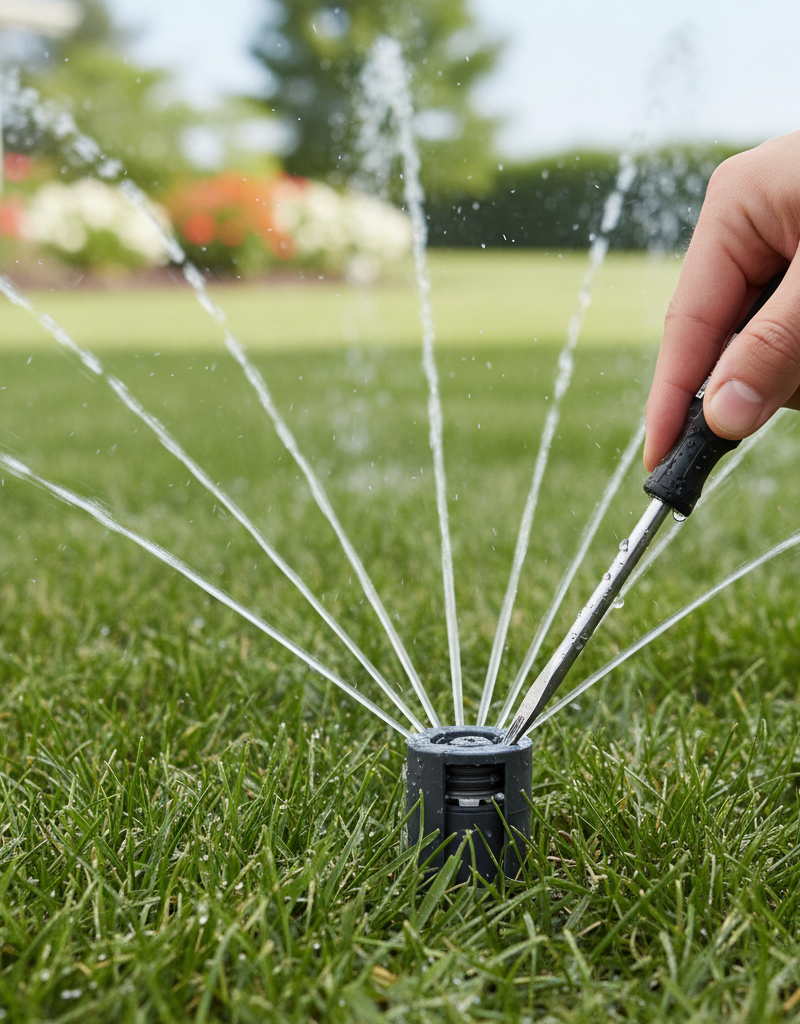
- Action: Insert the key or screwdriver into the arc adjustment slot (usually marked with +/- or an arrow). Turn it clockwise to increase the arc (make it spray a wider area) or counter-clockwise to decrease the arc. Watch the sprinkler as it operates to ensure it covers the desired area without overspraying.
- Real numbers: A full circle is 360 degrees. Most rotors adjust from 40-360 degrees. Aim for slight overlap with adjacent heads.
-
Adjust Rotor Head's Distance (Radius Reduction) — Fine-tune how far the water travels.
- Tools: Flat-head screwdriver.
- Action: Locate the radius reduction screw on the top of the head (often near the nozzle itself). Turning this screw clockwise drives a pin into the water stream, reducing the distance. Turn counter-clockwise to allow maximum distance. This is crucial for preventing water from spraying onto hardscapes.
- If this doesn't work: If the distance is still too great even with the screw fully engaged, you might need to install a different nozzle with a lower flow rate – this is more involved and might require professional help.
-
Re-evaluate and Test — Confirm your adjustments are correct.
- Action: Run your sprinklers through a full cycle after all adjustments. Walk the zone, observing the coverage. Look for dry spots, overspray, and ensure head-to-head coverage (where one head sprays to the next).
- Tip: If you have multiple heads in a zone contributing to the spray pattern, adjust them one by one, then re-evaluate the entire zone.
Common Causes
- Physical Impact: A lawnmower, car, or pedestrian traffic can knock a sprinkler head out of alignment or damage its internal components. This is the most frequent culprit for suddenly misbehaving heads.
- Debris in Nozzle: Dirt, sand, grass clippings, or even mineral deposits from hard water can partially block a nozzle, distorting the spray pattern or reducing its effective distance.
- Wear and Tear: Over time, the internal gears, seals, and springs in rotor heads can wear out, leading to erratic rotation or a failure to retract fully. Plastic components can become brittle and crack.
- Low Water Pressure: Insufficient water pressure can cause heads to spray shorter distances than designed, resulting in gaps in coverage. This isn't an adjustment issue with the head itself, but it affects the effective pattern.
- Installation Error: If heads were initially installed incorrectly (e.g., wrong nozzle for a given area, improper spacing, or not oriented correctly), their spray patterns will have inherent flaws.
- Ground Settling: Over time, the ground around a sprinkler head can settle or shift, causing the head to tilt or sink, which alters its trajectory.
Common Mistakes
- Adjusting When Dry: Trying to adjust a sprinkler head without the water running is like trying to fix a car engine with the hood closed. You can't see the effect of your changes, leading to guesswork and frustration. Always adjust with the water flowing.
- Overtightening Adjustment Screws: For fixed spray heads, overtightening the distance screw can permanently damage the nozzle, requiring a replacement. Be gentle and turn only until the desired effect is achieved.
- Ignoring the Fixed Side of a Rotor: Many homeowners adjust the arc of a rotor head without first ensuring the
Frequently asked questions
How do I fix a sprinkler spraying too far?+
For fixed spray heads, turn the small screw on top clockwise to break up the stream and reduce distance. For rotor heads, turn the radius reduction screw clockwise. You might also need to check for excessive water pressure or switch to a lower GPM nozzle.
Why is my sprinkler not rotating?+
If a rotor head isn't rotating, first check for debris in the nozzle, which can impede the internal turbine. If clear, the internal gears may be stripped or worn. In this case, the sprinkler head usually needs to be replaced. Ensure adequate water pressure; very low pressure can prevent rotation.
Can I adjust a sprinkler without special tools?+
Many modern sprinkler heads can be adjusted with common household tools like a flat-head screwdriver or even by hand for basic direction and arc changes. Some rotor heads might require a specific adjustment key, though often a small flat-head screwdriver can substitute.
How often should I check my sprinkler adjustments?+
It's a good practice to check your sprinkler adjustments at least once a season, ideally at the start of your primary watering period. Also, check after any significant lawn work, heavy foot traffic, or if you notice dry or overly wet spots developing in your lawn.

Discussion
Loading comments…