Tools & materials you'll need
Affiliate linksAs an Amazon Associate FixlyGuide earns from qualifying purchases — at no extra cost to you. Prices and availability are accurate as of publication and subject to change.
Quick Answer
Baseboards frequently pull away from walls due to the natural expansion and contraction of wood in response to fluctuating humidity levels, especially in older homes or during seasonal changes. The most reliable fix involves carefully re-securing the baseboards to the wall studs using finish nails or, in cases where studs are inaccessible or the wall material is challenging (like plaster), using a high-quality construction adhesive. Addressing any significant moisture sources in the home, such as leaky windows or high indoor humidity, is also crucial for a long-lasting repair.
The Problem
You walk into a room and notice it: a subtle, or not-so-subtle, gap forming between your baseboards and the wall. Perhaps it's just in one section, or maybe it spans an entire wall. This separation isn't just an aesthetic issue; it can allow dust and debris to accumulate, invite pests, and even signal deeper problems within your home's structure or moisture control. It's a common complaint for homeowners, leading to a visual disruption and a feeling that something isn't quite right with the house.
The separation can manifest in several ways: a thin, hairline crack, a noticeable gap that you can easily slide a piece of paper into, or in more severe cases, a significant bowing or detachment of the entire trim piece. Understanding why this happens is the first step toward a permanent fix, preventing a cycle of temporary repairs that don't last.
How It Works
To understand why baseboards separate, think of wood as a thirsty sponge. When the air is humid, wood absorbs moisture and expands; when the air is dry, it releases moisture and contracts. This natural process, known as hygroscopic movement, is the primary culprit behind baseboard detachment.
Most baseboards are made of wood, medium-density fiberboard (MDF), or a composite. Wood and MDF are particularly susceptible to humidity changes. In periods of high humidity (like summer), baseboards expand. If they were installed tightly to begin with, this expansion can create pressure, sometimes forcing nails to lose their grip or even bowing the material slightly. Conversely, during dry periods (like winter, especially with indoor heating running), the wood shrinks. This shrinkage pulls the baseboard away from the wall, creating those unsightly gaps. Over time, repeated cycles of expansion and contraction weaken the hold of nails or adhesive, leading to permanent separation.
Furthermore, how baseboards are installed plays a critical role. Ideally, baseboards should be nailed into wall studs, providing a solid anchor. Studs are typically spaced 16 or 24 inches on center. If nails miss the studs and only go into drywall, their holding power is significantly reduced. Drywall alone offers minimal resistance to the forces of wood movement. Consequently, even a slight shift can cause baseboards secured only to drywall to pull away much faster than those properly anchored.
Another factor is the natural movement of the house itself. Minor settling, vibrations from traffic, or even strong winds can exert subtle forces on walls and trim. While well-secured baseboards can withstand these minor stresses, those already weakened by humidity cycles or poor installation will be the first to show signs of detachment.
Lastly, the age of a home can contribute. Older homes often have plaster walls, which can become brittle over time. Nailing into compromised plaster is less effective than nailing into solid wood studs or even newer drywall with robust backing. Older homes also tend to have less consistent indoor environments, making them more prone to the dramatic humidity fluctuations that cause these issues.
Step-by-Step Fix
1. Assess the Damage and Underlying Causes – Before you grab any tools, take a good look at the separation. Inspect the length of the gap. Is it uniform, or worse in certain spots? Is the baseboard bowed or just pulled away cleanly? Gently press on the baseboard to see if it moves easily. Also, consider the environment: Is this a high-humidity area (bathroom, laundry room)? Is there a draft from a window or door nearby? Addressing specific moisture sources, like a leaky window sill or inadequate bathroom ventilation, can prevent recurrence.
2. Prepare the Area and Remove Old Fasteners – Clear out any debris and prepare for reattachment. Use a utility knife to carefully cut any old caulk along the top edge of the baseboard. If there are visible old nails that are bent or popped out, use pliers or a pry bar with a thin shim (like a paint stirrer) to gently remove them. Be careful not to damage the wall or the baseboard. Clean any dust or debris from behind the baseboard and on the wall surface with a vacuum cleaner and a damp cloth.
3. Locate Wall Studs – Proper anchoring is key for a lasting repair. Use a stud finder to locate the wall studs behind the baseboard. Mark their locations with a pencil just above the baseboard – these will be your target points for new fasteners. Studs are typically spaced 16 or 24 inches on center. If you can't find studs, or if the baseboard is separating significantly between studs, you may need to use construction adhesive or specialized anchors.
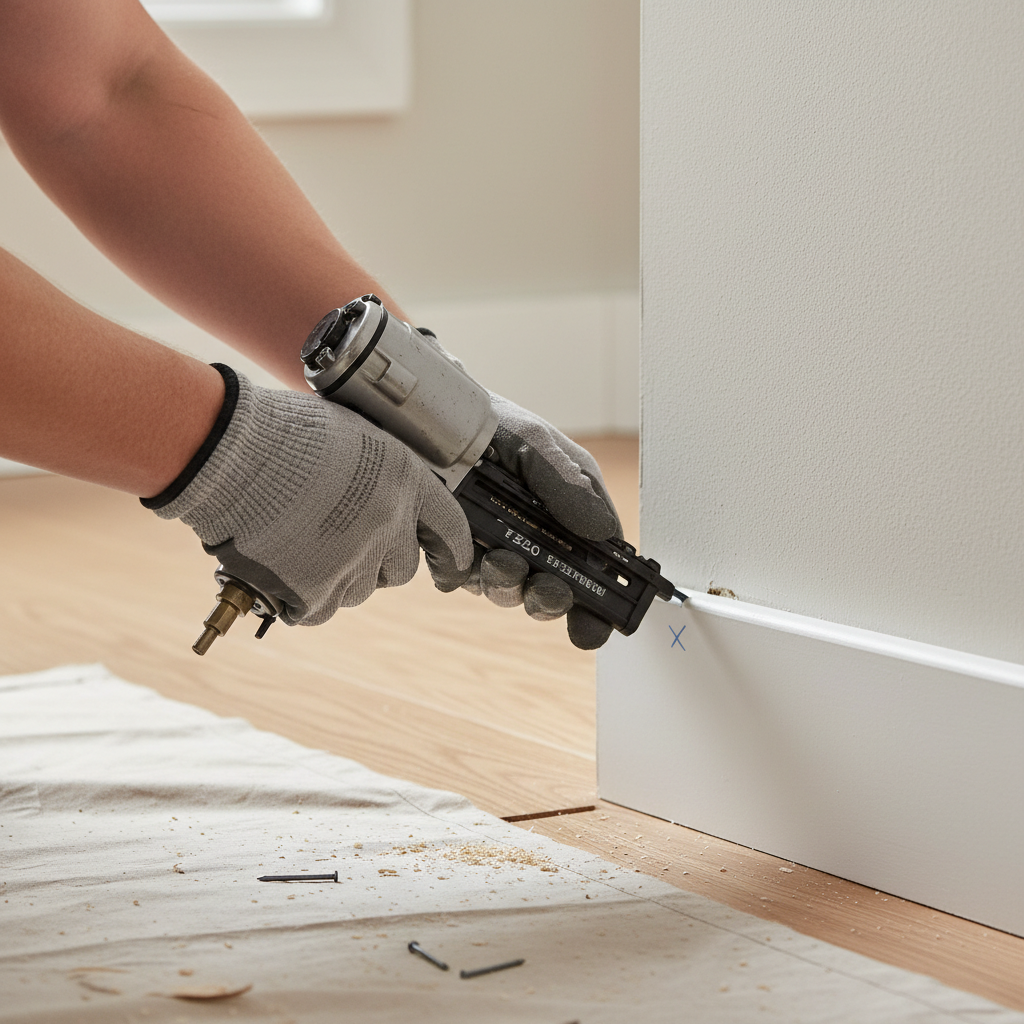
4. Re-secure with Finish Nails – The most common and effective method. Hold the baseboard firmly against the wall, ensuring it's flush. Using a hammer and 1.5-inch to 2-inch 16-gauge or 18-gauge finish nails, drive nails through the baseboard into the center of each marked stud. Angle the nails slightly up or down to create a better hold (toe-nailing). Use a nail set to recess the nail heads just below the surface of the wood. Space nails every 12 to 16 inches along the top and bottom edge of the baseboard. If using a brad nailer, set the pressure correctly to avoid over-penetration.
- Safety Note: Always wear safety glasses when hammering or using power tools.
- If you miss a stud: Pull out the nail and try again. Hitting a stud is crucial for long-term stability.
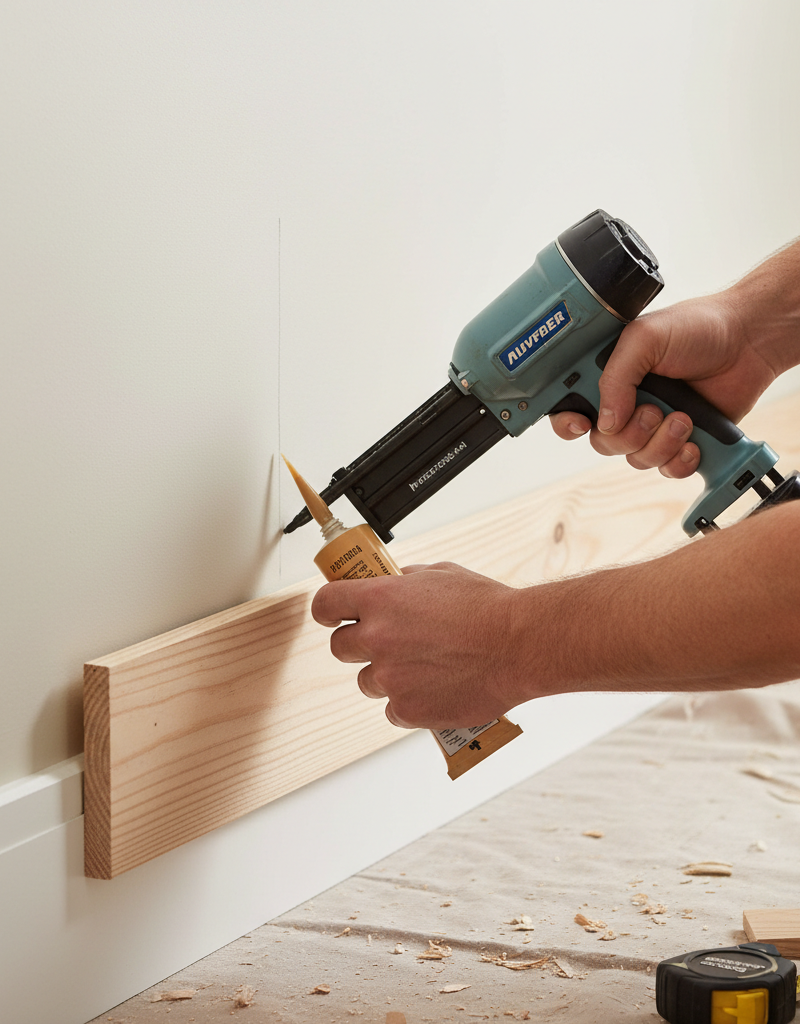
5. Alternatively: Use Construction Adhesive – For situations without reliable stud access. Apply a continuous ½-inch bead of high-quality construction adhesive (suitable for wood and drywall/plaster) to the back of the baseboard, focusing on the top and bottom edges and a zigzag pattern in the middle. Press the baseboard firmly into place against the wall. You may need to use painter's tape or temporary braces (like heavy boxes or scrap wood propped against the baseboard) to hold it in place while the adhesive cures. Follow the manufacturer's recommended cure time, usually 24-72 hours.
- Tip: Ensure the room temperature is within the adhesive's recommended application range.
- Pro-grade adhesives: Look for brands like Liquid Nails or Loctite PL Premium for strong, durable bonds.
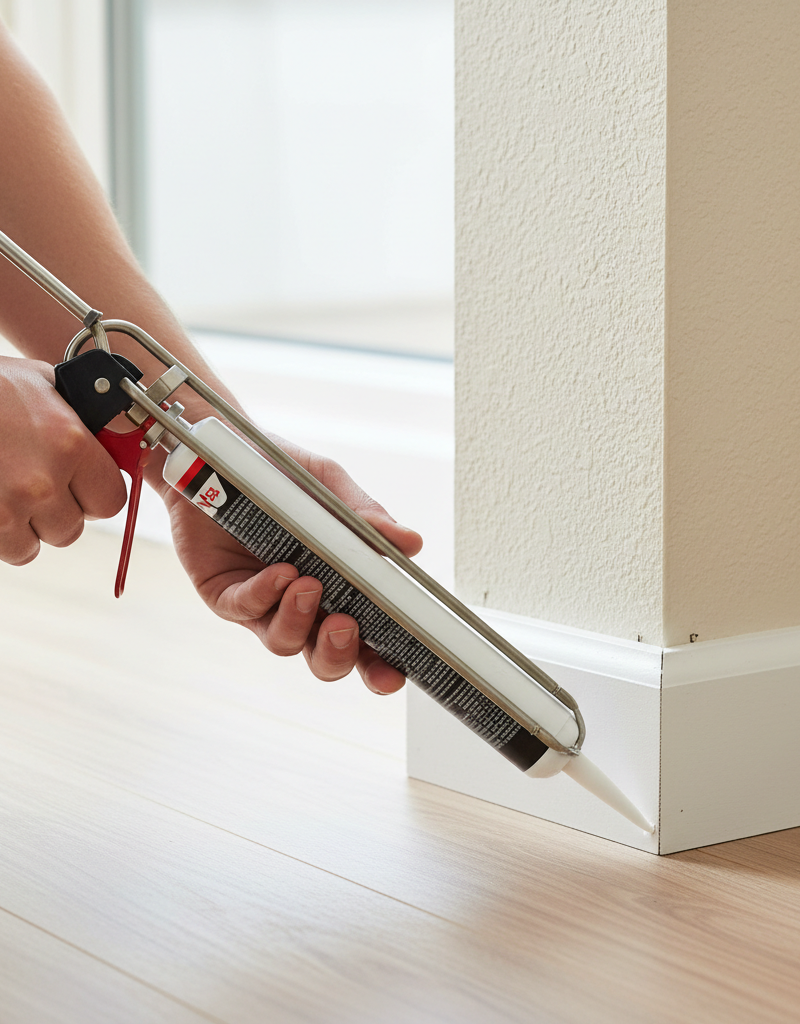
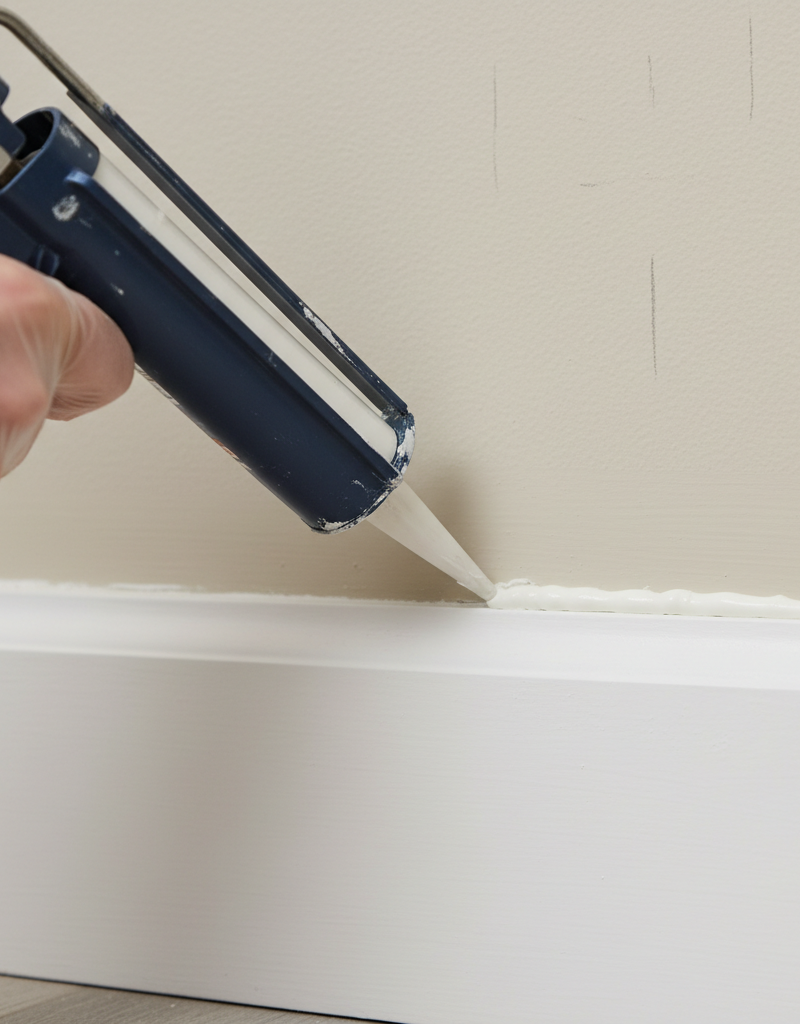
6. Fill Nail Holes and Gaps – Achieve a smooth, finished look. Once the baseboard is securely reattached, use a small amount of wood filler or spackle to fill all visible nail holes. Allow it to dry completely, then lightly sand smooth with 120-grit or 150-grit sandpaper. For the gap along the top edge of the baseboard where it meets the wall, apply a thin bead of paintable acrylic latex caulk. Smooth the caulk with a wet finger or a caulk tool for a clean line. For gaps at the bottom, ensure the baseboard is flush with the floor; if there's still a tiny gap, it's often covered by flooring or shoe molding.
7. Touch Up Paint – Complete the aesthetic repair. Once the filler and caulk are dry and cured (check product instructions, usually a few hours for filler and 24 hours for caulk), apply a matching paint to the baseboard. Paint directly over the filled nail holes and caulked seams to blend them seamlessly with the existing trim. Apply two thin coats if necessary for full coverage.
Common Causes
- Humidity Fluctuations: As described above, the most prevalent reason. Wood naturally expands and contracts with changes in atmospheric moisture, eventually weakening the fasteners' grip.
- Improper Fastening: If baseboards were originally nailed only into drywall without hitting studs, or if too few nails were used, they lack the structural support to stay secure long-term.
- House Settling: Over many years, houses can settle slightly, causing walls to shift or bow minimally. This subtle movement can put stress on rigid trim pieces, leading to separation.
- Poor Initial Installation: Sometimes, baseboards aren't tightly pressed against the wall during installation, or the wall itself isn't perfectly flat, leaving small initial gaps that worsen over time.
- Adhesive Failure (if used): If a previous repair or initial installation relied solely on adhesive, and it wasn't a strong enough product or wasn't applied correctly, it can degrade and fail.
- Vibrations: Constant vibrations from heavy foot traffic, nearby construction, or even large appliances can loosen fasteners over time.
Common Mistakes
- Nailing Only into Drywall: This is the most common DIY mistake. Drywall doesn't provide sufficient holding power for baseboards, leading to quick re-separation. Always aim for the studs.
- Using Too Many or Too Few Nails: Too few nails won't hold the baseboard securely. Too many can split the wood, especially at the ends. Aim for nails every 12-16 inches into studs, at the top and bottom edges.
- Not Removing Old Caulk/Debris: Old caulk creates an uneven surface that prevents new caulk or adhesive from bonding properly. Debris behind the baseboard will keep it from sitting flush. Always clean thoroughly first.
- Not Addressing Moisture Issues: If the separation is caused by a persistent humidity problem (e.g., a leaky window, chronically damp room), simply re-nailing won't provide a lasting fix. Diagnose and fix the moisture source first.
- Applying Caulk to an Unsecured Baseboard: Caulk is not an adhesive for securing baseboards. If the baseboard isn't firmly attached, the caulk will simply crack and pull away again as the baseboard moves. Secure the baseboard mechanically or with adhesive first, then caulk for aesthetics.
- Using the Wrong Caulk: Silicone caulk is great for wet areas but can't be painted. Using it on baseboards can make paint touch-ups difficult or impossible. Opt for paintable acrylic latex caulk.
Cost & Time Breakdown
| Task | DIY cost | Pro cost | Time |
|---|---|---|---|
| Materials (nails, caulk, filler) | $15–$30 | N/A | N/A |
| Tools (stud finder, nail gun) | $0–$100 | N/A | N/A |
| Repair per room (DIY) | $15–$30 | $150–$300 | 1–3 hours |
| Professional baseboard reattachment | N/A | $75–$150/hour | 2–4 hours (minimum service call) |
| Painting touch-up | Included | Included | 0.5–1 hour |
Tips & Prevention
- Monitor Indoor Humidity: Maintain indoor humidity levels between 30% and 50% year-round using a dehumidifier in summer and a humidifier in winter. This minimizes wood movement.
- Seal Exterior Leaks: Regularly inspect windows, doors, and exterior walls for any potential water intrusion. Promptly repair any leaks to prevent moisture from affecting interior trim.
- Use Proper Fasteners: When installing new baseboards or re-securing old ones, always use finish nails long enough to penetrate at least 1 inch into the wall studs. Aim for a nail every 12-16 inches.
- Acclimate New Wood: If installing new baseboards, allow the wood to acclimate to your home's humidity for several days (or even a week) before installation. This minimizes post-installation movement.
- Consider a Flexible Caulk: For the top seam, using a high-quality, paintable, flexible acrylic latex caulk can better accommodate slight movements without cracking.
- Inspect Annually: Make it a habit to walk around your home once a year, checking baseboards, window trim, and doorframes for any signs of separation. Early detection makes repairs easier.
When to Call a Professional
While re-securing baseboards is often a manageable DIY task, there are specific situations where calling a professional is highly advisable. If you notice extensive, widespread baseboard separation throughout multiple rooms, especially accompanied by cracking drywall, doors sticking, or uneven floors, this could indicate significant foundation issues or structural movement that requires a structural engineer's assessment. Similarly, if the separation is clearly linked to a persistent, unresolved moisture problem, such as a large roof leak, a plumbing leak behind a wall, or significant water intrusion from outside, a professional general contractor or water damage specialist should be called to properly diagnose and mitigate the underlying issue before any cosmetic repairs are attempted. Attempting to fix cosmetics when greater structural or moisture problems exist will be a temporary solution at best. If you're dealing with plaster walls that are crumbling, making it impossible to get a solid anchor for the baseboards, a handyman or finish carpenter experienced with older homes can offer specialized solutions that go beyond typical DIY methods. Lastly, if you simply lack the tools, confidence, or time to perform the repair consistently and effectively, hiring a professional ensures the job is done correctly and safely, providing a lasting finish.
Related Articles
Keep troubleshooting with these hand-picked guides from FixlyGuide:
- The 3 Hidden Reasons Your Baseboards Are Pulling Away (And How to Fix It FAST) — Don't ignore separating baseboards—they’re not just an eyesore. Learn the surprising culprits behind the gaps and how to permanently fix th…
- The 3 Hidden Reasons Your Baseboards Are Pulling Away (And How to Fix It Right) — Don’t just nail it back! Discover the real reasons your baseboards are separating from the wall and how to achieve a lasting repair.
- The Tiny Gap That Wastes Energy: Why Your Baseboards Pull Away (And the Simple, Permanent Fix) — Baseboards separating from walls are a common issue, often indicating underlying problems with moisture or house settling, but are typicall…
- The Tiny Gap Behind Your Baseboards That Costs You $100s in Drafts — Discover why your baseboards are pulling away from the wall and the simple, inexpensive fixes that can seal drafts and improve your home's…
- The 7 Critical Home Inspection Checks Most Homeowners Miss (And How to Spot Them) — Discover the crucial annual home inspection checks often overlooked by homeowners, and learn how to identify potential issues before they b…
- The 3 Hidden Reasons Your Gas Burner Won't Light (Beyond a Clog) — Before you call a technician, discover the most common culprits behind a gas stove burner that refuses to ignite and learn how to fix them…
Frequently asked questions
Why do baseboards separate from the wall?+
Baseboards primarily separate due to the natural expansion and contraction of wood or MDF in response to changes in indoor humidity. If not properly secured into wall studs, the movement can cause them to pull away. House settling or poor initial installation can also contribute.
Can I fix separating baseboards myself?+
Yes, re-securing separating baseboards is a common DIY task. It typically involves removing old fasteners, locating wall studs, re-nailing with finish nails, or using construction adhesive, and then filling holes and re-caulking.
What tools do I need to fix loose baseboards?+
You'll need a stud finder, hammer, finish nails (1.5-2 inch, 16 or 18 gauge), a nail set, wood filler or spackle, paintable acrylic caulk, a caulk gun, sandpaper, and matching paint. A brad nailer is optional but speeds up the process.
Should I use nails or construction adhesive for baseboards?+
For the strongest hold, always aim to nail into wall studs. If studs are inaccessible or the wall material is compromised (e.g., crumbling plaster), a high-quality construction adhesive can be an effective alternative, often used in conjunction with a few nails to hold it while it cures.
How do I prevent baseboards from separating again?+
Maintaining consistent indoor humidity levels (30-50%), ensuring proper fastening into studs during installation, and promptly repairing any water leaks are key preventive measures. Regular annual inspection also helps catch issues early.
Discussion
Loading comments…