Tools & materials you'll need
Affiliate linksAs an Amazon Associate FixlyGuide earns from qualifying purchases — at no extra cost to you. Prices and availability are accurate as of publication and subject to change.
Quick Answer
If your compost pile isn't decomposing, the primary issue is almost always an imbalanced carbon-to-nitrogen ratio, too dry conditions, or lack of aeration. By adjusting the 'greens' (nitrogen) to 'browns' (carbon) ratio, adding water, and turning the pile, you can quickly reactivate the microbial process that breaks down organic matter into nutrient-rich compost.
The Problem
Many eager backyard composters start with good intentions, diligently tossing kitchen scraps and yard waste into a designated area. However, weeks or even months can pass, and instead of a rich, dark, earthy-smelling product, they find a stagnant heap of recognizable garden debris. The common pain point is a compost pile that simply isn't breaking down. It smells bad, attracts pests, or just sits there, an uncooperative monument to good intentions. This not only defeats the purpose of composting but can also be frustrating, leading many to abandon the practice altogether. Understanding why it's not breaking down is the first critical step to getting your compost back on track.
How It Works
Composting is essentially a controlled decomposition process driven by microorganisms: bacteria, fungi, and other tiny creatures. These decomposers thrive on a specific diet of carbon (energy) and nitrogen (protein, for growth). Think of it like a balanced meal for microscopic workers. Carbon-rich materials, often called 'browns,' include dry leaves, wood chips, straw, and shredded newspaper. Nitrogen-rich materials, known as 'greens,' consist of fresh grass clippings, fruit and vegetable scraps, coffee grounds, and manures.
The ideal carbon-to-nitrogen (C:N) ratio for rapid decomposition is roughly 25-30 parts carbon to 1 part nitrogen. When this ratio is off, the microorganisms either don't have enough energy (too much nitrogen, leading to a smelly, slimy mess) or not enough building blocks (too much carbon, leading to a slow, dry, inactive pile). Moisture is also crucial, as microbes need water to live and move. A compost pile should feel like a wrung-out sponge—damp but not soaking wet. Finally, these hardworking microbes also need oxygen for aerobic decomposition. Without enough air, anaerobic bacteria take over, producing foul odors like ammonia or rotten eggs, and slowing the process significantly. Therefore, a thriving compost pile requires the right C:N balance, adequate moisture, and regular aeration to supply oxygen to the microscopic workforce.
Step-by-Step Fix
1. Assess the Pile's State — Diagnose the core issue
Before you add anything, observe your compost pile. Is it dry and brittle? Is it wet and slimy? Does it smell like ammonia, rotten eggs, or nothing at all? The smell and texture provide critical clues. If it's dry and doing nothing, it needs water and greens. If it's slimy and stinky, it has too much nitrogen and needs browns and aeration. If it's just sitting there, it likely needs a C:N adjustment, moisture, and turning.
2. Check Moisture Levels — Water is life for microbes
Reach into the middle of the pile and grab a handful of material. Squeeze it. It should feel like a damp sponge. If no water drips out, it's too dry. If water streams out, it's too wet.
- If too dry: Add water gradually as you turn the pile, using a hose with a spray nozzle or a watering can. Aim for even saturation.
- If too wet: Add dry 'brown' materials like shredded newspaper, cardboard, or dry leaves to absorb excess moisture. Turn the pile frequently to help it dry out.
3. Adjust the Carbon-to-Nitrogen Ratio — Feed your microbes a balanced diet
This is the most common reason for a stalled pile. Aim for an approximate 2:1 ratio by volume of browns to greens for starting, or roughly equal parts if your greens are very rich.
- If too many browns (slow, dry, no smell): Add more 'greens' like fresh grass clippings (in thin layers to prevent matting), fruit and vegetable scraps, coffee grounds, or even some fresh manure (chicken or rabbit work well).
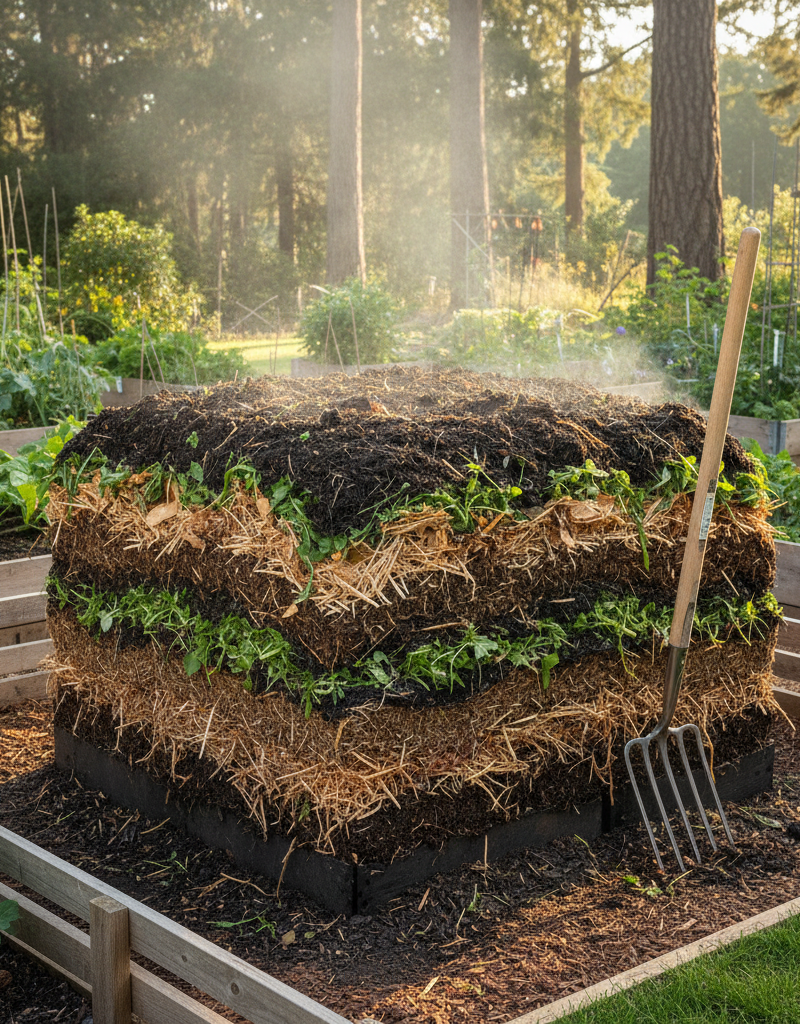
- If too many greens (slimy, stinky, ammonia smell): Add more 'browns' such as shredded cardboard, dry leaves, wood chips, straw, or newspaper. Layer them evenly.
4. Aerate the Pile Thoroughly — Oxygen for happy microbes
Lack of oxygen suffocates the beneficial aerobic bacteria, leading to slow, smelly anaerobic decomposition.
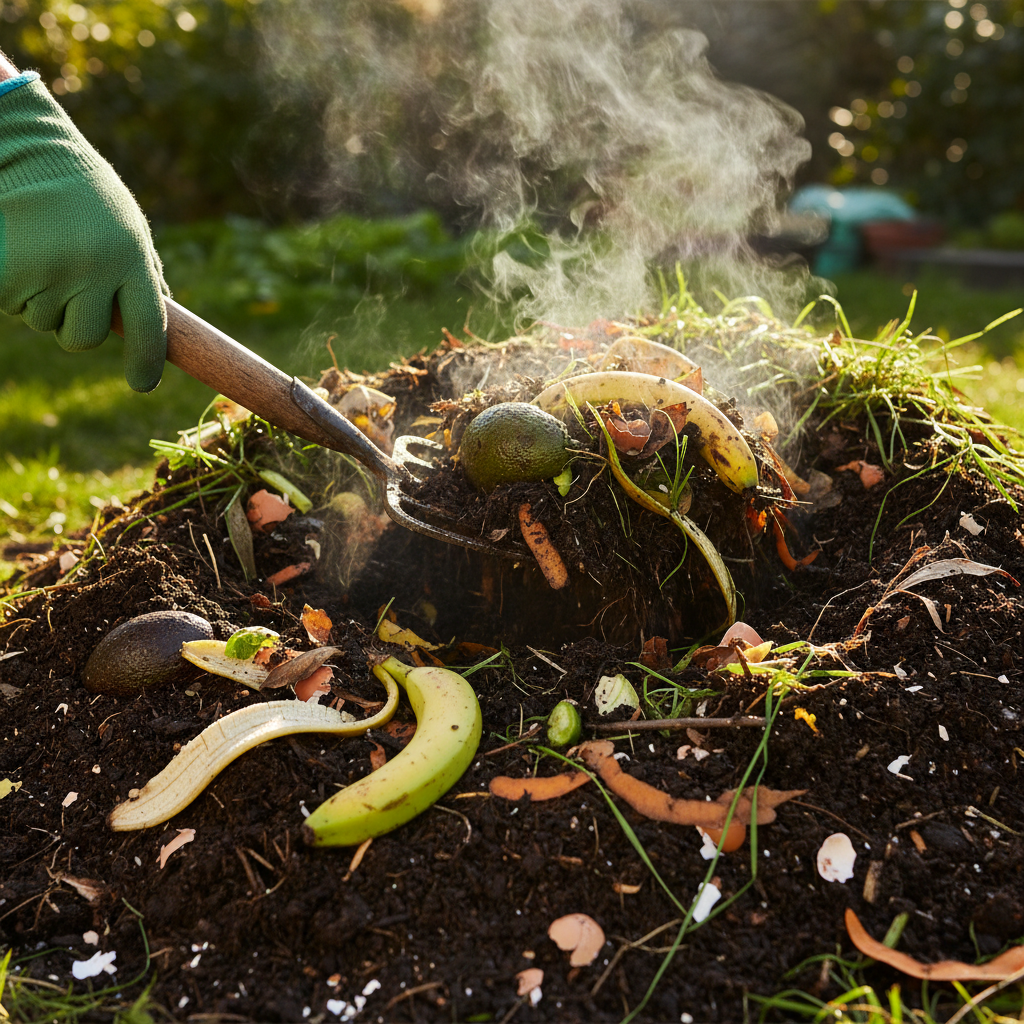
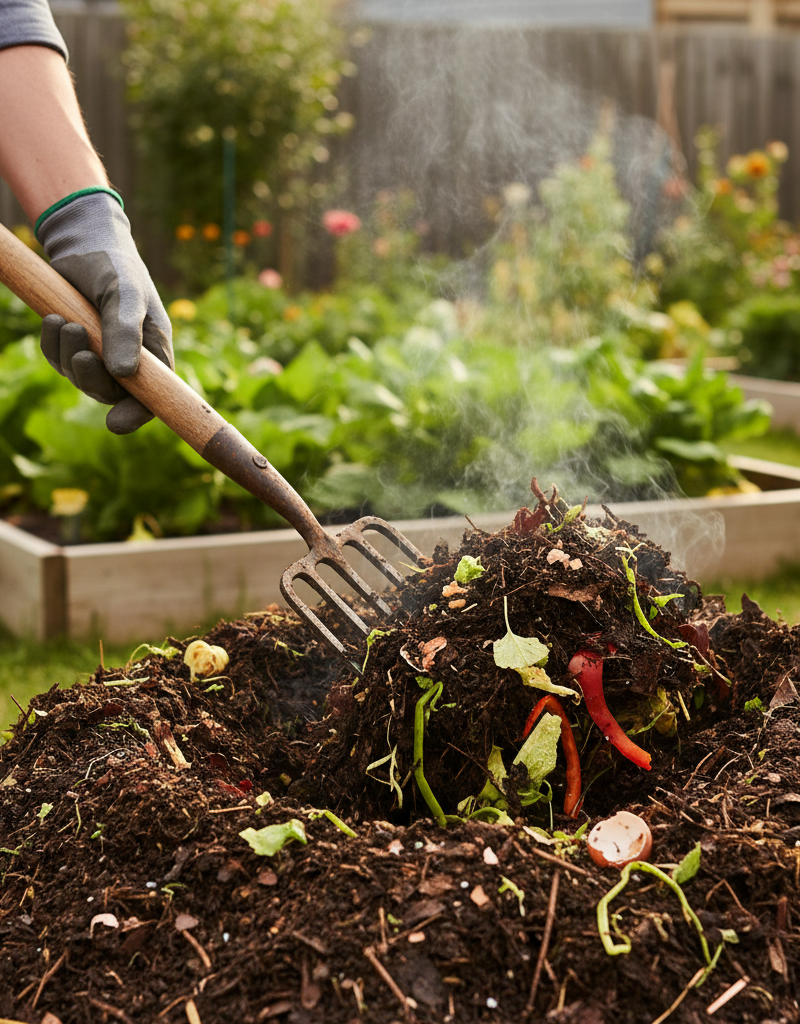
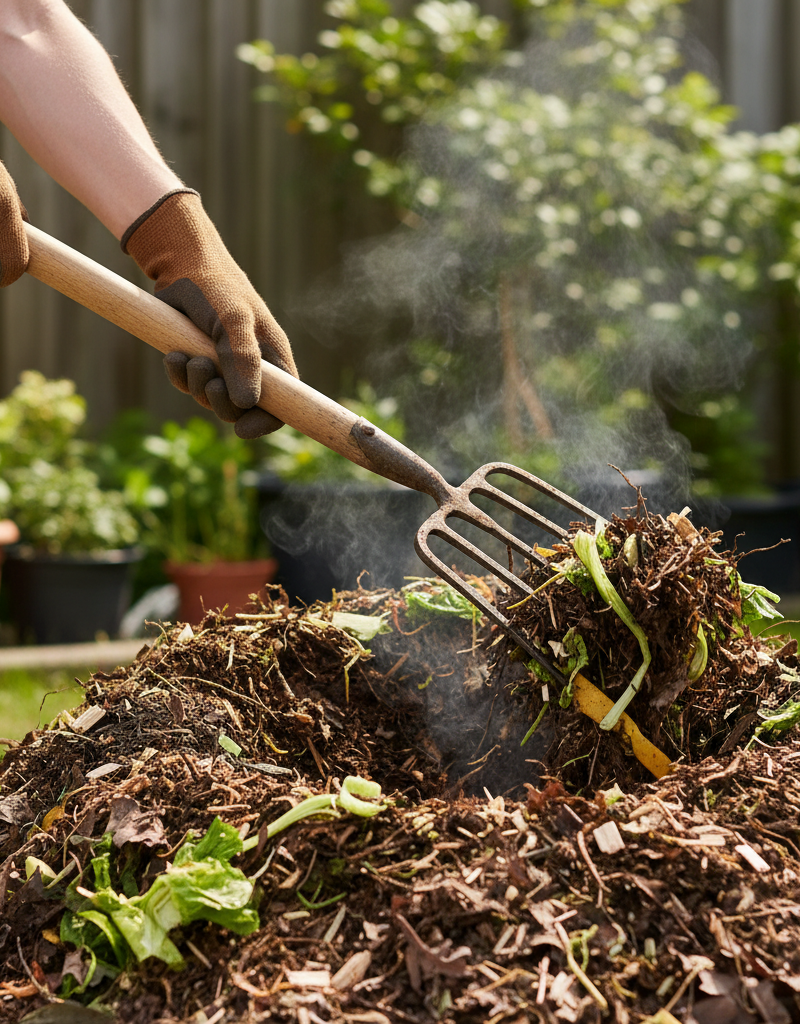
- Use a pitchfork, compost aerator tool, or even a sturdy stick to turn and mix the pile. Aim to reach the center and bring outer material inward, and vice versa.
- Do this every few days, or at least once a week, especially after adding new materials. This also helps distribute moisture and heat.
5. Break Down Materials — Smaller pieces compost faster
Large chunks of organic matter take longer to decompose.
- Chop up larger fruit rinds, vegetable stalks, and woody stems into smaller pieces (1-2 inches) before adding them to the pile.
- Shred leaves or run them over with a lawnmower for faster breakdown.
6. Monitor and Maintain — Consistency is key
After making adjustments, continue monitoring the pile's temperature, moisture, and smell. A healthy, active compost pile will generate heat (you might feel warmth when you reach in) and emit a pleasant, earthy aroma. Maintain moisture and continue turning regularly. The process takes time, but consistent care will yield results.
Safety Note: Always wear gloves when handling compost materials, especially if you're working with garden waste or manure. Avoid inhaling dust from dry compost.
Common Causes
- Incorrect Carbon-to-Nitrogen Ratio: This is by far the most frequent issue. Too many browns lead to a slow, dry pile; too many greens lead to a smelly, slimy one.
- Insufficient Moisture: Microbes need water to survive and function. A dry pile will instantly stall.
- Lack of Aeration: Without oxygen, beneficial aerobic decomposers cannot thrive, leading to anaerobic conditions, foul odors, and extremely slow decomposition.
- Large Material Size: Big chunks take significantly longer to break down than smaller, chopped-up pieces.
- Temperature Extremes: While active compost generates heat, extremely cold weather can slow down microbial activity, and excessively hot, dry conditions can dry out the pile.
- Pesticide Residues: Some pesticides or herbicides on yard waste can harm beneficial microorganisms, hindering decomposition.
Common Mistakes
- Adding Too Much of One Type of Material: Tossing in a huge batch of grass clippings or only dry leaves at once creates an immediate imbalance that's hard for the microbes to recover from. Layer materials instead.
- Not Chopping Materials Small Enough: Whole banana peels, large broccoli stalks, and full-sized leaves create air pockets and take ages to decompose. Always aim for smaller pieces.
- Forgetting to Water the Pile: Most people remember to add 'greens' and 'browns,' but neglect to ensure the pile stays consistently damp. A dry pile is a dead pile.
- Not Turning the Pile Regularly: Ignoring the need for aeration starves the microbes of oxygen, leading to compaction, odor, and a stalled process.
- Adding Problematic Materials: Dairy, meat, oily foods, pet waste (from carnivorous animals), diseased plants, or persistent weeds (like bindweed) can attract pests, create foul odors, or introduce pathogens. Stick to approved compostable materials.
- Giving Up Too Soon: Composting is a biological process that takes time. An active pile can produce finished compost in 2-3 months, but a slower pile might take 6-12 months. Be patient and consistent.
Cost & Time Breakdown
| Task | DIY Cost | Pro Cost | Time |
|---|---|---|---|
| Assess current pile | $0 | N/A | 5-10 mins |
| Add water (hose) | $0–$1 (water) | N/A | 5 mins |
| Gather/chop browns/greens | $0–$5 | N/A | 10-30 mins |
| Turn/aerate pile (pitchfork) | $0 | N/A | 10-15 mins |
| Monitor and adjust (ongoing) | $0 | N/A | 5 mins/week |
Tips & Prevention
- Layering is Key: When adding new materials, aim for thin layers of greens and browns, like making a lasagna. This helps maintain the C:N balance from the start.
- Keep it Moist, Not Soaked: Check moisture levels regularly. If it hasn't rained, give your pile a good drink until it's damp, but not dripping.
- Turn Frequently: Aim to turn your compost pile every few days or at least once a week, especially in warmer weather when decomposition is more active.
- Understand Your Materials: Get familiar with what counts as a 'green' (nitrogen-rich, fresh, often wet) and a 'brown' (carbon-rich, dry, often woody). This knowledge is your best tool.
- Use a Compost Thermometer: For serious composters, a thermometer helps ensure your pile is reaching optimal temperatures (130-160°F or 54-71°C) for rapid decomposition and killing weed seeds/pathogens.
- Regular Additions of 'Activators': A handful of finished compost or garden soil can help 'seed' a new pile with beneficial microbes. Coffee grounds and fresh manure are also excellent natural activators.
- Consider a Two-Bin System: Have one pile for active decomposition and another for curing or for adding new materials. This allows you to consistently add new scraps without disturbing a pile that's close to being finished.
When to Call a Professional
For most backyard compost piles, professional intervention isn't typically necessary. The issues are usually straightforward and can be resolved with the DIY steps outlined above. However, if you're dealing with very large volumes of unusual organic waste (e.g., specific agricultural byproducts), have persistent issues with odors that attract significant numbers of rodents or other pests that you cannot control, or if you're looking to implement a large-scale composting system for a community garden or farm, a composting consultant or landscape professional specializing in large-scale organic waste management might be beneficial. For the average homeowner simply trying to compost kitchen and yard waste, all the tools you need are right here.
Related Articles
Keep troubleshooting with these hand-picked guides from FixlyGuide:
- The 3 Compost Pile Mistakes Sabotaging Your Soil (And How to Fix Them) — Unlock nutrient-rich soil by avoiding common composting errors and learn the simple steps to a thriving backyard compost pile.
- The 3 Compost Pile Mistakes Even Experienced Gardeners Make — Avoid common pitfalls and build a thriving backyard compost pile with the right mix of greens, browns, and proper aeration for nutrient-ric…
- The #1 Mistake Killing Your Compost Pile (and How to Fix It in 10 Minutes) — Discover the most common error homeowners make with compost piles and a simple 10-minute fix to get yours thriving.
- The #1 Mistake Killing Your Summer Lawn (It's Not What You Think) — Uncover the surprising truth behind your yellow summer lawn and learn how to fix the most common, yet overlooked, culprit: overwatering.
- Thatched Lawn Secret: Why Brown Spots Bloom AFTER Watering (and the $15 Fix) — Brown spots appearing after watering your lawn often point to underlying thatch issues, hindering water absorption and nutrient delivery.
- The 5-Minute Trick to Restore Your Kitchen Sink Sprayer's Lost Pressure — Restore your kitchen sink sprayer's low pressure with a quick, simple trick that often takes less than five minutes and requires no special…
Frequently asked questions
Why is my compost pile not breaking down?+
The most common reasons are an incorrect balance of 'greens' (nitrogen) and 'browns' (carbon), insufficient moisture, or inadequate aeration. Microbes, which do the work, need the right conditions to thrive.
What is the ideal 'greens' to 'browns' ratio for compost?+
Aim for a ratio of approximately 2 parts 'browns' to 1 part 'greens' by volume. This provides the optimal carbon-to-nitrogen balance for rapid decomposition.
How often should I turn my compost pile?+
Ideally, turn your compost every few days to once a week. This introduces oxygen, which is vital for the beneficial aerobic bacteria that break down organic matter.
My compost pile smells like rotten eggs or ammonia. What's wrong?+
A rotten egg smell indicates anaerobic conditions (lack of oxygen) and/or too much moisture. An ammonia smell means there's too much nitrogen ('greens'). Turn the pile thoroughly and add more 'brown' materials.
Discussion
Loading comments…