Tools & materials you'll need
Affiliate linksAs an Amazon Associate FixlyGuide earns from qualifying purchases — at no extra cost to you. Prices and availability are accurate as of publication and subject to change.
Quick Answer
If your kitchen sink sprayer is suffering from frustratingly low pressure, the most common culprit is mineral buildup or debris obstructing the sprayer head. Performing a simple cleaning of the aerator and internal components, often involving a quick soak in white vinegar, can restore full pressure in a matter of minutes. This DIY fix is straightforward, requires minimal tools, and can save you the cost of a plumber.
The Problem
You've got a kitchen sink, and the sprayer is barely dribbling water out, making rinsing dishes or cleaning the sink basin a chore rather than a convenience. This isn't just an annoyance; it impacts the functionality of your entire kitchen cleanup routine. Before you assume a major plumbing issue or consider replacing the entire faucet, understand that low pressure in a sprayer is almost always a localized problem within the sprayer head itself or the hose connection leading to it. Over time, hard water deposits (like calcium and magnesium) and sediment from your water supply accumulate, slowly choking off the water flow. What starts as a slight decrease in force can quickly escalate to a weak, sputtering stream.
How It Works
To understand the fix, it helps to know how your kitchen sink sprayer delivers water. When you press the trigger or activate the handle, water is diverted from the main faucet spout through a dedicated hose that connects to the sprayer head. This hose is typically nested beneath your sink, coiled or hanging freely. At the end of the hose is the sprayer head, which contains a small aerator or a series of tiny openings designed to mix air with the water, creating a consistent, forceful, yet splash-free stream. Some sprayer heads also have internal check valves or diverters to prevent backflow and regulate pressure. The critical point of failure for pressure issues is almost always at these small openings or internal mechanisms where mineral deposits and debris can easily accumulate. As water flows through these constricted passages, the pressure drops significantly, resulting in the weak stream you're experiencing. The water supply itself isn't necessarily low; it's just being restricted at the point of exit.
Step-by-Step Fix
1. Shut Off Water and Prepare — Turn off the hot and cold water supply valves located beneath your kitchen sink. This prevents any accidental water flow while you're working. Have a towel or small bucket handy to catch any residual water when disconnecting the sprayer.
* **Safety Note:** Always ensure the water supply is completely off before disconnecting any plumbing fixtures.
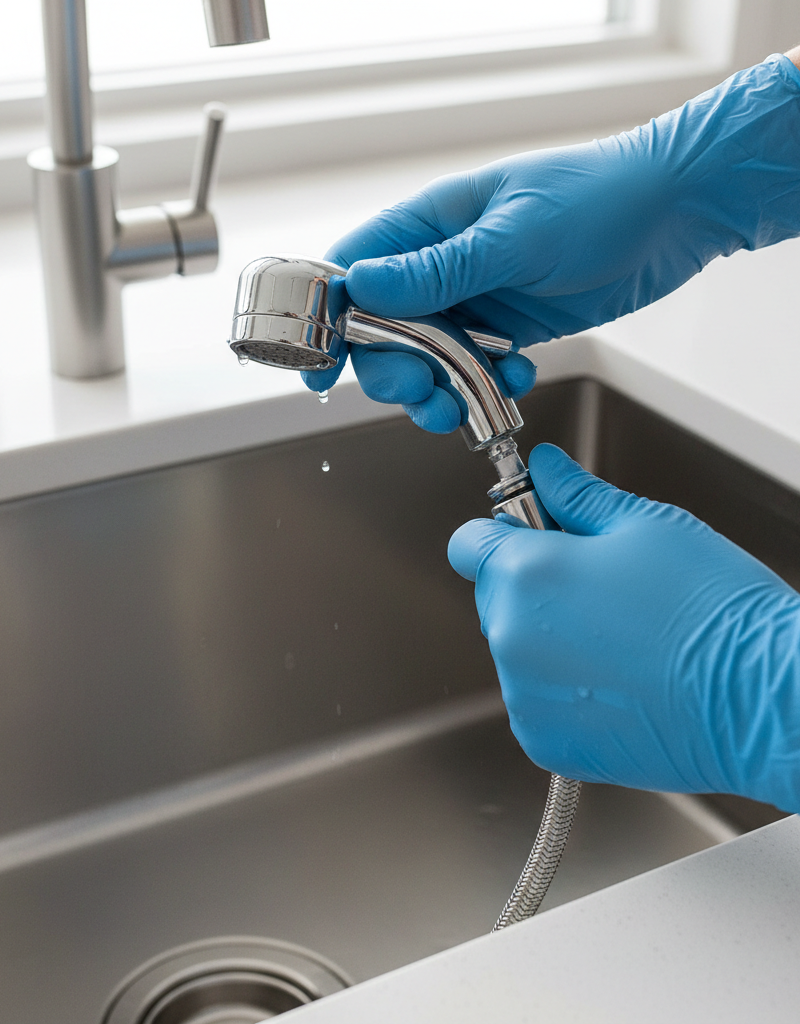
2. Disconnect the Sprayer Head — Grip the base of the sprayer head firmly and twist counter-clockwise to unscrew it from the sprayer hose. For stubborn connections, you might need an adjustable wrench, but be careful not to overtighten and strip the plastic nut. Place the sprayer head in your small bucket or on a towel.
* **If it's seized:** If the connection is too tight to unscrew by hand, wear gloves and use an adjustable wrench. Protect plastic finishes with a cloth.
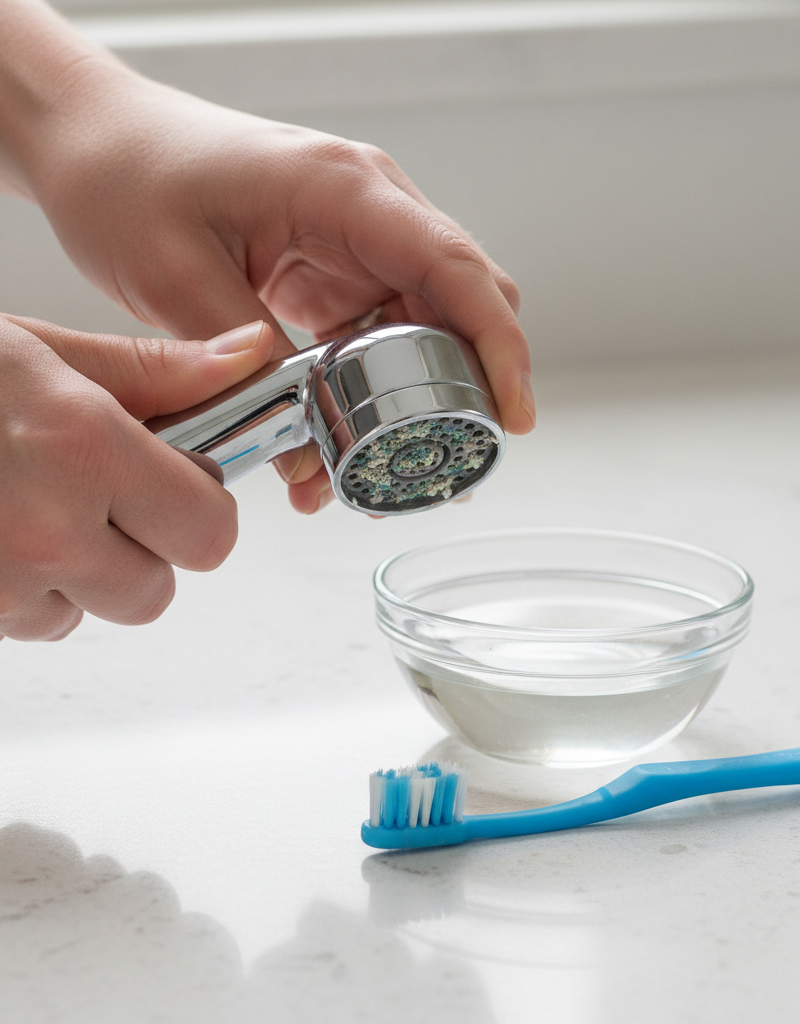
3. Inspect for Obvious Debris — Look inside the sprayer head, especially at the screen or aerator where the water exits. You might immediately see particles of sediment, rust flakes, or mineral chunks. Use a small brush (like a toothbrush or a pipe cleaner) or a toothpick to gently dislodge and remove any visible debris.
* **Common culprits:** Sand, pipe scale, or worn-out rubber gaskets can often be found here.
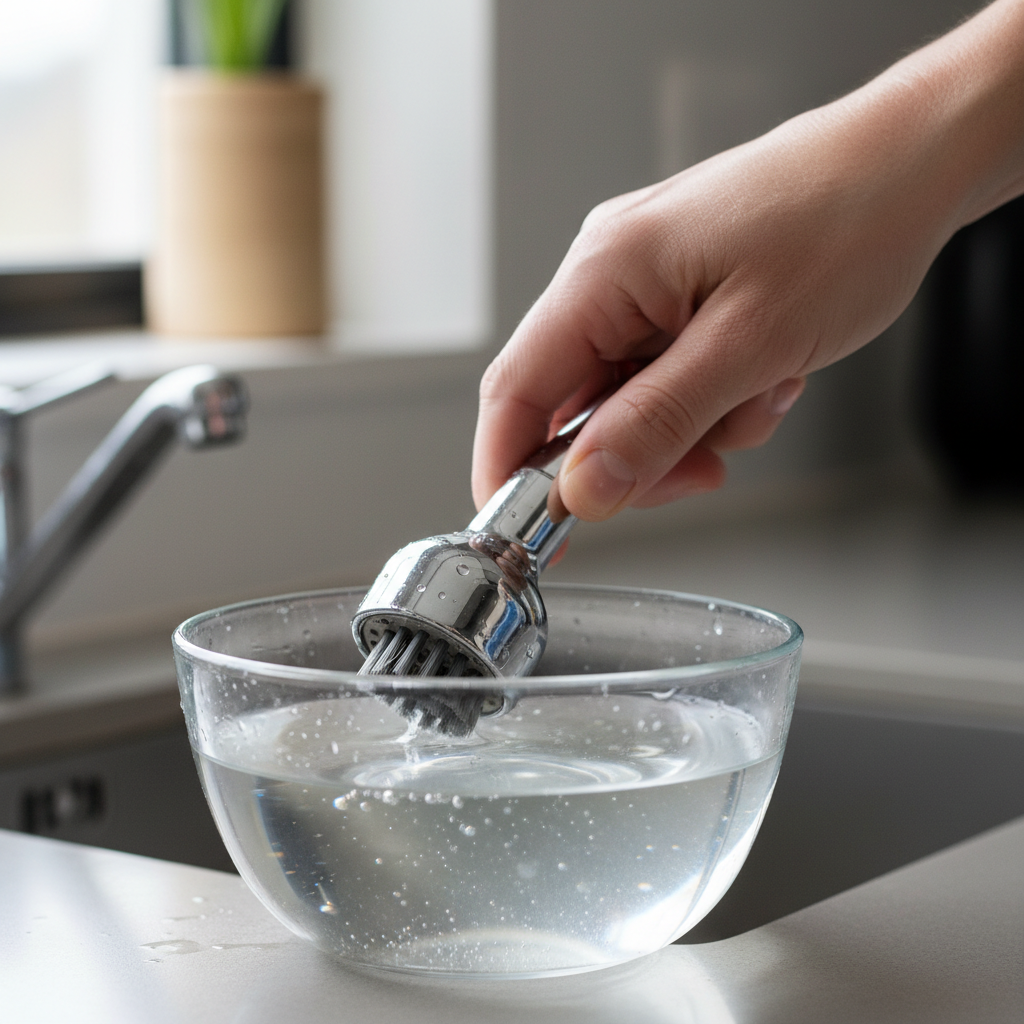
4. Soak to Dissolve Mineral Buildup — Fill a bowl with white vinegar. Submerge the disconnected sprayer head in the vinegar, ensuring the entire head, especially the nozzle area, is covered. Let it soak for at least 30 minutes, or for several hours (even overnight) if buildup is severe. The vinegar's acidity will break down calcium, lime, and other mineral deposits.
* **Alternative:** For very heavy buildup, a commercial descaling solution can be used, but always follow product instructions and wear protective gloves and eyewear.
5. Rinse and Scrub Thoroughly — After soaking, remove the sprayer head from the vinegar. Use your small brush or an old toothbrush to scrub all internal and external surfaces, paying extra attention to the nozzle openings. Rinse the sprayer head under running water from a separate faucet to flush out any loosened debris and vinegar residue.
* **Check flow:** Hold the sprayer head under the running water to see if water now flows freely through it.
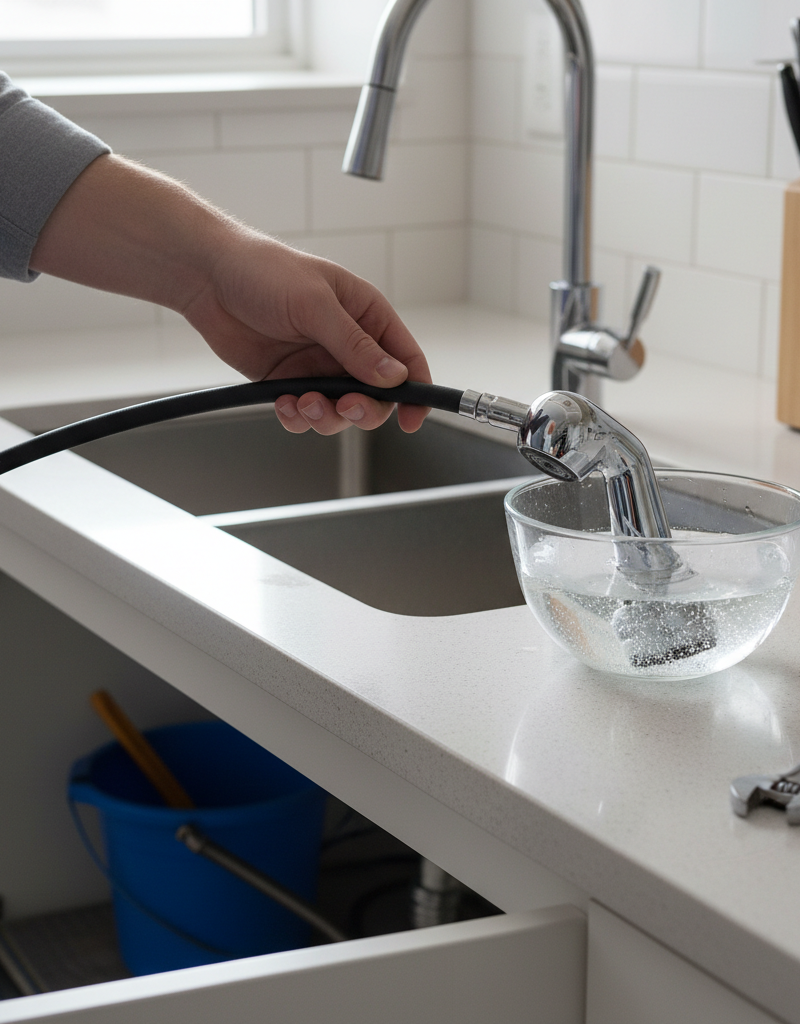
6. Flush the Sprayer Hose — Before reattaching the clean sprayer head, it's crucial to flush the sprayer hose itself. With a bucket positioned under the open end of the hose, slowly turn the hot and cold water supply valves back on. Let water run through the hose into the bucket for 30-60 seconds to clear any sediment that might be trapped in the hose or the diverter valve within the main faucet body.
* **Watch for debris:** Observe the water coming out – it should run clear and strong.
7. Reassemble and Test — Turn the water supply valves back off. Reattach the clean sprayer head to the hose by twisting it clockwise until finger-tight. Avoid overtightening. Slowly turn the hot and cold water supply valves back on. Test the sprayer pressure. If the pressure is restored, you're done!
* **Leak check:** After turning water back on, check for any drips or leaks around the sprayer head connection.
8. If Pressure is Still Low (Troubleshoot Further) — If the pressure hasn't significantly improved, the issue might be deeper. Check the diverter valve within the main faucet body (this usually requires specialized tools and expertise as it's an internal faucet component) or the main water supply to your house. Ensure the shut-off valves under the sink are fully open. In rare cases, a kinked sprayer hose can also reduce pressure; inspect the hose for any visible kinks or damage.
* **Pro Tip:** If you suspect the diverter, it's often best to call a plumbing professional, as replacement can be complex and may require specific parts for your faucet model.
Common Causes
- Mineral Buildup (Hard Water): The number one culprit. Calcium and magnesium deposits from hard water accumulate in the small openings of the sprayer head, restricting flow over time.
- Sediment and Debris: Rust flakes from old pipes, sand, dirt, or other particulate matter from your water supply can get trapped in the sprayer's aerator or internal screens.
- Kinked Sprayer Hose: If the hose beneath your sink becomes twisted or pinched, it can severely restrict water flow to the sprayer head. This is often an issue with retractable sprayers.
- Faulty Diverter Valve: Inside the main faucet assembly, a diverter valve routes water to either the main spout or the sprayer. If this valve is partially stuck or damaged, it won't allow full pressure to the sprayer.
- Low Water Pressure in House: While less common for only the sprayer, overall low house water pressure can affect all fixtures. Check other faucets in your home to rule this out.
Common Mistakes
- Ignoring the Water Shut-Off: Forgetting to turn off the water supply before disconnecting the sprayer results in an unexpected (and messy) gush of water.
- Over-Tightening Connections: When reattaching the sprayer head, overtightening plastic connections can strip the threads, leading to leaks or damaging the sprayer itself.
- Skipping the Hose Flush: Not flushing the hose before reattaching the cleaned head means any sediment caught in the hose will immediately clog your newly cleaned sprayer again.
- Using Harsh Chemicals: While vinegar is safe, using strong caustic drain cleaners or abrasive scouring pads on your sprayer can damage its finish or internal components.
- Not Inspecting the Hose: Assuming the problem is always the head and not checking for a kinked or damaged hose beneath the sink.
- Replacing Without Diagnosing: Immediately buying a new sprayer or faucet without first attempting this simple cleaning, which often solves the problem and saves money.
Cost & Time Breakdown
| Task | DIY Cost | Pro Cost | Time |
|---|---|---|---|
| Gather supplies / prep | $0 | N/A | 5 minutes |
| Disconnect & inspect sprayer | $0 | N/A | 5-10 minutes |
| Soak in vinegar | $2–$5 | N/A | 30 min – overnight |
| Scrub & rinse sprayer | $0 | N/A | 5-10 minutes |
| Flush hose | $0 | N/A | 5 minutes |
| Reassemble & test | $0 | N/A | 5 minutes |
| Total (DIY) | $2–$5 | N/A | 45 min – 1 day (active 20-30 min) |
| Professional Service | N/A | $150–$300 | 1-2 hours |
Tips & Prevention
- Regular Cleaning: Make cleaning your sprayer head a yearly task, especially if you live in an area with hard water. A quick vinegar soak can prevent major buildup.
- Water Softener: Consider installing a whole-house water softener if hard water is a pervasive issue, protecting all your plumbing fixtures and appliances.
- Filter Your Water: A point-of-use or whole-house water filter can reduce sediment and improve water quality, preventing clogs.
- Observe Warning Signs: If you notice the pressure slowly decreasing, address it early before it becomes a complete blockage.
- Inspect Hose Periodically: When changing filters or checking under the sink, take a moment to ensure the sprayer hose isn't kinked or pinched.
- Gentle Handling: Avoid yanking or forcefully retracting the sprayer hose, which can cause kinks or damage over time.
When to Call a Professional
While low sprayer pressure is often a DIY fix, there are clear signs it's time to call a licensed plumber. If you've cleaned the sprayer head thoroughly, flushed the hose, and the pressure remains low, the issue likely lies within the faucet's internal diverter valve or deeper within your plumbing system. Replacing a diverter valve typically requires specialized tools, faucet-specific parts, and an understanding of faucet assembly that goes beyond basic DIY. Additionally, if the low pressure affects all fixtures in your kitchen, or even your entire home, it indicates a broader plumbing problem – potentially with your main water supply line, pressure regulator, or water heater, which are complex and critical systems. A plumber can accurately diagnose these deeper issues, ensure proper repair, and prevent further damage to your home's essential plumbing infrastructure. Never attempt internal faucet repairs if you're unsure, as improper reassembly can lead to costly leaks and water damage.
Related Articles
Keep troubleshooting with these hand-picked guides from FixlyGuide:
- The 5-Minute Trick to Stop a Dripping Single-Handle Faucet (No Plumber Needed) — A persistent drip from your single-handle faucet is usually caused by a worn-out cartridge, a repair you can typically complete yourself in…
- The 3 Hidden Reasons Your Toilet Tank Fills Slowly (And How to Fix Each) — Discover the common culprits behind a slow-filling toilet tank, from crucial valve issues to subtle obstructions, and learn how to restore…
- The #1 Mistake Homeowners Make When Their AC Drain Clogs (And The $5 Fix) — Discover the most common error homeowners make when tackling a clogged AC drain line and learn a simple, inexpensive solution to prevent co…
- The 5-Minute Trick to Fix a Weak Kitchen Sink Sprayer (No Plumber Needed) — Restore full power to your kitchen sink sprayer with simple, DIY steps that tackle common culprits like clogs and diverter issues.
- The Secret Culprit Behind Your Slow Toilet Fill (It's Not Clogs!) — A slow-filling toilet tank is usually caused by issues with the fill valve, not clogs, affecting both water pressure and flush efficiency.…
- The 3 Hidden Reasons Your Gutters Fail in Heavy Rain (It’s Not Just Leaves) — Overflowing gutters during heavy rain often stem from a few common, yet overlooked, issues beyond simple leaf clogs, leading to potential s…
Frequently asked questions
Why is my kitchen sink sprayer suddenly losing pressure?+
The sudden loss of pressure in your kitchen sink sprayer is most often due to mineral buildup (like calcium and lime) or debris (such as sediment or rust particles) obstructing the small openings of the sprayer head. A kinked hose or a partially failed diverter valve inside the faucet body can also be culprits.
Can I use anything other than vinegar to clean my sink sprayer?+
While white vinegar is highly effective and safe for dissolving mineral buildup, you can also use a mixture of lemon juice and water, or a commercial descaling solution specifically designed for faucets and showerheads. Always follow product instructions and wear protective gear if using commercial cleaners.
How do I prevent my kitchen sink sprayer from getting clogged again?+
To prevent future clogs, regularly clean your sprayer head (every 6-12 months) by soaking it in vinegar. Consider installing a whole-house water softener if you have very hard water, and inspect the sprayer hose periodically for kinks or pinches.
What if cleaning the sprayer head doesn't fix the low pressure?+
If cleaning the sprayer head doesn't restore pressure, the issue might be a kinked sprayer hose, a faulty diverter valve within the main faucet body, or a broader low water pressure issue in your home's plumbing. Inspect the hose first, and if the problem persists, it's best to consult a licensed plumber.
Is it safe to try and fix this myself or should I call a plumber?+
Cleaning a kitchen sink sprayer head for low pressure is generally a very safe and easy DIY task for homeowners. You should only call a plumber if the problem persists after thorough cleaning and hose inspection, or if you suspect a more complex internal faucet component failure like a diverter valve.
Discussion
Loading comments…