Tools & materials you'll need
Affiliate links- AmazonPencil1
- AmazonWood furring strips (1x2 or 1x3)8-12 linear feet
- AmazonDrywall screws (1 1/4 inch, coarse thread)1 box
- AmazonDrywall scrap (matching thickness)1 sheet remnant
- AmazonSelf-adhesive fiberglass mesh tape OR paper joint tape1 roll
- AmazonSetting-type joint compound (hot mud)1 bag (small)
As an Amazon Associate FixlyGuide earns from qualifying purchases — at no extra cost to you. Prices and availability are accurate as of publication and subject to change.
Quick Answer
Fixing a large hole in drywall, defined as anything greater than 6 inches in diameter, is not a job for simple spackle or mesh patches. These larger openings require a more robust solution: cutting out the damaged section to create a clean, square opening, installing wood or metal backing inside the wall cavity for support, and then fitting a new piece of drywall into the opening. This method provides the structural integrity needed to prevent future cracks, bulges, or sagging, ensuring a lasting and invisible repair. It's a moderate DIY project that, when done correctly, will leave your wall looking brand new.
The Problem
You've got a gaping hole in your drywall—maybe from a doorknob gone wild, a clumsy move, or an accidental impact during a project. Regardless of the cause, a large drywall hole isn't just an eyesore; it compromises the wall's integrity and can even affect your home's insulation and soundproofing. Attempting to repair a hole this size with inadequate methods, like simply filling it with vast amounts of joint compound or applying a small mesh patch, will inevitably lead to failure. The patch will crack, sag, or become visible through the paint, forcing you to revisit the repair again and again. A proper repair addresses both the aesthetic and structural aspects, creating a seamless surface that blends with the surrounding wall and stands the test of time.
How It Works
Repairing a large drywall hole fundamentally involves recreating a structurally sound segment of your wall. Drywall itself is a panel made of gypsum plaster pressed between two sheets of thick paper. It's strong in compression but weak when unsupported in the middle—which is exactly why a large hole is problematic. The standard repair for a large hole uses a 'Dutchman patch' or 'California patch' principle, but scaled up. First, you create a precise, clean-edged opening, usually a square or rectangle, around the damaged area. This is critical because it provides a stable perimeter for the new patch. Inside the wall cavity, wood furring strips or metal studs are installed horizontally, extending beyond the edges of the cut opening. These strips act as new 'framing' for your patch, providing solid surfaces to screw the new drywall piece into. The new drywall piece, cut to precisely match the opening, is then screwed to these backing strips. Once secured, the seams where the new patch meets the old drywall are reinforced with joint tape and then covered with multiple thin layers of joint compound. The compound fills the seams, creating a smooth transition. Feathering the compound outwards ensures there are no visible ridges. Finally, sanding and priming prepare the surface for paint, making the repair disappear.
Step-by-Step Fix
1. Prepare the Area — Get ready to work by clearing the space and protecting your surroundings.
- Move furniture away and lay down a drop cloth to catch dust and debris.
- Wear safety glasses and a dust mask to protect your eyes and lungs from drywall dust.
2. Square Up the Hole — Transform the irregular hole into a workable, clean-edged opening.
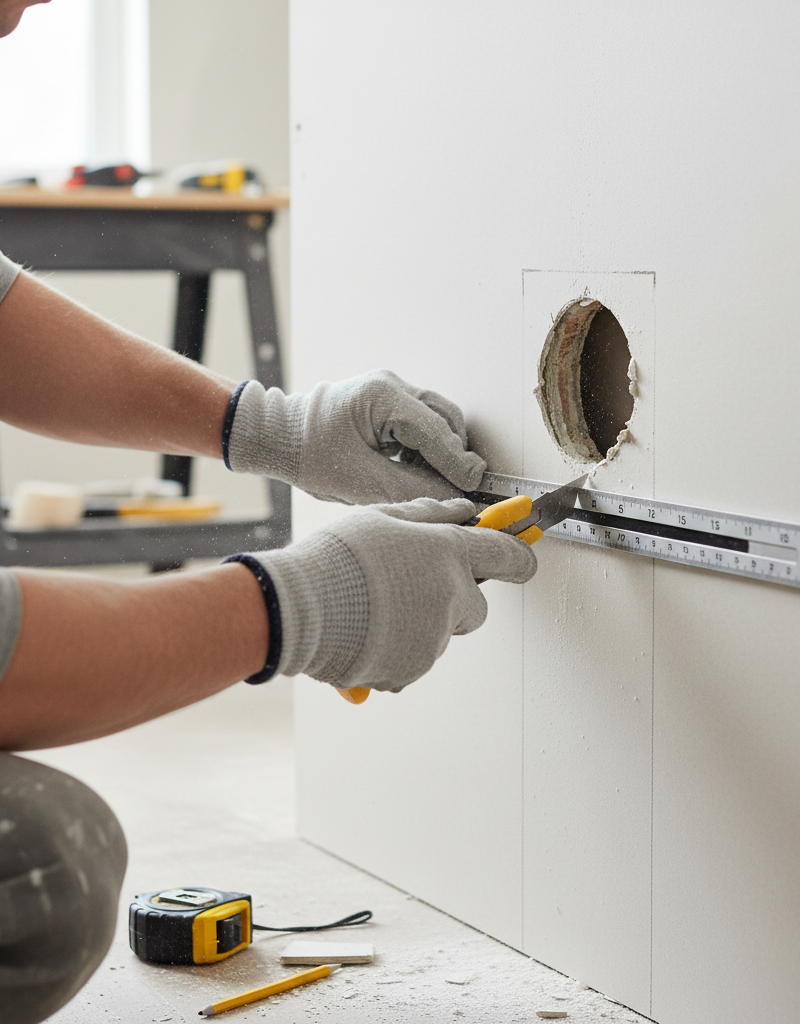
- Using a straightedge and pencil, draw a square or rectangle around the damaged area. Ensure the lines extend into structurally sound drywall, free of cracks.
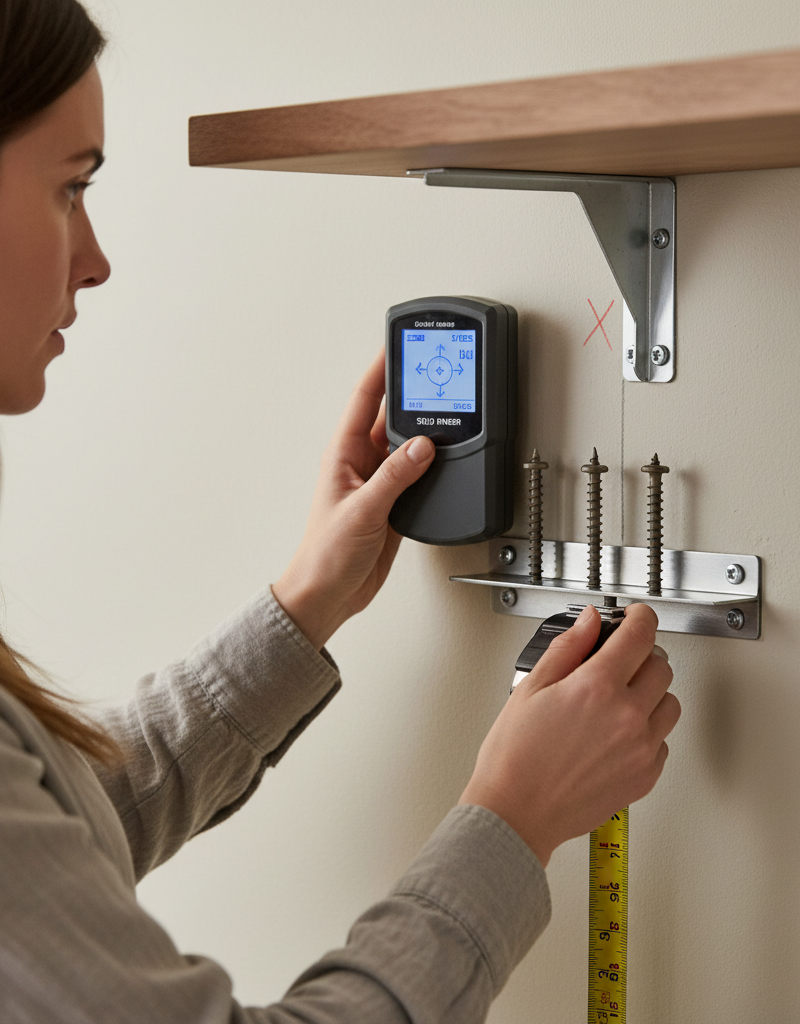
- Safety Note: Before cutting, use a stud finder to locate any hidden electrical wires or plumbing pipes that might be near your cutting path. Mark their locations on the wall.
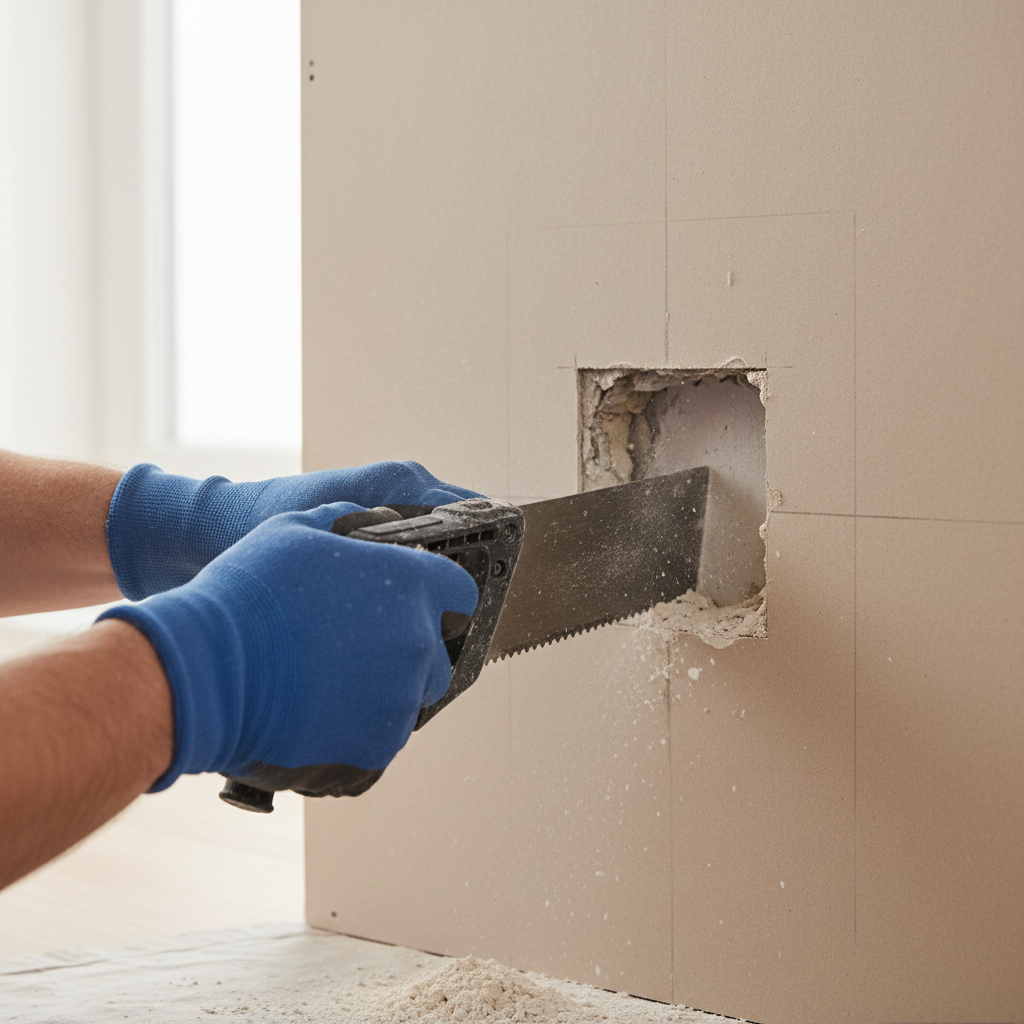
- Using a drywall saw or utility knife, carefully cut along your pencil lines. Make smooth, controlled cuts. If using a utility knife, score the lines several times and then snap the drywall.
- Remove the damaged section and clean up any loose debris around the edges.
3. Install Wood Backing — Create a sturdy frame within the wall cavity for your new patch.
- Cut two pieces of wood furring strip (1x2s or 1x3s work well) that are approximately 6-8 inches longer than the height of your squared opening.
- Hold one furring strip horizontally inside the wall cavity, positioning it so it extends about 3-4 inches beyond each vertical edge of your opening.
- Using 1 1/4-inch drywall screws, drive screws through the existing drywall and into the furring strip at several points from the outside. Ensure the screws firmly secure the strip in place.
- Repeat this process for the second furring strip, positioning it at the bottom of your opening, parallel to the first.
- If this doesn't work: If you can't get the backing strips to hold securely due to thin existing drywall, consider using larger screws or adding a third, shorter strip vertically between the two horizontal ones for added rigidity.
4. Cut and Fit the Patch — Prepare the replacement piece of drywall.
- Measure the exact dimensions of your squared opening (height and width).
- Transfer these measurements precisely onto a new piece of scrap drywall. Double-check your measurements before cutting.
- Score the drywall with a utility knife along your lines, then snap it clean. Smooth any rough edges with a utility knife or sandpaper.
- Test fit the patch into the opening. It should fit snugly, but not so tight that you have to force it. Trim as necessary for a perfect fit.
5. Secure the Patch — Fasten the new drywall section to your installed backing.
- Place the cut drywall patch into the opening.
- Using 1 1/4-inch drywall screws, drive screws through the patch and into the furring strips. Space screws every 6-8 inches along the top and bottom edges, ensuring they are flush with the drywall surface but not over-driven.
- Make sure the patch is flush with the surrounding wall surface.
6. Apply Joint Tape — Cover the seams for strength and a smooth finish.
- Apply self-adhesive fiberglass mesh tape directly over all four seams where the new patch meets the existing drywall. Press it down firmly.
- Alternatively, use paper joint tape, embedding it into a thin layer of setting-type joint compound (hot mud) immediately after applying the compound.
- Important: For large patches, setting-type joint compound (also known as hot mud) is recommended for the first coat as it dries harder and faster, reducing the chance of cracks.
7. First Coat of Joint Compound — Begin filling and smoothing the seams.
- Using a 6-inch drywall knife, apply a thin, even layer of joint compound over the joint tape and screws.
- Feather the edges of the compound outwards by about 2-3 inches beyond the tape, creating a slightly wider, flatter surface.
- Allow this coat to dry completely, which can take several hours or overnight depending on humidity and product type. Setting compound dries faster.
8. Second Coat of Joint Compound — Build up and refine the surface.
- Once the first coat is dry, lightly sand any major ridges or bumps with 120-grit sandpaper. Wipe away dust with a damp cloth.
- Apply a second, slightly wider, and thinner layer of all-purpose joint compound using an 8-inch or 10-inch drywall knife. Extend this coat an additional 2-3 inches beyond the first coat.
- Ensure there are no trowel marks or excessive buildup. Aim for a consistently smooth surface.
- Allow to dry completely.
9. Final Coat & Sanding — Achieve a perfect, ready-to-paint finish.
- Lightly sand the second coat, focusing on smoothness. Wipe away dust.
- Apply a very thin, wide final coat of lightweight all-purpose joint compound using a 10-inch or 12-inch drywall knife. This coat should be feathered out even further, making it blend seamlessly with the existing wall.
- Allow to dry completely. This final coat might take longer to dry due to its thinness and width.
- Once fully dry, use a fine-grit sanding sponge (150-220 grit) or a pole sander with fine-grit sandpaper to achieve a perfectly smooth, level surface. The goal is to make the repair invisible.
- Wipe down the entire repair area with a damp cloth to remove all dust.
10. Prime and Paint — Prepare for the final aesthetic step.
- Apply a high-quality PVA (polyvinyl acetate) drywall primer to the entire repaired area. This seals the joint compound and ensures consistent paint absorption. Allow to dry thoroughly.
- Once primed, paint the area to match the surrounding wall. You may need two coats of paint.
Common Causes
- Impact Damage: Moving furniture, playful children, dropped tools, or even an overzealous vacuum cleaner can cause significant impact holes.
- Doorknob Damage: Doorknobs repeatedly striking the wall without a doorstop will eventually create a large, circular hole.
- Plumbing/Electrical Access: Sometimes, plumbers or electricians need to cut larger sections of drywall for access during repairs, leaving a substantial opening.
- Water Damage: Prolonged water exposure can saturate and weaken drywall, making it soft and prone to collapsing into large holes.
- Poorly Mounted Fixtures: Heavy shelving or wall-mounted TVs installed without proper anchoring into studs can pull away from the wall, taking large chunks of drywall with them.
Common Mistakes
- Using Too Much Compound: Trying to fill a large hole with excessive amounts of joint compound will lead to cracking, shrinking, and a repair that never fully dries or hardens properly. Compound is for smoothing, not structural filling.
- Not Using Backing: Applying a patch without securing it to internal backing strips is a recipe for failure. The patch will be unstable, prone to cracking, and will eventually sag or fall out.
- Skipping Joint Tape: Relying solely on joint compound to hold the seams together will result in visible cracks as the house settles or experiences minor vibrations. Tape provides crucial reinforcement.
- Insufficient Drying Time: Applying subsequent coats of compound or paint before the previous layer is completely dry traps moisture and leads to bubbling, cracking, or an uneven finish. Patience is key.
- Poor Feathering/Sanding: Not properly feathering out the edges of the compound or failing to sand adequately will leave noticeable ridges and bumps, making the repair visible even after painting. The goal is an invisible transition.
- Ignoring a Stud Finder: Cutting into a wall without scanning for electrical wires or plumbing pipes is an extremely dangerous mistake that can lead to electrocution, flooding, or significant damage.
Cost & Time Breakdown
| Task | DIY Cost | Pro Cost | Time |
|---|---|---|---|
| Materials | $20–$50 | Included in labor | 1–2 hours |
| Drywall Patching | Free (DIY Labor) | $150–$300 | 2–4 hours |
| Finishing & Sanding | Free (DIY Labor) | $100–$200 | 2–3 hours |
| Primer & Paint | $15–$30 | Included in labor | 1–2 hours |
| Total (DIY) | $35–$80 | N/A | 5–11 hours |
| Total (Professional) | N/A | $350–$700 | N/A |
Note: Professional costs can vary widely based on location, contractor rates, and the complexity of the specific repair. DIY costs assume you already own basic tools like a drill and utility knife.
Tips & Prevention
- Install Door Stops: Prevent future doorknob damage by installing wall-mounted or baseboard door stops behind every door.
- Anchor Heavy Objects Correctly: Always mount heavy shelving, TVs, or wall art directly into wall studs using a stud finder to locate them. Use appropriate drywall anchors for lighter items when studs aren't available.
- Be Mindful When Moving Furniture: Plan your route and have a helper when moving large items to avoid accidental impacts with walls.
- Regular Inspections: Periodically check walls, especially in bathrooms or near pipes, for any signs of water stains, bubbling paint, or softening drywall, which can indicate a hidden leak before it causes major damage.
- Keep Scrap Drywall: If you have any leftover drywall pieces from a previous project, save them. They can be invaluable for patching smaller holes or even large ones like this if the size is right.
When to Call a Professional
A large drywall hole repair, while manageable for many DIYers, can quickly become overwhelming or indicate a deeper issue. You should call a professional if the hole is exceptionally large (e.g., more than 2 feet by 2 feet), or if it's located in an area with complex structural elements like a vaulted ceiling or a load-bearing wall. Professionals are also essential if the damage extends beyond just the drywall, revealing damaged studs, electrical wiring, or plumbing pipes behind the wall. Any signs of water damage, such as mold growth, a persistent musty smell, or significant discoloration, warrant immediate professional intervention to address the underlying leak before patching. If you find yourself repeatedly struggling to achieve a smooth, invisible finish, or if you simply lack the time and patience for multiple sanding and compound layers, a professional drywall contractor can deliver a flawless result efficiently. They have the experience and specialized tools to tackle large-scale repairs, ensuring a durable and aesthetically pleasing outcome while you focus on other things.
Frequently asked questions
How big of a hole in drywall can you patch?+
You can effectively patch drywall holes up to several feet in size using the cut-out and backing method. For holes smaller than 6 inches, a simple mesh patch and joint compound might suffice, but for larger holes, structural backing is essential for a lasting repair.
What happens if you don't use backing for a large drywall hole?+
Without proper wood or metal backing, a large drywall patch will lack structural support. This often leads to the patch sagging, cracking along the seams, or even falling out over time. The repair will not be durable or blend seamlessly with the wall.
Can I just fill a large drywall hole with joint compound?+
No, you should never try to fill a large drywall hole (larger than a few inches) solely with joint compound. Joint compound is designed for thin layers to smooth surfaces and fill seams, not for structural filling. Attempting to do so will result in extensive cracking, shrinking, and a repair that will fail rapidly.
How long does a large drywall patch take to dry?+
The drying time for a large drywall patch can vary significantly. Each layer of joint compound needs to dry completely, which can take 4-24 hours depending on the product type (setting-type compound dries faster), humidity, and temperature. A full repair, including multiple coats and sanding, might take 1-3 days including drying time.
What kind of screws should I use for drywall repair?+
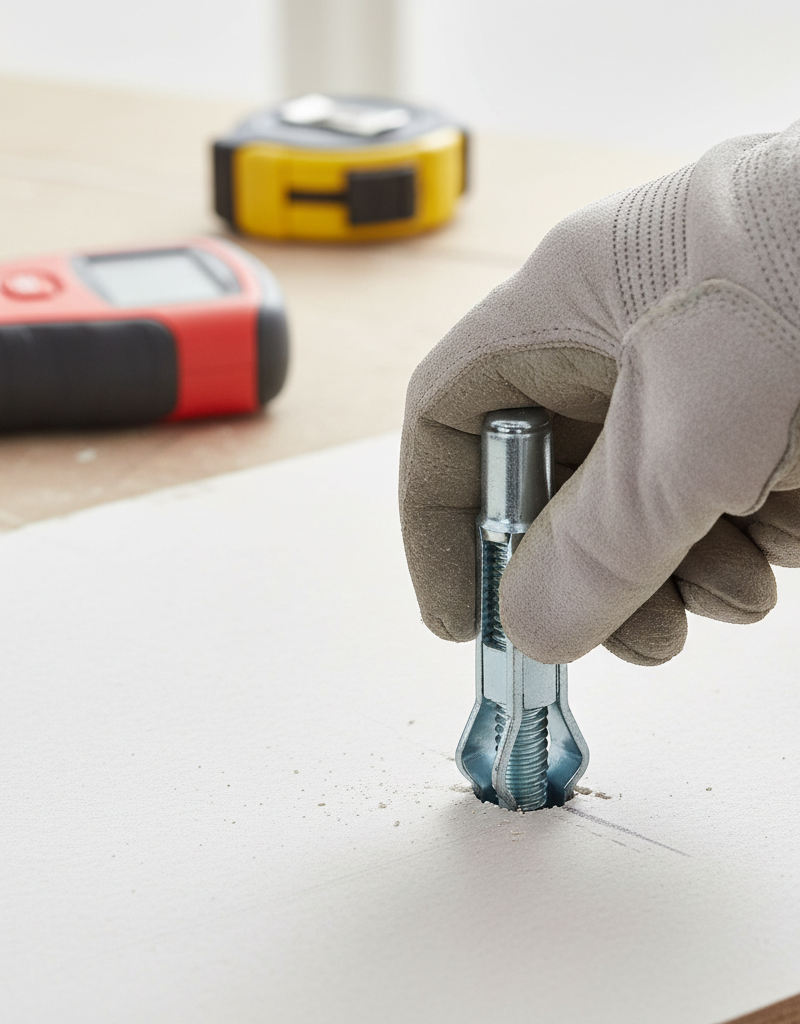
Use 1 1/4-inch coarse-thread drywall screws. Ensure they are designed for drywall to get the best grip in both the drywall and the wood backing. Drive them so their heads are flush with the drywall surface, but not so deep that they break the paper facing.
Discussion
Loading comments…