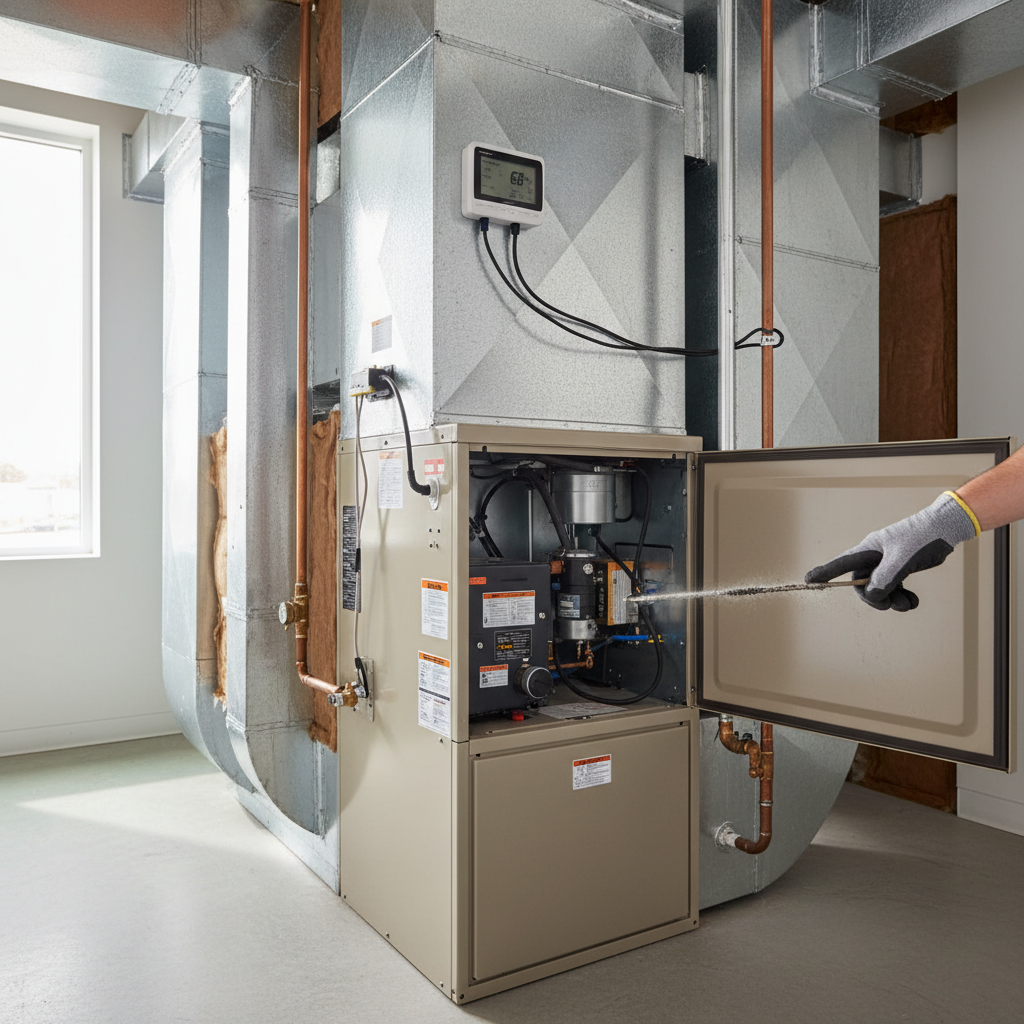
Tools & materials you'll need
Affiliate linksAs an Amazon Associate FixlyGuide earns from qualifying purchases — at no extra cost to you. Prices and availability are accurate as of publication and subject to change.
Quick Answer
Furnace short cycling in cold weather is often caused by a dirty flame sensor, a clogged air filter, or an obstructed exhaust vent. The flame sensor, a critical safety device, can get coated with residue and fail to detect the flame, causing the furnace to shut down prematurely. Cleaning the sensor and replacing the filter can often solve the problem.
The Problem
You notice it when the house never seems to get truly warm, even though you hear the furnace kick on. It runs for a minute or two—not long enough to push warm air through all the vents—and then abruptly shuts off. Five minutes later, the process repeats. This frequent on-and-off pattern is known as furnace short cycling.
Instead of completing a full, efficient heating cycle of 10-15 minutes, the system gets stuck in a loop of short, ineffective bursts. This isn't just annoying; it's a serious issue. Short cycling drives up your energy bills because the startup phase is the most energy-intensive part of the furnace’s operation. It also puts excessive wear and tear on critical components like the ignition system and blower motor, leading to premature breakdowns and costly repairs. In essence, your furnace is working much harder, not smarter, and failing to do its one job: keeping your home comfortable in the cold.
How It Works
To understand why short cycling happens, it’s essential to know what a normal heating cycle looks like. Your furnace operates through a precise sequence of events, all orchestrated by its control board.
- Call for Heat: It all starts at the thermostat. When the room temperature drops below your set point, the thermostat sends a low-voltage signal to the furnace control board, demanding heat.
- Ignition Sequence: The control board initiates the process. First, it activates the inducer motor, a small fan that clears the combustion chamber of any lingering gases and ensures proper venting. A pressure switch verifies the inducer motor is running correctly. Next, the igniter (either a hot surface igniter or a spark igniter) heats up until it’s glowing red hot, reaching temperatures over 1,800°F.
- Gas and Flame: Once the igniter is hot, the gas valve opens, releasing a carefully measured amount of natural gas or propane. The gas flows over the hot igniter and combusts, creating the burners' flames.
- Flame Detection: This is where the flame sensor comes in. A flame sensor is a simple metal rod positioned in front of one of the burner flames. Its job is not to measure heat, but to detect the presence of a flame through a process called flame rectification. When a flame is present, it creates ions that conduct a very small electrical current (microamps). The sensor picks up this current and sends a signal back to the control board confirming that the gas has successfully ignited. This is a crucial safety step. If the board doesn’t receive this signal within a few seconds, it assumes the gas didn’t light and immediately shuts the gas valve to prevent pumping raw, unburned gas into your home.
- Heating the Air: With the flame verified, the main blower motor kicks on after a 30-60 second delay. This delay allows the heat exchanger—the metal chamber heated by the flames—to get sufficiently hot. The blower pulls cool return air from your home, pushes it over the hot heat exchanger, and then sends the newly warmed air into your ductwork to be distributed throughout the house.
- Cycle Completion: The furnace runs until the thermostat registers that the set temperature has been reached. The thermostat then stops sending the "call for heat" signal. The furnace control board closes the gas valve, the flames go out, and the blower motor continues to run for a minute or two to push the remaining heated air from the ducts before shutting off. This entire process should ideally take 10-15 minutes, ensuring even and efficient heating.
Short cycling interrupts this sequence, typically right after ignition, pointing to a problem with flame detection or airflow.
Step-by-Step Fix
If your furnace is short cycling, you can often resolve it with a few basic diagnostic and maintenance steps. This guide focuses on the two most common culprits: a clogged air filter and a dirty flame sensor.
SAFETY FIRST: Before you open any panels on your furnace, you must turn off all electrical power to the unit. Locate the switch on or near the furnace that looks like a light switch and turn it off. For good measure, also turn off the corresponding breaker in your main electrical panel. If you have a gas furnace, also turn the gas supply valve to the "Off" position. The handle should be perpendicular to the pipe.
-
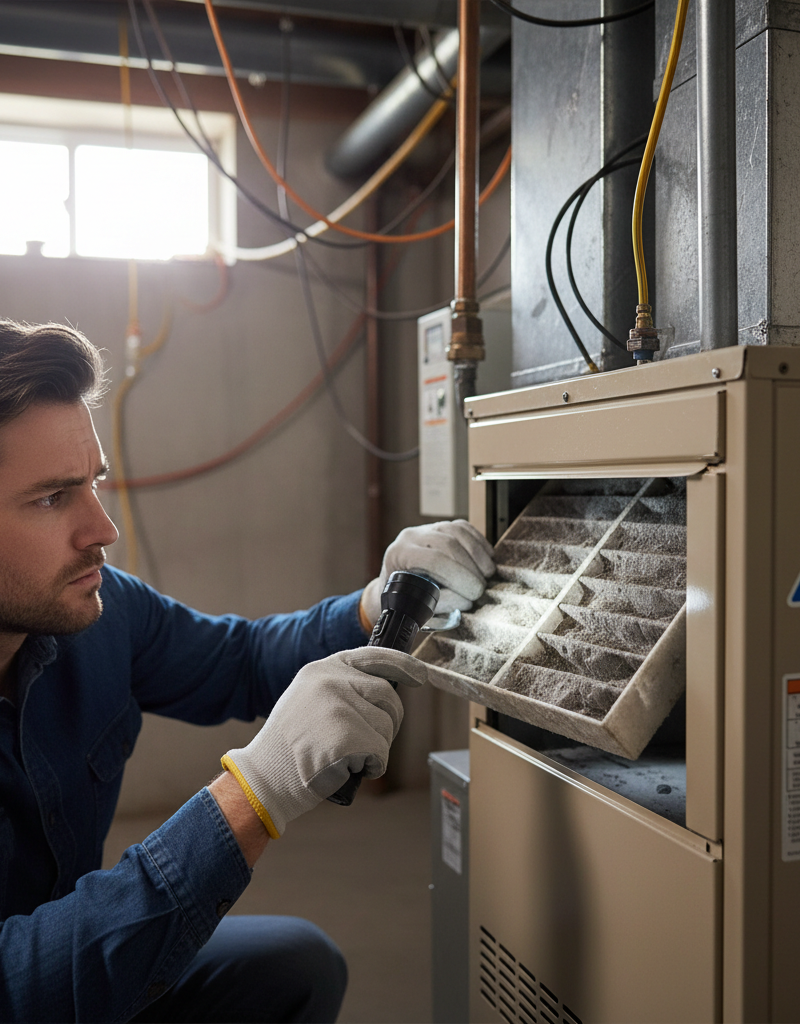
Check the Air Filter: Start with the simplest fix. Slide out your furnace filter and hold it up to a light. If you can't see light through it, it's clogged. A dirty filter restricts airflow, causing the furnace’s heat exchanger to overheat. A safety device called the high-limit switch will then trip, shutting down the burners to prevent damage. This is a common cause of short cycling. Replace the filter with a new one of the correct size. Even if it looks clean, make sure you're following the recommended replacement schedule (typically every 1-3 months).
-
Wait and Observe: With a new filter in place, turn the power and gas back on. Set your thermostat to heat and raise the temperature a few degrees to trigger a cycle. Watch and listen. If it now completes a full 10-15 minute cycle, your problem was a simple airflow issue. If it starts, ignites, runs for a few seconds, and then the flame cuts out, the problem is very likely your flame sensor.
-
Locate the Flame Sensor: Turn the power and gas off again. Remove the main service panel from the furnace to access the burner assembly. The flame sensor is a thin, metallic rod, often bent at a 90-degree angle, with a single wire connected to its base. It will be mounted so that the rod sits directly in the path of one of the flames. It is held in place by a single 1/4-inch hex-head screw.
-
Remove the Flame Sensor: Using a 1/4-inch nut driver or small socket wrench, carefully remove the screw holding the flame sensor in place. Gently pull the sensor out of the burner assembly. Disconnect the wire from the base of the sensor. Be gentle; the ceramic insulator at the base can be fragile.
-
Clean the Flame Sensor: The rod itself is likely covered in a fine layer of grey or white carbon buildup. This residue insulates the sensor, preventing it from detecting the flame’s ions. Do not use sandpaper or a coarse file. This will create grooves in the rod that attract buildup even faster. Instead, use a clean, dry, and very light abrasive, like a dollar bill, a piece of fine steel wool (#0000), or the rough side of a sponge. Gently rub the metal rod until it is shiny and smooth.
-
Wipe and Reinstall: Wipe the rod with a clean paper towel to remove any remaining dust from the cleaning process. Re-attach the wire to the base, then carefully guide the sensor back into its original position. Secure it with the hex screw. Ensure it’s snug, but don’t overtighten.
-
Check Thermostat Settings: While you’re in troubleshooting mode, ensure your thermostat is set correctly. It should be on "Heat," and the fan setting should be on "Auto," not "On." If the fan is set to "On," it will run continuously, which can sometimes be confused with a furnace issue.
-
Inspect Vents and Registers: Do a quick walk-through of your home. Are any supply or return air vents blocked by furniture, rugs, or boxes? Blocked vents can also restrict airflow and cause the furnace to overheat and short cycle. Make sure they are all open and unobstructed.
-
Clear Exterior Vents: If you have a high-efficiency furnace, it will have two large PVC pipes (usually white) coming out of the side of your house. One is for intake air, the other for exhaust. In cold, snowy weather, these can become blocked by snow drifts, ice, or even animals’ nests. A blockage will trigger a pressure switch and shut down your furnace. Ensure these pipe openings are completely clear.
-
Restore Power and Test: Replace the furnace service panels. Turn the gas supply valve back to the "On" position (parallel to the pipe). Turn the electrical switch and the circuit breaker back on. Go to your thermostat and call for heat. Watch the furnace go through its cycle. In most cases, it will now light and stay lit, completing a full heating cycle.
Common Causes
Short cycling is a symptom, not the root problem. Understanding the cause is key to a lasting fix.
- Dirty Flame Sensor: As detailed above, this is a leading cause. The sensor’s inability to confirm a flame tells the control board to shut off the gas as a safety precaution, stopping the cycle just seconds after it starts.
- Clogged Air Filter: This is the most common cause of furnace problems in general. It suffocates your system, preventing proper airflow. The heat exchanger gets too hot, and the high-limit switch shuts down the furnace to prevent a fire or a cracked heat exchanger.
- Overheating: While a clogged filter is a primary reason for overheating, it can also be caused by blocked air vents (both supply and return) or an improperly sized ductwork system that can
Related Articles
Keep troubleshooting with these hand-picked guides from FixlyGuide:
- The Hidden Reason Your Furnace Short Cycles — And Why Most Homeowners Get It Wrong — Furnace short cycling, characterized by frequent on-off cycles, often points to a few common issues, most of which are surprisingly easy fo…
- Why Your Heat Pump Auxiliary Heat Won't Turn Off — Discover why your heat pump's auxiliary heat keeps running, driving up your energy bills. Learn to troubleshoot common issues and know when…
- That August Chill: Why Your AC Freezes Up & How to Fix It — Is your air conditioner a block of ice in the middle of a heatwave? It seems counterintuitive, but an AC that freezes up is a common August…
- The Secret Culprit Behind Your Dead AC (And How to Revive It in 10 Minutes) — Discover how a common, easily replaceable part might be preventing your air conditioner from turning on, and learn to fix it yourself in un…
- Furnace Blowing Cold Air? Diagnose It in 10 Minutes — A furnace that runs but blows cold air is almost always one of 6 things — and 5 of them you can fix yourself before the house drops below 6…
- The #1 Summer Lawn Mistake Turning Your Grass Yellow (and How to Fix It) — Discover the most common summer lawn mistake that causes yellowing grass and learn the simple steps to revive your lawn.
Get the print-ready PDF of this guide
A clean, ad-free, printable version you can keep on your phone or pin to the workshop wall. We'll also send occasional weekly tips matched to your home situation.
- Print-optimized layout
- Tools, materials & every step included
- Unsubscribe anytime
Frequently asked questions
How do I know if my furnace is short cycling?+
A furnace is short cycling if its heating cycles are unusually short, typically lasting only a couple of minutes. Instead of running for 10-15 minutes to bring the house to the set temperature, it will turn on and off frequently without ever achieving it. You'll hear it start up and shut down every 5-10 minutes.
Can a bad flame sensor cause a furnace not to start at all?+
Yes. A flame sensor's job is to confirm that the gas has ignited. If the sensor is completely failed or extremely dirty, it won't send the confirmation signal to the control board. After a few seconds, the board will shut the gas valve as a safety measure and cease ignition attempts. So the furnace will click on, try to light, and then shut down entirely.
How often should I clean my furnace flame sensor?+
For most homeowners, the flame sensor doesn't need to be cleaned on a fixed schedule. It's best practice to have it inspected and cleaned by a professional during an annual HVAC tune-up. However, if your furnace begins to short cycle, cleaning the flame sensor is an excellent first troubleshooting step to perform yourself.
Is furnace short cycling dangerous?+
While the act of short cycling itself has built-in safety measures (like the high-limit switch or the flame sensor logic), it can be a symptom of a dangerous underlying problem, such as a blocked exhaust vent (which could lead to carbon monoxide buildup) or a failing component. It's not something to be ignored.
Discussion
Loading comments…