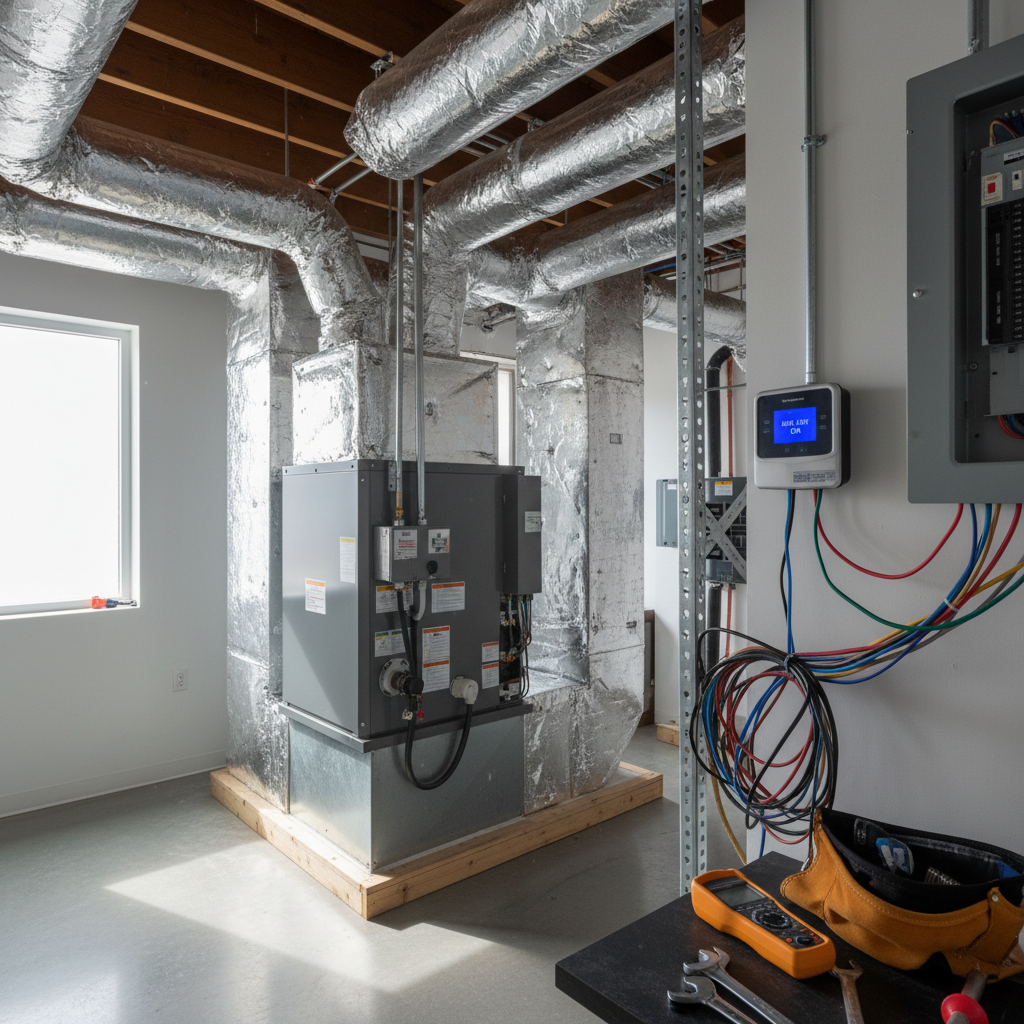
Tools & materials you'll need
Affiliate links- AmazonReplacement Air Filter1 · Ensure you have the correct size for your air handler.
As an Amazon Associate FixlyGuide earns from qualifying purchases — at no extra cost to you. Prices and availability are accurate as of publication and subject to change.
Quick Answer
If your heat pump's auxiliary heat is constantly on, it's likely due to a significant difference between your thermostat setting and the outdoor temperature, a malfunctioning thermostat, restricted airflow from dirty filters, or a problem with the heat pump itself such as a refrigerant leak. This backup heating, while necessary in cold weather, uses much more energy than the primary system, leading to bill spikes.
The Problem
You've noticed the "AUX" or "EM" light on your thermostat is on more than it's off. Your home feels comfortable, but your latest electricity bill tells a different, more expensive story. A heat pump is supposed to be an efficient way to heat your home, but when the heat pump auxiliary heat kicks in, that efficiency plummets. This secondary heating source, usually electric resistance coils, uses a tremendous amount of energy—often three to five times more than the heat pump itself. If it runs too often, it defeats the purpose of having an energy-saving system, turning your efficient HVAC into a power-hungry furnace. This article will help you diagnose why your auxiliary heat is overactive and provide actionable steps to regain control over your energy consumption.
How It Works
A heat pump works by transferring heat, not creating it. In winter, it extracts heat from the outside air and moves it inside. This process is highly efficient until the outdoor temperature drops significantly, typically below 35-40°F. As the air gets colder, there's less heat to extract, and the heat pump struggles to meet the temperature demand set on your thermostat. This is where the heat pump auxiliary heat comes into play. It's a supplemental heating system designed to assist the heat pump in two main scenarios: when the outdoor temperature is too low for the heat pump to work effectively on its own, or when you manually raise the thermostat by more than a few degrees at once. The auxiliary system is most often an electric resistance heating element, similar to the coils in a toaster. While effective at producing heat quickly, this method is far less energy-efficient. Your thermostat is the brain of the operation; it monitors the indoor and outdoor temperatures and decides when to activate the auxiliary heat to maintain your comfort. A properly functioning system will use auxiliary heat sparingly, only during extreme cold or during defrost cycles. If you see that AUX light frequently, it's a clear signal that something is amiss.
Step-by-Step Fix
-
Check Your Thermostat Settings: Before assuming a major problem, check your thermostat. Ensure it's set to "HEAT," not "EMERGENCY HEAT" (EM). Emergency heat locks out the heat pump and relies solely on the auxiliary system. Also, avoid making large temperature adjustments (more than 2-3°F at a time). A sudden large increase in the setpoint can trigger the auxiliary heat to kick on to heat the space rapidly.
-
Inspect and Clean Air Filters: A dirty or clogged air filter is a very common culprit. Restricted airflow makes your heat pump work harder and less efficiently. If it can't get enough air, it can't transfer enough heat, causing the system to trigger the auxiliary heat to compensate. Check your filter and replace it if it's dirty. Most 1-inch filters should be changed monthly; wider media filters can last 3-12 months.
-
Clear the Outdoor Unit: Go outside and inspect your heat pump unit. It needs plenty of unobstructed space to draw in air. Remove any leaves, snow, ice, or debris piled up against the unit. Ensure there's at least a 24-inch clearance around the entire unit. Also, make sure no fences, sheds, or vegetation are blocking airflow.
-
Observe the Outdoor Fan: With the system running in heat mode, the fan on top of the outdoor unit should be spinning. If the fan isn't moving, it could be a sign of a failed motor, a bad capacitor, or a control board issue. A non-operational fan will prevent heat exchange, forcing your system to rely on auxiliary heat.
-
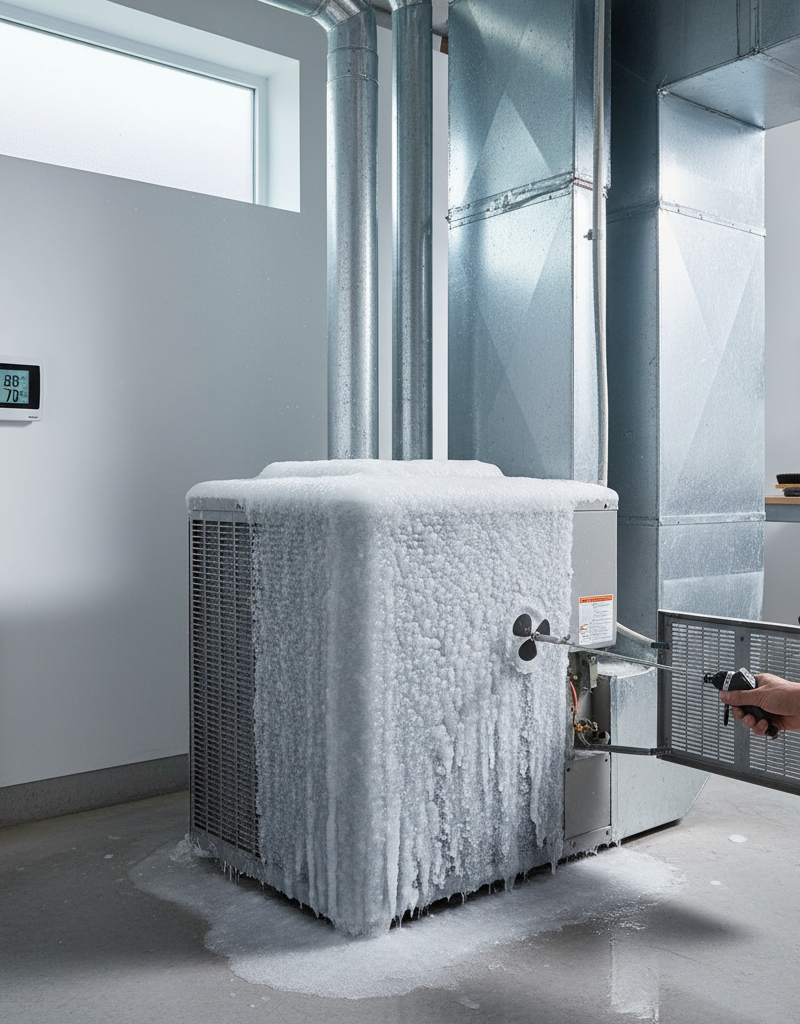
Check for Ice Buildup: It's normal for a light layer of frost to form on the outdoor coils in cold, damp weather. Your heat pump has a built-in defrost cycle to melt this. However, if the entire unit is encased in a thick layer of ice, it's a sign of a problem. This could be a failed defrost control board, a bad sensor, or a refrigerant issue. A frozen unit cannot extract heat from the air, and the auxiliary heat will take over.
-
Listen for the Defrost Cycle: A heat pump will periodically enter a defrost cycle to melt ice from the outdoor coils. During this 5-15 minute cycle, the outdoor fan will stop, the system will temporarily switch to cooling mode (which makes the outdoor coils hot), and the auxiliary heat will turn on to temper the cool air blowing from your vents. This is normal. What isn't normal is if the system gets stuck in defrost or defrosts too frequently.
-
Reset Your System: Try resetting your heat pump. Turn the thermostat to the "OFF" position. Then, go to your home's main electrical panel and find the two breakers for your HVAC system—one for the indoor air handler and one for the outdoor condenser. Turn them both off. Wait for 60 seconds, then turn them back on. Finally, turn your thermostat back to "HEAT." Wait a few minutes to see if the system operates normally.
-
Conduct a Thermostat Accuracy Test: Place a reliable thermometer next to your thermostat. After about 15 minutes, compare the readings. If they are off by more than a couple of degrees, your thermostat may be miscalibrated or failing. A faulty thermostat might incorrectly sense the room temperature and call for auxiliary heat unnecessarily.
Common Causes
- Extreme Cold Weather: This is the most straightforward reason. When temperatures drop below your heat pump's "balance point" (the temperature at which it can no longer heat your home on its own), the auxiliary heat is supposed to turn on.
- User Settings: Setting the thermostat to "Emergency Heat" or making drastic temperature changes will activate the auxiliary system.
- Dirty Air Filters: Clogged filters reduce airflow, hindering the heat pump's ability to heat and forcing the auxiliary system to compensate.
- Low Refrigerant Charge: A leak in the refrigerant lines means the heat pump can't effectively transfer heat. The system will run constantly but fail to reach the set temperature, eventually triggering the AUX heat.
- Faulty Thermostat: The thermostat may be miscalibrated, have a faulty sensor, or be wired incorrectly, causing it to call for auxiliary heat when it isn't needed.
- Outdoor Unit Obstruction or Failure: Blocked airflow from debris, or a malfunctioning outdoor fan motor prevents the heat pump from extracting heat from the ambient air.
- Defrost Control Malfunction: If the heat pump's defrost cycle fails, the outdoor coils can freeze over, rendering the unit useless and forcing reliance on the auxiliary strips.
- Undersized Heat Pump: If the heat pump installed is too small for your home's heating load, it will struggle to keep up in even moderately cold weather, relying heavily on the auxiliary system.
Common Mistakes
- Ignoring the AUX Light: Many homeowners see the light but don't realize it signals a significant increase in energy use. Don't ignore it; it's a warning sign.
- Using "Emergency Heat" as a Default: The EM setting is for emergencies only, like a total failure of the outdoor unit. Using it as the primary heating mode will lead to extremely high bills.
- Cranking Up the Thermostat: Resisting the urge to dial the temperature up by 5 or 10 degrees can save you a lot of money. Small, gradual adjustments are key.
- Neglecting Filter Changes: This simple task is the #1 cause of HVAC inefficiency and service calls. Make it a regular habit.
- Blocking the Outdoor Unit: Piling snow, storing items, or planting shrubs too close to the heat pump are common mistakes that choke the system.
- Attempting DIY Refrigerant Recharges: Handling refrigerant requires special certification and tools. It's illegal and dangerous to attempt this yourself. Not to mention, you haven't fixed the leak.
Cost & Time Breakdown
| Task | DIY Cost | Professional Cost | Time | Notes |
|---|---|---|---|---|
| Replacing Air Filter | $5 - $30 | N/A | 5 minutes | Varies by filter size and MERV rating. |
| Thermostat Replacement | $50 - $300 | $200 - $500 | 1 hour | Smart thermostats are on the higher end. |
| Clearing Outdoor Unit | $0 | $100 - $200 (for cleaning) | 15 minutes | Basic debris removal is free. Deep cleaning costs more. |
| Capacitor Replacement | $10 - $30 (part) | $150 - $400 | 1-2 hours | Safety Risk: Capacitors hold a dangerous electrical charge. Pro recommended. |
| Refrigerant Leak Detection & Repair | N/A | $400 - $1,500+ | 4-8 hours | Cost depends heavily on leak location and severity. |
| Defrost Control Board Replacement | N/A | $300 - $700 | 2-4 hours | Requires diagnosing and replacing complex electronic components. |
Tips & Prevention
- Get a Smart Thermostat: Many smart thermostats have advanced algorithms that learn your home's heating needs and use the auxiliary heat more intelligently.
- Annual Professional Maintenance: Schedule a tune-up for your HVAC system every fall. A technician will clean the coils, check refrigerant levels, test electrical components, and ensure the system is running at peak efficiency.
- Weatherize Your Home: Reduce your home's heating load by sealing air leaks around windows and doors, adding insulation to your attic, and using thermal curtains.
- Lock Out Auxiliary Heat: Some thermostats allow you to "lock out" the auxiliary heat until the outdoor temperature drops below a certain point (e.g., 30°F). Check your user manual.
- Understand Your System's Balance Point: Ask your HVAC technician to help you determine your heat pump's balance point. Knowing this will help you understand when to expect the auxiliary heat to run.
- Keep a Log: Note when you see the AUX light on and what the outdoor temperature is. This data can be very helpful for a technician if you need to make a service call.
When to Call a Professional
While you can handle simple checks like changing filters and clearing the outdoor unit, many heat pump auxiliary heat issues require professional expertise. You should call an HVAC technician immediately if you suspect a refrigerant leak (hissing sounds, oily residue on lines), if your outdoor unit is encased in a thick block of ice, or if the fan on the outdoor unit isn't working. Electrical work, including replacing a capacitor or control board, is dangerous and should only be performed by a qualified professional. A capacitor can hold a lethal electrical charge even when the power is off. Furthermore, if you've performed all the basic troubleshooting steps and the auxiliary heat is still running excessively, it’s time to call in a pro. They have the diagnostic tools to accurately pinpoint the problem, whether it's a failing sensor, a complex control board issue, or an incorrectly sized unit. Investing in a professional diagnosis will save you money in the long run by ensuring your system runs efficiently and avoiding further damage.
<br>SAFETY NOTE: Always turn off the power to your HVAC system at the circuit breaker before performing any inspection or cleaning of the indoor or outdoor units. Electrical components inside can be dangerous. For any work involving the electrical system or refrigerant lines, hire a licensed HVAC professional.
Related Articles
Keep troubleshooting with these hand-picked guides from FixlyGuide:
- The #1 Mistake Homeowners Make When Their AC Won't Turn On (And the Easy Fix) — Learn the most common oversight homeowners make when their AC won't turn on and how to troubleshoot basic issues to restore cooling.
- Furnace Keeps Turning On and Off? Here's Why. — Is your furnace running in short, frequent bursts instead of steady cycles? This is called short cycling. Discover the common causes, like…
- Why Your Thermostat Lies: The Real Reason Your Home Won't Hit the Set Temperature — Discover why your thermostat struggles to reach the set temperature and learn actionable steps to diagnose and fix common HVAC issues.
- AC Blowing Warm Air? Easy Fixes for Common AC Problems — Discover the most common reasons your AC is blowing warm air and learn simple, actionable steps to troubleshoot and fix the issue yourself,…
- The #1 Mistake Homeowners Make When Their AC Won't Turn On (And the Easy Fix) — Learn the most common reason your air conditioner won't turn on and how to diagnose and fix it with simple steps.
- The #1 Mistake Homeowners Make When Sprinklers Won't Turn On — Discover the most common oversight when your sprinkler system fails to activate and learn simple troubleshooting steps to restore your irri…
Get the print-ready PDF of this guide
A clean, ad-free, printable version you can keep on your phone or pin to the workshop wall. We'll also send occasional weekly tips matched to your home situation.
- Print-optimized layout
- Tools, materials & every step included
- Unsubscribe anytime
Frequently asked questions
What is the difference between auxiliary heat and emergency heat?+
Auxiliary heat (AUX) is a supplemental heat source that works *with* your heat pump when it struggles in cold weather. Emergency heat (EM) bypasses the heat pump entirely and relies solely on the backup heat source, typically for when the heat pump has failed.
Is it normal for auxiliary heat to run every day in winter?+
In very cold climates, it can be normal for the auxiliary heat to turn on for short periods during the coldest parts of the day or during defrost cycles. However, if it's running constantly or in mild temperatures (above 40°F), that indicates a problem.
How much more does it cost to run auxiliary heat?+
Auxiliary heat, which typically uses electric resistance coils, can cost 3 to 5 times more than running your heat pump. For every hour the AUX heat runs, your electricity usage can be significantly higher than when the heat pump runs alone.
Can I turn off my auxiliary heat?+
Some thermostats allow you to set a "lockout" temperature, preventing the auxiliary heat from turning on until the outside temperature drops below a certain point. However, disabling it completely is not recommended, as your home may not get warm enough in very cold weather, and it is needed for the defrost cycle.
Discussion
Loading comments…