Tools & materials you'll need
Affiliate links- AmazonScrewdriver set1 · Phillips and flathead for accessing panels and removing components
- AmazonMultimeter1 · Optional, for advanced thermostat or sensor testing
- AmazonAdjustable wrench1 · For minor adjustments to gas line connections if absolutely necessary, but pro recommended for this.
- AmazonWork gloves1 pair · For protection while working inside furnace
- AmazonShop vacuum1 · For cleaning dust and debris around furnace
As an Amazon Associate FixlyGuide earns from qualifying purchases — at no extra cost to you. Prices and availability are accurate as of publication and subject to change.
Quick Answer
Furnace short cycling, characterized by your furnace turning on and off too frequently, is a common issue that wastes energy, increases wear and tear on components, and leads to inconsistent heating. Most often, the culprit is a dirty air filter restricting airflow, a malfunctioning flame sensor prematurely shutting off the gas, or an improperly located or faulty thermostat. Basic troubleshooting, like replacing the air filter and cleaning the flame sensor, can often resolve the problem quickly and efficiently.
The Problem
Imagine your furnace as a tireless worker. Normally, it comes on, heats your home to the desired temperature, and then rests, waiting for the thermostat to signal it's time to work again. Short cycling, however, is like that worker taking countless tiny breaks – turning on for a few minutes, turning off, then turning on again shortly after. This erratic behavior prevents your home from reaching and maintaining a stable temperature, leading to cold spots and an overall uncomfortable living environment. Beyond comfort, short cycling is detrimental to your furnace's health. Each startup puts a strain on electrical components, the igniter, and the blower motor. Frequent cycling accelerates wear and tear, significantly shortening the lifespan of your unit and increasing the likelihood of costly repairs down the road. It also results in higher energy bills, as the furnace expends more energy during the inefficient on-off transitions than during a continuous heating cycle. Identifying and addressing the root cause of short cycling is crucial for both your comfort and your furnace's longevity.
How It Works
To understand short cycling, it's helpful to grasp the basic operation of a forced-air furnace. When your thermostat calls for heat, it sends a low-voltage signal to the furnace's control board. The control board initiates a sequence: first, the inducer motor turns on, creating a draft to vent combustion gases. Next, the igniter (either a hot surface igniter or a pilot light) glows or lights, and the gas valve opens, allowing gas to flow into the burners. The flame sensor, a small rod positioned in the flame path, detects the presence of a flame. If it detects a flame, it signals the control board that combustion is safe and established. Once the heat exchanger warms sufficiently, the blower motor activates, pushing heated air through your ductwork and into your home. The furnace continues to run until the thermostat's set temperature is reached, at which point the gas valve closes, and the blower motor typically runs for a short while longer to extract residual heat from the heat exchanger before shutting off.
Short cycling interrupts this carefully orchestrated sequence. For instance, if the flame sensor fails to detect a flame (perhaps due to being dirty or faulty), it will signal the control board to shut down the gas valve as a safety measure, even if a flame is present. Similarly, if airflow is restricted (e.g., by a dirty filter), the heat exchanger can overheat quickly. Modern furnaces have safety limits that will shut down the burners if the temperature gets too high, preventing damage. Once the heat exchanger cools slightly, the furnace might try to restart, only to overheat and shut off again, leading to a cycle of on-off operation. A thermostat problem might cause it to signal for heat, then immediately sense a rapid temperature rise (due to improper placement or internal fault) and shut the furnace off prematurely, only to call for heat again moments later as the ambient temperature drops.
Step-by-Step Fix
Safety First! Before attempting any repairs, always turn off the power to your furnace at the thermostat AND the main electrical panel or the furnace's dedicated power switch. Gas furnaces also have a manual gas shut-off valve, typically a red-handled lever or knob near the burner assembly. Turn this to the OFF position as well, if you will be working near gas lines.
-
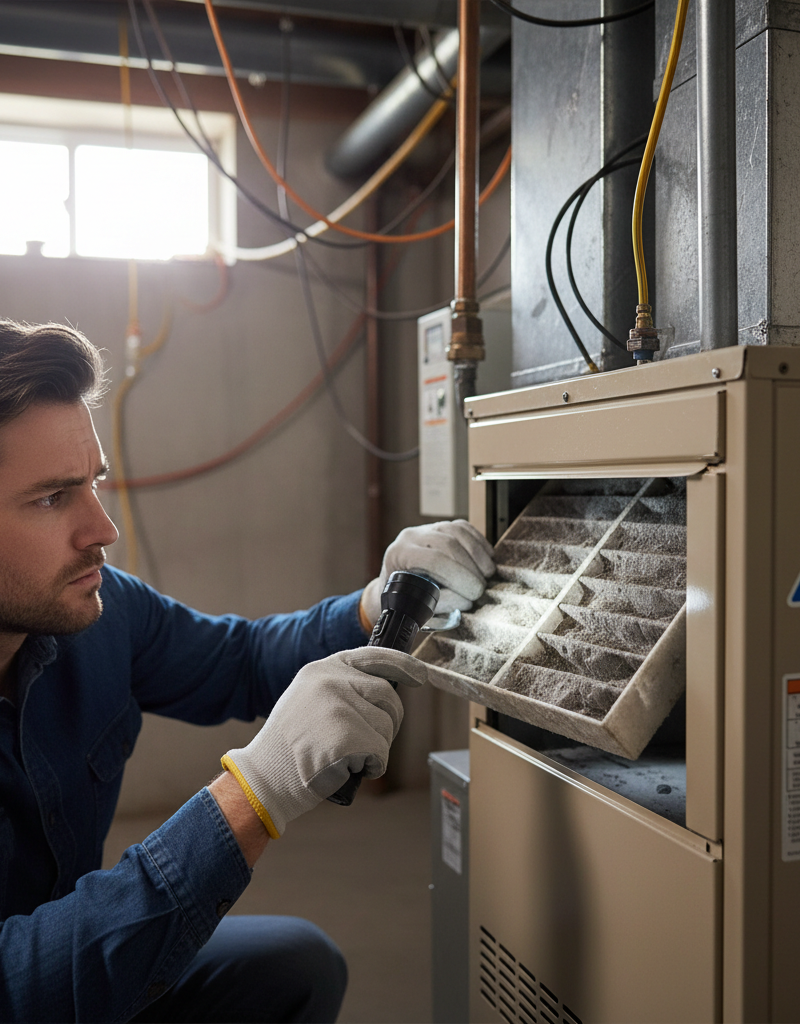
Check and Replace the Air Filter — The simplest fix, often overlooked.
- Locate your furnace's air filter slot, usually a rectangular opening near the return air duct or blower compartment. Pull out the old filter. Hold it up to a light source – if you can't see light through it, it's dirty.
- Note the arrow on the old filter indicating airflow direction. Install a new, correctly sized filter (check the dimensions printed on the old filter) with the arrow pointing towards the furnace.
- If this doesn't work: A clogged filter can restrict airflow, causing the furnace to overheat and trip a safety limit switch. If your filter is constantly getting dirty very quickly, check for excessive dust in your home or leaky return ducts.
-
Clean the Flame Sensor — A common cause of false shutdowns.
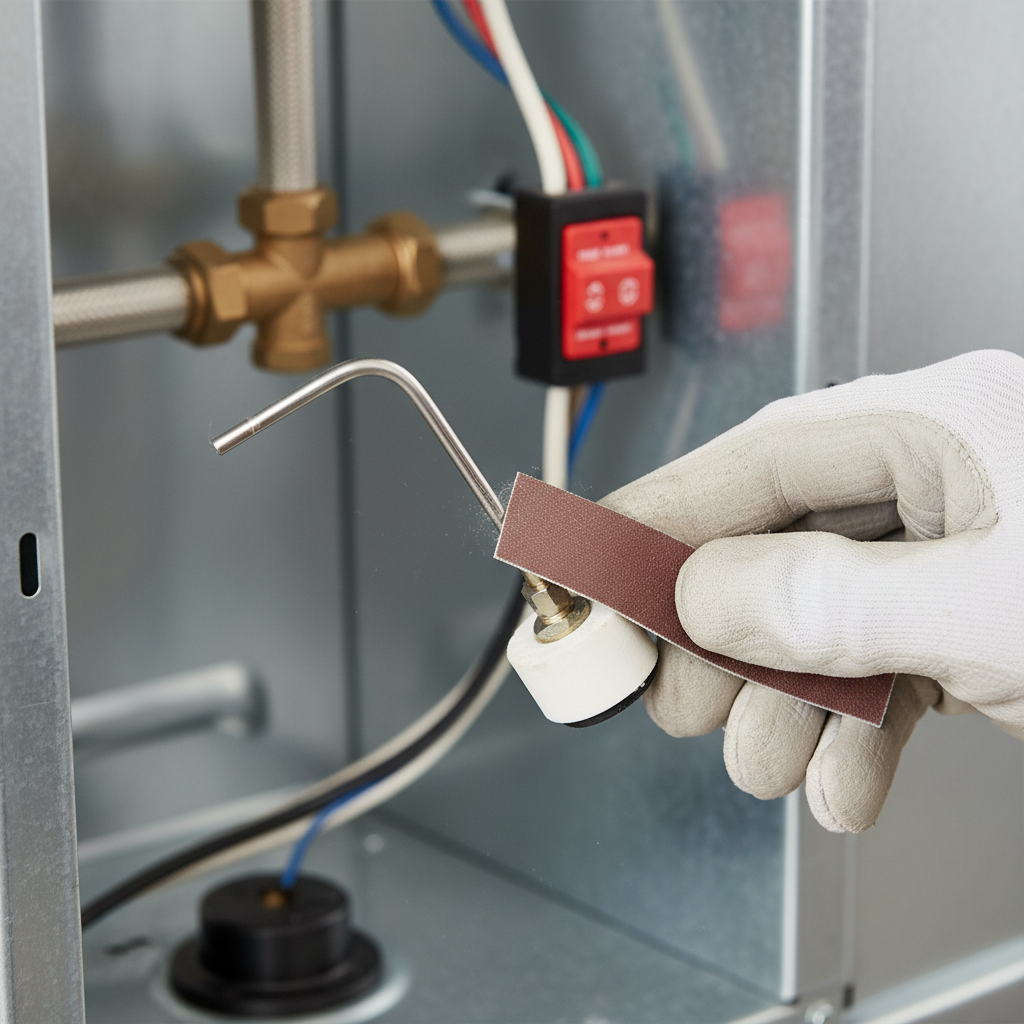
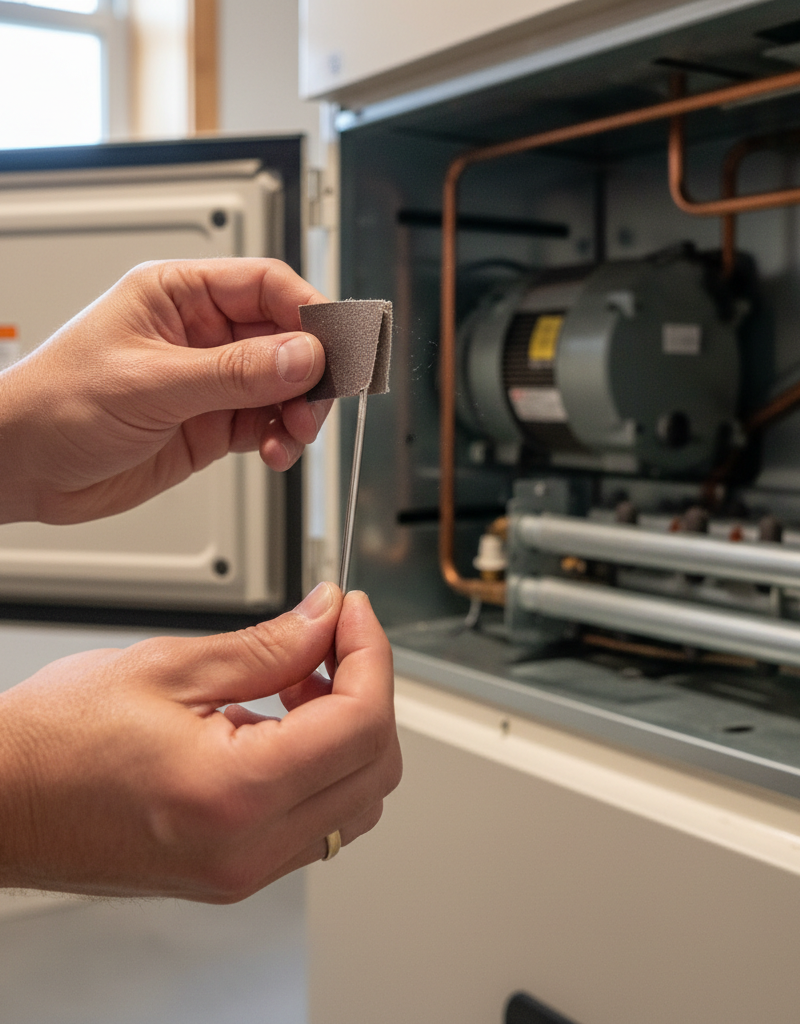
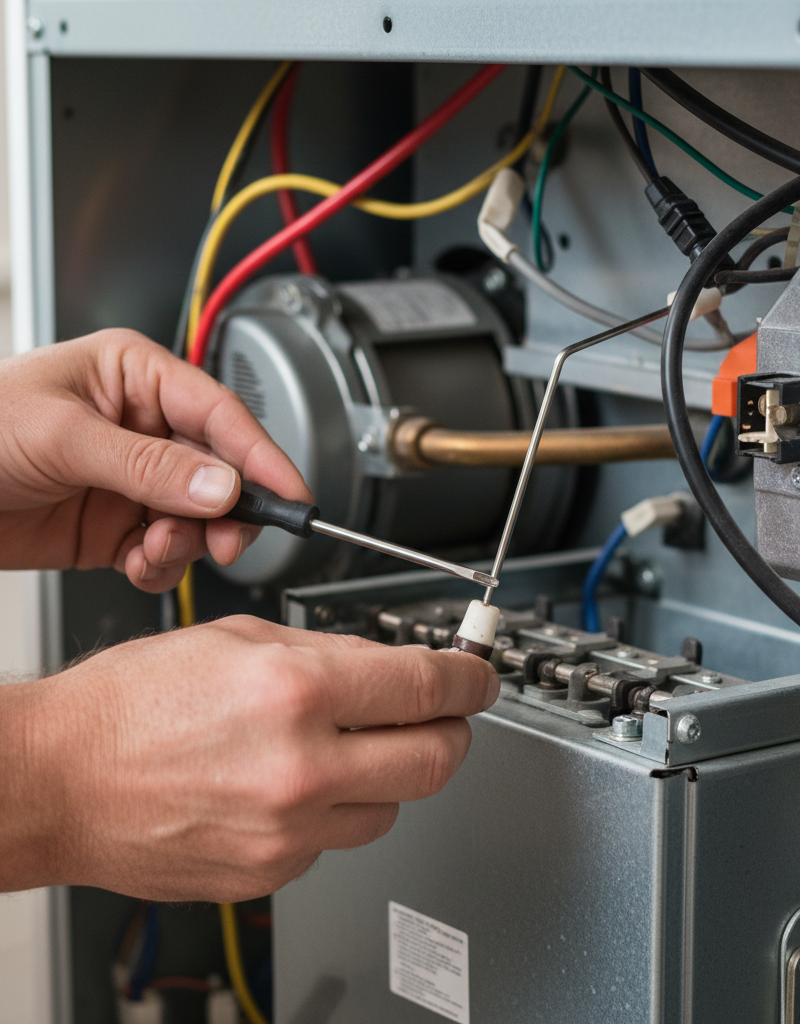
- With power and gas off, locate the flame sensor. It's a small, thin metal rod (about 2-3 inches long) with a ceramic base, usually positioned in the path of the burner flames, opposite the igniter. It will have a single wire running from it.
- Carefully disconnect the wire and remove the sensor. It's typically held in place by one screw.
- Using fine-grit sandpaper (around 100-200 grit) or a steel wool pad, gently scrub off any black carbon buildup on the metal rod. Do not bend or damage the rod or the ceramic base.
- Reinstall the clean sensor, reconnect the wire, and ensure it's securely in place.
- If this doesn't work: If cleaning doesn't resolve the issue, the flame sensor itself might be faulty and need replacement. They are relatively inexpensive parts.
-
Inspect the Thermostat Location and Settings — Misplaced or faulty thermostats cause erratic behavior.
- Ensure your thermostat is located on an interior wall, away from direct sunlight, heat sources (lamps, TVs, return vents), or drafts from windows/doors. These can cause it to read incorrect room temperatures.
- Check that the thermostat is set to
Related Articles
Keep troubleshooting with these hand-picked guides from FixlyGuide:
- The 3 Hidden Reasons Your Furnace Short Cycles (and What to Do) — Discover the surprising reasons your furnace might be short cycling and learn actionable steps to diagnose and fix the problem, saving you…
- The Secret Reason Your Furnace Turns On and Off So Much (It's Not What You Think) — Short cycling strains your furnace and wastes energy. Learn the most common surprising causes and how to fix them to restore efficient heat…
- Furnace Keeps Turning On and Off? Here's Why. — Is your furnace running in short, frequent bursts instead of steady cycles? This is called short cycling. Discover the common causes, like…
- The $5 Part That Stops Your Dryer From Heating (And How to Replace It in 30 Min) — Discover the most common, inexpensive culprit behind a dryer not heating up and learn how to quickly diagnose and replace it yourself.
- The 4 Hidden Reasons Your Dryer Tumbles Cold (And How to Fix Them in 30 Minutes) — Your dryer tumbles, but clothes stay cold. Discover the four most common culprits behind a dryer that won't heat, and how to troubleshoot t…
- The 3 Hidden Reasons Your Window Won't Stay Up (And the Easy Fixes) — Before you call a repairman, learn the three most common reasons your double-hung window won't stay open and how to fix them yourself.
Get the print-ready PDF of this guide
A clean, ad-free, printable version you can keep on your phone or pin to the workshop wall. We'll also send occasional weekly tips matched to your home situation.
- Print-optimized layout
- Tools, materials & every step included
- Unsubscribe anytime
Frequently asked questions
Why does my furnace turn on and off frequently?+
Frequent turning on and off, known as short cycling, is often caused by a dirty air filter restricting airflow, a malfunctioning flame sensor, or an improperly located or faulty thermostat that inaccurately reads room temperature.
Is short cycling bad for my furnace?+
Yes, short cycling is detrimental to your furnace. It increases wear and tear on components like the igniter, blower motor, and control board, shortening the unit's lifespan and leading to higher energy bills due to inefficient operation.
How often should I change my furnace filter?+
Most manufacturers recommend changing standard 1-inch furnace filters every 1 to 3 months. Households with pets, allergies, or frequent construction nearby may need to change them monthly. Thicker filters (4-5 inches) can last 6-12 months.
Discussion
Loading comments…