Tools & materials you'll need
Affiliate linksAs an Amazon Associate FixlyGuide earns from qualifying purchases — at no extra cost to you. Prices and availability are accurate as of publication and subject to change.
Quick Answer
Attracting hummingbirds to your garden is a delight, and providing a sugar-water solution is a popular way to do it. The key to successful and healthy hummingbird feeding lies in a simple, precise recipe: four parts water to one part granulated white sugar. This mixture closely mimics the natural nectar hummingbirds seek, providing essential energy without harmful additives. Remember to refresh the solution frequently and keep feeders impeccably clean to prevent mold or bacterial growth, which can sicken these tiny birds.
The Problem
Many homeowners, eager to attract hummingbirds, inadvertently make mistakes when preparing feeder solutions. These errors range from using incorrect sugar-to-water ratios to adding harmful ingredients or neglecting feeder hygiene. An improperly prepared or maintained feeder can do more harm than good, potentially leading to illness or even death for hummingbirds. For instance, too strong a sugar solution can be difficult for them to digest, while too weak a solution offers insufficient energy. Artificial sweeteners provide no caloric value, and honey can grow dangerous fungus. Red dyes, while once thought to be attractive, are now known to be unnecessary and can be harmful. Even plain sugar water, if left too long, can ferment or grow mold, turning a helpful food source into a hazardous one.
How It Works
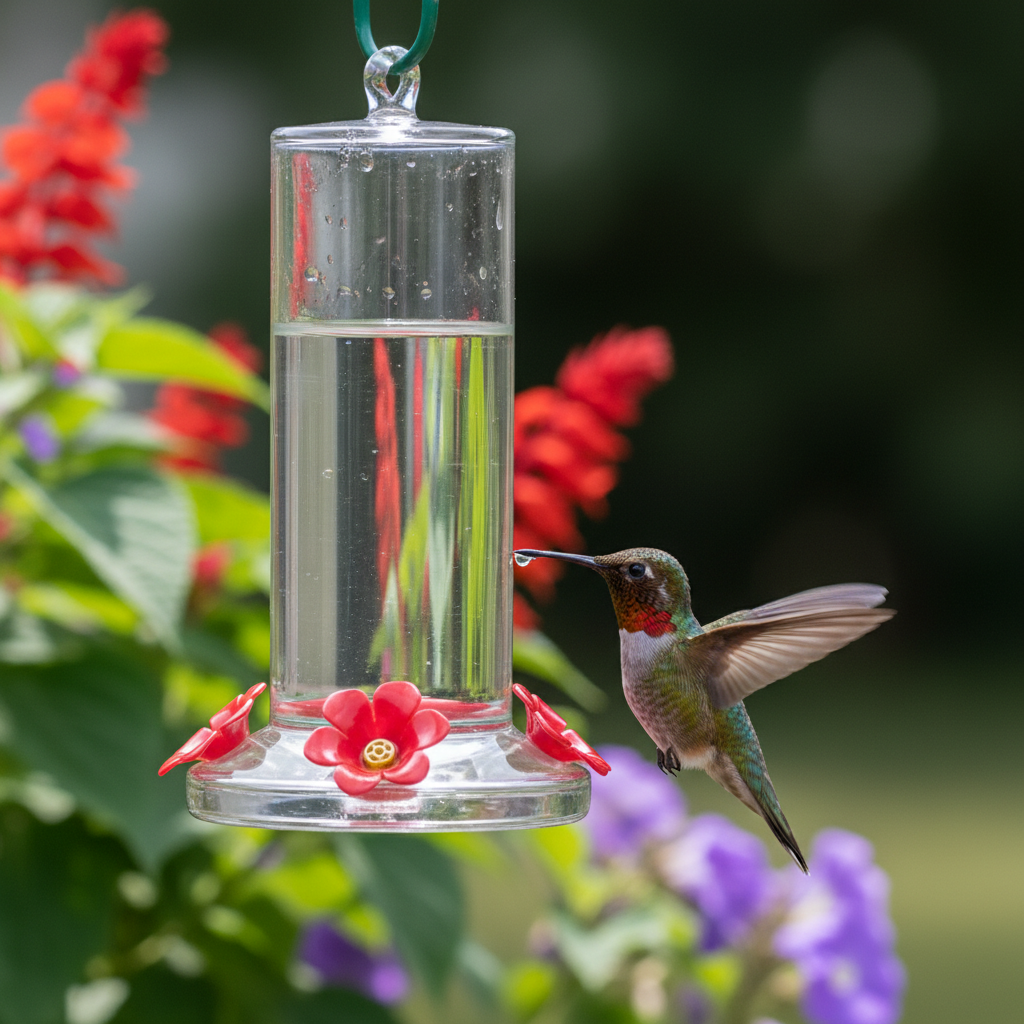
Hummingbirds are metabolic marvels, constantly needing high-energy fuel to power their rapid wing beats and high heart rates. Their diet primarily consists of nectar from flowers and small insects. Flower nectar is essentially a sugar-water solution, typically ranging from 10% to 25% sugar concentration. The 4:1 water-to-sugar ratio recommended for homemade hummingbird food mimics this natural concentration, providing the perfect balance of energy and hydration.
When a hummingbird sips from a feeder, its long, grooved tongue rapidly laps up the sugar solution. This solution quickly enters its digestive system, where the sugar (sucrose) is broken down into glucose and fructose and rapidly absorbed into the bloodstream. This glucose then fuels their incredibly active lifestyle. It's crucial that the sugar is pure sucrose, like that found in granulated white table sugar, as other sugars or artificial sweeteners are either not digestible or lack the necessary caloric density.
Furthermore, water plays a vital role beyond just dissolving the sugar. It helps with digestion and keeps the birds hydrated. The constant movement of hummingbirds means they lose water rapidly through respiration and evaporation, making a readily available water source, even within their food, essential. Maintaining a clean feeder is equally important because heat and sunlight can quickly cause sugar water to ferment, fostering the growth of bacteria and mold. These microorganisms produce toxins that can be fatal to hummingbirds. An understanding of these biological needs underscores why the precise 4:1 ratio and rigorous feeder hygiene are non-negotiable for responsible hummingbird feeding.
Step-by-Step Fix
1. Gather Your Ingredients — Start with pure granulated white sugar and clean tap water.
- Use only plain white table sugar. Do NOT use brown sugar, powdered sugar, organic sugar, honey, or artificial sweeteners. These can be difficult for hummingbirds to digest or contain harmful additives.
- Tap water is generally fine, but if your tap water contains high levels of chlorine or other chemicals, consider using filtered water.
2. Measure Precisely — Achieve the correct 4:1 water-to-sugar ratio.
- For every four cups of water, use one cup of granulated white sugar.
- A smaller batch could be 2 cups of water to 1/2 cup sugar, or 1 cup water to 1/4 cup sugar. Consistency in this ratio is crucial for the birds' health.
3. Dissolve the Sugar — Heat the water to ensure complete dissolution.
- Combine the measured water and sugar in a saucepan.
- Heat the mixture over medium heat, stirring occasionally, until all the sugar crystals have completely dissolved. You do not need to boil the water, just heat it enough to dissolve the sugar. Boiling can sometimes evaporate too much water, altering the concentration.
- Safety Note: Be careful when handling hot water to avoid burns.
4. Cool Completely — Allow the solution to reach room temperature before filling feeders.
- Remove the saucepan from the heat and let the mixture cool naturally.
- Never put hot nectar into a feeder, as it could damage the plastic or even harm the birds.
- Once cool, store any unused solution in a clean, airtight container in the refrigerator for up to one week.
5. Fill and Hang Feeders — Dispense the fresh nectar into clean feeders.
- Fill your hummingbird feeders, making sure not to overfill if you have multiple feeders or don't anticipate heavy traffic, as the nectar will still need to be changed regularly.
- Hang feeders in a shaded area if possible. Direct sunlight will cause the nectar to spoil much faster.
- If this doesn't work: If hummingbirds aren't visiting, try relocating the feeder to a more secluded or shaded spot in your yard. Ensure feeders are visible but not in a high-traffic human area.
6. Clean Feeders Regularly — Maintain strict hygiene to prevent mold and bacteria.
- In warm weather (above 80°F), change the nectar every 1-2 days. In cooler weather, you might get away with 3-4 days, but daily checks are best.
- Every time you change the nectar, thoroughly clean the feeder.
- Disassemble the feeder and scrub all parts with hot water and a bottle brush. You can use a very dilute bleach solution (1 part bleach to 9 parts water) for stubborn mold, but rinse extremely thoroughly afterward with plain water to remove all traces of bleach.
- Safety Note: Always wear gloves when cleaning with bleach and ensure good ventilation. Rinse liberally with clean water after using any cleaning agents.
7. Watch for Spoilage — Identify signs that the nectar needs changing immediately.
- Look for cloudiness, fermentation bubbles, unusual odors, or visible mold (often black spots) in the nectar or on feeder ports.
- If you see any of these signs, discard the nectar, thoroughly clean the feeder, and refill with fresh solution.
Common Causes
The primary
Related Articles
Keep troubleshooting with these hand-picked guides from FixlyGuide:
- The Secret to Lush Raised Beds? It's Not Just About How You Water — Smart irrigation for raised garden beds isn't just about automation; it's about delivering the right amount of water precisely when your pl…
- The Hidden Reason Your GFCI Trips (It's Not Always a Faulty Outlet) — A continuously tripping GFCI outlet is a critical safety warning, often indicating moisture, a faulty appliance, or a wiring problem that r…
- The 5 Essential Tools Every New Gardener Needs (And 3 You Can Skip) — Starting a garden doesn't require a huge investment in tools; savvy new gardeners can thrive with just a few key items and save money by kn…
- The 6-Minute Secret to a Sparkling Bathroom (It’s Not What You Think) — Unleash the hidden power of your cordless drill to tackle stubborn household grime, from tile grout to dryer vents, with specialized attach…
- The Hidden Reason Your GFCI Trips (It’s Not Always a Bad Outlet) — A tripping GFCI outlet is a safety mechanism doing its job, often indicating a problem like moisture, a faulty appliance, or a wiring issue…
- Is Your Gutter Sagging After Every Storm? The Hidden Flaw Most Homeowners Miss — Discover the overlooked reason your gutters sag after every storm and learn the lasting fix that most homeowners miss.
This article was independently written by FixlyGuide based on the source topic.
Frequently asked questions
What is the best recipe for hummingbird food?+
The best recipe for hummingbird food is a simple 4:1 ratio: four parts water to one part granulated white sugar. Heat the water to dissolve the sugar completely, then let it cool before filling your feeders. This mimics natural flower nectar.
Can I use honey or artificial sweeteners in hummingbird food?+
No, you should never use honey or artificial sweeteners. Honey can grow a dangerous fungus that is toxic to hummingbirds, and artificial sweeteners provide no caloric value, which hummingbirds desperately need for energy.
Is red dye necessary or safe for hummingbird food?+
Red dye is not necessary to attract hummingbirds, and it can actually be harmful to them. Hummingbirds are attracted to the red color of the feeder itself, so avoid adding any dyes to the sugar-water solution.
How often should I change and clean my hummingbird feeder?+
In warm weather (above 80°F), change the nectar every 1-2 days. In cooler weather, you can extend this to 3-4 days. Always clean the feeder thoroughly with hot water (and optionally a dilute bleach solution, followed by extensive rinsing) every time you change the nectar to prevent mold and bacteria.
Why are hummingbirds not visiting my feeder?+
If hummingbirds aren't visiting, check that your nectar is fresh and the feeder is clean. Try relocating the feeder to a more visible but shaded and secluded spot in your yard. Ensure there are no predators (like cats) nearby, and consider adding red accents or flowers to your garden to help attract them.
Can different types of sugar be used for hummingbird food?+
Only use plain granulated white cane sugar. Avoid brown sugar, powdered sugar, turbinado sugar, or organic sugars, as these can contain impurities or different compositions that are difficult for hummingbirds to digest or can lead to faster spoilage.

Discussion
Loading comments…