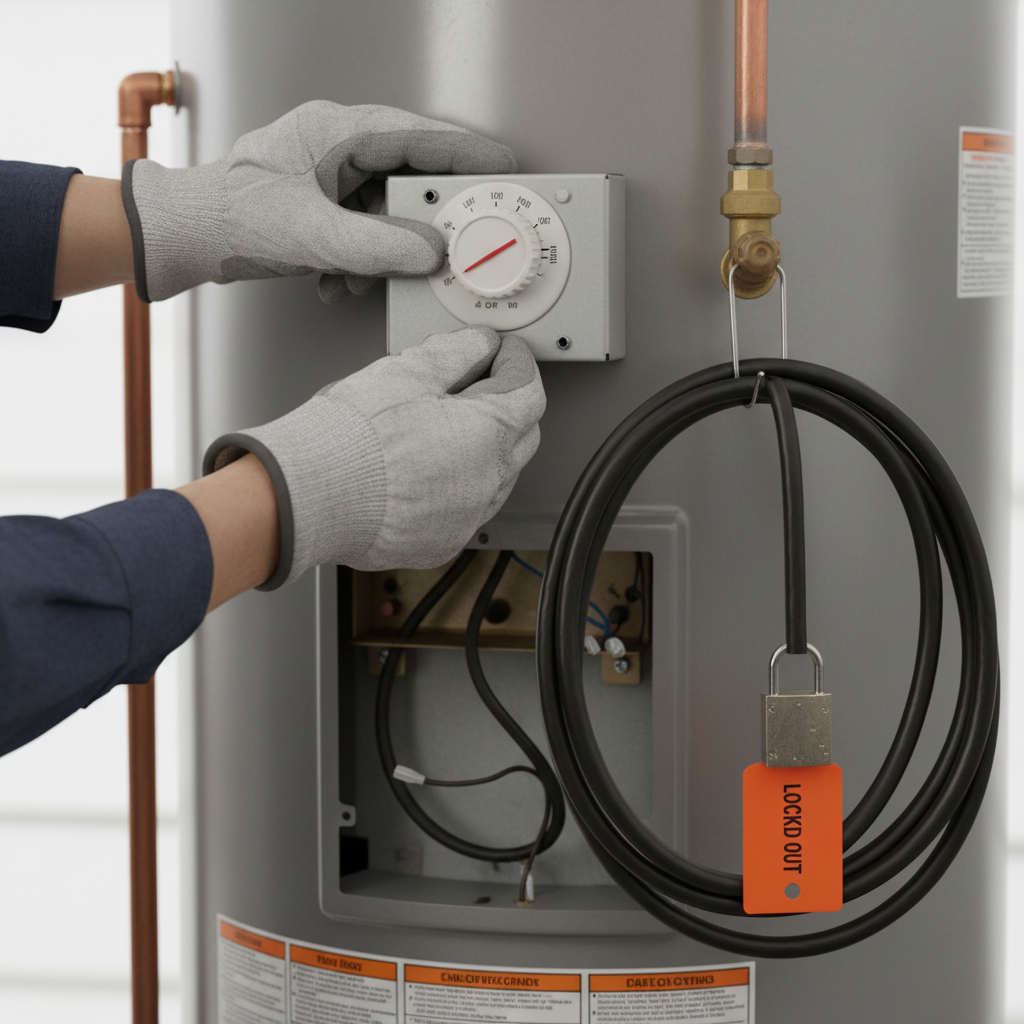
Tools & materials you'll need
Affiliate linksAs an Amazon Associate FixlyGuide earns from qualifying purchases — at no extra cost to you. Prices and availability are accurate as of publication and subject to change.
Quick Answer
Experiencing a sudden lack of hot water, wildly fluctuating temperatures, or water that's scalding hot instead of comfortably warm? Before you panic about a full water heater replacement, consider the humble thermostat. This small, but mighty, component is often the real reason behind your hot water woes. Most thermostat issues can be diagnosed and repaired by a diligent homeowner with a few common tools, potentially saving hundreds on a professional service call or unnecessary appliance replacement.
The Problem
You step into the shower, expecting a relaxing stream of warmth, only to be hit with an icy blast. Or perhaps your dishes never quite get clean because the water isn't hot enough. Even worse, you might experience water that's so hot it's a burn hazard. These are classic symptoms of a water heater thermostat that isn't doing its job correctly. When this critical component malfunctions, it throws the entire hot water system into disarray, leading to frustration, discomfort, and potentially dangerous situations.
How It Works
Your water heater's thermostat is essentially the brain of its heating operation. In electric water heaters, you'll typically find two thermostats: an upper and a lower, each controlling a corresponding heating element. These thermostats act as switches, sensing the water temperature within the tank and activating the heating elements when the temperature drops below your set point.
Here’s a simplified breakdown:
- Sensing Temperature: A bimetallic strip or an immersion bulb filled with a temperature-sensitive liquid detects the water temperature. This sensor is in direct contact with the water or pressed firmly against the tank wall.
- Activating Elements: When the water in the tank cools, the thermostat's internal switch closes, completing an electrical circuit and sending power to its respective heating element. The element then heats the water.
- Deactivating Elements: Once the water reaches the desired temperature, the thermostat's sensor reacts, causing the internal switch to open. This breaks the circuit, cutting power to the heating element and preventing the water from overheating.
- Temperature Differential: Thermostats aren't constantly cycling on and off. They have a built-in temperature differential, meaning they won't reactivate the heating element until the water cools several degrees below the set point. This prevents rapid cycling, which extends the life of the heating elements.
- High-Limit Cutoff (ECO): Both thermostats also incorporate a crucial safety feature called the Energy Cut Off (ECO) or high-limit switch. If the water temperature ever exceeds a safe threshold (typically around 180-200°F), this switch automatically trips, cutting all power to the heating elements to prevent scalding or tank damage. It usually has a small red reset button.
In a typical electric water heater, the upper thermostat generally controls the upper heating element and acts as the master. It will heat the top portion of the tank until it reaches the set temperature. Once the top is hot, power is then directed to the lower thermostat, which controls the lower element to heat the remaining water. If the upper thermostat fails, the lower element might still receive power and heat some water, but you'll run out of hot water quickly. If the lower thermostat fails, you might get some initial hot water, but it will quickly cool as the upper element alone can't heat the entire tank efficiently.
Step-by-Step Fix
Safety First — Always disconnect power before working on an electric water heater.
- Tools: Voltage tester, screwdriver, gloves.
- Turn off the circuit breaker for the water heater at your main electrical panel. Verify power is off using a non-contact voltage tester on the wires inside the thermostat access panel. This step is non-negotiable.
Diagnose the Problem — Look for obvious signs.
- Tools: Flashlight.
- Carefully remove the outer access panels on your water heater. You'll usually find two, one near the top and one towards the bottom. Underneath, there will be insulation and a plastic safety shield. Gently pull these aside.
- Look for a small red reset button on the upper thermostat. If it's popped out, press it firmly. If the ECO reset button continually trips, there's a more serious underlying issue that requires professional diagnosis, such as a faulty heating element or extreme sediment buildup.
Check for External Hot Water Issues — Rule out other system problems.
- Tools: None.
- Ensure your hot water supply isn't being drained by a running washing machine, dishwasher, or long showers. If the hot water runs out faster than usual, it could indicate a failing lower element or thermostat.
- Verify that your cold water supply valve to the water heater is fully open. A partially closed valve restricts incoming flow, reducing efficiency.
Adjust Thermostat Temperature — A simple change can make a big difference.
- Tools: Screwdriver, thermometer.
- The recommended temperature for a water heater is typically 120°F (49°C) to prevent scalding while still providing sufficient hot water. Temperatures above 125°F significantly increase the risk of burns. For every 10°F increase above 120°F, you roughly double the risk of scald injury.
- Most thermostats have a dial that can be adjusted with a flathead screwdriver or by hand. Start by turning both the upper and lower thermostats to about 120°F (often marked as
Related Articles
Keep troubleshooting with these hand-picked guides from FixlyGuide:
- The Hidden Reason Your GFCI Trips (It’s Not Always a Short Circuit) — A persistently tripping GFCI outlet is often a sign of a hidden electrical issue, frequently caused by moisture, a faulty appliance, or sub…
- The Hidden Reason Your GFCI Trips (It's Not Always a Faulty Outlet) — A continuously tripping GFCI outlet is a critical safety warning, often indicating moisture, a faulty appliance, or a wiring problem that r…
- The Hidden Reason Your GFCI Trips (It’s Not Always a Bad Outlet) — A tripping GFCI outlet is a safety mechanism doing its job, often indicating a problem like moisture, a faulty appliance, or a wiring issue…
- The Secret to Lush Raised Beds? It's Not Just About How You Water — Smart irrigation for raised garden beds isn't just about automation; it's about delivering the right amount of water precisely when your pl…
- The 5 Essential Tools Every New Gardener Needs (And 3 You Can Skip) — Starting a garden doesn't require a huge investment in tools; savvy new gardeners can thrive with just a few key items and save money by kn…
- The 4-Step Water Heater Flush That Adds Years to Its Life (and Cures 3 Common Problems) — Flushing your water heater annually is a quick DIY task that prevents sediment buildup, extends the unit's lifespan, and improves efficienc…
This article was independently written by FixlyGuide based on the source topic.
Frequently asked questions
Why would my water heater thermostat keep tripping?+
If your water heater's high-limit (ECO) thermostat repeatedly trips, it indicates a serious issue like a faulty heating element, excessive sediment buildup, or a blocked pressure relief valve, causing the water to overheat. Do not simply reset it repeatedly; call a professional to diagnose the underlying problem to prevent scalding or tank damage.

Discussion
Loading comments…