Tools & materials you'll need
Affiliate links- AmazonLiquid lawn fertilizer concentratetargeted NPK ratio for your needs
As an Amazon Associate FixlyGuide earns from qualifying purchases — at no extra cost to you. Prices and availability are accurate as of publication and subject to change.
Quick Answer
Many homeowners struggle to achieve a lush, green lawn despite their best efforts, often because they make three fundamental errors: fertilizing at the wrong time of year, incorrectly mixing or applying their fertilizer, and overlooking critical soil health. Liquid lawn fertilizers, when applied correctly, offer a rapid and effective way to deliver essential nutrients directly to your grass, correcting deficiencies and promoting vibrant growth. Understanding these common pitfalls and adjusting your approach can transform your turf from struggling to stunning.
The Problem
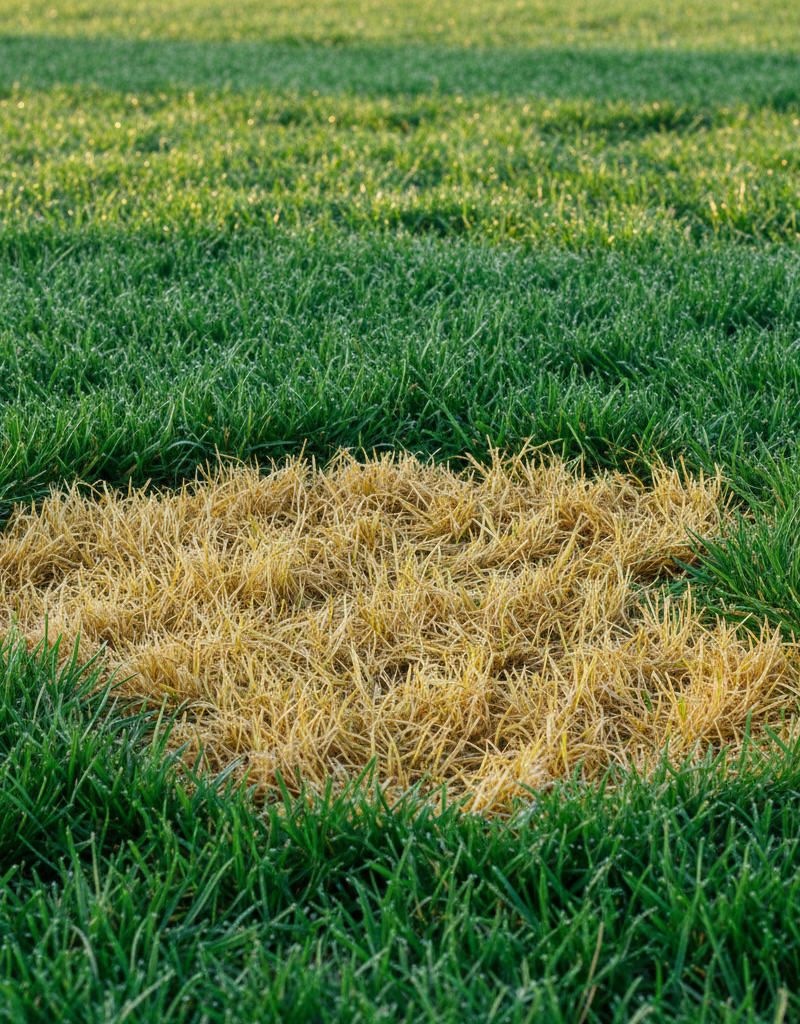
Is your lawn looking more like a patchy, pale imitation of the Golf Channel than a verdant carpet? You're not alone. Millions of homeowners inadvertently sabotage their lawns with common mistakes that undermine even the best fertilizers. It's not just about spreading some granules or spraying a solution; it's about understanding when, how, and why your lawn needs specific nutrients. Without this knowledge, you could be wasting money, time, and even harming your turf by over-fertilizing, applying at the wrong growth stage, or ignoring underlying soil problems. The result? Weak grass, rampant weeds, and a frustrating cycle of disappointment.
How It Works
To appreciate how liquid fertilizers work, it helps to understand the basic biology of your lawn. Grass plants, like all plants, need macronutrients (Nitrogen, Phosphorus, Potassium – NPK) and micronutrients (iron, manganese, zinc, etc.) to grow. Nitrogen is crucial for leaf development and color, phosphorus for root development, and potassium for overall plant health and resilience.
Traditional granular fertilizers release nutrients slowly as they break down in the soil, often requiring water to dissolve and be absorbed. This slow release can be beneficial, but it also means a delay in nutrient availability and potential for uneven distribution if not applied perfectly.
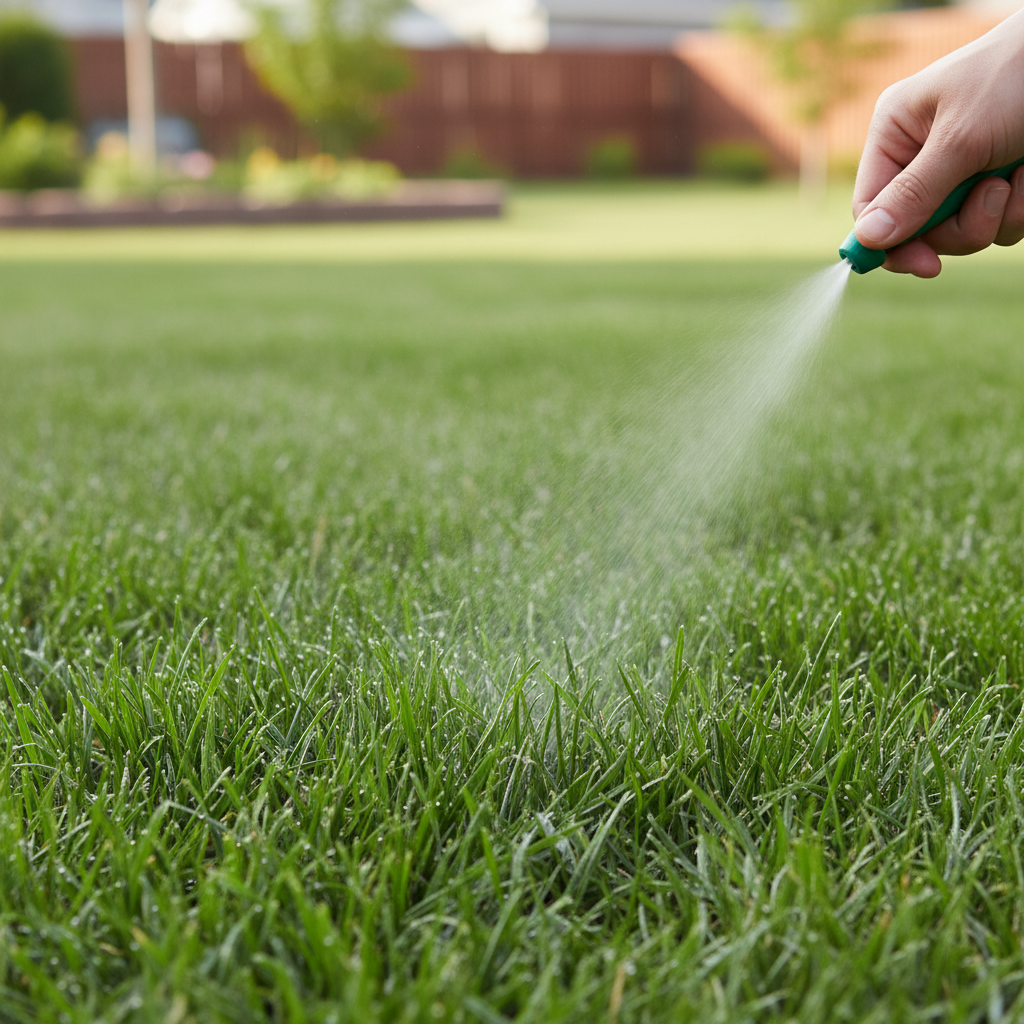
Liquid fertilizers, on the other hand, deliver nutrients in a dissolved, chelated form, meaning they are immediately available for uptake by the grass blades and roots. When sprayed onto the lawn, the liquid coating on the leaves allows for foliar absorption – nutrients are absorbed directly through the leaf surface. Simultaneously, the solution seeps down to the soil, where roots can absorb the remaining nutrients. This dual absorption method means faster results, often visible within days as your lawn greens up.
Many liquid formulations also include humic acids, fulvic acids, and other soil conditioners. These aren't direct nutrients but act as chelating agents, improving the soil's ability to hold onto nutrients and making them more available to the grass roots. They enhance microbial activity, which is vital for breaking down organic matter and creating a healthy soil ecosystem. Think of it like a vitamin shot for your lawn, delivering direct nourishment while also conditioning the very medium it grows in.
Step-by-Step Fix
Often, getting a great lawn isn't about buying a new product, but correcting fundamental errors in how you use them. Here's how to fix common problems with liquid fertilizer application.
Step 1: Diagnose Your Lawn's Needs – Understand what your grass is actually asking for.
Before you spray anything, perform a quick visual inspection. Is your grass pale green or yellow? This often signals a nitrogen deficiency. Are new shoots stunted or purplish? That might be phosphorus. Is it generally weak, disease-prone, or slow to recover? Potassium could be the culprit. While a professional soil test offers the most precise data, a simple visual assessment can guide your initial liquid fertilizer choice. Look for products with higher nitrogen (first number in NPK) for quick green-up, or more balanced formulas if overall health seems lacking.
- If this doesn't work: Consider a professional soil test. Many university extension offices offer affordable kits and detailed reports that will pinpoint exact nutrient deficiencies and pH imbalances.
Step 2: Choose the Right Time – Timing is everything for nutrient uptake.
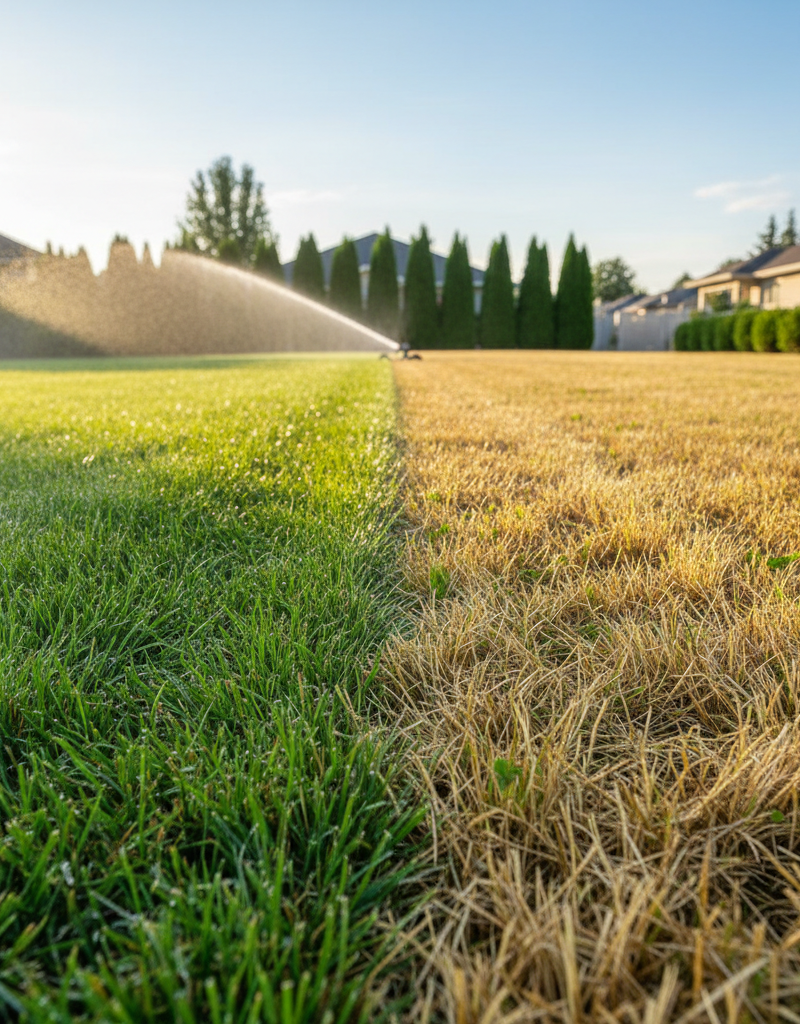
Applying liquid fertilizer at the wrong time of day or during adverse weather can cause more harm than good. The ideal time is early morning or late afternoon when temperatures are cooler and the sun is less intense. This minimizes evaporation and allows the grass blades maximum time to absorb nutrients before drying. Avoid applying during strong winds, heavy rain (which will wash away the product), or extremely hot, dry conditions (which can stress the grass). Check your local forecast for a calm, dry day with mild temperatures.
- Safety Note: Always wear appropriate personal protective equipment (PPE) like gloves and eye protection when handling any lawn chemicals.
Step 3: Prepare Your Lawn and Equipment – Set yourself up for even, effective coverage.
Before applying, mow your lawn to its regular height. This creates a more uniform surface for the liquid to cover. Lightly water your lawn a day or two before application, ensuring the soil is moist but not saturated. This helps with root absorption. Next, calibrate your sprayer. If using a hose-end sprayer, ensure it's clean and the dial is set to the manufacturer's recommended dilution rate. For pump sprayers, accurately measure the concentrate and water according to the label instructions. Improper dilution is a leading cause of poor results or even grass burn.
- Tool Tip: A clean, properly calibrated sprayer is crucial. Residue from herbicides or pesticides in a sprayer can harm your lawn.
Step 4: Dilute and Mix Correctly – Precision in mixing prevents common pitfalls.
This is where many DIYers go wrong. Always read the liquid fertilizer label for specific dilution ratios. For example, a common instruction might be
Related Articles
Keep troubleshooting with these hand-picked guides from FixlyGuide:
- The 6-Minute Secret to a Sparkling Bathroom (It’s Not What You Think) — Unleash the hidden power of your cordless drill to tackle stubborn household grime, from tile grout to dryer vents, with specialized attach…
- The 5 Essential Tools Every New Gardener Needs (And 3 You Can Skip) — Starting a garden doesn't require a huge investment in tools; savvy new gardeners can thrive with just a few key items and save money by kn…
- The Hidden Reason Your GFCI Trips (It’s Not Always a Bad Outlet) — A tripping GFCI outlet is a safety mechanism doing its job, often indicating a problem like moisture, a faulty appliance, or a wiring issue…
- The Hidden Reason Your GFCI Trips (It's Not Always a Faulty Outlet) — A continuously tripping GFCI outlet is a critical safety warning, often indicating moisture, a faulty appliance, or a wiring problem that r…
- The 4 Hidden Reasons Your Lawn Stays Yellow (And How to Fix It FAST) — Uncover the surprising culprits behind a yellow lawn and learn the quick, effective fixes to restore vibrant green growth.
- The #1 Mistake Homeowners Make When Fighting Lawn Grubs (And How to Fix It) — Discover the crucial mistake homeowners often make when treating lawn grubs and learn the most effective, timing-sensitive strategies to el…
This article was independently written by FixlyGuide based on the source topic.
Frequently asked questions
How often should I apply liquid lawn fertilizer?+
The frequency depends on the specific product and your lawn's needs, but typically liquid fertilizers are applied every 4-6 weeks during the growing season. Always check your product's label for precise instructions. Over-fertilizing can harm your lawn, so stick to the recommended schedule.
Can I use liquid fertilizer on newly seeded lawns?+
Yes, many liquid fertilizers are safe for new grass and can even encourage stronger root development. Look for formulations specifically designed for 'starter' lawns or those with lower nitrogen and higher phosphorus levels. Avoid high-nitrogen fertilizers on very young seedlings.
What's the difference between granular and liquid lawn fertilizer?+
Granular fertilizers release nutrients slowly as they break down, offering a sustained feeding. Liquid fertilizers provide immediate nutrient availability through foliar and root absorption, leading to faster green-up. Liquid fertilizers are also easier to apply evenly and can include soil conditioners more effectively.
Will liquid fertilizer burn my lawn?+
Liquid fertilizer *can* burn your lawn if applied improperly, particularly if mixed too strong (improper dilution), applied in excessive amounts, or used during direct, hot sunlight. Always follow dilution instructions carefully and apply during cooler parts of the day.

Discussion
Loading comments…