Tools & materials you'll need
Affiliate linksAs an Amazon Associate FixlyGuide earns from qualifying purchases — at no extra cost to you. Prices and availability are accurate as of publication and subject to change.
Quick Answer
Many homeowners attempt to overseed a thin lawn only to be disappointed by patchy results. The single biggest mistake is neglecting proper soil preparation, particularly aeration and correcting soil pH and nutrient imbalances, which are essential for new grass seeds to thrive. By addressing these foundational issues and then applying a strategic overseeding and watering plan, you can transform a sparse lawn into a dense, healthy one, typically in a weekend of active work with follow-up watering.
The Problem
You look out at your lawn, and instead of a uniform, emerald carpet, you see thin, patchy areas, bald spots, and perhaps even some bare dirt. This isn't just an aesthetic issue; a thin lawn is more susceptible to weeds, pests, and diseases because the turf isn't dense enough to choke out invaders or withstand environmental stress. Sunlight can reach the soil surface, encouraging weed seed germination, and the lack of a robust root system makes the lawn vulnerable to drought. Simply scattering more seed without understanding why the lawn is thin in the first place is often an exercise in futility and frustration.
The underlying causes for a thin lawn are varied but often boil down to poor soil health, inadequate irrigation, improper mowing, or a combination of these factors. Compacted soil prevents roots from growing deeply and restricts water and nutrient uptake. Nutrient deficiencies starve the grass, while an unbalanced pH can make even abundant nutrients unavailable. Without addressing these root issues, new seeds will struggle to establish, perpetuating the cycle of a sparse lawn.
How It Works
Grass plants, like all living organisms, require a specific environment to flourish. Their roots need access to water, oxygen, and essential nutrients (primarily nitrogen, phosphorus, and potassium, along with micronutrients). The soil acts as the medium for all of this. Healthy soil has a balanced structure, allowing for good drainage and aeration, which means tiny air pockets exist between soil particles, providing oxygen to the roots and allowing water to penetrate. When soil becomes compacted, these air pockets are crushed, restricting root growth and making it difficult for water and nutrients to reach the grass.
Overseeding introduces new grass seeds into an existing lawn with the goal of increasing turf density. For these new seeds to germinate and establish successfully, they need direct contact with the soil, consistent moisture, and adequate sunlight. They also need a favorable soil environment – proper pH (typically between 6.0 and 7.0 for most turfgrasses) and sufficient nutrients to fuel their initial growth. Without these conditions, seeds either won't germinate, or the young seedlings will quickly die, unable to compete with existing grass and weeds or withstand environmental stressors. Aeration helps by breaking up compacted soil, creating channels for water, air, and nutrients, and providing ideal little pockets for new seeds to settle into. Topdressing with compost further enhances soil structure and provides a slow release of organic nutrients, giving the new seedlings a vital head start.
Step-by-Step Fix
1. Assess Your Lawn's Health – Before you seed, know your soil
- Take a representative soil sample from several spots in your lawn.
- Send it to your local university extension office for a comprehensive soil test. This will tell you your soil's pH, nutrient levels, and organic matter content.
- If this doesn't work: If you can't get a soil test, a basic pH testing kit can give you a general idea. Aim for a pH between 6.0 and 7.0 for most turfgrasses.
2. Prepare the Ground – Clear the way for new growth
- Mow low: Cut your existing grass shorter than usual, down to about 1.5 to 2 inches. This exposes the soil to more sunlight and reduces competition for the new seedlings.
- Rake thoroughly: Vigorously rake out dead grass, thatch, and any debris. You want to expose as much bare soil as possible for seed-to-soil contact.
3. Aerate the Soil – Give roots room to breathe
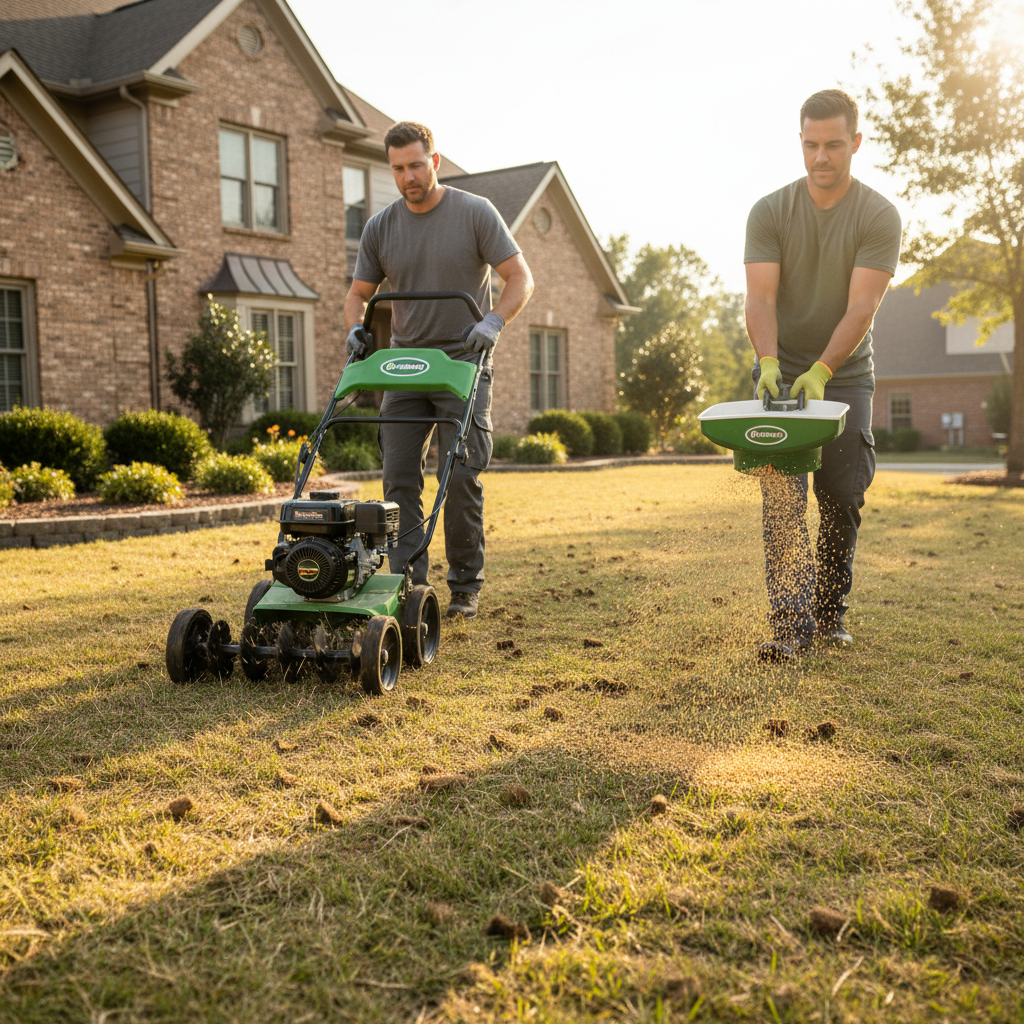
- Rent a core aerator: This machine pulls out small plugs of soil, relieving compaction and creating channels for air, water, and nutrients.
- Make multiple passes: For very thin or compacted areas, make two passes over the lawn, perpendicular to each other.
- Safety Note: Wear sturdy, closed-toe shoes when operating heavy machinery. Always read and follow the manufacturer's instructions for safe operation.
4. Amend and Topdress – Feed your soil for long-term health
- Adjust pH if needed: Based on your soil test, apply lime (to raise pH) or sulfur (to lower pH) according to product instructions. Do this before seeding.
- Spread a thin layer of compost: Apply about 1/4 to 1/2 inch of high-quality compost over the entire lawn. Rake it into the aeration holes.
- Tools: Wheelbarrow, shovel, rake.
- If this doesn't work: For minor compaction or small areas, a spike aerator tool can be used, but it's less effective than core aeration.
5. Choose the Right Seed – Match the grass to your region and sun exposure
- Select high-quality seed: Use reputable brands that offer good germination rates and are free of weed seeds.
- Consider your climate and sun: Choose a grass type appropriate for your specific region (e.g., cool-season grasses like fescue or rye in northern climates, warm-season grasses like Bermuda or Zoysia in southern climates) and the light conditions of your lawn (full sun, partial shade, or shade-tolerant varieties).
- Think about existing grass: If you have an existing lawn, try to match the new seed to provide a uniform look.
6. Spread the Seed Evenly – Precision seeding for a uniform lawn
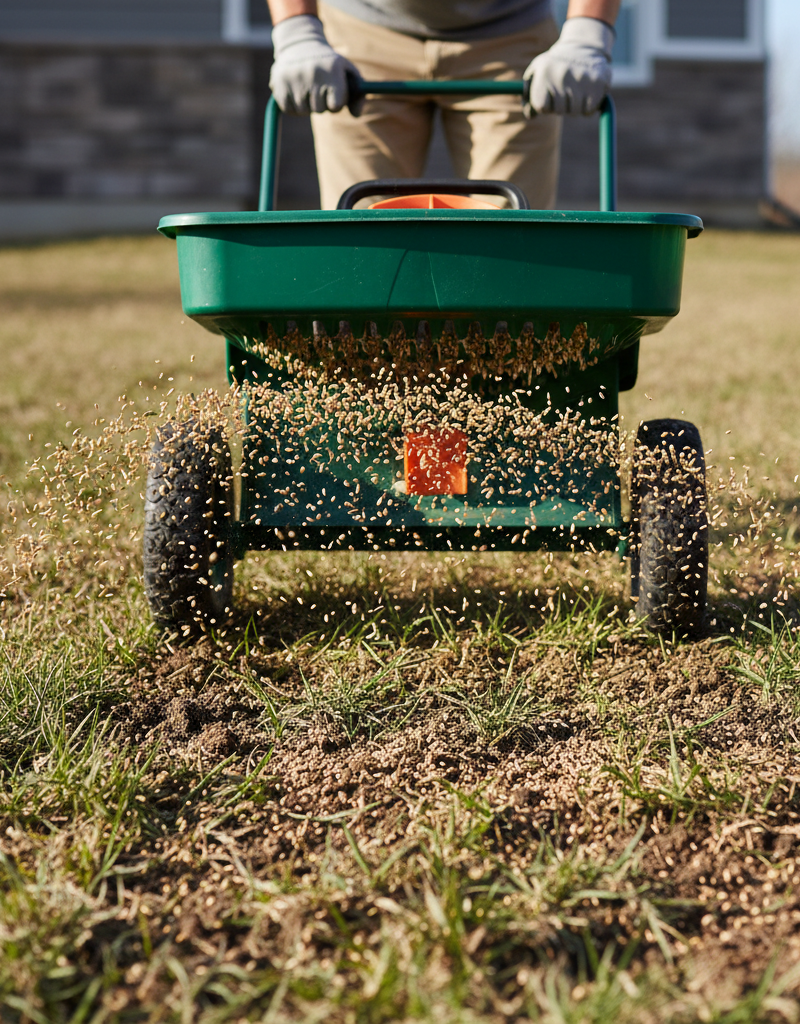
- Use a spreader: A broadcast spreader is ideal for larger lawns, ensuring even coverage. A drop spreader offers more precision for smaller areas.
- Divide seed in half: To ensure even coverage, fill the spreader with half the recommended amount of seed and make passes in one direction. Then, refill with the remaining half and make passes perpendicular to the first direction.
- Calibration is key: Follow the spreader's instructions for the correct setting for your chosen seed type and rate.
7. Lightly Rake or Roll – Ensure good seed-to-soil contact
- Gentle raking: Lightly rake the seed into the top 1/8 to 1/4 inch of soil. You want to cover the seeds without burying them too deeply.
- Optional light rolling: For very large areas, a lightweight lawn roller can be used very gently to ensure good seed-to-soil contact, but avoid compacting the soil again.
8. The Most Critical Step: Water Consistently – Keep it moist, not saturated
- Frequent, light watering: This is paramount. Water lightly 2-3 times a day for 10-15 minutes each time during the first 2-3 weeks, or until seeds germinate and seedlings are established (about 1-2 inches tall).
- Keep the top 1 inch of soil moist: The goal is to prevent the seeds from drying out, which can kill them. Do not let puddles form.
- As seedlings grow: Gradually reduce watering frequency and increase duration to encourage deeper root growth. Eventually, transition to deep, infrequent watering.
- Safety Note: Be mindful of slippery surfaces when watering. Ensure hoses are not trip hazards.
9. Protect and Nurture – Give your new lawn a fighting chance
- Avoid heavy traffic: Stay off the newly seeded areas as much as possible until the grass is well-established (4-6 weeks).
- Mow carefully: Don't mow until the new grass is at least 3-4 inches tall. Set your mower to its highest setting for the first few cuts.
- Fertilize gently: After 4-6 weeks, or when new grass is established, apply a slow-release starter fertilizer specifically designed for new lawns. Avoid weed killers for at least 6-8 weeks, as they can harm new seedlings.
Common Causes
- Soil Compaction: Heavy foot traffic, equipment, or even rainfall can compact soil, reducing air pockets essential for root growth and water penetration. Often found in high-traffic areas or lawns with heavy clay soil.
- Nutrient Deficiencies or Imbalances: Lack of essential nutrients (nitrogen, phosphorus, potassium) or an incorrect soil pH (too acidic or too alkaline) prevents grass from absorbing nutrients, leading to weak, sparse growth.
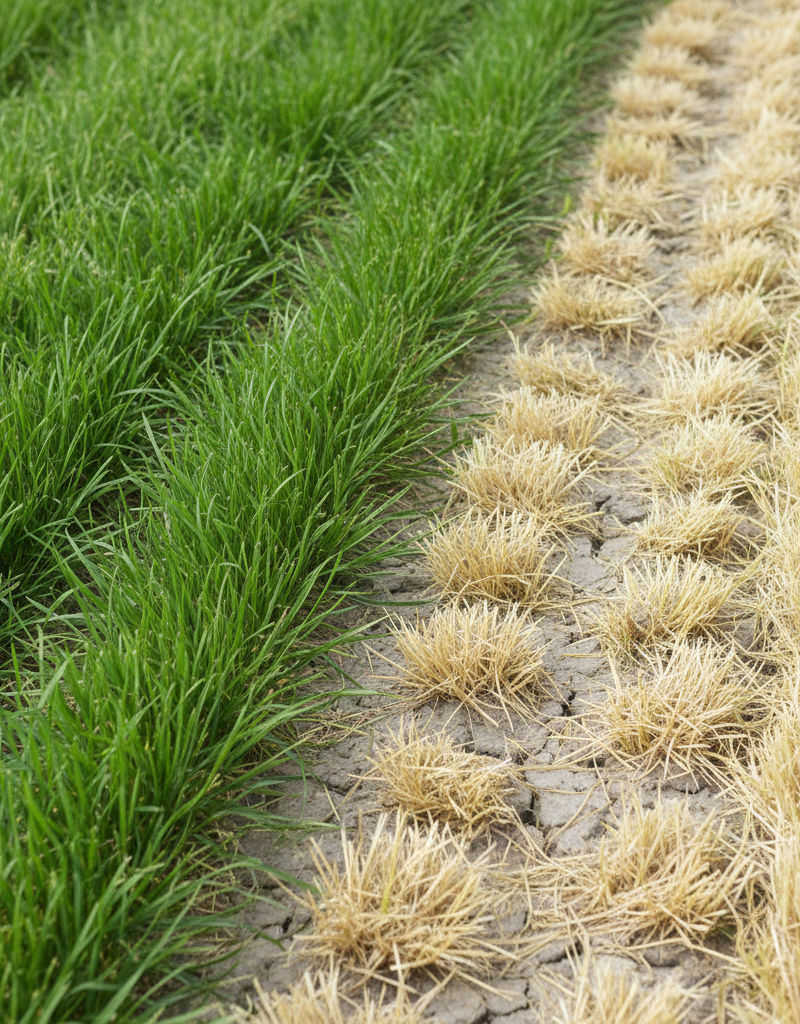
- Inadequate Watering: Insufficient or inconsistent watering, especially during dry periods, stresses grass and prevents healthy development. Shallow watering encourages shallow roots, making the lawn more susceptible to drought.
- Improper Mowing: Cutting grass too short (scalping) weakens the plant, making it more vulnerable to stress and disease. Mowing with dull blades tears grass, inviting disease.
- Pests and Diseases: Grubs, chinch bugs, fungal diseases (like brown patch or dollar spot) can cause significant thinning and bare spots by damaging grass roots or blades.
- Shade: Many popular turfgrasses require significant sunlight. Areas shaded by trees, buildings, or fences will naturally thin out if a shade-tolerant variety isn't used.
- Excess Thatch: A thick layer of thatch (undecomposed organic matter) can prevent water and nutrients from reaching the soil, harbor pests, and block new seeds from making soil contact.
Common Mistakes
- Skipping Soil Preparation: Simply throwing seed on unprepared, compacted soil is the most common mistake. Without aeration and proper soil contact, most seeds won't germinate or thrive.
- Not Doing a Soil Test: Guessing at soil pH and nutrient needs can lead to applying the wrong amendments or fertilizers, wasting time and money and potentially harming the lawn.
- Incorrect Seed Choice: Using the wrong type of grass seed for your climate, sun exposure, or existing lawn can result in poor establishment, uneven growth, or continued thinning.
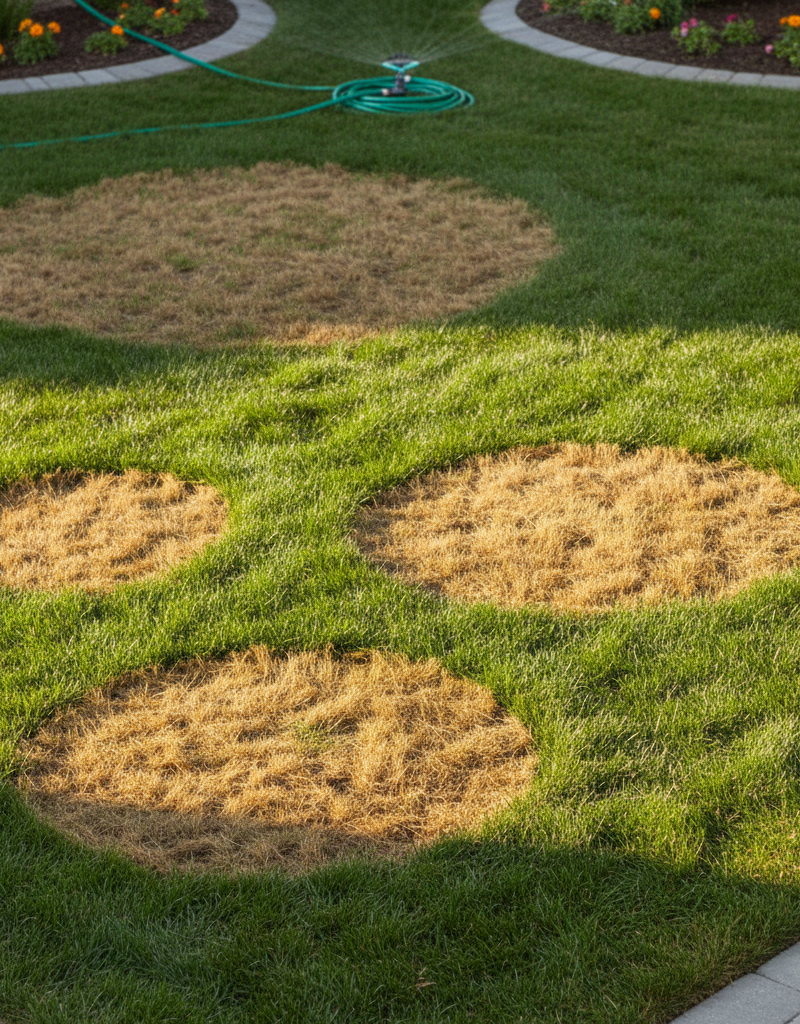
- Inconsistent Watering: Allowing newly seeded areas to dry out, even for a few hours during germination, can kill young seedlings. Overwatering, creating puddles, can also wash away seeds or encourage fungal diseases.
- Applying Weed Killers Too Soon: Many broadleaf weed killers will also harm or kill new grass seedlings. Always wait at least 6-8 weeks (or check product labels) after seeding before applying any herbicides.
- Mowing Too Soon or Too Short: Cutting new grass too early or too short stresses the young plants and can prevent them from developing a strong root system.
- Ignoring Underlying Problems: If significant pest activity, disease, or drainage issues are present, overseeding alone won't solve the problem; these must be addressed first.
Cost & Time Breakdown
| Task | DIY cost | Pro cost | Time |
|---|---|---|---|
| Soil Test | $15–$50 | Included in service | 5–10 min |
| Aerator Rental (half-day) | $70–$120 | Included in service | 2–4 hours |
| Grass Seed (10-20 lb bag) | $30–$80 | Included in service | 30 min |
| Compost / Soil Amendments | $20–$50 | Included in service | 1–2 hours |
| Starter Fertilizer | $20–$40 | Included in service | 15 min |
| Total DIY (materials only) | $155–$340 | N/A | 4–8 hours |
| Professional Overseeding | N/A | $400–$800+ | 1–2 days |
Tips & Prevention
- Regular Soil Tests: Conduct a soil test every 2-3 years to monitor pH and nutrient levels, allowing for proactive adjustments before problems arise.
- Proper Mowing Height: Maintain your grass at the highest recommended height for its type (typically 3-4 inches). Taller grass shades the soil, reducing weed germination and retaining moisture, and promotes deeper root growth.
- Sharpen Mower Blades: Sharpen your mower blades at least once a season, or every 25 hours of use. A clean cut allows grass to recover quickly, preventing disease.
- Deep, Infrequent Watering: Water deeply and infrequently to encourage roots to grow deeper into the soil, making the lawn more drought-resistant. Aim for 1 inch of water per week, including rainfall.
- Consistent Aeration: Consider aerating your lawn annually or bi-annually, especially if you have heavy clay soil or high foot traffic, to prevent compaction.
- Overseed Annually/Bi-annually: For a perpetually thick lawn, plan to overseed every one to two years, ideally in the fall for cool-season grasses or late spring/early summer for warm-season grasses. This replenishes aging turf and introduces new, vigorous grass.
When to Call a Professional
If your lawn remains thin despite consistent efforts, or if you suspect significant underlying issues like severe drainage problems, extensive pest infestations (such as widespread grub damage), or persistent fungal diseases that you can't diagnose or treat effectively, it's time to call a professional. A licensed lawn care specialist or arborist can accurately diagnose complex soil issues, identify specific pests or diseases, and recommend targeted treatments that may require specialized equipment or chemicals not available to homeowners. Furthermore, if your lawn is particularly large, hilly, or has areas with extreme compaction, the physical labor and equipment needed for proper aeration and overseeding might be better handled by professionals. Ignoring these deeper issues only leads to recurring thin spots and wasted DIY efforts.
Related Articles
Keep troubleshooting with these hand-picked guides from FixlyGuide:
- The #1 Mistake Killing Your Thin Lawn (And How to Fix It in a Weekend) — Overseeding your lawn can transform it from thin and patchy to lush, but many homeowners make a crucial mistake that hinders success. Learn…
- The #1 Mistake Killing Your Lawn's Clover—and the Easy fix That Spares Your Grass — Discover the most common mistake homeowners make when trying to eliminate clover, and learn how to remove it effectively without harming yo…
- The #1 Summer Lawn Mistake That Guarantees Yellow Grass (It's Not Drought) — Understanding the most common mistake homeowners make with summer lawn care can save your grass from turning yellow and dying.
- The #1 Mistake Homeowners Make Adjusting Sprinklers (and How to Fix It in 5 Minutes) — Even advanced sprinkler heads can go rogue, wasting water and harming your lawn. Learn to quickly diagnose and adjust their spray patterns.
- The #1 Mistake Homeowners Make When Fighting Lawn Grubs (And How to Fix It) — Discover the crucial mistake homeowners often make when treating lawn grubs and learn the most effective, timing-sensitive strategies to el…
- The #1 Mistake Homeowners Make When Their Ice Maker Stops (And the Easy Fix) — Before you call for service, learn the most common and easily fixable reason your refrigerator's ice maker isn't producing ice.
Frequently asked questions
What is the best time of year to overseed a thin lawn?+
For cool-season grasses (fescue, rye, bluegrass), the best time is early fall (late August to October) when soil temperatures are warm enough for germination, but air temperatures are cooler and weed competition is low. For warm-season grasses (Bermuda, Zoysia, St. Augustine), late spring to early summer is ideal.
How long does it take for new grass seed to grow after overseeding?+
Most grass seeds will start to germinate within 5 to 14 days, depending on the grass type and environmental conditions. It typically takes 3 to 4 weeks for new seedlings to become established enough to withstand light foot traffic and their first mow.
Can I just scatter grass seed without aerating?+
While you *can* scatter seed without aerating, the results will likely be poor. Aeration is crucial for breaking up compacted soil, allowing seeds to make good soil contact, and ensuring water and nutrients can reach the developing roots. Without it, seeds often struggle to germinate or die shortly after.
How soon can I fertilize after overseeding?+
It's best to apply a starter fertilizer *at the time of seeding* or shortly after, as these are formulated to support new seedling growth. Avoid traditional 'weed and feed' fertilizers for at least 6-8 weeks after seeding, as herbicides can harm young grass.
My lawn is thin because of too much shade. Will overseeding help?+
Overseeding can help if you use a high-quality, shade-tolerant grass seed variety. However, for significant shade issues, you might also need to prune trees for more light, or consider alternative ground covers if grass simply won't thrive.
Discussion
Loading comments…