Tools & materials you'll need
Affiliate linksAs an Amazon Associate FixlyGuide earns from qualifying purchases — at no extra cost to you. Prices and availability are accurate as of publication and subject to change.
Quick Answer
Whole-house low water pressure is a frustrating issue that can often be resolved by a savvy homeowner. The most common culprits range from simple fixes like a partially closed main shutoff valve or a clogged aerator affecting multiple fixtures, to more involved problems like a failing pressure reducing valve (PRV) or sediment accumulation in your water heater. Less frequently, but more seriously, a main water line leak or issues with your municipal supply can cause a significant drop in pressure throughout your home. A systematic diagnostic approach, starting with the simplest checks, is key to identifying and rectifying the problem.
The Problem
Imagine stepping into the shower only to be met with a pathetic dribble, or trying to run the dishwasher while someone washes their hands, and both appliances struggle for water. Low water pressure affecting every faucet and fixture in your home isn't just an annoyance; it impacts daily hygiene, appliance efficiency, and overall comfort. This isn't about one sputtering faucet; it's a systemic problem indicating an issue with your home's main water supply or distribution. Understanding the 'why' behind this widespread pressure drop is the first step toward restoring robust water flow to every corner of your house.
How It Works
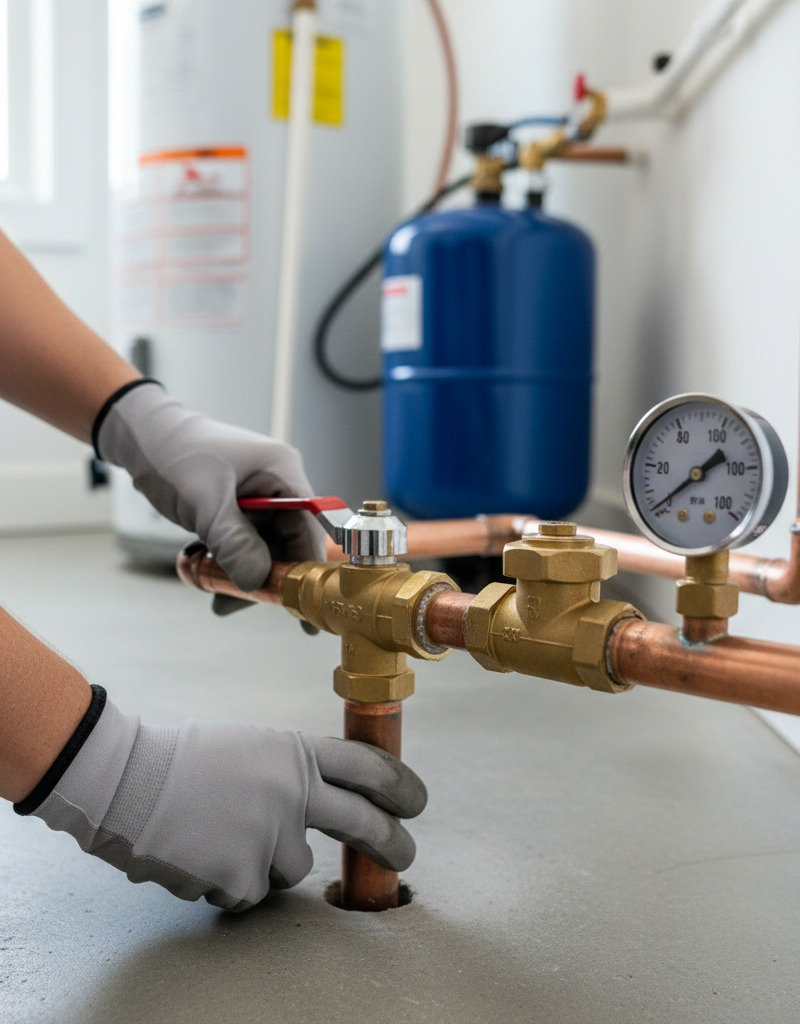
Your home's water pressure journey begins with the municipal water supply (or well pump) delivering water to your property. This water enters your home through the main water line. Somewhere along this line, typically near where the main water line enters the house, you'll find the main shutoff valve – a critical component. If your home is in an area with high municipal water pressure (often above 80 PSI), you'll also have a pressure reducing valve (PRV). This bell-shaped device is designed to lower and regulate the incoming pressure to a safe, consistent level (usually 50-70 PSI) for your home's plumbing system, protecting your pipes and fixtures from damage. From there, the water branches off, supplying cold water directly to fixtures and also routing to your water heater. The water heater then distributes hot water to the relevant fixtures. Every pipe, valve, and fixture connection in your home contributes to the overall water flow and pressure. Obstructions or restrictions at any major point – a partially closed main valve, a faulty PRV, a clogged water heater, or even heavily corroded pipes – can manifest as reduced pressure throughout the entire system because they impede the total volume of water able to enter or flow through your home's plumbing tree. The physics are straightforward: pressure is essentially the force pushing water through pipes, and any significant resistance in that path will diminish the force, leading to less water flow at the faucets.
Step-by-Step Fix
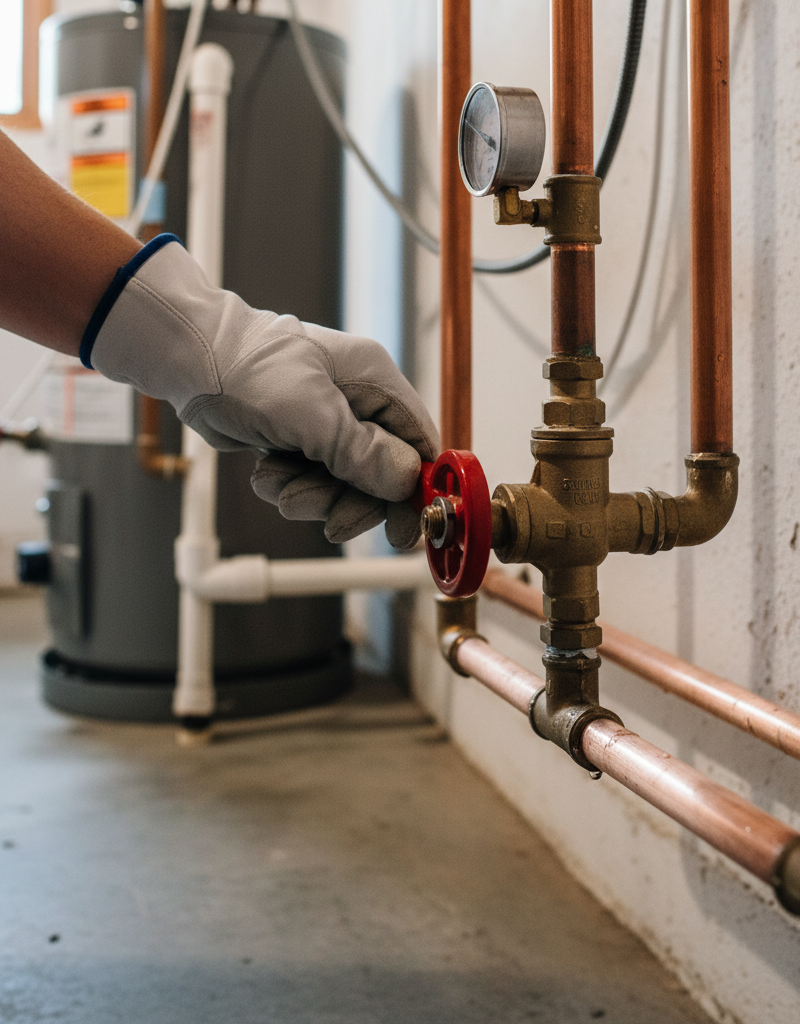
1. Check Your Main Shutoff Valve — Ensure it's fully open, as even a slight closure can restrict flow.
- How: Locate your main water shutoff valve, typically where the water line enters your house from the street, or sometimes near your water heater. It might be a gate valve (wheel-handle) or a ball valve (lever handle). If it's a gate valve, turn it clockwise to close and counter-clockwise to open. If it's a ball valve, the handle should be parallel to the pipe when open and perpendicular when closed. Make sure it's completely in the open position. Often, these valves can get bumped or partially closed for minor repairs and not reopened fully.
- If this doesn't work: If the valve is fully open and pressure is still low, proceed to the next step.
2. Test Neighbor's Water Pressure — Determine if the issue is isolated to your home or affects the neighborhood.
- How: Politely ask a neighbor if they are experiencing similar low water pressure issues. This simple check can quickly tell you if the problem stems from your municipal water supply or is specific to your property. This is a crucial diagnostic step before you start disassembling anything.
- If this doesn't work: If neighbors have normal pressure, the problem is almost certainly inside your property. Call your water utility company to report the issue if they are also experiencing low pressure.
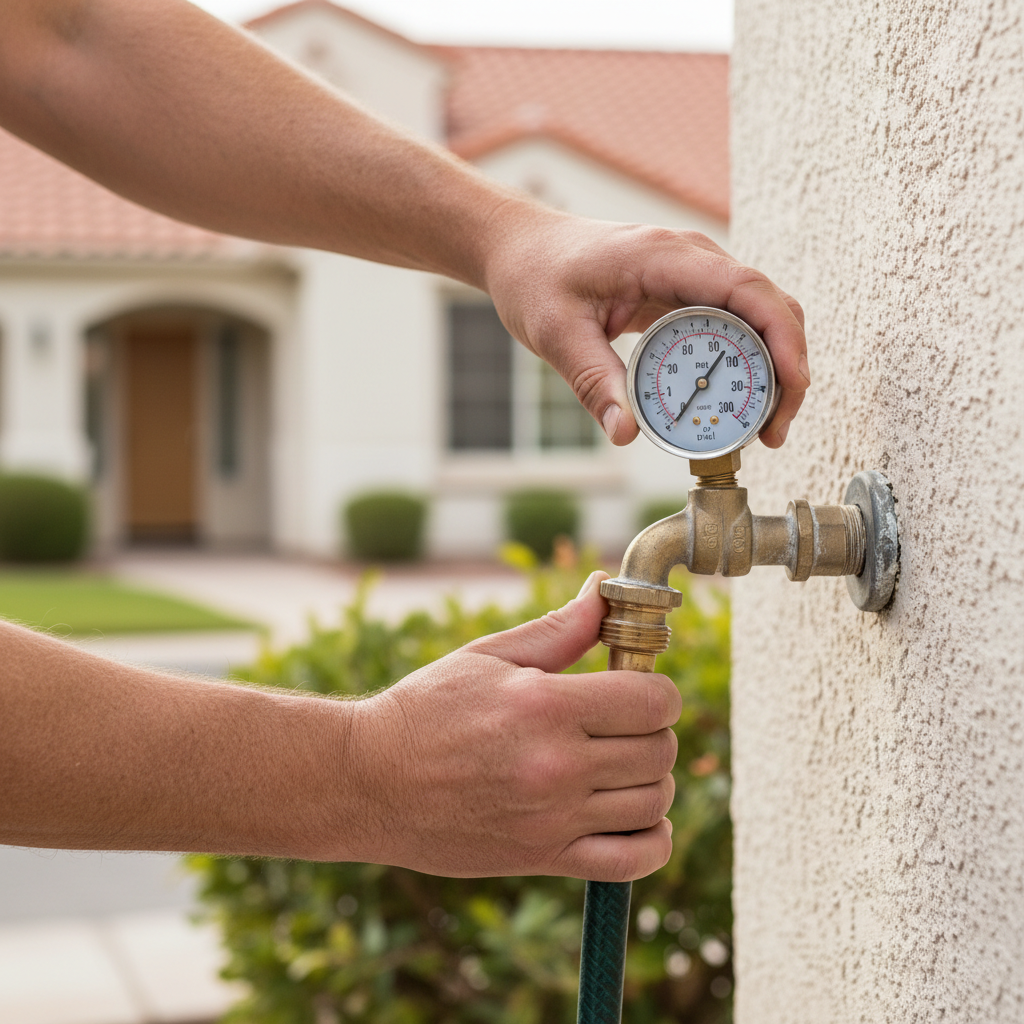
3. Measure Water Pressure with a Gauge — Get an objective reading of your home's static water pressure.
- Tools: Water pressure gauge (screw-on type).
- How: Purchase an inexpensive water pressure gauge from a hardware store. Turn off all water-using appliances and fixtures in your home. Attach the gauge to an outdoor spigot (hose bib) or a laundry sink faucet. Turn the spigot/faucet on fully and note the reading. Ideal household water pressure is typically between 40-60 PSI. Anything below 40 PSI is considered low.
- Safety: Ensure the gauge is threaded on tightly to prevent leaks.
- If this doesn't work: If the reading is consistently low at multiple outdoor spigots, the problem is upstream of those points.
4. Isolate the Water Heater — Determine if the hot water system is responsible for the pressure drop.
- How: If you have low pressure across the board, but it seems worse with hot water or when hot water is being used, your water heater could be the culprit. Locate the cold water shutoff valve on the supply line going into the top of your water heater. Close this valve. Then, open a hot water faucet in your home. If pressure improves significantly at other cold water faucets (or if you notice sediment coming out), your water heater is likely bogged down with sediment. Open a cold water faucet to verify if cold water pressure is now normal.
- Safety: Be aware that turning off the cold water supply to your water heater means no more hot water will be generated until it's reopened. Follow manufacturer instructions for flushing your particular water heater model.
- If this doesn't work: If isolating the water heater doesn't impact cold water pressure, the issue lies elsewhere.
5. Flush Your Water Heater — Remove accumulated sediment that can restrict flow.
- How: Sediment (calcium and magnesium carbonate) naturally accumulates at the bottom of tank-style water heaters, especially in hard water areas. This sludge can block the cold water inlet dip tube or cover the hot water outlet, severely restricting flow.
- Turn off the cold water supply to the water heater (if you haven't already).
- Turn off the gas supply or circuit breaker for an electric water heater.
- Attach a garden hose to the drain valve at the bottom of the tank and run the other end to a floor drain or outside. Open the drain valve completely.
- Open a hot water faucet somewhere in the house to release vacuum and allow air in.
- Allow the tank to drain completely (can take 30-60 minutes). You'll likely see cloudy water and chunks of sediment.
- Once drained, briefly open the cold water supply to the water heater (with the drain valve still open) to jet out remaining sediment. Close the cold water supply.
- Close the drain valve, disconnect the hose, and reopen the cold water supply to the tank.
- Once the tank is full (water flows normally from a hot water faucet), turn the gas/electricity back on.
- Replacement interval: Water heaters should be flushed annually for optimal performance and longevity.
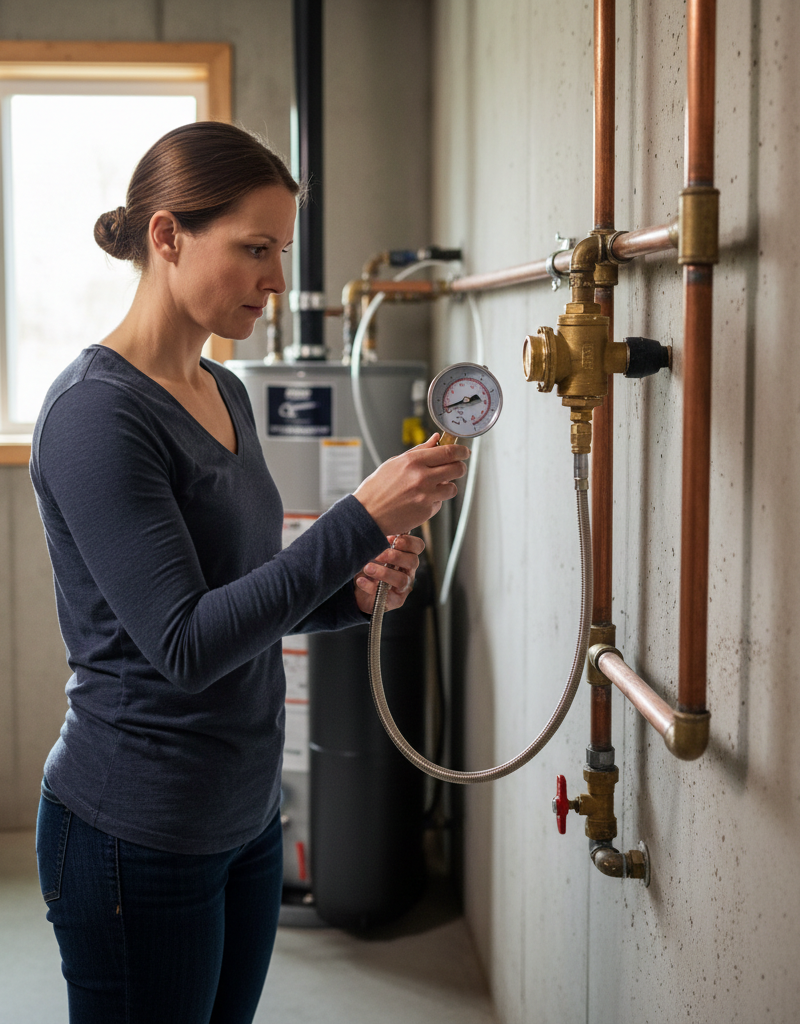
6. Inspect and Adjust/Replace Your Pressure Reducing Valve (PRV) — A failing PRV is a very common cause of low whole-house pressure.
- How: The PRV is often bell-shaped and located on your main water line after the main shutoff valve. If your home has a PRV and your pressure gauge reading (from step 3) is low, the PRV is a prime suspect. Many PRVs have an adjustment screw on the top, often with a locknut. Loosening the locknut and turning the screw clockwise slightly can increase pressure. Turn it a quarter turn at a time, then re-measure pressure. Do NOT adjust past 75 PSI. If adjustment doesn't work, or if the PRV is old and visibly corroded, it likely needs replacement. A failing PRV can also manifest as high pressure at night and low pressure during the day when demand is high.
- Pro Tip: If you live in an area with a PRV, it's one of the most likely causes of systemic pressure problems. They generally last 10-15 years.
- Safety: Be careful not to overtighten connections when removing or installing a new PRV. If you're unsure about this step, or if your PRV is located in a hard-to-reach or complex section of your plumbing, it's wise to consult a licensed plumber.
7. Check for Leaks in the Main Water Line — A significant leak
Related Articles
Keep troubleshooting with these hand-picked guides from FixlyGuide:
- The #1 Mistake Homeowners Make When Diagnosing Low Water Pressure — Discover the most common oversight homeowners make when troubleshooting low water pressure throughout their house and how to fix it with si…
- The Secret Culprit Behind Your Whole-House Low Water Pressure (It's Not Always the City) — Whole-house low water pressure can be a frustrating and complex issue, ranging from simple fixes homeowners can do to signs that require a…
- The 4 Hidden Reasons Your Entire Home Has Low Water Pressure (And the Easy Fixes) — Low water pressure throughout your entire home can be a frustrating and often misunderstood problem, with several common culprits. Learn to…
- The 4 Hidden Reasons Your Entire Home Has Low Water Pressure — Low water pressure throughout your house can stem from several hidden issues, ranging from municipal supply problems to your home's main sh…
- The #1 Mistake Homeowners Make When Diagnosing Low Water Pressure (and What to Check First) — Before you call a plumber, learn the most common overlooked cause of low water pressure affecting your entire home and how to easily check…
- The 5-Minute Trick to Restore Your Kitchen Sink Sprayer's Lost Pressure — Restore your kitchen sink sprayer's low pressure with a quick, simple trick that often takes less than five minutes and requires no special…
Get the print-ready PDF of this guide
A clean, ad-free, printable version you can keep on your phone or pin to the workshop wall. We'll also send occasional weekly tips matched to your home situation.
- Print-optimized layout
- Tools, materials & every step included
- Unsubscribe anytime
Frequently asked questions
Why is my water pressure suddenly low throughout the house?+
Sudden drops in whole-house water pressure can be caused by a partially closed main shutoff valve, a sudden main water line leak (which might cause a spike in your water bill), or a new issue with your municipal water supply. A failing pressure reducing valve can also manifest suddenly.
How do I know if my PRV is bad?+
A common sign of a failing PRV is low water pressure throughout the house, especially when multiple fixtures are in use. You might also notice fluctuating pressure, or water hammer (loud banging pipes). If adjusting the PRV doesn't resolve the pressure issue, or if the valve is old and corroded, it likely needs replacement.
Can a clogged water heater cause low water pressure?+
Yes, absolutely. Sediment buildup at the bottom of a conventional tank-style water heater can restrict the flow of water into and out of the tank, leading to a noticeable drop in hot water pressure, and in severe cases, even affecting overall cold water flow if the cold water inlet dip tube is compromised.
Discussion
Loading comments…