Tools & materials you'll need
Affiliate links- AmazonSilicone spray lubricantspecifically for windows, not oil-based
As an Amazon Associate FixlyGuide earns from qualifying purchases — at no extra cost to you. Prices and availability are accurate as of publication and subject to change.
Quick Answer
Most single or double-hung windows that won't stay up are suffering from a failed or dislodged sash balance. These internal mechanisms counteract the weight of the window sash, allowing it to remain open at any position. Often, you can re-engage, adjust, or even replace these balances yourself with minimal tools and effort, restoring full functionality to your window.
The Problem
You push your window open, expecting it to stay put, but it slowly (or quickly) slides back down, sometimes all the way. This isn't just annoying; it can be a security risk, a nuisance for ventilation, and a sign of a deeper issue within the window's operating mechanism. This frustrating phenomenon is almost always due to a problem with the window sash balance system, which is designed to counterbalance the weight of the window sash. When these balances fail, the sash loses its support and gravity takes over, pulling the window closed. Ignoring this problem can lead to warped sashes from repeated slamming, increased energy loss if the window can't fully close, and continued frustration.
How It Works
To understand why your window won't stay up, it helps to know how a typical single or double-hung window is designed to stay open. The key components are the window sashes (the movable frames holding the glass) and the sash balance system.
In older windows, you might find weight and pulley systems. These rely on heavy metal weights hidden within the window frame, connected to the sashes by ropes or chains running over pulleys. The weights are sized to match the sash weight, providing a counterbalance. If a rope breaks or a weight gets jammed, the window won't stay up.
Most modern windows, however, use more compact and efficient sash balance mechanisms. There are several types:
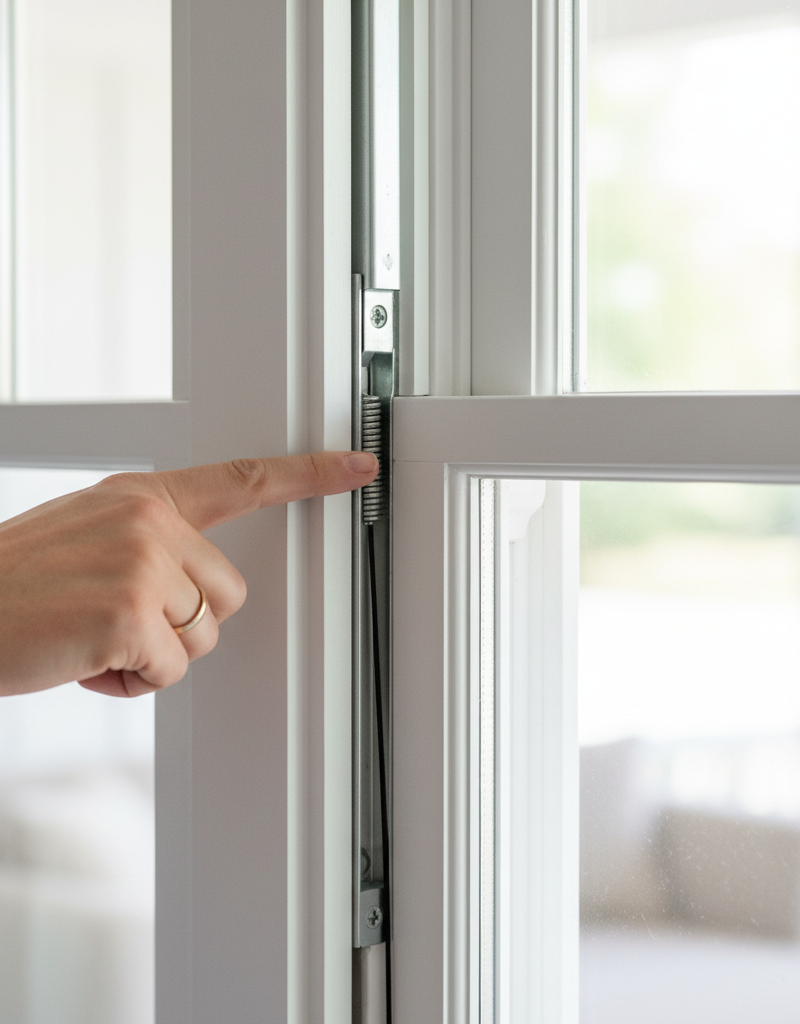
- Spring-loaded coil balances: These are common in vinyl or aluminum windows. They consist of a spiral spring encased in a tube, often visible along the side of the window sash. A small plastic shoe or clip on the end of the coil balance connects to a slot in the sash. As the window moves, the spring provides tension to hold it in place.
- Channel balances: These are typically found in wood or some vinyl windows. A metal channel, often silvery, runs along the side of the window frame. Inside this channel, a spring-and-pulley system (or sometimes a spiraling rod) is housed. A terminal clip at the bottom of the channel engages with the sash.
- Block and tackle balances: These combine a spring with a series of cords and pulleys, designed for heavier sashes. They are usually hidden within the side jambs.
The basic principle for all these systems is the same: they store potential energy (in a spring or by lifting a weight) as the window is closed, then release that energy to assist in opening the window and holding it in place. When a spring weakens, breaks, or a connecting piece detaches, the balance is lost, and the window succumbs to gravity.
Step-by-Step Fix
Before you begin, carefully observe which side of the window is failing. Sometimes only one balance has malfunctioned, and identifying it can save you time. This guide focuses on common coil and channel balance issues, which account for the vast majority of "window won't stay up" problems.
1. Clear the Window Area— Remove any obstructions
Take down blinds, curtains, and remove any items from the windowsill. This gives you clear access to the window frame and sashes and prevents accidental damage. Open the window as far as you can and try to prop it open temporarily with a piece of wood or a sturdy book if needed, just to get it out of the way for inspection.
2. Identify the Balance Type— Determine if you have coil or channel balances
Look at the sides of your window sashes. Do you see a plastic tube with a coil inside, often with a small plastic shoe at the bottom? That's a coil balance. Or do you see a metallic channel running along the side of the window frame, perhaps with a cord or hook emerging from the bottom? That's likely a channel balance. This step is crucial as the repair methods differ.
3. Inspect Coil Balances (If applicable)— Check for dislodged or broken shoes
For coil balances, the most common issue is the plastic shoe (or "pivot bar shoe") detaching from the sash or the pivot bar itself. Carefully lift the window sash slightly (you might need a helper or to prop it open). Look for a small plastic block at the bottom corner of the sash, where it meets the side jamb. This shoe should be seated firmly in a slot in the sash or clipped onto a pivot bar that extends from the bottom of the sash. If it's dangling or disconnected, it's the culprit. Also, check if the spring inside the plastic tube appears broken or unwound.
4. Re-engage a Dislodged Coil Balance Shoe— The quick fix for many modern windows
Safety Note: Window sashes can be heavy. Use caution to avoid pinching fingers or dropping the sash.
- Remove the sash: If your window has tilt-in sashes (common in modern windows), unlock the window, raise it a few inches, slide the tilt latches (small tabs usually on the top corners of the sash) inward, and tilt the top of the sash towards you. Lift the sash out of the frame. This gives you easy access to both balance shoes.
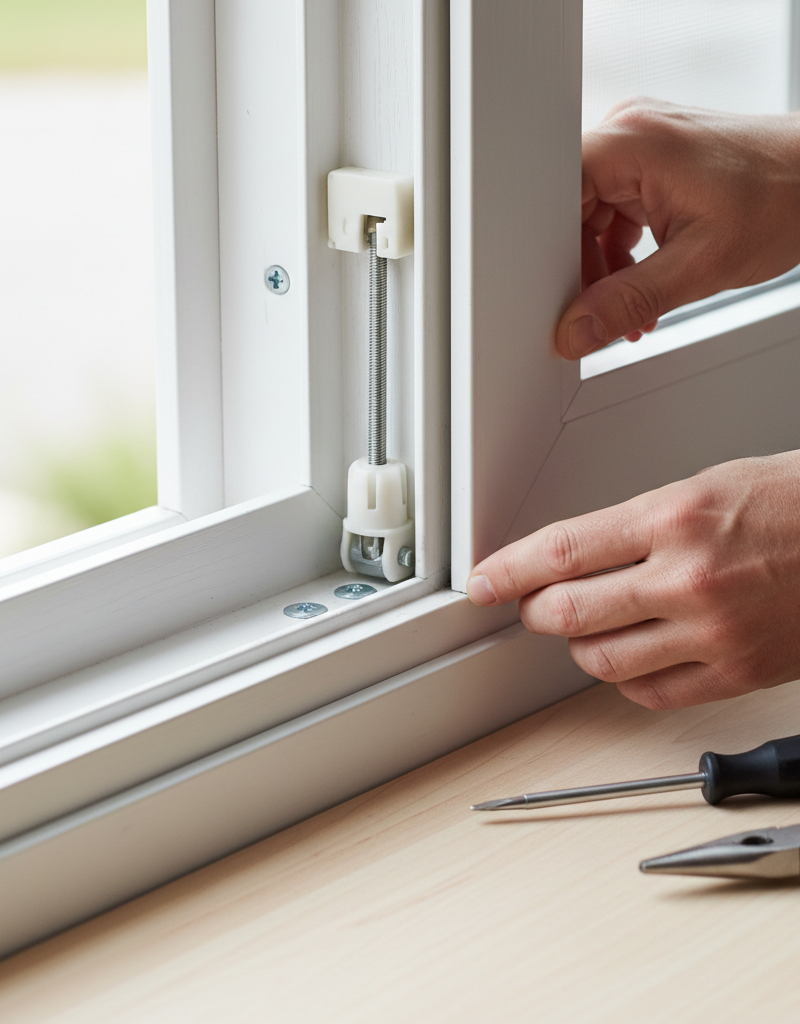
- Locate the shoe: Find the dislodged plastic shoe on the side jamb. It should be attached to the end of the coil spring.
- Re-seat the shoe: Carefully pull the shoe down a few inches (it may have tension). Align it with the slot at the bottom of the sash (or the pivot bar if it's a pivot-bar system) and push it firmly into place. Ensure it clicks or slides securely. If it's a pivot-bar system, you'll usually need to slide the pivot bar into the shoe's slot.
- Reinstall the sash: Tilt the sash back into the frame, ensuring the bottom pivot pins (if applicable) or the bottom of the sash seats correctly into the balance shoes. Close and open the window a few times to test.
5. Inspect Channel Balances (If applicable)— Look for broken cords or clips
For channel balances, the most common culprit is a broken cord or a disconnected attachment clip on the end of the cord. The metal channel itself rarely fails, but the internal spring or cord can degrade. Pull the window sash up slightly and look along the side jamb inside the channel. Do you see a cord that's frayed, snapped, or detached from the small metal or plastic clip meant to engage with the sash? Sometimes the clip itself breaks. If the cord is completely retracted into the channel, the spring assembly might be broken.
6. Re-engage a Dislodged Channel Balance Clip— When the cord is still good but detached
This is less common than with coil balances, but sometimes the clip at the end of the channel balance cord can slip out of its slot in the sash. Gently lift the sash, locate the cord and its clip. Guide the clip back into the receiving slot on the side of the sash. It should snap or slide into place. Exercise care as these cords are under spring tension.
- If the cord is broken: This usually means a replacement of the entire channel balance unit is necessary. This is a moderate DIY task for most homeowners. You'll need to remove the sash as described in step 4, then typically remove screws holding the channel balance in place and slide it out. Take the old balance to a window parts supplier or match it online. Crucially, note the length of the channel and the weight code (a stamped number or letter) which indicates the spring strength needed for your specific sash weight.
7. Clean and Lubricate (Optional but Recommended)— Ensure smooth operation
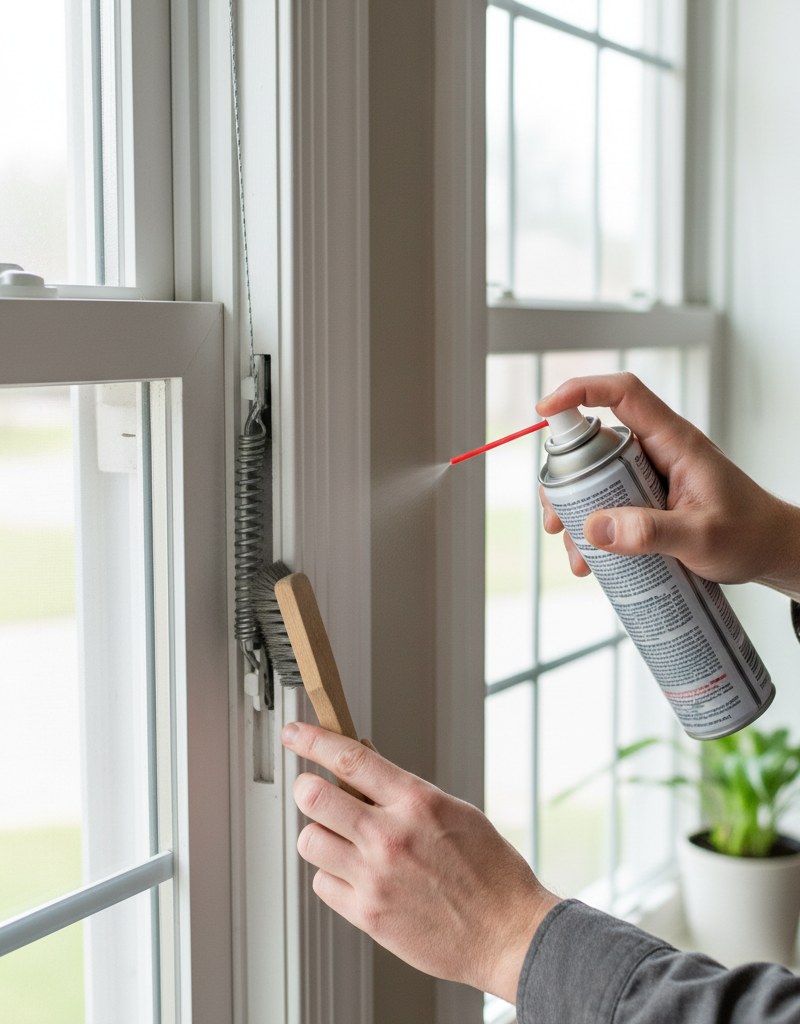
Even if you've fixed the balance issue, dirt and grime can hinder operation. Use a stiff brush or a vacuum with a narrow attachment to clean out the window tracks and jambs. Then, apply a silicone-based lubricant (never oil-based, as it attracts dirt) to the tracks and any moving parts of the balance system. This can improve the overall smoothness of the window operation.
- Caution: Avoid overspraying and creating a sticky mess. A light, even coat is all that
Related Articles
Keep troubleshooting with these hand-picked guides from FixlyGuide:
- The 5-Minute Trick to Fix a Window That Won't Stay Open (No Tools Needed!) — Discover the surprisingly simple reasons why your window keeps sliding shut and how to fix it in minutes, often without any tools.
- The 3 Hidden Reasons Your Window Won't Stay Up (And the Easy Fixes) — Before you call a repairman, learn the three most common reasons your double-hung window won't stay open and how to fix them yourself.
- The 4 Hidden Reasons Your Window Won't Stay Up (And the Easy Fixes) — Before you blame a broken window, learn the common culprits behind window sashes that won't stay open and how to fix them yourself.
- The 3 Hidden Reasons Your Garage Door Won't Close (And How to Fix Each) — A garage door that won't close completely is a common, frustrating issue often caused by simple sensor obstructions, misalignments, or trav…
- The 3 Hidden Reasons Your Garage Door Stops Mid-Close (And the $0 Fix) — Your garage door stopping mid-close is usually a sign of misaligned safety sensors, a blocked path, or incorrect travel limits, all fixable…
- The 3 Hidden Mistakes That Make Your Deck Sealer Fail (And How to Fix Them) — Resealing your wood deck protects it from weather and extends its life. Learn how to avoid common mistakes for a long-lasting finish and vi…
Frequently asked questions
How do I know what type of window balance I have?+
Most modern windows use either coil balances (a plastic tube with a spring inside, often visible along the side of the sash) or channel balances (a metallic channel housing a spring and cord mechanism, also along the side jamb). Older windows might have rope and pulley systems.
Can I fix a broken window balance myself?+
For dislodged coil balance shoes or detached channel balance clips, yes, it's often an easy DIY fix. If a spring is visibly broken or a cord snapped, you'll likely need to replace the balance unit, which is a moderate DIY task requiring sash removal and careful matching of the replacement part.
What causes a window to not stay up?+
The most common causes are worn, broken, or dislodged sash balance mechanisms. These balances are responsible for counteracting the weight of the window sash. Dirt and debris in the tracks can also contribute to the problem.
Discussion
Loading comments…