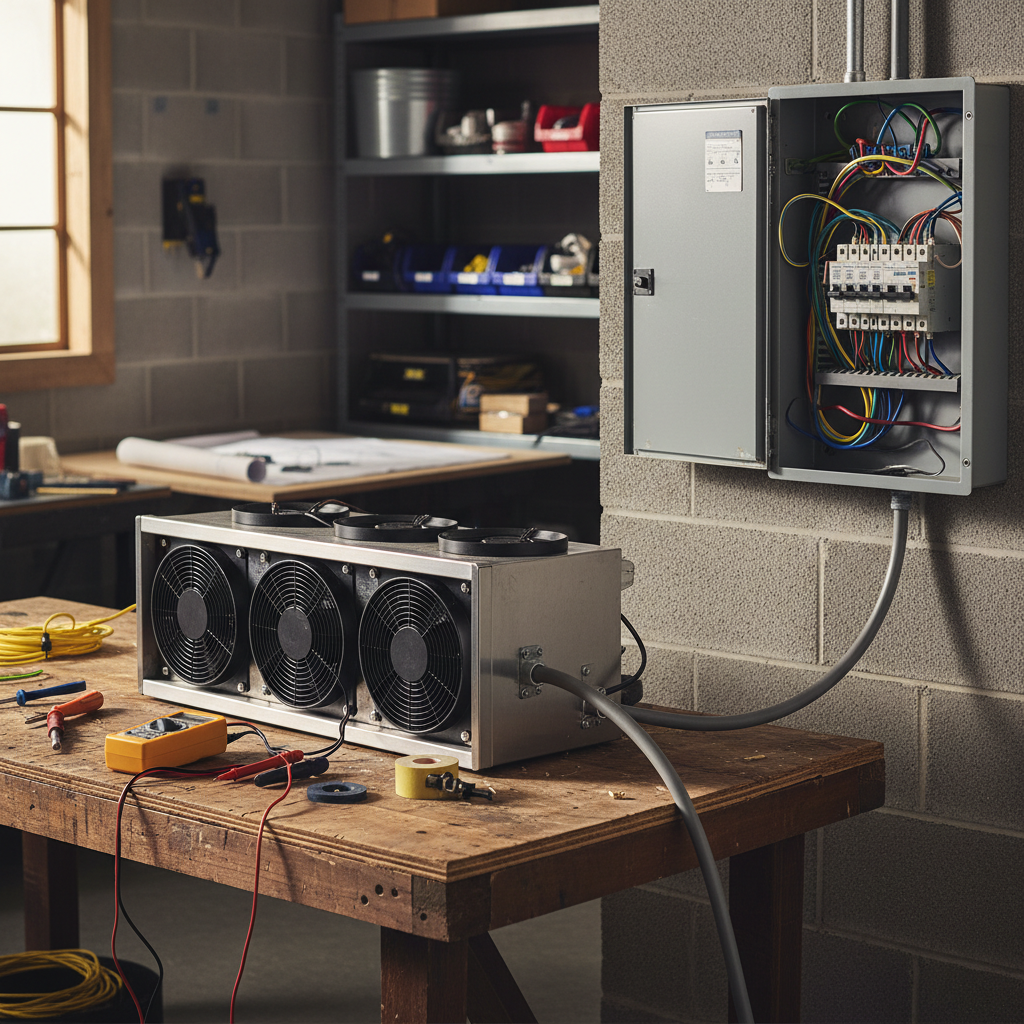
Tools & materials you'll need
Affiliate links- AmazonNon-Contact Voltage Tester1 · Essential for verifying power is off.
- Amazon4-in-1 Screwdriver1 · Will have Phillips and flat-head bits for various screws.
- AmazonCordless Drill1 · For drilling pilot holes and driving mounting screws.
- AmazonTape Measure1
- AmazonLevel1 · To ensure the new hood is mounted perfectly horizontally.
- AmazonSafety Glasses1
- AmazonNew Ducted Range Hood1 · Ensure its amp/wattage draw is compatible with your circuit.
- AmazonWire Nuts1 pack · Use new ones sized for your home's wiring (usually yellow or red).
- AmazonFoil HVAC Tape1 roll · Do NOT use cloth duct tape. This is for sealing the duct connection.
- AmazonDegreaser & Rags1 · For cleaning the greasy cabinet before installation.
As an Amazon Associate FixlyGuide earns from qualifying purchases — at no extra cost to you. Prices and availability are accurate as of publication and subject to change.
Quick Answer
Yes, in most cases you can install a significantly more powerful range hood (up to about 400-600 CFM) on an existing 15-amp kitchen circuit. The key is to check the new hood's amperage (amp) or wattage draw, not just its CFM rating. As long as the new hood draws less than 4-5 amps and the circuit isn't already overloaded with other appliances, a major rewiring job is usually unnecessary.
The Problem
You sear a beautiful steak, and within minutes the smoke alarm is screaming. You try to enjoy a quiet dinner, but the smell of last night's salmon still hangs in the air. This is the frustrating reality of living with a weak, ineffective range hood. Most homes are built with basic, underpowered hoods—often a recirculating microwave unit—that do little more than move smoky, greasy air around the kitchen. They are chosen for cost, not performance. The result is a film of grease that slowly coats your cabinets, lingering odors that permeate your home, and poor indoor air quality. You know a more powerful, properly vented range hood is the answer, but the fear of a massive, expensive electrical project, tearing open walls to run a new dedicated circuit, stops you in your tracks. It feels like an all-or-nothing proposition, forcing you to choose between a smoky kitchen and a budget-breaking renovation.
How It Works
To overcome this hurdle, you need to understand the relationship between a range hood's power, its ducting, and your home's electrical system. A range hood's performance is measured in Cubic Feet per Minute (CFM), which is the volume of air it can move in sixty seconds. A builder-grade microwave or hood might only move 150-200 CFM. A good-quality hood for a standard electric range should start around 300-400 CFM. For gas ranges, which produce more heat and combustion byproducts, the rule of thumb is 100 CFM for every 10,000 BTUs of cooktop output.
So, how does this relate to your wiring? The air movement (CFM) is generated by a motor, and that motor consumes electricity, measured in watts (W) or amperes (amps). This is the number that matters for your circuit. Your home's electrical circuits are rated for a maximum amperage—typically 15 amps or 20 amps for a kitchen area. The total power a circuit can provide is calculated as: Watts = Volts x Amps. In the US, voltage is a stable 120V.
- A 15-amp circuit can theoretically handle 1,800 watts (120V * 15A).
- A 20-amp circuit can theoretically handle 2,400 watts (120V * 20A).
However, for safety and to prevent nuisance breaker trips, the National Electrical Code (NEC) advises that a circuit should only be loaded to 80% of its maximum capacity. This gives you a continuous load budget of 1,440 watts for a 15-amp circuit and 1,920 watts for a 20-amp circuit.
The secret is that modern, efficient range hood motors can produce significant CFM without drawing a huge amount of power. A weak 200 CFM hood might draw 1.5 amps (180W). A far more effective 400 CFM hood might only draw 2.5 amps (300W). Even a powerful 600 CFM model could draw as little as 4 amps (480W). As you can see, these wattages are a small fraction of the 1,440-watt budget on a standard 15-amp circuit, even one that also powers your kitchen lights. The key is to do the math before you buy, ensuring the combined load of your new hood and anything else on the circuit stays safely within that 80% capacity.
Step-by-Step Fix
This guide assumes you are replacing an existing under-cabinet range hood with a new, more powerful one, using the same electrical and ductwork location.
1. Safety First — Kill the Power
- Go to your home’s main electrical panel. Locate the breaker that controls your current range hood. It may be labeled "Kitchen," "Kitchen Lights," or "Appliances." Turn the breaker to the full OFF position. If it is not clearly labeled, you may need to turn off the main breaker for the whole house. Place a piece of tape over the breaker to prevent anyone from accidentally turning it back on.
- Crucial Safety Step: Back in the kitchen, try to turn on the old range hood’s fan and light. Confirm they do not operate. Then, use a non-contact voltage tester to verify that there is no power in the electrical box or wires connected to the hood. The tester should not light up or beep. Do not proceed until you are 100% certain the power is off.
2. Diagnose Your Existing Circuit
- With the correct breaker identified, note its amperage rating—it will be clearly marked with "15" or "20". This tells you your circuit's maximum capacity.
- Now, play detective. With the breaker still off, go around your kitchen and see what else lost power. Is it just the hood? Do the main kitchen lights also go out? Are a few nearby outlets now dead? This tells you whether the hood is on a dedicated circuit (unlikely) or a shared circuit (very common). Make a list of everything on the circuit.
3. Calculate Your Circuit’s Capacity
- Now you’ll use the 80% rule. For a 15-amp circuit, your total budget is 1,440 watts. For a 20-amp circuit, it's 1,920 watts.
- Tally up the wattage of all other devices on the circuit. For example, if the circuit also powers six 10-watt LED ceiling lights, that’s 60 watts of existing load (6 lights x 10W/light = 60W).
- Subtract this from your budget: 1,440W (budget) - 60W (lights) = 1,380 watts remaining for your new hood. As you can see, there is ample capacity.
4. Select the Right High-CFM Hood
- You are now an empowered shopper. As you browse for new range hoods, ignore the CFM for a moment and look for the technical spec sheet. Find the "Amps" or "Wattage" rating. A hood rated at 3.5 Amps will consume 420 watts (3.5A * 120V). A hood rated at 500 watts will draw 4.17 amps (500W / 120V).
- Compare the new hood's consumption to your available budget. In our example, a 500-watt hood is well under the 1,380-watt capacity we have available. You can confidently purchase this powerful upgrade knowing your wiring can handle it.
5. Remove the Old Range Hood
- First, remove the grease filters from the old unit to get a better grip and access to the wiring and screws. For a recirculating unit, you're done. For a ducted unit, you'll need to detach the ductwork. There are usually a few screws or a compression clamp holding the duct to the hood's damper outlet. Remove them.
- Open the hood's electrical cover. You should see three wire connections (black, white, green) held together by wire nuts. Unscrew the wire nuts and separate the wires. Untighten the cable clamp (the Romex connector) where the house wiring enters the hood.
- Get a Helper: Range hoods are awkward. Have a helper support the hood while you unscrew the four main mounting screws that go up into the bottom of the cabinet. Once the last screw is out, carefully lower the hood and set it aside.
6. Prep the Space
- That cabinet bottom is probably disgusting. Using a good degreaser, thoroughly clean the underside of the cabinet where the new hood will mount. This is your only chance to get this area truly clean.
- Inspect the ductwork. If you have a 6-inch round duct, you are in great shape for most hoods up to 600-900 CFM. If you have a smaller rectangular duct or a 4-inch round duct, it will limit the effectiveness of your new powerful hood. You may need an adapter, but be aware this can reduce performance and increase noise.
7. Mount the New Hood
- Most new hoods come with a paper template. Tape this to the underside of the cabinet to mark your screw holes and a larger cutout for the electrical and duct connections. Drill your pilot holes for the mounting screws.
- With your helper’s assistance, lift the new hood. Feed the house electrical cable through the back of the hood. Align the hood with your pilot holes and have your helper hold it firmly in place while you drive in at least two mounting screws to secure it. Install the remaining screws and tighten them all.
8. Connect the Ductwork
- Align the hood’s damper outlet with your home’s duct pipe. The fit should be snug. Use a new duct connector if needed.
- Crucial Performance Step: Use high-quality foil HVAC tape to completely seal the seam between the hood's outlet and your home's ductwork. Do not use standard cloth "duct tape," which will fail under the temperature changes. An airtight seal is critical to ensure all the air you're pulling actually goes outside.
9. Wire the New Hood
- Inside the hood's wiring compartment, strip about 3/4" of insulation from the ends of the hood's wires if they aren't pre-stripped.
- Using new wire nuts, make the three connections: House Black to Hood Black (Hot), House White to Hood White (Neutral), and House Green/Bare Copper to Hood Green (Ground). Tug gently on each wire to ensure the connection is secure.
- Neatly fold the wires into the compartment, replace the cover, and tighten the cable clamp around the house wire to secure it.
10. Install Filters & Final Touches
- Install the new, clean baffle or mesh filters that came with your hood. If your hood is stainless steel, now is the time to peel off the white or blue protective film. Clean any fingerprints with a microfiber cloth and stainless steel cleaner.
11. Test Your Work
- The moment of truth. Go back to the electrical panel and turn the breaker back to the ON position.
- Return to the kitchen and test every function. Cycle through all the fan speeds, from low to high. Turn the lights on and off. Listen for any rattling sounds (indicating something is loose) and feel around the duct connection for any air leaks. If everything works as it should, you are done!
Common Causes
Why was your old hood so bad? Understanding the cause helps you appreciate the solution.
- Recirculating Design: The single biggest culprit. Recirculating hoods only pull air through a flimsy carbon filter and blow it right back into the kitchen. They remove almost no heat, moisture, or serious smoke.
- Undersized CFM: A hood with a low CFM rating simply can't move enough air to keep up with a standard cooktop, let alone a high-output gas range.
- Clogged Filters: Mesh filters caked with grease drastically restrict airflow, rendering even a decent hood useless.
- Improper Ducting: A powerful hood needs a properly sized duct—typically 6 inches or more in diameter. Connecting a high-CFM hood to an old, undersized 4-inch duct is like trying to breathe through a coffee straw; it chokes the airflow and dramatically reduces performance.
- Worn-Out Motor: Over time, the motor itself can wear out, losing speed and power.
Common Mistakes
Avoid these pitfalls for a successful and safe installation:
- Ignoring Amperage: Buying a hood based only on CFM and accidentally choosing a 900+ CFM monster that requires a dedicated 20-amp circuit.
- Duct-Size Mismatch: Failing to check if your existing ductwork diameter matches the new hood's requirements.
- Leaky Duct Connections: Not using foil tape to create an airtight seal at the duct, allowing greasy air to leak into your cabinets or ceiling.
- Forgetting the Breaker: Attempting any wiring work without triple-checking that the power is off is extremely dangerous.
- Solo Installation: A range hood is heavy and awkward. Trying to install it alone can lead to a damaged hood, damaged cabinets, or personal injury.
- Ignoring Makeup Air: If you install a very powerful hood (typically over 400-600 CFM depending on local code), you may be required to install a makeup air system to prevent back-drafting of other appliances. This is a pro-level job.
Cost & Time Breakdown
| Task | DIY Cost | Pro Cost (Installation Only) | Time |
|---|---|---|---|
| New Ducted Hood (300-600 CFM) | $200 - $700 | (part of materials) | 1 hr (Shop) |
| Electrical & Ducting Supplies | $25 - $50 | (included in labor) | - |
| Degreaser & Cleaning Supplies | $15 | - | - |
| Total DIY Project | $240 - $765 | - | 3-5 hours |
| Professional Installation | - | $250 - $600 | 2-4 hours |
Tips & Prevention
- Clean Your Filters Religiously: For mesh filters, run them through the dishwasher monthly. Baffle filters can be wiped down or also put in the dishwasher. This is the single best thing you can do for performance.
- Use It Every Time: Turn on your hood a minute before you start cooking to establish airflow. Use it for everything, even boiling pasta, to control humidity.
- Let It Run: After you finish cooking, let the fan run on low for 5-10 minutes to clear any residual smoke, steam, and odors.
- Choose Baffle Filters: If you have the option, choose a hood with stainless steel baffle filters. They are more effective at capturing grease and are far more durable than aluminum mesh filters.
- Check the Outside Vent: Periodically, make sure the flap on your exterior vent cap isn't stuck closed with ice, debris, or a bird's nest.
When to Call a Professional
This DIY project has its limits. You should stop and call a qualified electrician or HVAC technician if you encounter any of the following:
- Your chosen hood is a high-power, pro-style unit (typically >600-900 CFM) that explicitly states it requires a dedicated 20-amp circuit. Running a new circuit is a job for a licensed electrician.
- You want to switch from a recirculating hood to a ducted one, which requires installing new ductwork. Cutting holes in your walls, ceiling, or roof is a job for an HVAC contractor or skilled carpenter.
- Upon inspection, your home’s wiring is old, frayed, or is ungrounded two-wire or aluminum wiring. Do not touch it. This requires a professional assessment.
- The project requires moving or modifying a gas line.
- You are physically unable or simply uncomfortable with performing the electrical wiring or lifting the heavy appliance. A pro can do this job quickly and safely, and the cost is often very reasonable for the peace of mind it provides.
Related Articles
Keep troubleshooting with these hand-picked guides from FixlyGuide:
- The 4-Step Drywall Patch Secret That Makes Large Holes Vanish — Discover how to flawlessly repair a large hole in drywall using a simple, effective method that makes the damage disappear without a trace.
- The 5-Minute Trick to Making Drywall Holes Disappear (Without Sanding!) — Discover a surprisingly fast and clean method for patching small drywall holes that bypasses messy sanding, leaving a smooth, professional…
- Swap Your Leaky Faucet This Weekend, No Plumber Needed — Ready to stop that annoying drip and give your kitchen an instant upgrade? This guide shows you how to replace a kitchen faucet yourself. W…
- The Secret to a Flawless Drywall Patch Is In the Paper — Frustrated by drywall patches that always show through? That telltale bump or sanding mark can ruin a perfect wall. Discover the 'Californi…
- Skip the Demo: The Secret to Tiling Over Existing Floors — Discover the professional method for tiling directly over your existing bathroom floor, saving you thousands on messy, expensive demolition…
- Range Hood Fan Not Working? Easy Fixes for Common Issues — Fix a non-functional range hood fan by checking power, cleaning components, and inspecting basic electrical connections to restore ventilat…
Frequently asked questions
How many CFM do I need for my gas range?+
A common rule of thumb is to have 100 CFM for every 10,000 BTUs of your cooktop's total output. For example, a 60,000 BTU gas range would ideally be paired with a 600 CFM range hood.
Can I replace a ducted hood with a ductless one?+
Yes, but it is a significant downgrade in performance. A ducted hood physically removes smoke, grease, and odors from your home. A ductless (recirculating) hood only filters some grease and odors before blowing the air back into your kitchen. It does not remove heat, humidity, or smoke.
Is a 400 CFM range hood enough?+
For most standard 30-inch electric cooktops, a 400 CFM hood is an excellent and effective choice that provides a major upgrade over builder-grade models without typically requiring electrical modifications.
What is better, baffle or mesh filters?+
Stainless steel baffle filters are generally considered superior. They are more durable, easier to clean, and work by forcing air to change direction, causing grease to drip into channels rather than clogging a fine mesh. Mesh filters are less expensive but can be difficult to clean thoroughly and can become permanently clogged over time.
Discussion
Loading comments…