Tools & materials you'll need
Affiliate linksAs an Amazon Associate FixlyGuide earns from qualifying purchases — at no extra cost to you. Prices and availability are accurate as of publication and subject to change.
Quick Answer
If your frameless shower door is leaking from the bottom, the cause is almost always a worn-out, incorrectly sized, or improperly installed vinyl bottom seal (or "sweep"). The fix is to replace it with a new, clear vinyl seal that exactly matches your glass thickness (usually 3/8" or 1/2"). The critical trick is ensuring the new seal has a "drip rail" and that this rail is installed facing the inside of the shower to direct all water back into the shower pan.
The Problem
A frameless glass shower door is the crown jewel of a modern bathroom—minimalist, elegant, and clean. That is, until you step out of the shower and into a small, persistent puddle on your floor. That frustrating pool of water, always seeming to emerge from the bottom corner or along the base of the door, completely undermines the sleek aesthetic. It’s not just an annoyance; it’s a threat. Consistent water leakage can seep into grout lines, get under tile, and saturate the subfloor, leading to thousands of dollars in water damage, rot, and mold remediation. You find yourself stuffing a towel at the base of the door, a clumsy fix for a high-end feature. The leak often seems mysterious, with no obvious cracks or gaps, leaving many homeowners stumped and frustrated.
How It Works
Unlike their framed counterparts that use overlapping metal channels to contain water, frameless shower doors rely on precision and a system of discrete vinyl seals to create a watertight enclosure. The glass panels are separated by mere fractions of an inch. The effectiveness of this system hinges entirely on the integrity and proper orientation of these seals. The primary component in preventing leaks at the bottom of the door is the bottom sweep seal.
There are two main styles of bottom sweeps:
- Push-On (or U-Channel) Seals: These are the most common. They have a U-shaped channel that grips the bottom edge of the glass. They feature one or more flexible fins or "wipes" that create a barrier, and most importantly, a drip rail. The drip rail is a longer, angled fin designed to catch water running down the face of the door and direct it back into the shower pan. The single biggest mistake in DIY installation is installing this seal with the drip rail facing the outside of the shower, which effectively channels water directly onto your bathroom floor.
- T-Adhesive or T-Slot Seals: Some doors have a narrow channel or slot cut into the bottom edge of the glass. A T-shaped seal slides into this groove. These are less common but provide a very clean look. They still rely on a properly oriented drip edge to function correctly.
Water adheres to the glass surface (a property called adhesion) and flows downward due to gravity. When it reaches the bottom of the door, it encounters the sweep. Without a properly installed sweep, or with one that is old, brittle, and compressed, surface tension allows the water to wrap around the bottom edge of the glass and drip outside. A functional drip rail, facing inward, interrupts this path. It acts as a gutter, collecting the water and, thanks to the slope of the shower curb, guiding it safely back toward the drain.
Step-by-Step Fix
Follow these steps precisely to eliminate the leak at the source. This process goes beyond just swapping the old part for a new one; it involves a professional-level sealing technique that creates a truly robust and durable barrier.
1. Pinpoint the Exact Leak Source
- Action: Before removing anything, confirm where the water is escaping. Instead of turning on the shower, fill a cup with water and slowly pour it along the inside bottom edge of the door. Have a spotter outside watch for where the first drops appear. Mark the spot on the outside of the shower floor with a small piece of painter's tape. This confirms the issue is the seal, not a cracked curb or bad caulking at the wall.
2. Measure Your Glass and Old Seal
- Action: Precision is non-negotiable here. Use digital calipers or a high-quality ruler to measure the exact thickness of your glass door. Do not guess. The two most common sizes are 3/8-inch (0.375") and 1/2-inch (0.5"). Buying a 3/8" seal for 1/2" glass means it won't fit; buying a 1/2" seal for 3/8" glass means it will be loose and leak. Also measure the length of the existing seal from end to end.
3. Purchase the Correct High-Quality Replacement Seal
- Action: Search online for a "frameless shower door bottom seal" or "shower door sweep." Crucially, you must order the one that matches your glass thickness. Select a high-quality, clear polycarbonate or vinyl seal that includes a soft bottom fin and, most importantly, a prominent drip rail. Reputable brands like C.R. Laurence (CRL) are what the pros use. Buy a length that is at least as long as your current seal; you will trim it to fit perfectly.
4. Remove the Old Seal
- Action: For push-on U-channel seals, this is usually a matter of pulling it straight down and off the glass. It may be stiff from age and soap scum. If it’s stubborn, you can use a hairdryer on low heat to soften the vinyl slightly. Safety Note: Wear gloves, as the old plastic can be brittle and sharp. For T-slot seals, you will need to slide it out from one end.
5. Deep-Clean the Glass Edge
- Action: This is a critical step that most DIYers skip. The bottom edge of the glass must be perfectly clean for the new seal to grip properly and for the silicone (in a later step) to bond. Use a new plastic razor blade to carefully scrape away all soap scum, hard water deposits, and old adhesive. Then, spray the edge with a 50/50 solution of white vinegar and water, let it sit for a few minutes, and scrub with a non-abrasive pad. Finally, wipe the edge completely clean with a lint-free cloth dampened with isopropyl alcohol to remove all residues.
6. The Critical Orientation "Dry Fit"
- Action: Take your new seal and push it onto the cleaned glass edge without any sealant. Check the orientation. The long, angled drip rail MUST face the inside of the shower. The shorter, softer "wipe" fins at the very bottom should brush against the shower curb. This is the moment to confirm your fix will work. Swing the door gently to ensure the new sweep doesn’t catch or bind on the curb. If it does, you may need to trim the soft fins slightly.
7. Trim the New Seal to a Perfect Length
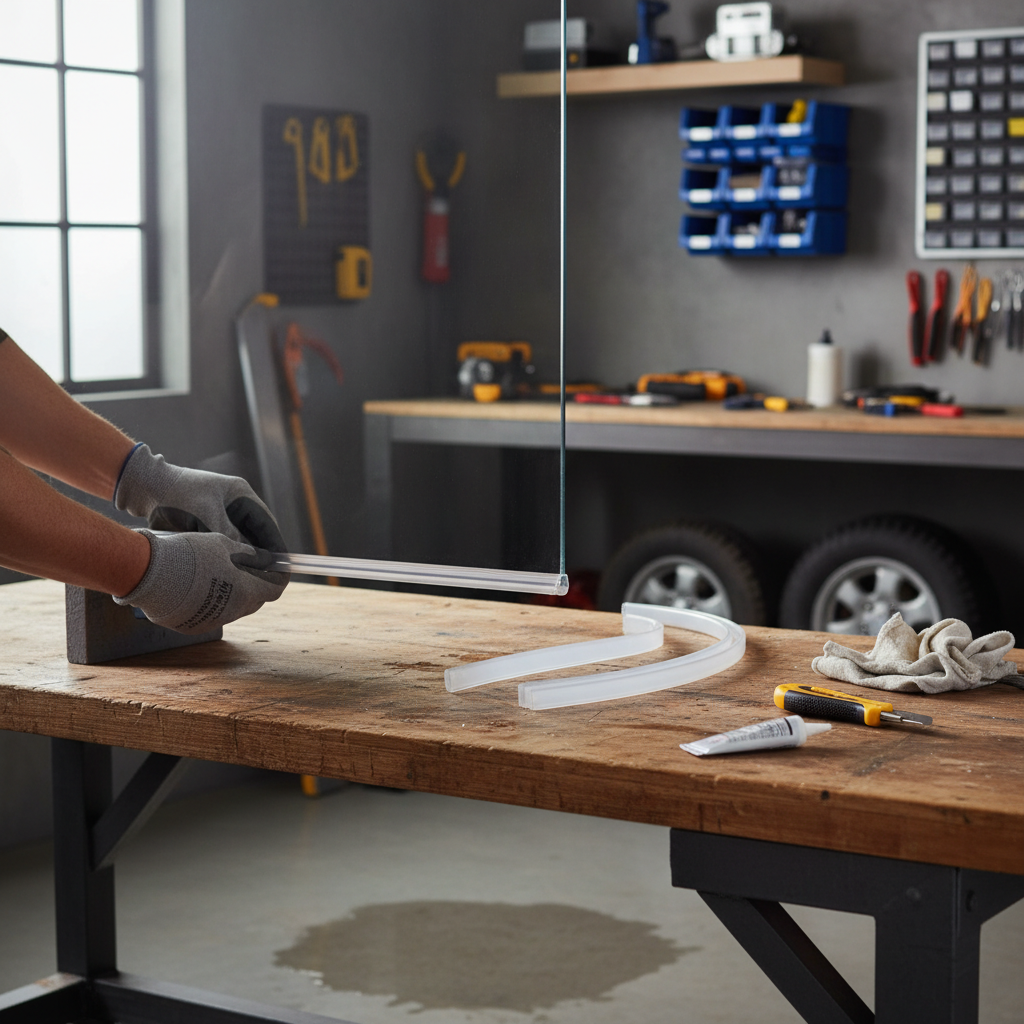
- Action: With the seal dry-fitted, use a felt-tip marker to mark the exact length needed. It should fit snugly between the wall and the hinge-side seal, leaving no gaps. Remove the seal and place it on a stable surface. Use a sharp utility knife with a new blade or specialized vinyl tubing cutters to make a clean, square cut. A hacksaw with a fine-tooth blade also works well. A straight, 90-degree cut is essential.
8. The Pro Silicone Trick for a Permanent Seal
- Action: Here is the secret to a leak-proof installation. Put on nitrile gloves. Run a very fine, continuous bead of clear, 100% mildew-resistant kitchen and bath silicone caulk inside the U-channel of the new sweep. You don’t need much—just a thin "worm" of silicone running down the center of the channel. This will bond the sweep to the glass, filling any microscopic imperfections and preventing water from ever getting between the glass and the seal itself.
9. Install the New Seal Immediately
- Action: While the silicone is wet, align the seal and firmly push it up onto the bottom of the glass door. Start at one end and work your way to the other, ensuring it is fully seated along the entire length. You should see a tiny amount of silicone squeeze out, which confirms a good bond.
10. Tool the Joints and Clean Up
- Action: Use a caulk finishing tool or a wet fingertip to smooth the tiny bead of squeezed-out silicone for a clean, invisible finish. At the corners where the new bottom sweep meets the vertical wall jamb or hinge seal, apply a small, precise dab of silicone to close that tiny triangular gap where leaks often begin. Immediately wipe away any excess or smeared silicone using a lint-free cloth dampened with denatured alcohol.
11. CURE! Do Not Skip This.
- Action: Patience is a virtue. Do not use the shower for at least 24 hours. The silicone needs to fully cure to form a durable, waterproof bond. Using the shower prematurely will wash away the uncured silicone and ruin your work. Check the silicone manufacturer’s instructions for exact cure times.
12. Test Your Work
- Action: After the 24-hour cure time, it’s the moment of truth. Turn on the shower and aim the water directly at the inside of the door and the new seal. Let it run for several minutes. Step out and inspect your floor. It should be perfectly dry.
Common Causes
- Incorrect Seal Profile: The #1 cause. The replacement sweep's channel is too wide for the glass (e.g., 1/2" sweep on 3/8" glass), leaving a loose fit.
- Backward Installation: The drip rail is installed facing the bathroom floor, effectively creating a gutter that channels water out of the shower.
- Degraded Material: The original vinyl seal has become hard, brittle, cracked, or permanently compressed from age and cleaning chemicals, losing its flexibility.
- Gaps at Corners: The bottom sweep is cut too short, leaving a small gap at one or both ends where it meets the vertical seals or wall.
- Clogged Weep Holes: In some T-slot designs, the bottom metal channel has tiny weep holes to let water out. If these get clogged with soap scum, water can back up and overflow.
- Improperly Sloped Curb: This is a more serious installation issue. The shower curb (threshold) should have a slight slope (approx. 1/8" per foot) into the shower, so gravity naturally pulls water toward the drain. If it’s level or sloped outward, water will pool against the door and try to find a way out.
Common Mistakes
- Guessing the Glass Thickness: Not using calipers or a precise ruler to measure the glass, resulting in buying the wrong size replacement seal.
- Ignoring the Drip Rail Direction: Rushing the installation and facing the all-important drip rail outwards instead of inwards.
- Not Cleaning the Glass: Pushing a new seal over a dirty, scum-covered glass edge, leading to a poor grip and immediate failure.
- Cutting the Seal Too Short: Creating gaps at the ends of the door that are prime leak paths.
- Skipping the Corner Seal: Failing to apply a small dab of silicone where the horizontal sweep meets the vertical jambs.
- Impatience: Using the shower before the silicone sealant has had a full 24 hours to cure, washing away the seal before it can set.
Cost & Time Breakdown
| Task | DIY Cost | Pro Cost | Time (DIY) |
|---|---|---|---|
| Diagnosis & Measurement | $0 | $85 - $150 (Service Call) | 20 minutes |
| Purchase New Seal & Silicone | $25 - $60 | Included in parts | 30 minutes (shopping) |
| Removal & Deep Cleaning | $5 (for vinegar/alcohol) | Included in labor | 45 minutes |
| Installation, Sealing & Curing | $0 | $100 - $200 (labor) | 30 minutes (install) + 24hr cure |
| Total | $30 - $65 | $185 - $350 | ~1.5 hours + Cure Time |
Tips & Prevention
- Squeegee After Every Use: Use a squeegee on the glass door after every shower. This drastically reduces the amount of water that sits on the seal, prolonging its life.
- Gentle Cleaning Only: Clean the seal weekly with a soft brush and a gentle, non-abrasive cleaner. Harsh chemicals can make the vinyl brittle prematurely.
- Aim the Shower Head Correctly: Position your shower head so the primary spray is directed away from the door and seams as much as possible.
- Annual Inspection: Once a year, inspect the full length of the seal. Look for any signs of cracking, discoloration, or hardening. If it feels stiff and not pliable, it’s time to replace it before it starts leaking.
- Buy a Spare: These seals are inexpensive. Once you confirm the correct size and profile, buy a second one to have on hand for a quick future replacement in a few years.
When to Call a Professional
While replacing a bottom sweep is a very manageable DIY project, there are situations where the problem is beyond a simple seal swap. You should call a professional glazier or bathroom contractor if:
- You have meticulously replaced the seal twice, following all instructions, and the leak persists. This points to a different issue.
- You notice the shower curb (threshold) itself is cracked or has crumbling grout lines.
- Water seems to pool against the door on the inside, indicating the curb may be improperly sloped away from the drain.
- The glass door itself is loose, sagging, or doesn’t close properly. The hinges may need adjustment or the entire door may need to be reset, which is a job that requires specialized skills to avoid shattering the glass.
- You see signs of water damage outside the shower, such as soft drywall, discolored baseboards, or a spongy feeling in the floor. This means the leak has been happening for a while and you may have subfloor damage that needs to be addressed by a general contractor before any cosmetic fixes are made. Trying to fix a major installation flaw with more caulk will only hide the problem and lead to more extensive damage.
Related Articles
Keep troubleshooting with these hand-picked guides from FixlyGuide:
- That Peeling Caulk Hides a $2,000 Mistake. Here's the Fix. — Stop re-caulking your shower every year. Discover the professional method, from meticulous prep to the right materials, for a waterproof ba…
- Your New Faucet Leaks at the Base? The 50-Cent O-Ring Fix — That brand new kitchen faucet shouldn't be dripping at the base; here's the surprisingly common reason why it's happening and the specific…
- This Caulking Trick Stops Bathtub Mold & Cracks for Good — Tired of cracked, moldy caulk around your tub? Our guide reveals the pro secrets to a durable, waterproof seal. Learn the right material to…
- Swap Your Leaky Faucet This Weekend, No Plumber Needed — Ready to stop that annoying drip and give your kitchen an instant upgrade? This guide shows you how to replace a kitchen faucet yourself. W…
- The Giant Drywall Hole: 3 Hidden Causes (And The Best Permanent Fix) — Don’t just slap a patch on a large drywall hole—understand the common causes and learn the most durable repair method homeowners can tackle.
- The $2 Trick to Stop a Running Toilet (Plumbers Don't Want You to Know) — Discover the simple, two-dollar fix that can stop your running toilet in minutes, saving water and preventing costly repairs.
Frequently asked questions
Can I just use any clear caulk from the hardware store?+
No. You must use a 100% silicone sealant that is specifically rated for kitchens and baths. These formulas contain mildewcides that prevent the growth of black mold and mildew in the damp, humid environment of a shower.
How often should I replace my frameless shower door seal?+
As a general rule, inspect it annually and plan to replace it every 2-5 years. In areas with hard water, or if you use harsh cleaning chemicals, the seal may become brittle and fail sooner. If it looks yellowed, cracked, or feels stiff, it's time to replace it.
My shower door swings both in and out. Which way should the drip rail face?+
The drip rail must always face the INSIDE of the shower, toward the drain. Its sole purpose is to catch water running down the glass and direct it back into the shower pan. Even if you primarily swing the door outward, the seal must be installed to manage water on the inside.
The gap at the bottom of my door seems too big for a standard seal. What can I do?+
If the gap is larger than 3/4 inch, a standard sweep may not be enough. You may need to have a professional glazier install a slightly taller threshold or dam onto your curb. This provides a taller surface for the bottom sweep to seal against. This is not typically a DIY job as it involves drilling into the shower curb.
Discussion
Loading comments…