Tools & materials you'll need
Affiliate links- Amazon1x3 or 2x4 lumber scrapsapprox. 4-6 linear ft
- AmazonDrywall screws1 lb box, 1-1/4 inch
- AmazonDrywall sheets1 small sheet (2'x2' or similar) · Match thickness of existing wall
- AmazonSelf-adhesive fiberglass mesh drywall tape1 roll
- AmazonAll-purpose joint compound (drywall mud)1 quart or 1/2 gallon tub
As an Amazon Associate FixlyGuide earns from qualifying purchases — at no extra cost to you. Prices and availability are accurate as of publication and subject to change.
Quick Answer
Repairing a large drywall hole (larger than 6 inches in diameter) requires more than just spackle; it typically involves cutting out the damaged section, adding wood backing for support, and installing a new piece of drywall. This ensures a strong, seamless repair that won't sag or crack over time, unlike simple mesh patches. The process involves precise cuts, secure backing, and careful finishing to blend the repair invisibly with the surrounding wall.
The Problem
A large hole in drywall, whether from an accidental impact, a plumbing leak, or an old fixture removal, isn't just an eyesore; it compromises the integrity of your wall and can allow drafts, pests, or moisture to penetrate. Unlike small nail holes or minor cracks, a significant breach—anything over 6 inches in diameter—cannot be effectively resolved with simple patching compounds or adhesive mesh patches alone. These quick fixes lack the structural support needed for a lasting repair on a larger scale, often leading to sagging, cracking, or an easily re-damaged area. Attempting to fill a substantial void with just spackle is like trying to build a bridge without a foundation; it will inevitably fail. Homeowners often underestimate the structural requirements for such repairs, leading to repeat fixes and increasing frustration. Addressing a large hole correctly means providing proper backing and integrating a new piece of drywall to match the existing wall plane, creating a repair that is both strong and aesthetically seamless.
How It Works
To properly repair a large drywall hole, the fundamental principle is to replace the missing section with a new piece of drywall, securely fastened to the wall's internal structure. Since a large hole likely extends beyond the nearest stud, you can't simply screw a new piece of drywall directly into existing framing. This is where backing material comes in. typically small pieces of lumber (1x3 or 2x4 scrap wood). These backing pieces are installed behind the existing drywall, overlapping the edges of the hole, and secured to the inside surface of the existing drywall with drywall screws. This creates a stable subsurface to which the new patch panel can be securely attached. Think of it as creating new (but hidden) mini-studs around the perimeter of your hole.
Once the backing is in place, a precisely cut new piece of drywall, matching the thickness of your existing wall, is screwed into these backing strips. This physically bridges the gap and provides a solid surface. After the patch is secure, the seams between the new patch and the old wall are taped and mudded. Drywall tape, usually paper or fiberglass mesh, reinforces these joints and prevents cracking. Multiple thin coats of joint compound (drywall mud) are applied, feathered out, and sanded smooth. This multi-layer process, from secure backing to careful finishing, ensures the patch becomes an indistinguishable part of the surrounding wall, resisting future damage and maintaining the wall's structural and aesthetic integrity.
Step-by-Step Fix
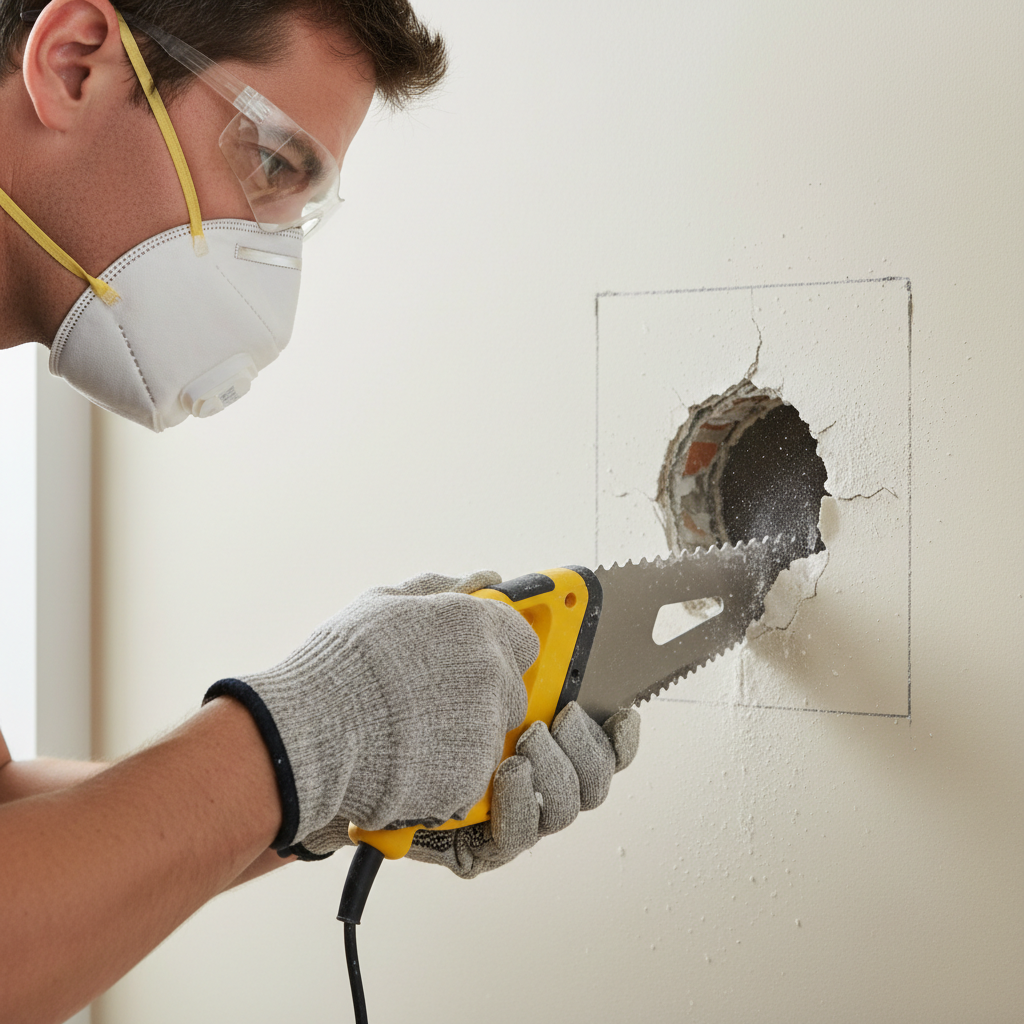
Safety First! Before starting any drywall repair, especially if you're working near electrical outlets or plumbing lines, ensure the power is off to that circuit at the breaker. Always wear a dust mask and safety glasses when cutting or sanding drywall.
-
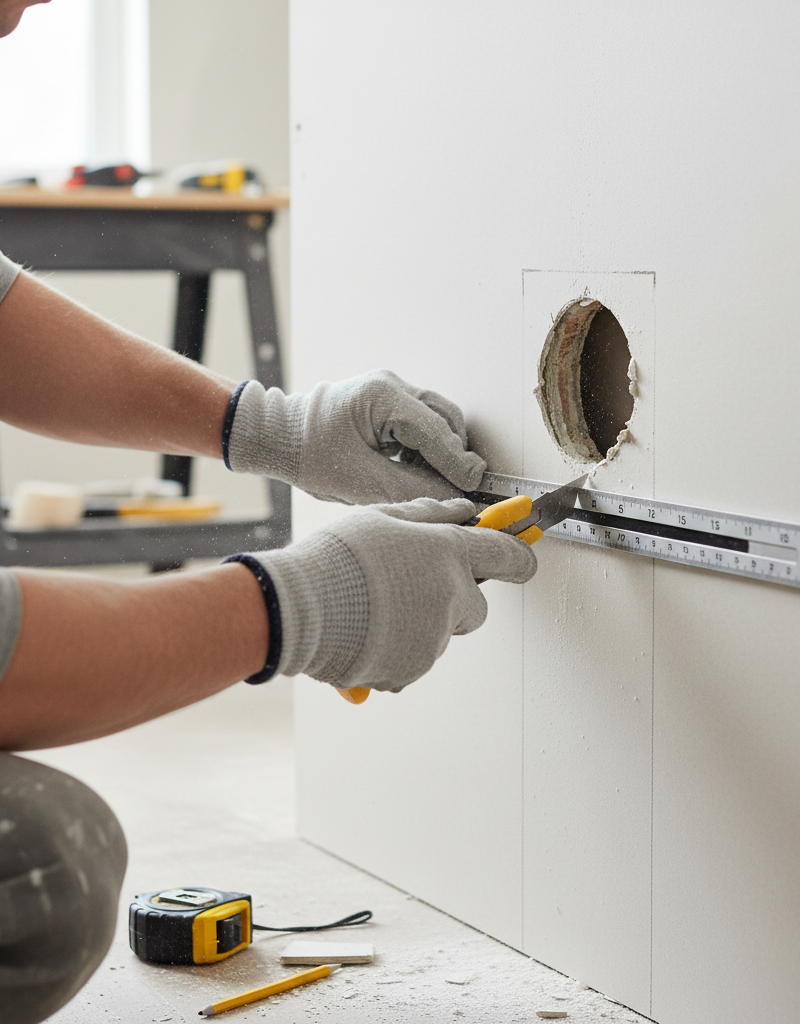
Prepare the Opening – Clear the surrounding area and create a clean, square or rectangular hole. Start by carefully trimming any loose or damaged drywall around the hole. Using a utility knife or a drywall saw, cut the existing hole into a perfect square or rectangle. This makes it easier to measure and cut your patch panel. Extend your cuts slightly beyond the damaged area to ensure you're working with solid, intact drywall. Remember to make sure not to cut through any electrical wires or pipes that may be behind the wall.
-
Measure and Cut Backing Strips – Create a secure foundation for your patch. Measure the length of each side of the square or rectangular opening. Cut four pieces of 1x3 or 2x4 lumber scrap wood that are about 6-8 inches longer than each side. These will serve as your backing. The extra length allows them to extend beyond the hole on both sides, providing a surface to screw into the existing drywall.
-
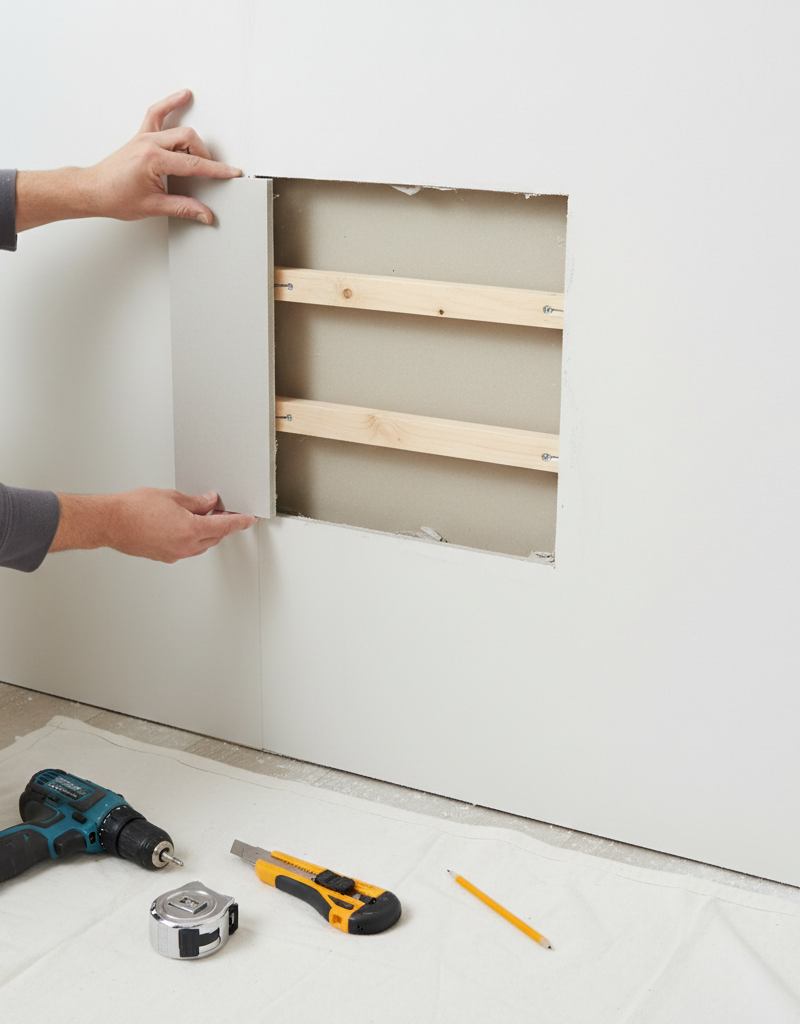
Install Backing Strips – Securely anchor the new patch. Insert two of the backing strips behind the top and bottom edges of the opening. Hold them firmly in place so they bridge the opening and overlap the existing drywall by about 3-4 inches on each side. Drive two drywall screws through the existing drywall and into each end of the backing strip. Then, install the remaining two backing strips on the left and right sides, screwing them into place through the existing drywall. Ensure all backing strips are flush with the existing drywall surface and form a sturdy frame behind the hole.
-
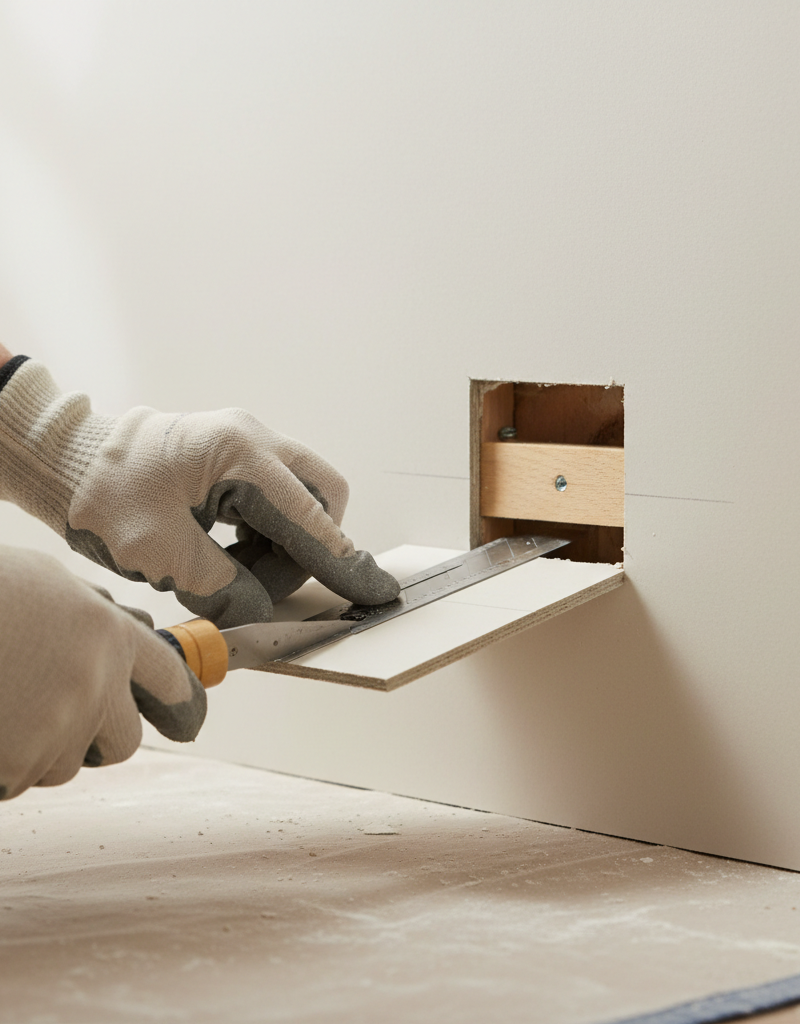
Measure and Cut the Patch Panel – Create a perfectly fitting replacement piece. Carefully measure the exact dimensions of your now-squared or rectangular hole. Transfer these measurements to a new piece of drywall of the same thickness as your wall (typically 1/2-inch or 5/8-inch). Use a utility knife and a straightedge to score the drywall face, then snap it along the score line, and finally cut the paper backing. Test fit the patch in the opening; it should fit snugly but not forcefully.
-
Install the Drywall Patch – Secure the new piece into your prepared backing. Place the freshly cut drywall patch into the opening. Make sure it sits flush with the existing wall surface. Drive drywall screws through the new patch and into the backing strips you installed. Space the screws about 6-8 inches apart around the perimeter of the patch. Don't over-tighten the screws, as this can break the paper face of the drywall.
-
Apply Drywall Tape – Reinforce the seams to prevent future cracks. Apply self-adhesive fiberglass mesh tape directly over all four seams where the new patch meets the old drywall. Alternatively, you can use paper tape embedded in a thin layer of joint compound (skip ahead slightly, apply mud first, then embed paper tape, then thin coat over tape). Ensure the tape is centered over the seam and adheres smoothly.
-
Apply First Coat of Joint Compound (Mud) – Begin filling and smoothing the seams. Using a 6-inch drywall knife, apply a thin, even coat of all-purpose joint compound over the taped seams and over the screw heads. Feather the edges of the compound out a few inches onto the existing wall. The goal for this coat is to fill the tape and screw depressions, not to make it perfectly smooth. Let this coat dry completely, which can take 4-24 hours depending on humidity.
-
Apply Second Coat of Joint Compound – Build up and refine the patch area. Once the first coat is dry, lightly sand any major ridges or bumps with fine-grit sandpaper (150-220 grit). Wipe off dust. Apply a second, slightly wider and thinner coat of joint compound using an 8-inch or 10-inch drywall knife. Feather the edges even further onto the wall. This coat further conceals the patch and smooths the transition. Let it dry completely.
-
Apply Third (Finish) Coat of Joint Compound – Achieve a professional, feathered finish. After the second coat is dry, lightly sand again. Apply a final, very thin and wide coat of joint compound, using a 10-inch or 12-inch drywall knife. This is your finish coat, so focus on making it perfectly smooth and blending it seamlessly with the surrounding wall. Feather the edges as wide as necessary, sometimes a foot or more from the patch seams, to avoid noticeable humps. Let it dry completely.
-
Final Sanding and Priming – Prepare for painting. Once the final coat is thoroughly dry, perform a comprehensive sanding using a sanding pole or block with fine-grit sandpaper (220 grit or higher). Move in circular motions and use a bright light to check for imperfections. Dust thoroughly with a damp cloth. Apply a high-quality PVA (polyvinyl acetate) drywall primer to the entire repaired area. This seals the new mud and ensures uniform paint absorption, preventing
Frequently asked questions
How large of a hole can you patch in drywall?+
You can patch holes of almost any size in drywall, but the method changes significantly. Small holes (under 2 inches) can use spackle. Medium holes (2-6 inches) might use adhesive mesh patches. Large holes (over 6 inches or spanning between studs) absolutely require cutting out the damaged section, adding wood backing, and installing a new piece of drywall for a durable, permanent repair.
What happens if you don't use backing for a large drywall patch?+
If you don't use proper backing (like wood strips) for a large drywall patch, the new piece of drywall will lack structural support. This will almost certainly lead to the patch cracking, sagging, or pushing inwards over time. It won't integrate properly with the surrounding wall and will likely fail prematurely, requiring you to re-do the repair.
Can I use tape and joint compound alone for a large hole?+
No, using only tape and joint compound for a large hole in drywall is a common mistake and will not work. Tape and mud are designed to reinforce seams and smooth transitions, not to span large gaps or provide structural support. Without a solid backing and a new piece of drywall, the compound will crack and sag as it dries, leaving a weak and unsightly repair.
How long does drywall mud take to dry between coats?+
Drywall mud typically takes between 4 to 24 hours to dry between coats, depending on the type of compound used, the thickness of the application, and environmental factors like temperature and humidity. Always ensure each coat is completely dry before sanding or applying the next coat to prevent cracking and ensure proper adhesion.
Discussion
Loading comments…