Tools & materials you'll need
Affiliate linksAs an Amazon Associate FixlyGuide earns from qualifying purchases — at no extra cost to you. Prices and availability are accurate as of publication and subject to change.
Quick Answer
A slow-filling toilet tank is a common and often frustrating issue, but it's usually not a sign of a major plumbing disaster. The primary culprits are almost always a restricted fill valve, a kinked or partially closed supply line, or mineral buildup at the water inlet. Fortunately, most of these problems are straightforward to diagnose and fix yourself with minimal tools, restoring your toilet's efficient flushing cycle.
The Problem
You've flushed your toilet, and while the bowl empties as expected, the tank seems to take an eternity to refill. You might notice a weak stream of water entering the tank, or perhaps it starts strong and then dwindles to a trickle. This slow refill isn't just an annoyance; it means you have to wait longer between flushes, can indicate an underlying issue that might worsen over time, and could even contribute to a less efficient flush if the tank isn't filling to its optimal level. Ignoring a slow-filling tank won't make it go away, and in some cases, a severely restricted flow can lead to your toilet running constantly as the fill valve struggles to reach the shut-off point.
How It Works
To understand why your toilet tank fills slowly, it helps to know how a standard toilet's refilling mechanism operates. When you flush, the water in the tank rushes into the bowl, creating the siphon action that clears waste. As the tank empties, the float (either a cup-style or a ball-on-arm float) drops with the water level. This drop in the float's position triggers the fill valve to open, allowing fresh water from your home's supply line to enter the tank.
The fill valve itself is a clever piece of engineering. Inside, there's a diaphragm or piston that responds to water pressure. When the float opens the valve, water enters through a small inlet at the bottom of the toilet tank, then travels up a tube inside the fill valve assembly. A portion of this water (typically a small tube leading from the top of the fill valve) also diverts to the overflow tube in the tank, refilling the toilet bowl to its proper level simultaneously. As the tank fills, the float rises. Once it reaches a predetermined point (usually marked on the inside of the tank or adjustable), the float pushes against a lever or cam within the fill valve, which in turn closes the diaphragm or piston, shutting off the water flow.
Any obstruction at the point where water enters the fill valve, a crimped supply line, or a faulty fill valve mechanism can impede this process, leading to the slow refill you're experiencing. Sediment, mineral deposits (especially in hard water areas), or even small debris from your water supply can accumulate in these narrow passages, reducing the flow rate significantly.
Step-by-Step Fix
Safety First: Before starting any plumbing work, locate your toilet's shut-off valve (usually on the wall or floor behind the toilet) and turn it clockwise to completely stop the water supply. Flush the toilet to empty the tank as much as possible.
-
Inspect the Supply Line and Shut-Off Valve — Check for kinks and full opening
- Begin by visually inspecting the flexible water supply line connecting the wall valve to the toilet tank. Ensure there are no sharp bends, kinks, or signs of damage. A kinked line can severely restrict water flow. Gently straighten any kinks you find.
- Next, verify that the shut-off valve itself is fully open. Sometimes these are accidentally partially closed. Turn the valve counter-clockwise as far as it will go to ensure maximum water flow. If the valve feels stiff or doesn't seem to open fully, it might be faulty and restricting flow. If this is the case, you may need a plumber to replace the main shut-off valve for the toilet, but this is less common than other issues.
-
Test Water Pressure at the Fill Valve — Pinpoint low pressure source
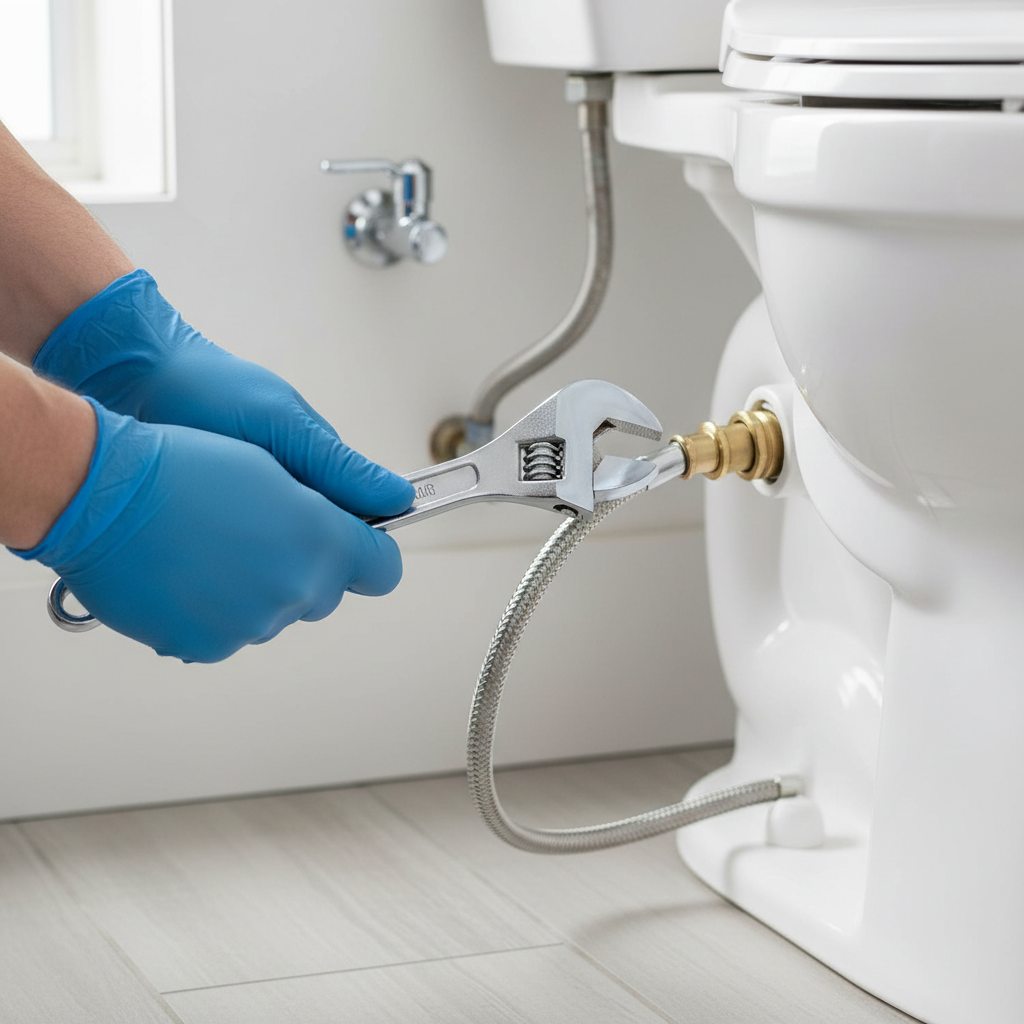
- With the water turned off at the toilet's shut-off valve and the tank empty, disconnect the supply line from the bottom of the toilet tank. Place the end of the supply line into a bucket.
- Point the end of the supply line securely into the bucket and slowly turn the toilet's shut-off valve counter-clockwise to open it.
- Observe the strength of the water stream filling the bucket. If the stream is strong and consistent, your house's water pressure is likely fine, and the problem lies within the toilet. If the stream is weak, the issue might be with your home's overall water pressure or a problem with the toilet's shut-off valve itself.
- If water pressure is low: Test another faucet in your house. If it's also low, the problem is systemic (e.g., municipal issue, main house shut-off partially closed, pressure regulator fault); contact a plumber. If only the toilet's pressure is low, and the supply line test was weak, consider replacing the toilet's shut-off valve.
- Turn off the water supply at the toilet's shut-off valve once again before proceeding.
-
Clean or Replace the Fill Valve Filter — Remove sediment buildup
- Most fill valves have a small filter screen or washer at the base where the supply line connects. This is a common place for sediment and mineral deposits to accumulate.
- Unscrew the large plastic nut holding the fill valve to the bottom of the tank (if replacing the valve) or usually a smaller nut/clip at the very bottom where the supply line connects (if just accessing the filter). For some fill valve designs, the filter is located inside the valve stem and requires disassembling the top cap.
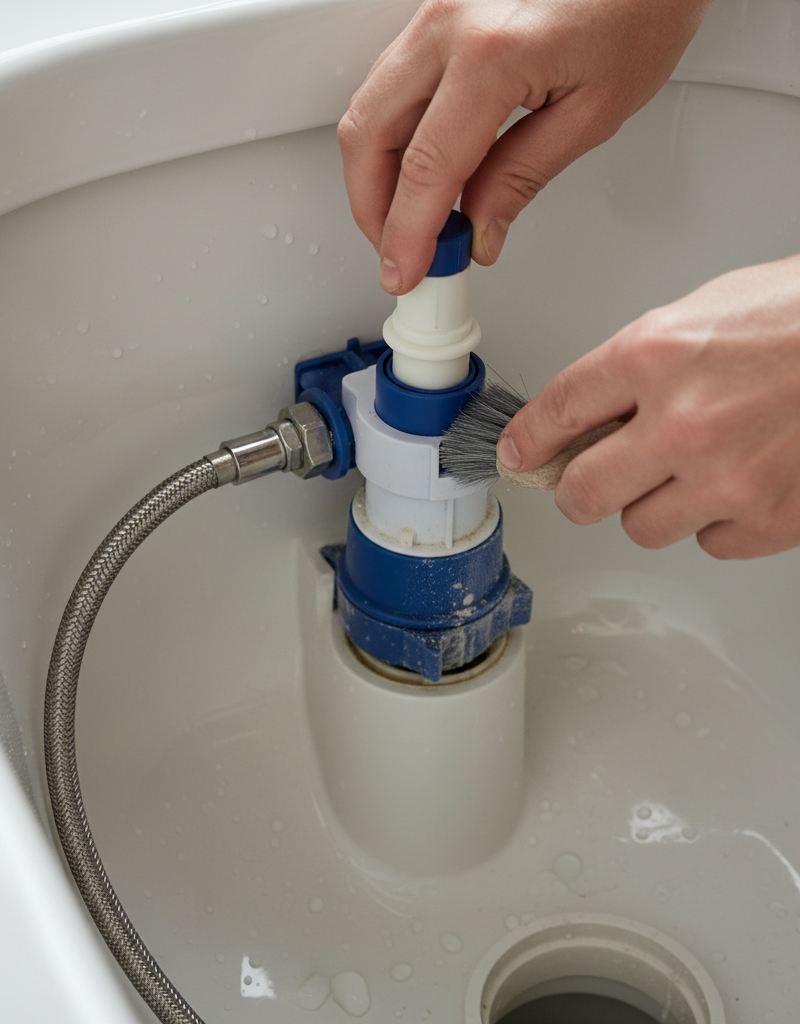
- Carefully remove the filter screen. Rinse it thoroughly under running water, scrubbing gently with an old toothbrush if necessary to remove any debris or mineral buildup. If the screen is damaged or heavily caked, replace it.
- If you have a Fluidmaster 400A or similar: The filter screen is often part of the black rubber washer that sits at the inlet. Clean this washer. For deeper clogs within the valve itself, you might need to proceed to the next step.
- Reassemble and reconnect the supply line. Turn the water on and test.
-
Disassemble and Clean the Fill Valve Head (if applicable) — Clear internal blockages
- If cleaning the base filter didn't work, the blockage might be further up inside the fill valve's head assembly.
- Turn off the water and flush the toilet.
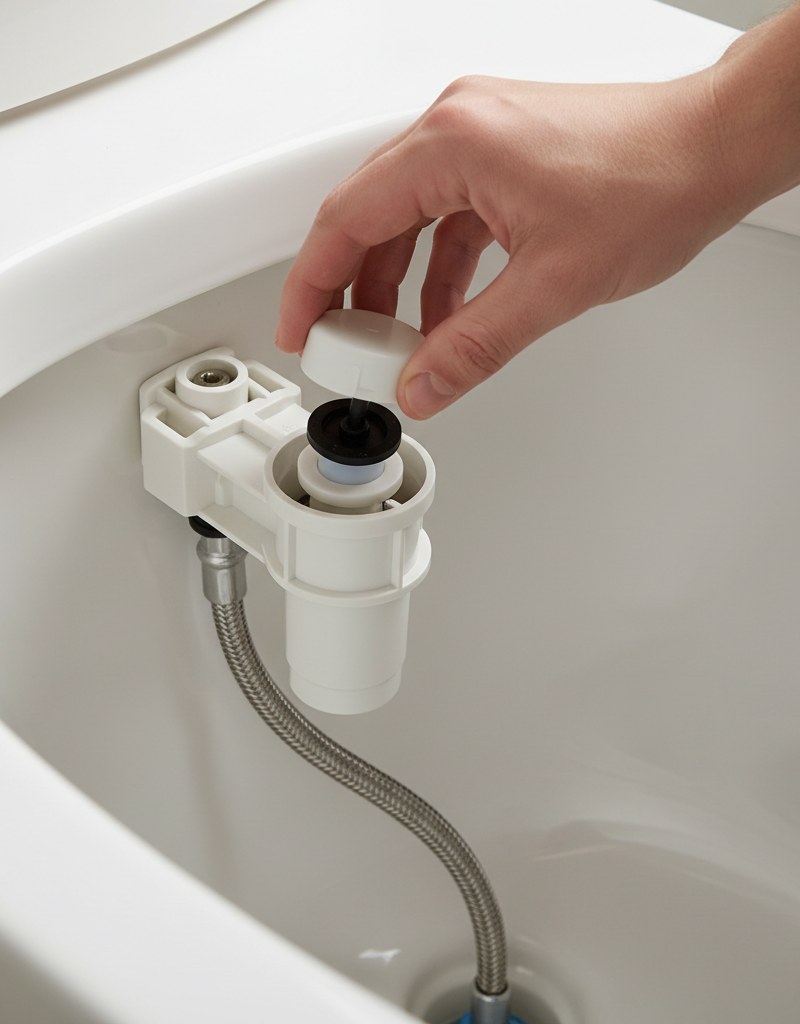
- Most modern fill valves (like the popular Fluidmaster 400A) have a removable cap. Hold the float cup down gently and twist the top cap of the fill valve counter-clockwise about an eighth of a turn, then lift it off. Take note of the orientation of the rubber gasket or diaphragm beneath it.
- Remove the rubber diaphragm. Inspect it for tears, stiffness, or mineral buildup. Clean any visible debris.
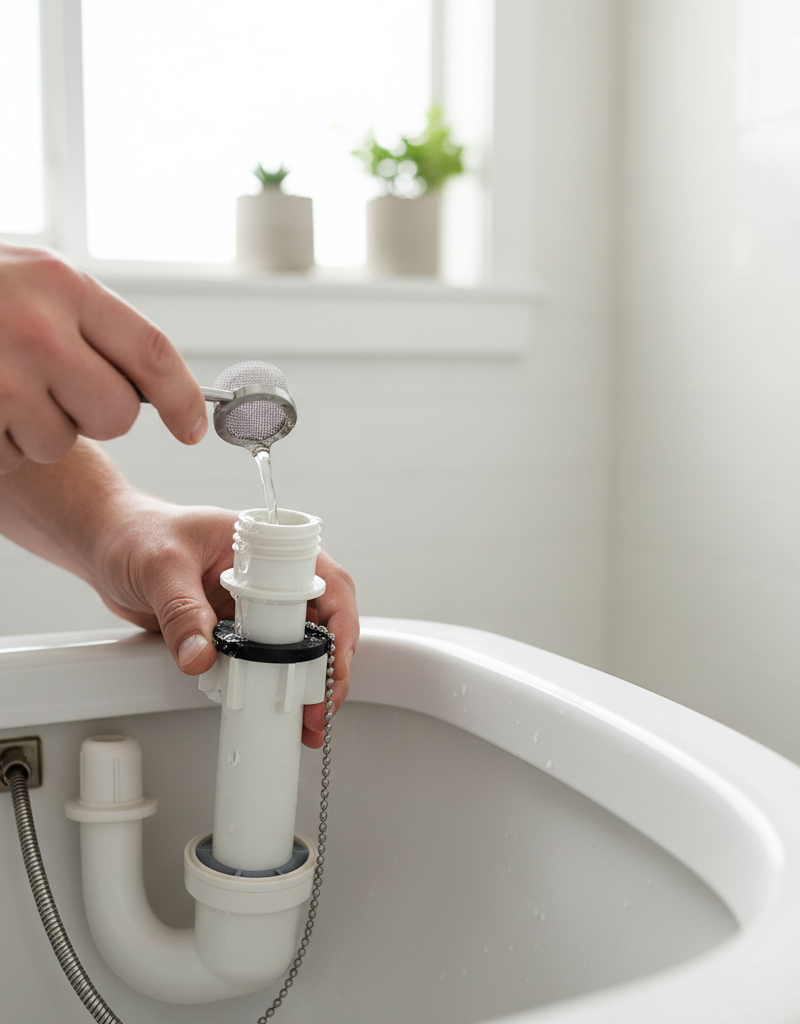
- With the cap and diaphragm removed, place a cup or small bucket over the exposed valve shaft (to contain splashing) and briefly turn the water supply on for 1-2 seconds. This will flush out any loose sediment from the valve's inner workings.
- Turn the water off. Reinstall the diaphragm, making sure it's seated correctly. Replace the cap by aligning the tabs and twisting clockwise to lock it.
- Turn the water back on and observe the fill rate.
-
Adjust the Fill Valve Height (if too low) — Ensure proper water level and float movement
- While not a direct cause of slow filling, an incorrectly set fill valve can lead to the tank not filling completely, which some users might confuse with slow filling.
- Ensure the float cup or ball-on-arm is not hitting the tank walls or other internal components, which could impede its movement.
- Most fill valves have an adjustment rod or a clip that allows you to raise or lower the float. Adjust it so the water level in the tank reaches about ½-1 inch below the top of the overflow tube. This ensures the tank fills to its optimal capacity.
-
Replace the Fill Valve — Last resort for stubborn issues
- If you've cleaned everything, confirmed good water pressure from the supply line, and your toilet is still filling slowly, the fill valve itself is likely faulty and needs replacement. The internal mechanisms can wear out, or microscopic clogs can persist even after cleaning.
- Tools: New fill valve kit (universal type works for most), adjustable wrench, sponge/towel.
- Process: Turn off the water supply and flush the toilet to empty the tank. Disconnect the supply line from the bottom of the fill valve. Use an adjustable wrench to loosen and remove the large plastic nut securing the old fill valve to the tank. Lift the old valve out. Insert the new fill valve, making sure the washer is on the outside bottom of the tank. Hand-tighten the new nut, then gently tighten with a wrench (don't overtighten). Reconnect the supply line. Turn the water on and check for leaks. Adjust the water level as needed by raising or lowering the float cup.
Common Causes
- Clogged Fill Valve Filter/Inlet: This is by far the most common cause. Sediment, rust particles, or mineral deposits from your water supply accumulate at the small sieve or rubber washer where the water enters the fill valve, restricting flow.
- Partially Closed or Faulty Shut-Off Valve: The small valve on the wall behind the toilet might not be fully open, or its internal components could be corroded, preventing full water flow.
- Kinked or Damaged Supply Line: The flexible hose connecting the wall valve to the toilet tank can get kinked, especially if the toilet has been moved or pushed against the wall, restricting water flow.
- Low Household Water Pressure: While less common for just one toilet, systemic low water pressure in your home can obviously lead to slow filling, especially if other fixtures are also affected.
- Worn or Damaged Fill Valve Diaphragm/Piston: Over time, the internal rubber components or plastic parts within the fill valve can wear out, become stiff from mineral deposits, or fail, preventing the valve from opening fully.
Common Mistakes
- Ignoring the Supply Line: Many DIYers jump straight to the fill valve without first checking the flexible supply line for kinks or the shut-off valve for full opening. This is a quick inspection that can save you a lot of time.
- Overtightening the Supply Line or Fill Valve Nut: These are typically plastic or brass fittings. Overtightening can strip threads, crack plastic, or damage rubber washers, leading to leaks and bigger problems. Hand-tighten, then give a quarter-turn with a wrench.
- Failing to Flush Out the Valve: When cleaning an internal fill valve, briefly turning the water on with the cap removed (and a cup over it!) helps flush out larger debris that might not be visible or reachable.
- Not Checking for Systemic Low Pressure: If the water flow from the supply line into a bucket is weak, cleaning the toilet's fill valve won't solve the core problem. Always eliminate systemic low pressure as a cause.
- Not Replacing Old Washers/Gaskets: When disassembling a fill valve or supply line, if any rubber washers or gaskets look stiff, cracked, or deformed, replace them. They are critical for a watertight seal.
- Using Harsh Cleaners: Avoid pouring chemical drain cleaners or harsh descalers into your toilet tank. These can damage the rubber and plastic components of your toilet's flushing mechanism over time.
Cost & Time Breakdown
| Task | DIY Cost | Pro Cost | Time |
|---|---|---|---|
| Inspect line & valve | $0 | $50–$100 | 5–10 min |
| Clean fill valve filter | $0–$5 | $100–$150 | 10–20 min |
| Clean fill valve head | $0 | $100–$150 | 15–30 min |
| Replace toilet shut-off valve | $10–$25 | $150–$250 | 30–60 min |
| Replace fill valve | $15–$30 | $150–$250 | 30–60 min |
| Diagnose low house pressure | $0 (DIY) | $150–$300+ | 15–30 min (DIY) |
Tips & Prevention
- Regular Visual Inspections: Periodically check the waterline at the top of the overflow tube and listen for any running water. A healthy toilet is a quiet toilet once it's filled. Inspect the supply line for kinks.
- Annual Fill Valve Cleaning: If you live in an area with hard water or older pipes, consider annually turning off the water, emptying the tank, and at least cleaning the fill valve's inlet screen. This proactive step can prevent significant sediment buildup.
- Install a Whole-House Water Filter: For homes with consistently 'dirty' or hard water, a whole-house water filter can significantly reduce sediment and mineral buildup in all your plumbing fixtures, including toilets. While a larger upfront investment, it protects all your appliances.
- Replace Old Flexible Supply Lines: If your toilet supply line is old, braided steel with rust, or plastic that feels brittle, consider replacing it before it fails. They typically cost under $10 and are easy to change during fill valve replacement.
- Don't Use In-Tank Cleaners: Drop-in toilet tank cleaners that turn the water blue can contain harsh chemicals that erode the rubber seals and plastic parts inside your toilet, leading to leaks and component failure. Flush often and clean the bowl manually.
- Listen to Your Toilet: Pay attention to any changes in flushing sound or tank refill time. Your toilet will often
Related Articles
Keep troubleshooting with these hand-picked guides from FixlyGuide:
- The 4 Hidden Reasons Your Toilet Tank Fills Slowly (And How to Fix Them in Under an Hour) — A toilet tank that fills slowly is a common, annoying plumbing problem, often caused by easily fixable issues within the fill valve or wate…
- The 3 Hidden Reasons Your Toilet Tank Fills Slowly (And How to Fix Each) — Discover the common culprits behind a slow-filling toilet tank, from crucial valve issues to subtle obstructions, and learn how to restore…
- The Secret Culprit Behind Your Slow Toilet Fill (It's Not Clogs!) — A slow-filling toilet tank is usually caused by issues with the fill valve, not clogs, affecting both water pressure and flush efficiency.…
- The 30-Minute Trick to Stop Your Single-Handle Faucet Drip (And What Plumbers Charge if You Don't) — A persistent drip from a single-handle faucet often signals a worn-out cartridge, a common issue homeowners can fix with basic tools in und…
- The 30-Second Trick When Your Garbage Disposal Hums (But Won't Spin) — When your garbage disposal hums but refuses to spin, it's usually a simple fix involving a jammed flywheel, easily remedied with basic tool…
- The #1 Mistake Homeowners Make When Their Dryer Stops Drying (And How to Fix It Free) — If your dryer is taking too long to dry clothes, the most common culprit is a clogged vent, which can be easily fixed with simple tools.
Get the print-ready PDF of this guide
A clean, ad-free, printable version you can keep on your phone or pin to the workshop wall. We'll also send occasional weekly tips matched to your home situation.
- Print-optimized layout
- Tools, materials & every step included
- Unsubscribe anytime
Frequently asked questions
Why is my toilet tank filling so slowly?+
The most common reasons for a slow-filling toilet tank are a clogged fill valve filter, a partially closed or faulty shut-off valve, a kinked water supply line, or in rarer cases, low overall household water pressure.
Can I fix a slow-filling toilet myself?+
Yes, in most cases, a slow-filling toilet is a straightforward DIY repair. You can typically diagnose and fix the issue by checking and cleaning the fill valve, inspecting the supply line, and verifying the shut-off valve is fully open, all with basic tools.
How do I clean the fill valve in my toilet?+
To clean the fill valve, turn off the water, disconnect the supply line, and access the small filter screen at the base of the valve. Rinse away any sediment. For internal clogs, you may need to remove the top cap of the fill valve and briefly flush out debris by turning the water on for a second or two (with a cup over the valve).
When should I replace the toilet fill valve instead of cleaning it?+
If you've thoroughly cleaned the fill valve's filter and internal components, checked the water supply line and shut-off valve, and the toilet still fills slowly, it's usually best to replace the entire fill valve. They are inexpensive and can wear out over time.
Could low water pressure in my house cause a slow-filling toilet?+
Yes, if your entire house is experiencing low water pressure, it will definitely affect your toilet's refill rate. However, if only the toilet is slow, the problem is more likely localized to the toilet's components rather than a systemic issue.
Discussion
Loading comments…