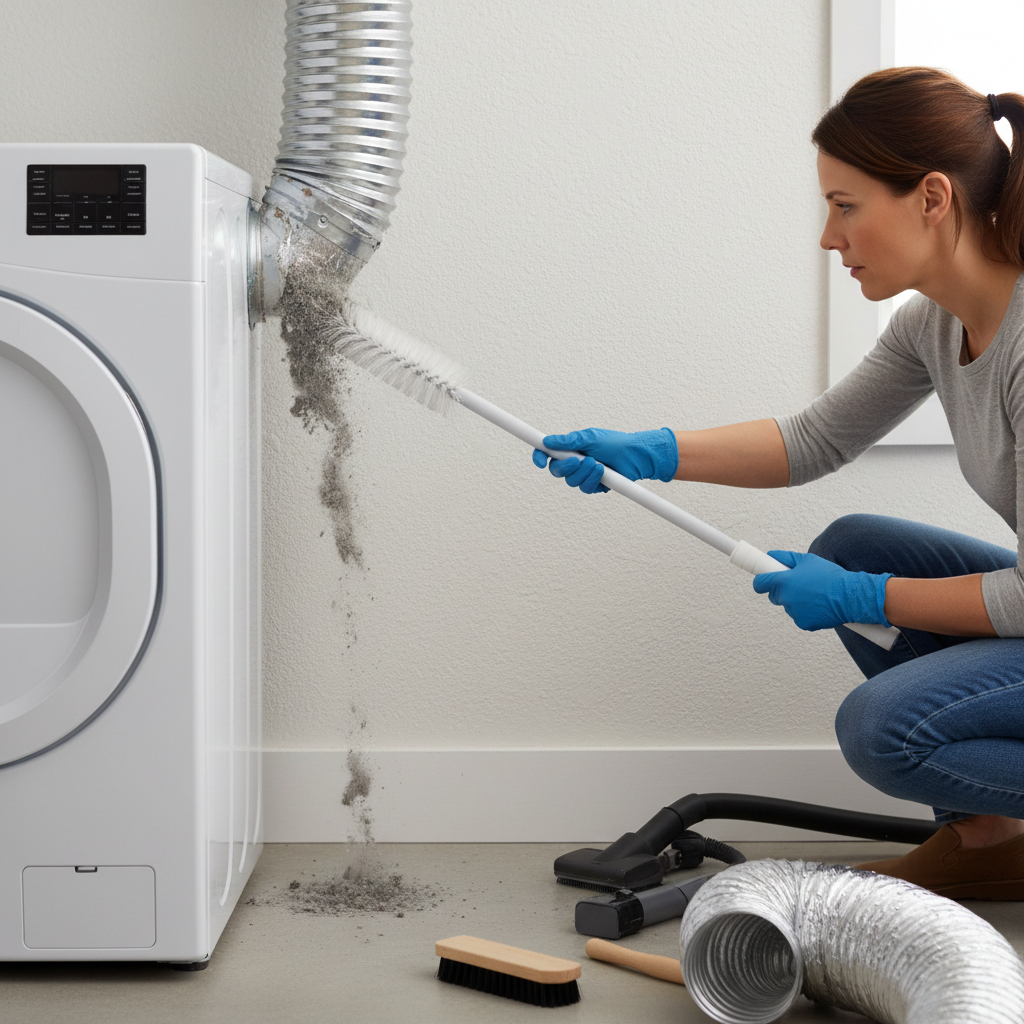
Tools & materials you'll need
Affiliate linksAs an Amazon Associate FixlyGuide earns from qualifying purchases — at no extra cost to you. Prices and availability are accurate as of publication and subject to change.
Quick Answer
Lint buildup is the leading cause of dryer fires and can drastically reduce your dryer's efficiency. Cleaning your dryer vent system involves disconnecting the dryer, meticulously removing lint from the dryer's internal connections, the flexible vent hose, and the rigid wall duct using a specialized dryer vent brush and a powerful vacuum. This essential maintenance should be performed at least once a year, or more frequently if you have a large household, pets, or notice signs of reduced drying performance, to ensure safety and optimal operation.
The Problem
Every year, thousands of house fires are attributed to clothes dryers, with lint accumulation being the primary culprit. When you run your dryer, hot, moist air is pushed through a ventilation system to the outside. This air carries tiny fibers of lint, which can easily get trapped within the dryer's exhaust ductwork, especially in the flexible transition hose behind the dryer or in elbows and bends within the wall duct. Over time, this lint builds up, creating a highly flammable fuel source. The dryer's heating element operates at high temperatures, and when combined with reduced airflow due to a clogged vent, the trapped lint can reach its ignition point, leading to a fire. Beyond the severe fire risk, a clogged vent also forces your dryer to work harder, consuming more energy, increasing drying times, and accelerating wear and tear on the appliance itself. Many homeowners underestimate the danger, often focusing only on cleaning the lint trap inside the dryer, while ignoring the much larger, hidden problem in the vent.
How It Works
Your clothes dryer functions by circulating hot air through tumbling clothes to evaporate moisture. This moisture-laden air, along with lint particles, is then expelled from the dryer drum and pushed through an exhaust port by a powerful fan, also known as a blower wheel. From the dryer's exhaust port, the hot, moist, lint-filled air travels through a transition duct, typically a flexible foil or semi-rigid aluminum hose, to a wall-mounted vent connection. From there, it enters the main dryer vent duct, which is usually a rigid metal pipe routed through walls, ceilings, or crawl spaces, eventually terminating at an exterior vent hood on your home's exterior wall or roof.
The efficiency of your dryer and, critically, its safety, depend on this entire pathway being clear and unobstructed. As the hot, humid air travels, lint particles inevitably escape the lint screen and adhere to the inner surfaces of the ductwork. Flexible ducts, with their corrugated interiors, are particularly prone to trapping lint. Similarly, sharp bends or long runs in rigid ducts can create areas where lint collects. When airflow is restricted by this buildup, the dryer's heating element can overheat because it can't efficiently dissipate the heat. The restricted airflow also keeps the hot, humid air trapped inside the dryer and the vent system for longer. This combination of trapped heat and dry, combustible lint creates a dangerous situation where the lint can ignite, often starting within the transition duct behind the dryer or at the first bend in the wall duct. The dryer's thermostat is designed to prevent overheating, but a severely clogged vent can overwhelm these safety mechanisms, especially if the lint ignites before the thermostat can react or if the heat is concentrated in a specific area of the vent.
Step-by-Step Fix
Safety First — Before you begin any work, unplug your dryer from the electrical outlet. For gas dryers, in addition to unplugging the electrical cord, you must turn off the gas supply valve, which is typically a yellow or red handle located on the gas line behind the dryer. Never work on a dryer with the power or gas supply connected.
- Pull the Dryer Out — Carefully pull the dryer away from the wall, allowing enough space to work behind it. You may need assistance for heavier dryers. If there's an exhaust hood restriction kit or anti-vibration pad, set it aside.
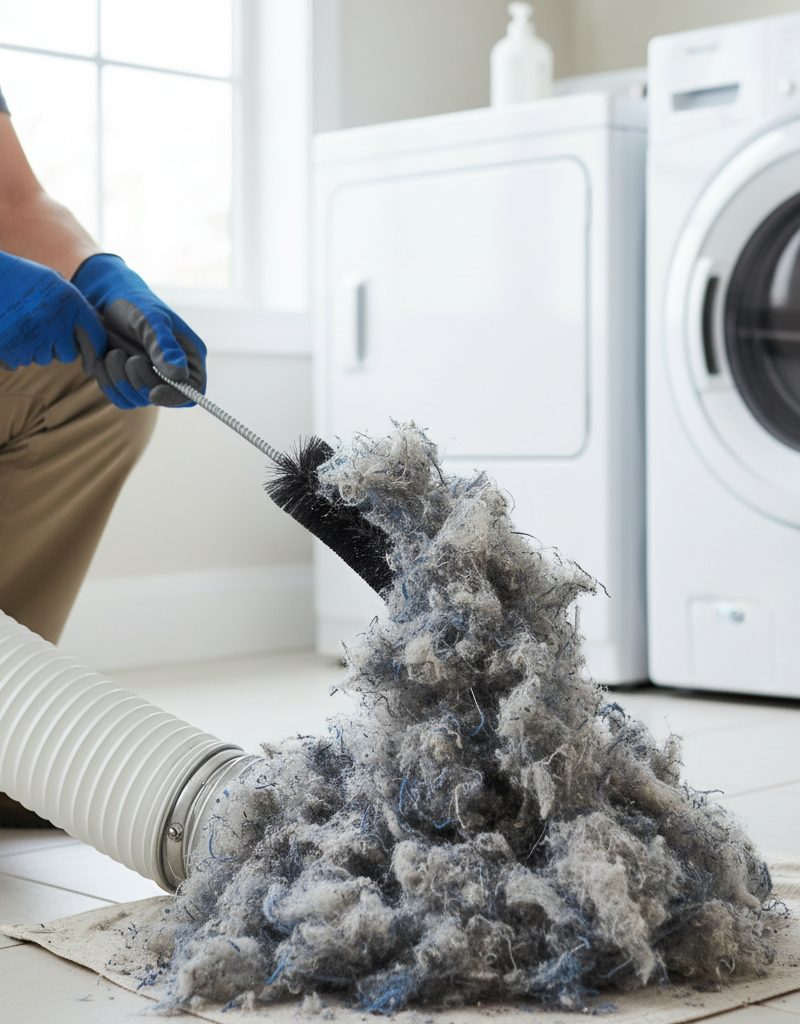
- Disconnect the Vent Hose — Locate the transition duct (the flexible hose) connecting the dryer's exhaust port to the wall vent. Loosen any clamps (usually metal screw clamps or spring clamps) securing the hose to both connections. Carefully twist and pull the hose off. Be prepared for a significant amount of lint to fall out.
- Tip: Have a trash bag or bucket ready to catch the lint as you disconnect the hose.
- Clean the Dryer's Exhaust Port — Use a long, narrow brush (like a bottle brush) or the crevice attachment of your vacuum cleaner to reach into the dryer's exhaust port. Remove any visible lint. This is a critical area often overlooked.
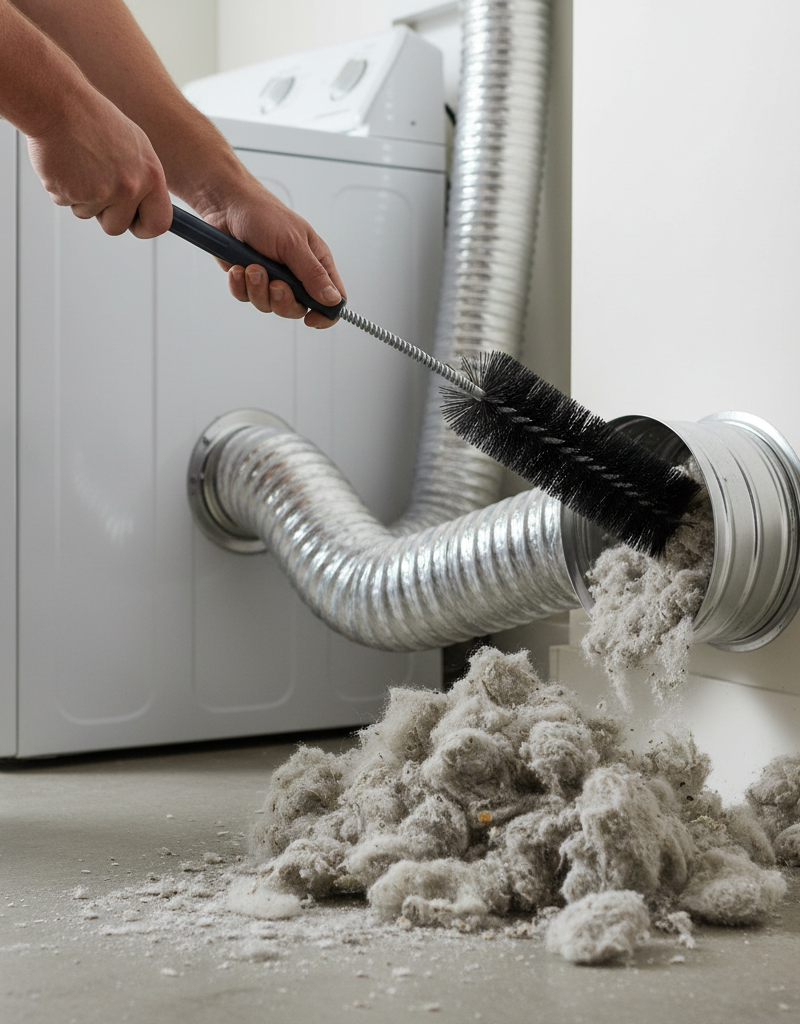
- Clean the Transition Duct — Take the disconnected flexible vent hose outside. Shake out as much lint as possible. Then, use your dryer vent cleaning brush kit, pushing the brush through the hose from both ends. Twist the brush as you go. Follow up with your shop vac to suck out any remaining debris. Inspect the hose for damage; if it's crushed, torn, or excessively worn, replace it with a new, semi-rigid aluminum duct.
- If this doesn't work: If the hose is severely kinked or clogged despite brushing, it's best to replace it. Flexible foil vents can easily tear; semi-rigid aluminum is more durable.
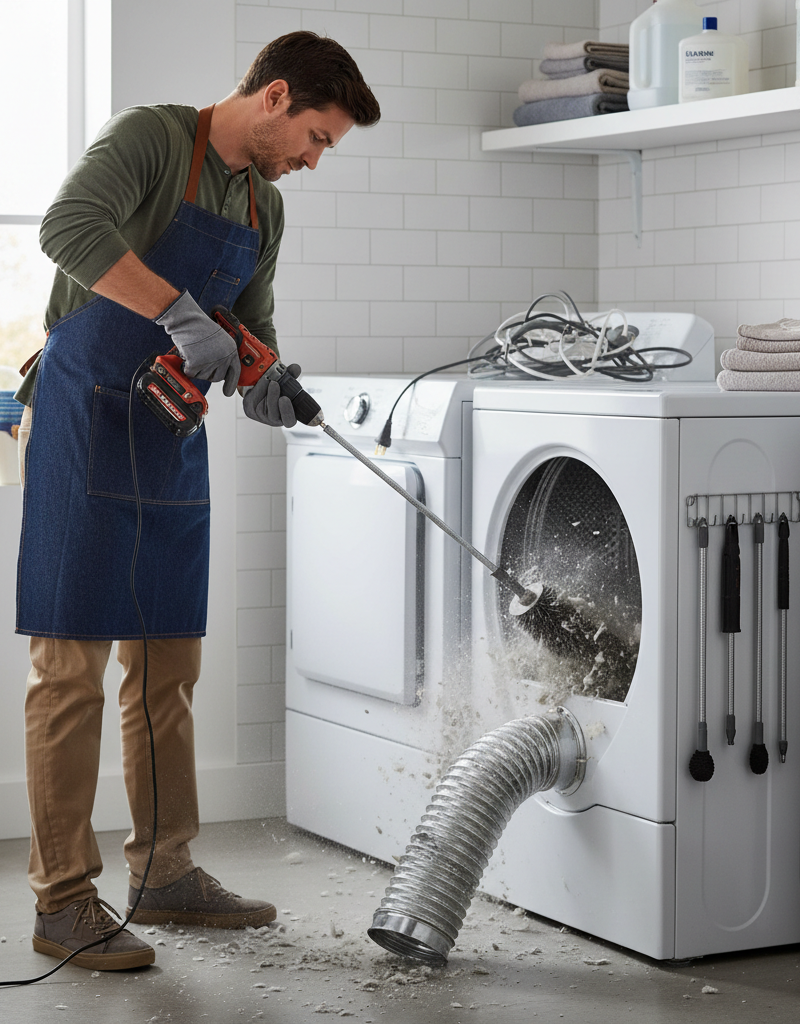
- Clean the Wall Vent Duct — This is the most crucial part. Depending on the length and configuration of your vent, you'll use your dryer vent cleaning brush kit, typically consisting of several rod sections that screw together. Attach the brush head to the first rod, insert it into the wall vent opening, and connect it to your drill (if the kit allows). Slowly run the drill, pushing the brush further into the duct by adding rod sections. Work the brush back and forth to dislodge lint. You may need to go outside and push the brush from the exterior vent opening as well, if accessible.
- Safety warning: Be careful not to force the brush, especially around bends, to avoid damaging the ductwork.
- If your vent is long or complex: Consider using a leaf blower at the exterior vent opening (after removing the cover) while someone inside vacuums the wall opening to create a strong airflow that helps push out dislodged lint.
- Clean the Exterior Vent Hood — Go outside and remove the cover of your exterior dryer vent hood. Most are secured with a few screws. Clean out any lint accumulation inside the hood and around the flap or louver. Ensure the flap moves freely. Use your vacuum and brush here as well. Replace covers that are damaged or don't close properly, as they can allow pests in.
- Tip: Check for bird nests or insect nests. These are common obstructions.
- Vacuum Thoroughly — Once all brushing is complete, use a powerful shop vac to thoroughly vacuum both the wall vent opening from inside and the dryer's exhaust port. If you have access, vacuum the exterior vent opening as well. This will remove any loosened lint that didn't come out with the brush.
- Reassemble and Test — Reconnect the transition duct to both the dryer and the wall vent, securing it firmly with clamps. Ensure the duct is as straight as possible, avoiding kinks or sharp bends. Push the dryer back into place, taking care not to crush the vent hose. Plug the dryer back in and, for gas dryers, turn the gas supply back on. Run the dryer on an air-only (no heat) cycle for a few minutes to check for proper airflow from the exterior vent and to ensure no unusual noises.
- Check for leaks: If you have a gas dryer, apply a soapy water solution to the gas line connections after turning the gas back on. Bubbles indicate a leak – tighten connections or call a professional immediately.
Common Causes
- Infrequent Cleaning: The most common cause. Lint accumulates gradually, and if not removed annually (or more often), it will eventually restrict airflow. Many homeowners only clean the lint trap, neglecting the vent itself.
- Improper Vent Material: Flexible vinyl or thin foil ducts are highly problematic. Their corrugated surfaces trap lint easily, and they are prone to crushing, kinking, and tearing. These should be replaced with semi-rigid or rigid metal ductwork.
- Long or Kinked Vent Runs: Longer vent runs (over 25 feet, deducting 5 feet for each 90-degree bend) increase lint accumulation points and reduce air velocity. Sharp bends or kinks caused by pushing the dryer too close to the wall severely restrict airflow.
- Exterior Vent Hood Issues: Vent hoods with fine mesh screens or small cages designed to keep out pests can easily get clogged with lint, dramatically reducing airflow. Even standard flaps can get stuck closed or accumulate dense lint.
- Overloading the Dryer or Drying Lint-Producing Items: Consistently overloading your dryer or frequently drying items like pet bedding, excessive towels, or new garments that produce a lot of lint will accelerate buildup in the vent.
- Worn or Damaged Dryer Components: A faulty blower wheel or a deteriorating lint screen can allow more lint to bypass the trap and enter the vent system.
Common Mistakes
- Only Cleaning the Lint Trap: This is the most prevalent and dangerous mistake. The lint trap only catches a portion of the lint; significant amounts still make it into the vent system.
- Using Plastic or Vinyl Ducting: These materials are not only fire hazards but also collect lint more readily due to their ribbed interiors. Always use metal (aluminum or galvanized steel) ductwork.
- Ignoring Warning Signs: Prolonged drying times, excessively hot clothes, a burning smell, or a hot dryer top are all clear indicators of a clogged vent. Don't wait for a fire to happen.
- Crushing the Vent Hose Behind the Dryer: Pushing the dryer too close to the wall can crimp or crush the transition duct, severely restricting airflow even if the duct itself is clean.
- Not Cleaning the Exterior Vent Hood: The exit point is often a major choke point for lint and can also be blocked by pests.
- Using Inadequate Tools: A household vacuum alone isn't usually powerful enough for deep vent cleaning, nor can it reach the entire length of the duct. Specialized dryer vent brushes are essential.
- Failing to Disconnect Power/Gas: Working on any appliance without completely shutting off its power (and gas for gas dryers) is extremely dangerous and can lead to electric shock or gas leaks.
Cost & Time Breakdown
| Task | DIY Cost | Pro Cost | Time |
|---|---|---|---|
| Basic Vent Cleaning (DIY) | $0 (if tools exist) / $20–$50 (brush kit) | $100–$200 | 30–90 min |
| Replacing Flexible Duct | $10–$25 | Included w/ cleaning | 10–20 min |
| Replacing Exterior Vent Hood | $15–$40 | Included w/ cleaning | 20–45 min |
| Dealing with Complex/Long Vents | $20–$50 (blower/extra rods) | $200–$400+ (complex routing) | 1–3 hours |
| Annual Professional Cleaning | N/A | $150–$250 | 1–1.5 hours |
Tips & Prevention
- Clean the Lint Screen Every Load: This seems obvious, but it's the first line of defense against lint accumulation in the vent.
- Inspect Your Vent Regularly: Pull out your dryer every 6 months to a year and visually inspect the transition duct for kinks, crushing, or excessive lint buildup near the connections. Wiggle the flap on the exterior vent to ensure it moves freely.
- Use Semi-Rigid or Rigid Metal Ducting: Replace any flexible plastic or foil ducts with approved semi-rigid aluminum or rigid galvanized steel ducts. These offer better airflow and are far less likely to be crushed or catch fire.
- Keep Vent Runs Short and Straight: If possible, configure your laundry room so the dryer vent run is as short and straight as possible, with minimal bends. Each 90-degree bend is equivalent to 5 feet of straight duct in terms of airflow restriction.
- Avoid Overloading Your Dryer: Overloading reduces airflow and can cause the dryer to work harder, generating more heat and lint. Dry smaller loads.
- Consider a Dryer Vent Alarm: These inexpensive devices monitor airflow and sound an alarm if a clog is detected, providing an early warning system.
- Professional Cleaning: Even with diligent DIY cleaning, consider a professional vent cleaning service every 2-3 years, especially for long or complex vent runs, to ensure a thorough deep clean.
When to Call a Professional
While cleaning a dryer vent is a straightforward DIY task for many homeowners, there are specific situations where calling a licensed professional is the safest and most effective course of action. You should contact a professional dryer vent cleaning service if your vent run is exceptionally long (over 25 feet with multiple bends) or routed through inaccessible areas like finished walls, ceilings, or crawl spaces that you cannot easily reach with standard cleaning tools. Similarly, if you suspect there's significant damage to the ductwork, such as a detached section within a wall, or if the exterior vent is on a high roof that requires specialized equipment to access safely, a professional is essential. If, after cleaning the vent yourself, your dryer still exhibits signs of poor performance like extended drying times, excessive heat, or a faint burning smell, a professional can properly diagnose underlying issues with the dryer itself or thoroughly inspect the vent for missed or deeper blockages. For gas dryers, any concern about gas line connections or suspected leaks warrants immediate professional intervention to ensure safety. Professionals have specialized tools, diagnostic equipment, and the expertise to handle complex installations and ensure all safety standards are met.
Related Articles
Keep troubleshooting with these hand-picked guides from FixlyGuide:
- The Dryer Vent Fire Trap: 3 Hidden Signs Your Home Is at Risk — Learn the critical signs your dryer vent is clogged and how to safely clean it to prevent a dangerous house fire.
- The $5 Part That Stops Your Dryer From Heating (And How to Replace It in 30 Min) — Discover the most common, inexpensive culprit behind a dryer not heating up and learn how to quickly diagnose and replace it yourself.
- The #1 Mistake Homeowners Make With HVAC Filters (And How Often to Really Change Them) — Discover the crucial mistake most homeowners make with HVAC filters and the specific schedule you should follow to avoid costly HVAC issues…
- The $5 Part That Stops Your Dryer From Heating (And How to Replace It in 30 Minutes) — A dryer that tumbles but doesn't heat often points to a blown thermal fuse, a simple and inexpensive fix most homeowners can do themselves.
- The $0 Trick to Revive Your Frozen AC Fan (Before You Call a Pro) — Before you spend money on an AC repair, try this simple, no-cost trick to get your condenser fan spinning again and cool your home.
- The Silent Fire Hazard Lurking In Your Laundry Room — Don't let a clogged dryer vent become a silent fire starter. Learn why this common oversight is so dangerous, the clear warning signs to lo…
Get the print-ready PDF of this guide
A clean, ad-free, printable version you can keep on your phone or pin to the workshop wall. We'll also send occasional weekly tips matched to your home situation.
- Print-optimized layout
- Tools, materials & every step included
- Unsubscribe anytime
Frequently asked questions
How often should I clean my dryer vent?+
You should clean your dryer vent at least once a year. If you use your dryer frequently, have pets, or notice clothes taking longer to dry, consider cleaning it every 6 months.
What are the signs of a clogged dryer vent?+
Key signs include clothes taking longer to dry, clothes feeling unusually hot at the end of a cycle, the dryer itself feeling hot to the touch, a burning smell, or excessive lint accumulating around the dryer vent opening outside your home.
Can I use a leaf blower to clean my dryer vent?+
Yes, a leaf blower can be effective for pushing out dislodged lint from the exterior end of the vent, especially when used in conjunction with brushing from the inside. However, always ensure the interior opening is protected (e.g., with a shop vac hose) to catch flying lint, and never use it as a primary cleaning method without prior brushing.
Is it safe to clean a gas dryer vent myself?+
Yes, it is safe to clean a gas dryer vent yourself, but you *must* turn off the gas supply valve and unplug the dryer's electrical cord before disconnecting any hoses. If you are unsure about handling gas connections, or suspect a gas leak, always call a qualified professional.
What kind of dryer vent hose is safest?+
Semi-rigid aluminum or rigid galvanized steel ducts are the safest and most efficient options. Avoid flexible plastic or foil ducts as they are fire hazards and prone to lint buildup.
Discussion
Loading comments…