Tools & materials you'll need
Affiliate linksAs an Amazon Associate FixlyGuide earns from qualifying purchases — at no extra cost to you. Prices and availability are accurate as of publication and subject to change.
Quick Answer
Most doors that refuse to latch properly are suffering from a minor misalignment between the door's latch bolt and the strike plate on the door frame. Often, the strike plate has shifted, or the door itself has sagged slightly due to loose hinges or temperature changes. A simple, often overlooked adjustment of the strike plate or tightening of hinge screws can fix the issue in minutes, restoring the satisfying click of a securely closed door.
The Problem
Is your door refusing to stay shut unless you really push it? Does it bounce back or rattle loosely in the frame? This common household annoyance isn't just frustrating; it can compromise privacy, energy efficiency, and even security. A door that won't latch properly is usually a symptom of a spatial mismatch: the latch bolt isn't entering the strike plate's opening cleanly or deeply enough. This can manifest as the door needing an extra push, the latch bolt scraping against the strike plate, or the door failing to hold shut at all. While it might seem like a complex issue, the underlying causes are usually straightforward and easily fixable without calling a professional.
How It Works
Understanding how a door latches helps in diagnosing the problem. A door's latching mechanism consists of a few key components: the latch bolt (the spring-loaded, beveled piece that extends from the door's edge), the doorknob spindle (which retracts the latch bolt when turned), and the strike plate (a metal plate mortised into the door frame with an opening for the latch bolt). When you close the door, the beveled edge of the latch bolt slides against the strike plate's angled lip, compressing the spring and retracting the bolt slightly. As the door reaches the closed position, the latch bolt springs forward into the opening of the strike plate, securing the door. For this system to work perfectly, the latch bolt and the opening in the strike plate must align precisely both vertically and horizontally. Even a millimeter of misalignment can prevent the latch bolt from fully engaging, causing the door to bind, bounce back, or simply fail to latch.
Factors like house settlement, changes in humidity (causing wood to swell or shrink), loose hinge screws, or even minor impacts can cause the door frame or the door itself to shift, throwing off this delicate alignment. When this happens, the latch bolt either hits the strike plate above or below the opening, hits the frame itself, or doesn't extend far enough into the opening to hold the door securely.
Step-by-Step Fix
Safety First: When working with doors, be mindful of pinch points. Use appropriate eyewear when drilling or chiseling. Always test door function slowly after adjustments.
1. Diagnose the Misalignment — Pinpoint the Problem
Begin by slowly closing the door and observing exactly where the latch bolt interacts with the strike plate.
- Method: Press a small amount of toothpaste or chalk onto the end of the latch bolt. Slowly close the door until the latch bolt touches the strike plate, then open it. The mark left on the strike plate will show you precisely where the latch bolt is hitting.
- Observe: Is the mark too high, too low, or off to one side of the opening? This is your crucial diagnostic clue.
2. Tighten Loose Hinge Screws — Re-anchor the Door
Loose hinges are a very common culprit for a sagging door.
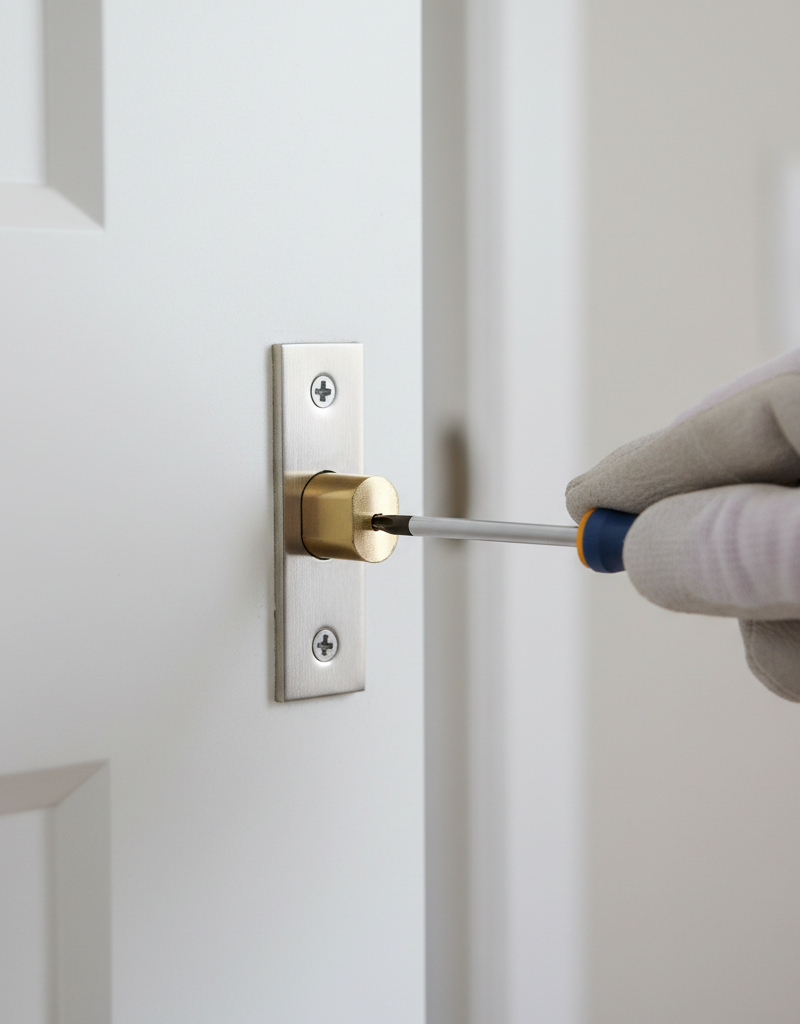
- Action: Firmly tighten all screws on the door's hinges, both on the door frame and on the door itself. Use a screwdriver appropriate for the screw head type (Phillips or flathead).
- Check: If the screws just spin without tightening, it means the wood is stripped. You can try a longer screw of the same gauge (confirm it won't protrude the other side), or remove the screw, insert a few wooden toothpicks or a golf tee (with wood glue) into the hole, let it dry, then break off flush and re-insert the original screw.
- Result: After tightening, re-check the door's latching. If it's still not right, proceed to strike plate adjustments.
3. Adjust The Strike Plate (Vertical Alignment) — Shift Up or Down
If your diagnosis showed the latch bolt hitting too high or too low on the strike plate.
- Tools: Screwdriver, small round file or wood chisel, utility knife.
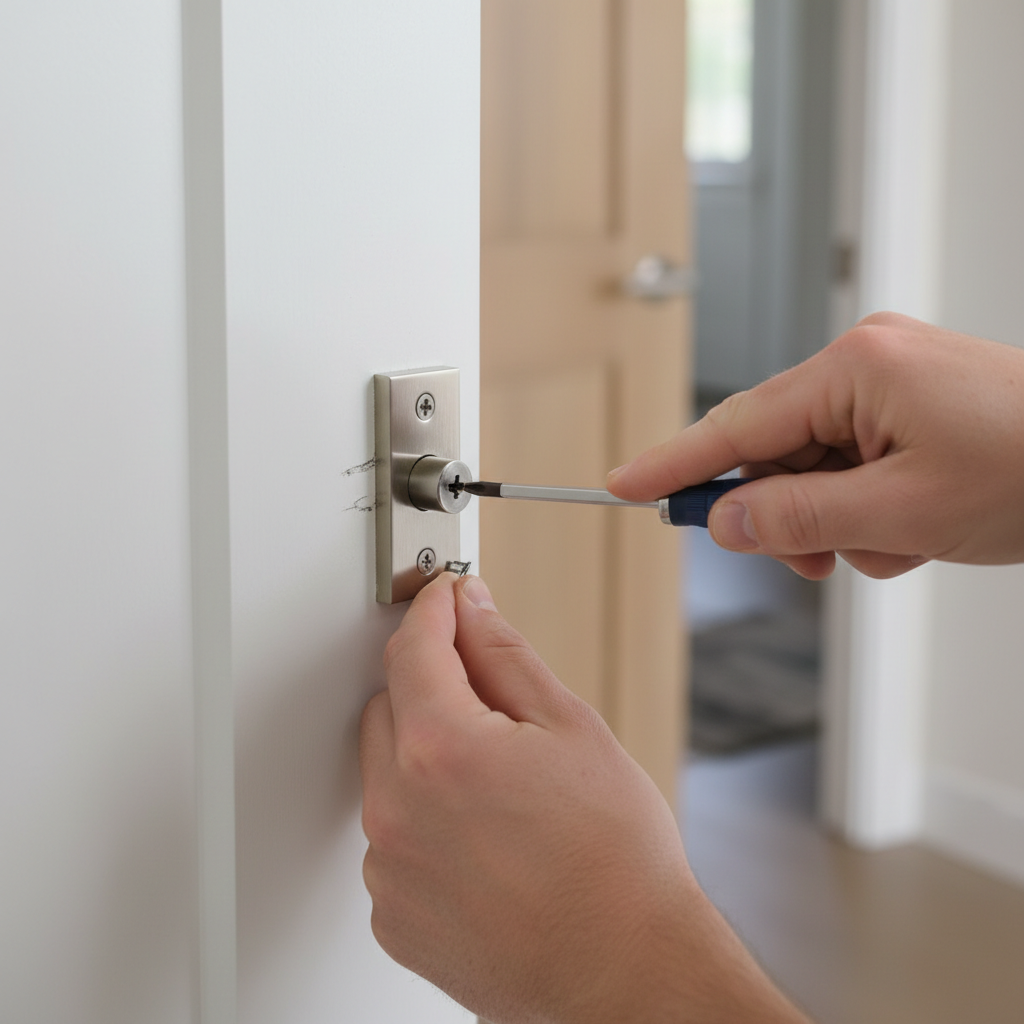
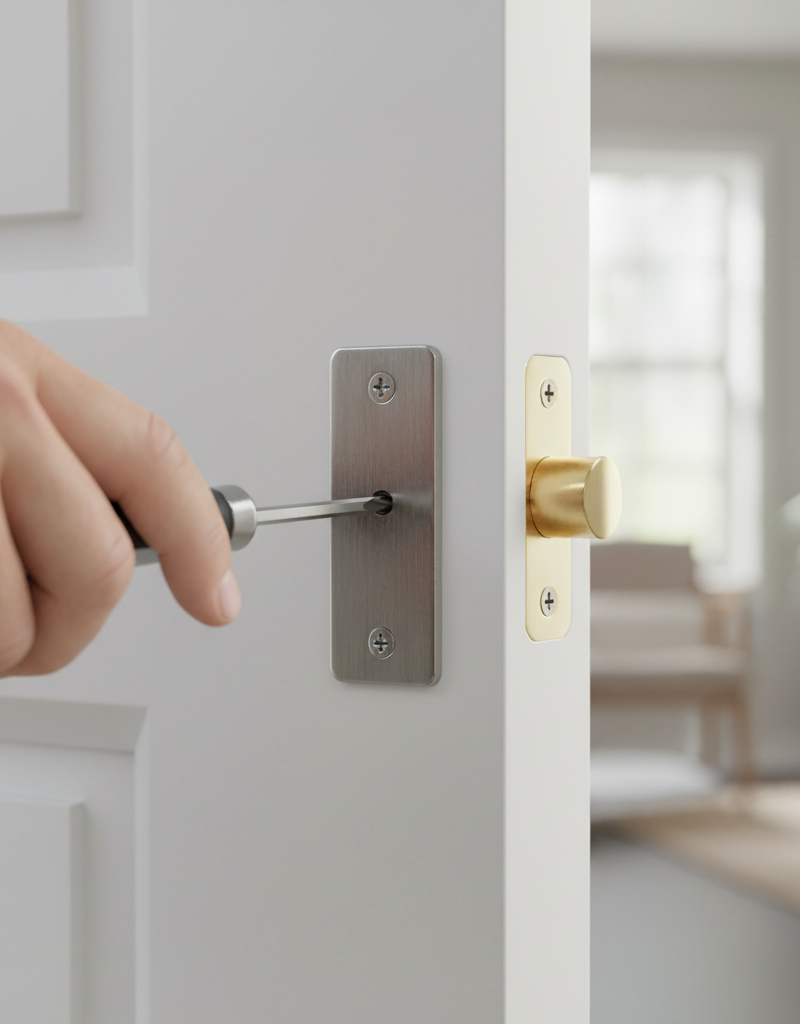
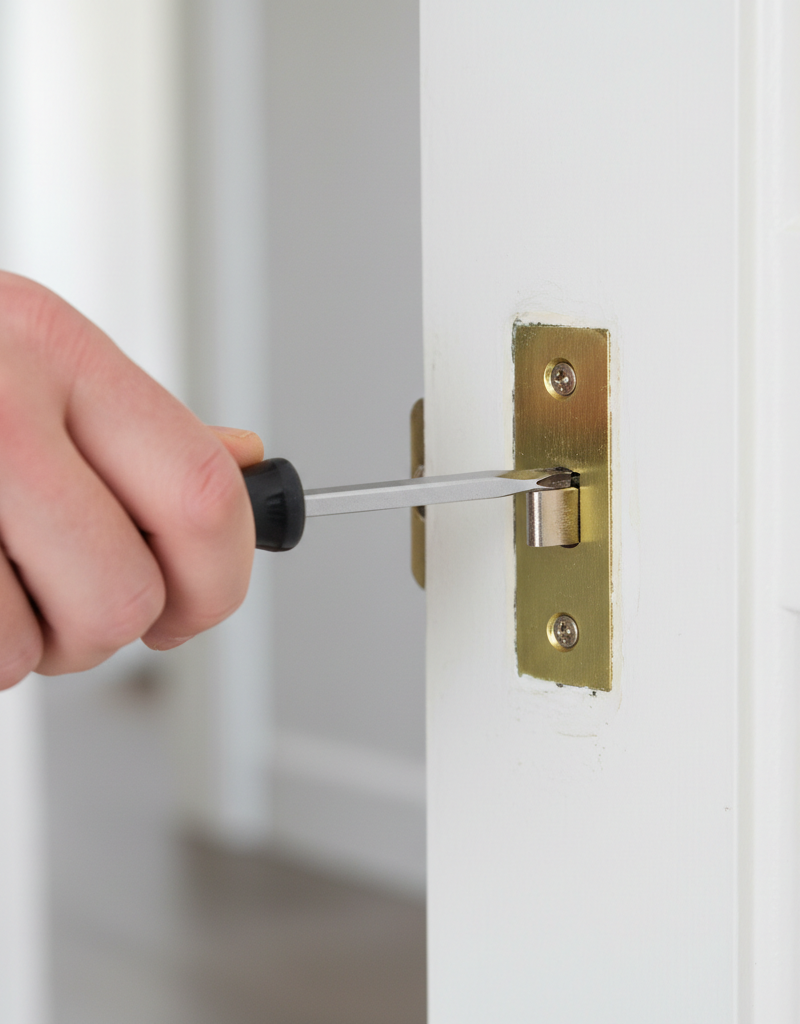
- Action: Unscrew the strike plate. If the latch bolt is hitting too high, you'll need to slightly enlarge the bottom edge of the strike plate's opening. If it's hitting too low, enlarge the top. Do this carefully. Use a round file for metal, or a sharp wood chisel and utility knife to shave away a tiny amount of wood from the mortise (the recessed area) in the door frame where the strike plate sits. Only remove as much material as necessary.
- Re-test: Re-install the strike plate, tighten screws, and test the door. Repeat small adjustments as needed.
4. Adjust The Strike Plate (Horizontal Alignment) — Move In or Out
If the latch bolt isn't extending far enough into the strike plate opening, or is hitting the frame before it reaches the plate.
- Tools: Screwdriver, thin cardboard shims or paper (optional), wood chisel, utility knife.
- Action: Unscrew the strike plate. If the door isn't closing flush with the frame (i.e., it stops with a gap before the latch engages), the strike plate might need to move slightly outward. You can achieve this by placing a thin shim (like a piece of cardboard or construction paper) behind the strike plate before screwing it back in. If the door is closing flush but the latch bolt isn't extending deeply enough, the strike plate may need to move slightly inward. This is more complex and involves carefully chiseling out a tiny bit more wood from the mortise behind the strike plate to allow it to recess further into the frame. This scenario is less common for a simple latch issue and often indicates a more significant door or frame issue, so proceed with caution.
- Re-test: Re-install and test.
5. Enlarge the Strike Plate Opening — A Last Resort for Clearance
If after vertical and horizontal adjustments, the latch bolt is still binding or catching on the edges of the strike plate opening.
- Tools: Round file (metal) or wood chisel, hammer (for chiseling), utility knife.
- Action: Remove the strike plate. Very carefully and incrementally enlarge the sides of the opening using a round file on the metal plate itself, or by carefully carving out more wood from the frame behind the plate. The goal is to allow the entire latch bolt to pass through smoothly without friction.
- Caution: Remove small amounts of material at a time. You can't put wood back once it's removed. Re-install and test frequently.
6. Adjust the Deadbolt (If Applicable) — Ensure Full Engagement
If your door has a deadbolt that also isn't engaging smoothly, the same principles apply.
- Action: Follow the same diagnostic and adjustment steps for the deadbolt's strike plate, which is usually separate but adjacent to the latch's strike plate. Misalignment here is very common with older homes.
7. Lubricate the Latch Mechanism — Smooth Operation
Sometimes, a sticky latch bolt can mimic a misalignment problem.
- Material: Dry lubricant like graphite powder or silicone spray. Avoid oil-based lubricants as they can attract dirt and grime.
- Action: Apply a small amount of lubricant directly into the latch bolt mechanism itself and around the spindle where it meets the door. Work the doorknob repeatedly to distribute the lubricant.
8. Check for Warped Door/Frame — Deeper Issues
If none of the above adjustments resolve the issue, inspect the door and frame for significant warping or damage.
- Method: Use a long level or a straightedge to check the door edges and the door frame for bows or twists. Look for consistent gaps around the door when it's closed (before latching).
- Decision: Minor warping might be managed with extreme strike plate adjustment, but significant warping often points to a need for professional intervention or door/frame replacement.
9. Replace the Latch Mechanism — Worn Parts
If the latch bolt itself appears worn, bent, or doesn't spring out fully, the internal mechanism might be failing.
- Action: Remove the doorknob assembly and replace the latch mechanism. This is generally a straightforward process with most standard doorknobs. Ensure you purchase a replacement latch that matches the backset and faceplate dimensions of your existing one.
Common Causes
- Loose Hinge Screws: The most frequent culprit. Over time, screws can loosen, causing the door to sag and pull out of alignment. This is especially common in high-traffic doors.
- House Settlement/Movement: Minor shifts in a home's foundation can cause door frames to become slightly out of square, leading to misalignment.
- Wood Swelling/Shrinking: Humidity and temperature changes cause wood doors and frames to expand or contract, altering the precise fit of the latch.
- Worn Strike Plate or Latch Bolt: Over years of use, the edges of the strike plate opening can become enlarged or the latch bolt itself can wear down, leading to a loose fit or failure to catch.
- Improper Installation: If the door or frame was not installed perfectly plumb and square from the start, latching issues can appear sooner or later.
- Paint Buildup: Multiple layers of paint can incrementally narrow the gap around the door or fill in the strike plate mortise, causing friction or preventing full engagement.
Common Mistakes
- Ignoring Loose Hinges: Many homeowners jump straight to the strike plate, overlooking the foundational issue of a sagging door caused by loose or stripped hinge screws. Always check hinges first!
- Removing Too Much Material: When chiseling or filing, many DIYers remove too much wood or metal at once. Make tiny, incremental adjustments and re-test frequently. You can't easily add material back.
- Using the Wrong Tools: Trying to file metal with a wood file, or forcing a screwdriver that doesn't fit, can damage the strike plate, screws, or the door frame, making the problem worse.
- **Ignoring the
Related Articles
Keep troubleshooting with these hand-picked guides from FixlyGuide:
- The 3 Hidden Reasons Your Door Won't Latch (And the Easy Fixes) — Discover the surprising reasons your interior door isn't latching and how to quickly diagnose and fix the issue with simple tools.
- The 3 Hidden Reasons Your Door Won't Latch (And the Easy DIY Fixes) — Don't live with a door that refuses to latch; discover simple, DIY solutions for common door latch problems and restore security and privac…
- The 3 Hidden Reasons Your Door Won't Latch (And the Easy DIY Fixes) — Frustrated by a door that refuses to latch? Discover the common culprits behind this annoying problem and learn simple, effective DIY fixes…
- The 3 Hidden Reasons Your Door Won't Latch (And the Easy Fixes) — A door that won't latch properly is a common household nuisance, often caused by simple issues that are easy to diagnose and repair.
- The 5-Minute Trick to a Silky-Smooth Door Lock (and Why Yours Is Sticky) — A sticky door lock is annoying and can be a security risk. Learn how to quickly diagnose and fix the common causes of a door lock that won'…
- Is Your Gutter Sagging After Every Storm? The Hidden Flaw Most Homeowners Miss — Discover the overlooked reason your gutters sag after every storm and learn the lasting fix that most homeowners miss.
Frequently asked questions
Why won't my door latch properly?+
The most common reasons are loose hinge screws causing the door to sag, or a misaligned strike plate on the door frame. Changes in humidity can also cause wood to swell or shrink, affecting the fit.
How do I know if my strike plate is misaligned?+
Close the door slowly and observe where the latch bolt hits the strike plate. For a more precise diagnosis, put a small amount of toothpaste or chalk on the latch bolt, close the door until it touches the strike plate, then open it. The mark left on the strike plate will show the exact point of contact.
Can I fix a door that won't latch without special tools?+
Yes, often. Most fixes involve a screwdriver, and possibly a utility knife or a small file. The goal is small adjustments, so you typically don't need specialized equipment.
What if my door hinges are stripped?+
If hinge screws spin without tightening, the wood is stripped. You can fix this by removing the screw, inserting a few wooden toothpicks (or a golf tee) with wood glue into the hole, letting it dry, breaking them off flush, and then re-inserting the original screw.
When should I call a professional for a door latch issue?+
You should call a professional if you suspect significant structural issues like a severely warped door or frame, if your door frame is visibly out of square, or if you've tried all basic adjustments and the door still won't latch. For high-security exterior doors, if you're uncomfortable making adjustments, a locksmith or carpenter can help.
Discussion
Loading comments…