
Tools & materials you'll need
Affiliate links- AmazonExtension cord1 · Replacement, if necessary
As an Amazon Associate FixlyGuide earns from qualifying purchases — at no extra cost to you. Prices and availability are accurate as of publication and subject to change.
Quick Answer
An extension cord repeatedly tripping a circuit breaker is a clear indication of an electrical problem that requires immediate attention. Most often, this points to an overloaded circuit, meaning the combined wattage of all devices plugged into that circuit (including those connected via the extension cord) exceeds the breaker's amperage rating. However, it can also signal a short circuit in the extension cord itself, the appliance, or even a ground fault. Safely diagnosing and correcting the issue is crucial to prevent electrical fires or damage to appliances.
The Problem
Few things are as frustrating as plugging in an appliance, only for an extension cord to immediately trip a circuit breaker. This isn't just an inconvenience; it's a safety mechanism working exactly as intended, protecting your home's wiring from excessive current that could lead to overheating and fire. When an extension cord consistently trips a breaker, it's telling you something fundamentally unsafe or incorrect is happening with your electrical setup. Ignoring these repeated trips can put your home and family at risk.
How It Works
To understand why an extension cord trips a breaker, you need to know a little about your home's electrical system. Electricity flows from the utility company, through your main service panel (breaker box), and then out to various circuits in your home. Each circuit is protected by a circuit breaker, which is essentially a safety switch designed to automatically 'trip' or open when too much current flows through it. This overcurrent scenario can occur for two primary reasons: an overload or a short circuit.
An overload happens when you plug in too many devices or a single high-power device that draws more amperage than the circuit is designed to handle. For example, a typical kitchen circuit is often 15 or 20 amps. If you have a toaster (around 10 amps) and a coffee maker (around 8 amps) running simultaneously on a 15-amp circuit, you're already at 18 amps, exceeding the limit and causing the breaker to trip. The extension cord itself, if it's too thin (higher gauge number, e.g., 16-gauge for heavy use), can also become a bottleneck, adding resistance and heating up, even if the circuit itself isn't technically overloaded yet. However, more commonly, the extension cord simply facilitates the connection to an already overloaded circuit.
A short circuit is a more sudden and dangerous event. It occurs when the hot (live) wire accidentally touches the neutral wire, or sometimes the ground wire, bypassing the normal electrical path. This creates a direct path for current, leading to a massive, instantaneous surge in amperage that trips the breaker almost immediately. Short circuits often result from damaged insulation in wires (including within an extension cord or appliance cord), loose connections, or exposed wires touching. Since the current isn't flowing through a resistive load (like a light bulb or motor), the amperage can spike to hundreds or even thousands of amps in milliseconds, making the breaker's quick response critical for safety.
Ground faults are similar to short circuits but involve the hot wire touching a grounded surface or the ground wire itself. These are typically detected and tripped by a Ground Fault Circuit Interrupter (GFCI) outlet or breaker, often found in bathrooms, kitchens, and outdoor areas. While an extension cord doesn't cause a ground fault, its damage could expose wires and create one if it contacts a grounded surface.
When a breaker trips, it's not a malfunction; it's a warning. It's indicating that somewhere in the circuit path, including the extension cord and the connected appliance, there's a problem that needs investigation.
Step-by-Step Fix
Safety First — Always unplug the extension cord and any connected appliances before inspecting them. Never force a tripped breaker back on without investigating the cause. Repeatedly resetting a breaker without fixing the underlying issue can damage your electrical system and pose a fire hazard.
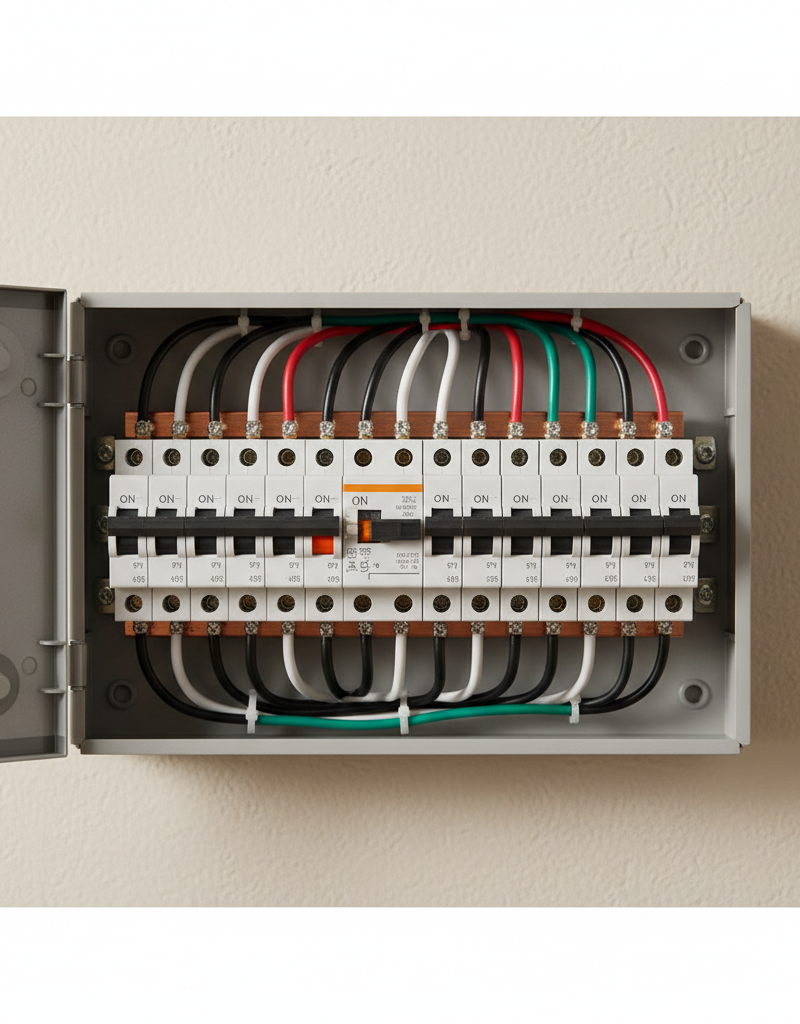
1. Identify the Tripped Breaker — Locate your home's electrical panel and find the breaker that is in the 'OFF' or middle position. It will likely be labeled for the room or area you were in.
* **Action:** If it's a GFCI or AFCI breaker, it might have a test/reset button on it. Turn it completely to the 'OFF' position, then firmly back to 'ON'.
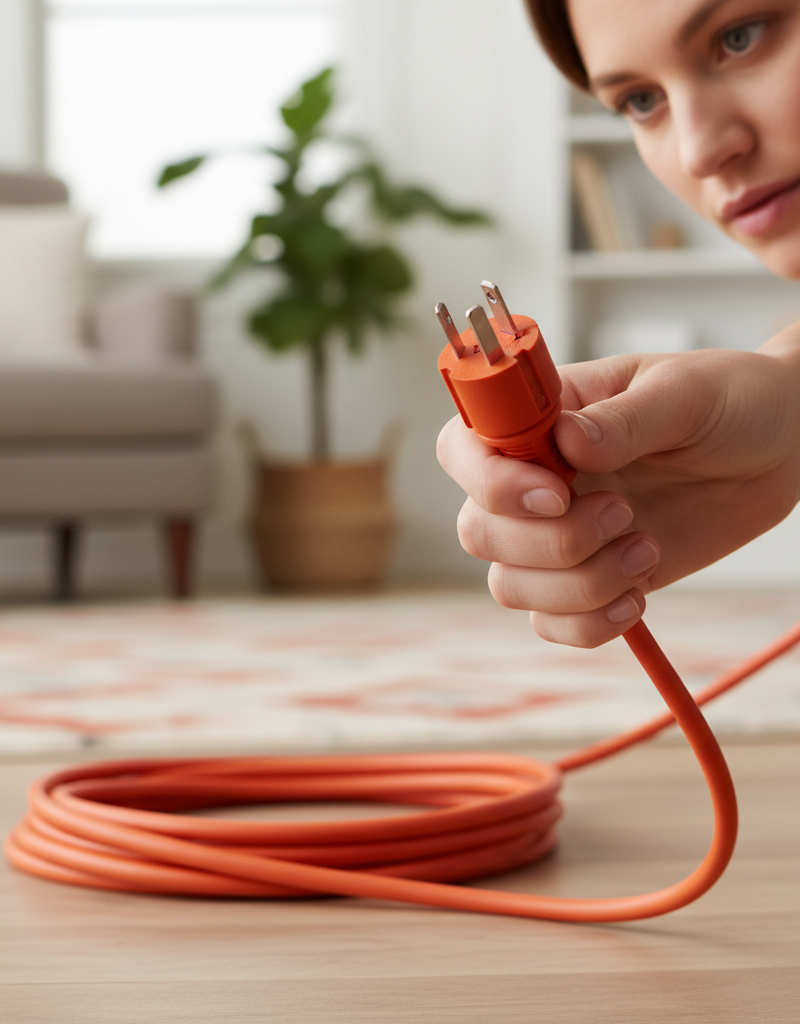
2. Unplug and Inspect Everything — Disconnect the extension cord from the wall outlet and unplug all appliances from the extension cord. Carefully inspect the extension cord and the cords of all connected appliances for any visible damage.
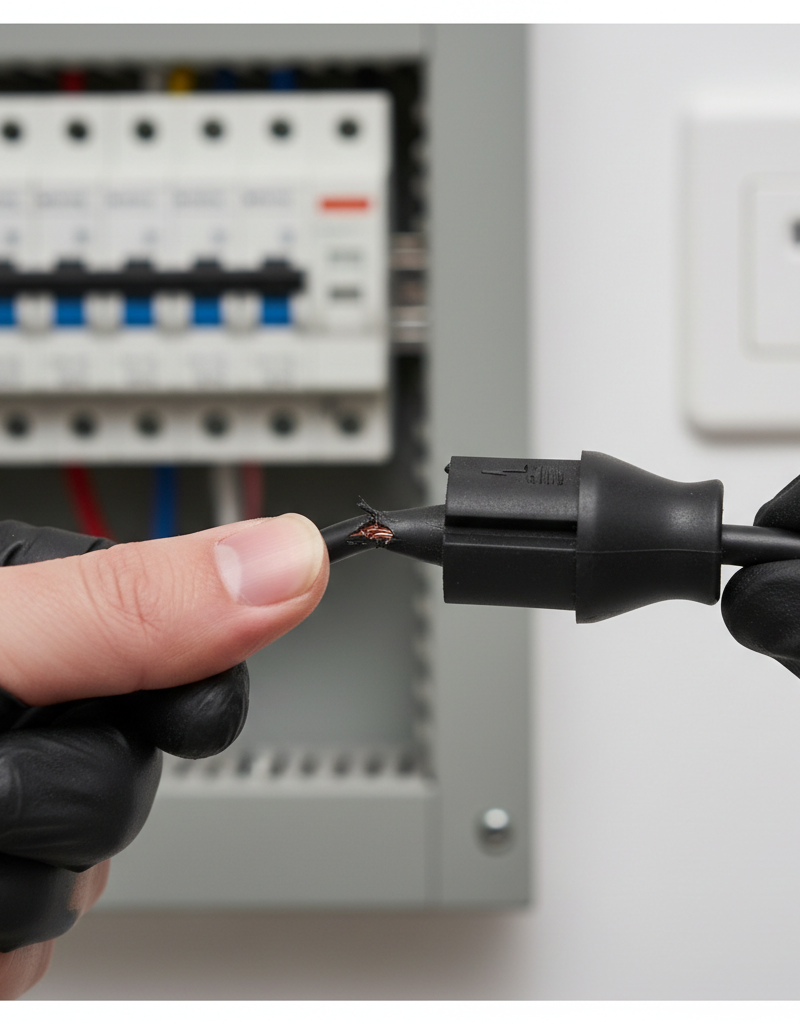
*   **Check for:** Cuts, fraying, exposed wires, scorch marks, melted plastic, or signs of overheating. Pay close attention to the plug ends and where the cord enters the appliance.
*   **If found:** If any cord is damaged, **DO NOT USE IT**. Replace the extension cord or have the appliance inspected by a professional if its cord is damaged. A damaged cord is a common cause of short circuits.
3. Reduce the Load (If Overload Suspected) — If the cords appear undamaged, an overload is the most common culprit. Check the wattage of the appliances you were using. Don't guess; look for labels on the appliances themselves (often on the bottom or back).
*   **Compare to:** A standard 15-amp circuit can safely handle about 1440 watts (15 amps x 120 volts x 0.8 safety factor). A 20-amp circuit can handle around 1920 watts.
*   **Action:** Try plugging in only *one* high-wattage appliance (like a space heater, hair dryer, or microwave) directly into a wall outlet on a different circuit, if possible. If that works, then the previous setup was overloaded.
4. Test the Extension Cord Alone — Plug only the extension cord into the wall outlet (with nothing connected to its other end).
*   **Observe:** If the breaker trips immediately even with nothing plugged into the extension cord, the cord itself is likely internally shorted or faulty.
*   **Action:** Discard the faulty extension cord and replace it with a new, appropriately rated one.
5. Test Appliances One by One — If the extension cord alone doesn't trip the breaker, plug the appliances into the extension cord one at a time.
*   **Observe:** Plug in the first appliance. If the breaker trips, that appliance is likely the problem (internal short). If it doesn't trip, plug in the next, and so on.
*   **Action:** Identify the appliance that causes the trip. Discontinue use of that appliance and have it inspected by a qualified repair technician.
6. Ensure Proper Extension Cord Rating — If your appliances are drawing significant power, you need an extension cord designed for that load. Look for the gauge number on the cord itself.
*   **Wire Gauge:** Lower gauge numbers (e.g., 12-gauge, 14-gauge) indicate thicker wires and higher current capacity. Higher gauge numbers (e.g., 16-gauge, 18-gauge) are for lighter loads.
*   **Action:** Ensure the extension cord's amperage rating (or wattage rating, if provided) exceeds the total wattage of the devices you plan to connect. Never use a light-duty cord for heavy-duty appliances.
7. Avoid 'Daisy-Chaining' — Never plug one extension cord into another, or a power strip into an extension cord. This creates an extremely dangerous fire hazard and can easily lead to overloads.
*   **Why:** Each connection adds resistance and potential points of failure, making it easier to exceed safe current limits.
*   **Action:** If you need more outlets or length, reconsider your setup. Perhaps a power strip with surge protection directly into a wall outlet is a better solution for multiple devices, or a single, longer, heavy-duty extension cord for a single appliance.
Common Causes
- Circuit Overload: The most frequent cause. Too many appliances or a single high-wattage appliance (like a space heater, air conditioner, microwave, or vacuum cleaner) are drawing more current than the circuit breaker is rated to handle. The extension cord facilitates this connection, but the root cause is the total draw on the circuit.
- Damaged Extension Cord: Knicks, cuts, frayed insulation, or crush damage can expose the live and neutral wires, causing them to touch and create a short circuit. Internal damage not visible externally can also lead to shorts.
- Faulty Appliance: The appliance plugged into the extension cord might have an internal wiring issue, a short circuit, or a ground fault that causes the sudden spike in current.
- Inadequate Extension Cord: Using a light-duty (higher gauge number, e.g., 16 or 18 gauge) extension cord for a heavy-duty appliance can cause the cord itself to overheat and become a resistive load that trips the breaker, even if the circuit itself could theoretically handle the wattage. The cord's insufficient capacity can also lead to internal damage over time.
- Loose Connections: A loose plug or receptacle connection, either at the wall outlet, in the extension cord, or at the appliance plug, can create resistance and heat, eventually leading to a short or an arc fault that trips the breaker (especially an AFCI).
Common Mistakes
- Ignoring Repeated Trips: A breaker tripping is a warning. Continuously resetting it without identifying and fixing the cause can lead to serious electrical damage or fire.
- Using Indoor Cords Outdoors: Indoor extension cords are not designed to withstand moisture or UV exposure. Using them outdoors can lead to rapid degradation of insulation and create shock or fire hazards.
Related Articles
Keep troubleshooting with these hand-picked guides from FixlyGuide:
- The Hidden Reason Your Extension Cord Keeps Tripping the Breaker (and What to Do) — Discover why your extension cord might be tripping a circuit breaker and learn how to diagnose and fix common electrical issues safely.
- Why Your Extension Cord Keeps Tripping the Breaker (And the Simple Test to Find the Hidden Cause) — Discover why your extension cord keeps tripping the circuit breaker and learn how to safely diagnose and fix the real problem with a simple…
- The Hidden Reason Your Circuit Breaker Keeps Tripping (It's Not Always an Overload) — Discover the often-overlooked culprits behind a frequently tripping circuit breaker and learn how to diagnose and fix the most common issue…
- The Hidden Reason Your Circuit Breaker Keeps Tripping (It's Not Always an Overload) — Discover the often-overlooked causes behind a frequently tripping circuit breaker and learn how to diagnose and fix them safely.
- The Hidden Reason Your Circuit Breaker Keeps Tripping (It's Not Always an Overload) — Discover the often-overlooked electrical issues that cause circuit breakers to trip repeatedly, and how to accurately diagnose and fix them.
- The Hidden Reason Your GFCI Trips (It's Not Always a Faulty Outlet) — A continuously tripping GFCI outlet is a critical safety warning, often indicating moisture, a faulty appliance, or a wiring problem that r…
Frequently asked questions
How do I know if my extension cord is overloaded?+
An extension cord is overloaded if the total wattage of all devices plugged into it exceeds the cord's rated capacity, which should be printed on the cord or its packaging. If it feels hot to the touch, or the breaker trips, it's a strong indicator of an overload.
Can a bad extension cord trip a breaker?+
Yes, absolutely. A damaged extension cord with frayed wires, cuts, or internal shorts can cause a direct path for electricity, creating a short circuit that will immediately trip the breaker to prevent overheating and fire.
What's the difference between a 14-gauge and 16-gauge extension cord?+
The gauge number indicates the thickness of the wire. A lower gauge number means a thicker wire. A 14-gauge cord has thicker wires than a 16-gauge cord, allowing it to safely carry more electrical current and making it suitable for heavier-duty appliances.
Is it safe to reset a tripped breaker repeatedly?+
No, it is not safe. A tripped breaker is signaling a problem. Repeatedly resetting it without addressing the underlying issue can lead to overheating of wires, potential damage to appliances, and poses a serious fire risk. Always investigate the cause first.
When should I call an electrician for a tripping breaker?+
You should call an electrician if your breaker continues to trip after you've unplugged all extension cords and appliances, if you notice burning smells or scorch marks, if the outlet feels hot, or if you're unsure how to safely diagnose the problem. Any persistent electrical issue warrants professional attention.
Discussion
Loading comments…