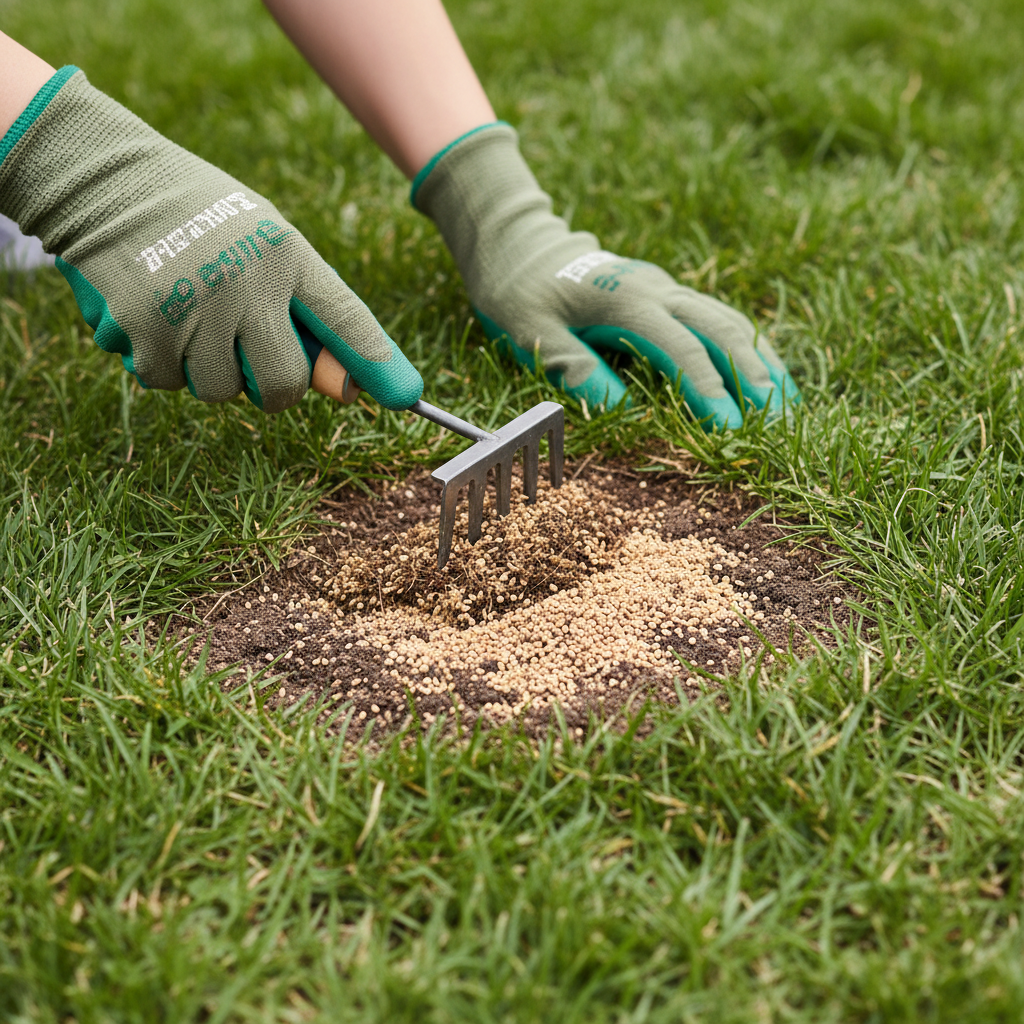
Tools & materials you'll need
Affiliate links- AmazonHeavy-duty rakeFor clearing dead grass and debris
- AmazonSoil probe or long screwdriverTo check for compaction
- AmazonCore aerator (manual or rental)If soil compaction is severe
- AmazonHand broadcaster or spreaderOptional, for even seed distribution
- AmazonGarden hose with sprayerFor consistent watering
As an Amazon Associate FixlyGuide earns from qualifying purchases — at no extra cost to you. Prices and availability are accurate as of publication and subject to change.
Quick Answer
Patchy grass in your lawn often signals underlying issues like soil compaction, insufficient nutrients, or inconsistent watering. Addressing these problems effectively requires a multi-pronged approach: first, identify the specific cause for a patch; then, amend the soil, overseed, and establish a proper watering and fertilization routine. Aeration and dethatching are critical first steps to ensure new grass can thrive, followed by selecting the right grass seed for your climate and sun exposure. Finally, consistent care, including deep watering and regular soil testing, will prevent future patches.
The Problem
Bare or thin patches of grass can dramatically diminish the aesthetic appeal of an otherwise healthy lawn. These areas aren't just an eyesore; they're an open invitation for weeds to take root, further deteriorating your lawn's health and appearance. Understanding why these patches form is the first step toward a lush, uniform green turf. Without intervention, small patches can grow, leading to a lawn that's more soil and weeds than vibrant grass.
How It Works
Grass, like any plant, requires specific conditions to thrive: adequate sunlight, water, and nutrients, all delivered through healthy soil. When one or more of these elements are out of balance, grass struggles, leading to thinning or death.
Soil Compaction: Over time, foot traffic, heavy machinery, and even rainfall can compact soil. Compacted soil has fewer air pockets, making it difficult for grass roots to penetrate and for water and nutrients to reach them. This essentially suffocates the roots, preventing them from accessing essential resources.
Nutrient Deficiency: Grass needs a balanced diet of nitrogen, phosphorus, and potassium (NPK), along with micronutrients. If the soil lacks these, grass growth becomes stunted, and existing blades may yellow or die off, creating patches. Soil tests are crucial for identifying specific deficiencies.
Improper Watering: Both overwatering and underwatering can be detrimental. Underwatering causes grass to dry out and die, while overwatering can lead to shallow root systems, fungal diseases, and nutrient leaching. Deep, infrequent watering promotes strong, deep roots that are more resilient to stress.
Pests and Diseases: Grubs, cinch bugs, armyworms, and various fungal diseases can attack grass roots or blades, causing widespread damage and distinct patches. Identifying the pest or disease early is key to effective treatment.
Excessive Thatch: Thatch is a layer of dead and living organic matter (stems, roots) that accumulates between the soil surface and the green grass blades. A thin layer (under 1/2 inch) is beneficial, but excessive thatch (over 1 inch) can block water, air, and nutrients from reaching the soil, creating a haven for pests and diseases.
Shade and Competition: Grasses vary in their light requirements. If a patch is in heavy shade, it likely needs a shade-tolerant seed mix. Tree roots near patches can also outcompompete grass for water and nutrients.
Step-by-Step Fix
Before you start, make sure to read through all steps. Safety first, always.
Step 1: Diagnose the Problem — A critical first step is identifying why the patch exists.
- Inspect the area: Look for signs of pests (chewed blades, grubs in the soil), diseases (discolored spots, slime), or environmental factors (heavy shade, water pooling).
- Soil Probe Test: Push a screwdriver or soil probe into the patchy area and a healthy area. If it's much harder to penetrate the patchy area, compaction is likely. For compaction, proceed with aeration.
- Water Test: Apply water to the patchy area. Does it pool immediately, or does it soak in slowly? Pooling indicates compaction or a hydrophobic soil layer (often from too much thatch).
- Consider a Soil Test: This is highly recommended to pinpoint nutrient deficiencies or pH imbalances. Kits are available at garden centers or through local extension offices.
Step 2: Clear the Area — Remove dead grass and debris to prepare for new growth.
- Rake out dead grass and thatch: Use a sturdy rake to aggressively remove all dead grass, weeds, and any excessive thatch (the spongy layer above the soil). Get down to the bare soil if possible. This exposes the soil, allowing seeds direct contact.
- If thatch is thick (over 1 inch): Consider renting a dethatcher for larger areas or using a powerful core aerator with a dethatching attachment.
Step 3: Aerate Compacted Soil — Improve air, water, and nutrient penetration if compaction is an issue.
- Use a core aerator: For significant compaction, a core aerator (manual or gas-powered) is best. It pulls out small plugs of soil, creating channels for air, water, and nutrients.
- For smaller patches: A manual spike aerator or aeration sandals can work, but they primarily just push soil aside, which isn't as effective as core aeration.
- Timing: Aerate when grass is actively growing and the soil is moist but not waterlogged (typically spring or early fall).
Step 4: Amend the Soil — Address nutrient deficiencies and improve soil structure.
- Based on soil test results: Apply the recommended fertilizers or amendments (e.g., lime to raise pH, sulfur to lower pH). Peat moss or compost can improve soil structure and water retention.
- For general improvement: Spread a 1/2-inch layer of organic compost over the prepared patch and gently rake it in. Compost adds beneficial microbes and slow-release nutrients.
Step 5: Select and Apply Grass Seed — Choose the right seed and spread it evenly.
- Choose the right seed: Select a grass seed mix suitable for your climate, sun exposure (full sun, partial shade, dense shade), and existing grass type. Read seed labels carefully for germination times and light requirements.
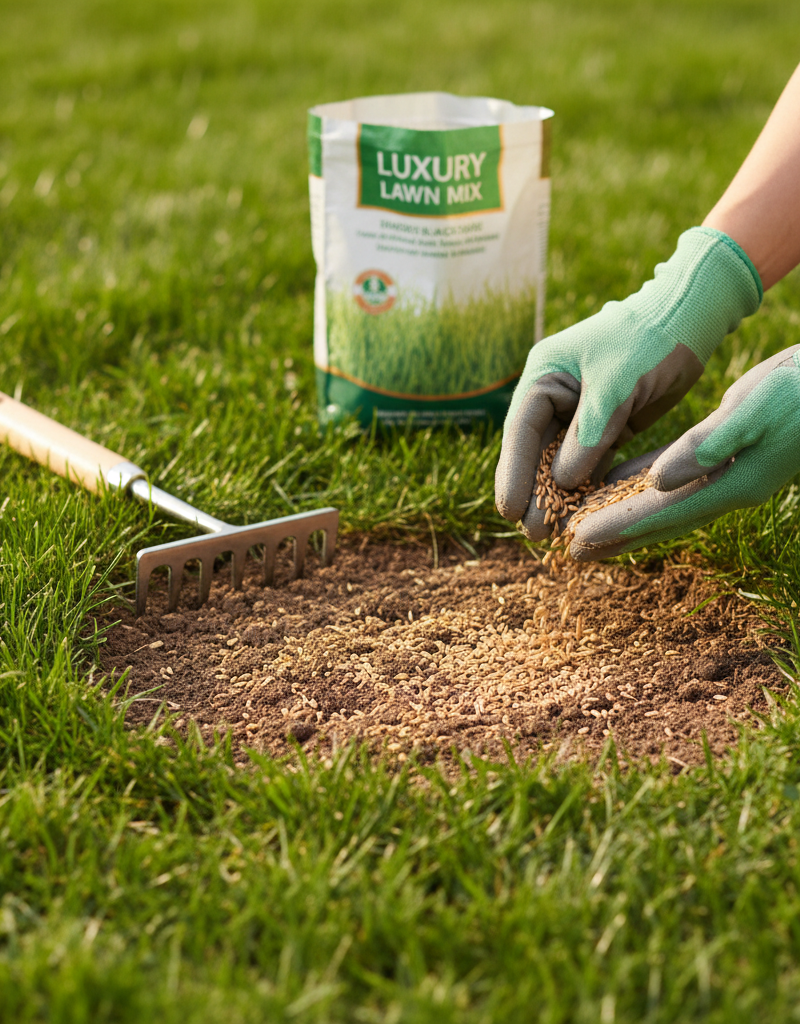
- Spread the seed: Hand-broadcast the seed evenly over the prepared patch. For best results, aim for about 10-15 seeds per square inch. Don't go too thick, as competition will hinder growth.
- Lightly rake: Gently rake the seeds into the top 1/8 to 1/4 inch of soil. This ensures good seed-to-soil contact, which is crucial for germination.
- Optional: Apply a starter fertilizer: These are high in phosphorus to encourage root development. Follow package directions precisely.
Step 6: Cover and Protect (Optional but Recommended) — Help retain moisture and deter birds.
- Peat moss or straw: Lightly cover the seeded area with a thin layer (about 1/8 inch) of peat moss or weed-free straw (like certified weed-free straw or straw specifically for seeding). This helps retain moisture, protects seeds from birds, and prevents wash-away.
- Caution: Don't use hay, as it often contains weed seeds.
Step 7: Water Properly — Consistent moisture is essential for germination.
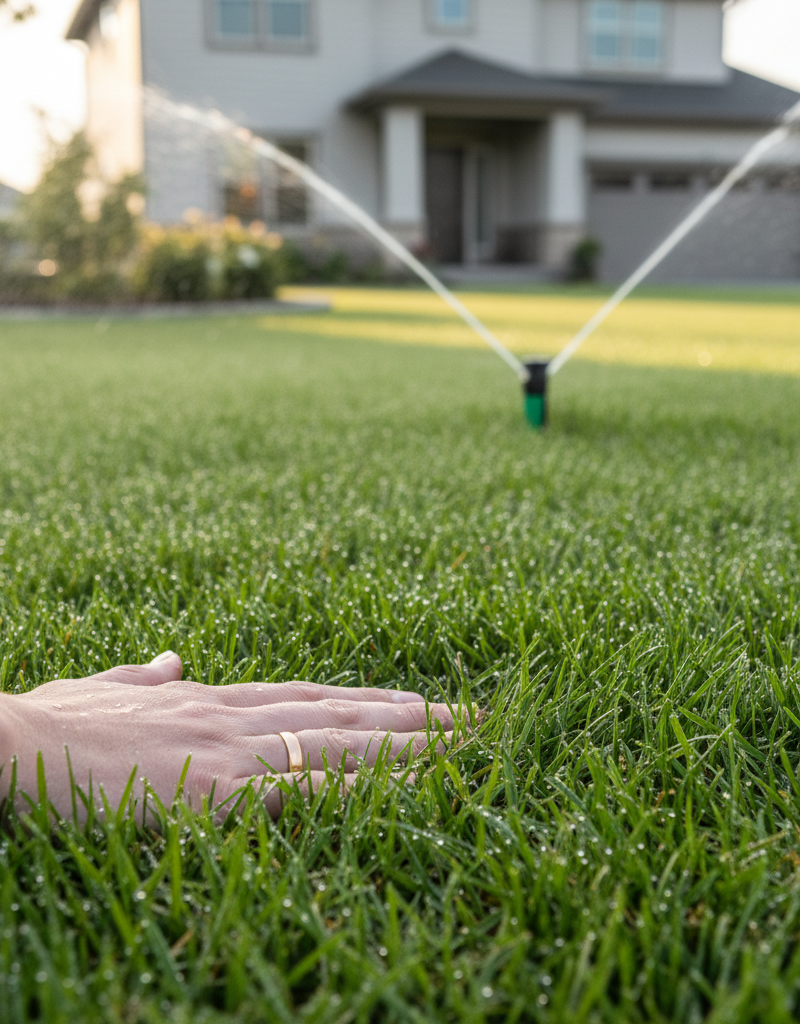
- Keep the area consistently moist: This is the most critical step for success. Water new seeds lightly but frequently (2-3 times a day) for short durations (5-10 minutes) to keep the top inch of soil moist until seeds germinate and seedlings are about 1 inch tall.
- Avoid standing water: Do not overwater to the point of creating puddles, as this can wash away seeds or promote fungal growth.
- Transition to deeper watering: Once seedlings are established, gradually reduce frequency and increase duration to promote deep root growth (e.g., once every few days for 20-30 minutes, or enough to soak 4-6 inches deep).
Step 8: First Mow — When and how to safely cut new grass.
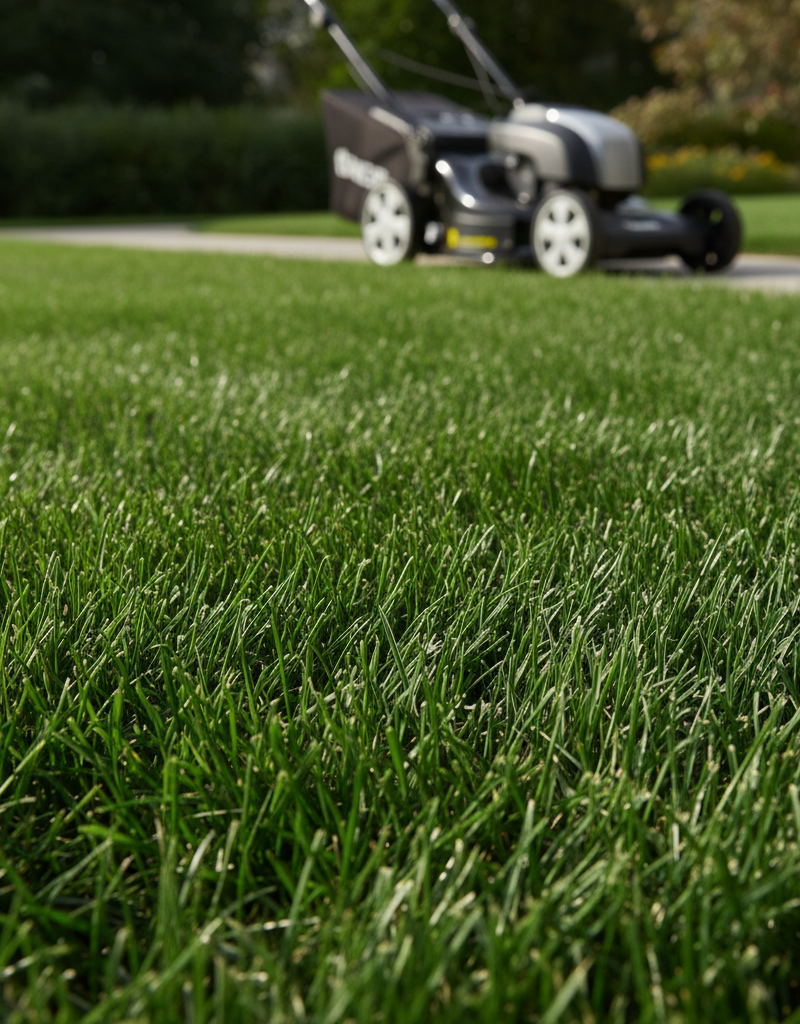
- Wait until grass is 3-4 inches tall: Do not mow until the new grass is robust enough to handle it, typically when it reaches 3 to 4 inches in height.
- Set mower height high: Set your mower to its highest setting (usually 3 inches or higher) to avoid stressing the young grass. Only cut off the top one-third of the blade.
- Sharp blade: Ensure your mower blade is sharp to prevent tearing new grass.
Common Causes
- Soil Compaction: Reduces air, water, and nutrient flow to roots.
- Inadequate Watering: Either too little (causing drought stress) or too much (leading to shallow roots and disease).
- Nutrient Deficiencies: Lack of essential NPK or micronutrients hinders growth.
- Excessive Thatch: Creates a barrier, preventing water and nutrients from reaching the soil.
- Pests and Diseases: Grubs, fungal spots, and other infestations directly damage grass.
- Pet Urine Spots: High nitrogen content in pet urine can burn grass.
- Chemical Spills: Gasoline, oil, herbicides (especially if misapplied) can kill grass.
- Heavy Shade: Many common lawn grasses require significant sunlight.
Common Mistakes
- Ignoring Soil Conditions: Simply throwing seed on compacted or nutrient-poor soil is a waste of time and money. Always prepare the soil first.
- Improper Seed Choice: Using a shade-intolerant seed in a shady area, or a cool-season grass in a hot climate, leads to failure. Match seed to your conditions.
- Insufficient Seed-to-Soil Contact: Seeds need to be in direct contact with soil to germinate properly. Just broadcasting them on top of thatch or debris won't work.
- Inconsistent Watering: New seeds need constant moisture during germination. Letting them dry out for even a few hours can kill them. Conversely, drowning them promotes disease.
- Mowing Too Soon or Too Low: Cutting young grass before it's established, or scalping it, places immense stress on the fragile seedlings, often killing them.
- Over-fertilizing: Applying too much fertilizer, especially nitrogen, can burn young grass or promote excessive top growth at the expense of root development. A soil test is key.
Cost & Time Breakdown
| Task | DIY Cost | Pro Cost | Time |
|---|---|---|---|
| Soil Testing | $15–$50 | Included with service | 15–30 minutes |
| Raking/Clearing Patch | $0 (if you have rake) | $30–$75 | 15–30 minutes |
| Aeration (manual) | $0–$30 (tool) | $75–$200 | 30–60 minutes |
| Soil Amendments (compost) | $15–$40/bag | $50–$150 | 15–30 minutes |
| Grass Seed | $10–$50 | Included with service | 10–20 minutes |
| Starter Fertilizer | $15–$30 | Included with service | 10–15 minutes |
| Watering | $0 (water bill only) | N/A | Ongoing |
Tips & Prevention
- Regular Soil Testing: Test your soil every 2-3 years to monitor nutrient levels and pH, allowing for proactive adjustments before patches form.
- Mow High: Keep your mower blade set to 3 inches or higher. Taller grass shades the soil, reducing water evaporation and suppressing weeds, leading to a healthier, denser lawn.
- Deep, Infrequent Watering: Water deeply enough to soak the soil 4-6 inches every few days, rather than shallowly every day. This encourages deep root growth.
- Dethatch Annually (if needed): If thatch builds up quickly, consider dethatching in late spring or early fall to maintain healthy soil contact for water and nutrients.
- Overseed Annually: In high-traffic areas or just to maintain density, consider overseeding your entire lawn every fall. This keeps the grass thick and outcompetes weeds.
- Manage Pet Traffic/Waste: Train pets to use a designated area, or dilute urine spots with water immediately to prevent burns.
When to Call a Professional
While many patchy lawn problems are manageable for the average homeowner, there are times when professional help is essential. If you've tried the above steps and your patches persist or worsen, a professional landscaper or lawn care specialist can provide advanced diagnostics and solutions. This is especially true if you suspect a widespread pest infestation that's resistant to DIY treatments, a chronic fungal disease that keeps returning, or a significant underlying drainage issue that's causing constant waterlogging in certain areas. Professionals have access to commercial-grade equipment for severe compaction or dethatching and can apply specialized treatments or fertilizers not readily available to the public. If large sections of your lawn are consistently struggling, or if you're dealing with recurring problems despite your best efforts, calling in an expert can save you time, money, and frustration in the long run by ensuring the problem is correctly identified and permanently resolved.
Related Articles
Keep troubleshooting with these hand-picked guides from FixlyGuide:
- The #1 Mistake Killing Your Thin Lawn (and How to Fix It in a Weekend) — Overseeding a thin lawn is crucial for a lush yard, but a common mistake can ruin your efforts before they even begin. Learn how to diagnos…
- The #1 Mistake Killing Your Thin Lawn (And How to Fix It in a Weekend) — Overseeding your lawn can transform it from thin and patchy to lush, but many homeowners make a crucial mistake that hinders success. Learn…
- The #1 Mistake Killing Your Lawn's Grass (and 3 Simple Fixes) — Patchy grass can ruin your lawn's appearance, but often the cause is a common mistake that's easy to correct with the right approach.
- The #1 Mistake Killing Your Lawn's Thatch (And How to Fix Patchy Grass) — Patchy grass often stems from an overlooked problem: excessive thatch. Learn how to diagnose and correct thatch issues to restore a healthy…
- The #1 Mistake Killing Your Lawn's Crabgrass Defense (And the Easy Fix) — Discover why common crabgrass removal methods fail and how to naturally eliminate this stubborn weed for a healthier lawn.
- The 3 Hidden Mistakes That Make Your Deck Sealer Fail (And How to Fix Them) — Resealing your wood deck protects it from weather and extends its life. Learn how to avoid common mistakes for a long-lasting finish and vi…
Frequently asked questions
How long does it take for new grass to grow in patches?+
New grass typically starts to germinate within 5-10 days, but it can take 2-4 weeks for the seedlings to establish and become noticeable. Full maturity for mowing might take 4-6 weeks, depending on the grass type and growing conditions.
Can I just put grass seed on bare spots?+
You can, but it's highly unlikely to be successful without proper preparation. For best results, you need to clear dead debris, loosen the soil, and ensure good seed-to-soil contact. Just spreading seed on top of compacted soil or thatch is rarely effective.
What causes grass to die in patches?+
Common culprits include soil compaction, inconsistent watering (too much or too little), nutrient deficiencies, excessive thatch, pet urine, fungal diseases, and insect pests like grubs. Heavy shade can also cause patches in sun-loving grass varieties.
Discussion
Loading comments…