Tools & materials you'll need
Affiliate linksAs an Amazon Associate FixlyGuide earns from qualifying purchases — at no extra cost to you. Prices and availability are accurate as of publication and subject to change.
Quick Answer
The most critical step in successful sprinkler winterization is completely evacuating all water from the irrigation lines. Even a small amount of residual water can freeze, expand, and crack your PVC pipes, sprinkler heads, and valves, leading to hundreds or even thousands of dollars in repairs next spring. Homeowners often underestimate the thoroughness required, making partial drainage the number one mistake.
The Problem
As temperatures drop below freezing, any water remaining in your sprinkler system's pipes, valves, and sprinkler heads will turn to ice. Water expands by about 9% when it freezes. This expansion creates immense pressure within the confined spaces of your irrigation system, far exceeding the pressure most PVC or polyethylene pipes can withstand. The result is cracked pipes, shattered sprinkler heads, and damaged backflow preventers and valves, often requiring extensive digging and costly replacements once the weather warms up.
The pain for homeowners isn't just the repair bill; it's the sudden flood in the yard, the lost time troubleshooting, and the disruption to a perfectly manicured lawn. Many homeowners delay winterizing until the last minute or rely on passive drainage methods that aren't sufficient, only to discover the expensive consequences months later.
How It Works
An irrigation system is essentially a network of pipes, valves, and sprinkler heads designed to deliver water to your lawn and landscaping. The system connects to your home's main water supply, usually through a backflow preventer that stops irrigation water from contaminating your potable water. Zone valves, controlled by a timer, open and close to direct water to specific areas of your yard. When the system is active, water flows under pressure through the pipes to the sprinkler heads, which then distribute the water.
During winterization, the goal is to reverse this process by removing all water. There are three primary methods: manual drain, automatic drain, and the blowout method. Manual and automatic drain systems rely on gravity; manual drains require opening a valve at the low points of each zone, while automatic drains have valves that open automatically when water pressure drops. These methods are often insufficient in areas with complex piping or undulating landscapes, as water can become trapped in sags or high spots.
The most effective and widely recommended method for most climates is the 'blowout' method, using an air compressor. This method forces compressed air through the system, physically pushing water out of the pipes, valves, and sprinkler heads. The air-water mixture exits through the open sprinkler heads, ensuring a more complete evacuation. Understanding how air pressure interacts with the water and the proper sequence of opening and closing valves is key to preventing damage during the blowout process itself and ensuring no water is left behind.
Step-by-Step Fix: Mastering the Blowout Method
While hiring a professional is always an option, a homeowner with the right tools can safely and effectively winterize their sprinkler system using the blowout method. This method uses compressed air to force water out of the lines and is the most thorough way to prevent freezing damage.
1. Shut Off the Main Water Supply – Locate and close the isolation valve.
First, find the main water shut-off valve for your irrigation system. This is typically located near your main water meter or where the irrigation line branches off from your home's plumbing. Turn the handle clockwise to completely shut off the water flow. This prevents new water from entering the system during the blowout process. Failing to do this can lead to a continuous flow of water, making the blowout ineffective and potentially dangerous.
2. Drain the Backflow Preventer – Relieve pressure and remove water from critical components.
Your backflow preventer is a crucial, often expensive, component that protects your drinking water. Most backflow preventers have small test cocks or ball valves. Slowly open the two test cocks (or turn the ball valve handles perpendicular to the pipe) to allow water to drain out. This relieves any trapped pressure and removes most of the standing water. Leave these valves open for the duration of the winterization process. Safety Note: Avoid rapid opening of these valves, as pressurized water can spray out forcefully.
3. Connect the Air Compressor – Attach the compressor securely and safely.
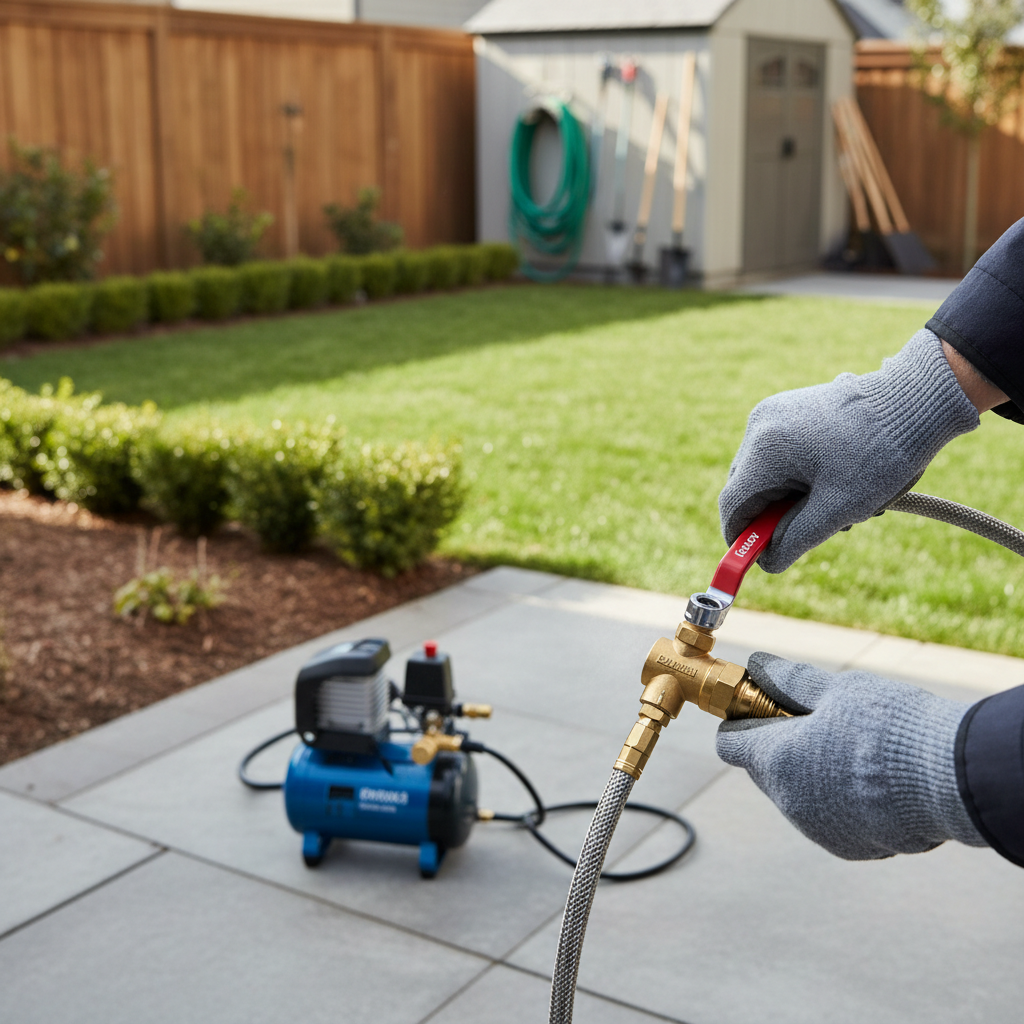
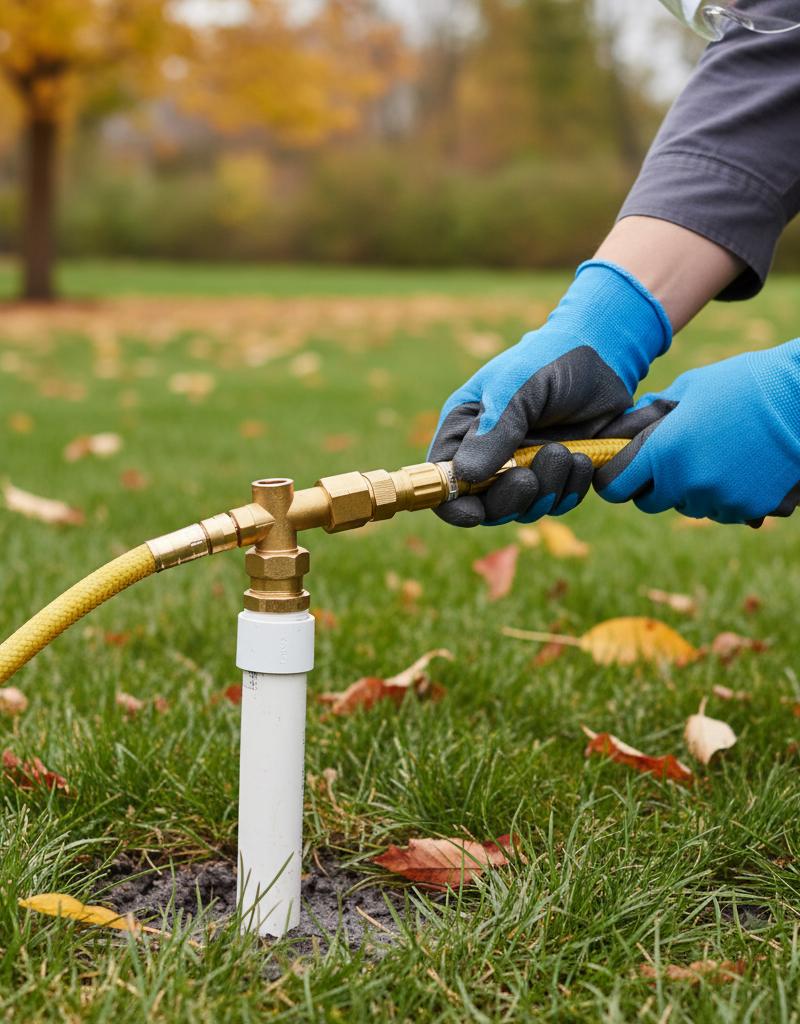
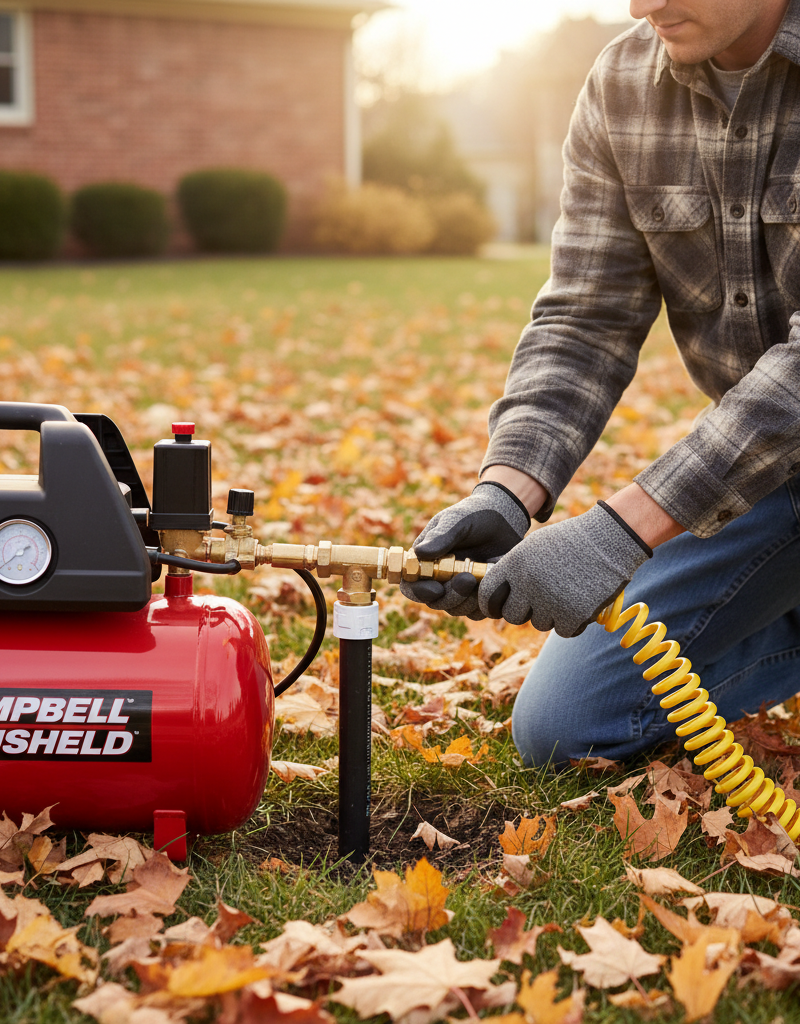
Locate the compressor connection point on your sprinkler system. This is often a dedicated port with a Schrader valve or a threaded cap, usually downstream of the backflow preventer. Use an air hose and appropriate adapter (typically a quick-connect fitting or a threaded fitting) to securely attach your air compressor. Ensure all connections are tight to prevent air leaks. Set your air compressor's regulator to a safe pressure: do not exceed 50 PSI for PVC systems or 80 PSI for polyethylene (black flexible pipe) systems. Higher pressures can damage your pipes and fittings.
4. Open the Furthest Zone Valve – Prepare for the first blowout sequence.
Go to your sprinkler system's controller and manually open the valve for the zone that is furthest away from your compressor connection point. This allows the compressed air to travel through the longest segment of piping, pushing water towards the most distant heads first. Opening zones sequentially from furthest to closest helps ensure thorough drainage.
5. Begin the Blowout Sequence – Force air through the system in short bursts.
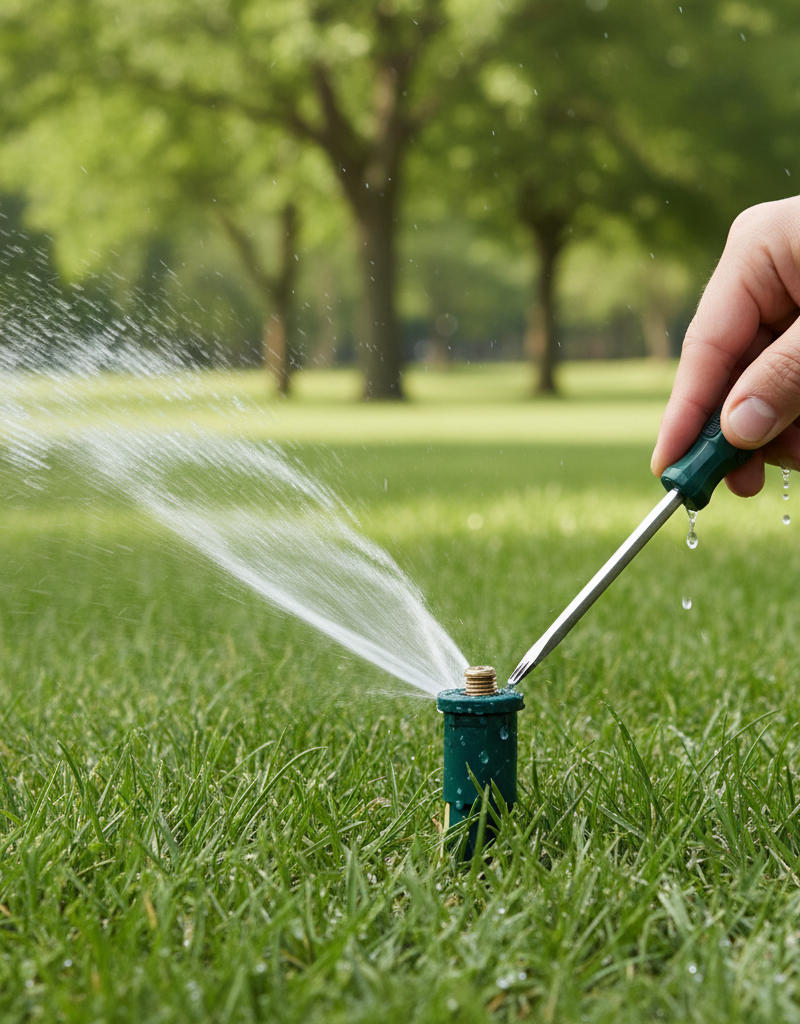
With the furthest zone open, slowly open the ball valve on your air compressor (or activate the air flow). Allow compressed air to flow into the system. You will see water misting and spraying from the sprinkler heads in that zone. Let the air run until only a fine mist or dry air is coming out of all the heads in that zone. This indicates most of the water has been expelled. Do not run the compressor continuously for more than 60-90 seconds per zone to avoid overheating the compressor or applying excessive stress to the system. Repeat this process 2-3 times per zone, with short breaks in between, to ensure all water is cleared.
6. Repeat for All Zones – Systematically clear each section.
Once the furthest zone is clear, go back to your controller. Close the valve for the current zone and then open the valve for the next furthest zone. Return to your compressor and repeat the blowout sequence (step 5) for this new zone. Continue this process, working your way through all zones, moving from the furthest to the closest zone to the compressor connection. Always ensure only one zone valve is open at a time during the blowout.
7. Clear Rotary Heads Separately (If Applicable) – Address specific head types.
Rotary sprinkler heads often retain more water due to their internal gears and mechanisms. After blowing out a zone containing rotary heads, manually pull up each rotary head by hand. Allow any residual water to drain out, then gently push the head back down. While not always necessary, this extra step provides an additional layer of protection, particularly for older or more complex rotary heads.
8. Disconnect and Winterize Compressor Connection – Secure main components.
Once all zones are thoroughly blown out and only dry air is expelled, turn off your air compressor. Close the ball valve on the compressor's output. Carefully disconnect the air hose from your sprinkler system's connection point. If your connection point has a cap, replace it securely. Ensure no water remains in the connection components. Remove any gauges or adapters and store them safely.
9. Turn Off Sprinkler Controller – Power down for the season.
Go to your sprinkler system's controller and turn it to the
Related Articles
Keep troubleshooting with these hand-picked guides from FixlyGuide:
- The #1 Mistake Homeowners Make Winterizing Sprinklers (And How to Avoid a Burst Pipe) — Learn the critical steps to properly winterize your sprinkler system and prevent costly burst pipes when temperatures drop below freezing.
- The #1 Sprinkler Winterization Mistake That Costs Homeowners Thousands — Discover the crucial mistake many homeowners make winterizing sprinklers and how to avoid costly freeze damage with proper blowout techniqu…
- The #1 Mistake Homeowners Make Winterizing Sprinklers (and How to Avoid Burst Pipes) — Discover the biggest mistake homeowners make when winterizing their sprinkler system and learn the proper steps to prevent costly burst pip…
- The #1 Mistake Homeowners Make Pruning Trees (And How to Fix It) — Pruning trees at the wrong time can severely damage them, stunting growth and inviting pests. Learn the critical mistake to avoid.
- The #1 Mistake Homeowners Make When Sprinklers Won't Turn On — Discover the most common oversight when your sprinkler system fails to activate and learn simple troubleshooting steps to restore your irri…
- The #1 Deck Sealing Mistake Most Homeowners Make (And How to Fix It) — Many homeowners make a critical error when sealing their decks, leading to premature wear and damage. Learn how to properly reseal your woo…
Frequently asked questions
When should I winterize my sprinkler system?+
You should winterize your sprinkler system just before the first hard freeze is expected in your area. This typically means when nighttime temperatures consistently drop below 32°F (0°C). Don't wait until the ground is frozen, as it might be too late to prevent damage.
Can I winterize my sprinkler system without an air compressor?+
Some systems are designed with manual or automatic drain valves that allow water to drain by gravity. However, these methods are often insufficient to remove all water, especially in complex systems or uneven terrain. The blowout method with an air compressor is the most reliable way to prevent freeze damage for most homeowners.
What happens if I don't winterize my sprinkler system?+
If water remains in your sprinkler system and freezes, it will expand, causing pipes, valves, and sprinkler heads to crack or burst. This leads to costly repairs, water leaks, and potential damage to your yard and landscaping when the system is turned back on in the spring.
How much air pressure should I use for blowing out sprinklers?+
For PVC pipe systems, do not exceed 50 PSI (pounds per square inch). For polyethylene (flexible black pipe) systems, do not exceed 80 PSI. Exceeding these pressures can damage your irrigation pipes and components.
Should I leave my backflow preventer valves open or closed after winterizing?+
It is generally recommended to leave the test cocks or ball valves on your backflow preventer open after draining. This allows any residual moisture to evaporate and prevents pressure buildup from freeze-thaw cycles, protecting the internal components.
Discussion
Loading comments…