Tools & materials you'll need
Affiliate linksAs an Amazon Associate FixlyGuide earns from qualifying purchases — at no extra cost to you. Prices and availability are accurate as of publication and subject to change.
Quick Answer
If your thermostat isn't hitting its target temperature, the problem often boils down to restricted airflow, an overworked HVAC system, or a faulty thermostat sensor. Simple checks like replacing a dirty air filter, opening blocked vents, or cleaning outdoor condenser coils can often resolve the issue. If the problem persists, you might be looking at a system imbalance or even a failing component, which may require professional diagnosis.
The Problem
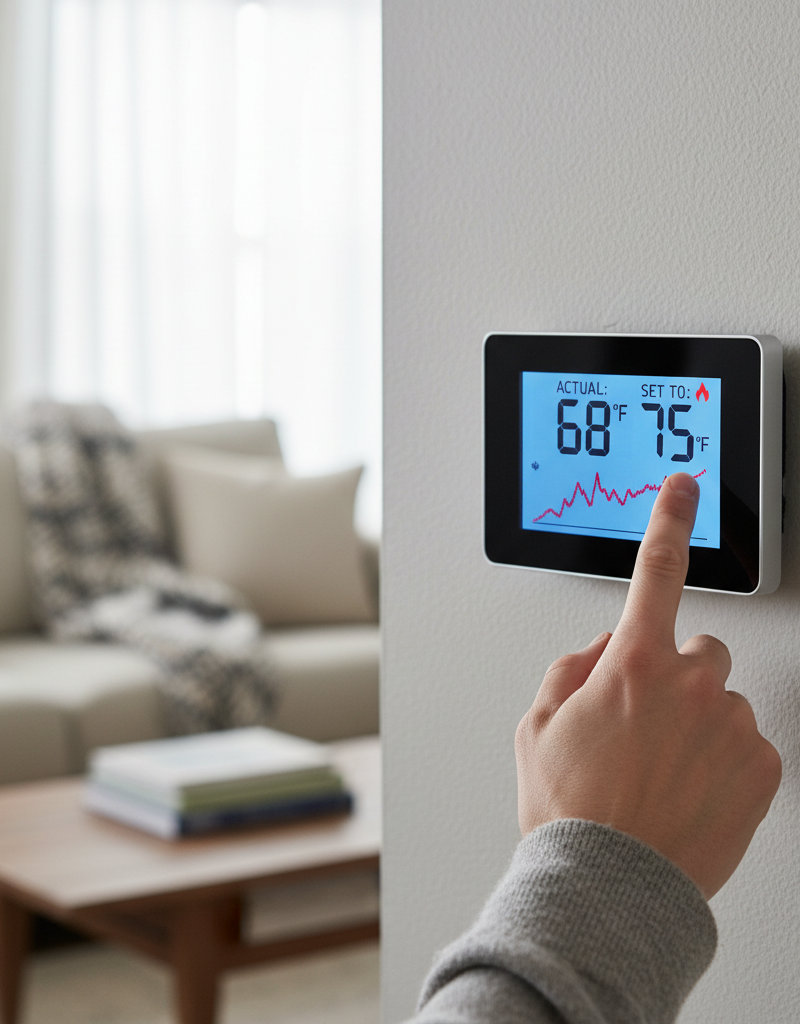
Imagine setting your thermostat to a comfortable 72°F, but your home feels like 78°F, and the display stubbornly shows 75°F. Your HVAC system seems to be running, but it just can't quite get there. This frustrating scenario not only leaves you uncomfortable but also wastes energy as your system continuously struggles. It can manifest in both heating and cooling cycles, leading to hot or cold spots, unusually long run times, and unexpectedly high utility bills. Failing to address this can shorten the lifespan of your HVAC equipment and escalate into more costly repairs.
How It Works
Your home's heating and cooling system operates on a simple principle: a thermostat acts as the brain, sensing the ambient temperature and signaling the HVAC unit to turn on or off. When you set a desired temperature, the thermostat compares it to the actual room temperature. If the room is hotter than the set point during cooling, the thermostat sends a low-voltage signal to the air conditioner's control board. This activates the condenser fan, compressor, and indoor blower fan, circulating refrigerant and removing heat from your home's air. Conversely, for heating, it signals the furnace to ignite and the blower to distribute warm air.
Crucially, air circulation is vital. The blower fan draws air from your return vents, pushes it through filters, over evaporator (cooling) or heat exchanger (heating) coils, and then forces the conditioned air through your supply vents into the living spaces. A sensor, typically located within the thermostat itself, continuously monitors the room's temperature. It's normally accurate within ±1°F. Any obstruction to this airflow, a weakness in the conditioning power of the coils, or a misreading by the sensor can lead to the system running inefficiently or failing to reach the set temperature. The system is designed to provide a steady temperature, and if it's constantly battling an imbalance, it will struggle, run longer, and never quite satisfy the thermostat's demand.
Step-by-Step Fix
Here are the most common reasons your thermostat isn't reaching its set temperature and how to address them:
1. Check and Replace Air Filter— *The single most common culprit.
-
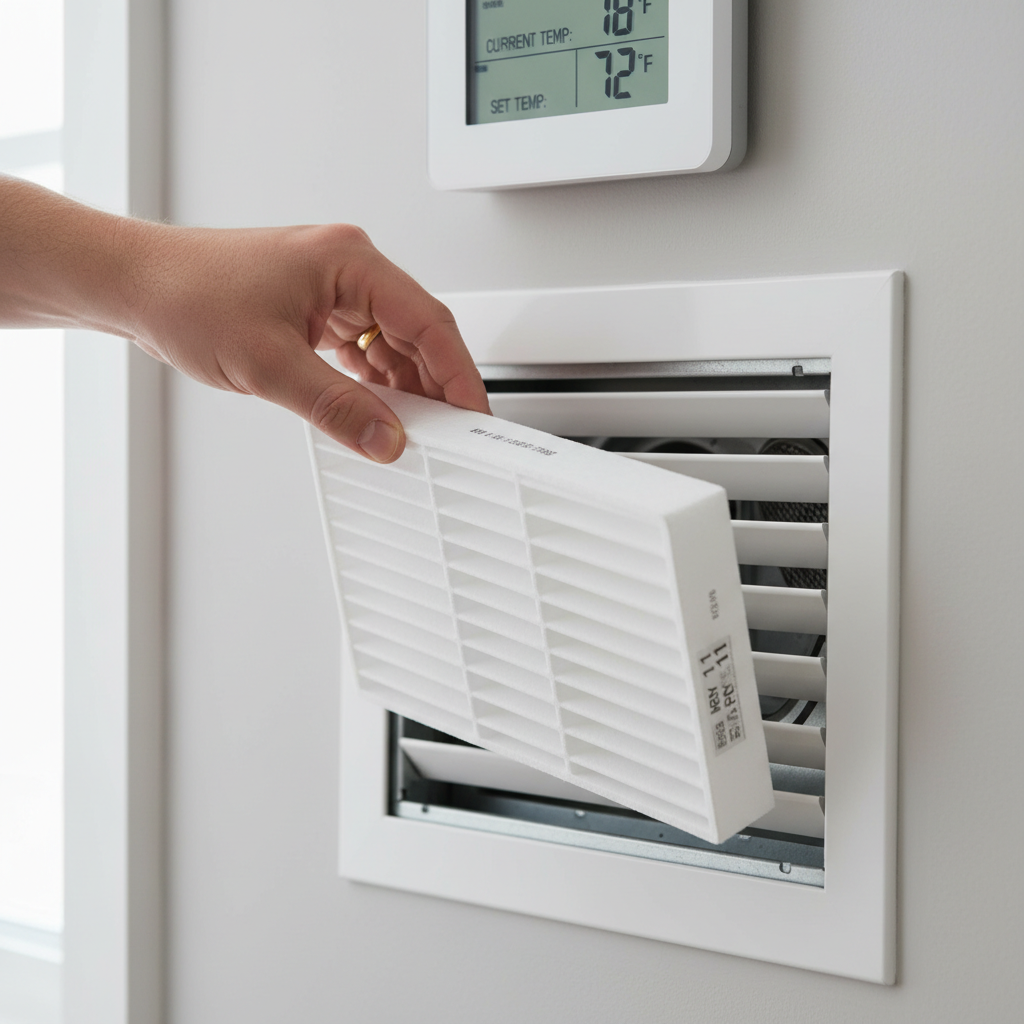
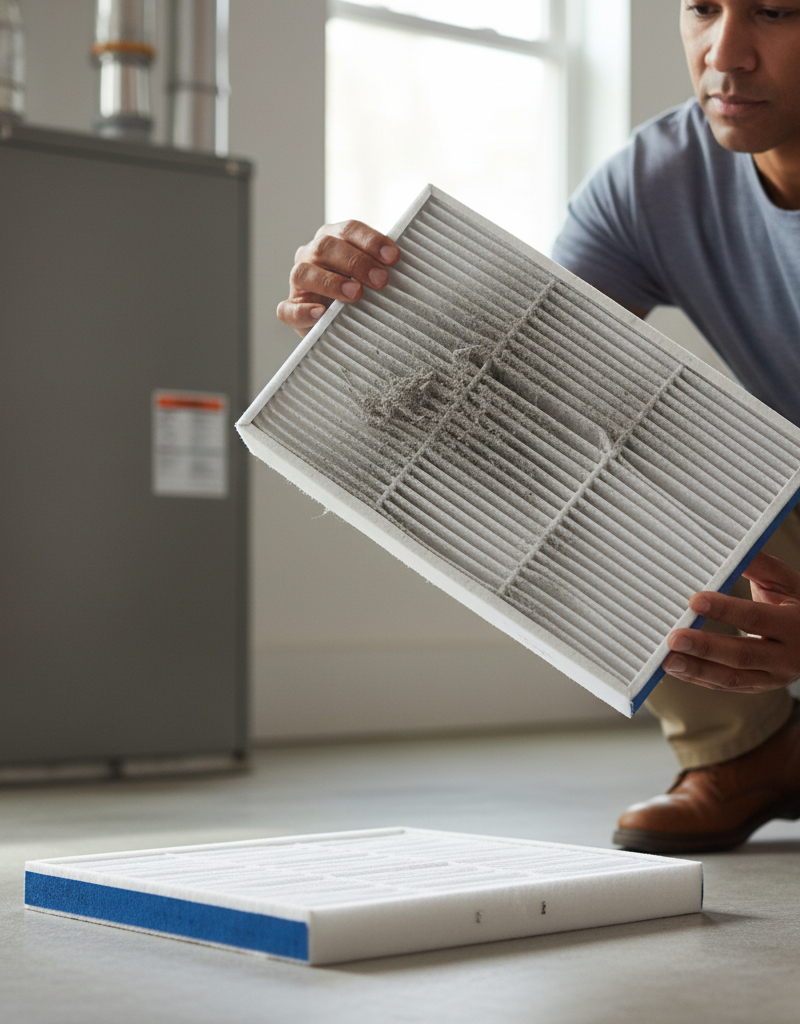
- Locate your air filter, usually in the return air duct or at the air handler/furnace. Note the arrow indicating airflow direction. A dirty filter chokes airflow, making your system work harder and reducing efficiency. Aim to check it monthly and replace it every 1-3 months. Hold it up to a light source – if you can't see light through it, it's time for a new one.
-
- Safety Note: Turn off your HVAC system at the thermostat or circuit breaker before handling the filter. Dust can irritate airways, so consider wearing a mask.
2. Ensure Vents and Returns Are Unblocked— *Clear paths for conditioned air.
-
- Walk through every room and ensure all supply vents (where air comes out) and return vents (where air goes back to the system) are fully open and not obstructed by furniture, rugs, or drapes. Even partially closed vents can significantly impact air distribution, creating temperature imbalances.
-
- If this doesn't work: Consider checking for obstructions within the ductwork, especially if you've recently had construction or pests. This usually requires professional inspection.
3. Inspect Outdoor HVAC Unit (AC Condenser or Heat Pump)— *A dirty unit can't dissipate heat efficiently.
-
- Safety Note: Turn off power to the outdoor unit at the dedicated circuit breaker before proceeding. The fan and electrical components can be dangerous.
-
- Visually inspect the fins around the outside of the unit. Are they clogged with dirt, leaves, grass clippings, or other debris? Use a garden hose (not a pressure washer) to gently spray the fins from the inside out to clear blockages. Ensure there's at least 2 feet of clear space around the entire unit for proper airflow.
-
- If this doesn't work: If the fins are bent or severely damaged, professional cleaning or repair may be needed to restore heat exchange efficiency.
4. Check for Leaky Windows and Doors— *Heat exchange with the outside world.
-
- Examine windows and doors for drafts. Use your hand, a lit incense stick, or a thermal camera (if available) to detect air leaks. Seal any gaps with caulk, weatherstripping, or door sweeps. Even small leaks add up to significant heat loss or gain, forcing your HVAC system to constantly fight against the elements.
-
- If this doesn't work: For larger gaps or older windows/doors, consider professional sealing or replacement to improve overall home energy efficiency.
5. Calibrate or Relocate Thermostat Sensor— *The brain needs accurate information.
-
- Some smart thermostats allow for sensor calibration within their settings menu. Consult your thermostat's manual for specific instructions. If your thermostat is near a heat source (like direct sunlight, a lamp, or a vent), it might be reading a falsely high temperature. Try moving any heat-emitting devices away from the thermostat. For older, mercury-based thermostats, you might gently dust inside the cover.
-
- If this doesn't work: If the thermostat still seems to be misreading temperatures consistently after calibration attempts, it might be faulty and require replacement. Newer thermostats often have remote sensors that can be strategically placed to give a more accurate average temperature of your home.
6. Inspect Refrigerant Lines (AC Only)— *A sign of insufficient cooling capacity.
-
- Safety Note: Do NOT attempt to add, remove, or work with refrigerant lines yourself. This is dangerous and illegal without proper certification. This step is for visual inspection only.
-
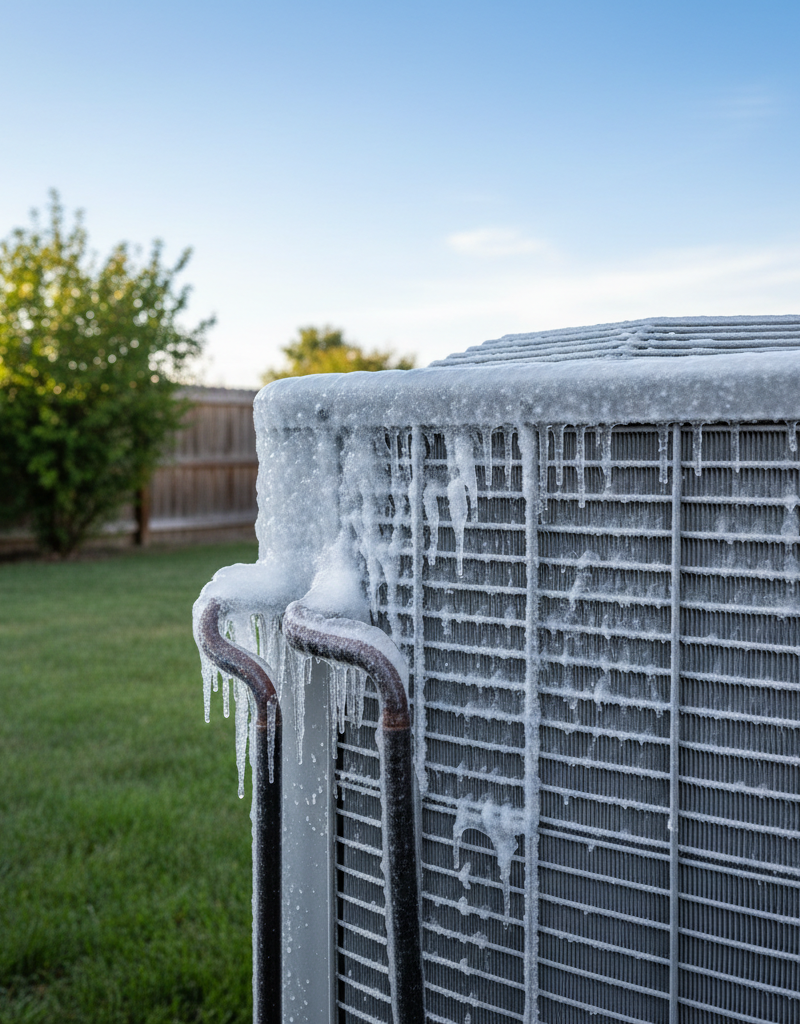
- During cooling cycles, observe the larger insulated copper line coming from your outdoor AC unit. If it's frozen or coated in ice, this is a strong indication of low refrigerant, a restricted line, or a dirty evaporator coil (the indoor coil). A frozen line severely impairs cooling ability.
-
- Pro Callout: If you spot ice, turn off your AC immediately to prevent compressor damage and call an HVAC professional. This is beyond DIY.
7. Review HVAC Short Cycling or Continuous Running— *System not running long enough or running too much.
-
- Listen to your HVAC unit's cycle times. If it's turning on and off very frequently (short cycling) or running non-stop without reaching the set temperature, it indicates an underlying problem. Short cycling can be due to an oversized unit, a dirty flame sensor (furnace), or low refrigerant (AC). Continuous running often points to low refrigerant, a major leak, or an undersized unit.
-
- If this doesn't work: These symptoms often require professional diagnosis using specialized tools to test pressures, charges, and electrical components. DIY attempts can cause further damage.
Common Causes
- Dirty Air Filter: Restricts airflow, making the system work harder and less efficiently.
- Blocked Vents or Returns: Prevents conditioned air from circulating properly throughout the home.
- Dirty Outdoor Condenser Unit: Impairs the AC's ability to dissipate heat, reducing cooling capacity.
- Low Refrigerant (AC/Heat Pump): A leak in the system reduces cooling/heating power and can cause freezing.
- Leaky Ductwork: Conditioned air escapes into unconditioned spaces (attic, crawl space), never reaching living areas.
- Poor Insulation or Air Leaks in Home: Allows heat/cold to escape/enter, overwhelming the HVAC system.
- Faulty Thermostat Sensor: Inaccurate temperature readings lead to incorrect system operation.
- Undersized HVAC System: The system isn't powerful enough to condition the home's square footage or poor insulation.
Common Mistakes
- Ignoring the Air Filter: Many homeowners forget to check or replace their air filter regularly, leading to reduced airflow and increased energy consumption.
- Closing Vents in Unused Rooms: While seemingly logical, this can disrupt the entire system's airflow balance, potentially leading to increased static pressure and damage to the blower motor.
- Setting Thermostat Too Low or Too High: Drastically changing the set point won't cool or heat a home faster; it just makes the system run longer, consuming more energy.
- Forgetting to Clear Around Outdoor Unit: Allowing shrubs, leaves, or debris to accumulate around the condenser unit chokes its ability to release or absorb heat.
- Attempting Refrigerant Recharge DIY: Refrigerant is a hazardous chemical, and its handling is regulated. Improper charging can damage your system and harm the environment.
- Assuming the Thermostat is Always Correct: A thermostat's location or internal sensor can be compromised, leading to inaccurate readings that throw off the entire system.
Cost & Time Breakdown
| Task | DIY Cost | Pro Cost | Time |
|---|---|---|---|
| Air Filter Replacement | $10–$30 | $0 (part of tune-up) | 5 minutes |
| Clear Vents/Returns | $0 | $0 | 5–10 minutes |
| Clean Outdoor Condenser Fins | $0 | $100–$250 | 30 minutes |
| Seal Leaks (Caulk/Weatherstrip) | $10–$50 | $200–$500 | 1–2 hours |
| Thermostat Calibration/Move | $0 | $50–$100 | 10–20 minutes |
| Professional HVAC Diagnosis | N/A | $80–$150 (trip fee) | 1 hour |
Tips & Prevention
- Regular Filter Changes: Replace your HVAC air filter every 1-3 months (more often with pets or allergies) to maintain optimal airflow and indoor air quality.
- Annual Professional Tune-Ups: Schedule a preventative maintenance check-up for your HVAC system every spring (for AC) and fall (for heating). Pros can spot minor issues before they become major problems.
- Keep Vents Clear: Periodically check that all supply and return vents are unobstructed by furniture, rugs, or drapes.
- Maintain Outdoor Unit Clearance: Ensure at least 2 feet of clear space around your outdoor AC or heat pump unit. Trim nearby foliage and keep it free of debris.
- Consider a Smart Thermostat: Upgrade to a programmable or smart thermostat for better scheduling, remote control, and features like zone control or remote sensors for improved temperature accuracy.
- Insulate and Seal: Improve your home's insulation and seal air leaks around windows, doors, and utility penetrations to reduce the load on your HVAC system.
When to Call a Professional
Call a licensed HVAC professional immediately if you observe ice on your refrigerant lines, hear unusual grinding or banging noises from your unit, or smell burning or gas (if applicable to your furnace). If basic troubleshooting steps like filter changes and vent clearing don’t resolve the issue, or if your system is short cycling, running constantly, and you suspect low refrigerant or a significant mechanical failure, it's time for a pro. An HVAC technician has specialized tools to safely diagnose complex electrical, mechanical, and refrigerant issues, ensuring your system operates efficiently and safely without further damage. Attempting DIY repairs on sealed refrigerant systems or complex electrical components can be dangerous and costly.
Related Articles
Keep troubleshooting with these hand-picked guides from FixlyGuide:
- The Secret Reason Your Oven Fails to Heat (It's NOT Always the Element) — Discover why your oven isn't reaching its set temperature, from common part failures to overlooked calibration issues, and how to fix it.
- The #1 Reason Your AC Freezes Solid (It's Not What You Think) — A frozen AC unit often points to poor airflow, which can be a simple fix if you know where to look.
- The #1 Reason Your AC Blows Warm Air (And It's Not What You Think) — Discover the most common and often overlooked reason your AC might be blowing warm air, and how a simple capacitor fix can restore cool air.
- Why Your Heat Pump Auxiliary Heat Won't Turn Off — Discover why your heat pump's auxiliary heat keeps running, driving up your energy bills. Learn to troubleshoot common issues and know when…
- The $0 Trick to Revive Your Frozen AC Fan (Before You Call a Pro) — Before you spend money on an AC repair, try this simple, no-cost trick to get your condenser fan spinning again and cool your home.
- The Secret Reason Your Chimney Leaks During Rain (It's Not Always the Obvious Culprit) — A leaking chimney during rain can be a frustrating mystery, but often the root cause isn't what you think, leading to costly misdiagnosis.
Frequently asked questions
Why would my thermostat not reach the set temperature?+
Your thermostat might not reach the set temperature due to common issues like a dirty air filter restricting airflow, blocked supply or return vents, a dirty outdoor AC unit preventing heat exchange, low refrigerant levels in your AC, or a miscalibrated thermostat sensor.
Can a bad thermostat cause the AC not to cool?+
Yes, a faulty thermostat can definitely cause your AC not to cool effectively. If the sensor inside the thermostat is inaccurate, it may incorrectly read the room temperature and tell the AC unit to turn off prematurely or not turn on at all, even when the room is warmer than the set temperature.
How do I fix my thermostat from not reaching temperature?+
To fix your thermostat not reaching the set temperature, start by replacing your air filter, ensuring all vents are open and unobstructed, and cleaning the outdoor condenser unit. Also, check for drafts around windows and doors, and consider if your thermostat's location is causing false readings. For complex issues like low refrigerant, call a professional.
Should my AC run constantly to reach temperature?+
No, your AC should not run constantly to reach the set temperature. While it will cycle on and off, continuous running without achieving the desired temperature suggests an underlying problem, such as being undersized, low on refrigerant, or experiencing a major airflow obstruction. This indicates inefficiency and potential system strain.
Discussion
Loading comments…