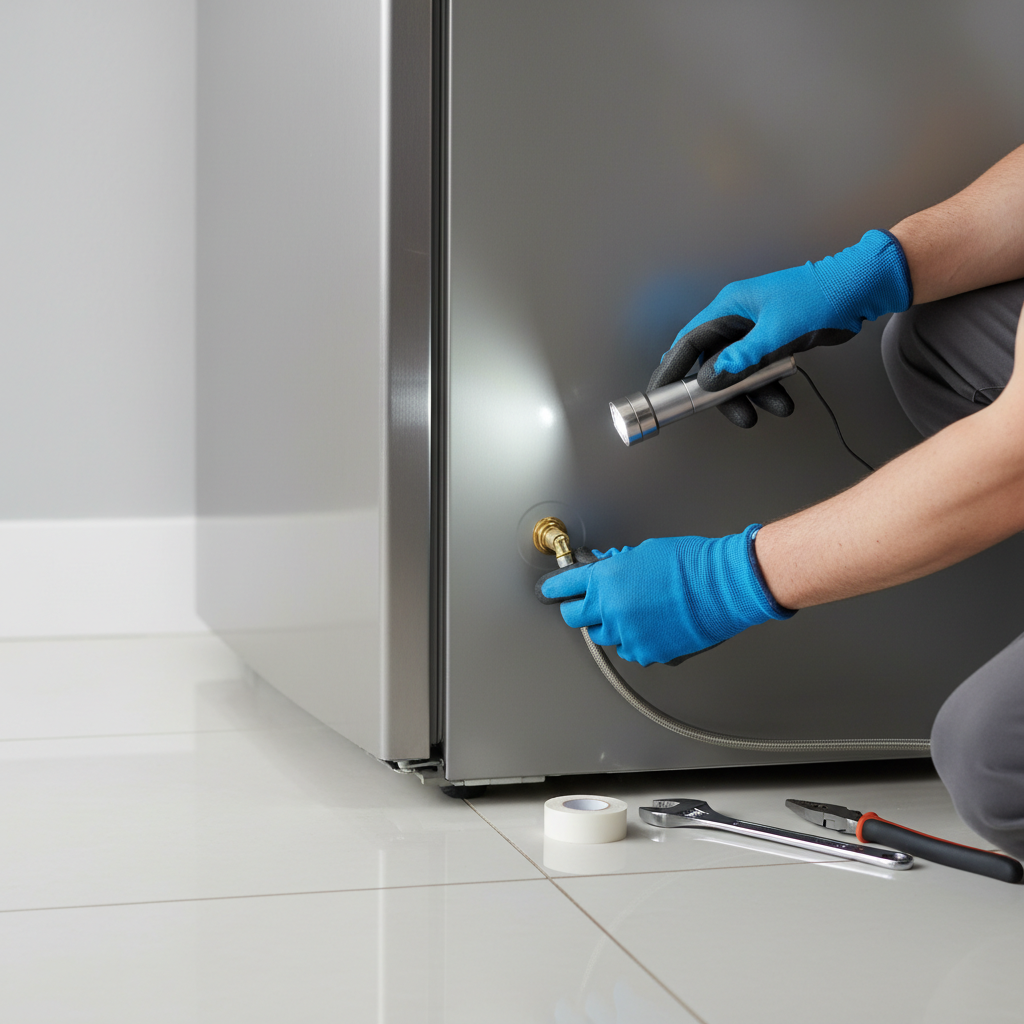
Tools & materials you'll need
Affiliate linksAs an Amazon Associate FixlyGuide earns from qualifying purchases — at no extra cost to you. Prices and availability are accurate as of publication and subject to change.
Quick Answer
Is your refrigerator forming an unwelcome puddle on your kitchen floor? More often than not, the culprit isn't a catastrophic failure but a simple blockage or misalignment. The most common cause is a clogged or frozen defrost drain line, which prevents condensation from reaching the evaporator drip pan. A simple cleaning or thawing can usually resolve this issue, saving you a costly service call.
The Problem
You wake up to find a mysterious puddle spreading from beneath your refrigerator. It's not a small spill from a dropped ice cube; it's significant, persistent, and frustrating. A leaking refrigerator can damage flooring, create slip hazards, and indicate a problem that, if left unaddressed, could lead to more serious issues with your appliance. Identifying the source of the leak is the first step to a dry floor and a happy refrigerator.
How It Works
Most modern refrigerators work by circulating cold air. Inside the freezer compartment, an evaporator coil gets incredibly cold, drawing heat and moisture from the air. This moisture, in the form of frost, regularly builds up on the coils. To prevent excessive frost buildup, refrigerators have an automatic defrost cycle. During this cycle, a heating element warms the evaporator coils for a short period, melting the frost.
The melted water then flows down into a defrost drain tube, which typically leads to a shallow drip pan located beneath the refrigerator, near the compressor. The heat generated by the compressor helps to evaporate this water over time. If the defrost drain tube becomes clogged with food particles, ice, or other debris, the melted water has nowhere to go. Instead, it backs up, overflows from the drain trough in the freezer, and eventually finds its way out of the appliance, often appearing as a leak on your kitchen floor. Similarly, problems with the water supply line for the ice maker or water dispenser can cause leaks, as can a cracked or improperly seated drain pan.
Step-by-Step Fix
Here's how to diagnose and fix the most common causes of a refrigerator leak:
-
Safety First— Unplug your refrigerator before performing any inspection or repair. This prevents accidental electric shock and ensures the unit doesn't suddenly start a defrost cycle while you're working. Pull the refrigerator away from the wall to access the back.
- Pro Safety Tip: Wear gloves to protect your hands from sharp edges and dirt.
-
Inspect the Defrost Drain Pan— Locate and examine the drip pan beneath the refrigerator. Many leaks are due to an overflowing drip pan. This pan collects condensation and often sits near the compressor at the very bottom, behind the kickplate, or accessible from the back. Carefully slide it out.
- Tools: Flathead screwdriver (for kickplate), Gloves
- If this doesn't work: If the pan is full, it's likely the defrost drain is clogged or you have a crack. Empty the pan and thoroughly clean it with soap and water.
-
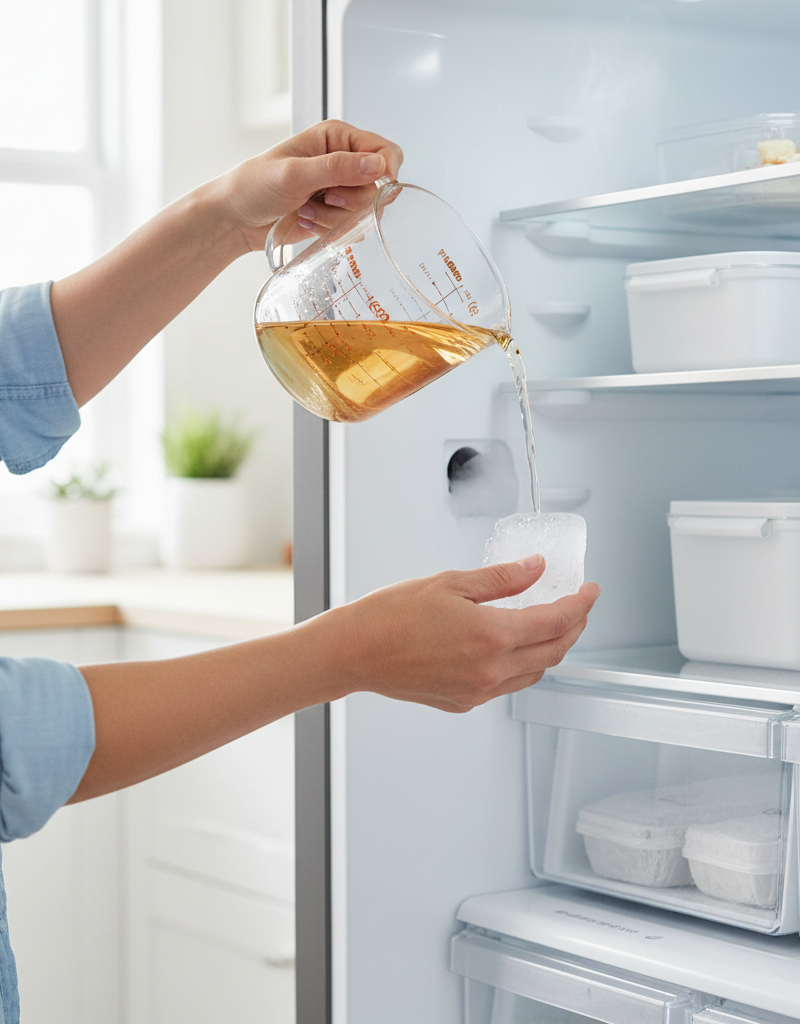
Clear a Clogged Defrost Drain Line— Access the defrost drain line, usually found at the back of the freezer compartment. First, empty your freezer. Remove any panels covering the evaporator coils. Locate the small drain hole or funnel beneath the coils. Use a turkey baster or syringe to flush hot water mixed with a little baking soda down the drain line. For stubborn clogs, use a thin, flexible wire or a pipe cleaner to carefully dislodge the debris. Be gentle to avoid puncturing the line.
- Tools: Turkey baster/syringe, Hot water, Baking soda, Flexible wire/pipe cleaner, Towels
- If this doesn't work: If water still doesn't drain freely, the clog might be further down or frozen. Proceed to step 4.
-
Thaw a Frozen Defrost Drain Line— If the drain line is frozen, you'll need to melt the ice. This often happens when the drain opening is partially blocked, allowing cold air to freeze residual water. You can apply a hairdryer on a low setting (keeping it moving to prevent overheating of plastic components) or pour warm water through the line using a turkey baster or similar tool. Place towels to catch the runoff.
- Tools: Hairdryer, Turkey baster, Warm water, Towels
- Safety Note: Do not use metal objects to chip away ice, as you could damage the evaporator coils or the drain line.
-
Check the Ice Maker Supply Line— Inspect the water supply line connected to your ice maker or water dispenser. These lines, typically made of plastic or copper, can crack, kink, or become loose, leading to leaks. Look for visible drips, puddles around the line connections, or signs of corrosion.
- Tools: Flashlight, Adjustable wrench (for compression fittings)
- If this doesn't work: If you find a leak, tighten any loose connections. If the line is cracked, it will need to be replaced. Ensure the new line is properly seated and secured.
-
Examine the Fill Tube (Ice Maker)— If the leak occurs only when the ice maker cycles, check its fill tube. Sometimes, the fill tube that guides water into the ice maker mold can become misaligned or partially frozen, causing water to spray or drip outside the mold. Reposition the tube so it points directly into the ice maker tray.
- Tools: Flashlight
- If this doesn't work: If frozen, carefully thaw it as described in Step 4. If misaligned, gently adjust its position.
-
Ensure Proper Refrigerator Leveling— A refrigerator that isn't level can cause water to pool incorrectly. Use a level to check the top and sides of your refrigerator. Adjust the leveling feet (usually located at the bottom front corners) to ensure the unit is stable and slightly tilted back. This slight backward tilt helps ensure condensation flows correctly towards the drain. Consult your owner's manual for specific leveling instructions for your model.
- Tools: Level, Wrench (for leveling feet)
- Key Insight: Many manufacturers recommend a slight backward tilt.
-
Reassemble and Test— Once you've addressed the potential leak sources, reassemble any panels, plug the refrigerator back in, and monitor for a few hours. Keep an eye on the drip pan and the area around the refrigerator to ensure the leak has stopped. It may take some time for the system to cycle and for condensate to form, so patience is key.
- Observation Tip: Place a dry paper towel under the refrigerator for easy leak detection.
Common Causes
- Clogged Defrost Drain Line: This is by far the most frequent culprit. Food particles, slime, or ice can block the narrow tube, causing water to back up and overflow into the freezer compartment and then onto the floor.
- Frozen Defrost Drain Line: Similar to a clog, ice buildup within the drain line prevents water from passing through. This often occurs in older refrigerators or those with a malfunctioning defrost heater.
- Cracked or Misaligned Drain Pan: The catch pan beneath the refrigerator can crack from age or impact, or it might simply be pushed out of place during cleaning, causing collected water to spill.
- Ice Maker Water Supply Line Issues: The plastic or copper line supplying water to the ice maker can become loose, kinked, or develop a small crack, leading to a steady drip.
- Ice Maker Fill Tube Misalignment: The tube that funnels water into the ice maker mold can shift, causing water to miss the mold and drip into the freezer cabinet.
- Door Gasket Leaks: While less common for significant floor puddles, a damaged or dirty door gasket can allow warm, humid air into the refrigerator, leading to excessive condensation and potential overflow of the internal drain system.
- Unlevel Refrigerator: If the refrigerator isn't properly leveled, especially with a slight backward tilt, water may not flow correctly to the drain pan.
Common Mistakes
- Ignoring the Problem: A small puddle can quickly become a big problem. Ignoring a leak can lead to floor damage, mold growth, and more extensive refrigerator repairs if moisture gets into electrical components.
- Overlooking the Defrost Drain: Many DIYers immediately suspect the water line and miss the more common defrost drain clog. Always check the defrost drain first.
- Using Sharp Objects in the Drain: Poking a metal hanger or knife into the defrost drain can puncture the delicate line or damage the evaporator coils, leading to a much more expensive repair.
- Not Unplugging the Unit: Forgetting to unplug the refrigerator before working on it is a critical safety mistake. Always disconnect power.
- Improperly Re-seating the Drain Pan: After cleaning, ensure the drain pan is correctly positioned and fully seated. A partially seated pan can cause leaks despite a clean drain line.
- Tightening Water Lines Too Much: Overtightening compression fittings on water supply lines can strip threads or crack plastic components, creating new leaks.
Cost & Time Breakdown
| Task | DIY Cost | Pro Cost | Time |
|---|---|---|---|
| Clear Defrost Drain | $0–$5 | $100–$250 | 30–60 mins |
| Replace Drain Pan | $20–$50 | $150–$300 | 20–40 mins |
| Replace Water Supply Line | $10–$30 | $120–$280 | 45–90 mins |
| Adjust Ice Maker Fill Tube | $0 | $80–$180 | 15–30 mins |
| Level Refrigerator | $0 | $50–$100 | 10–20 mins |
| Diagnosing Complex Issues | $0 | $100–$200+ | 1–2 hours |
Tips & Prevention
- Regular Drain Flushing: Every 6-12 months, flush a cup of hot water with a tablespoon of baking soda down your defrost drain to keep it clear of slime and debris.
- Clean Drain Pan: Periodically (e.g., when cleaning behind the fridge) remove and clean the drip pan. This prevents mold and ensures it's properly seated.
- Check Water Line Connections: During routine cleaning behind the refrigerator, take a moment to inspect the ice maker's water supply line for any kinks, obvious wear, or loose connections.
- Maintain Door Gaskets: Keep your door gaskets clean and inspect them for tears or gaps. A good seal prevents excess moisture buildup.
- Proper Leveling: Ensure your refrigerator remains level, with a slight backward tilt, to facilitate proper drainage.
- Don't Overload: Avoid overloading your freezer, which can sometimes impede airflow and lead to excessive frost buildup, straining the defrost system.
When to Call a Professional
While many refrigerator leaks are DIY-fixable, there are specific situations where calling a licensed appliance technician is the wisest course of action. If you've followed the diagnostic steps and are still experiencing a leak, or if you suspect an internal component failure, professional help is necessary. Call a professional if you notice water leaking from inaccessible areas, such as directly from behind the internal back panel of the refrigerator where the evaporator coils are located, after clearing the drain. This could indicate a more serious issue with the defrost heater, thermostat, or evaporator fan, which are complex components to diagnose and replace. Additionally, if the leak is accompanied by unusual noises, strange smells, or a complete failure of the refrigerator to cool, these are signs of a deeper mechanical or electrical problem that requires specialized tools and expertise. An experienced technician can safely diagnose and repair issues involving refrigerant lines, sealed systems, or complex electrical controls, ensuring the longevity and safe operation of your appliance.
Frequently asked questions
Why is my refrigerator leaking water inside the fridge?+
Water leaking inside your refrigerator, particularly in the crisper drawers or along the back wall, is almost always due to a clogged defrost drain. When the drain is blocked, melted frost has nowhere to go but back into the fridge compartment. Cleaning this drain line, usually accessible from inside the freezer, should resolve the issue.
Can a clogged water filter cause a refrigerator to leak?+
While less common for floor leaks, a damaged or improperly installed water filter can certainly cause leaks from the filter housing area. If you've recently replaced your water filter and notice a leak, re-check the installation and ensure the filter is the correct type for your model and securely seated.
How do I find the defrost drain on my refrigerator?+
The defrost drain typically originates at the bottom of the evaporator coil area inside your freezer. You'll usually need to remove an access panel (often at the back of the freezer compartment) to locate a small funnel or opening that leads to the drain tube. Consult your refrigerator's owner's manual for its exact location and access instructions.
My new refrigerator is leaking, what could be wrong?+
If a new refrigerator is leaking, first check that the water supply line for the ice maker/water dispenser is properly connected, not kinked, and free of damage. Ensure the refrigerator is level, as an unlevel unit can cause drainage issues. Sometimes, shipping plugs or improper alignment during installation can also be the cause. If these simple checks don't resolve it, contact the retailer or manufacturer for warranty service.
How often should I clean the drip pan under my refrigerator?+
It's a good practice to clean the drip pan at least once a year, or more frequently if you notice standing water, odors, or a very dirty pan when cleaning behind your refrigerator. Regular cleaning prevents mold and mildew growth and ensures the pan isn't overflowing due to debris.
Discussion
Loading comments…