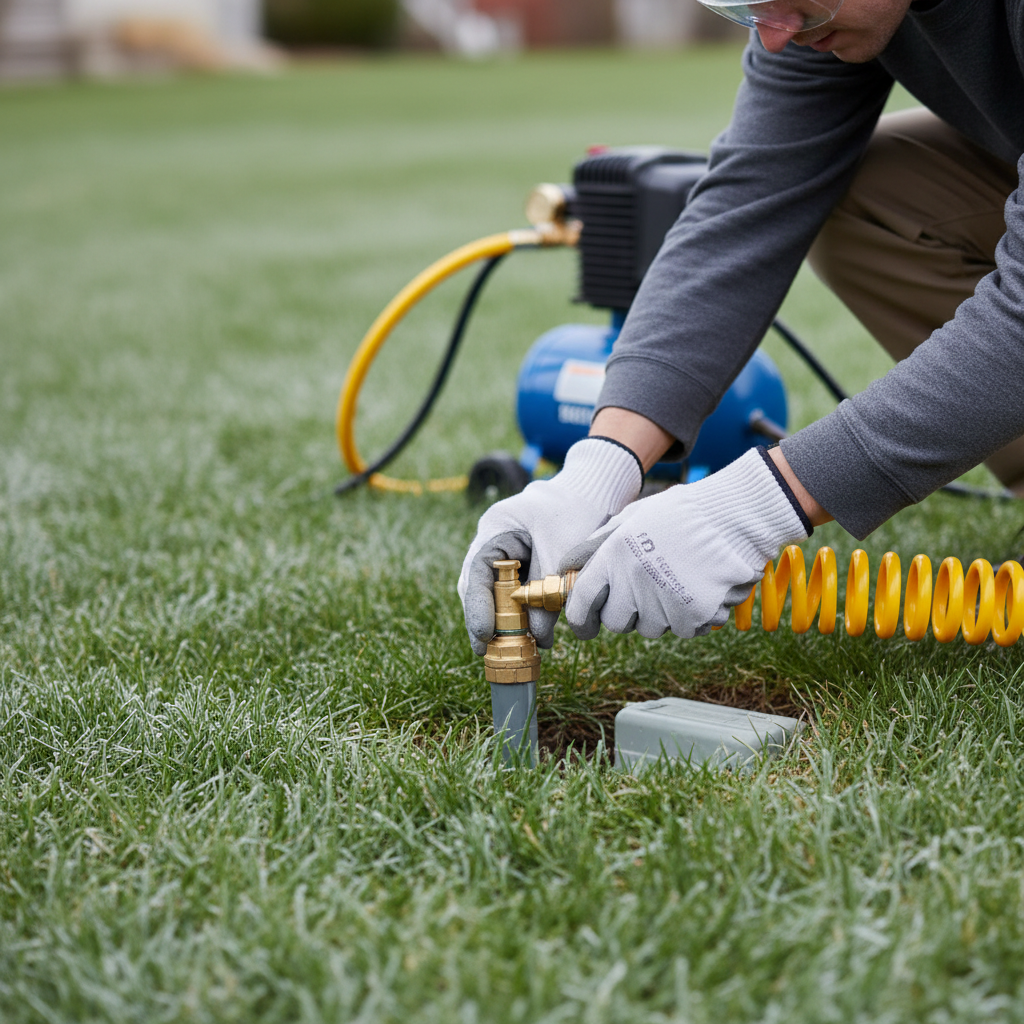
Tools & materials you'll need
Affiliate links- AmazonAir compressor adapter kitAssorted fittings to connect to your blow-out port
As an Amazon Associate FixlyGuide earns from qualifying purchases — at no extra cost to you. Prices and availability are accurate as of publication and subject to change.
Quick Answer
Protecting your sprinkler system from winter freeze damage hinges on the complete removal of water from all pipes, valves, and sprinkler heads. The most effective and recommended method for homeowners is a 'blow-out' using an air compressor to force all water out of the irrigation lines. Skipping this crucial step or performing it incorrectly is the leading cause of costly cracks and leaks when temperatures drop below freezing, often leading to hundreds, if not thousands, of dollars in repairs come springtime.
The Problem
As temperatures plummet below 32°F (0°C), residual water left inside your sprinkler system's pipes and components will freeze. Water, unlike most substances, expands as it freezes, exerting immense pressure (up to 2,000 pounds per square inch) on its surroundings. This expansive force is powerful enough to crack PVC pipes, rupture polyethylene lines, shatter brass or plastic valves, and damage the internal mechanisms of sprinkler heads and backflow preventers. The aftermath is often discovered in spring: multiple leaks, non-functioning zones, and significant expenses to excavate and replace damaged sections. Many homeowners underestimate the severity of this damage, assuming a simple drain will suffice, only to face a plumbing nightmare when they attempt to reactivate their system for the warmer months.
How It Works
An irrigation system is essentially a network of pipes, valves, and spray or rotor heads designed to distribute water across your lawn and garden. Water enters the system from your main supply, passes through a backflow preventer (which stops contaminated water from re-entering your drinking supply), and then branches off into various zones, each controlled by an electric valve. When a zone is activated, its valve opens, allowing water under pressure to flow through the underground pipes to the sprinkler heads, which then spray water. The pipes are typically buried 8 to 12 inches deep, but sprinkler heads, risers, and some valve components are closer to the surface. Even deep pipes can hold water that will freeze if not properly drained or blown out. The 'blow-out' method introduces compressed air into the system, pushing the water out through the open sprinkler heads. This process must be done carefully, zone by zone, ensuring that the air pressure is sufficient to clear the lines but not so high that it damages the system's components. The air pressure essentially takes the place of the water, clearing the system entirely.
Step-by-Step Fix
Before you begin, check your owner's manual for recommended air pressure limits for your specific system components, especially the backflow preventer. Always wear appropriate personal protective equipment, including safety glasses.
- Safety First: Wear safety glasses and sturdy gloves. Compressed air can cause serious injury if not handled correctly.
- Shut Off Water Supply – Turn off the main water supply to your irrigation system.
- Locate the main shut-off valve, usually near your water meter or where the irrigation line branches off from your house's main water supply.
- Turn the handle clockwise until it's fully closed.
- If your system has a separate backflow preventer, ensure its shut-off valves are also closed.
- Drain the Backflow Preventer – Prevent damage to this critical component.
- Locate your backflow preventer, often a brass or plastic device above ground.
- Open the test cocks (small valves on the side or top) to allow any remaining water to drain out.
- Open the main shut-off valves on the backflow preventer (if you closed them in step 2) to a 45-degree angle. This allows air to pass through but prevents a vacuum. Check your specific backflow model for the correct draining procedure, as some require full opening.
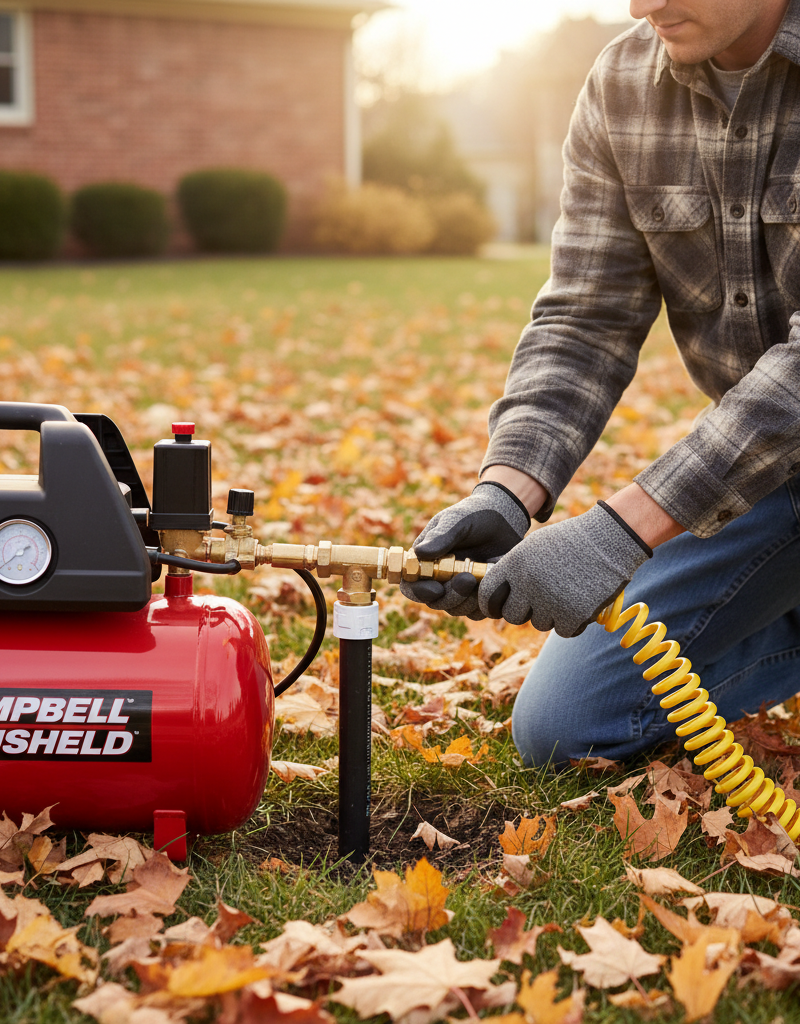
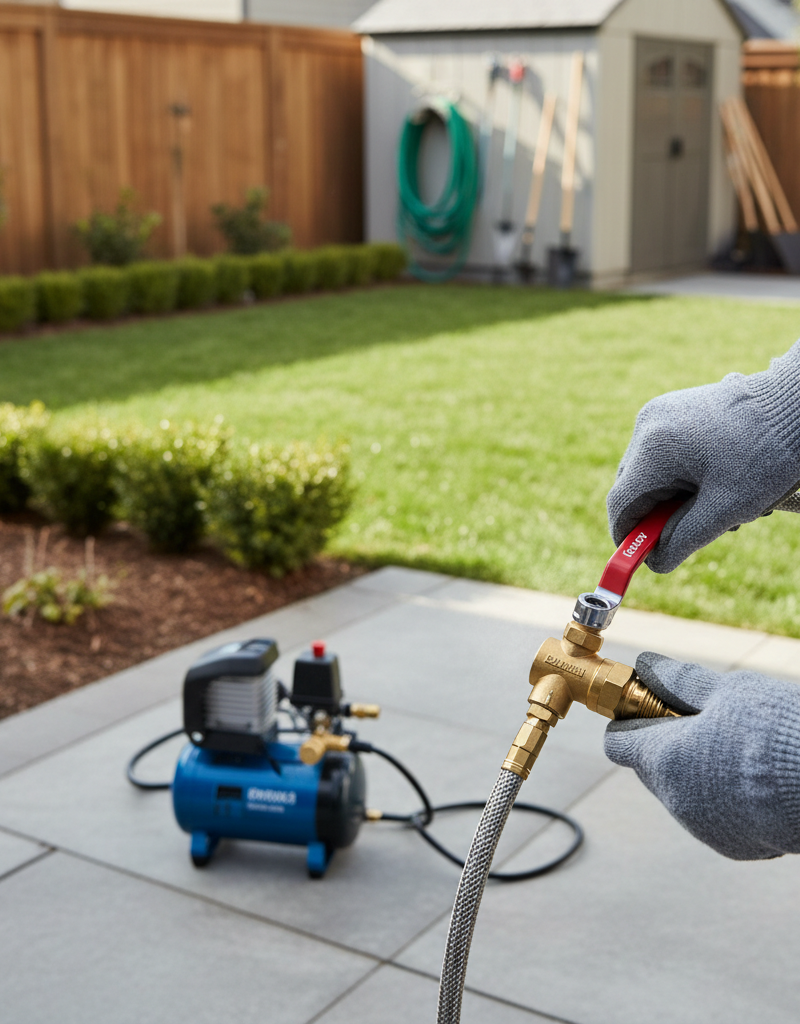
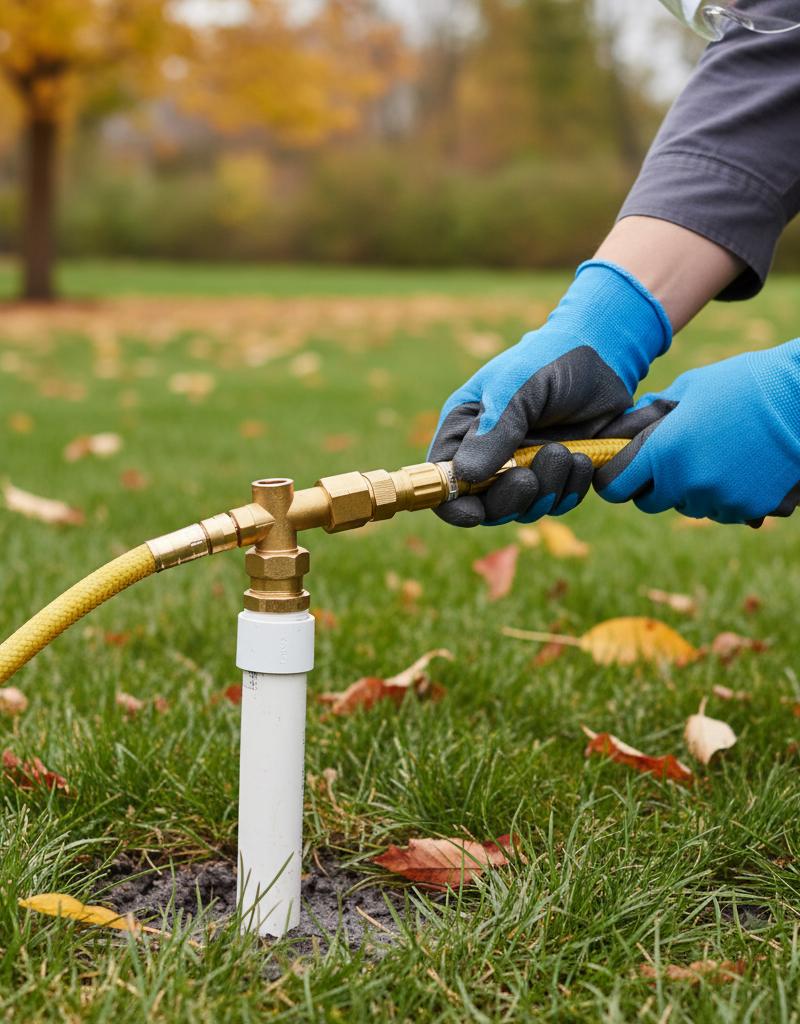
- Connect Air Compressor – Attach the compressor to the system's blow-out port.
- Find the blow-out port. This is usually a dedicated fitting, often a threaded male connection, located after the backflow preventer but before the irrigation zones.
- Use an air compressor (recommended 5-10 CFM and 20-25 gallon tank for residential systems) with an air hose and appropriate adapter (e.g., quick connect, tire chuck, or threaded fitting).
- Set the compressor's regulator to no more than 50 PSI for PVC systems and 80 PSI for polyethylene systems. Lower pressure is always safer. Never exceed 80 PSI.
- Attach the air hose securely to the blow-out port.
- Open the Farthest Zone First – Systematic clearing prevents pressure buildup.
- On your irrigation controller, manually activate the zone that is physically farthest from the compressor connection.
- Stand clear of the sprinkler heads. Water will initially spray out, followed by a mist, and then just air.
- Allow the air to run for about 1-2 minutes after only air is coming out of the heads, ensuring all residual moisture is gone.
- If heads aren't fully extending or water isn't clearing, briefly close the zone valve on the controller, let the air compressor build pressure, and then reopen the zone. Repeat as needed.
- Cycle Through Remaining Zones – Repeat for each zone until fully purged.
- Once the first zone is clear, deactivate it on the controller.
- Move to the next farthest zone and repeat the process from step 5.
- Continue this systematic approach for all remaining zones.
- Troubleshooting multiple zones: If one zone isn't clearing, check for blockages or a possible leak in that line. Turn off the compressor, inspect heads, and resume.
- Purge the Main Line (if applicable) – Ensure the primary feed is clear.
- After all individual zones are blown out, open the irrigation master valve (if your system has one) and briefly blow air through the main line to ensure it's also clear.
- Disconnect and Store – Prepare for next season.
- Turn off the air compressor.
- Slowly disconnect the air hose from the blow-out port, being mindful of any remaining pressure.
- Store your compressor and hoses in a dry place.
- Leave all backflow preventer valves and test cocks open at a 45-degree angle to prevent water from accumulating and freezing again. This also allows for drainage of any future condensation.
Common Causes
- Neglecting the Blow-Out: The most common cause of winter damage is simply not performing a blow-out or relying on manual draining alone, which rarely removes all water.
- Insufficient Air Pressure/Volume: Using a small, underpowered air compressor that can't move enough air (CFM) or generate enough pressure (PSI) to force all the water out of the longer, larger diameter pipes.
- Incorrect Blow-Out Procedure: Not starting with the farthest zone, opening too many zones at once, or not allowing enough time for each zone to clear completely.
- Over-Pressurization: Setting the air compressor's regulator too high, exceeding the maximum safe PSI for the system's components (especially PVC pipes and backflow preventers), leading to immediate or latent damage.
- Ignoring the Backflow Preventer: Forgetting to properly drain and set the backflow preventer's valves for winter, as this component is particularly susceptible to freezing.
- Early Winterizing: Waiting until the last minute, allowing an unexpected early freeze to catch the system unprepared.
Common Mistakes
- Using a Tire Compressor: These small compressors lack the necessary CFM (cubic feet per minute) to effectively push water out of an entire irrigation zone. You need a compressor with a higher air volume for this task.
- Opening All Zones at Once: This drastically reduces air pressure across the entire system, making it ineffective at purging water from any single zone. Always clear one zone at a time.
- Underestimating Compressor Size: A small pancake compressor might work for a tiny drip line, but a typical residential sprinkler system requires a compressor with at least 5-10 CFM and a 20-25 gallon tank to be effective.
- Not Draining the Backflow Preventer Correctly: Many homeowners either forget to open test cocks or leave the main backflow valves fully open/closed without proper partial opening, leading to water accumulation and freezing.
- Exceeding Recommended PSI: Blasting too much air pressure can cause internal damage to valves, sprinkler heads, and even burst pipes. Always use a regulator and stay within the safe limits (typically 50 PSI for PVC, 80 PSI for poly).
- Skipping the Last Zone: Thinking that once most water is out, the job is done. Even a small amount of water in the last zone can cause significant damage.
Cost & Time Breakdown
| Task | DIY Cost | Pro Cost | Time |
|---|---|---|---|
| Air Compressor Rental (day) | $40–$70 | Included in service | 0.5–1 hour setup |
| Fittings/Adapters | $10–$30 | Included | 10–20 minutes |
| DIY Winterization | $50–$100 | N/A | 1–2 hours |
| Professional Winterization | N/A | $75–$150 | 30–60 minutes |
| Spring Repair (minor leak) | $50–$150 | $200–$400+ | 2–4 hours (DIY) |
| Spring Repair (major damage) | $200–$500+ | $500–$1,500+ | 4–8+ hours (DIY) |
Tips & Prevention
- Monitor Forecasts: Pay close attention to local weather forecasts. Aim to winterize your system a few weeks before the first hard freeze (several consecutive hours below 32°F) is expected.
- Zone Labeling: Clearly label your irrigation control zones for easy identification and systematic blow-out.
- Annual Inspection: In late summer or early fall, conduct a full inspection of your system for any existing leaks or damage. Fix these proactively to ensure proper winterization.
- Consider a Professional: If you're unsure about the process, lack the right equipment, or have a complex system, investing in a professional winterization service annually is often cheaper than repairing freeze damage.
- Self-Draining Systems (Caveat): While some basic systems are advertised as
Related Articles
Keep troubleshooting with these hand-picked guides from FixlyGuide:
- The #1 Mistake Homeowners Make Winterizing Sprinklers (And How to Avoid a Burst Pipe) — Learn the critical steps to properly winterize your sprinkler system and prevent costly burst pipes when temperatures drop below freezing.
- The #1 Sprinkler Winterizing Mistake That Leads to $1,000s in Damage — Learn how to properly winterize your sprinkler system and avoid costly damage from freezing temperatures with this comprehensive guide.
- The #1 Sprinkler Winterization Mistake That Costs Homeowners Thousands — Discover the crucial mistake many homeowners make winterizing sprinklers and how to avoid costly freeze damage with proper blowout techniqu…
- The #1 Mistake Homeowners Make Winterizing Sprinklers (and How to Avoid Burst Pipes) — Discover the biggest mistake homeowners make when winterizing their sprinkler system and learn the proper steps to prevent costly burst pip…
- The #1 Mistake Killing Your Thin Lawn (And How to Fix It in a Weekend) — Overseeding your lawn can transform it from thin and patchy to lush, but many homeowners make a crucial mistake that hinders success. Learn…
- The #1 Mistake Homeowners Make After Finding Missing Shingles (And How to Fix It Right) — Discover the crucial steps to take after a storm rips shingles from your roof, ensuring a proper, lasting repair and preventing costly futu…
Frequently asked questions
How cold does it have to be to damage sprinkler pipes?+
Sprinkler pipes can be damaged once temperatures drop to 32°F (0°C) or below for several hours. This allows any residual water inside the pipes to freeze and expand, leading to cracks and ruptures. Even short periods below freezing can cause significant issues.
Can I winterize my sprinkler system without an air compressor?+
While some very basic systems with drains at low points might allow for manual draining, it's highly unreliable for residential systems with varying elevations and complex piping. An air compressor (blow-out method) is the only truly effective way to ensure all water is removed and prevent freeze damage. Manual draining often leaves enough water behind to cause significant issues.
What PSI should I use to blow out my sprinkler system?+
For most residential PVC sprinkler systems, you should use no more than 50 PSI (pounds per square inch). For polyethylene (black flexible pipe) systems, you can go up to 80 PSI. Always use a regulator and err on the side of lower pressure to avoid damaging system components, especially sensitive backflow preventers.
How long does it take to blow out a sprinkler system?+
For a typical residential system with 4-6 zones, the active blow-out process usually takes 30-60 minutes, assuming you have the right equipment set up. This doesn't include the time to gather equipment or set up the compressor.
Discussion
Loading comments…