Tools & materials you'll need
Affiliate links- AmazonBucket1 · For catching water
- AmazonScrewdriver set (Phillips and flathead)1 set · For access panels
- AmazonPliers (needle-nose or slip-joint)1 · For hose clamps (if applicable)
- AmazonMultimeter1 · Optional, for testing electrical components
- AmazonAdjustable wrench1 · For hose connections (if applicable)
- AmazonSmall brush (e.g., old toothbrush)1 · For cleaning filters
As an Amazon Associate FixlyGuide earns from qualifying purchases — at no extra cost to you. Prices and availability are accurate as of publication and subject to change.
Quick Answer
When your washing machine mysteriously refuses to spin or drain, the problem can often be traced back to a few key areas that are surprisingly easy for a homeowner to inspect and, in many cases, fix. From a simple kink in the drain hose to a less obvious issue with the lid switch or a clogged pump filter, understanding the common failure points can save you time, money, and the hassle of a service call. We'll walk you through how to diagnose and resolve these common issues, empowering you to get your laundry routine back on track.
The Problem
You've loaded your washing machine, added detergent, and pressed start, only to return later to find a tub full of soapy water and soggy clothes – the dread of every homeowner. Your washing machine isn't spinning to wring out the water, and it's certainly not draining. This frustrating scenario can stem from various causes, some minor and others requiring a bit more detective work. The immediate concern is the standing water, which can lead to odors or even damage if not addressed promptly. Beyond that, the inability to complete a cycle means your laundry is stuck, and your washer is essentially out of commission. Before you panic and call a pricey repair technician, there are several diagnostic steps and simple repairs you can perform to identify and often resolve the issue yourself.
How It Works
To understand why your washing machine might not be spinning or draining, it helps to know the basic mechanics of how these cycles function. When your washer is in a drain cycle, a powerful drain pump activates, pulling water from the bottom of the tub and pushing it out through the drain hose connected to your home's plumbing system (usually a utility sink, a standpipe, or a floor drain). This pump is typically motor-driven and can move several gallons of water per minute. For the spin cycle, the main motor engages, rapidly rotating the inner drum to centrifugally force water out of the clothes and through perforations in the tub, where it then enters the drain system.
Crucially, safety mechanisms are in place to prevent the spin cycle from engaging if the lid is open. A lid switch, usually located under the machine's top panel near the lid hinge, detects whether the lid is closed. If the lid is open or the switch is faulty, the washer's control board will prevent the spin cycle (and often the drain cycle, as they are often intertwined) from starting to protect users from the high-speed motion of the tub. Additionally, a pressure switch monitors the water level in the tub. If this switch malfunctions, it might incorrectly believe the tub is still full, preventing the drain and spin cycles from activating even if the tub is empty, or conversely, allowing these cycles to run when they shouldn't. Any obstruction in the drain path, from the tub's filter to the main drain hose, will impede the pump's ability to move water out, leading to a standstill.
Step-by-Step Fix
1. Safety First — Before attempting any repair, always unplug the washing machine from the wall outlet to eliminate the risk of electric shock. If the tub contains standing water, you may need to bail it out manually before tilting or moving the machine.
2. Check the Drain Hose for Kinks or Clogs — This is the simplest and most common cause. The flexible drain hose can easily become kinked if the machine is pushed too close to a wall, or a clog can form internally.
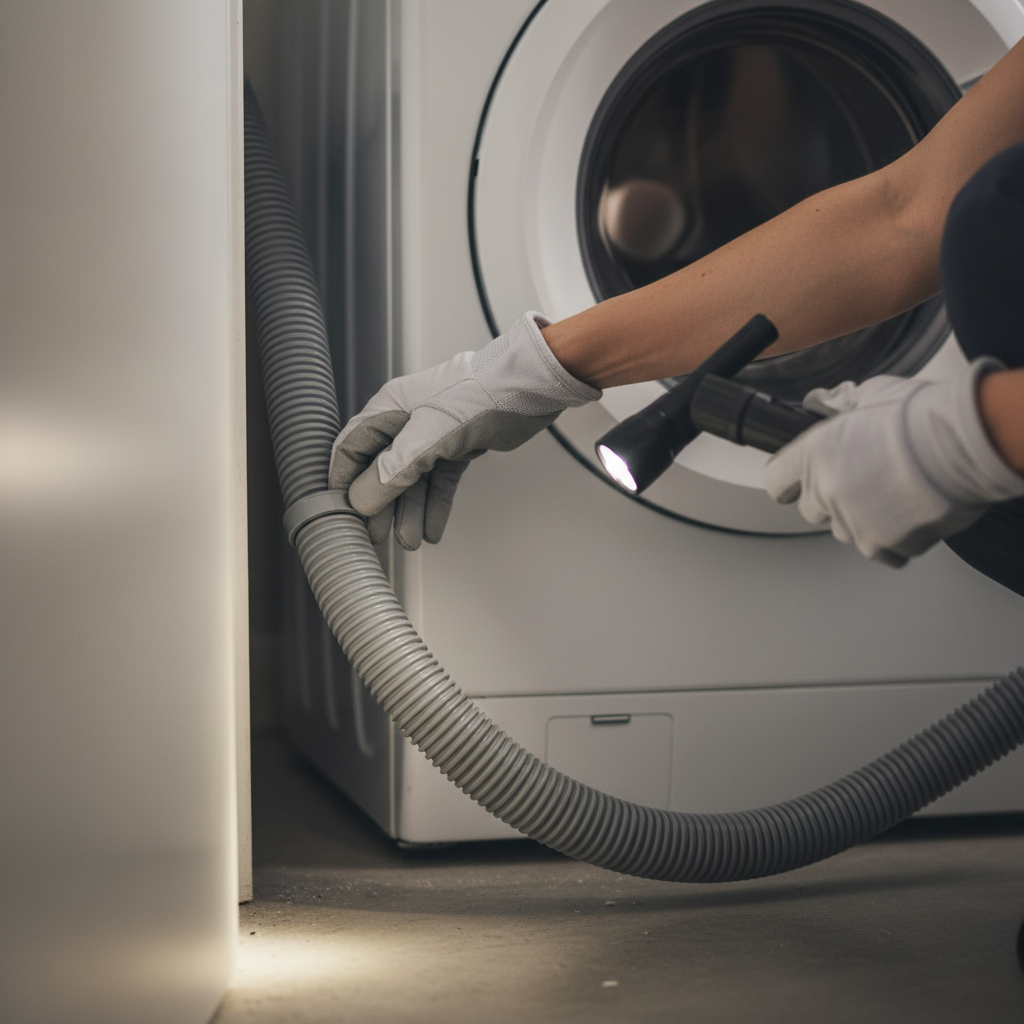
- Inspection: Pull the washer away from the wall and visually inspect the entire length of the drain hose for any bends, kinks, or crushing. Ensure it's not shoved too far down the standpipe, which can create an airlock. The hose should enter the standpipe no more than 6-8 inches.
- Clear Clogs: Disconnect the drain hose from the standpipe or utility sink. Place the end of the hose into a bucket and lower it to floor level to see if any water drains out. If it does, the clog is likely in your household drain plumbing, not the washer itself. If no water comes out or it drains slowly, the clog is in the hose. You can try flushing it with a garden hose or using a drain snake if necessary.
- If this doesn't work: If the hose is clear, the issue likely lies deeper within the washer's drainage system.
3. Inspect and Clean the Drain Pump Filter — Many modern washing machines have a small filter designed to catch lint, coins, and other small items before they reach the pump, preventing damage and clogs. This filter is usually located behind a small access panel near the bottom front of the washer.
- Locate Panel: Refer to your appliance's owner's manual for the exact location. It may be a small door or a removeable panel.
- Drain Water: Before opening the filter, place a shallow pan and towels underneath, as some water will likely spill out. Slowly unscrew or unclip the filter cover.
- Clean Filter: Carefully remove the filter and clean off any debris, lint, or foreign objects (coins, buttons, socks). Use an old toothbrush to scrub away any grime. Also, inspect the cavity where the filter sits for obstructions.
- Reassemble: Screw the filter back in firmly, ensuring a watertight seal.
- Safety Note: Wear gloves, as the water can be dirty and contain sharp objects.
4. Test the Lid Switch Assembly — A faulty lid switch is a very common reason a washer won't spin or drain, as it's a critical safety interlock. On most top-loading washers, the switch is located under the main top panel, near the lid hinge.
- Access: Unplug the washer. Depending on your model, you might need to pry up the control panel or remove screws to lift the main top panel.
- Locate Switch: Find the small plastic or metal switch assembly; it often has a plunger arm that the lid presses down.
- Bypass (for testing ONLY): With the washer unplugged, you can carefully use a multimeter to test for continuity across the switch's terminals when the plunger is depressed (lid closed simulation). Alternatively, and with extreme caution and the machine UNPLUGGED after initial fill, you can briefly jump the wires (consult a wiring diagram for your specific model – typically the two
Related Articles
Keep troubleshooting with these hand-picked guides from FixlyGuide:
- The Secret Culprit Behind Your Leaking Washer (It's Not Always the Hose) — A washing machine leaking water from the bottom can often be traced to common, easily fixable issues like loose hoses or a clogged drain pu…
- The Secret Culprit Behind Your Leaky Refrigerator (It’s Not Always a Hose) — Discover the hidden causes of your refrigerator leaking water and how to fix them with our comprehensive troubleshooting guide.
- The Secret Culprit Behind Your Dishwasher Not Draining (It's Not Always a Clog) — Your dishwasher not draining can stem from simple fixes to more complex issues, often involving the air gap, drain hose, or filter.
- The #1 Mistake Homeowners Make When Their AC Drain Clogs (And The $5 Fix) — Discover the most common error homeowners make when tackling a clogged AC drain line and learn a simple, inexpensive solution to prevent co…
- The 4-Step Water Heater Flush That Adds Years to Its Life (and Cures 3 Common Problems) — Flushing your water heater annually is a quick DIY task that prevents sediment buildup, extends the unit's lifespan, and improves efficienc…
- The Hidden Reason Your GFCI Trips (It's Not Always a Faulty Outlet) — A continuously tripping GFCI outlet is a critical safety warning, often indicating moisture, a faulty appliance, or a wiring problem that r…
Frequently asked questions
Why is my washing machine not draining all the water?+
The most common reasons for a washing machine not fully draining are a clogged drain hose, a blocked drain pump filter, or a malfunctioning drain pump itself. Less frequently, a faulty water level sensor or control board can also be the cause, incorrectly signaling that the tub is empty when it's not.
Can I manually drain my washing machine?+
Yes, you can manually drain a washing machine. First, unplug it from the power source. Then, locate the drain hose at the back of the machine, lower it into a bucket on the floor, and allow gravity to drain the water. For models with a front-access drain pump filter, you can also slowly unscrew the filter (with a pan underneath) to allow water to flow out.
How do I know if my washing machine pump is broken?+
Signs of a broken washing machine pump include the machine not draining water at all, making loud humming or grinding noises during the drain cycle without water moving, or leaking water from the pump area. If you've cleared all clogs and the pump still doesn't activate or move water, it's likely faulty.
Where is the filter on my washing machine?+
The drain pump filter on most front-loading washing machines is typically located behind a small access panel at the bottom front of the appliance. For some top-loaders, the filter might be integrated with the drain hose connection inside the machine. Always consult your owner's manual for the exact location specific to your model.
How often should I clean my washing machine drain pump filter?+
It's recommended to check and clean your washing machine drain pump filter every 3 to 6 months, or more frequently if you wash a lot of pet hair, heavily soiled items, or notice drainage issues. Regular cleaning helps prevent clogs and maintains efficient drainage performance.
Discussion
Loading comments…