Tools & materials you'll need
Affiliate linksAs an Amazon Associate FixlyGuide earns from qualifying purchases — at no extra cost to you. Prices and availability are accurate as of publication and subject to change.
Quick Answer
When your gas stove burner clicks away but refuses to ignite, the most frequent culprits are surprisingly simple: a clogged burner port, a dirty or failing igniter, or a loose electrical connection. These issues often arise from everyday cooking spills and wear. You can typically resolve the problem with a thorough cleaning of the burner components and igniter, followed by a check of the igniter's electrical connections. Understanding how your stove's ignition system works is key to making a quick, effective repair without needing a professional.
The Problem
There's nothing more frustrating than preparing a meal only to find one of your gas stove burners won't light. You turn the knob, hear the familiar clicking, smell the faint scent of gas, but no flame appears. This isn't just an inconvenience; it can disrupt your cooking plans and, if left unaddressed, indicate a larger issue with your stove's ignition system. The good news is that for many homeowners, this problem is entirely solvable with basic tools and a bit of patience. Before you call a technician, understanding the common points of failure will empower you to diagnose and potentially fix the issue yourself, saving you time and money.
How It Works
Modern gas stove burners rely on an electronic ignition system, a clever piece of engineering that eliminates the need for a standing pilot light. When you turn a burner knob, two things happen simultaneously:
- Gas Valve Opens: The knob's rotation opens a gas valve, allowing natural gas or propane to flow from the gas line through the stove's manifold and into the burner base. The gas then travels through small holes, or ports, around the burner head.
- Spark Ignition: At the same time, an electrical switch sends a signal to the igniter assembly, usually a small ceramic rod with a metal tip located near the burner. A high-voltage spark is generated across the igniter's tip, creating an arc of electricity.
This spark is designed to ignite the gas flowing out of the burner ports. For successful ignition, three elements must be present: fuel (gas), oxygen (from the air), and an ignition source (the spark). If any of these are compromised – for example, if the gas flow is blocked, the igniter is dirty or faulty, or there isn't enough oxygen due to a lack of spark – the burner will click indefinitely without lighting. Understanding this basic principle helps you isolate the problem: is it a gas delivery issue, a sparking issue, or something else preventing the two from meeting effectively?
Step-by-Step Fix
Safety First: Before attempting any repairs, ensure your stove is unplugged from the electrical outlet or the circuit breaker for the stove is turned off. If you smell a strong gas odor, immediately turn off the gas supply to the stove, open windows, and evacuate. Do NOT use any electrical devices, and call your gas company's emergency line. Work in a well-ventilated area.
1. Assess the Situation – Determine which burner is problematic.
*   **All burners not lighting?** – This usually points to a larger issue like a power supply problem or a gas supply disruption. Check if the stove is plugged in and if the gas valve is open. For power issues, check your home's circuit breaker.
*   **Only one burner not lighting?** – This typically indicates a local problem with that specific burner or its igniter, which is what we'll focus on.
2. Remove Burner Components – Clear the deck for cleaning.
*   **Tools:** Work gloves.
*   Allow the stove to cool completely if it was recently used.
*   Carefully lift off the burner grates, then the burner caps (the round, solid pieces) and the burner bases (the metal rings with gas ports). Set them aside on a protective surface. Note their orientation if they vary in size.
3. Inspect and Clean Burner Ports – Unclog the gas flow.
*   **Tools:** Toothpick, unbent paperclip, soft-bristle toothbrush (an old toothbrush works great).
*   Examine the small holes, or ports, around the burner base. These can become clogged with spilled food, grease, or cleaning solution residues.
*   Gently insert a toothpick or unbent paperclip into each port to clear any obstructions. Be careful not to enlarge the holes.
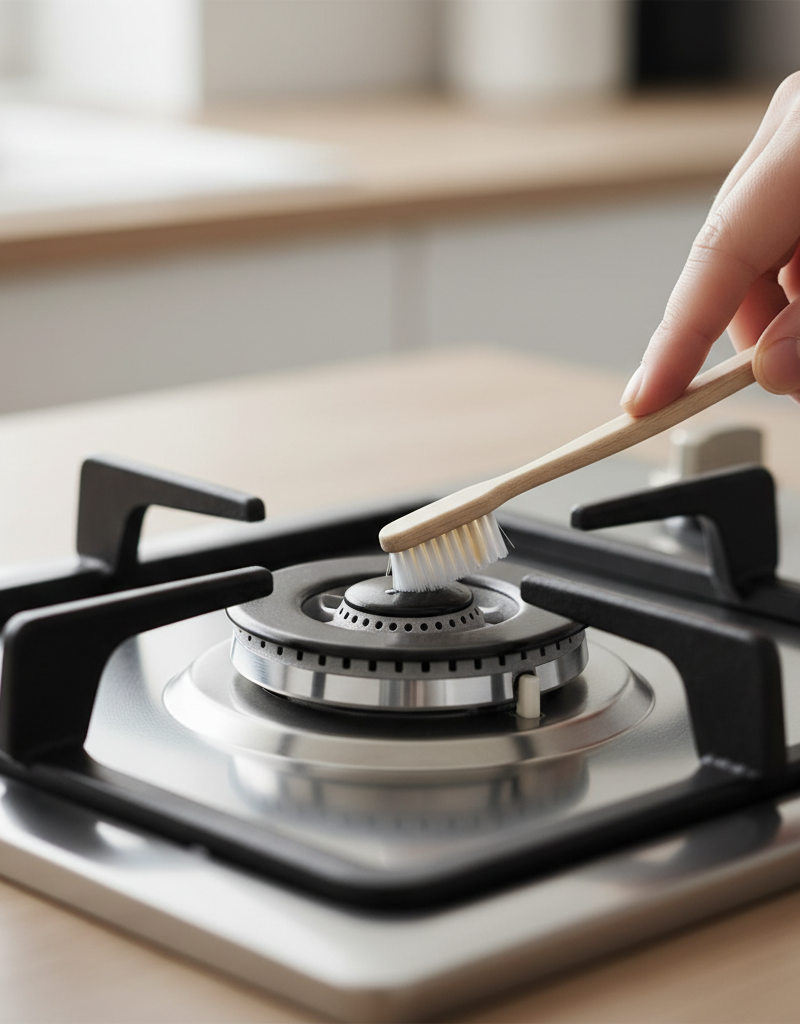
*   Use a soft-bristle toothbrush to scrub away any surface grime or debris on the burner cap and base. Avoid harsh abrasives that could damage the metal.
*   **If this doesn't work:** Consider a deeper clean with a specialized burner cleaning solution if ports are heavily caked, but ensure you rinse thoroughly.
4. Clean the Igniter – The spark needs a clean path.
*   **Tools:** Dry soft-bristle brush, rubbing alcohol, cotton swab, fine-grit sandpaper (optional, for heavily corroded igniters).
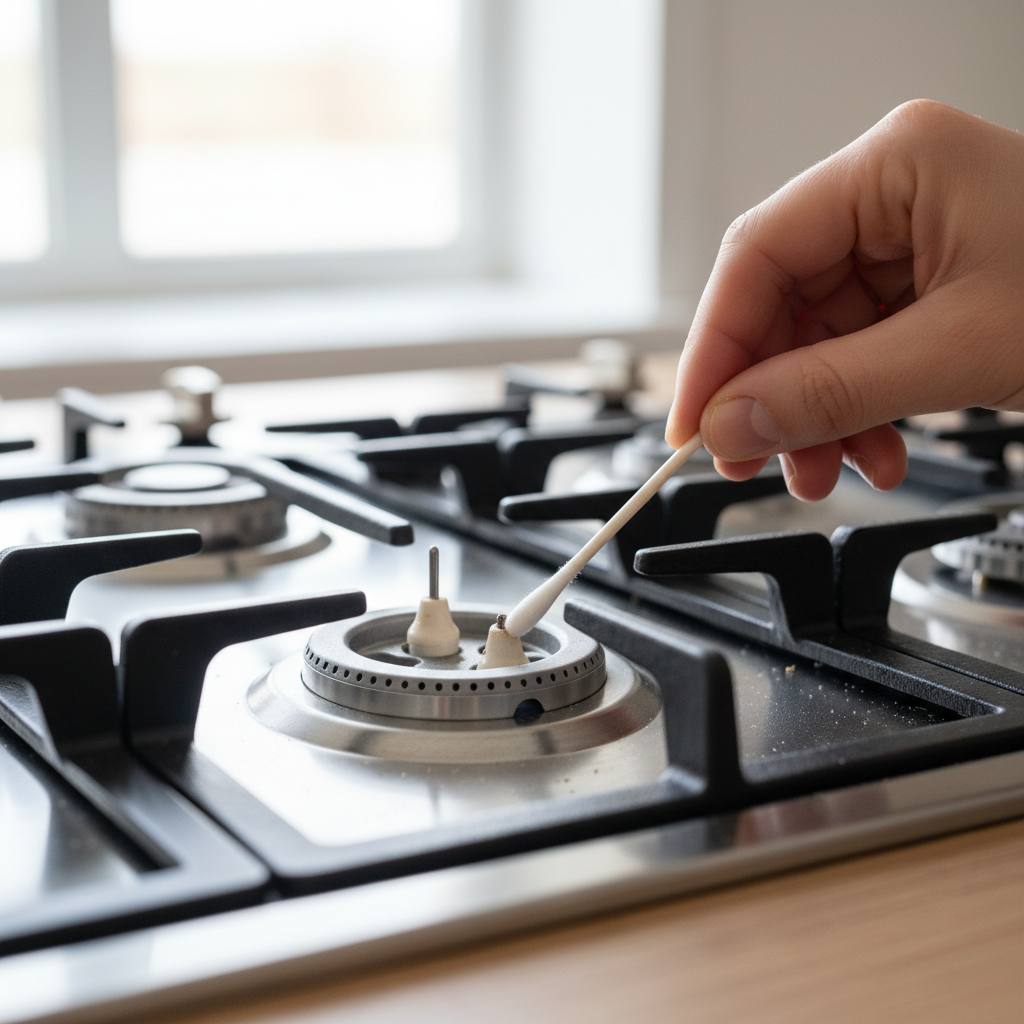
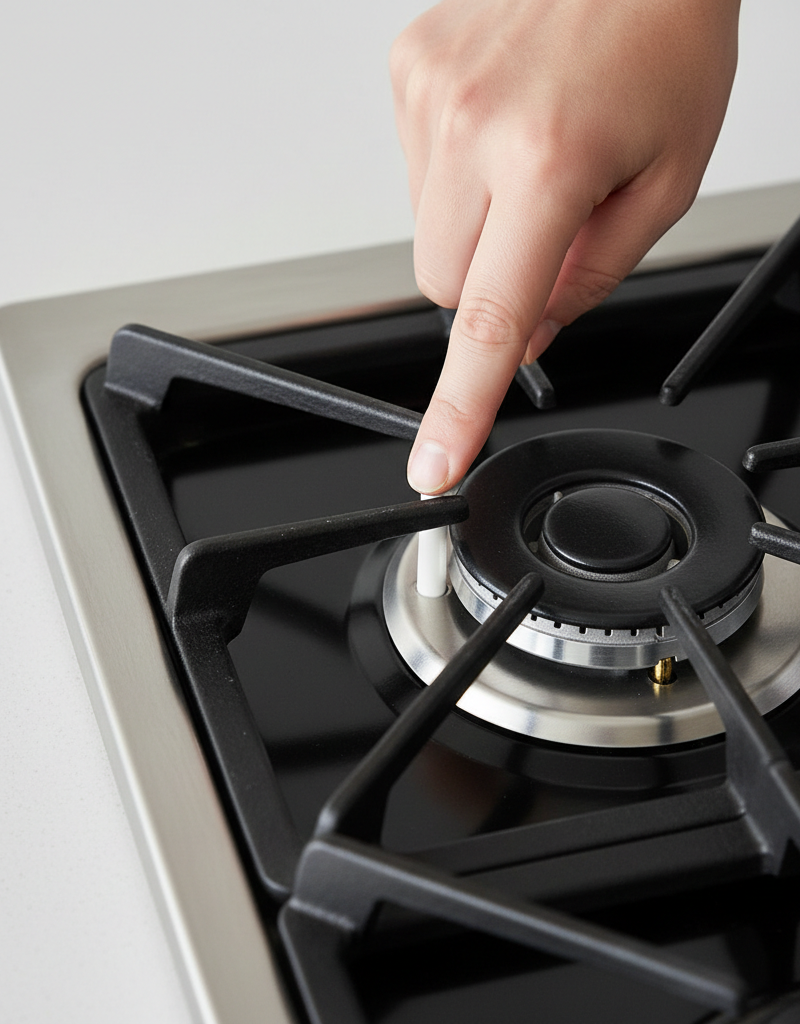
*   Locate the igniter: it's a small, off-white ceramic rod with a metal tip, usually protruding through the stove top near the burner base.
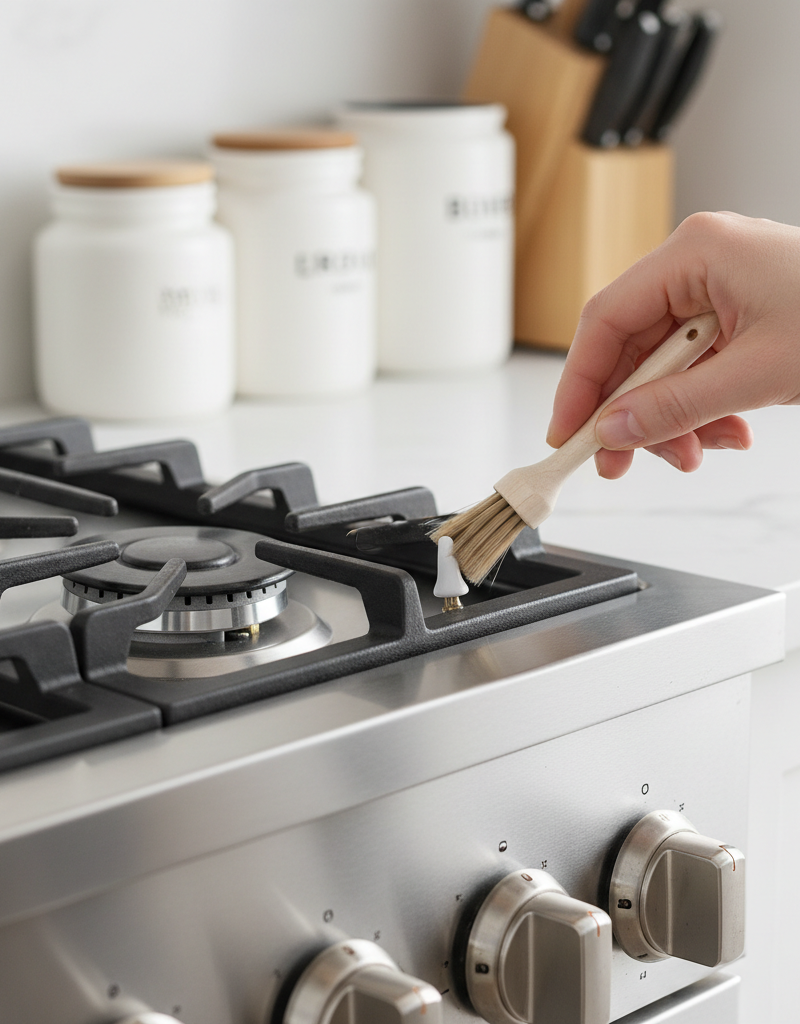
*   Gently brush away any food debris or grease from the igniter's ceramic shaft and metal tip using a dry toothbrush.
*   Dip a cotton swab in rubbing alcohol and carefully clean the igniter's tip and ceramic body. Alcohol evaporates quickly and leaves no residue.
*   **Caution:** Be extremely careful not to bend or break the ceramic igniter. It's fragile.
*   **If heavily corroded:** With extreme care, lightly buff the metal tip of the igniter with fine-grit sandpaper (e.g., 400-600 grit) to remove stubborn corrosion, but this should be a last resort and performed very gently.
5. Check Igniter Wire Connections – Ensure good contact.
*   **Tools:** Flashlight.
*   Often, spilled liquids can seep under the cooktop, corroding or loosening the igniter's wire connection.
*   With the burner components removed, use a flashlight to look under the cooktop directly below the igniter. You'll likely see a wire connected to the ceramic igniter body.
*   Gently wiggle the wire to ensure it's securely attached. If it appears loose, carefully push it firmly back into place.
*   **Pro Tip:** Some ceramic igniters have an insulated wire that connects at the base. Ensure this connection is snug.
6. Allow to Dry Completely – Moisture is the enemy of sparks.
*   After cleaning with any liquids (even rubbing alcohol), ensure all components – especially the burner ports and the igniter – are completely dry before reassembling. Residual moisture can prevent ignition or even cause short circuits.
*   Allow at least 15-30 minutes for air drying, or use a clean, dry cloth to carefully blot components.
7. Reassemble Burner Components – Put it all back correctly.
*   Once everything is clean and dry, carefully place the burner base back into its position, ensuring it's seated correctly.
*   Then, place the burner cap firmly on top of the burner base. Make sure the cap is properly aligned and not wobbly. An improperly seated cap can block gas flow or interfere with the spark.
*   Replace the burner grates.
8. Test the Burner – The moment of truth.
*   Plug the stove back in or restore power at the circuit breaker.
*   Turn the burner knob to the
Related Articles
Keep troubleshooting with these hand-picked guides from FixlyGuide:
- The 3 Hidden Reasons Your Gas Burner Won't Light (Beyond a Clogged Pilot) — Before you call a technician, learn the common culprits behind a gas stove burner that refuses to light, from simple clogs to ignition comp…
- The 3 Hidden Reasons Your Gas Burner Won't Light (Beyond a Clog) — Before you call a technician, discover the most common culprits behind a gas stove burner that refuses to ignite and learn how to fix them…
- Why is Your Light Switch Hot? (The Hidden Danger Most Homeowners Miss) — A hot light switch isn't just uncomfortable; it's a critical warning sign of electrical issues that should never be ignored due to fire ris…
- The #1 Mistake Homeowners Make When a Gas Burner Won't Light (And the Easy Fix) — Before you call a technician, discover the most common, overlooked reason your gas stove burner isn't lighting and how to fix it yourself i…
- The 7 Head-Scratching Reasons Your Outlet Died (Even With The Breaker On) — Discover the surprising reasons why an electrical outlet might stop working even when its circuit breaker is fully engaged, and how to safe…
- The #1 Mistake Homeowners Make After Finding Missing Shingles (And How to Fix It Right) — Discover the crucial steps to take after a storm rips shingles from your roof, ensuring a proper, lasting repair and preventing costly futu…
Frequently asked questions
Why does my gas burner click but not light?+
A gas burner that clicks but doesn't light usually indicates an issue with the ignition system or gas flow. Common causes include clogged burner ports, a dirty or faulty igniter, or a loose electrical connection to the igniter. Cleaning these components often resolves the problem.
Can I clean my gas stove igniter myself?+
Yes, you can clean a gas stove igniter yourself. Ensure the stove is unplugged first. Use a dry, soft-bristle brush, or a cotton swab dipped in rubbing alcohol, to gently clean the ceramic igniter and its metal tip. Be very careful not to bend or break it.
What if only one burner isn't lighting?+
If only one burner isn't lighting, the problem is usually isolated to that specific burner. Focus your troubleshooting on cleaning its burner ports and igniter, and checking its wire connection. If all burners are affected, the issue might be with the stove's power or gas supply.
When should I call a professional for a gas stove that won't light?+
Call a professional if you suspect a gas leak (persistent gas smell without ignition), if the issue persists after thorough cleaning and checks, or if you're uncomfortable working with electrical components or dismantling parts of your stove. Issues with gas valves or main igniter modules require a licensed technician.
Discussion
Loading comments…