Tools & materials you'll need
Affiliate links- AmazonSelective broadleaf herbicideSafe for your grass type, contains 2,4-D, MCPP, or dicamba.
- AmazonTriple-action lawn fertilizerWith weed control and/or pre-emergent for ongoing prevention.
- AmazonGrass seedMatching your existing lawn type, for overseeding bare spots.
- AmazonTopsoil or peat mossFor covering newly sown grass seed.
As an Amazon Associate FixlyGuide earns from qualifying purchases — at no extra cost to you. Prices and availability are accurate as of publication and subject to change.
Quick Answer
Eliminating dandelions and look-alike weeds from your lawn requires a multi-pronged approach: manual removal for young, sparse weeds; targeted spot treatments with selective herbicides for widespread issues; and cultural practices like proper mowing and watering to prevent re-infestation. Early intervention is key for the most effective control.
The Problem
Dandelions are the iconic yellow menace of many lawns, but often, the problem extends beyond just this single weed. Several other common broadleaf weeds mimic dandelions in appearance, particularly in their early growth stages or when they're flowering. These imposters, like catsear (false dandelion), hawkweed, and sow thistle, not only compete with your turf for nutrients and water but also signal underlying issues in your lawn's health, such as compacted soil, improper mowing, or nutrient deficiencies. Allowing these weeds to proliferate diminishes your lawn's aesthetics, crowds out desirable grass, and can lead to an endless cycle of new weeds if their extensive root systems or prolific seed production aren't addressed. Understanding the differences between these weeds is crucial for selecting the most effective removal strategy, as some methods are better suited for specific weed types.
How It Works
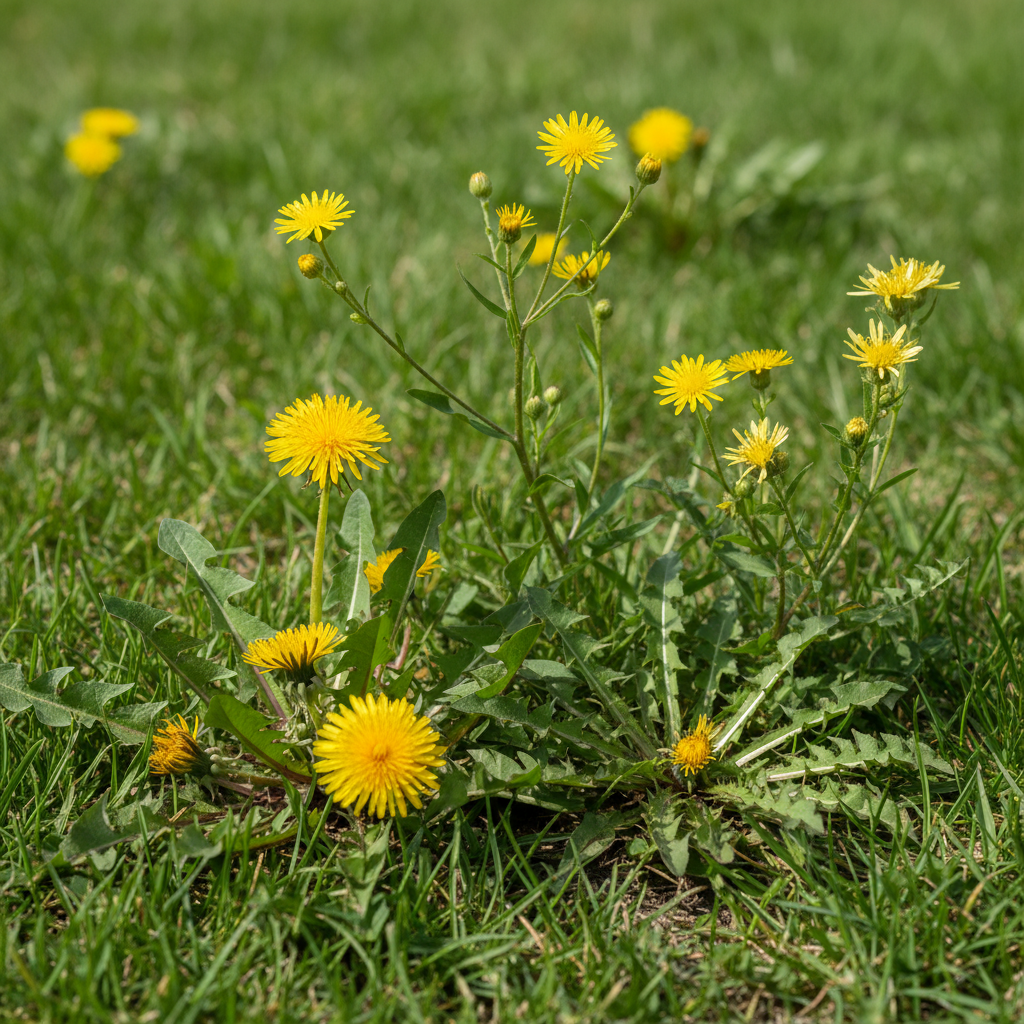
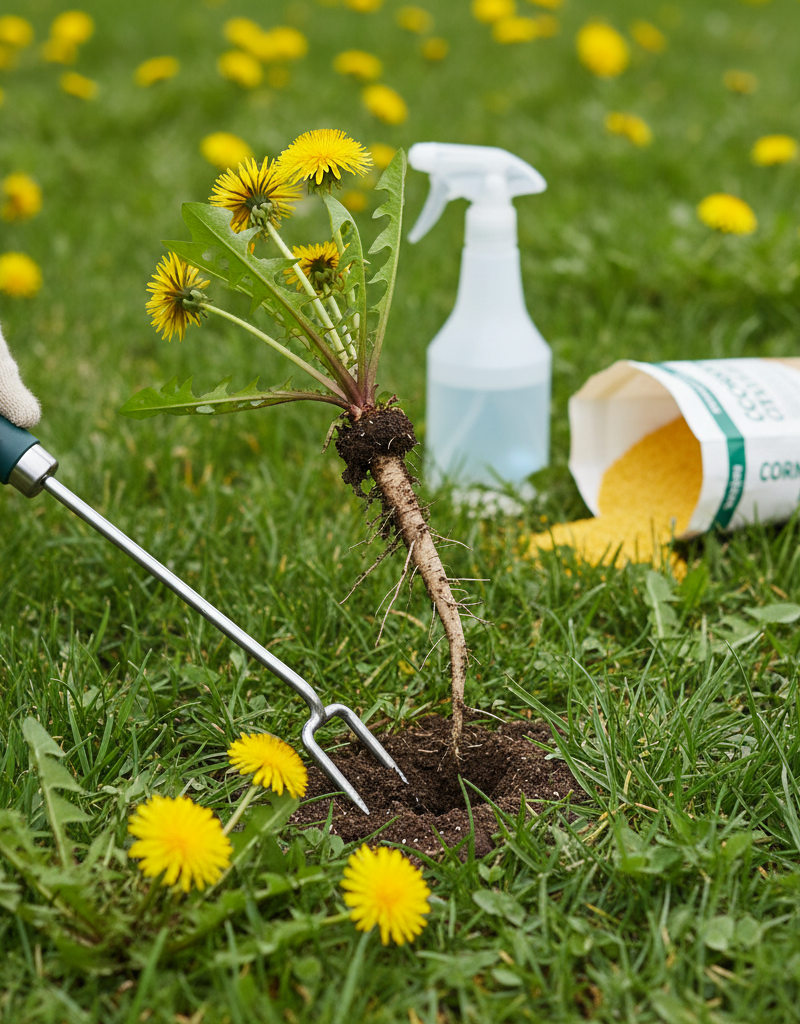
To effectively combat dandelions and their doppelgängers, it's essential to understand their life cycles and vulnerabilities. Dandelions (Taraxacum officinale) are perennial weeds characterized by a deep taproot that can extend 10-15 inches into the soil. This taproot is their secret to survival, allowing them to regrow even after the top growth is removed. They reproduce primarily by seeds, which are easily dispersed by wind, and can also regenerate from fragments of their taproot. Their leaves form a basal rosette, and they produce distinctive bright yellow flowers that transform into puffballs of seeds. A key identifying feature is the hollow flower stem that exudes a milky white sap when broken.
Catsear (Hypochaeris radicata), often called false dandelion, is another perennial weed with a taproot, though typically less substantial than a true dandelion's. Its leaves are noticeably hairy and more deeply lobed than dandelion leaves, clinging flatter to the ground. Its flower stalks are solid, often branched, and may have multiple smaller, dandelion-like yellow flowers. Unlike dandelions, catsear stems do not necessarily exude milky sap.
Hawkweed, a genus that includes several species like orange hawkweed (Hieracium aurantiacum) and yellow hawkweed (Hieracium pratense), can be annual, biennial, or perennial. Many hawkweed species spread aggressively via stolons (above-ground runners) and rhizomes (underground runners) in addition to seeds. Their leaves are often hairy and may have a reddish tint, especially on the undersides or edges. The flowers are typically yellow or orange and can appear in clusters on branched, solid stems. Hawkweed usually has milky sap in its leaves and stems.
Sow thistle (Sonchus oleraceus or Sonchus asper) can be annual or perennial, depending on the species. They have milky sap in their stems and leaves, much like dandelions. Their leaves are often spiny or prickly, especially along the edges, and can clasp the stem. The flowers are yellow and resemble small dandelions, often appearing in clusters. Sow thistles reproduce by seeds and can regenerate from taproot fragments.
Selective broadleaf herbicides work by targeting the specific cellular processes in broadleaf plants, disrupting their growth hormones and ultimately leading to their demise, without significantly harming most turfgrasses. These herbicides are absorbed through the leaves and translocated throughout the plant, including the taproot. For manual removal, the goal is to extract as much of the taproot as possible to prevent regrowth.
Step-by-Step Fix
1. Identify Your Enemy — Carefully examine the weed to confirm if it's a true dandelion, catsear, hawkweed, or sow thistle.
- Dandelion: Smooth, hairless leaves forming a basal rosette; single, hollow flower stem with one yellow flower; milky sap from broken stem/leaves. Taproot can be very thick.
- Catsear (False Dandelion): Hairy leaves, often more deeply lobed than dandelions, hugging the ground; branched, solid flower stems with multiple smaller yellow flowers. Less milky sap or none at all.
- Hawkweed: Fuzzy, often reddish-tinted leaves; branched, solid stems with clusters of yellow or orange flowers; spreads aggressively via runners. Milky sap present.
- Sow Thistle: Spiny, prickly leaves, sometimes clasping the stem; branched stems with clusters of small yellow flowers; milky sap present.
- If this doesn't work: If you're unsure after a visual inspection, take a clear photo with your phone and use a plant identification app (like PictureThis or iNaturalist) or consult with your local extension office for expert help.
2. Manual Removal for Young, Sparse Weeds — For a few dandelions or their look-alikes, especially when young, manual removal is the most environmentally friendly option.
- Timing is key: Tackle weeds when the soil is moist (after rain or watering) as this makes extraction easier and reduces the chance of breaking the taproot.
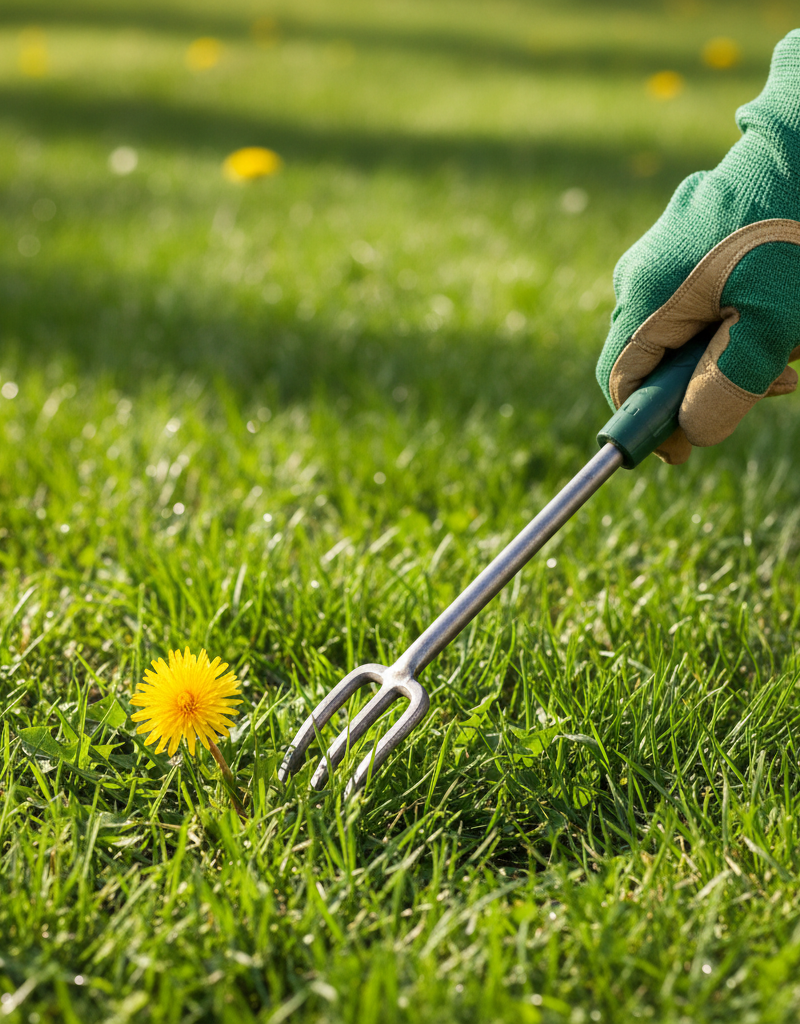
- Tools: Use a dandelion fork, weeding knife, or hori-hori garden knife. A standard trowel can also work but may not get the entire taproot.
- Technique: Insert your tool vertically alongside the taproot, as close to the center as possible. Gently rock the tool and pry the weed upwards, aiming to extract the entire taproot. The goal is to get at least 4-6 inches of the root. For dandelions, you'll see a thick, white taproot. For catsear, it's similar but often thinner. Hawkweed and sow thistle may have more fibrous or branching roots.
- Safety Note: Always wear gardening gloves to protect your hands, especially when dealing with potentially spiny sow thistle or sap that can irritate skin (though dandelion sap is generally harmless).
- If this doesn't work: If the taproot breaks, the weed will likely regrow. Mark the spot and be prepared for a follow-up removal in a week or two, or consider a spot treatment with herbicide.
3. Spot Treatment with Selective Herbicide (Widespread Issues) — For extensive infestations, a liquid selective broadleaf herbicide is efficient.
- Choose the right product: Look for a selective broadleaf herbicide specifically labeled for dandelions, clover, and other common lawn weeds. Products containing 2,4-D, MCPP (mecoprop), or dicamba are effective against this group. Read the label carefully to ensure it's safe for your grass type.
- Application: Follow the manufacturer's instructions precisely. Apply the herbicide on a calm, windless day to prevent drift onto desirable plants. Target the leaves of the weeds thoroughly but avoid over-saturating the soil.
- Timing: Apply when weeds are actively growing, typically in spring or fall, and temperatures are between 50-85°F (10-29°C). Avoid hot, stressful periods for the lawn as this can damage grass.
- Safety Note: Wear long sleeves, long pants, gloves, and eye protection when mixing and applying herbicides. Keep children and pets off treated areas until the product has dried completely, usually 24-48 hours.
- If this doesn't work: Some stubborn weeds may require a second application after 2-3 weeks, or you might need to try a different herbicide blend if the first one wasn't fully effective. Always wait the recommended re-application time.
4. Post-Treatment Care — After manual removal or herbicide application, proper lawn care helps prevent recurrence.
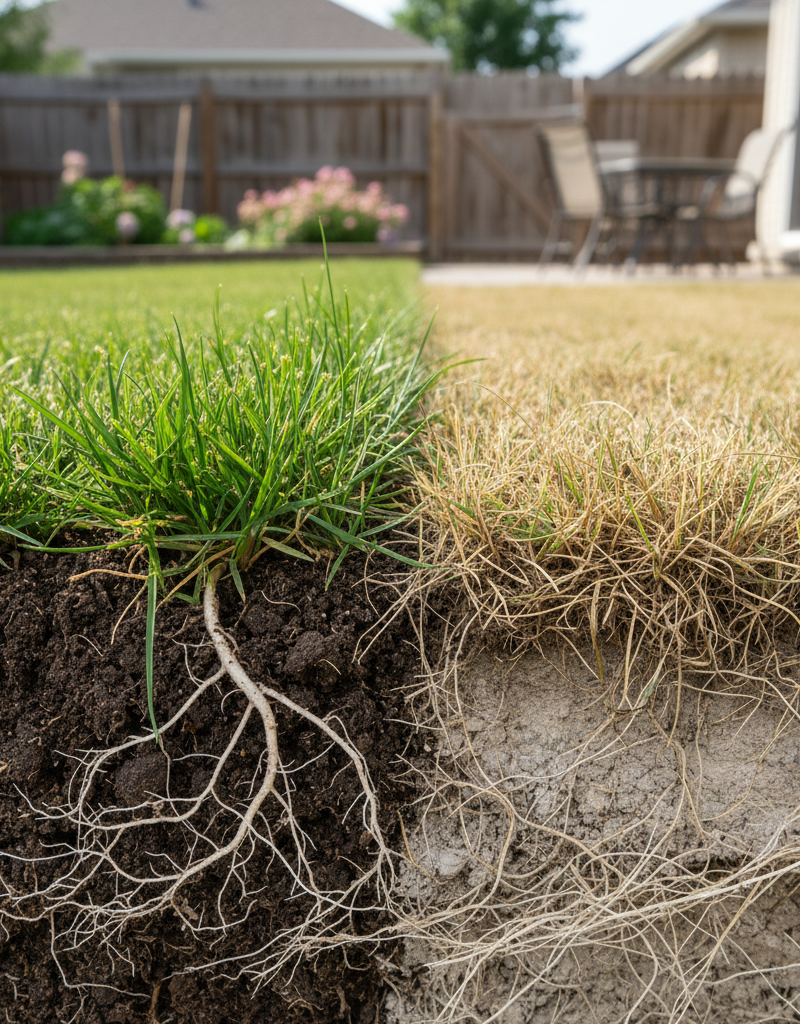
- Watering: Water your lawn deeply and infrequently (1 inch of water per week) to encourage deep grass roots, which can outcompete weeds. Avoid frequent, shallow watering that favors shallow-rooted weeds.
- Mowing: Mow at the highest recommended height for your grass type (typically 2.5-3 inches or higher). Taller grass shades the soil, preventing weed seeds from germinating and strengthening the turf.
5. Fertilization for Lawn Health — A healthy, dense lawn is the best defense against weeds.
- Schedule: Fertilize 2-4 times a year based on your grass type and soil test recommendations (e.g., spring and fall for cool-season grasses; late spring/early summer and early fall for warm-season grasses).
- Nutrients: Use a slow-release granular fertilizer that provides a balanced nutrient profile (Nitrogen, Phosphorus, Potassium - N-P-K) to promote strong grass growth.
6. Overseeding Bare Spots — Fill in any areas where weeds were removed or where the grass is thin.
- Prepare the soil: Lightly rake the area to loosen the soil.
- Seed selection: Choose a grass seed variety compatible with your existing lawn and climate.
- Application: Spread grass seed according to package directions, then lightly cover with a thin layer of topsoil or peat moss. Keep the area consistently moist until new grass germinates and establishes.
Common Causes
- Compacted Soil: Dandelions and many other broadleaf weeds thrive in compacted soil where grass struggles to establish deep roots. Foot traffic, heavy machinery, or construction can lead to compaction.
- Improper Mowing: Mowing your lawn too short stresses the grass, reducing its ability to shade the soil and outcompete weeds. It also allows more sunlight to reach weed seeds, encouraging germination.
- Nutrient Deficiencies: An unbalanced or insufficient fertilization program can weaken your turf, making it more susceptible to weed invasion. Weeds often indicate what your soil lacks or has in excess.
- Poor Drainage: Areas with standing water or consistently soggy soil can favor certain weeds and stress grass, creating opportunities for weed growth.
- Bare Spots: Any area of your lawn without dense grass cover is an open invitation for weed seeds to germinate and colonize.
- Overwatering/Underwatering: Incorrect watering practices can weaken grass and create stressful conditions that weeds can exploit. Frequent, shallow watering in particular encourages shallow-rooted weeds.
- Acidic or Alkaline Soil: While dandelions are fairly tolerant, extreme pH levels can inhibit desirable grass growth, allowing weeds better access to resources. A soil test can identify pH issues.
Common Mistakes
- Pulling Weeds Without the Root: A common mistake with dandelions and similar tap-rooted weeds is merely pulling off the top growth. This leaves the taproot intact, allowing the weed to regrow, sometimes even stronger.
- Mowing Too Short: Scalping your lawn stresses the grass and opens up the soil to sunlight, which encourages weed seed germination. Always mow at the highest recommended height for your turf type.
- Ignoring Soil Health: A neglected lawn with poor soil (compacted, nutrient-deficient, or pH-imbalanced) is a breeding ground for weeds. Addressing soil health is fundamental to long-term weed control.
- Applying Herbicides Incorrectly: Using the wrong type of herbicide, applying it at the wrong time of day or year, or over-applying can damage your grass or be ineffective against weeds. Always read and follow label instructions precisely.
- Not Cleaning Tools: If you've been weeding or dealing with aggressive spreading weeds (like hawkweed with its runners), not cleaning your tools can inadvertently spread weed fragments or seeds to other parts of your lawn.
- Fertilizing Weeds Instead of Grass: Applying a general fertilizer without simultaneously addressing a weed problem can inadvertently feed the weeds, making them more robust and harder to remove. Use targeted weed control or a
Related Articles
Keep troubleshooting with these hand-picked guides from FixlyGuide:
- The 3 Dandelion Killers Hiding In Your Garage (And How To Use Them Safely) — Eradicate dandelions from your lawn effectively with common household items and proper application techniques to restore a pristine yard.
- The #1 Mistake Homeowners Make When Fighting Dandelions (And The Weeds Still Win) — Learn the surprising reason dandelions continue to plague your lawn and the effective, long-term strategies to reclaim your turf without en…
- The #1 Mistake Killing Your Lawn (And How to Eradicate Clover, The RIGHT Way) — Discover how to eliminate stubborn clover from your lawn effectively without harming your grass, using targeted strategies and proper lawn…
- The #1 Dandelion Mistake Almost Every Homeowner Makes (and How to Fix It) — Many homeowners accidentally make dandelions worse. Learn the most common mistake and how to truly eliminate these persistent weeds for goo…
- The #1 Crabgrass Mistake Killing Your Lawn (And 3 Natural Fixes) — Discover how common crabgrass removal mistakes undermine your lawn's health and learn three natural, effective methods to eradicate crabgra…
- Is Your Gutter Sagging After Every Storm? The Hidden Flaw Most Homeowners Miss — Discover the overlooked reason your gutters sag after every storm and learn the lasting fix that most homeowners miss.
Frequently asked questions
What kills dandelions permanently?+
Permanently eliminating dandelions requires consistent effort. Manual removal by extracting the entire taproot is very effective for individual weeds. For widespread issues, a selective broadleaf herbicide applied correctly will kill them down to the root. Long-term prevention through a thick, healthy lawn is key to keeping them from returning.
What is the fastest way to get rid of dandelions in the lawn?+
For individual young plants, a weeding tool to extract the taproot is fast. For widespread infestations, a selective broadleaf herbicide spot-treated directly onto the weeds will show results within 1-2 weeks. Ensure the soil is moist before manual removal and apply herbicides when weeds are actively growing for best results.
What is similar to a dandelion but has hairy leaves?+
Catsear (also known as false dandelion) is very similar to a dandelion but is distinguished by its noticeably hairy leaves, which often lie flatter to the ground than dandelion leaves. Its flower stalks are also typically solid and branched, sometimes with multiple smaller flowers, unlike the single, hollow stem of a true dandelion.
Can dandelions grow back from roots?+
Yes, dandelions are notorious for their deep taproots. If even a small portion of the taproot (as little as 1-2 inches) remains in the soil after weeding, the plant can regenerate. This is why it's crucial to extract as much of the taproot as possible during manual removal.
Discussion
Loading comments…