Tools & materials you'll need
Affiliate links- AmazonScrewdriver (6-inch or longer)
- AmazonGarden hose with adjustable nozzleFor spot watering if needed
- AmazonIrrigation systemIf you have one, to adjust settings
- AmazonTimer for irrigation systemSmart timers are helpful for automating deep watering schedules
- AmazonAerator (manual or rental)Optional, for compacted areas
- AmazonEmpty tuna cans or rain gauges3-5
As an Amazon Associate FixlyGuide earns from qualifying purchases — at no extra cost to you. Prices and availability are accurate as of publication and subject to change.
Quick Answer
The number one watering mistake that's quietly undermining the health and resilience of most home lawns is frequent, shallow watering. Instead of promoting robust growth, this practice coaxes grass roots to stay near the surface, making them highly vulnerable to heat stress, drought, and disease. To correct this, homeowners should shift to a deep and infrequent watering schedule, delivering about 1 inch of water per session, once or twice a week, compelling roots to grow deeper and creating a more drought-tolerant and vibrant lawn.
The Problem
You've probably seen it: a lawn that looks lush for a few days after watering, only to quickly wilt and turn brown when the weather heats up. Or perhaps your lawn struggles with persistent dry patches, fungal issues, or an excessive weed problem despite your best efforts. The hidden culprit often isn't a lack of water, but rather an improper watering technique. Most homeowners fall into the trap of watering too often and not deeply enough. This creates a vicious cycle. The grass develops a shallow root system, expecting a frequent, light drink. When temperatures rise or you miss a day, those surface roots quickly dry out, leading to stress, browning, and an open invitation for weeds and diseases that thrive in weakened turf. It's a fundamental misunderstanding of how grass truly needs to drink, leading to wasted water, increased effort, and a perpetually struggling lawn.
How It Works
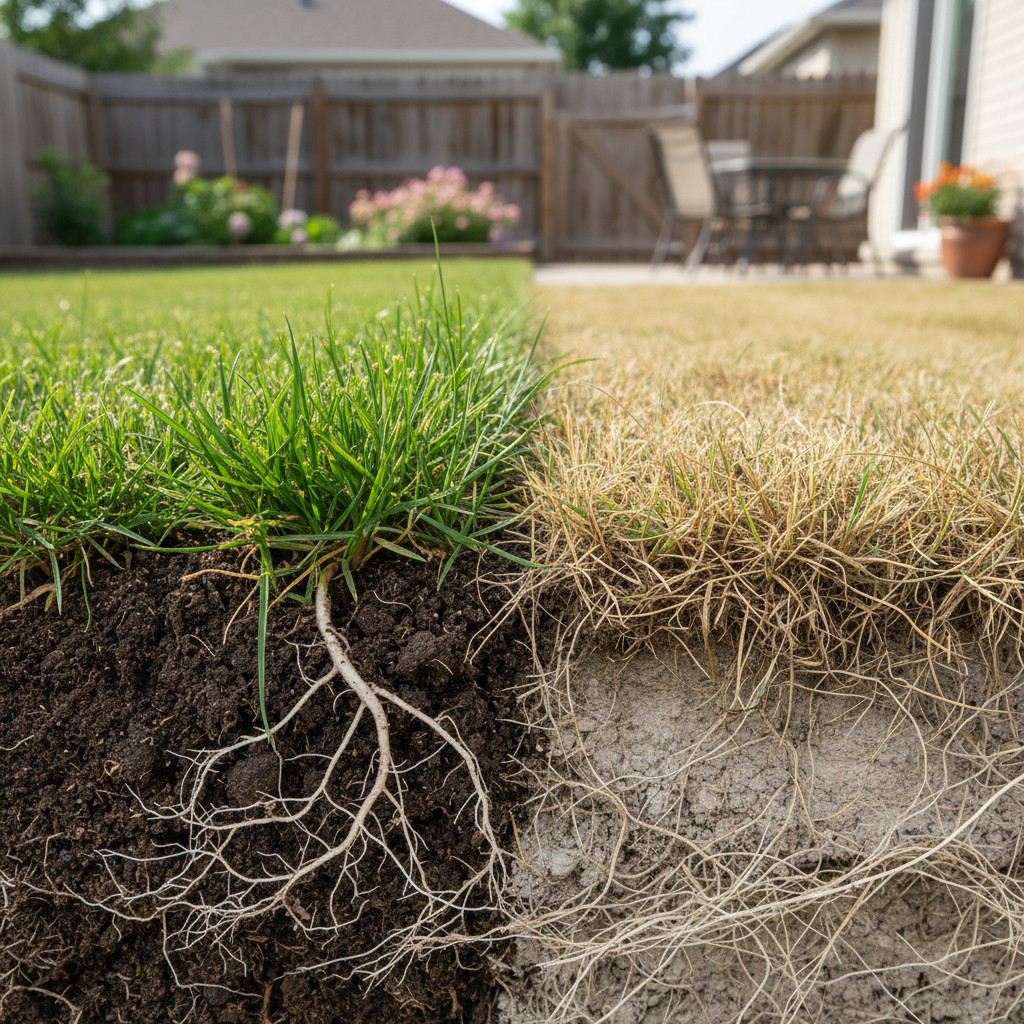
To understand proper watering, you need to understand how grass roots interact with soil and water. Grass plants, like all plants, take up water and nutrients through their root systems. When you water frequently and lightly, only the top inch or two of soil becomes moist. The grass, being opportunistic, senses this readily available moisture and has no reason to extend its roots deeper into the soil. It says, 'Why work harder when the buffet is right here?' This results in a dense, tangled mat of roots just below the surface.
However, the top few inches of soil dry out much faster than deeper soil, especially in hot, sunny, or windy conditions. When this shallow moisture evaporates, those shallow roots are left high and dry, leading to immediate stress. The grass blades lose turgor pressure, wilt, and eventually turn brown. Even worse, a shallow root system makes your lawn less able to access stored nutrients deeper in the soil and less resistant to pests and diseases that can take hold in stressed turf. Conversely, a deep and infrequent watering strategy encourages roots to grow several inches, or even a foot or more, down into the soil profile. These deep roots can tap into a larger reservoir of moisture, even when the surface soil is dry. This makes the grass plant far more resilient to environmental stresses, allows for better nutrient uptake, and results in a denser, healthier turf that naturally crowds out weeds and resists disease with less intervention from you.
Step-by-Step Fix
Here’s how to transition your lawn to a healthy, deep-watering schedule.
Step 1: Get to Know Your Grass and Soil – Understand what you're working with.
- Different grass types have different water needs. Cool-season grasses (fescue, rye, bluegrass) generally prefer consistent moisture but can tolerate some dry spells with deeper roots. Warm-season grasses (zoysia, Bermuda, St. Augustine) are more drought-tolerant once established but still benefit from deep watering to encourage robust growth. Local soil type is also critical: sandy soils drain quickly and may need more frequent, albeit still deep, watering; clay soils retain water longer and need less frequent watering to avoid waterlogging.
Step 2: Determine Your Watering Depth – Aim for 1 inch of water per session.
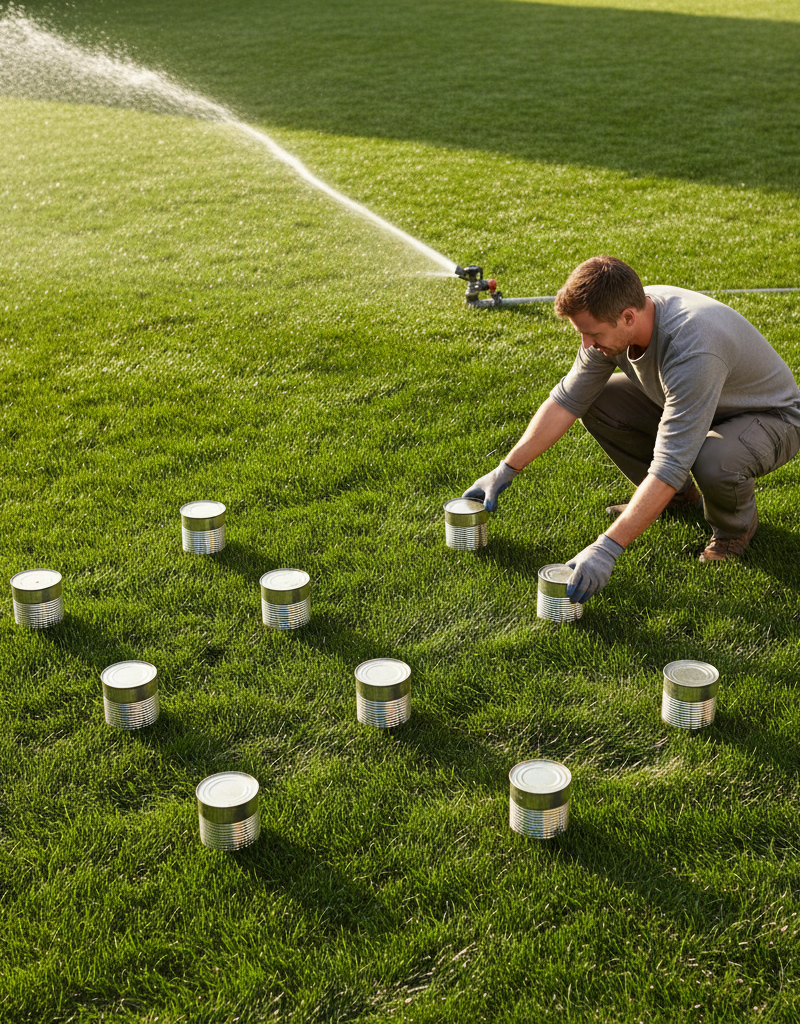
- This is the gold standard for promoting deep root growth. To measure how much water your sprinklers are delivering, place several empty tuna cans or rain gauges evenly across your lawn within the sprinkler's reach. Run your sprinklers for a set amount of time (e.g., 15 minutes), then measure the average depth of water collected in the cans. Do this a few times to get an accurate average for your specific sprinkler system. Once you know your system’s output rate, you can calculate how long it takes to deliver 1 inch of water. For example, if it takes 30 minutes to collect 0.5 inches, you'll need to run it for 60 minutes to get 1 inch. Some newer smart controllers can automate this, but testing manually is always best for accuracy.
Step 3: Establish a Watering Schedule – Infrequent but thorough.
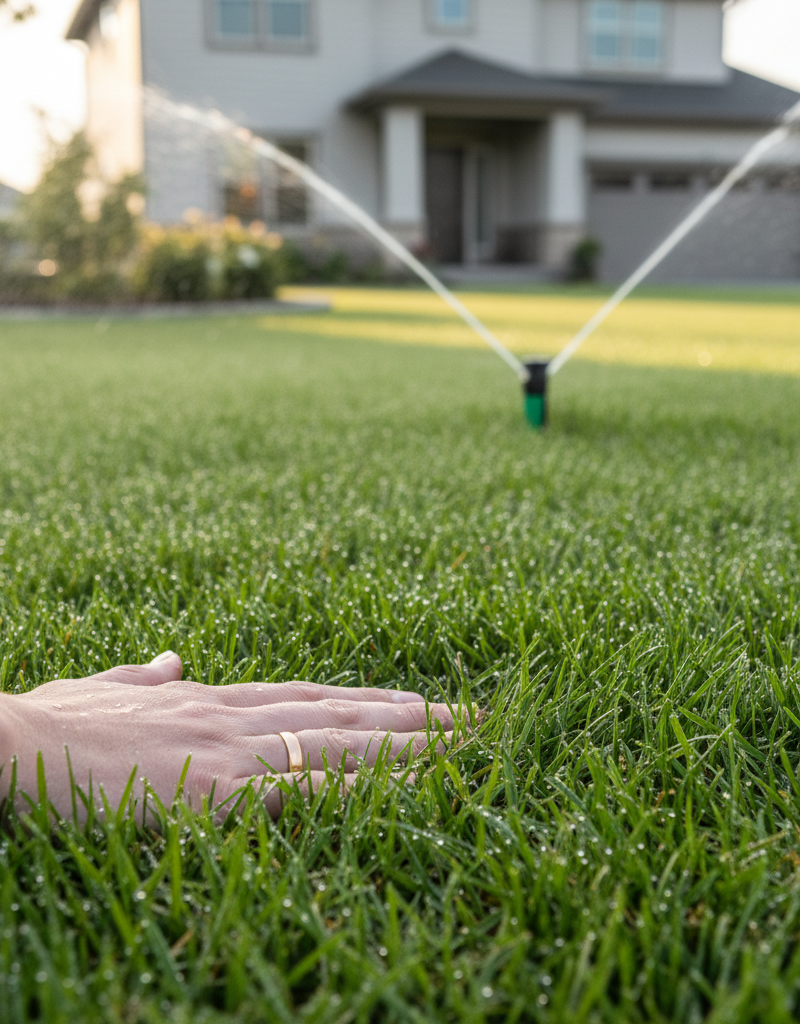
- The goal is to water once or twice a week, depending on your climate, grass type, and current weather conditions. In hot, dry periods, two deep waterings might be necessary. During cooler weather or after rainfall, you might only need one, or even none. Always check the soil before watering; it should feel dry to the touch 3-4 inches down. Try a screwdriver test: if you can easily push a 6-inch screwdriver into the soil, it's moist enough. If it's hard to push, it's time to water. Consistency is key in training your roots.
- Tip: Water early in the morning (between 4 AM and 9 AM) to minimize evaporation and allow grass blades to dry before nightfall, which reduces the risk of fungal diseases.
Step 4: Monitor Your Lawn's Response – Observe and adjust.
- After implementing your new watering schedule, closely watch your lawn for signs of stress or improvement. It may take a few weeks for the grass to adjust and for roots to deepen. If you notice wilting or a bluish-gray tint, your lawn is thirsty and might need a slightly longer duration or a second deep watering that week. If you see standing water or soft, squishy soil, you might be overwatering or have compaction issues that need addressing. Don't be afraid to experiment slightly with timing; every yard is unique.
Step 5: Address Specific Dry Spots – Manual intervention where needed.
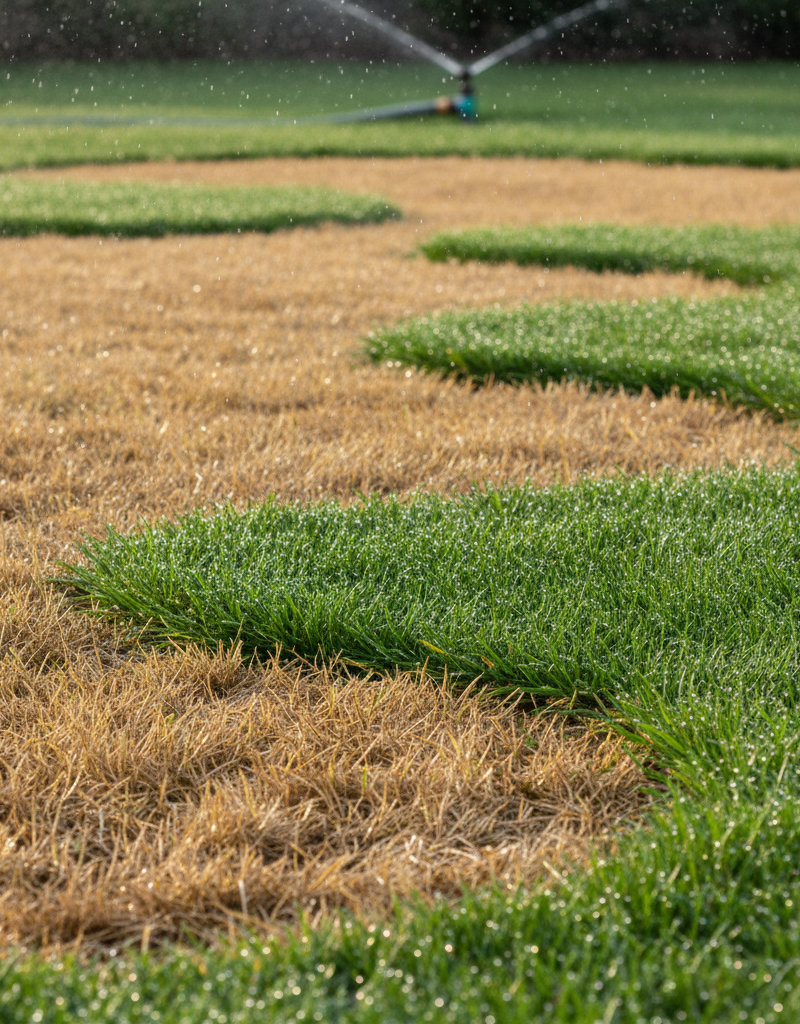
- Even with a deep watering schedule, some areas of your lawn might dry out faster due to sun exposure, compacted soil, or root competition from trees. For these spots, consider targeted hand watering with a hose or temporary sprinkler. Use the tuna can method to ensure deep penetration. Aeration can also significantly improve water penetration in compacted areas.
Common Causes
- Misunderstanding Grass Physiology: Most homeowners simply don't realize grass needs deep encouragement for roots to thrive. The default seems to be
Related Articles
Keep troubleshooting with these hand-picked guides from FixlyGuide:
- The #1 Watering Mistake That Kills Lawns (And How to Fix Yours in 10 Minutes) — Discover the most common watering mistake homeowners make and how to adjust your watering routine for a healthier, more resilient lawn.
- The #1 Mistake Killing Your Lawn's Crabgrass Defense (And the Easy Fix) — Discover why common crabgrass removal methods fail and how to naturally eliminate this stubborn weed for a healthier lawn.
- The #1 Mistake Killing Your Summer Lawn (It's Not What You Think) — Uncover the surprising truth behind your yellow summer lawn and learn how to fix the most common, yet overlooked, culprit: overwatering.
- The #1 Mistake Turning Your Green Lawn Brown After Watering — Watering your lawn should make it greener, but brown spots appearing afterward can signal common issues like overwatering, fungal disease,…
- The #1 Mistake Killing Your Lawn's Clover—and the Easy fix That Spares Your Grass — Discover the most common mistake homeowners make when trying to eliminate clover, and learn how to remove it effectively without harming yo…
- The Secret to Lush Raised Beds? It's Not Just About How You Water — Smart irrigation for raised garden beds isn't just about automation; it's about delivering the right amount of water precisely when your pl…
Frequently asked questions
How do I know if I'm watering too much or not enough?+
The easiest way to tell is by observing your lawn and checking the soil. If your lawn looks wilted, has a bluish-gray tint, or footprints remain visible, it's likely thirsty. If you have standing water, squishy soil, or persistent fungal growth, you might be overwatering. A screwdriver pushed into the soil should go in easily about 6 inches if moisture is adequate.
What's the best time of day to water my lawn?+
The best time to water your lawn is early in the morning, between 4 AM and 9 AM. This minimizes water loss due to evaporation and allows the grass blades to dry before nightfall, significantly reducing the risk of fungal diseases. Watering in the evening leaves the grass wet for too long.
How long should I run my sprinklers to get 1 inch of water?+
This depends entirely on your specific sprinkler system's flow rate. To find out, place several empty tuna cans or rain gauges evenly across your lawn and run your sprinklers for a set time (e.g., 15 minutes). Measure the average water depth in the cans. Then, calculate how much longer you need to run them to reach 1 inch. For example, if you get 0.25 inches in 15 minutes, you'll need 60 minutes to get 1 inch.
Can I water my lawn daily without causing problems?+
Generally, daily watering is not recommended for established lawns. It promotes shallow root growth, making your lawn more susceptible to drought, heat stress, and disease. For most grass types and climates, deep and infrequent watering (1-2 times per week) is far more beneficial for developing a strong, resilient root system.
What if I have different soil types in my yard?+
Variations in soil type across a yard can be tricky. For significant differences, you might need to adjust sprinkler heads or zones to provide more or less water to specific areas. For minor variations, focus on consistent, deep watering and address specific dry or wet spots with targeted manual watering or soil amendments like compost to improve overall soil health and uniformity over time.
Discussion
Loading comments…