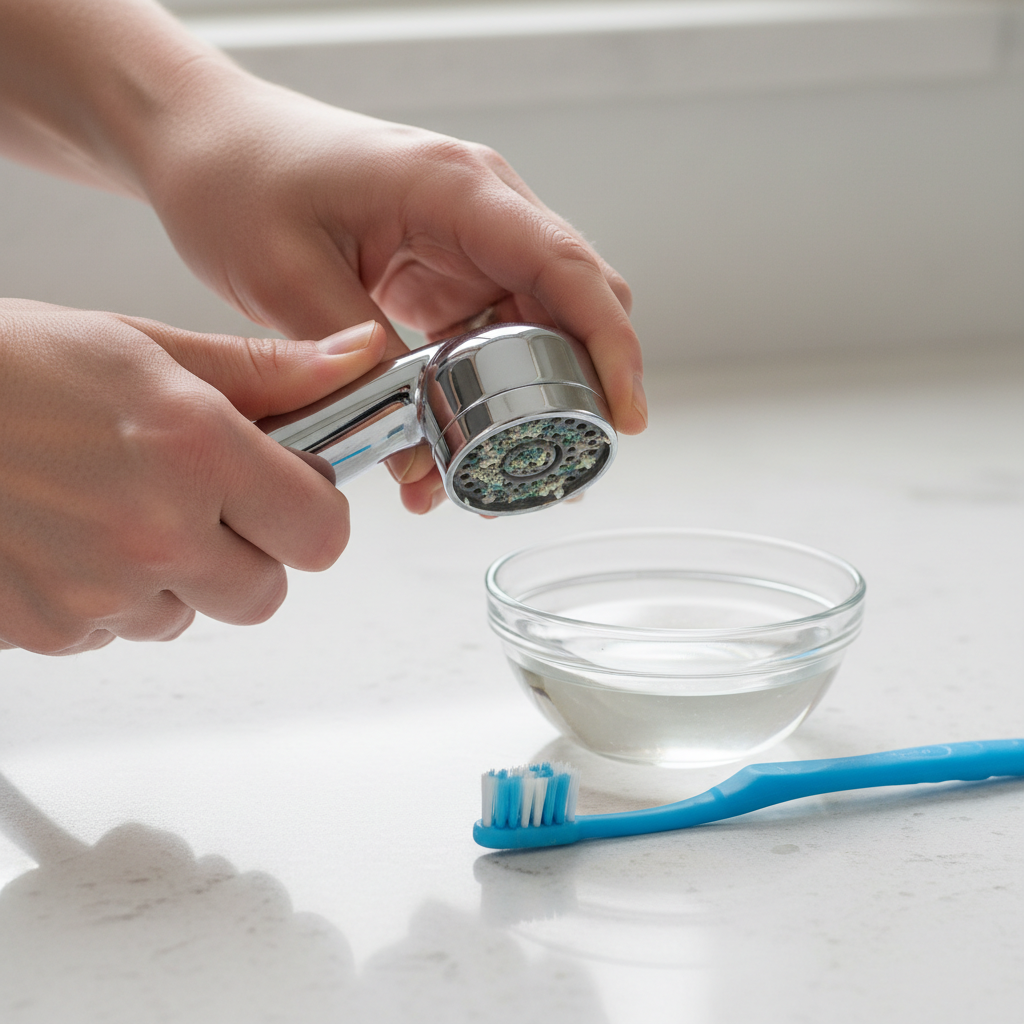
Tools & materials you'll need
Affiliate links- AmazonAdjustable pliersTo grip the sprayer head or faucet components if needed.
- AmazonOld toothbrushFor scrubbing deposits.
- AmazonSmall bucket or bowlFor soaking the sprayer head and catching drips.
- AmazonScrewdriver setPhillips and flathead for faucet disassembly.
- AmazonHex key setIf your faucet handle uses hex screws.
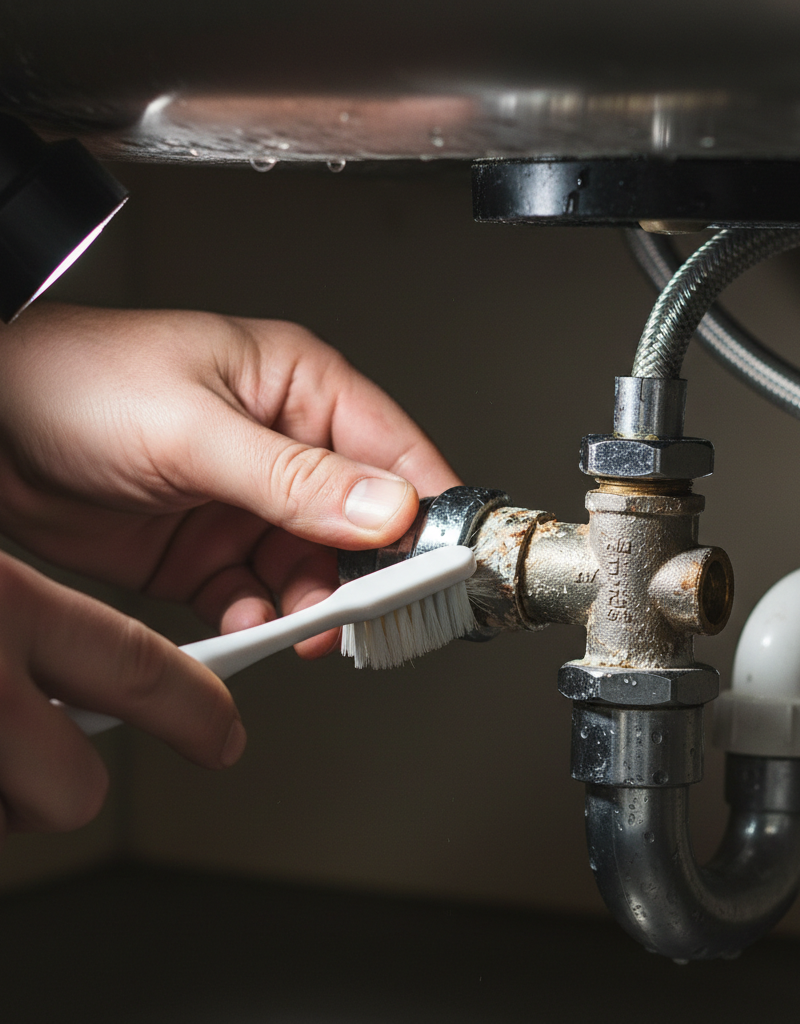
- AmazonFlashlightFor working under the sink.
As an Amazon Associate FixlyGuide earns from qualifying purchases — at no extra cost to you. Prices and availability are accurate as of publication and subject to change.
Quick Answer
If your kitchen sink sprayer has lost its power, the most common culprits are mineral buildup in the sprayhead itself or a malfunctioning diverter valve inside your faucet. Most often, you can restore full pressure by simply unscrewing and thoroughly cleaning the sprayhead. If that doesn't work, accessing and cleaning the diverter valve may be necessary. These are straightforward tasks that many homeowners can tackle in under an hour with basic tools.
The Problem
You're trying to rinse dishes or clean your sink, but your kitchen sink sprayer merely dribbles water, or worse, doesn't spray at all. This lack of pressure isn't just an inconvenience; it makes basic kitchen tasks frustrating and less hygienic. The issue stems from an obstruction or a component failure within the sprayer assembly or the main faucet body, preventing water from being properly diverted and delivered with force. It's a common problem in homes, especially those with hard water, and usually indicates a simple fix rather than a major plumbing emergency.
How It Works
To understand why your sprayer loses pressure, it helps to know how it's designed to work. When you operate your kitchen faucet, water flows from your hot and cold supply lines, through the shut-off valves, and into the faucet's mixing cartridge where the temperature is controlled. From there, the water normally flows up to the faucet spout.
The sprayer, however, operates differently. A dedicated hose connects the sprayer to the main faucet body, typically to a port before the water reaches the main spout's aerator. Inside the faucet body, there's a critical component called a diverter valve. This small valve's purpose is to redirect water flow. When the sprayer handle is engaged (either by squeezing a trigger or pressing a button on older models), the diverter valve is activated. It's designed to restrict or completely block the flow to the main spout and instead divert the full water pressure towards the sprayer hose, forcing water through the sprayer head at high velocity.
The sprayer head itself is essentially a small nozzle with multiple tiny orifices. These orifices are designed to constrict the water flow, increasing its velocity and creating the characteristic spray pattern. When any part of this system—the sprayer head's orifices, the hose, or especially the diverter valve—becomes clogged with mineral deposits (calcium and magnesium from hard water), or if the diverter valve mechanism fails, the water can't be properly pressurized or directed through the sprayer, resulting in low or no pressure. The main spout might work perfectly because its water path is separate or less susceptible to the same kind of blockage.
Step-by-Step Fix
It's best to tackle the simplest and most common causes first. Start with the sprayer head, then move to the diverter valve if needed.
-
Safety First – Always shut off the water supply before working on plumbing.
- Beneath your sink, locate the hot and cold water shut-off valves for the kitchen faucet. Turn both handles clockwise until they are completely closed.
- Turn on the kitchen faucet to release any remaining pressure in the lines.
- Safety Note: Always wear appropriate eye protection when working with tools and plumbing to prevent debris or water from entering your eyes. Have a bucket and towels handy for any drips.
-
Inspect the Sprayer Head – The most common culprit is a clogged spray head.
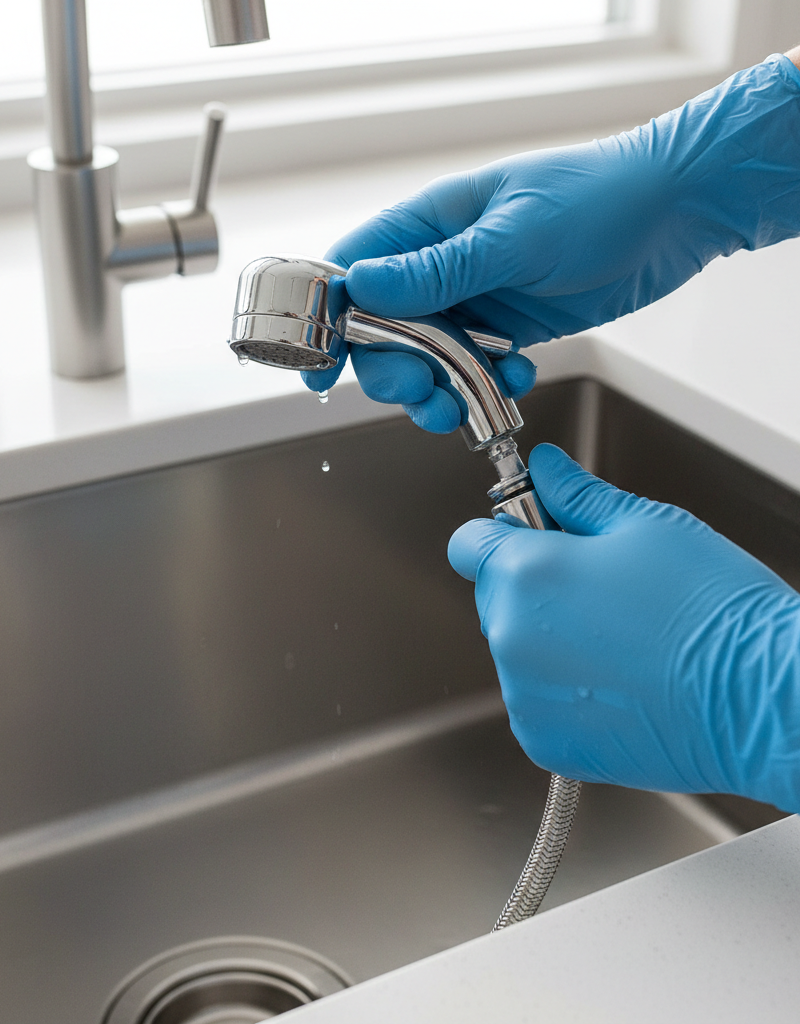
- Unscrew the sprayer head from the end of the hose. Most simply twist off counter-clockwise. You might need adjustable pliers if it's tightened firmly or corroded, but be gentle to avoid damaging the finish. Wrap a rag around the sprayer head if using pliers to protect it.
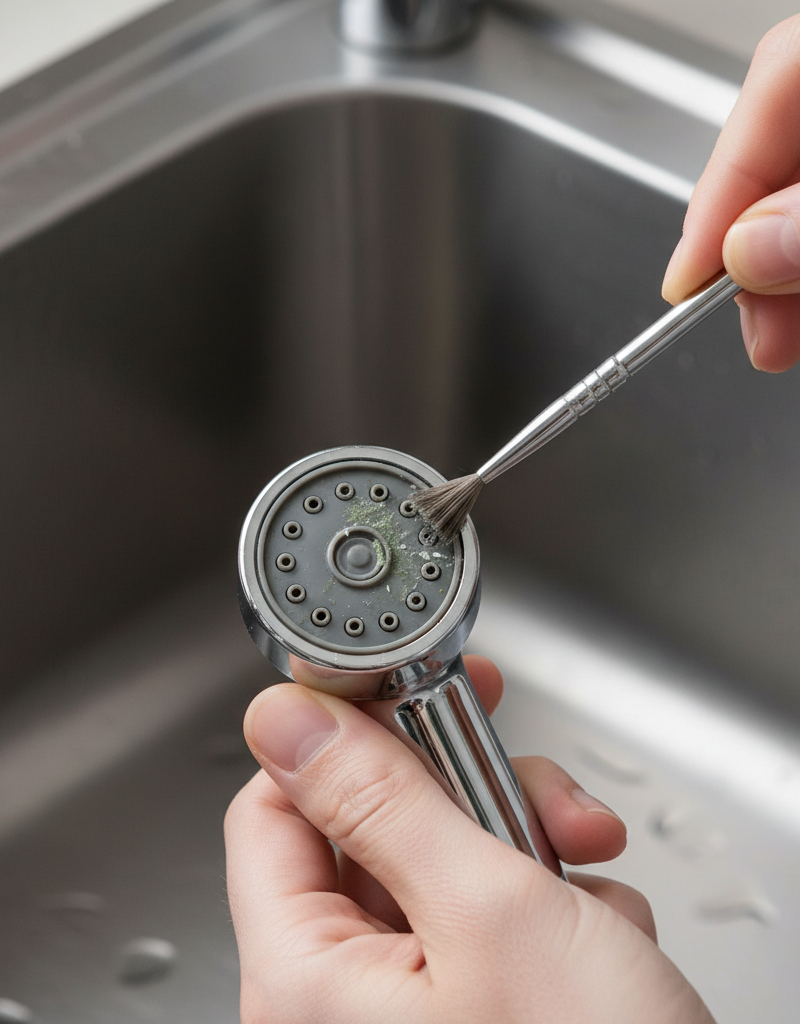
- Once removed, inspect the small holes for visible mineral deposits, food particles, or debris. You might see white or green crusty buildup.
- Tools: Adjustable pliers (optional), old rag.
-
Clean the Sprayer Head – Remove mineral buildup and debris.
- Submerge the detached sprayer head in a bowl of white vinegar for at least 30 minutes, or longer if the buildup is severe (up to a few hours). Vinegar is a mild acid that effectively dissolves mineral deposits.
- Use an old toothbrush, a small wire brush, or even a toothpick to gently scrub away any softened deposits from the spray holes and inside the sprayer head.
- Thoroughly rinse the sprayer head under running water.
- If this doesn't work: If the sprayer head looks clear but still has low pressure, the internal mesh screen might be permanently clogged or damaged. Consider replacing the sprayer head rather than continuing to clean an old one.
-
Flush the Hose – Clear any debris within the hose itself.
- Hold the detached sprayer hose (without the sprayhead) over a bucket.
- Slowly turn the cold water supply back on (just the cold).
- Observe the water flow. If it comes out with good pressure, the problem is likely isolated to the sprayer head. If the flow is still weak, there might be a blockage further up the line or a diverter valve issue.
- Turn the water supply back off when finished flushing.
-
Examine the Diverter Valve (Faucets with a Separate Sprayer) – This is the next common point of failure.
- The diverter valve is typically located in the main body of your kitchen faucet, usually accessed from underneath the sink or by removing the faucet handle/spout from above.
- Identify your faucet type:
- Single-handle faucets: Often involve removing the handle and then a retaining nut or screws to lift off the spout, revealing the diverter underneath.
- Two-handle faucets: May require removing the main spout. The diverter is a small, often cylindrical plastic or brass piece with an O-ring or spring.
- Consult your faucet's owner's manual if you have it. If not, take photos as you disassemble to aid reassembly. You may need a hex key for some handle screws.
- Tools: Screwdriver set (Phillips, flathead), hex key set, adjustable wrench, flashlight.
-
Clean or Replace the Diverter Valve – Remove blockages or install a new part.
- Once you've located and removed the diverter valve, inspect it for mineral buildup, rubber particles, or other debris. Use white vinegar and a small brush (like an old toothbrush) to clean it thoroughly.
- Check for any cracks or damage to the plastic, or if the spring (if present) is rusted or compressed. If it looks damaged or heavily corroded beyond cleaning, it's best to replace it. Take the old diverter to a hardware store to find an exact match, as they are often faucet-specific.
- If this doesn't work: If cleaning the diverter doesn't fix it, and the diverter itself appears fine, the entire diverter mechanism might need replacement. For this, it's crucial to get a manufacturer-specific part.
-
Reassemble and Test – Put everything back together carefully.
- Reinsert the diverter valve (if removed) in the correct orientation. Ensure any springs or O-rings are properly seated.
- Reattach the faucet spout and handle, tightening any screws or nuts securely but without overtightening.
- Screw the cleaned (or new) sprayer head back onto the hose. Hand-tighten it, then give it a quarter-turn with pliers if needed, protecting the finish with a rag.
- Slowly turn the hot and cold water supply valves back on underneath the sink. Check for leaks around the sprayer hose connection and the faucet base.
- Test the sprayer pressure. If it's still low, you may have missed a blockage or the diverter valve needs replacement.
Common Causes
- Mineral Buildup (Hard Water): The most frequent cause. Calcium and magnesium deposits accumulate in the tiny spray holes of the sprayer head, restricting water flow. These minerals also build up on and around the diverter valve, preventing it from fully redirecting water pressure.
- Debris in the Sprayer Head: Small particles like rust flakes, sediment from water pipes, or even pieces of rubber from aging faucet components can travel through the water line and lodge in the sprayer's orifices.
- Faulty Diverter Valve: Over time, the diverter valve can wear out, accumulate mineral deposits, or become damaged. If it doesn't fully seal off the main spout or correctly open the path to the sprayer, pressure will be lost.
- Kinked or Damaged Sprayer Hose: While less common, a kink in the hose underneath the sink or internal damage (like a split inner lining) can restrict water flow to the sprayer.
- Low Water Pressure to Faucet: If the main kitchen faucet also has low pressure, the issue might be with the main home water supply, a partially closed shut-off valve under the sink, or a clogged aerator on the main spout (though this wouldn't directly affect the sprayer unless the diverter is also faulty). Ensure the main faucet pressure is normal before troubleshooting the sprayer.
Common Mistakes
- Ignoring the Sprayer Head: Many homeowners immediately assume a major internal faucet problem when a simple cleaning of the readily accessible sprayer head would solve the issue. Always start with the easiest fix.
- Overtightening: When reattaching the sprayer head or any faucet components, overtightening can strip threads, crack plastic components, or damage the finish. Hand-tighten first, then use tools for a final snug quarter-turn.
- Not Shutting Off Water: Forgetting to turn off the hot and cold water supply lines before disconnecting anything will lead to an immediate and potentially messy flood under your sink.
- Using Harsh Cleaners: Abrasive cleaners or strong chemical solvents can damage the finish of your sprayer head or faucet components, or even corrode internal rubber seals. White vinegar is usually sufficient and safe for mineral buildup.
- Misplacing Parts During Disassembly: Faucets have small O-rings, springs, and washers that are crucial for proper function and preventing leaks. Keep track of all parts and their order during disassembly, or take photos.
- Not Checking Supply Valves: Sometimes, one or both of the water supply shut-off valves underneath the sink may have been accidentally partially closed, restricting flow to the entire faucet and thus the sprayer. Always ensure these are fully open (turned counter-clockwise until they stop).
Cost & Time Breakdown
| Task | DIY cost | Pro cost | Time |
|---|---|---|---|
| Clean sprayer head | $0 | N/A | 5–15 minutes |
| Replace sprayer head | $15–$50 | N/A | 10–20 minutes |
| Clean diverter valve | $0 | N/A | 30–60 minutes |
| Replace diverter valve | $10–$40 | N/A | 45–90 minutes |
| Replace sprayer hose | $20–$60 | N/A | 30–60 minutes |
| Professional diagnosis/repair | N/A | $150–$300 | 1–2 hours |
Tips & Prevention
- Regular Cleaning: Periodically unscrew your sprayer head and soak it in white vinegar, especially if you have hard water. Do this every 3-6 months. This prevents severe buildup.
- Hard Water Treatment: If hard water is a persistent problem, consider installing a whole-house water softener. This will reduce mineral buildup not just in your sprayer but throughout your entire plumbing system and appliances.
- Check for Leaks: Routinely inspect the sprayer hose connection under the sink for any signs of drips or moisture, which could indicate a developing problem.
- Gentle Use: Avoid yanking or excessively stretching the sprayer hose, as this can lead to internal damage or kinking over time.
- Know Your Faucet: Keep your faucet's owner's manual handy. It will have diagrams and part numbers specific to your model, which is invaluable if you need to replace components like the diverter valve.
- Monitor Main Faucet Pressure: If the main kitchen faucet's pressure also starts dropping, it's a sign of a broader water pressure issue, either localized to the sink (e.g., clogged aerator) or affecting the whole house.
When to Call a Professional
While addressing low sprayer pressure is often a DIY task, there are clear indicators when it's time to call a licensed plumber. If you've cleaned or replaced the sprayer head and the diverter valve, flushed the hose, and confirmed good water pressure to the main faucet, but the sprayer still lacks pressure, the issue might be more complex. This could involve an internal blockage deeper within the faucet body that's difficult to access without specialized tools, or a problem with your home's main water supply pressure that affects more than just the kitchen sink. Additionally, if you encounter persistent leaks after attempting repairs, discover corroded or seized components you can't easily remove, or if you're uncomfortable disassembling your faucet, a professional can diagnose and fix the problem efficiently and correctly. Plumbers have the expertise to handle nuanced issues and ensure your plumbing system is functioning safely and effectively.
Related Articles
Keep troubleshooting with these hand-picked guides from FixlyGuide:
- The 5-Minute Fix for Your Kitchen Sprayer's Weak Stream — Restore your kitchen sink sprayer's strong stream with simple troubleshooting steps for common causes like clogs and diverter issues.
- The Secret Culprit Behind Your Leaky Refrigerator (It’s Not Always the Water Line) — Discover the most common, often overlooked, reasons your refrigerator is leaking water and how to fix them with simple DIY steps.
- The $5 Single-Handle Faucet Fix Most Homeowners Ignore (And Pros Charge $200 For) — A single-handle leaky faucet can often be fixed with a simple, inexpensive DIY repair, saving you hundreds on a plumber.
- That Annoying Water Heater Popping Sound? It's Trying to Tell You This One Thing — A popping water heater usually signals a common issue: sediment buildup. Learn why it happens and how to fix it with a simple flush.
- The Surprising Culprit Behind Your Refrigerator's Water Leak (It's Not Always the Ice Maker) — Discover the most common, often overlooked reason your refrigerator is leaking water and how to fix it with simple steps.
- That 15-Minute Brew? Your Coffee Maker's Secret Clog — A slow-dripping coffee maker is almost always a sign of internal mineral buildup, not a faulty machine, and a simple vinegar descaling can…
Get the print-ready PDF of this guide
A clean, ad-free, printable version you can keep on your phone or pin to the workshop wall. We'll also send occasional weekly tips matched to your home situation.
- Print-optimized layout
- Tools, materials & every step included
- Unsubscribe anytime
Frequently asked questions
Why does my kitchen sink sprayer have low pressure but the faucet is fine?+
The most likely reason is a clogged sprayer head or a malfunctioning diverter valve inside your faucet. The diverter valve specifically directs water to the sprayer, so if it's blocked or faulty, the sprayer's pressure will be affected while the main faucet can still function normally.
How do I clean a clogged kitchen sink sprayer?+
Unscrew the sprayer head from the hose, then soak it in a bowl of white vinegar for at least 30 minutes to dissolve mineral buildup. Use an old toothbrush or toothpick to scrub away any remaining debris, then rinse thoroughly before reattaching.
Where is the diverter valve in a kitchen faucet?+
The diverter valve is typically located inside the main body of the kitchen faucet, usually accessed by removing the faucet handle and/or spout. Its exact position can vary by faucet model, so consulting your faucet's owner's manual is helpful.
Can a kinked hose cause low sprayer pressure?+
Yes, a kink or restriction in the sprayer hose underneath the sink can significantly reduce water flow and pressure to the sprayer. Check the hose for any bends or damage that might be impeding water movement.
When should I replace my kitchen sink sprayer?+
Consider replacing your sprayer if cleaning the head and diverter valve doesn't restore pressure, if the sprayer head is visibly cracked or damaged, or if the internal components are corroded beyond repair. A new sprayer head is often an inexpensive and easy replacement.
What's the best way to prevent kitchen sink sprayer pressure problems?+
Regularly unscrew and clean your sprayer head in white vinegar every few months, especially if you have hard water. This helps prevent mineral buildup. Also, inspect the hose periodically for kinks or leaks.
Discussion
Loading comments…