Tools & materials you'll need
Affiliate linksAs an Amazon Associate FixlyGuide earns from qualifying purchases — at no extra cost to you. Prices and availability are accurate as of publication and subject to change.
Quick Answer
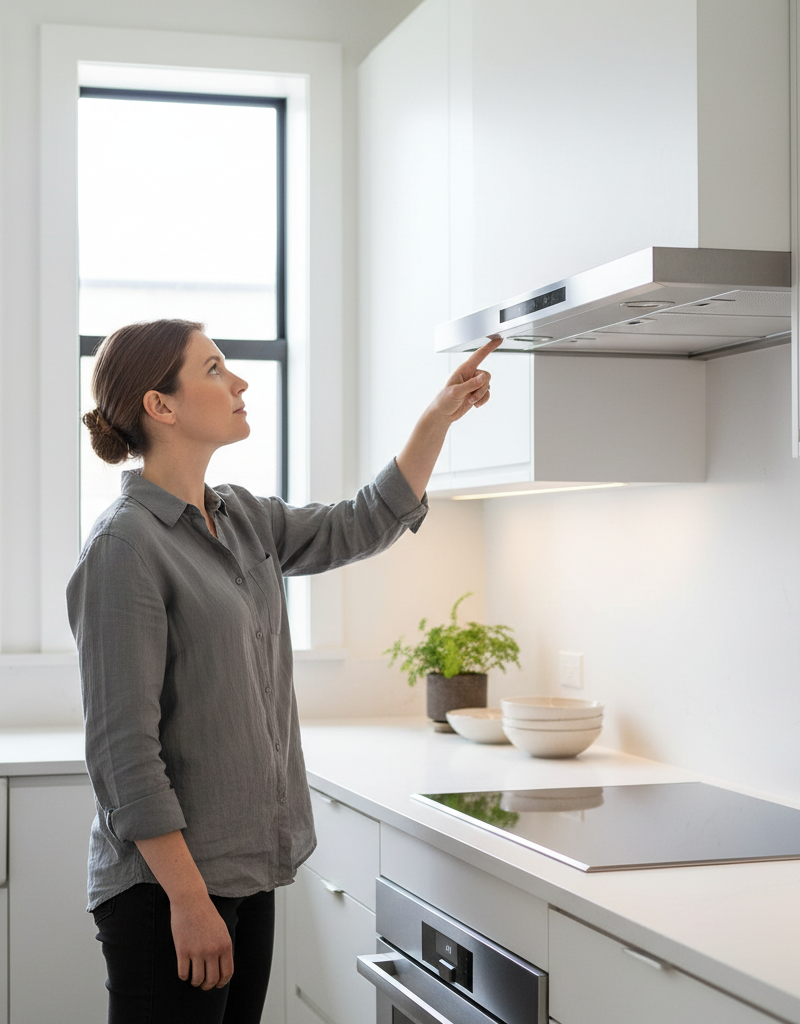
If your range hood fan has suddenly stopped working, the most common culprits are a tripped circuit breaker, a heavily clogged grease filter, or a blown thermal fuse. Start by checking your home's electrical panel for a tripped breaker, then remove and thoroughly clean or replace your grease filters. For more persistent issues, you may need to investigate the thermal fuse or motor wiring, but always ensure the power is off before proceeding with any electrical checks.
The Problem
You're cooking up a storm, and suddenly your range hood fan, which usually whisks away smoke and odors, goes completely silent. Or perhaps it's sputtering, making unusual noises, or only working on certain settings. A non-functional range hood isn't just an inconvenience; it allows grease, smoke, and cooking odors to circulate throughout your home, leading to poor air quality and potentially triggering smoke detectors. Grease buildup in ducts also presents a fire hazard. While seemingly complex, many range hood fan issues can be resolved with basic troubleshooting and a few common tools, saving you the expense of a service call.
How It Works
A range hood fan operates on a relatively simple principle, but understanding its components helps in diagnosing problems. At its core, an electric motor spins an impeller or blower wheel, creating a vacuum that draws air from above your stovetop into the hood. This air, laden with cooking byproducts, then passes through a series of filters designed to capture grease, smoke, and odors before being either vented outside (ducted system) or recirculated back into the kitchen through charcoal filters (ductless system).
Power to the motor comes from your home's electrical system, typically through a dedicated circuit breaker. Inside the hood, a control panel allows you to select fan speeds and sometimes activate lights. This control panel sends electrical signals to the motor, determining its speed. Many range hood motors also incorporate a thermal fuse. This small, heat-sensitive device acts as a safety mechanism, designed to blow and cut power to the motor if it overheats, protecting it from damage due to excessive use or blockages. The filters are crucial; mesh filters trap grease, while charcoal filters (in ductless models) absorb odors. If these filters become excessively clogged, they restrict airflow, forcing the motor to work harder, which can lead to overheating and potentially trip the thermal fuse or circuit breaker. Understanding this basic chain – power > controls > motor > filters > airflow – provides a logical path for troubleshooting a non-operative fan.
Step-by-Step Fix
1. Check the Circuit Breaker — The first and easiest troubleshooting step.
Locate your home's electrical service panel, usually a gray metal box in a utility room, basement, or garage. Identify the breaker labeled for your kitchen or range hood. If it's in the 'OFF' position or partially tripped (often indicated by being midway between 'ON' and 'OFF'), firmly push it to 'OFF' and then back to 'ON'.
- Safety Note: Always use caution around electrical panels. If you're unsure, or if breakers repeatedly trip, consult a licensed electrician.
- If this doesn't work: The problem lies elsewhere, or there might be an overloaded circuit requiring professional attention.
2. Clean or Replace Grease Filters — Overlooked gunk can bring a fan to a halt.
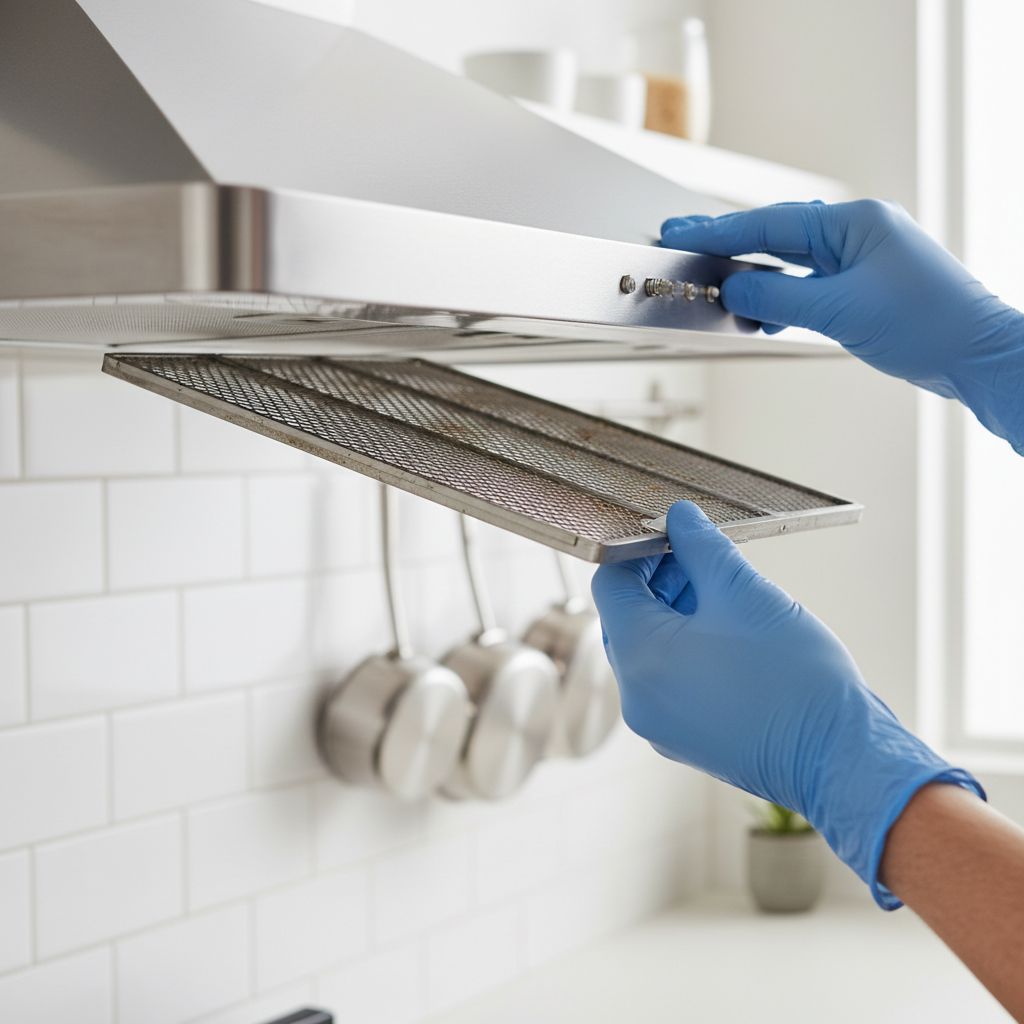
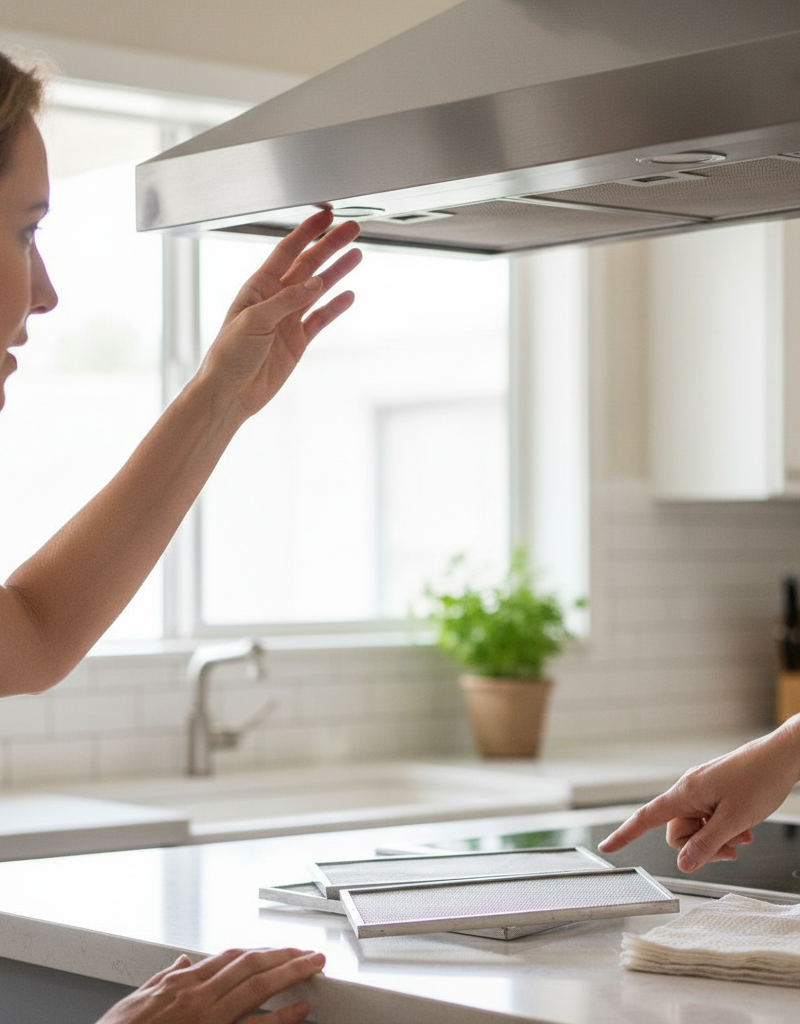
Most range hoods have removable metal mesh grease filters. Locate the latches or tabs holding them in place, typically on the underside of the hood, and remove them. Inspect them for heavy grease buildup. If they're clogged, wash them thoroughly in hot, soapy water, using a degreasing dish soap, or run them through your dishwasher. For seriously degraded or fabric filters, replace them.
- Tools: Degreasing dish soap, scrub brush (optional).
- Frequency: Clean mesh filters monthly, more often if you cook frequently with grease. Replace charcoal filters every 3-6 months.
- If this doesn't work: While cleaning filters won't directly fix an electrical failure, severe clogs can cause the motor to overheat and trip a thermal fuse, so this is a critical preventative step.
3. Inspect the Fan Control Switch — Sometimes the simplest explanation is the right one.
With the power off at the breaker, gently remove the control knob or switch cover on your range hood. Visually inspect the wiring connected to the switch. Look for any loose, corroded, or burnt wires. While not easily repairable by a homeowner, a visible issue here indicates a faulty switch or wiring problem.
- Safety Note: Ensure power is OFF before touching any wiring.
- If this doesn't work: If the switch appears fine and there are no obvious issues, the problem is likely deeper than the switch itself.
4. Check for Obstructions in the Blower Wheel — Something might be jamming the works.
After ensuring power is OFF, remove the grease filters. You'll likely see the blower wheel (squirrel cage fan) or propeller blades. Shine a flashlight into the opening and carefully inspect for anything that might be lodged in the blades – small utensils, plastic wrappers, or excessive grease buildup can prevent the fan from spinning freely.
- Safety Note: Never attempt this with power on. Be gentle when removing obstructions to avoid bending or breaking fan blades.
- Tools: Flashlight, long tweezers or small pliers (if needed for removal).
- If this doesn't work: If the blower wheel is clear and spins freely by hand, the motor itself or its power supply is the issue.
5. Test the Thermal Fuse — A common culprit for a completely dead fan.
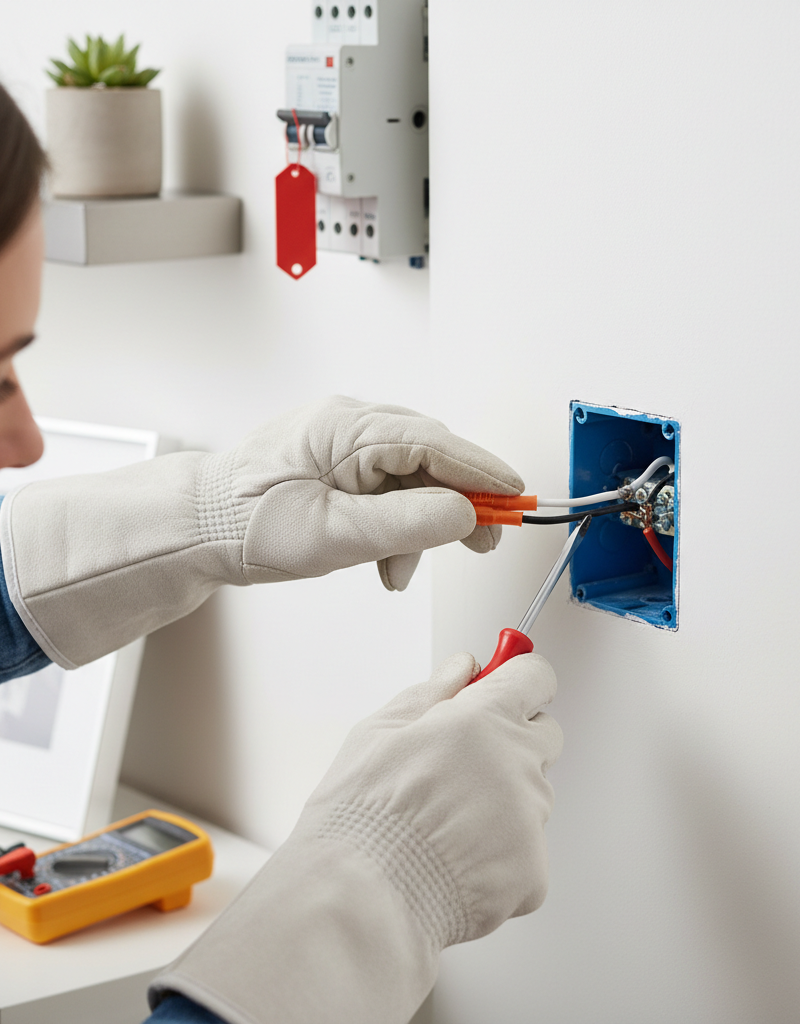
Safety Note: Turn off the power at the circuit breaker before proceeding. The thermal fuse is usually located near the fan motor or within the control panel wiring. It's a small, cylindrical component wrapped in heat-shrink tubing or a small glass tube. You'll need a multimeter set to measure continuity. Disconnect the fuse from the circuit (usually by unplugging or cutting one wire, then re-splicing later). Place the multimeter's probes on both ends of the fuse. A good fuse will show a reading of zero ohms or sound a beep (indicating continuity). If there's no reading or no beep, the fuse is blown and needs replacement. Use an exact replacement with the same voltage and amperage ratings.
- Tools: Multimeter, wire stripper/cutter, electrical tape or wire nuts, small screwdriver.
- Replacement: Thermal fuses are inexpensive and can be found at appliance parts stores. Ensure the new fuse has identical specifications.
- If this doesn't work: If the fuse tests good, the problem is likely the motor itself or another electrical component.
6. Inspect the Motor Wiring — Loose connections can prevent operation.
With the power OFF, carefully examine all visible wiring connections leading to the fan motor. Look for any wires that appear loose, disconnected, scorched, or frayed. Gently tug on connections to ensure they are secure. If you find a loose wire, and it's safe to do so, re-secure it. If wires are burnt or frayed, they will need to be replaced, which may require professional help.
- Safety Note: Do not attempt extensive electrical repairs if you are not comfortable or skilled. Burnt wiring can indicate a deeper electrical problem.
- Tools: Flashlight, small screwdriver.
- If this doesn't work: If all wiring appears secure and intact, the motor itself might be the issue, or a more complex internal control board problem.
7. Consider Motor Replacement — The last resort for a non-responsive fan.
If all previous steps fail, and you've confirmed power is reaching the hood but the fan still doesn't spin, the motor itself might be burnt out or seized. Replacing a range hood motor is an advanced DIY task. You'll need to remove the existing motor, ensure you get an exact replacement part number, and carefully re-wire the new motor. This involves disconnecting and reconnecting electrical terminals. In many cases, especially for older or less expensive hoods, the cost of a new motor and the complexity of installation might make professional repair or even replacement of the entire range hood a more economical choice.
- Tools: Manufacturer-specific tools may be required, screwdrivers, nut drivers, wire strippers.
- Pro Tip: Take photos of wiring before disconnecting to aid in reassembly.
Common Causes
- Tripped Circuit Breaker: The most frequent cause, often due to an overloaded circuit or a temporary power surge.
- Clogged Grease Filters: Restricts airflow, causing the motor to work harder, overheat, and potentially wear out or trip a thermal fuse.
- Blown Thermal Fuse: A safety device that sacrifices itself to protect the motor from overheating.
- Faulty Control Switch: Worn or damaged switches can prevent power from reaching the motor.
- Loose or Damaged Wiring: Vibrations or age can cause electrical connections to become loose or corroded.
- Motor Failure: Over time, the motor bearings can seize, or the motor windings can burn out, leading to complete failure.
- Blower Wheel Obstruction: Small debris can get caught in the fan blades, preventing them from spinning.
Common Mistakes
- Forgetting to Check the Breaker First: Many homeowners jump to more complex diagnostics without checking the simplest, most common issue.
- Ignoring Clogged Filters: Dirty filters aren't just an aesthetic issue; they're a primary cause of motor strain and failure. Neglecting them shortens the life of your hood.
- Replacing Parts Without Troubleshooting: Don't buy a new motor until you've confirmed it's the actual problem. Thorough diagnostics save money.
- Working with Power On: Always, always turn off the circuit breaker before performing any inspection or repair inside the range hood. Electrical shocks are dangerous.
- Using the Wrong Replacement Fuse: A thermal fuse has specific amperage and voltage ratings. Using an incorrect replacement can lead to further damage or create a fire hazard.
- Over-tightening Fasteners: When reassembling, over-tightening screws, especially into plastic components, can strip threads or crack housings.
Cost & Time Breakdown
| Task | DIY Cost | Pro Cost | Time |
|---|---|---|---|
| Check/Reset Breaker | $0 | $0 (if included) | 1-2 minutes |
| Clean/Replace Filters | $0–$30 | $0–$50 (if included) | 10-20 minutes |
| Test/Replace Thermal Fuse | $5–$20 | $75–$150 | 30-60 minutes |
| Inspect Blower Wheel/Wiring | $0 | (Part of diagnostic) | 15-30 minutes |
| Replace Fan Motor | $50–$200 | $150–$350 | 1–2 hours |
| Full Range Hood Replacement | $100–$1,000+ | $250–$1,500+ | 2–4 hours (DIY) |
Tips & Prevention
- Regular Filter Cleaning: Make cleaning your grease filters a monthly habit. For ducted systems, check for external vent obstructions annually. For ductless, replace charcoal filters every 3-6 months based on usage.
- Listen for Changes: Pay attention to any new noises, reduced airflow, or unusual smells coming from your range hood. These can be early warning signs of a developing problem.
- Proper Installation: Ensure your range hood was installed correctly, with adequate ducting and proper clearance above the stovetop, to optimize performance and longevity.
- Don't Overload Circuits: Avoid plugging other high-draw appliances into the same circuit as your range hood if possible.
- Keep Vents Clear: Regularly check the exterior vent cap for bird nests, insect screens clogged with lint, or other obstructions that can impede airflow.
When to Call a Professional
You should call a licensed electrician or appliance repair professional if you encounter persistent electrical issues, such as a circuit breaker that repeatedly trips after being reset. If you've replaced the thermal fuse and the fan still doesn't work, indicating a deeper motor or control board issue, or if you are uncomfortable working with electrical components, it's best to seek expert help. Professionals have the specialized tools to diagnose complex wiring faults, test motors accurately, and ensure all components are safely installed, preventing fire hazards or further damage. If your range hood is vented externally and you suspect a ducting issue beyond your reach, a professional can also address that efficiently and safely.
Related Articles
Keep troubleshooting with these hand-picked guides from FixlyGuide:
- The 5-Minute Trick When Your Range Hood Fan Suddenly Dies (It's Not Always the Motor) — Before you panic about a broken motor, learn the quick diagnostic steps to revive a dead range hood fan and restore proper kitchen ventilat…
- The #1 Mistake Homeowners Make When Their Range Hood Fan Stops Humming — Before you call an electrician, check the simplest — and most overlooked — cause for a dead range hood fan: a tripped circuit breaker or a…
- Why Does Only One Room Have Flickering Lights? The Real Culprit — Flickering lights in a single room often point to a localized electrical issue, most commonly a loose connection within the circuit.
- Why Your Outlet Died (Even If the Breaker's ON): The Hidden Causes Everyone Misses — Discover the surprising reasons why an electrical outlet might stop working even when the circuit breaker appears to be on, and learn how t…
- Why Does Only One Room Have Flickering Lights? The Real Culprit — Flickering lights in a single room often point to a loose connection, a faulty bulb, or an overloaded circuit, rather than a whole-house el…
- The 4 Hidden Reasons Your Dryer Tumbles Cold (And How to Fix Them in 30 Minutes) — Your dryer tumbles, but clothes stay cold. Discover the four most common culprits behind a dryer that won't heat, and how to troubleshoot t…
Frequently asked questions
Why did my range hood fan suddenly stop working?+
The most common reasons are a tripped circuit breaker, severely clogged grease filters causing the motor to overheat, or a blown thermal fuse designed to protect the motor from damage. Start by checking your electrical panel.
How do I test the thermal fuse on my range hood?+
First, turn off the power at the circuit breaker. Locate the thermal fuse near the motor and disconnect it. Use a multimeter set to continuity mode; place probes on both ends. If there's no continuity (no beep or reading), the fuse is blown and needs replacement.
Can dirty grease filters really stop my range hood fan?+
Yes, severely clogged grease filters restrict airflow, forcing the motor to work much harder. This increased strain can cause the motor to overheat and either trip the circuit breaker or blow the thermal fuse, effectively shutting down the fan.
Is it safe to replace a range hood motor myself?+
Replacing a range hood motor involves working with electrical wiring and can be an advanced DIY task. If you're not experienced with electrical repairs, it's safer to call a qualified appliance repair technician or electrician to avoid potential hazards and ensure correct installation.
How often should I clean my range hood filters?+
For mesh grease filters, aim to clean them monthly, especially if you cook frequently with grease. For ductless range hoods, charcoal filters should be replaced every 3 to 6 months to maintain odor absorption efficiency.
Discussion
Loading comments…