
Tools & materials you'll need
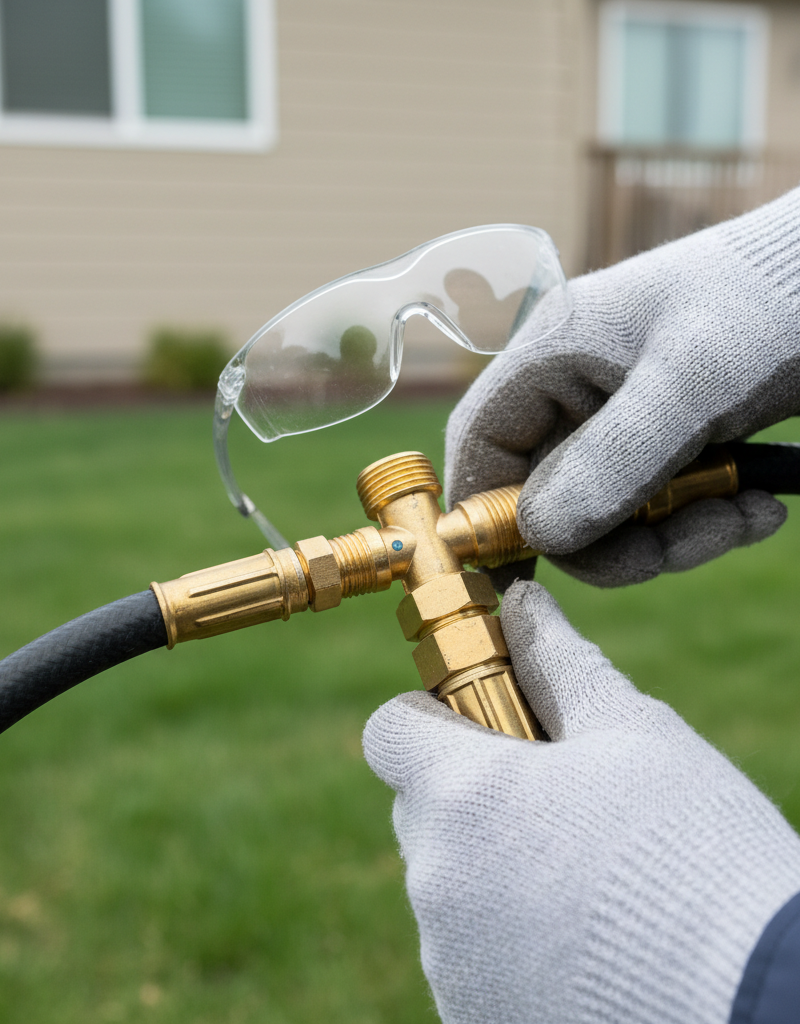
Affiliate links- AmazonBlow-out adapter fittingmatched to your sprinkler system's blow-out port
As an Amazon Associate FixlyGuide earns from qualifying purchases — at no extra cost to you. Prices and availability are accurate as of publication and subject to change.
Quick Answer
The most common mistake homeowners make when winterizing a sprinkler system is failing to completely remove all water, particularly from the backflow preventer and sprinkler lines. This oversight directly leads to water freezing, expanding, and causing severe damage like burst pipes and cracked valves. The correct approach involves systematically shutting off the water supply, opening manual drain valves (if present), and then using an air compressor to blow out every zone until no water is visible, or hiring a professional for complex systems. This ensures your irrigation system survives winter intact.
The Problem
As temperatures drop and winter approaches, any water left standing in your home's outdoor sprinkler system becomes a ticking time bomb. Water expands by about 9% when it freezes. This seemingly small expansion creates immense pressure—thousands of pounds per square inch—inside pipes, valves, and sprinkler heads. These components, made of plastic, copper, or brass, are not designed to withstand such internal forces. The result is often catastrophic: cracked PVC pipes, shattered sprinkler heads, ruptured solenoid valves, and, most expensively, a damaged backflow preventer. You won't discover the extent of the damage until spring, when you reactivate the system only to find geysers erupting from your lawn and water pouring from compromised components, leading to extensive repairs and wasted water.
How It Works
An irrigation system consists of a main water supply line, a backflow preventer, a manifold with control valves for each zone, and a network of underground pipes leading to various sprinkler heads. When water is introduced, it flows from the main line, through the backflow preventer (which prevents contaminated irrigation water from re-entering your potable water supply), and then through the solenoid valves to specific zones. Each zone's pipes distribute water to the sprinkler heads. When winterizing, the goal is to evacuate all this water. The most effective method for most modern systems is the 'blow-out' method. Air, typically from an air compressor, is introduced into the system downstream of the backflow preventer. This compressed air pushes the water through the lines and out through the sprinkler heads. The key is to manage the air pressure (keeping it below 50 PSI for PVC systems) and to open each sprinkler zone valve sequentially, ensuring that the air has a clear path to expel all the water.*
Another method is the 'manual drain' method, suitable for systems designed with drain valves at low points. Here, the water supply is shut off, and manual drain valves are opened, allowing gravity to pull water out of the pipes. However, this method is less effective at removing all water, especially from undulating terrains or higher elevation pipes, making the blow-out method generally preferred for comprehensive protection. For regions with very mild winters, a 'drain and flush' method might be used, where the system is simply allowed to drain, but this is insufficient for areas experiencing hard freezes.
Step-by-Step Fix
1. Shut Off Water Supply — Secure your system from continuous water flow.
- Locate the main shut-off valve for your irrigation system. This is typically found near your water meter or where the irrigation line branches off from your main house supply.
- Turn the handle or valve completely clockwise until it is tightly closed. This prevents any more water from entering the system during the winterization process. Confirm that no water is flowing to the sprinklers.
2. Drain the Backflow Preventer — Protect this critical and expensive component.
- The backflow preventer is usually an assembly of brass or PVC pipes and valves above ground. It has test cocks or small bleed screws.
- Using a flathead screwdriver, slowly open the test cocks (usually two of them) until water drains out. Some models may have larger ball valves that you can open.
- Ensure water drains completely. Leave these open slightly (at a 45-degree angle) for winter to prevent trapping any remaining moisture. Place a bucket underneath to catch any residual water.
- If your backflow preventer is connected with unions, you can sometimes carefully remove it and store it indoors. Check your specific model's instructions.
3. Connect Air Compressor — Prepare for the blow-out.
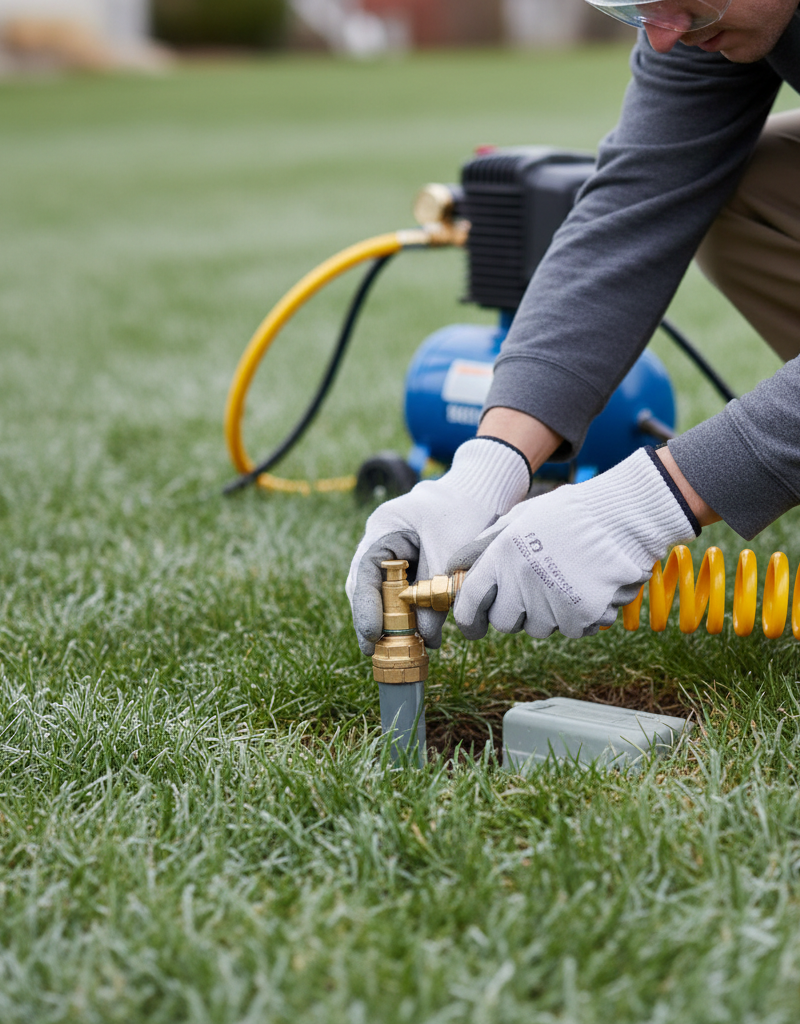
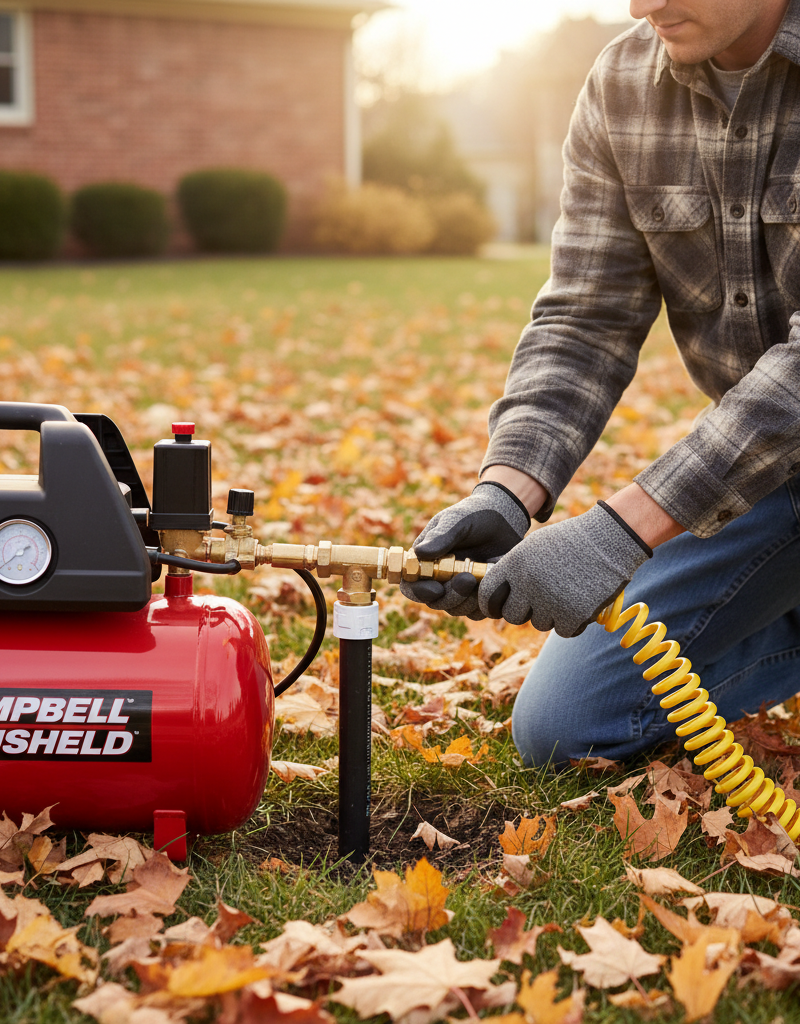
- Locate the blow-out port, a dedicated connection point for an air compressor, usually downstream of the backflow preventer or main shut-off valve. If you don't have one, you might need to adapt a sprinkler head connection or install one (a professional task).
- Attach an air compressor hose to the blow-out port using appropriate fittings. Ensure the connection is secure to prevent air leaks.
- Set your compressor's pressure regulator. Important Safety Note: For PVC pipes, never exceed 50 PSI (pounds per square inch). For systems with polyethylene (P.E.) tubing, you might be able to go slightly higher, but always consult your system's manual. High pressure can rupture pipes.
4. Open Remote Drain Valves (If Applicable) — Use built-in drainage.
- Some older or custom systems might have manual drain valves at the lowest points of each zone's piping. These are less common in modern blow-out systems but are worth checking.
- If present, open these valves for each zone to allow gravity to assist in initial water removal. Close them before proceeding with the blow-out.
5. Blow Out Each Zone Systematically — The core of winterization.
- Go to your irrigation controller and turn on the first zone manually. This opens the solenoid valve for that zone, allowing air and water to flow.
- Return to the air compressor. Slowly open the valve on the compressor's tank, allowing pressurized air to enter the system. You will see water mixed with air spraying from the sprinkler heads in the activated zone.
- Let the air run until only mist or air is coming out of the sprinkler heads. This indicates that most of the water has been expelled. Do not run the compressor for more than a minute or two per zone, as generating excessive heat can damage plastic components. Close the compressor's air valve.
- Go back to the irrigation controller, turn off the first zone, and immediately turn on the second zone. Repeat the compressed air process for this zone, and then for every subsequent zone. Work your way through all zones, making sure each one is completely dry.
- If you have specialized drip irrigation zones, treat them like a regular zone, ensuring all water is expelled from emitters and drip lines.
6. Deactivate Controller — Save energy and prevent accidental activation.
- Once all zones have been thoroughly blown out and no more water is emerging, return to your irrigation controller.
- Turn the controller to the
Related Articles
Keep troubleshooting with these hand-picked guides from FixlyGuide:
- The #1 Sprinkler Winterizing Mistake That Leads to $1,000s in Damage — Discover the crucial mistake homeowners make when winterizing sprinkler systems and how to avoid costly freeze damage with a simple, effect…
- The #1 Sprinkler Winterizing Mistake That Leads to $1,000s in Damage — Learn how to properly winterize your sprinkler system and avoid costly damage from freezing temperatures with this comprehensive guide.
- The #1 Mistake Homeowners Make Winterizing Sprinklers (And How to Avoid a Burst Pipe) — Learn the critical steps to properly winterize your sprinkler system and prevent costly burst pipes when temperatures drop below freezing.
- The #1 Sprinkler Winterizing Mistake That Leads to $1,000+ in Spring Repairs — Discover the crucial mistake many homeowners make when winterizing sprinkler systems, leading to costly spring repairs, and learn the right…
- Is Your Drip System Failing? The #1 Overlooked Cause of Uneven Watering — Uneven watering in drip irrigation is often caused by clogged emitters, but the real secret to a healthy system lies in proper pressure reg…
- The Secret to Lush Raised Beds? It's Not Just About How You Water — Smart irrigation for raised garden beds isn't just about automation; it's about delivering the right amount of water precisely when your pl…
Frequently asked questions
How cold does it have to be to winterize sprinklers?+
You should winterize your sprinkler system before the first hard freeze, typically when sustained temperatures drop below 32°F (0°C) for several consecutive hours. It's better to do it a little early than to risk damage from an unexpected early cold snap.
Can I winterize my sprinkler system myself?+
Yes, many homeowners can winterize their sprinkler systems themselves, especially if they have a blow-out port and an air compressor. However, complex systems, those without a blow-out port, or if you're uncomfortable with the process, are best handled by a professional.
What happens if I don't winterize my sprinklers properly?+
If water remains in your sprinkler system and freezes, it will expand and can cause pipes to burst, sprinkler heads to crack, and damage expensive components like the backflow preventer. This leads to costly repairs and water waste in the spring.
How much air pressure should I use to blow out sprinklers?+
For PVC systems, never exceed 50 PSI (pounds per square inch) to avoid rupturing pipes. For systems with polyethylene (P.E.) tubing, you might be able to go slightly higher, but always consult your system's manual to confirm safe pressure levels.
Should I leave my backflow preventer open or closed for winter?+
After draining, it's generally recommended to leave the test cocks or bleed screws on your backflow preventer open at a 45-degree angle for the winter. This prevents any residual moisture from getting trapped and freezing, protecting the internal components.
Discussion
Loading comments…