Tools & materials you'll need
Affiliate linksAs an Amazon Associate FixlyGuide earns from qualifying purchases — at no extra cost to you. Prices and availability are accurate as of publication and subject to change.
Quick Answer
Safely thawing a frozen pipe involves quickly identifying the location of the ice blockage, applying controlled, gentle heat, and monitoring for leaks once the water flow is restored. The most effective DIY methods use a hairdryer, heat gun on a low setting, or warm towels, always starting at the faucet end and working backward to allow meltwater to escape. Crucially, never use an open flame or high heat, as this can damage pipes, joints, and surrounding materials, creating a much larger and more dangerous problem. Prompt action can prevent a burst pipe, which is a major plumbing emergency.
The Problem
Discovering a frozen pipe is a homeowner's nightmare, often signaled by a sudden loss of water pressure or no water at all from a faucet, particularly in colder parts of the house like basements, exterior walls, or unheated garages. The immediate danger isn't just the lack of water; it's the immense pressure that builds up as water expands into ice. A pipe can burst anywhere along the frozen section, but it most commonly occurs at elbows, joints, or where the pipe diameter changes, leading to catastrophic water damage once the ice thaws and water rushes out.
Beyond the immediate threat of a burst pipe, lingering issues can include structural damage to your home (from water seepage into walls, ceilings, and floors), mold growth, and damaged belongings. The problem isn't always obvious until it's too late, making proactive identification and safe thawing techniques essential. Homeowners often underestimate the speed at which freezing temperatures can affect unprotected pipes, leading to a scramble when the first signs of trouble appear.
How It Works
Water expands by about 9% when it freezes and transitions from a liquid to a solid state. This expansion is the fundamental cause of burst pipes. When water inside a pipe freezes, it doesn't just create an ice blockage; it creates pressure. Think of it like this: if you fill a tightly sealed container completely with water and freeze it, the container will likely burst. The same principle applies to pipes.
When a section of pipe freezes, the ice forms a plug. If this plug extends, it can create two points of high pressure: one between the ice blockage and the nearest closed faucet (or valve), and another between the ice blockage and the incoming water supply. As more ice forms, or as the existing ice expands further, this pressure intensifies. Metal and plastic pipes have a certain amount of elasticity, but they can only withstand so much pressure before they fail. Copper pipes, for example, can typically withstand pressures up to around 2,000 PSI before bursting, but the freezing expansion can easily exceed this. CPVC plastic pipes are more flexible but still susceptible.
Typically, pipes freeze in areas exposed to cold air, such as those running through unheated basements, crawl spaces, attic spaces, exterior walls, or near poorly insulated windows and doors. Even a small crack in your home’s insulation or a draft can allow enough cold air to reach a pipe and cause it to freeze. The type of pipe material also plays a role; uninsulated copper or PEX pipes are more vulnerable than those with proper insulation. The rate of freezing can vary significantly based on the ambient temperature, water flow (stagnant water freezes faster), and pipe material and insulation. Understanding this mechanism is key to appreciating why quick, careful action is needed.
Step-by-Step Fix
1. Identify the Frozen Pipe — Begin by determining which pipe is frozen.
- Start by turning on all faucets in your home. If only one faucet or a specific area has no water or very low pressure, the issue is likely isolated to that pipe or branch.
- Check pipes in unheated areas: basements, crawl spaces, attics, garages, under sinks along exterior walls, and exposed outdoor spigots. Look for visible frost on the pipe's exterior, condensation, or a slight bulge (though a significant bulge means it’s likely already compromised).
- Safety Note: If the pipe has burst and water is actively leaking, immediately turn off your home's main water supply valve. This is usually located where the water main enters your house, typically in the basement or utility area.
2. Open the Faucet — Prepare the system for thawing.
- Open the affected faucet (the one fed by the frozen pipe) to at least a trickle. This provides an escape path for melting ice and helps relieve pressure as the ice thaws.
- Keep it open throughout the thawing process.
3. Apply Gentle Heat — Start the thawing process safely.
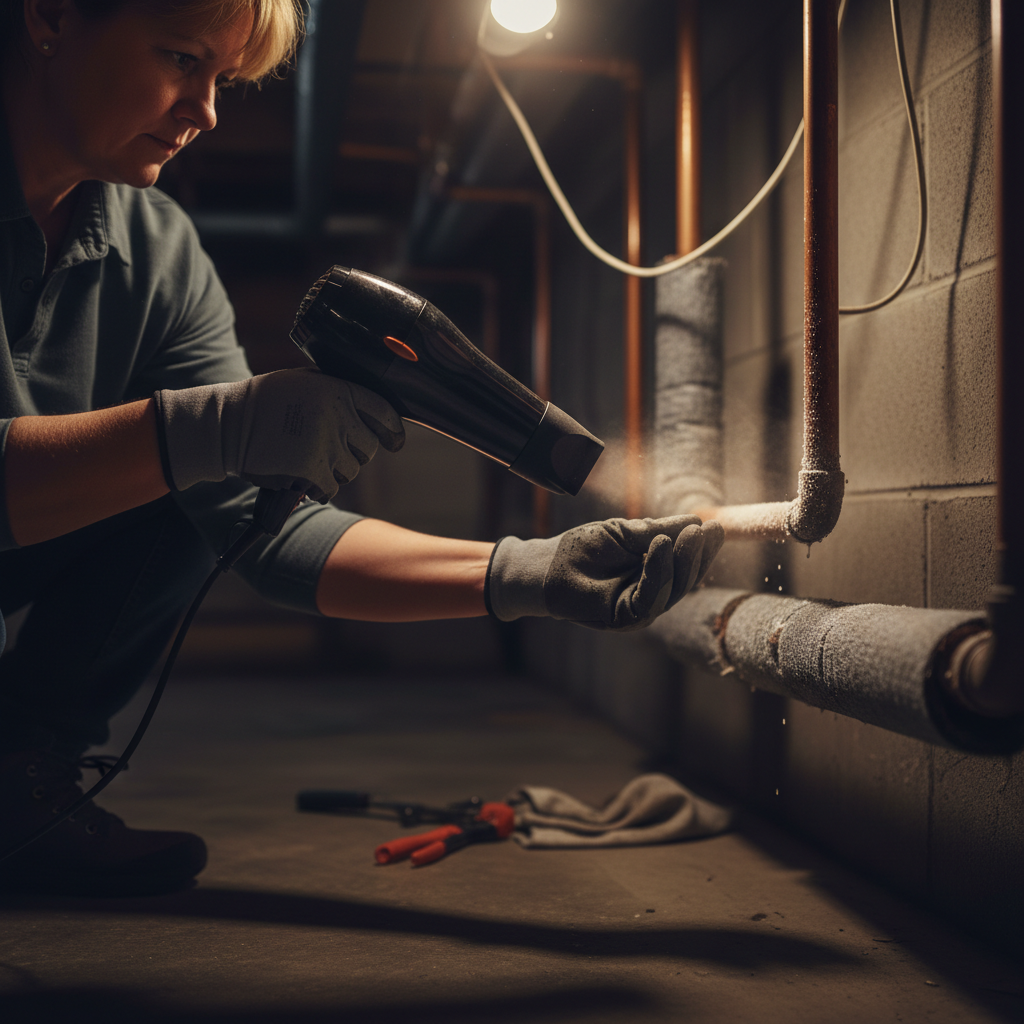
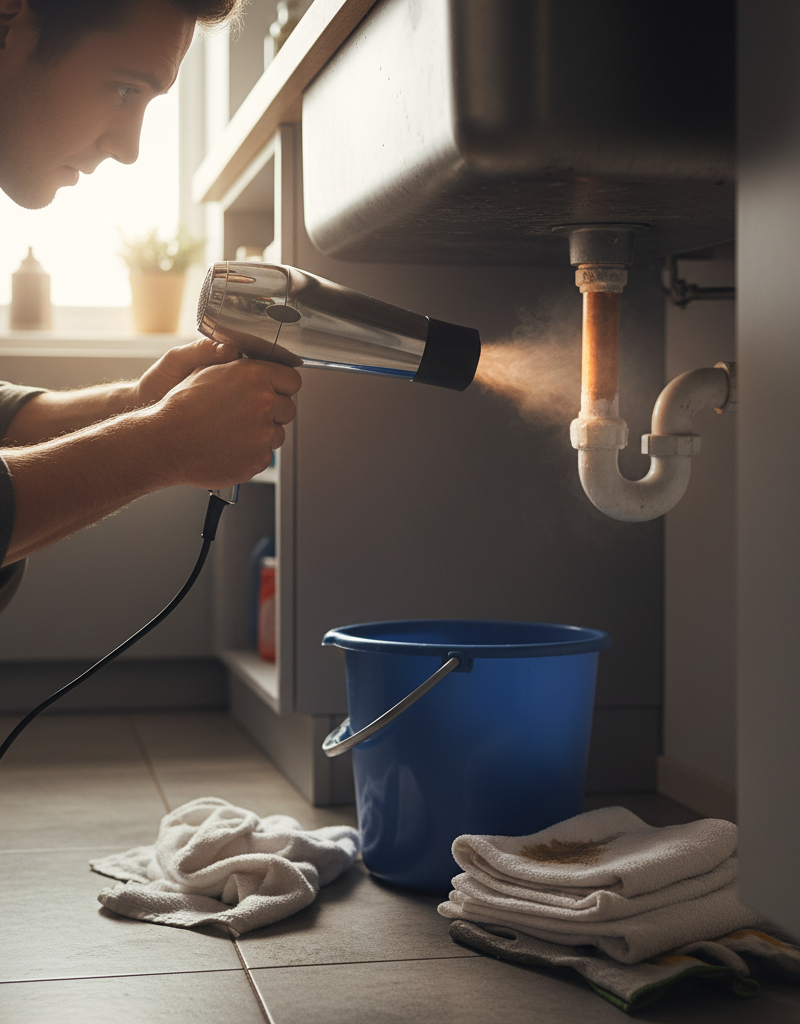
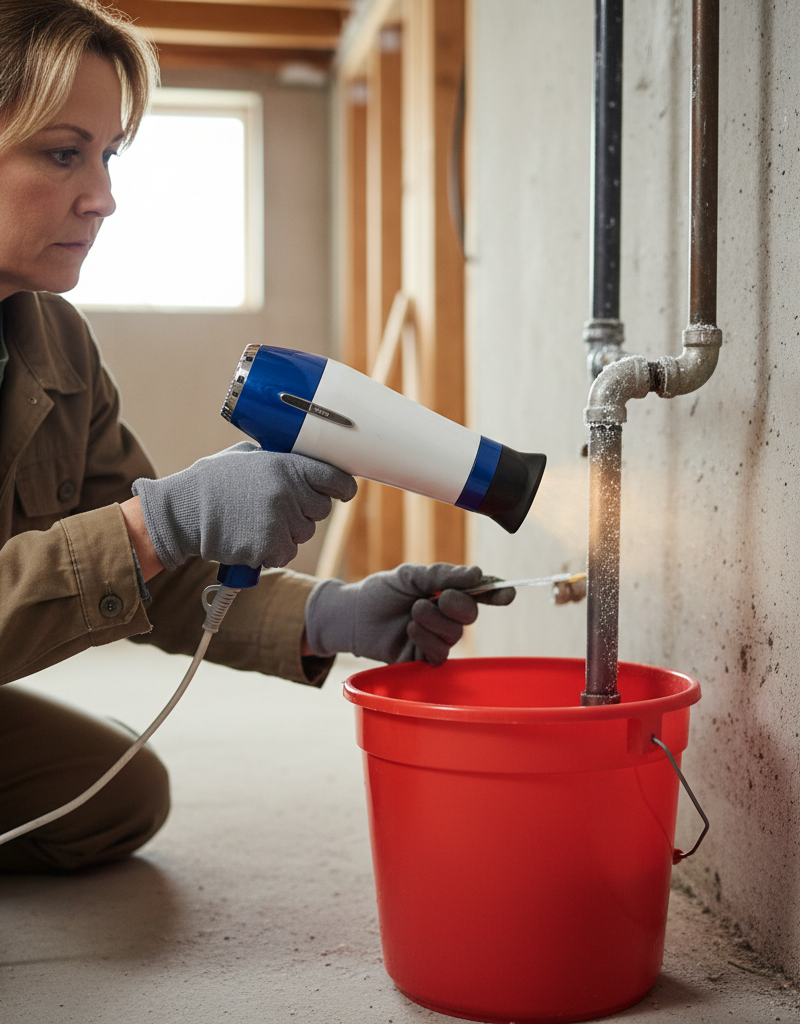
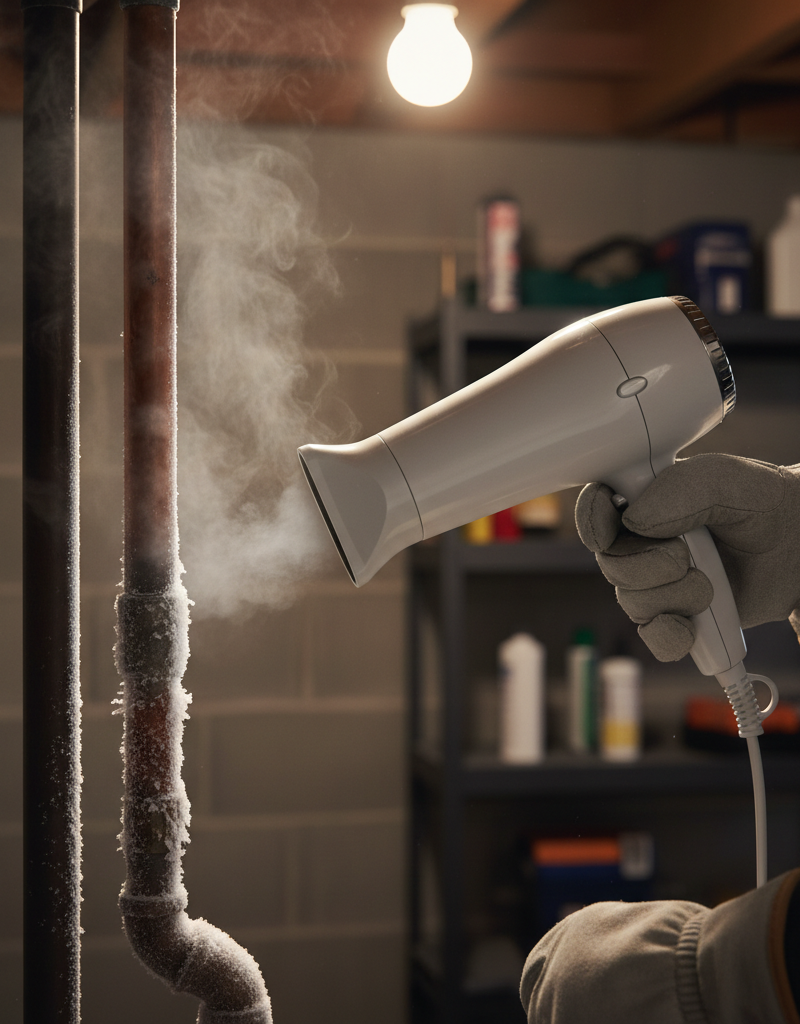
- Tools: Hair dryer (on a medium-hot setting), heat gun (on its lowest setting, held at least 6-8 inches away), electric heating pad, or warm towels.
- Method: Begin applying heat to the section of the pipe closest to the open faucet. Work your way slowly back along the pipe towards the main water supply. This allows meltwater to drain out, preventing new pressure buildups.
- Warm Towels: Wrap warm (not boiling) water-soaked towels around the pipe. Replace them frequently as they cool. This is a very gentle but slower method.
- Avoid: Never use an open flame torch, propane heater, charcoal warmer, or any extremely high-heat device. These can severely damage pipes, melt solder joints, ignite nearby flammable materials (like insulation or wood), and pose a significant fire hazard.
4. Monitor for Thawing and Leaks — Observe for full water restoration and potential damage.
- Continue applying heat until water flow returns to normal from the open faucet. This indicates the blockage has cleared.
- Carefully inspect the thawed section of the pipe and surrounding area for any leaks, drips, or signs of cracks. The pipe might have burst internally but not outwardly until water pressure returns.
- If you find a leak: Immediately turn off your home's main water supply and call a licensed plumber. Even a small leak can cause significant damage over time.
5. Restore Water (if main valve was shut off) — Bring your home's water system back online.
- If you had to shut off the main water supply, slowly reopen it, watching carefully for any new leaks.
- Flush air from the system by running all faucets (hot and cold) until flow is steady and no air spluttering occurs.
6. Insulate and Prevent Future Freezes — Take steps to protect your pipes.
- Once the pipe is thawed and confirmed leak-free, take steps to prevent it from freezing again. Wrap the vulnerable pipe with foam pipe insulation sleeves (available at hardware stores).
- Seal any drafts or cracks in walls, foundations, or around windows/doors that might expose pipes to cold air.
- Consider keeping cabinet doors open under sinks on exterior walls to allow warmer room air to circulate.
Common Causes
- Lack of Insulation: Pipes located in unconditioned spaces like basements, crawl spaces, attics, or exterior walls without adequate insulation are the primary candidates for freezing. Even a thin layer of insulation can make a significant difference.
- Sudden Temperature Drops: A sudden, severe drop in outdoor temperature, especially when combined with inadequate pipe protection, can quickly lead to freezing, often catching homeowners off guard.
- Poorly Sealed Exterior Openings: Gaps, cracks, or unsealed openings in your home's foundation, exterior walls, or around window/door frames can allow cold air to infiltrate and chill adjacent pipes to freezing temperatures.
- Thermostat Set Too Low: If you leave your home for an extended period during winter and set your thermostat too low (e.g., below 55°F or 13°C), the ambient temperature inside your walls can drop significantly, risking even well-insulated pipes.
- Hose Bibs Left Connected: Leaving garden hoses connected to outdoor spigots (hose bibs) allows water to remain in the spigot and the pipe leading to it. When this water freezes, it expands and can rupture the pipe inside your wall, often without immediate detection until spring.
- Pipes on Exterior Walls: Plumbing runs that are located directly within or very close to exterior walls are inherently more vulnerable to freezing, even if the interior of the home is warm.
Common Mistakes
- Using an Open Flame: Applying a blowtorch or any open flame to a frozen pipe is extremely dangerous. It can melt or warp plastic pipes, burst copper pipes due to rapid expansion, or ignite nearby flammable materials, leading to house fires.
- Applying Heat Too Quickly/Intensely: Even with a heat gun or high-setting hairdryer, too much heat too fast can stress the pipe material, especially older or plastic pipes, increasing the risk of a burst. Gradual, gentle heat is key.
- Ignoring the Main Water Shut-Off: Not knowing where or how to turn off your main water supply is a critical mistake. If a pipe bursts during thawing, every minute without the water shut off can cause thousands of dollars in damage.
- Thawing from the Wrong End: Only applying heat to the middle of the frozen section or the end furthest from a faucet can trap meltwater, creating immense pressure between the ice plug and the newly formed water, potentially leading to a burst. Always work from the faucet end backward.
- Neglecting to Check for Leaks: Assuming a pipe is fine after water flow returns without thoroughly inspecting for leaks is risky. A hairline crack might not gush but can cause significant cumulative damage.
- Not Addressing the Cause: Thawing a pipe without addressing the underlying reason it froze (e.g., poor insulation, drafts) means you’ll likely face the same problem again with the next cold snap.
Cost & Time Breakdown
| Task | DIY Cost | Pro Cost | Time |
|---|---|---|---|
| Identifying Frozen Pipe | $0 | Included | 5–15 minutes |
| Thawing with Hairdryer/Heat Gun | $0–$30 (if buying tool) | Included | 30–90 minutes |
| Pipe Insulation (DIY) | $10–$50 | $100–$250+ | 1–3 hours |
| Sealing Drafts | $5–$20 | $50–$150+ | 30–60 minutes |
| Burst Pipe Repair (Pro) | N/A | $300–$1,000+ | 2–4 hours (pro) |
| Water Damage Restoration (Pro) | N/A | $1,000–$10,000+ | Days–Weeks |
Tips & Prevention
- Insulate Vulnerable Pipes: Wrap pipes in unheated areas (basements, crawl spaces, attics, exterior walls) with foam pipe insulation sleeves. This is a cheap and effective preventative measure.
- Seal Air Leaks: Use caulk or expanding foam sealant to seal cracks and openings in your home's foundation and exterior walls, especially where pipes or wiring enter the house.
- Disconnect Hoses: In late fall, disconnect and drain all outdoor garden hoses. Turn off the water supply to outdoor spigots if they have a dedicated shut-off valve. If not, protect them with insulated covers.
- Maintain Indoor Temperature: During cold snaps, keep your thermostat set to at least 55°F (13°C) even if you're away. Open cabinet doors under sinks on exterior walls to allow warm air to reach the pipes.
- Allow Faucets to Drip: In extremely cold weather, if you have known vulnerable pipes, allowing a very slow drip from cold water faucets can keep water moving, making it harder to freeze. This is a temporary solution, not a substitute for proper insulation.
- Know Your Main Water Shut-off: Locate your main water shut-off valve and ensure everyone in the household knows how to turn it off. This is crucial in a burst pipe emergency.
- Consider Heat Tape/Cables: For very exposed or problematic pipes, thermostatically controlled heat tape or cables can be installed to prevent freezing. Always follow manufacturer instructions for safe installation.
When to Call a Professional
While thawing a superficial freeze can be a DIY task, several situations warrant an immediate call to a licensed plumber. If you suspect a pipe has already burst (indicated by a visible crack, a bulge, or a gushing leak once thawing begins), turn off your main water supply immediately and contact a professional. Dealing with a burst pipe requires specialized tools and expertise to repair or replace the damaged section correctly, ensuring water-tight connections and adherence to plumbing codes.
Furthermore, if you cannot locate the frozen section, the pipe is inaccessible (e.g., inside a wall), or if your attempts to thaw it are unsuccessful after a reasonable amount of time, a plumber has thermal imaging cameras and other diagnostic tools to pinpoint the problem without destructive measures. Any issues with gas lines (which can also freeze if condensate builds up) or main sewer lines require a professional due to extreme safety hazards and specialized equipment needs. Don't risk extensive water damage or unsafe repairs; a professional can often save you money and headaches in the long run.
Frequently asked questions
How do you know if a pipe is frozen?+
The most common signs are a sudden loss of water pressure or no water at all from a specific faucet, especially during cold weather. You might also see frost on visible pipes or notice a slight bulge in the pipe itself.
Is it safe to use a heat gun on a frozen pipe?+
Yes, but only on the lowest setting and held at least 6-8 inches away from the pipe. Keep it moving constantly to prevent overheating any single spot. Never use an open flame.
How long does it take to thaw a frozen pipe?+
The time varies depending on the severity of the freeze, the pipe material, and the heat source. It can range from 30 minutes to several hours. Patience and continuous, gentle heat are key.
Discussion
Loading comments…