Tools & materials you'll need
Affiliate links- AmazonScrewdriver setFor opening access panels if necessary.
- AmazonWet/dry shop vacuumOptional, for stubborn condensate clogs.
- AmazonSoft brushFor light cleaning of evaporator coil fins.
- AmazonFlashlightFor inspecting dark areas like coils and ducts.
- AmazonHygrometerOptional, for measuring indoor humidity levels accurately.
As an Amazon Associate FixlyGuide earns from qualifying purchases — at no extra cost to you. Prices and availability are accurate as of publication and subject to change.
Quick Answer
If your house feels uncomfortably humid despite your air conditioner running, the most frequent culprits are an improperly sized AC unit, a dirty evaporator coil, or issues with your blower fan settings. An AC unit that's too large will cool your home too quickly without running long enough to adequately remove moisture from the air. A dirty evaporator coil loses its ability to transfer heat and condense humidity effectively. Ensuring your thermostat is set to 'Auto' for the fan, rather than 'On', allows the unit to complete its full cooling and dehumidifying cycles.
The Problem
You expect your air conditioner to do two things: cool your home and remove humidity. When it's doing the first but failing at the second, you're left with a clammy, uncomfortable feeling, even if the temperature is reasonable. This isn't just about comfort; high indoor humidity can lead to mildew growth, musty odors, and even damage to your home's structure and furnishings over time. Many homeowners mistakenly believe their AC is failing entirely when, in fact, it's just not addressing the humidity load. Understanding why this happens is the first step to diagnosing and fixing the issue, saving you money and preventing bigger moisture-related problems.
How It Works
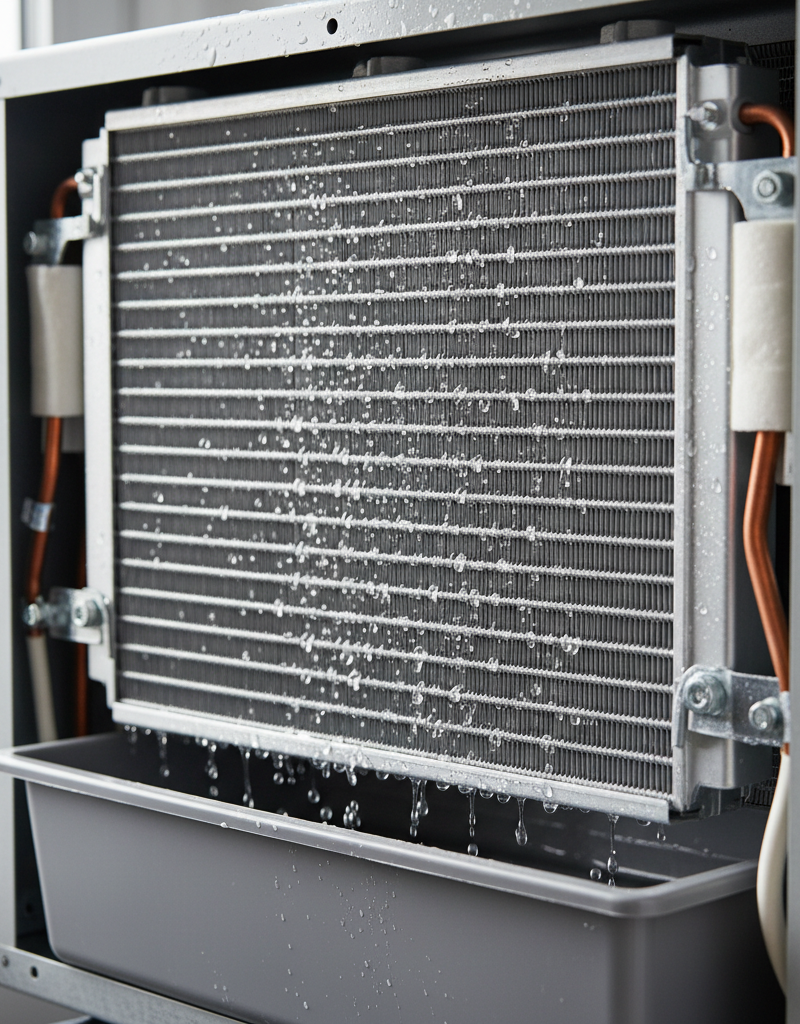
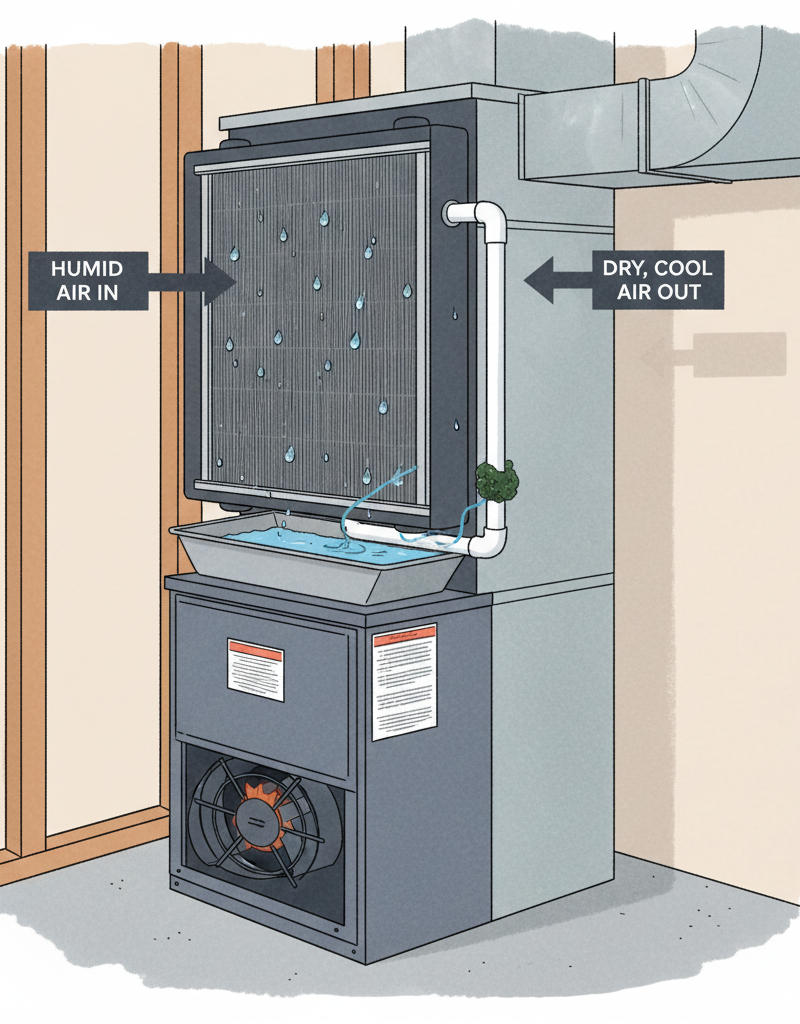
To understand why your AC might not be dehumidifying, it's crucial to grasp how it should work. An air conditioner operates on the principle of heat exchange. Warm, humid air from your home is drawn into the return air ducts and passes over the evaporator coil, located in your indoor air handler or furnace. This coil contains a cold refrigerant that absorbs heat from the air. As the air cools, it reaches its dew point, causing the water vapor (humidity) in the air to condense into liquid water droplets on the cold surface of the coil. This condensed water then drips into a drain pan below the coil and is typically routed outside or to a utility drain via a condensate line.
Meanwhile, the now-cooled and dehumidified air is pushed by the blower fan through the supply ducts and back into your living spaces. The refrigerant, now warmer, travels to the outdoor condenser unit, releases its absorbed heat to the outside air, and returns to the evaporator coil to repeat the cycle. The efficiency of this dehumidification process hinges on several factors: the temperature difference between the refrigerant and the air, the airflow across the coil, and the duration the air spends in contact with the cold coil surface. If any part of this system is compromised – for example, if the coil isn't cold enough, the airflow is too fast, or the unit cycles too briefly – the dehumidification process suffers, leaving your home feeling clammy and damp.
Step-by-Step Fix
Here are the critical steps to diagnose and resolve common humidity issues with your AC.
1. Check Your Thermostat Settings — Ensure your fan is set to 'Auto'.
- Your thermostat should always be set to 'Auto' for the fan, not 'On'. When the fan is set to 'On', it continuously circulates air even when the compressor isn't running. This re-evaporates condensed moisture from the evaporator coil back into your home, increasing humidity. 'Auto' ensures the fan only runs when the compressor is actively cooling and dehumidifying.
- If this doesn't work: Consider getting a smart thermostat with humidity control or a humidistat, which can precisely manage indoor moisture levels.
2. Inspect and Clean Your Air Filter — A clogged filter restricts airflow.
- Safety First: Turn off your AC unit at the thermostat and the breaker box before opening any access panels.
- Locate your furnace or air handler and identify the air filter slot. Remove the existing filter. Hold it up to a light source – if you can't see light through it, it's dirty and needs replacement.
- Replace dirty filters with new ones of the correct size and MERV rating (typically MERV 8-11 is good for most homes). A clean filter ensures proper airflow over the evaporator coil, which is essential for effective heat transfer and dehumidification.
- Frequency: Check your filter monthly and replace it every 1-3 months, more often if you have pets or allergies.
3. Examine the Evaporator Coil for Dirt and Ice — A dirty or frozen coil can't dehumidify.
- Safety First: Turn off your AC unit at the thermostat and the breaker box. Accessing the evaporator coil often involves opening a panel on your indoor air handler or furnace. Consult your owner's manual for specific instructions.
- Using a flashlight, visually inspect the evaporator coil. It should appear clean and free of dirt, dust, and debris. If you see a layer of grime, this insulates the coil, preventing it from getting cold enough to condense moisture effectively.
- If you see ice: An iced-over coil indicates a more serious issue, possibly low refrigerant, a restricted air filter, or a faulty blower motor. Do NOT attempt to run the AC with an iced coil as it can damage the compressor. Turn the unit off and allow the ice to melt completely (this can take several hours) before investigating further. If icing persists after cleaning the filter, call an HVAC professional.
- Cleaning a dirty coil (light dust): For light dust, a soft brush and a shop vacuum with a brush attachment can carefully remove surface debris. Avoid bending the delicate fins. For heavy grime, specialized coil cleaner may be needed. Always follow product instructions and wear appropriate PPE.
4. Clear the Condensate Drain Line — Clogs can back up water and affect humidity.
- Locate the condensate drain pan, usually beneath the evaporator coil. Check for standing water. A full pan indicates a clogged drain line.
- The condensate line is typically a PVC pipe, usually 3/4-inch in diameter, extending from the drain pan, often with a vent or cleanout tee near the air handler.
- To clear a minor clog: Find the cleanout tee (it may have a cap). Remove the cap and slowly pour a solution of 1/4 cup distilled white vinegar mixed with 3/4 cup warm water down the line. Let it sit for 30 minutes to an hour, then flush with a cup of plain water. This helps to dissolve algae and sludge.
- Advanced clogs: If water doesn't drain after flushing, you might need a wet/dry vacuum to suction the clog out from the outdoor end of the drain line, or a specialized flexible brush. If you're uncomfortable, call a pro.
5. Check for Leaky Ductwork — Return leaks pull in humid attic/crawl space air.
- Inspect visible ductwork in your attic, crawl space, or basement. Look for disconnected sections, gaps, or tears in the ducting.
- Focus on return air ducts: Leaks in the return ducts are particularly problematic for humidity, as they can pull in hot, humid unconditioned air from these unconditioned spaces directly into your system, bypassing the evaporator coil entirely or overloading it.
- Seal small leaks and gaps with mastic sealant or metallic foil tape (not duct tape, which degrades over time). For larger damage, professional repair or replacement may be necessary.
6. Evaluate Your AC Unit Size — An oversized AC is a common cause of high humidity.
- An AC unit that is too large for your home will cool the space too quickly, satisfying the thermostat before it has run long enough to remove sufficient moisture from the air. This results in short cycling – the unit frequently turns on and off.
- There's no easy DIY fix for an oversized unit; it requires professional evaluation and potentially replacement or adjustment (like installing a variable speed compressor or a dedicated dehumidifier). If you've recently moved into a home, or if your AC was installed without a proper load calculation, this could be the root cause. This often requires a professional assessment.
7. Consider External Humidity Sources — Shower fans, clothes dryers, and foundation issues.
- Ensure bathroom exhaust fans are always used during and after showers/baths for at least 15-20 minutes. Confirm they vent outside, not into the attic.
- Make sure your clothes dryer is vented properly to the outside and that the vent isn't clogged.
- Check your basement or crawl space for signs of water intrusion or excessive dampness. Use a hygrometer to measure humidity in these areas. Install a dehumidifier down there if needed.
Common Causes
- Oversized AC Unit: The most common hidden culprit. It cools too fast, short-cycling before it can adequately dehumidify.
- Dirty Evaporator Coil: Grime on the coil acts as an insulator, preventing effective heat transfer and moisture condensation.
- Clogged Air Filter: Restricts airflow, leading to less contact time between air and the cold coil, hindering dehumidification.
- Fan Set to 'On': Continuously running blower re-evaporates condensed moisture from the coil back into the airstream.
- Clogged Condensate Drain Line: Standing water in the drain pan can evaporate back into the air or cause system shutdowns.
- Leaky Return Ductwork: Pulls humid air from non-conditioned spaces (attic, crawl space) directly into the air stream, overloading the AC's dehumidifying capacity.
- Low Refrigerant: Causes the coil to run less cold, reducing its ability to condense moisture. Often accompanied by an iced coil.
Common Mistakes
- Setting the Fan to 'On' on the Thermostat: While it feels like it's circulating air, it's actually pushing re-evaporated moisture back into your home. Always use 'Auto'.
- Ignoring a Dirty Air Filter: Thinking it's 'just a little dust' can significantly impact your AC's performance and efficiency, especially its dehumidifying capabilities.
- Assuming a Full Drain Pan is Normal: A drain pan should ideally have very little standing water. A full pan signals a clog that needs immediate attention.
- Using Standard Duct Tape for Leaks: Regular duct tape isn't designed for HVAC use; it will fail, peel, and leave you with persistent leaks. Use metallic foil tape or mastic sealant instead.
- Believing All ACs Dehumidify Equally: While all ACs remove some humidity, some are better designed for it, and proper sizing is paramount for effective moisture removal.
- Turning the AC Off Completely During Humid Days: If you turn off your AC, especially when leaving for an extended period, humidity will build up rapidly, promoting mold and mildew growth. Keep it running, perhaps at a slightly higher temperature, for continuous moisture control.
Cost & Time Breakdown
| Task | DIY Cost | Pro Cost | Time |
|---|---|---|---|
| Check thermostat & fan setting | $0 | $0 | 1 minute |
| Replace air filter | $10–$30 | $10–$30 | 5 minutes |
| Clear condensate drain with vinegar | $5 | $75–$150 | 30–60 minutes |
| Inspect & clean evaporator coil (DIY light) | $15–$30 | $150–$400 | 1–2 hours |
| Seal duct leaks (DIY) | $20–$50 | $300–$800 | 1–3 hours |
| Professional AC inspection / sizing eval | N/A | $80–$200 | 1–2 hours |
Tips & Prevention
- Regular Filter Changes: Replace your air filter every 1-3 months. It's the simplest and most effective maintenance step.
- Annual Professional Tune-up: Schedule an HVAC technician for a tune-up once a year, typically in the spring. They will clean coils, check refrigerant levels, inspect the condensate drain, and catch potential issues early.
- Use Exhaust Fans: Always use bathroom and kitchen exhaust fans when showering or cooking to remove localized moisture at the source.
- Maintain Proper Drainage Outside: Ensure ground slopes away from your foundation and gutters are clear to prevent water from accumulating around your home and seeping into basements or crawl spaces.
- Consider a Whole-House Dehumidifier: If you consistently struggle with high humidity despite your AC running optimally, a whole-house dehumidifier integrated into your HVAC system can provide superior, consistent moisture control.
- Seal Your Home's Envelope: Address air leaks around windows, doors, and penetrations to prevent humid outdoor air from infiltrating your conditioned spaces.
When to Call a Professional
While many humidity issues can be resolved with DIY checks, there are specific situations where calling a licensed HVAC professional is essential. If you suspect your AC unit is oversized, only a technician can perform a proper load calculation and recommend the appropriate solutions, which may involve system modifications or replacement. Persistent issues like an iced-over evaporator coil, refrigerant leaks, or a condensate drain line that repeatedly clogs and cannot be cleared with simple methods indicate a deeper problem requiring specialized tools and expertise. Furthermore, if you've checked all the common DIY fixes and your home still feels muggy, or if you notice strange noises, leaks, or a significant drop in cooling performance alongside high humidity, it's time to bring in a professional. They can accurately diagnose complex mechanical failures, refrigerant issues, or significant ductwork problems that are beyond the scope of typical homeowner repairs, ensuring the longevity and efficient operation of your costly HVAC system and preventing potential water damage or mold growth.
Related Articles
Keep troubleshooting with these hand-picked guides from FixlyGuide:
- The Secret Culprit Behind Your Humid House (Even with the AC On) — If your house feels sticky and damp despite the AC running, a common and often overlooked issue is an oversized air conditioner.
- The Secret Reason Your AC Isn't Drying Your Home (And 5 Things to Check Now) — If your AC is running but your house still feels sticky, it's likely battling an underlying humidity issue that simple adjustments can fix.
- The #1 Reason Your AC Blows Warm Air (And It's Not What You Think) — A dirty air filter is often the overlooked culprit behind an air conditioner blowing warm air, hindering its ability to cool your home effi…
- The #1 Mistake Homeowners Make When Heat Pumps Stop Heating in Winter — Discover the crucial mistake most homeowners make when their heat pump struggles in cold weather and how to fix it, potentially saving hund…
- Why Your Thermostat Lies: The Real Reason Your Home Won't Hit the Set Temperature — Discover why your thermostat struggles to reach the set temperature and learn actionable steps to diagnose and fix common HVAC issues.
- The 7 Critical Home Inspection Checks Most Homeowners Miss (and How to Do Them Yourself) — Discover the essential annual home inspection checks many homeowners overlook and learn how to perform them yourself to prevent costly repa…
Frequently asked questions
Why does my house feel sticky even with the AC on?+
Your house feels sticky because your AC is primarily cooling but not effectively removing moisture from the air. This often happens if the unit is too big and short-cycles, or if components like the evaporator coil or air filter are dirty, impeding the dehumidification process.
Can an AC unit be too big for a house?+
Yes, an AC unit can absolutely be too big for a house. An oversized unit cools the space too quickly, satisfying the thermostat before it has run long enough to adequately condense and remove humidity from the air, leaving your home feeling cool but damp.
How do I know if my AC is dehumidifying?+
You can tell if your AC is dehumidifying by checking the condensate drain line for dripping water (this indicates moisture is being removed). Also, measure your indoor humidity levels with a hygrometer; ideally, it should be between 40-55%. If levels are consistently higher, your AC isn't dehumidifying effectively.
Should I run my AC fan on 'Auto' or 'On' for humidity?+
Always run your AC fan on 'Auto' for effective dehumidification. When the fan is set to 'On', it continuously blows air over the evaporator coil, re-evaporating condensed moisture back into your home even when the compressor isn't running, which increases indoor humidity.
What common AC problem causes high humidity?+
The most common AC problems causing high humidity are an oversized unit that short-cycles, a dirty evaporator coil that can't condense moisture, or a clogged air filter restricting airflow. These prevent the system from running long enough or efficiently enough to remove adequate water vapor.
Discussion
Loading comments…