Tools & materials you'll need
Affiliate linksAs an Amazon Associate FixlyGuide earns from qualifying purchases — at no extra cost to you. Prices and availability are accurate as of publication and subject to change.
Quick Answer
When your freezer hums along perfectly, creating ice and keeping frozen foods rock-solid, but the fresh food compartment feels more like a cool pantry than a true refrigerator, the prime suspect is almost always related to the airflow system. Specifically, the evaporator fan motor, which serves as the workhorse for moving that essential cold air from the freezer into the fridge section, is a frequent point of failure. Other culprits can include a build-up of ice obstructing airflow, a clogged defrost drain leading to a frozen evaporator coil, or a malfunctioning defrost heater or thermistor. pinpointing the exact issue often involves a bit of detective work, feeling for airflow, and potentially using a multimeter to test component continuity.
The Problem
It’s a universally frustrating experience: you open your freezer to find everything perfectly chilled, often even frosty, but when you reach into the refrigerator compartment, items are warm, milk is spoiling, and produce is wilting. This scenario, where the freezer maintains its temperature but the refrigerator fails to cool, is a clear indicator that the cooling system itself—the compressor and refrigerant cycle—is likely functioning to some degree. The problem, therefore, shifts from the primary cooling mechanism to the distribution of that cold air, or a specific issue preventing the fresh food compartment from receiving its share of the chill. This often leads to wasted food, increased energy consumption as the unit struggles to cool, and the inconvenience of potentially needing a replacement if not addressed promptly.
How It Works
Understanding why a refrigerator can cool in the freezer but not the fridge requires a basic grasp of how modern refrigerators operate. Most consumer refrigerators utilize a single cooling system to serve both compartments, especially top-freezer and bottom-freezer models. The compressor pumps refrigerant through coils, extracting heat from inside the appliance. This super-cold refrigerant first passes through the evaporator coils, located primarily in the freezer compartment. Here, the refrigerant absorbs heat from the air, causing the freezer to get very, very cold.
Once the freezer air is chilled, a crucial component comes into play: the evaporator fan motor. This fan is strategically positioned to pull in the cold air from around the evaporator coils and then push it through a series of dampers and vents into the fresh food compartment. A thermistor or thermostat in the fresh food section monitors the temperature and signals the main control board to open or close these dampers, regulating the flow of cold air. In essence, the freezer acts as the main cooling engine, and the refrigerator compartment relies entirely on this forced air circulation to maintain its cooler, but not freezing, temperatures.
Periodically, the freezer’s evaporator coils accumulate frost. To prevent excessive ice buildup, which would impede cooling, the refrigerator enters a defrost cycle. During this cycle, a defrost heater warms the evaporator coils, melting the frost. The melted water then drains through a defrost drain tube into a drain pan usually located beneath the refrigerator, where it evaporates. A defrost thermostat or defrost thermistor monitors the coil temperature and terminates the defrost cycle once the ice is gone. Any interruption in this delicate balance—a failed fan, a blocked vent, a clogged drain, or a malfunctioning defrost component—can explain why the freezer works while the refrigerator struggles.
Step-by-Step Fix
1. Check Airflow — Look for obstructions and feel for air movement.
— First, unplug your refrigerator from the wall outlet for safety. Open both refrigerator and freezer doors. Visually inspect all vents in both compartments, especially the vent located between the freezer and fresh food sections. Items like food packaging, plastic bags, or even ice buildup can block these crucial airways. Remove any obstructions. Safely plug the refrigerator back in and after a few minutes, carefully feel for cold air blowing out of the vents, particularly the one connecting the freezer to the fridge. If you don't feel any air, or if it feels weak, it's a strong indicator of an airflow problem.
- Safety First: Always disconnect power before reaching into any part of the appliance.
- If this doesn't work: The issue might be deeper, possibly with the evaporator fan itself.
2. Clear the Defrost Drain — Prevent ice buildup from blocking airflow.
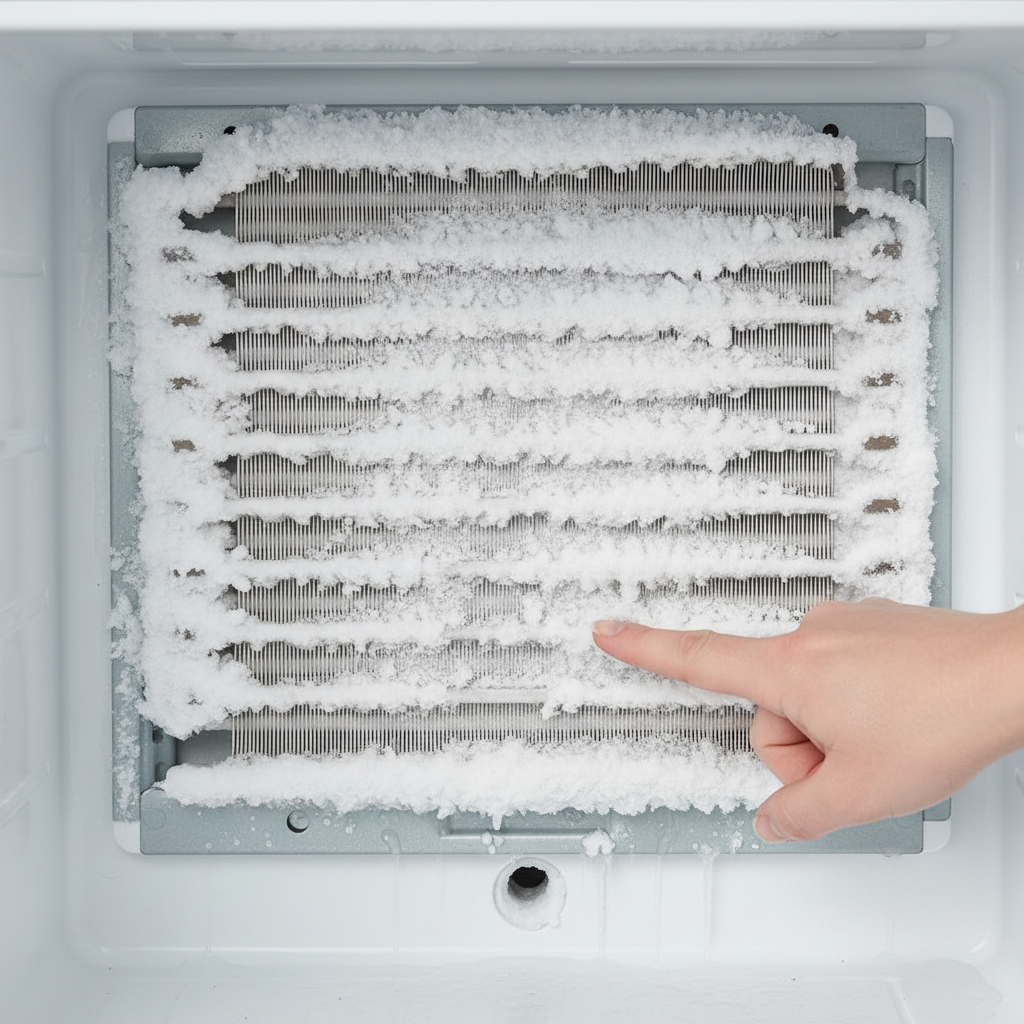
— Ice buildup is a common cause of poor fridge cooling. Over time, the defrost drain tube can become clogged with food particles, mold, or ice, preventing meltwater from escaping during the defrost cycle. This water then freezes, often forming a sheet of ice around the evaporator coils and blocking the fan or the cold air vents. To access the drain, you'll typically need to remove the freezer's rear panel (inside the freezer). Once exposed, locate the drain hole – it's usually directly beneath the evaporator coils. Use warm water and a turkey baster or a small funnel to slowly pour warm water down the drain. You can also use a thin, flexible instrument like a straightened coat hanger or a long pipe cleaner to gently clear any clogs. Be prepared with towels to catch any overflow.
- Tools: Screwdriver set (Phillips and flathead), turkey baster or funnel, warm water, towels, pipe cleaner/coat hanger.
- If this doesn't work: The issue could be an actively failing defrost system component.
3. Inspect the Evaporator Fan Motor — Determine if the fan is operational.
— The evaporator fan is located in the freezer compartment, usually behind the rear panel. Unplug the refrigerator. Carefully remove any shelves, ice maker components, and then unscrew the rear panel to expose the fan. Once visible, manually try to spin the fan blades. They should spin freely. If they are stiff, obstructed by ice, or encounter resistance, it could be the problem. Plug the refrigerator back in (briefly) and listen closely to the fan. If it makes grinding noises, doesn't spin at all, or spins weakly, it likely needs replacement. If it's frozen solid, allow it to thaw completely before retesting.
- Safety First: Disconnect power before removing panels. Watch out for sharp edges on metal panels.
- Tools: Screwdriver set.
- Parts: Replacement evaporator fan motor (specific to your refrigerator model).
4. Test the Damper Control — Ensure cold air can move freely.
— Many refrigerators use a damper, often electronically controlled, to regulate the flow of cold air from the freezer to the fresh food compartment. This damper can sometimes get stuck in a closed or partially closed position. The damper assembly is usually located in the air duct between the freezer and the fresh food section. Unplug the refrigerator. Access the damper (consult your appliance's service manual if unsure). Some dampers are manually operable. If yours is, try gently moving it to see if it's stuck. If it's an electronic damper, you may need a multimeter to test for continuity or proper voltage if you can access the wiring harness. A faulty damper will prevent cold air from reaching the fridge section, even if the fan is working perfectly.
- Tools: Screwdriver set, multimeter (optional).
- If this doesn't work: Consider the defrost system components.
5. Examine the Defrost Heater and Thermistor — Check for proper defrosting.
— If the evaporator coil is completely encased in a thick layer of ice, the defrost system might be failing. The defrost heater warms the coils to melt this ice. The defrost thermistor (or thermostat) senses the temperature and tells the system when to stop heating. Unplug the refrigerator. You'll need to remove the freezer's rear panel to reveal the evaporator coil and associated components. Visually inspect the defrost heater (it looks like a heating element, often encased in a glass tube or metal sheath, running along the evaporator coil). Look for any signs of damage like breaks or burn marks. Use a multimeter to test the resistance (continuity) of both the defrost heater and the defrost thermistor. A good heater will show continuity. A good thermistor's resistance will change with temperature. If either component shows an open circuit or values outside the manufacturer's specifications (you'll need your refrigerator's service manual for exact specs), they need to be replaced.
- Tools: Screwdriver set, multimeter.
- Parts: Replacement defrost heater, replacement defrost thermistor (consult your model's parts list).
6. Check the Main Control Board — A less common, but possible, culprit.
— While less common for this specific issue, a faulty main control board can sometimes mismanage the defrost cycle or the operation of the evaporator fan and damper. If all other components (fan, heater, thermistor, damper) test good, the control board might be sending incorrect signals or no signals at all. This is an advanced diagnostic. Visually inspect the board for any burnt components or signs of arcing. If suspicious, this typically requires professional diagnosis or replacement by an experienced DIYer following strict safety protocols.
- Safety First: High voltage components are present. Call a licensed appliance technician if you are unsure or uncomfortable.
- Tools: Screwdriver set, multimeter (for advanced diagnostics).
Common Causes
- Defrost System Failure: This is arguably the most frequent cause. If the defrost heater, defrost thermistor, or defrost timer (in older models) fails, ice will accumulate on the evaporator coils. This ice buildup acts as an insulator, preventing the coils from properly absorbing heat, and can physically block the evaporator fan and the vents leading to the fresh food compartment. The compressor will still run, cooling the freezer, but the restricted airflow means no cold air reaches the fridge.
- Faulty Evaporator Fan Motor: The evaporator fan is solely responsible for circulating the cold air generated in the freezer into the refrigerator compartment. If this motor fails, slows down, or is obstructed, the chilled air remains trapped in the freezer, leaving the fridge warm.
- Clogged Defrost Drain: As ice melts during the defrost cycle, the water needs a clear path to drain away. If the drain tube gets clogged with debris, food particles, or mold, the water will pool and refreeze, leading to excessive ice buildup on the evaporator coils and potentially blocking the fan or vents.
- Blocked Air Vents: Simply put, if something inside your refrigerator (a large container, a bag of groceries, or even a shelf lining) is physically blocking the vents that allow cold air to enter the fresh food compartment from the freezer, the fridge won't cool.
- Failed Damper Control: Many refrigerators use a damper, either manual or electronic, to regulate the amount of cold air flowing from the freezer into the fresh food section. If this damper gets stuck in a closed position, no cold air can pass through, regardless of the fan's operation. This is more common in older or less advanced models with mechanical dampers.
- Thermostatic Issues: Though less common with this specific symptom (where the freezer works), a faulty thermistor or thermostat in the fresh food compartment could potentially read an incorrect temperature, signaling the system that the fridge is cold enough when it isn't, thus restricting airflow or cooling cycles. This usually results in some cooling, just not enough.
Common Mistakes
- Ignoring the Defrost Drain: Many homeowners focus on the fan or the main control board, overlooking the simple yet critical issue of a clogged defrost drain. Ice buildup from a blocked drain can mimic a fan failure or a complete defrost system breakdown.
- Not Unplugging the Refrigerator: Always disconnect power before performing any inspection or repair, especially when dealing with internal components. Failing to do so can lead to electrical shock or damage to components.
- Forcing Fan Blades: If the evaporator fan blades are stuck due to ice, attempting to force them to spin can break the blades or damage the motor. Always thaw the ice completely first.
- Prying Off Panels Incorrectly: Refrigerator panels are often held by hidden clips or specific screw locations. Forcing them can lead to broken plastic, making reassembly difficult or impossible. Consult your appliance manual or find a diagram online for correct panel removal.
- Assuming a Full Breakdown: Just because the refrigerator isn't cooling doesn't mean the entire unit is beyond repair. Many issues, especially those related to airflow or defrost, are relatively inexpensive and straightforward to fix compared to replacing the entire appliance.
- Overloading the Refrigerator: A densely packed refrigerator can restrict airflow, even if all components are working correctly. Ensure there's adequate space around items for air to circulate, especially near vents.
Cost & Time Breakdown
| Task | DIY Cost | Pro Cost | Time |
|---|---|---|---|
| Check Airflow & Vents | $0 | $75–$150 | 10–20 minutes |
| Clear Defrost Drain | $0–$5 | $100–$250 | 30–60 minutes |
| Replace Evaporator Fan Motor | $30–$100 | $150–$300 | 1–1.5 hours |
| Replace Defrost Heater | $50–$150 | $180–$350 | 1–2 hours |
| Replace Defrost Thermistor | $20–$60 | $150–$280 | 1–1.5 hours |
| Replace Damper Control | $40–$120 | $160–$320 | 1–1.5 hours |
Tips & Prevention
- Regularly Inspect Vents: Every few months, quickly check that no food items or containers are blocking the cold air vents inside both the freezer and refrigerator compartments. Proper airflow is paramount.
- Keep the Defrost Drain Clear: If you notice any pooling water in the freezer or ice buildup around the bottom of the freezer compartment, proactively clear the defrost drain using warm water and a small brush or pipe cleaner. This avoids larger blockage issues.
- Avoid Overpacking: While it's tempting to cram every grocery item into your fridge, resist the urge. Overpacking restricts airflow, making your refrigerator work harder and potentially leading to uneven cooling. Aim for about 75-80% capacity.
- Check Door Gaskets: Periodically inspect the rubber door gaskets on both the freezer and refrigerator doors for cracks, tears, or looseness. A bad seal allows warm air to leak in, forcing the appliance to run constantly and potentially causing frost buildup, especially if it combines with a defrost issue. Clean them regularly with mild soap and water.
- Maintain Proper Temperature Settings: Ensure your refrigerator and freezer are set to the recommended temperatures (typically 37-40°F for the fridge and 0°F for the freezer). Extreme settings can sometimes overwork components or exacerbate minor issues.
- Listen for Unusual Noises: Pay attention to any new or unusual sounds coming from your refrigerator. A grinding or buzzing sound could indicate a failing evaporator fan motor, while increased running time might suggest a less efficient system.
When to Call a Professional
While many of these troubleshooting steps are manageable for a DIY-savvy homeowner, there are clear instances when calling a licensed appliance repair professional is the safest and most cost-effective solution. If you've systematically checked the airflow, cleared the defrost drain, and inspected the evaporator fan, defrost heater, and thermistor without success, it's time to call in a pro. Specifically, if you suspect a problem with the sealed refrigerant system (compressor, condenser, evaporator coils containing refrigerant) – which typically manifests as the compressor running but no cooling in either compartment, or unusual hot spots on the outside of the fridge – a DIY fix is not possible due to specialized tools and certifications required. Issues involving the main control board, especially if there are no obvious visual defects and components test out, are also best left to experienced technicians who can properly diagnose complex electronic faults without risking further damage. Furthermore, if you are uncomfortable working with electrical components, removing intricate panels, or lack the necessary diagnostic tools like a multimeter, a professional can quickly and safely identify and rectify the issue, often saving you time and preventing potential injury or costly mistakes.
Related Articles
Keep troubleshooting with these hand-picked guides from FixlyGuide:
- The #1 Reason Your AC Blows Warm Air (And It's Not What You Think) — A dirty air filter is often the overlooked culprit behind an air conditioner blowing warm air, hindering its ability to cool your home effi…
- The #1 Mistake Homeowners Make When Heat Pumps Stop Heating in Winter — Discover the crucial mistake most homeowners make when their heat pump struggles in cold weather and how to fix it, potentially saving hund…
- The 4 Hidden Reasons Your Dryer Tumbles Cold (And How to Fix Them in 30 Minutes) — Your dryer tumbles, but clothes stay cold. Discover the four most common culprits behind a dryer that won't heat, and how to troubleshoot t…
- The #1 Mistake Homeowners Make Installing a Smart Thermostat (and How to Fix It) — Avoid the most common pitfall when installing a smart thermostat yourself and ensure a smooth, energy-efficient setup.
- The #1 Mistake Homeowners Make When Their AC Won't Turn On (And the Easy Fix) — Learn the most common oversight homeowners make when their AC won't turn on and how to troubleshoot basic issues to restore cooling.
- The Secret Culprit Behind Your Washing Machine's Spin & Drain Failure (It's Not Always Clogs) — Discover the most overlooked reasons why your washing machine refuses to spin or drain, and how to fix them with simple tools.
Frequently asked questions
Why would my freezer work but not my fridge?+
The most common reason is a problem with the air circulation between the freezer and the fresh food compartment. This is often caused by a faulty evaporator fan motor, which moves cold air, or extensive ice buildup on the evaporator coils blocking airflow due to a defrost system malfunction or a clogged drain.
How do I test my refrigerator's evaporator fan?+
To test the evaporator fan, first unplug the refrigerator. Remove the rear panel inside the freezer to expose the fan. Manually spin the blades to check for obstructions or stiffness. Briefly plug the unit back in and listen for the fan to run; if it makes grinding noises, doesn't spin, or spins weakly, it likely needs replacement.
Can a clogged defrost drain stop my fridge from cooling?+
Yes, absolutely. A clogged defrost drain prevents melted ice from leaving the freezer compartment. This water then refreezes, often creating a thick layer of ice around the evaporator coils and blocking the vents and fan responsible for pushing cold air into the fresh food section.
How much does it cost to fix a refrigerator that's not cooling?+
DIY repair costs can range from $0 (if just clearing a drain) to $150 for parts like an evaporator fan motor or defrost heater. Professional repair typically costs $150 to $400 or more, depending on the component needing replacement and labor rates.
Discussion
Loading comments…